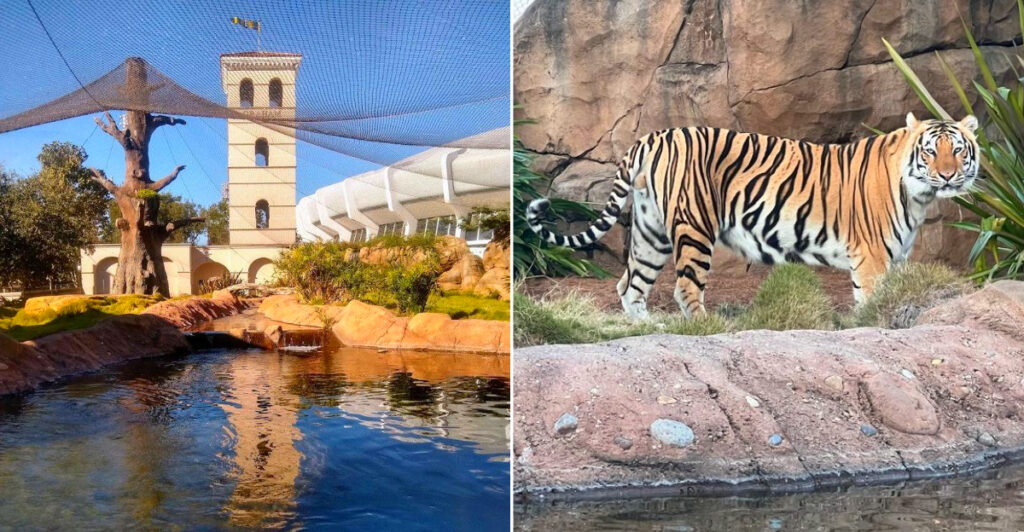
Between the stadium and the arena, campus suddenly offers a surprise that feels more like a landscaped sanctuary than a school landmark.
One minute you are surrounded by game-day geography, the next, you are looking at waterfalls, rocky plateaus, a wading pond, and a live oak arranged with almost theatrical care.
What makes the habitat memorable is how thoughtfully it balances spectacle with calm. It is free to visit, easy to fit into a Baton Rouge stop, and best appreciated when you are not treating it like a quick mascot selfie mission.
Cooler mornings and late afternoons give you the best chance of seeing movement, while the design itself rewards slow looking even during quieter moments.
Waterfalls, shaded viewing areas, rocky ledges, and a beautifully designed tiger habitat make this LSU campus stop a memorable Baton Rouge Louisiana attraction.
Come with patience, keep your distance, and watch respectfully. The best visit feels less like checking off a landmark and more like quietly observing a living campus icon.
Campus Vibe Up Close
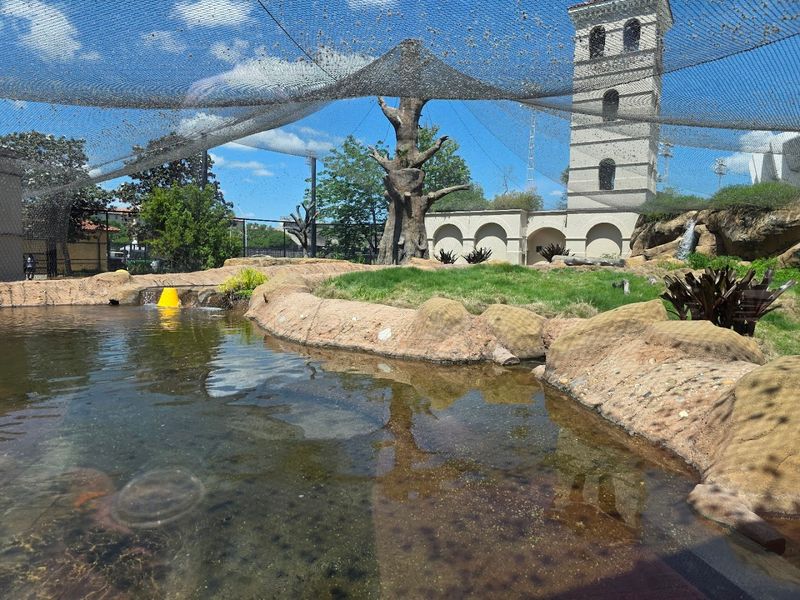
The habitat sits like a quietly grand island between stadiums, where student footsteps and campus life frame a surprisingly tranquil scene. You notice the Italianate campanile looming beyond the trees, visually tying the tiger’s garden to the wider LSU architectural language and campus coherence.
Design choices like layered plantings and varied sightlines create a sense of depth that holds your attention longer than a quick glance.
Approach during the cooler hours to catch more motion; mornings and late afternoons are when Mike tends to patrol, swim, or lounge on the comfort rock that offers warmed or cooled surfaces. Visitors linger at the rail in respectful silence, cameras ready but voices low to keep this live wild animal comfortable.
Use North Stadium Drive As Your Campus Compass
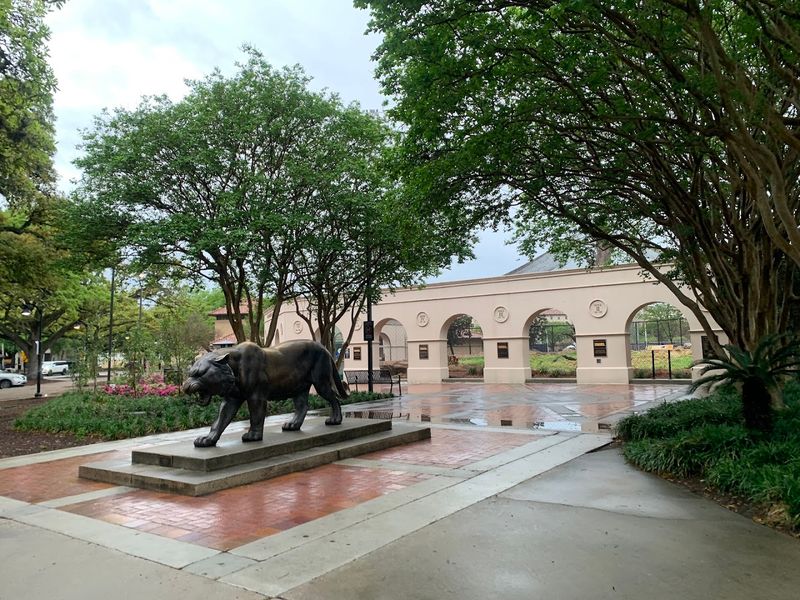
Mike the Tiger Habitat, North Stadium Drive, Baton Rouge, Louisiana 70803, sits inside the LSU campus world, so the approach feels more like finding a landmark within a lively university setting than chasing a roadside attraction.
Head toward North Stadium Drive and pay attention to campus traffic, especially during school events or game-day weekends. Parking and walking may take a little patience, but the habitat is worth building into a slower LSU stop.
Once you arrive, let the pace soften. This is not just a quick photo moment, it is a place to pause, observe respectfully, and feel how deeply this tiger tradition is woven into Baton Rouge campus life.
Sensory Oddities To Notice
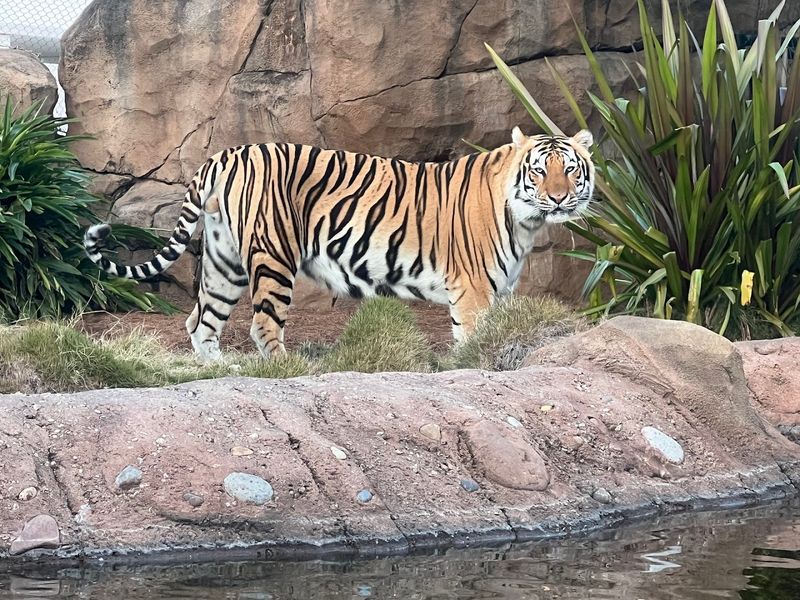
There are small, odd little details that make a visit feel intimate if you slow down: the steam that can rise off the water on a cool morning, the soft thud of a large paw against the stone, and the scent of damp earth mixing with cut grass from campus lawns. Those sensory notes give the habitat a living texture that photos rarely capture, and they make the space feel like a functioning ecosystem rather than a display.
Watch for the comfort rock, it’s engineered for seasonal thermal comfort and often invites Mike to sprawl, revealing the purposeful blending of animal welfare and design. The pool and stream system are used daily; you may catch him paddling, which can shift the atmosphere from reverent to playfully primal in seconds.
Respectful, quiet observation amplifies this oddly calm yet potent sensory experience.
Architectural Connections
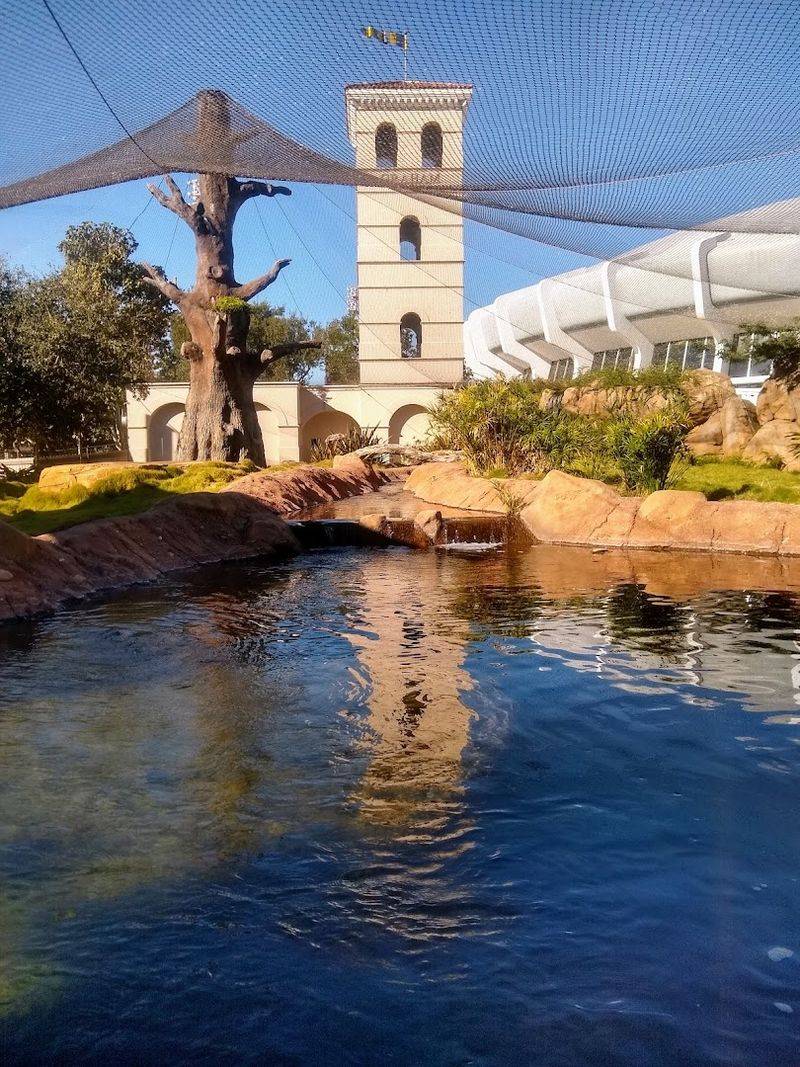
A striking aspect is how the habitat visually connects to LSU’s Italianate campus architecture through the campanile backdrop, which was intentional to create continuity. That tower ties the enclosure into a broader civic grammar; you feel the campus history pressing in gently while the habitat remains its own naturalized corner.
Materials and sightlines were chosen to avoid making the tiger feel isolated from campus life yet still protected.
The rockwork and planted terraces echo local stone palettes and give visitors varied vantage points for observation without crowding the animal’s territory. This thoughtfulness shows a concern for aesthetics and welfare equally, making the habitat an integrated part of the campus landscape rather than a detached novelty.
Bring a camera but remember to keep movement minimal to avoid disturbing Mike.
Best Times To Visit
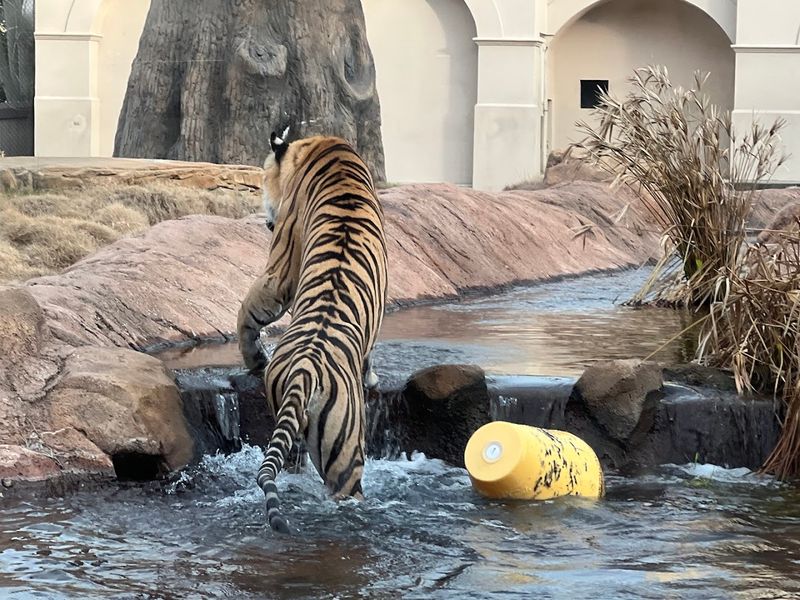
Timing can make or break your visit: Mike is most likely to be active in the early morning or late afternoon when cooler temperatures entice movement and even a swim. While the habitat is open and Mike often spends time outdoors from about 8 a.m. to 7 p.m., cooler windows produce the best observational payoff.
I found that arriving just after sunrise increases the chance of seeing him patrol or use the stream.
Be cautious about Thursday mornings when maintenance usually brings Mike indoors; the LSU social channels update his status in real time. Weekends can be pleasant but sometimes busier; if you want quieter observation, aim for weekday mornings or late afternoons around campus lull times so you can enjoy a more contemplative visit.
How The Habitat Works
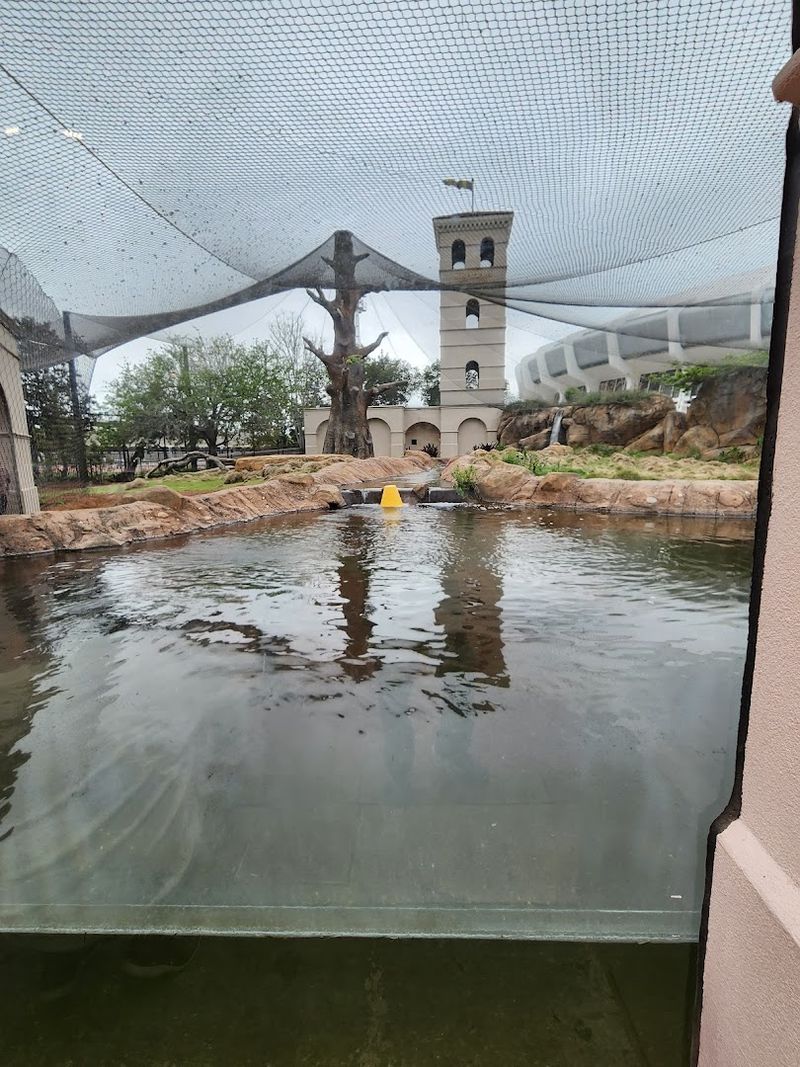
The habitat is engineered for natural behavior: a cascading waterfall feeds a stream and wading pond, rocky plateaus create vantage points, and a live oak provides shade and vertical interest.
The comfort rock is a neat technical detail, designed with thermal control to give Mike a warm surface in winter and a cool one in summer.
Together, these features support daily enrichment and a range of natural activities like swimming and scent marking.
Behind the scenes, the habitat supports research and husbandry programs and links to LSU’s Tiger Conservation Fund, showing a commitment to broader conservation messaging. For visitors, seeing those systems in use is an education in how modern enclosures balance animal welfare, public viewing, and scientific research, all while remaining accessible and free to the public.
Watching Respectfully
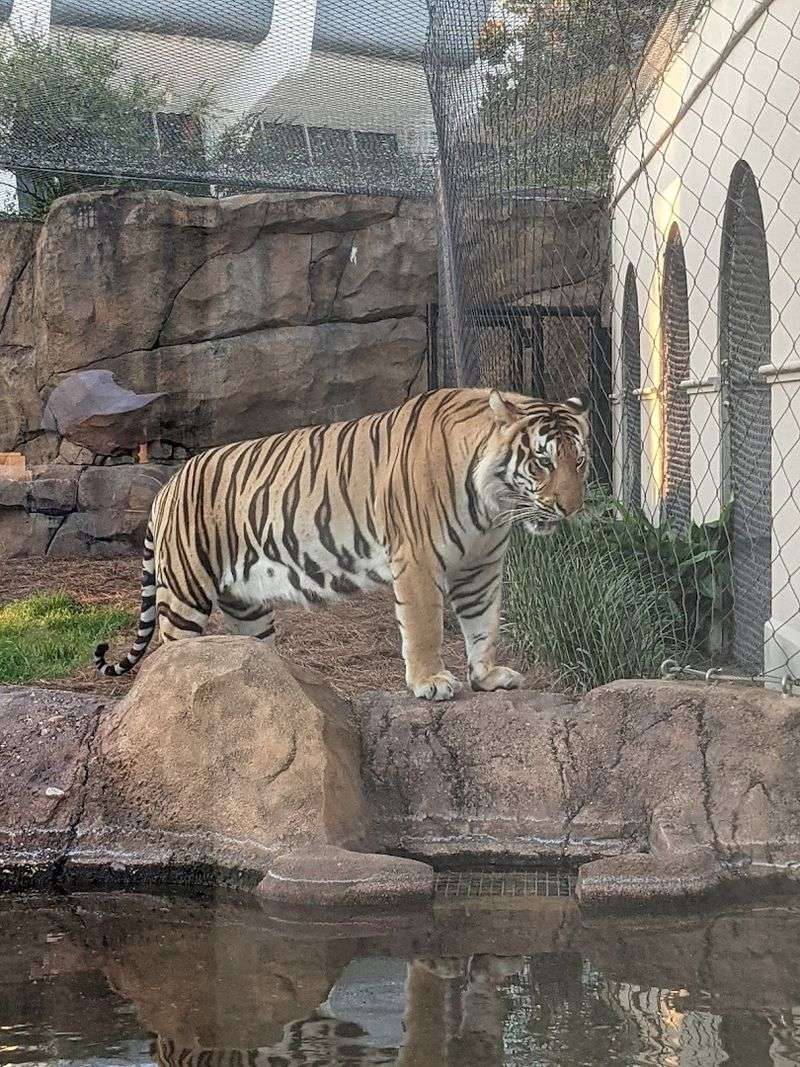
Because Mike is a wild animal, respectful observation is essential: keep noise low, avoid sudden movements, and remain within the designated viewing areas to ensure his comfort. The staff and signage encourage calm behavior and discourage feeding or attempting to interact, which protects both visitors and Mike.
I noticed families and students immediately quiet down as they approach, which makes the habitat feel like a shared communal moment rather than a spectacle.
If you plan to photograph, avoid flash and long lens noise near the fence; most satisfying images come from steady, unobtrusive viewing. Staying patient and calm often rewards you with natural behaviors, a stroll along the water, a self-groom, or a long, dignified stretch on the comfort rock, scenes that feel earned when observed courteously.
Practical Logistics
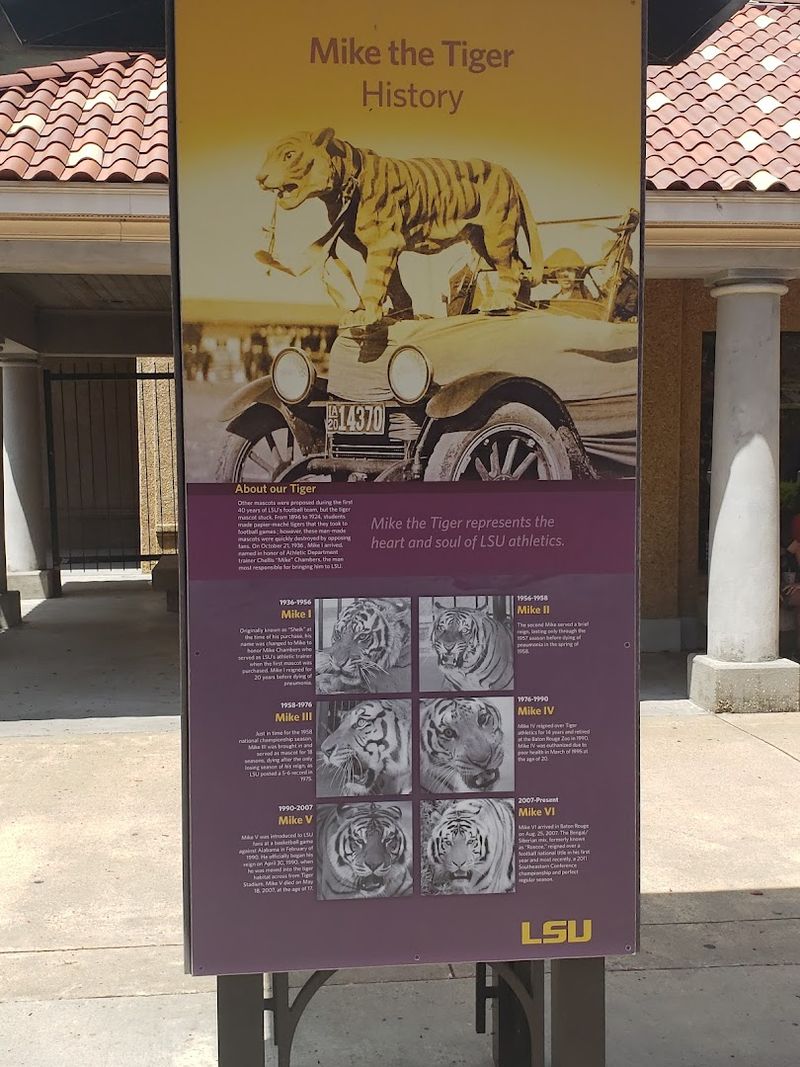
Logistics are simple but worth planning: the habitat sits on North Stadium Drive between the stadium and Maravich Center, easily found on campus maps and Google Maps.
There is free admission to view Mike; however, parking can vary by event schedules and game days, so arriving early helps.
For a stress-free visit, consider public parking areas or visitor lots and confirm any temporary closures or maintenance that might keep Mike indoors.
Check the LSU website and MiketheTiger.com for Tigercam access if you want to preview his activity before heading over.
If you time it right and avoid game-day congestion, a short walk from nearby parking gets you to the viewing area quickly, and you’ll have time to read the informational displays about past Mikes and conservation programs.
Conservation And Research Role
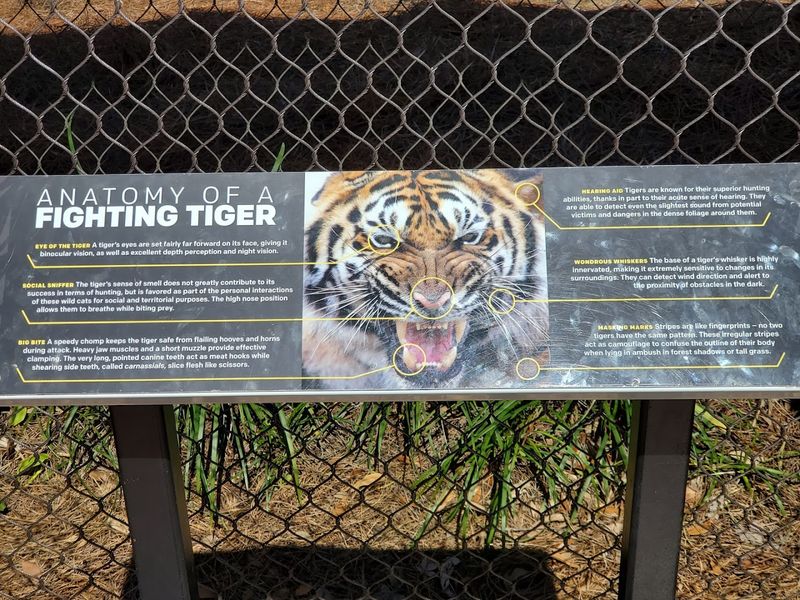
The habitat is more than a mascot backdrop; it supports research, conservation, and husbandry programs connected to LSU’s Tiger Conservation Fund.
Interpretive signage and campus materials explain how the university channels resources and expertise into studying tiger care, genetics, and conservation outreach, so a visit can be educational as well as aesthetic.
This coupling of spectacle and substance is one reason the site resonates with both fans and conservation-minded visitors.
If you want a deeper connection, explore the fund’s programs online or through LSU outreach; donations and awareness efforts tie the on-campus icon to global preservation work.
The habitat functions as a bridge: it draws attention locally while highlighting broader challenges facing wild tiger populations, making your visit a small act of engagement with real-world conservation.
Seasonal Quirks to Expect
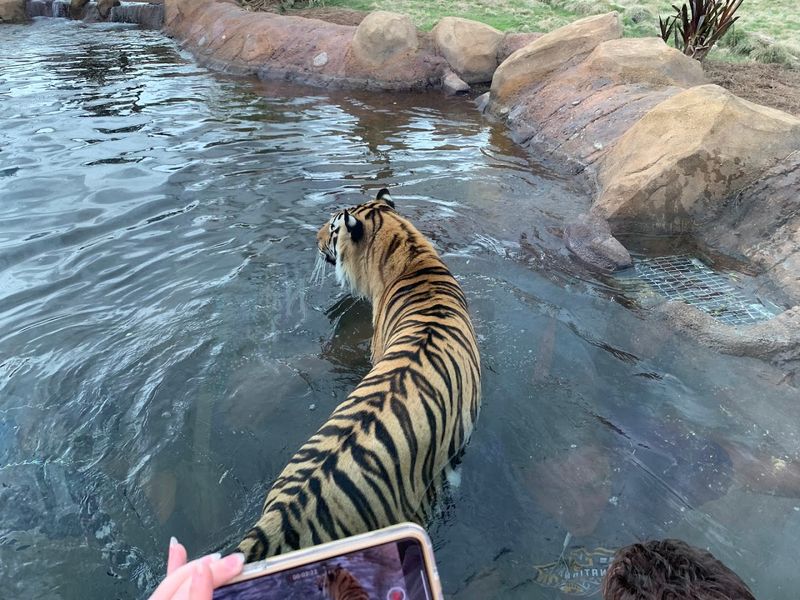
Seasonal shifts change how the habitat reads: in summer the live oak and plantings provide crucial shade and the pool becomes a choreography of cooling behaviors; in cooler months you might see steam rising from the water or Mike reclining on the warmed comfort rock.
These seasonal behaviors affect visibility and activity levels, making certain seasons better for dynamic viewing and others more suited to quiet, contemplative observation.
Plan around weather: early mornings in warm months increase the chance of seeing cooling swims, while cooler days can make the comfort rock a favored lounging spot.
Checking social channels before you go can also reveal short-term closures for maintenance or weather-related adjustments so your timing isn’t wasted.
Detail Spotlight, The Comfort Rock
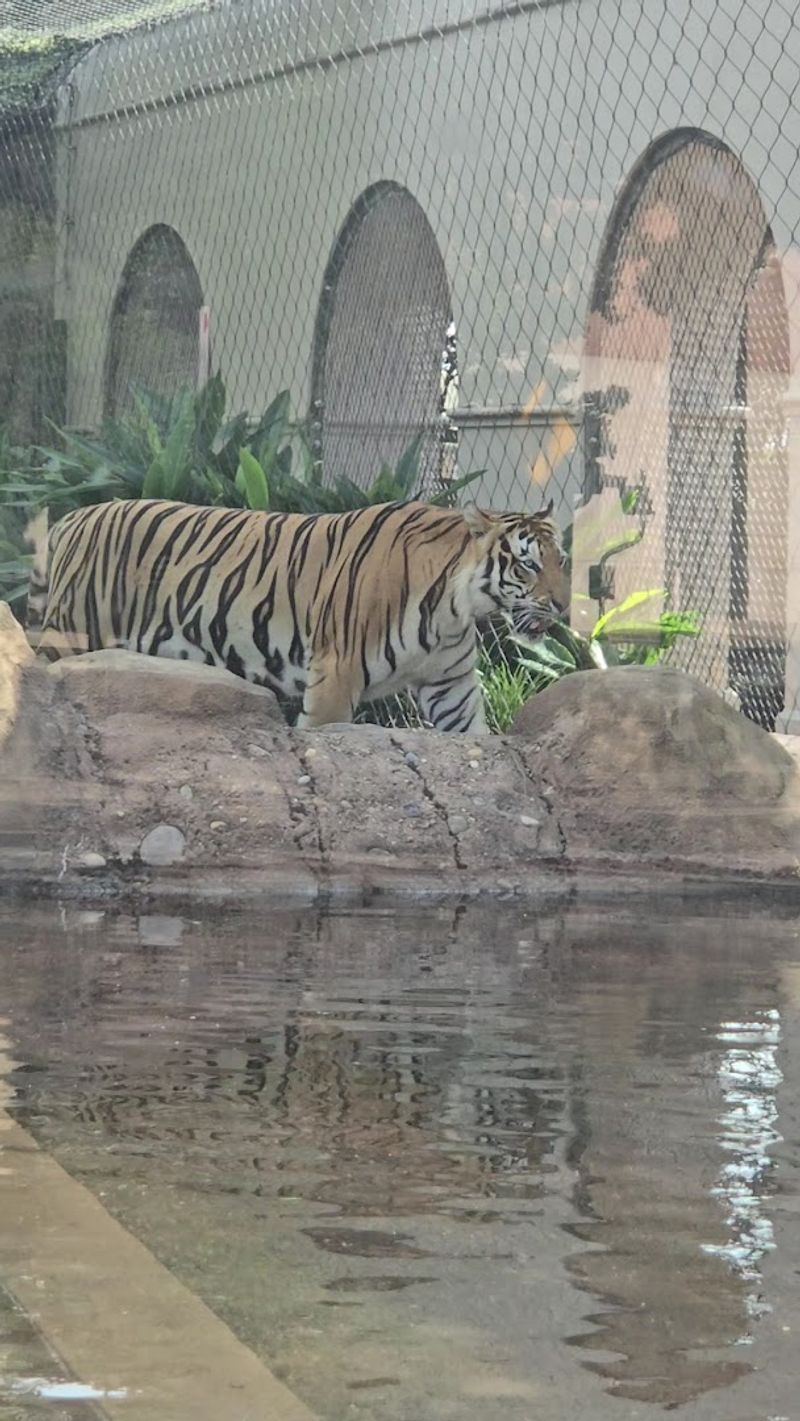
The comfort rock is a deceptively simple innovation with a lot to tell: it offers thermally regulated surfaces so Mike can seek warmth in winter and cool relief in summer, improving year-round comfort and encouraging natural resting behaviors.
Watching him use it reveals how design can directly influence welfare: he stretches, paws at the edge, or simply dozes with one eye open, and the rock becomes a focal point for observing subtle behaviors.
Spotting him there is a treat because the rock positions him prominently within view while remaining integrated into the landscape. It’s a reminder that animal-centric design can be elegantly practical, and it gives visitors a clear, understandable example of how modern habitats prioritize comfort beyond mere containment.
Using The Tigercam And Online Resources
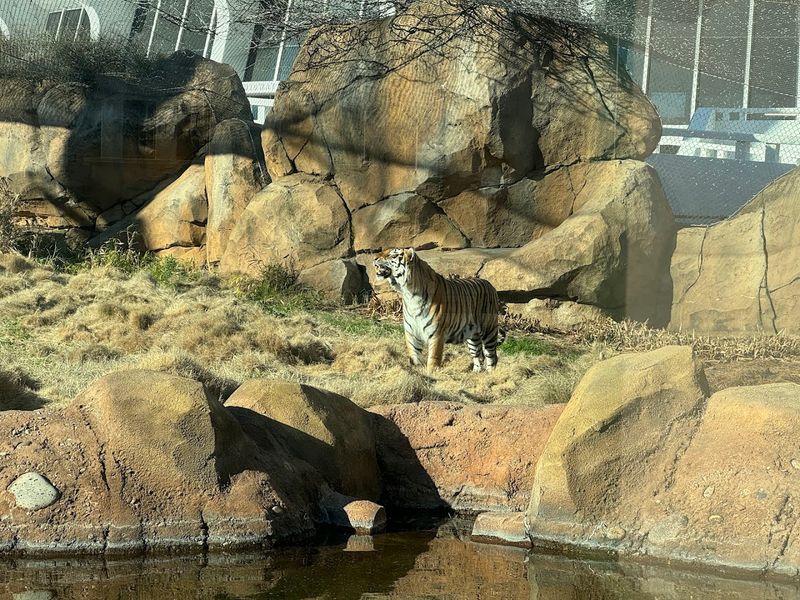
If you can’t make it in person or want to check Mike’s status before you travel, the Tigercam at MiketheTiger.com is a reliable preview tool, streaming live views of the habitat. The webcam helps time visits and offers a low-friction way to watch daily routines from afar.
I used it once to confirm Mike was outdoors before walking over, and it saved me time on a hot day when he preferred indoor rest.
Social media and the official website also post maintenance notices and updates about which Mike is currently mascot, which matters for fans tracking lineage.
Using these digital resources is practical and considerate, it reduces wasted trips and helps maintain the habitat’s calm by preventing sudden visitor surges when Mike is headlining his own show.