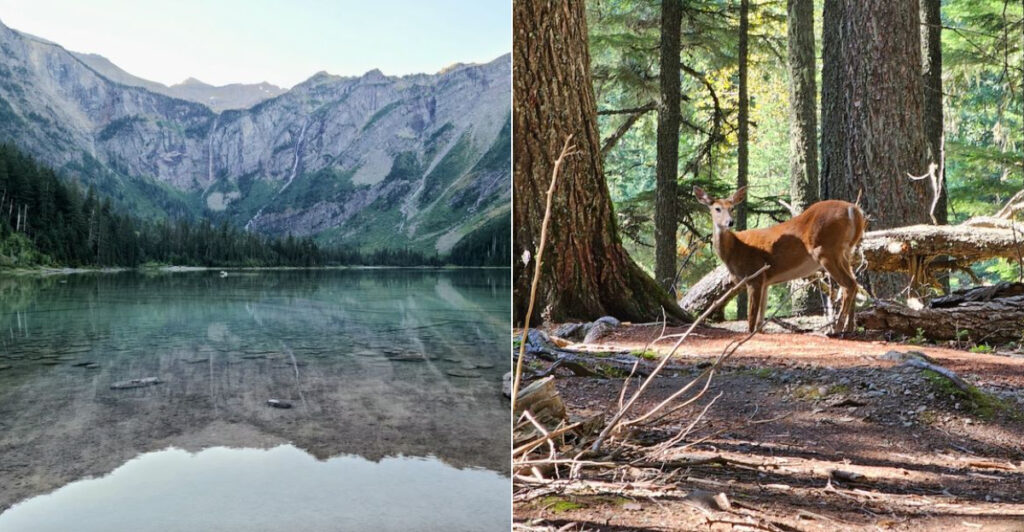
Most people drive right past it. That is the honest truth, and it is also the best reason to be the one who does not.
A short hike off one of Montana’s most famous roads leads to a lake so wildly beautiful that first-timers actually stop walking just to stare.
Towering cliffs. Glacial waterfalls pouring down from hundreds of feet above. Water that shade of turquoise you have only ever seen in screensavers, except this one is real and you are standing right in front of it.
Families do this hike. Solo adventurers do it.
People who swore they were not hikers do it and come back wanting more. Every single one of them says the same thing afterward.
They cannot believe they almost skipped it. You are not going to skip it.
The Trail That Surprises You
Before you even reach the lake, the trail itself earns its own round of applause. The hike to Avalanche Lake starts on the Trail of the Cedars, a boardwalk path that winds through one of the most impressive old-growth forests you will ever walk through.
The trees here are massive western red cedars and hemlocks, some of them hundreds of years old. The canopy overhead is so thick it feels like the forest has its own roof.
Light filters down in thin golden beams, and the whole place smells like cool earth and pine.
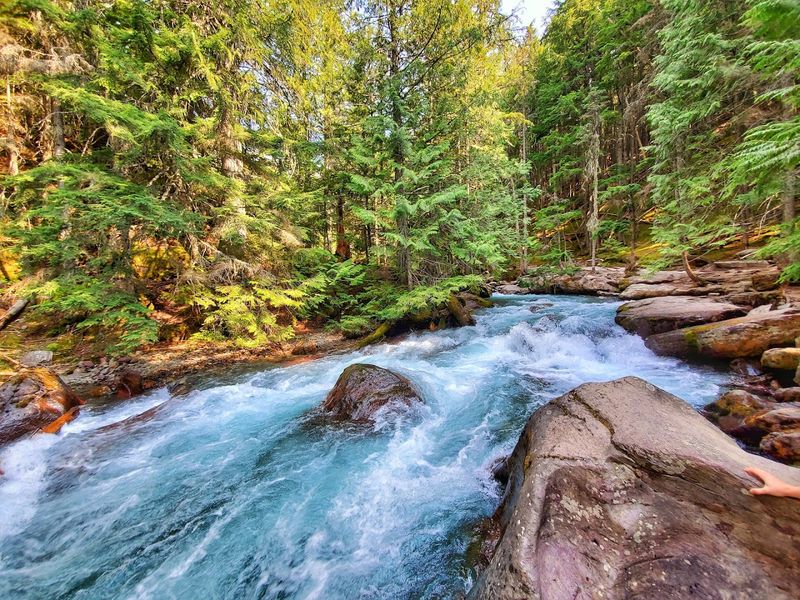
After the boardwalk section, the trail follows Avalanche Creek uphill through shaded forest. The path is well-maintained and the elevation gain is gradual, around 700 feet over roughly two miles.
Most families with kids aged eight and up handle it without much trouble.
Have you ever been on a hike where the journey itself was worth the trip before you even saw the destination? This trail is exactly that.
Visitors say walking through the cedar forest alone felt like stepping into a world that most people never find.
The total round trip is about 4.5 to 6 miles depending on how far you explore, and the trail stays mostly shaded the entire way.
Avalanche Creek Gorge Views
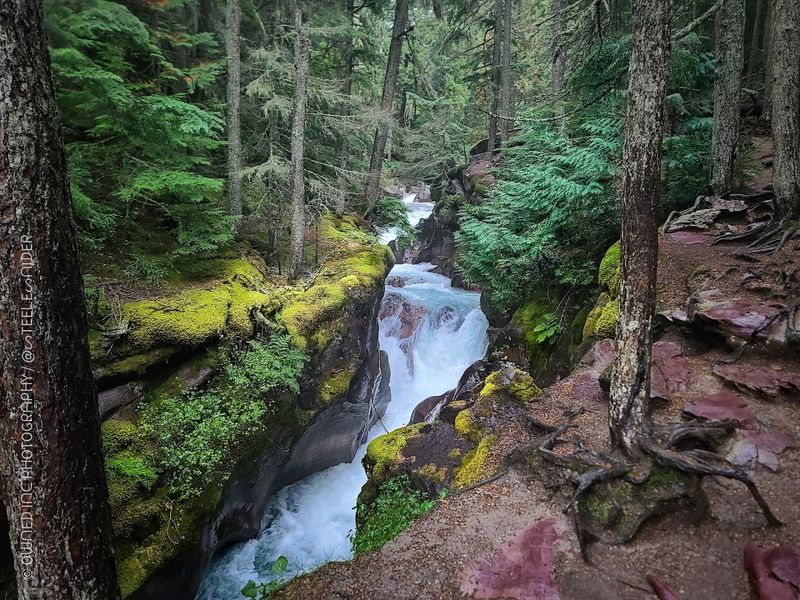
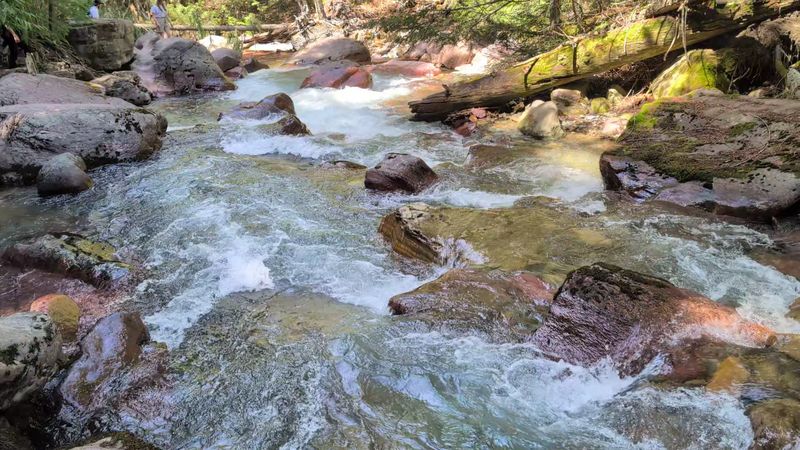
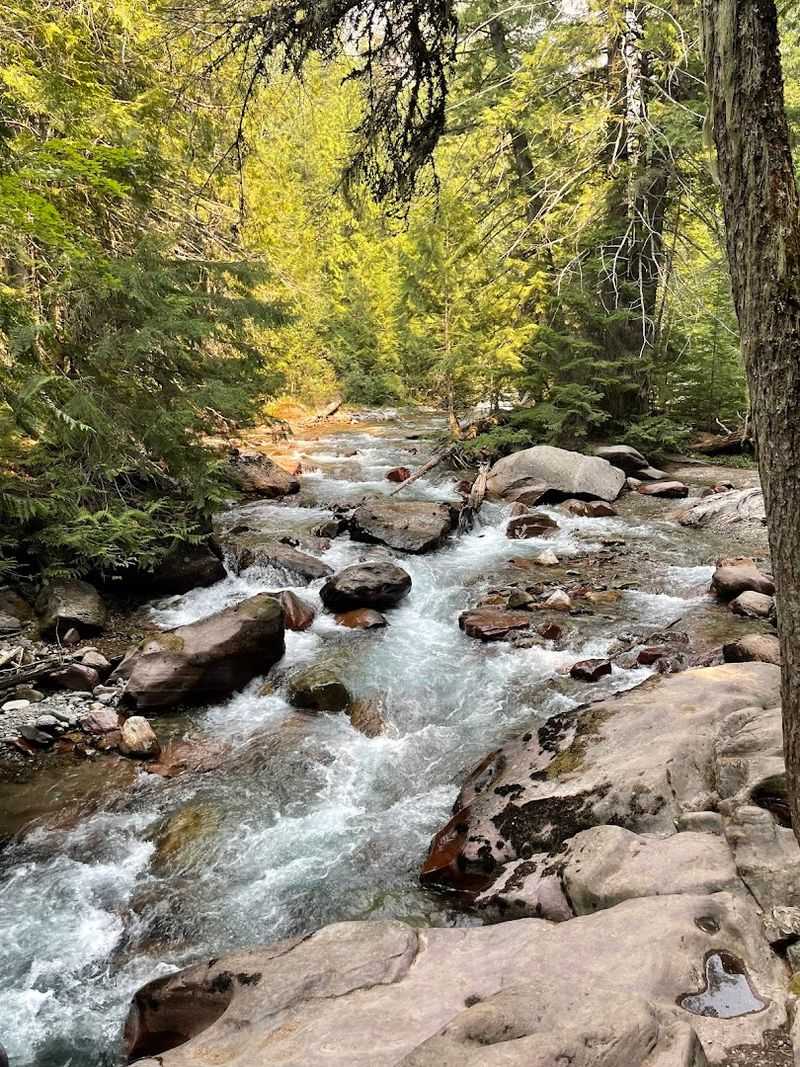
Right before the trail climbs toward the lake, it passes alongside Avalanche Creek Gorge, and this spot alone is worth the drive to the trailhead. The water here is an almost unreal shade of turquoise blue, rushing fast through a narrow channel of smooth, sculpted rock.
The gorge is carved deep into the stone, and the colors inside it, pale red rock, vivid blue water, dark green moss, look like something out of a nature documentary. Most hikers stop here for a few minutes just to stare.
Some stay much longer than they planned.
The rocks along the gorge edge can be slippery, so staying on the trail is genuinely important here. The park has marked safe viewing spots, and they offer plenty of excellent angles for photos.
You do not need to climb off the path to get a great shot.
What makes this stretch of trail so memorable is the sound. The creek is loud and constant, filling the forest with a rushing, churning energy that makes the whole hike feel alive.
Visitors say the gorge section was completely unexpected and that the color of the water looked edited even in real life. Montana has a way of delivering moments like this one, where nature does something so vivid you almost cannot believe it is real.
The Lake Itself Arrives
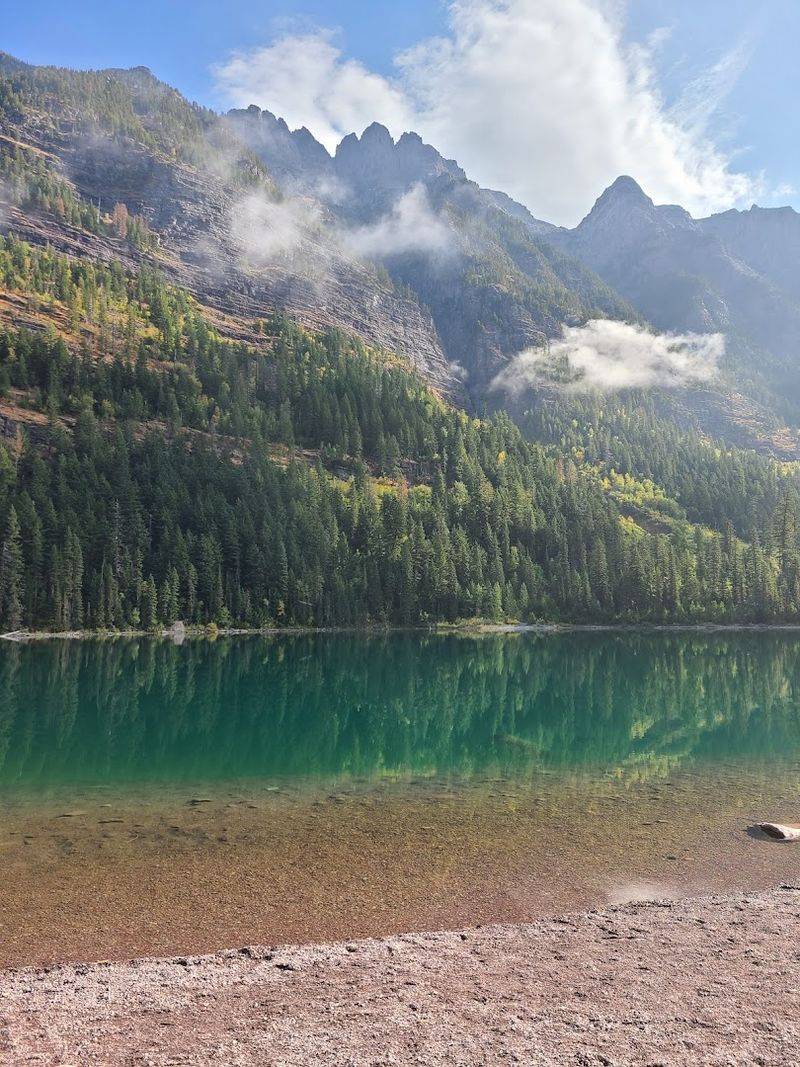
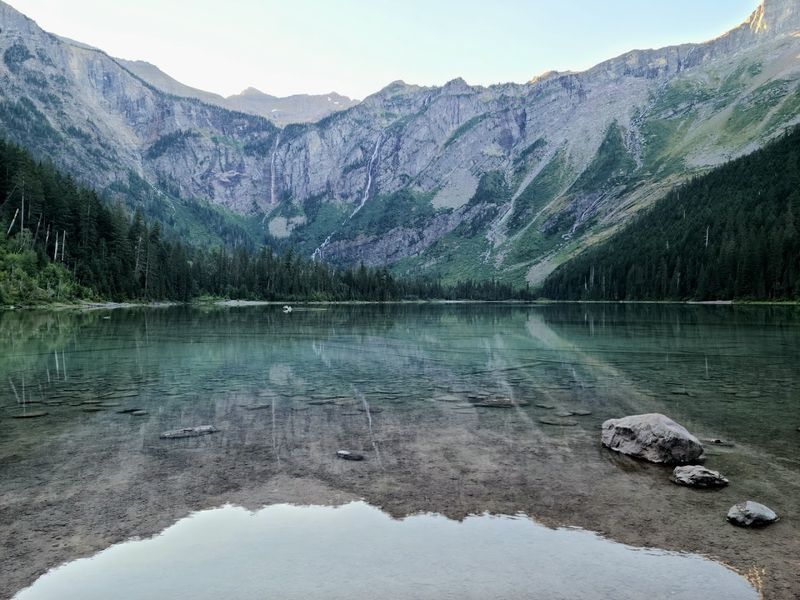
Nothing fully prepares you for the moment the trees open up and Avalanche Lake appears in front of you. The water is glacier-fed, which means it carries fine glacial silt that gives it a color somewhere between mint green and deep turquoise. On a clear day, the reflections of the cliffs above shimmer across the surface.
The lake sits inside a natural bowl formed by steep mountain walls on three sides. Those walls are not just dramatic scenery.
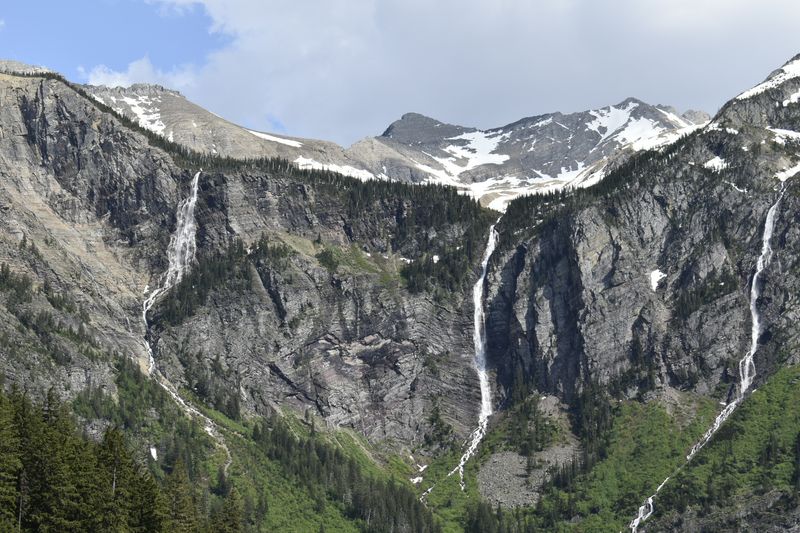
They are the source of the waterfalls, some of which drop from nearly 2,000 feet above the lake surface. On a calm morning, you can hear them from the moment you step out of the trees.
Bearhat Mountain and Little Matterhorn rise above the lake and form a jagged skyline that photographers obsess over. The reflections in still morning water are the kind of image that makes people stop scrolling when they see it online.
Could you honestly look at a lake like this and feel anything other than completely floored? Visitors consistently say the view exceeded every expectation, even after seeing photos beforehand.
The lake is located at roughly 4,031 feet elevation inside Glacier National Park, Montana, accessible from the Avalanche Lake Trailhead off Going-to-the-Sun Road, Montana. It is one of those places where standing still feels like the right move.
Waterfalls From Every Angle
One waterfall is impressive. Four or five at the same time is something else entirely.
Avalanche Lake is surrounded by cascading falls that pour off the cliffs from multiple directions at once.
Depending on where you stand along the shoreline, you can count four to five separate falls visible at the same time.
In early summer, when snowmelt is still running strong, the falls are at their most powerful. The sound is enormous, a constant roar that fills the entire bowl of the lake.
By late summer, the flow slows down but the falls are still very much active and beautiful.
The best strategy is to walk the full length of the shoreline rather than stopping at the first open spot you find. The far end of the lake offers a completely different perspective, with the falls framed against the mountains from a wider angle.
Visitors who made the effort to walk all the way around said the view from the back of the lake was even more dramatic than the main approach.
Is there a better natural backdrop for a photo than a glacier-fed lake with walls of falling water on three sides? The falls here come directly from Sperry Glacier above, making them a living, moving piece of Montana geology.
Wildlife Along The Way
The trail to Avalanche Lake passes through prime wildlife habitat, and the variety of animals people encounter here is genuinely impressive.
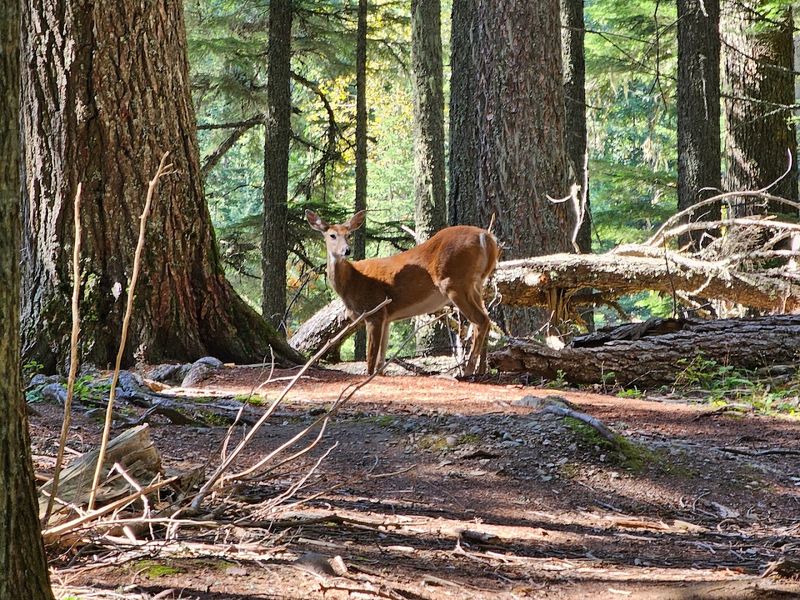
Deer appear along the lower sections of the trail, often unbothered by hikers passing nearby. Marmots pop up near the rocky areas closer to the lake, sitting upright and watching visitors with obvious curiosity.
Chipmunks are everywhere and are famously bold around food. If you set a snack down for even a moment, there is a good chance something small and fast will notice.
Visitors say the chipmunks near the lake are the most aggressive snack thieves they have ever encountered in the wild, which most people find hilarious in hindsight.
Bears are present in this area, and the park takes that seriously. Carrying bear spray is strongly recommended, and the park provides clear guidelines at the trailhead.
Most hikers complete the trail without any bear encounters, but being prepared is simply smart hiking practice here.
Montana wildlife does not perform on a schedule, so every hike offers something different. Bird watchers have spotted Steller’s Jays along the trail, recognizable by their deep blue plumage and loud calls.
The combination of old-growth forest, creek habitat, and open lake shoreline creates a layered ecosystem that supports a wide range of species.
Best Time To Visit
Timing your visit to Avalanche Lake makes a significant difference in the experience you have.
The trail is open during summer when Going-to-the-Sun Road is accessible, typically from late June through early October depending on snow conditions. Peak season runs through July and August, and the trail gets genuinely busy during those months.
The parking lot at Avalanche Campground fills up fast, often completely by 7:00 AM on busy summer days. Arriving before 6:30 AM gives you the best chance of securing a spot without waiting.
Early morning also means cooler temperatures, quieter trails, and the possibility of catching the lake surface in perfect still-water reflection mode before afternoon wind picks up.
During peak season, vehicle reservations may be required to access Going-to-the-Sun Road. Checking the Glacier National Park website before your visit is a practical step that saves real frustration at the gate.
The park updates access information regularly throughout the season.
Late afternoon visits after 3:00 PM can also work well as crowds thin out considerably.
The light at that hour hits the cliffs and waterfalls at a lower angle, which creates warmer tones and longer shadows across the lake.
Fall visits in September and October offer fewer crowds and the added bonus of changing leaf colors in the forest below. Montana in autumn has a quieter, more personal energy that early summer simply cannot match.
Family-Friendly Hiking Facts
One of the most common things visitors say about Avalanche Lake is how surprised they were that their kids made it.
The trail has a reputation for being one of the most family-accessible hikes in all of Glacier National Park, and that reputation holds up in practice. Kids as young as five have completed it with determination and a few snack breaks.
The elevation gain is steady rather than steep, which means there are no sudden brutal climbs to push through. The total gain of around 700 feet is spread across nearly two miles of uphill trail, making the incline feel manageable even for younger legs.
The shaded forest keeps temperatures comfortable even on warm summer days.
Restrooms are available at the trailhead and again just before the lake, which is a practical detail that parents of young children genuinely appreciate.
The trail surface is well-maintained and clearly marked throughout, so navigation is straightforward. Dogs are not permitted on hiking trails inside Glacier National Park, so leave your furry friends at home or with a pet-friendly accommodation nearby.
What makes this hike stand out for families is the constant reward along the way. There is always something to look at, a waterfall, a creek, a curious animal, a view through the trees.
The lake at the end is a payoff that every age group responds to with the same wide-eyed reaction. Montana has no shortage of beautiful hikes, but this one earns its place at the top of the family list.
Practical Tips Before You Go
A little preparation goes a long way at Avalanche Lake. The trail is not technically difficult, but being ready for the conditions makes the whole experience more enjoyable.
Water is the most important thing to pack. The hike is around 4.5 to 6 miles round trip, and the lake water, while incredibly clear, is not safe to drink without filtration equipment.
Bear spray is strongly recommended and available for rent or purchase in the West Glacier area. The trailhead signs remind visitors clearly that this is active bear country.
Most hikers never see a bear, but having spray clipped to your pack is a simple habit that experienced Montana hikers never skip.
Wear layers, especially for early morning starts. The cedar forest is cool even in summer, and mornings near the lake can feel much cooler than the temperature in the parking lot.
A light jacket tucked into your pack takes up almost no space and earns its place on the return trip when temperatures drop.
The lake water is extremely cold year-round due to its glacial source. Some visitors do wade in, but going in unprepared for that temperature is a shock most people describe as unforgettable in a breathtaking way. Wearing water shoes makes shoreline exploring much more comfortable.
Pack a snack worth savoring because sitting at the edge of Avalanche Lake with food and a view is one of those simple Montana moments that stays with you for a very long time.