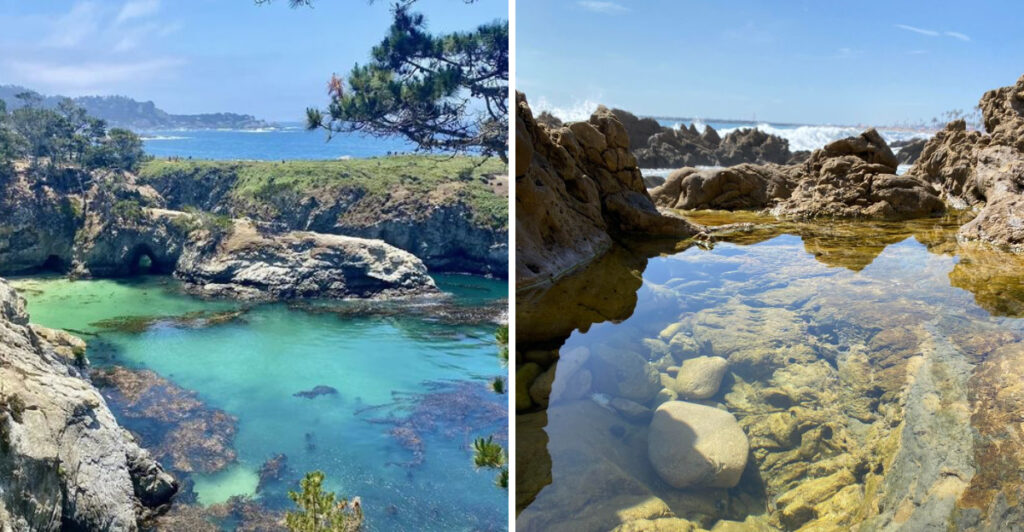
Ready to feel like you just stepped onto another planet without leaving California? Picture hot pink reefs stretching as far as you can see, electric-blue nudibranchs crawling across ancient rock, and sea otters floating just offshore cracking shellfish like it is nothing.
The colors here are completely natural, and they will stop you in your tracks. California delivers eight tide pool destinations so wild and vivid that photos barely do them justice.
Kelp-draped coves, coralline algae turning entire reefs deep pink, anemones waving in shades of emerald and cream. These are living ecosystems hiding in plain sight along the coast, and every single one rewards the curious traveler who shows up at the right tide.
Plan your visit wisely.
1. La Jolla Tide Pools
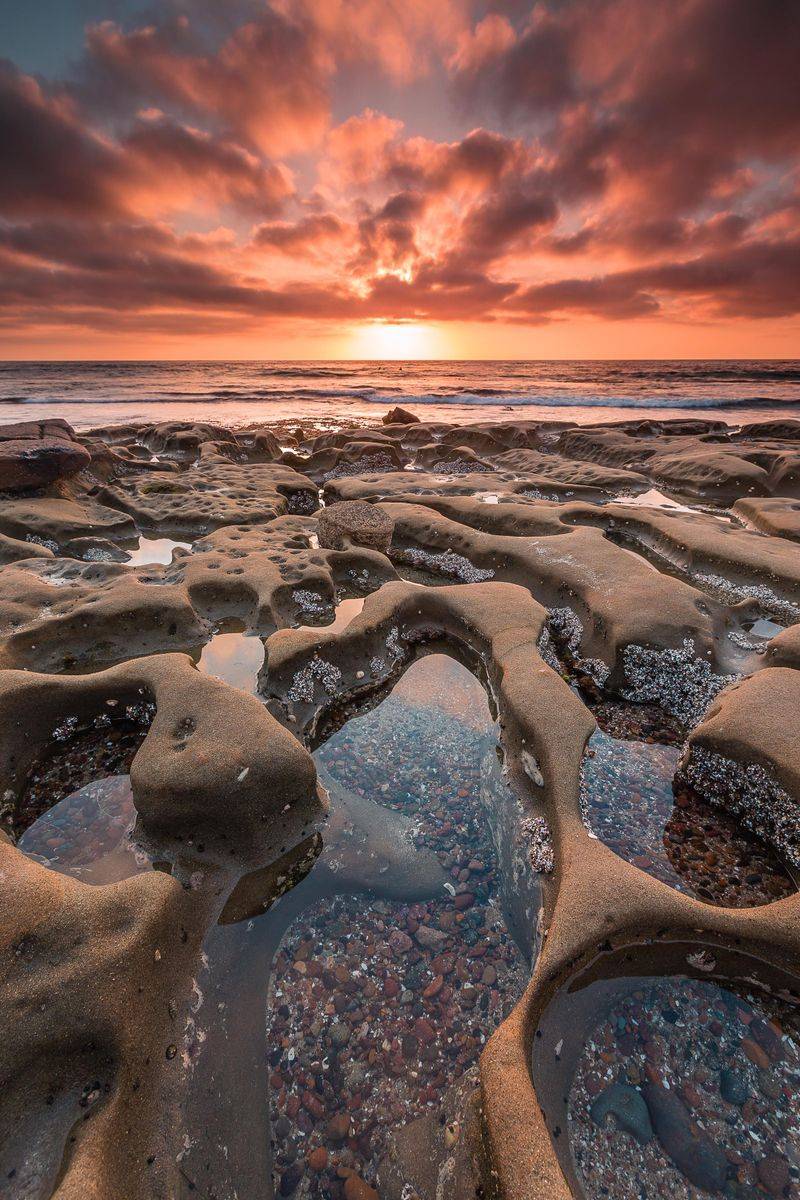
Few places on the Southern California coast hit you with this much color all at once. La Jolla’s tide pools, located along Coast Boulevard in San Diego, sit beneath dramatic sandstone cliffs that have been carved by centuries of wave action.
The result is a layered, theatrical landscape that feels almost too cinematic to be real.
At low tide, the rocks reveal an entire living community. Purple sea urchins cluster in carved-out depressions, bright green anemones wave their tentacles in shallow pools, and hermit crabs drag their borrowed shells across barnacle-covered surfaces.
Bright orange and ochre sea stars cling to rocks with surprising stubbornness.
The pools closest to the water’s edge tend to hold the most life. Heading toward the lower intertidal zone rewards patient explorers with more unusual sightings.
Nudibranchs, those wildly colorful sea slugs, sometimes appear in shades of orange, pink, and electric blue that seem almost digitally enhanced.
La Jolla is also home to a protected marine reserve, which means the wildlife here is remarkably abundant. No collecting is allowed, which keeps the ecosystem healthy and thriving year after year.
Visitors are encouraged to look but never touch.
The best time to explore is during a negative tide, which typically occurs in early morning hours. Arriving early also means fewer crowds, better light for photos, and a quieter, more personal experience with one of California’s most spectacular natural attractions.
2. Point Loma Tide Pools
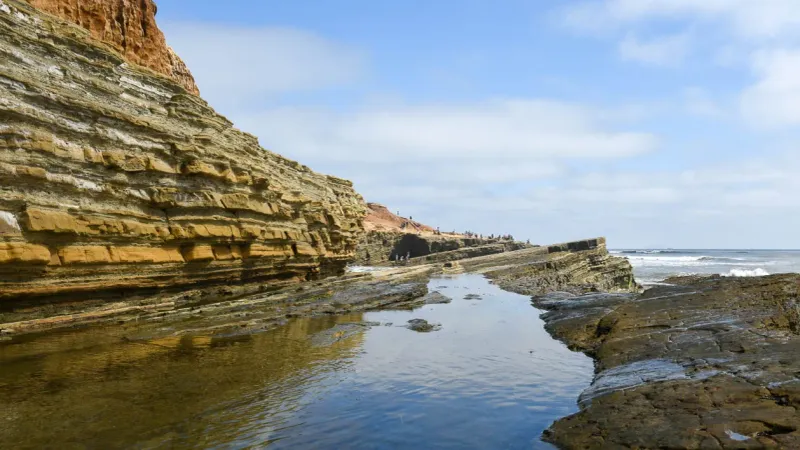
Point Loma is the kind of place that makes you realize how much life exists just below the waterline. Part of Cabrillo National Monument, these tide pools sit on a rugged peninsula in San Diego, stretching along Lands End Road.
The protected status of the monument means the marine life here is some of the most abundant and undisturbed in all of Southern California.
The rocky intertidal zone at Point Loma is layered like a natural museum exhibit. Higher pools are dominated by barnacles and periwinkle snails.
Move lower toward the water and keyhole limpets, black tegula snails, and Kellet’s whelks start to appear. During especially low tides, spiny lobsters have been spotted sheltering in the deeper crevices.
Fall and winter are considered the prime visiting seasons. That is when tides drop lowest during daylight hours, exposing the widest range of marine zones.
The cool, clear water makes visibility excellent for peering into the pools without disturbing anything.
The surrounding cliffs and coastal scrub add to the wild, remote feeling of the place. Overhead, pelicans glide in formation while cormorants perch on nearby rocks.
The whole scene feels layered with life in every direction.
Staying on marked trails protects both the visitor and the ecosystem. These pools have survived because of consistent protection, and a little careful attention from each visitor helps ensure they keep thriving for future generations exploring California’s remarkable coastline.
3. Tide Pools at Little Corona del Mar
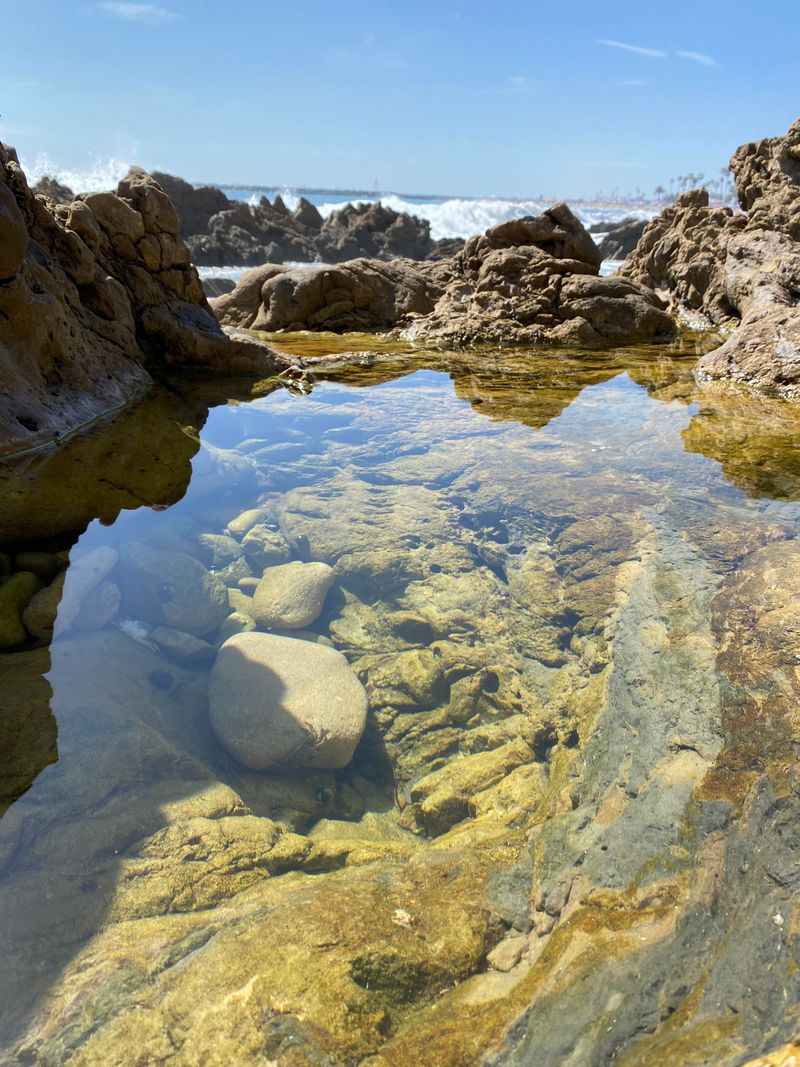
Tucked just around the corner from the more crowded stretches of Newport Beach, Little Corona del Mar operates like a well-kept local secret. The tide pools here, accessed from Ocean Boulevard in Corona Del Mar, reward visitors who take the time to walk past the main beach area and explore the rocky outcroppings closer to the water.
What makes this spot stand out is the sheer variety of anemones. They appear in nearly every shape and color imaginable, from pale cream to deep forest green, clustering in groups that ripple gently with each small wave.
Sea slugs, some spotted and some striped, move slowly between rocks with a kind of unhurried elegance.
Purple starfish are another highlight here. They tend to congregate in the pools that sit farther from the beach entrance, which means the crowds thin out before you reach the best spots.
A short walk earns a noticeably richer experience.
The sea caves along the cliff base add an extra layer of drama to the landscape. At lower tides, some are accessible on foot and offer a shadowy, enclosed view of the ocean that feels genuinely otherworldly.
Bring a flashlight if sea cave exploration sounds appealing.
This location in California is family-friendly and relatively easy to navigate. The rocks can be slippery, so sturdy shoes with grip are a smart choice.
Visiting during a minus tide opens up the most diverse and spectacular sections of this underrated coastal destination.
4. J.V. Fitzgerald Marine Reserve
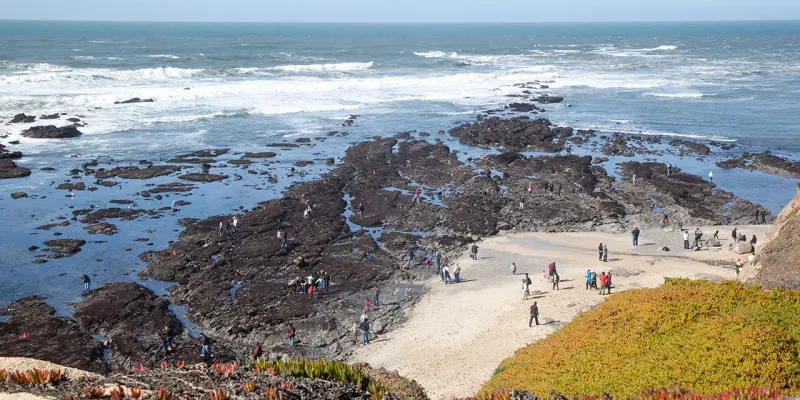
Just south of San Francisco, the J.V. Fitzgerald Marine Reserve in Moss Beach quietly holds one of the most biodiverse stretches of tide pools on the entire West Coast.
That is not a small claim, but the reserve backs it up with an almost overwhelming variety of marine life packed into a protected strip of rocky shoreline.
Giant green anemones are the visual stars here. They sit in pools like living flowers, their tentacles fanned out in brilliant emerald rings.
Sea stars in multiple species and colors cling to the reef surface, while hermit crabs bustle across the bottom with their characteristic sideways urgency. Occasional octopuses have been spotted retreating into crevices during low tide explorations.
The reserve is located at 200 California Avenue in Moss Beach and is officially protected, meaning no collection of any kind is permitted. Rangers and volunteers are often present to answer questions and help visitors identify what they are seeing.
That educational layer makes the visit feel richer and more meaningful.
Negative tides open up the widest sections of the reef for exploration. Planning a visit around those tidal windows dramatically increases the range of species visible.
Tide charts are easy to find online and worth checking before making the trip.
The surrounding coastal bluffs add scenic beauty to an already impressive setting. California has no shortage of dramatic coastline, but Fitzgerald Marine Reserve manages to combine raw natural beauty with exceptional ecological richness in a way that few other spots can match.
5. Natural Bridges State Beach
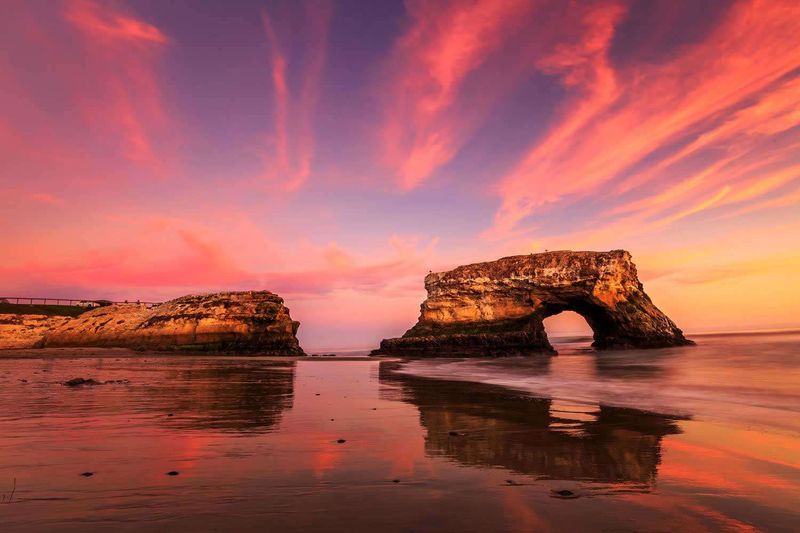
Natural Bridges State Beach in Santa Cruz carries a double attraction that most coastal parks can only dream about. The iconic natural rock arch that gives the beach its name is visually striking on its own.
But the tide pools stretching along the rocky reef nearby deserve equal attention and often steal the show entirely.
The pools here are rich with life across multiple intertidal zones. Chitons cling to rock surfaces with their segmented armor plates, while turban snails graze slowly on algae.
Purple sea urchins pack themselves into rocky hollows, and sea lettuce, a bright green algae, creates a lush carpet across many of the flatter rock surfaces.
Monarch butterflies add a seasonal surprise to the experience. During fall and winter months, the eucalyptus grove behind the beach becomes a major overwintering site for migrating monarchs.
Thousands can gather in the trees at peak season, creating a remarkable natural spectacle just steps from the tide pools.
The beach is located at 2531 West Cliff Drive in Santa Cruz and is part of the California State Park system. Parking is available on site, and the walk to the tide pools from the lot is short and manageable for most visitors.
Low tide is essential for the best pool access. The rocks can be uneven and slick, so footwear with solid grip is strongly recommended.
Morning visits tend to offer calmer conditions and better light for observing the remarkable creatures that call this California coastline home.
6. Weston Beach Tide Pools at Point Lobos State Natural Reserve
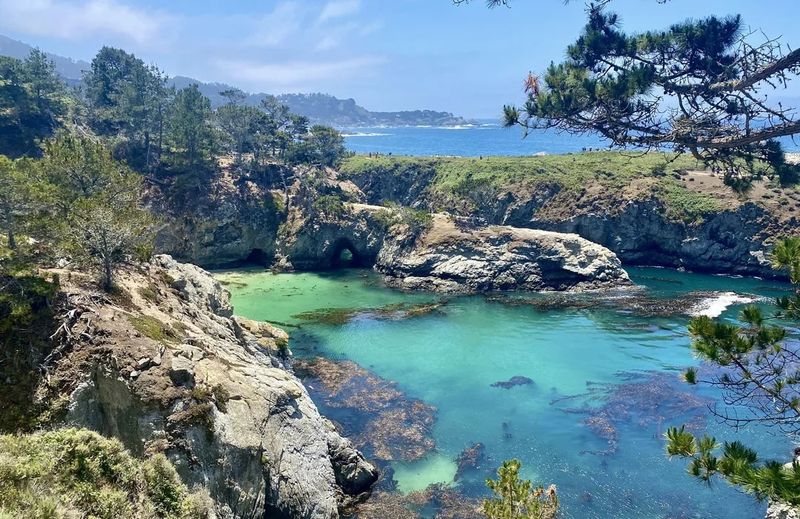
Point Lobos State Natural Reserve near Carmel has a reputation as one of the most spectacular meeting points of land and sea anywhere on the California coast. Weston Beach, tucked within the reserve along Highway 1, offers tide pools that feel almost untouched by the modern world.
The water is clear, the rocks are dramatic, and the wildlife is remarkably close.
Sea otters are perhaps the most exciting potential sighting here. They float in the kelp beds just offshore, cracking shellfish on their chests with small rocks and occasionally drifting close enough to the tide pools to observe with ease.
Watching an otter work through a meal is one of those genuinely joyful wildlife experiences.
The intertidal pools at Weston Beach shelter a range of species typical of central California’s rocky coast. Ochre sea stars, purple urchins, hermit crabs, and various species of snails all make appearances depending on the tidal conditions.
The clarity of the water makes observation easy even without getting too close.
Point Lobos operates as a protected reserve, and visitor numbers are managed to prevent overcrowding. Arriving early is wise, especially on weekends, as the reserve can fill up quickly during peak seasons.
The quiet atmosphere once inside makes the effort very much worthwhile.
The surrounding scenery includes cypress trees, dramatic headlands, and sweeping ocean views that frame the tide pool experience beautifully. This is California’s wild coast at its most cinematic and its most ecologically rich.
7. Spooner’s Cove Tidepools at Montana de Oro State Park
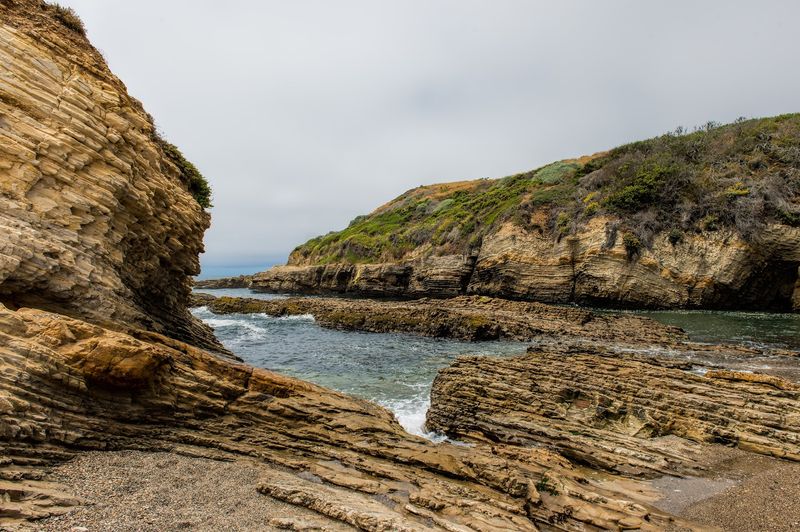
Montana de Oro State Park lives up to its name, which translates to Mountain of Gold, with golden hillsides rolling down to one of the most rugged and rewarding stretches of coastline in central California. Spooner’s Cove, located within the park at 3550 Pecho Valley Road in Los Osos, offers tide pools with a wild, untamed character that feels distinctly different from more polished coastal parks.
The rocks here are jagged and dramatic, carved by powerful Pacific swells into complex formations that trap water in deep, varied pools. Mussels pack the mid-intertidal zone in thick clusters.
Ochre sea stars prey on them from the edges. Giant green anemones open wide in the lower pools, their vivid color contrasting sharply against dark basalt rock.
The setting amplifies everything. Tall coastal bluffs rise above the cove on both sides, and the sound of waves crashing against the headlands creates a constant, energizing backdrop.
The park is relatively uncrowded compared to coastal destinations farther south, which gives the experience a more private, exploratory feel.
Hiking trails connect Spooner’s Cove to other parts of the park, making it easy to combine a tide pool visit with a coastal walk through wildflowers and grasslands. The combination of habitats in one park is genuinely impressive.
Tidal conditions matter greatly here. Checking a tide chart before visiting ensures access to the richest zones.
The lower pools reveal the most diverse and visually striking marine life when the tide drops far enough to expose them fully.
8. Agate Beach County Park and Duxbury Reef
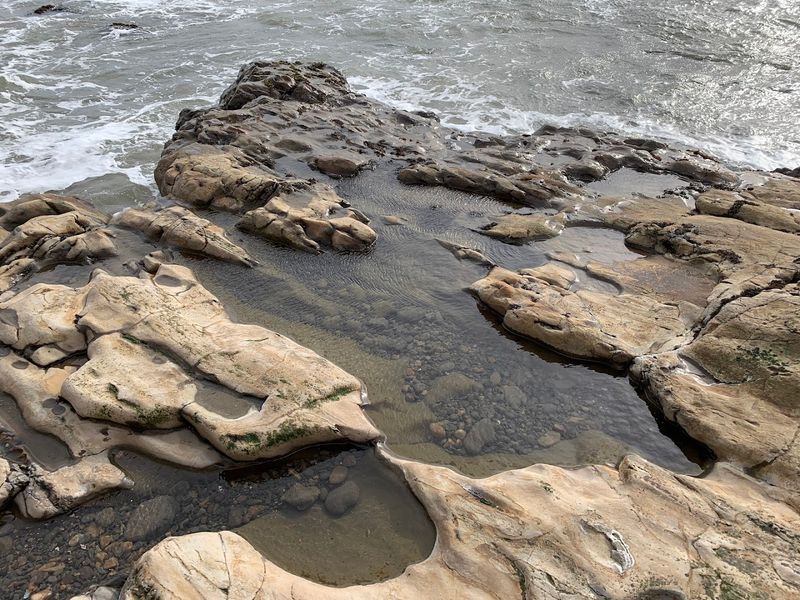
Duxbury Reef, accessed from Agate Beach County Park at 350 Ocean Parkway in Bolinas, is the kind of place that genuinely earns the phrase otherworldly.
This massive shale reef sits at the southern tip of the Point Reyes Peninsula in Marin County, and at low tide it reveals one of the largest and most visually dramatic intertidal landscapes in all of California.
The scale alone is impressive. The reef stretches out far from shore, exposing wide platforms of rock covered in coralline algae that turns the landscape a deep, vivid pink.
It looks like something between a coral garden and a lava field, and the color is entirely natural.
The biodiversity matches the visual spectacle. Spotted Unicorn sea snails, nudibranchs in electric colors, and octopuses hiding in rocky crevices all appear during thorough low tide exploration.
Iridescent algae shimmers blue and green underwater, catching light in ways that seem almost artificial.
Because Duxbury Reef is part of a protected area, the ecosystem remains remarkably healthy. The remote location near Bolinas keeps visitor numbers lower than at more famous tide pool destinations, which means the wildlife has had space and time to thrive.
Extreme low tides, often called minus tides, are the key to unlocking the reef’s full potential. During those tidal windows, vast sections of the reef become walkable and explorable.
Sturdy footwear, a tide chart, and a sense of wonder are the only real requirements for an unforgettable morning on this remarkable stretch of Northern California coastline.