Virginia has been quietly sitting on one of the most breathtaking gorge hikes on the entire East Coast, and almost nobody knows it exists.
Steep walls drop sharply on either side of the creek, a waterfall plunges somewhere between 200 and 370 feet depending on who you ask, old-growth hemlocks tower overhead, and the ruins of a forgotten community wait silently along one of the trails.
The water running through here holds the highest quality classification in Virginia and supports rare fish species found almost nowhere else on Earth. Virginia keeps this one far from the tourist trail, and the solitude alone is worth seeking out.
Pack water, download a map, and plan for a few hours because this gorge absolutely earns every minute.
The Gorge That Virginia Forgot To Tell Anyone About
Most people drive past Shawsville without a second thought. That is a mistake worth correcting immediately.
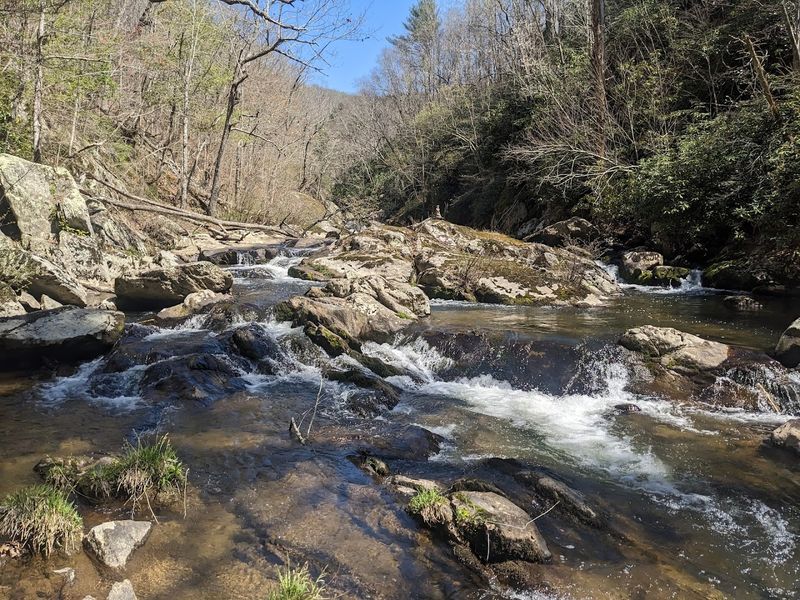
Bottom Creek Gorge Preserve sits quietly in Montgomery County, Virginia, just outside the small community of Shawsville. Managed by The Nature Conservancy since 1988, it covers over 1,600 acres of raw, undisturbed land that feels nothing like the crowded parks most hikers settle for.
The gorge itself is the kind of place that stops you mid-step. Steep walls drop sharply on either side of Bottom Creek, and the sound of rushing water fills the air long before you spot it through the trees.
Virginia has plenty of well-known hiking destinations, but this preserve operates on a different level entirely. It rewards visitors who take the time to seek it out.
The address, near 7 10th Avenue South, Shawsville, VA 24162, is easy to miss on a map, which is honestly part of the charm.
Bent Mountain Falls And The Height Debate Worth Having
Virginia’s second-tallest waterfall might actually be its tallest. That debate alone makes Bent Mountain Falls worth the trip.
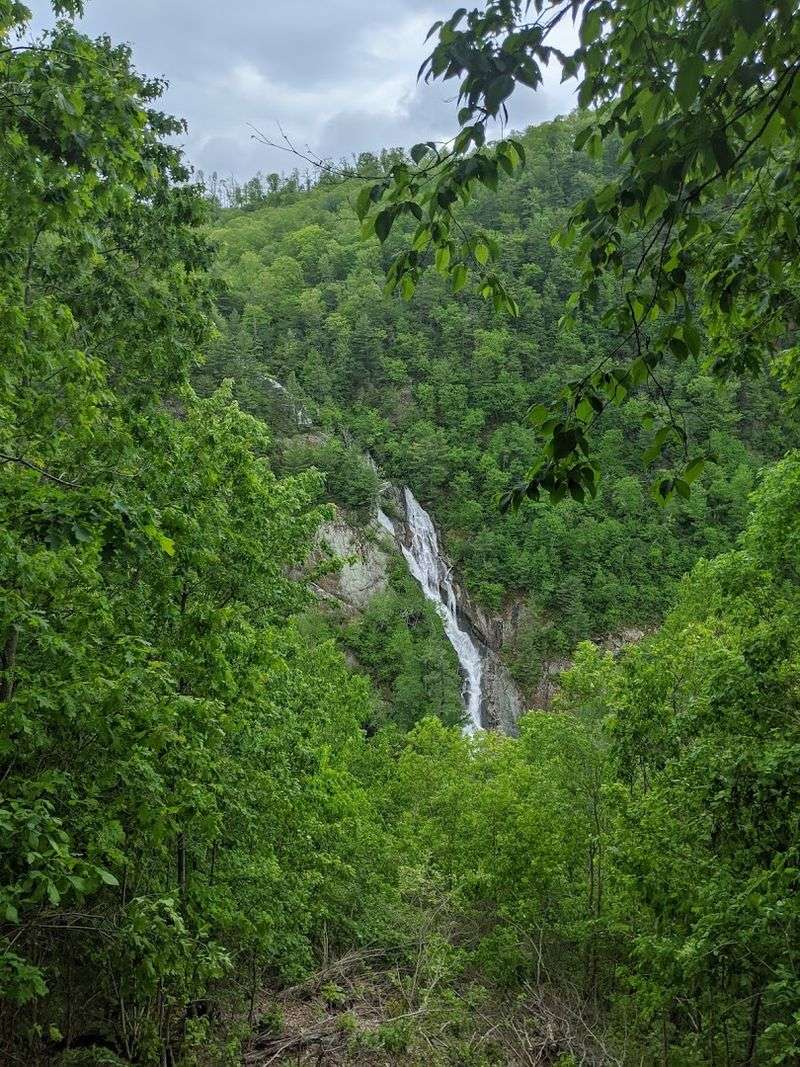
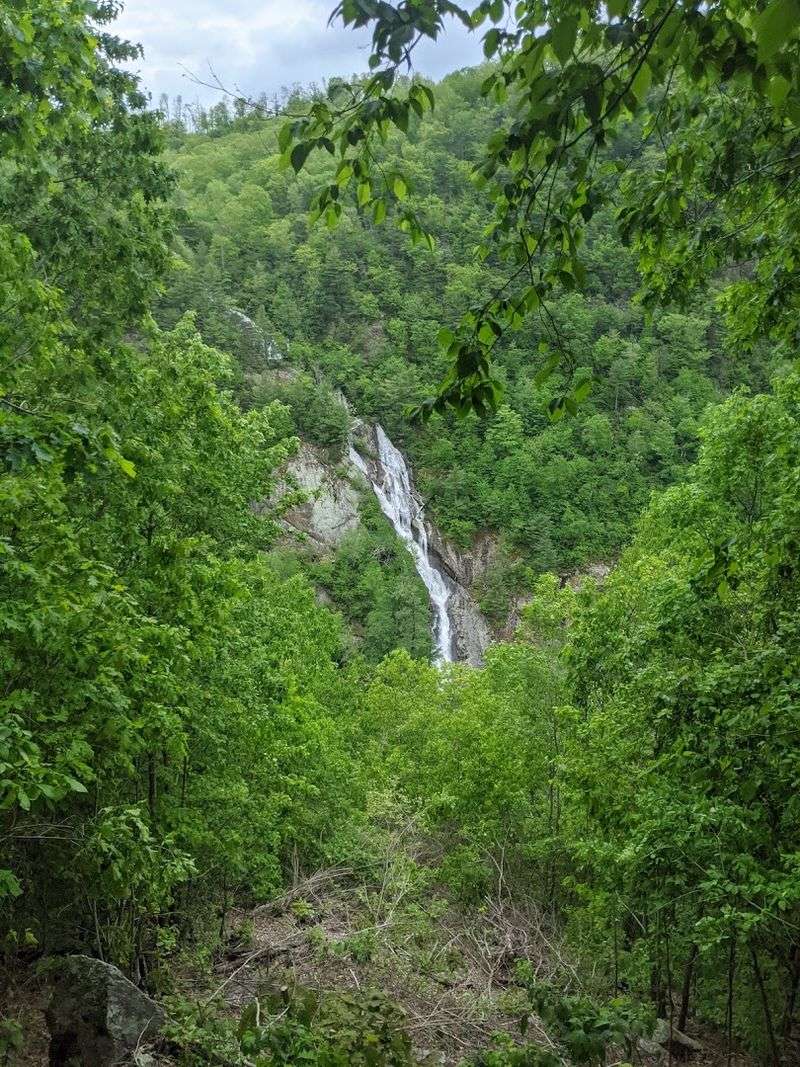
Depending on the source, the falls drop somewhere between 200 feet and an estimated 340 to 370 feet when the full cascade is measured. Either way, standing at the overlook and watching that white ribbon of water disappear into the gorge below is genuinely breathtaking.
The viewing area sits at the edge of a steep drop-off with no railings. The terrain is open and the footing is solid, but visitors should stay aware of the edge, especially with younger hikers in the group.
In winter, when the leaves are down, the view opens up dramatically. The falls look even more impressive against bare trees and grey rock.
After heavy rain, the volume of water increases significantly, making the experience even more powerful. Timing a visit right can turn a great hike into an unforgettable one.
The Kettles And The Magic Of Stair-Step Water
Bent Mountain Falls gets most of the attention, but The Kettles deserve their own moment in the spotlight.
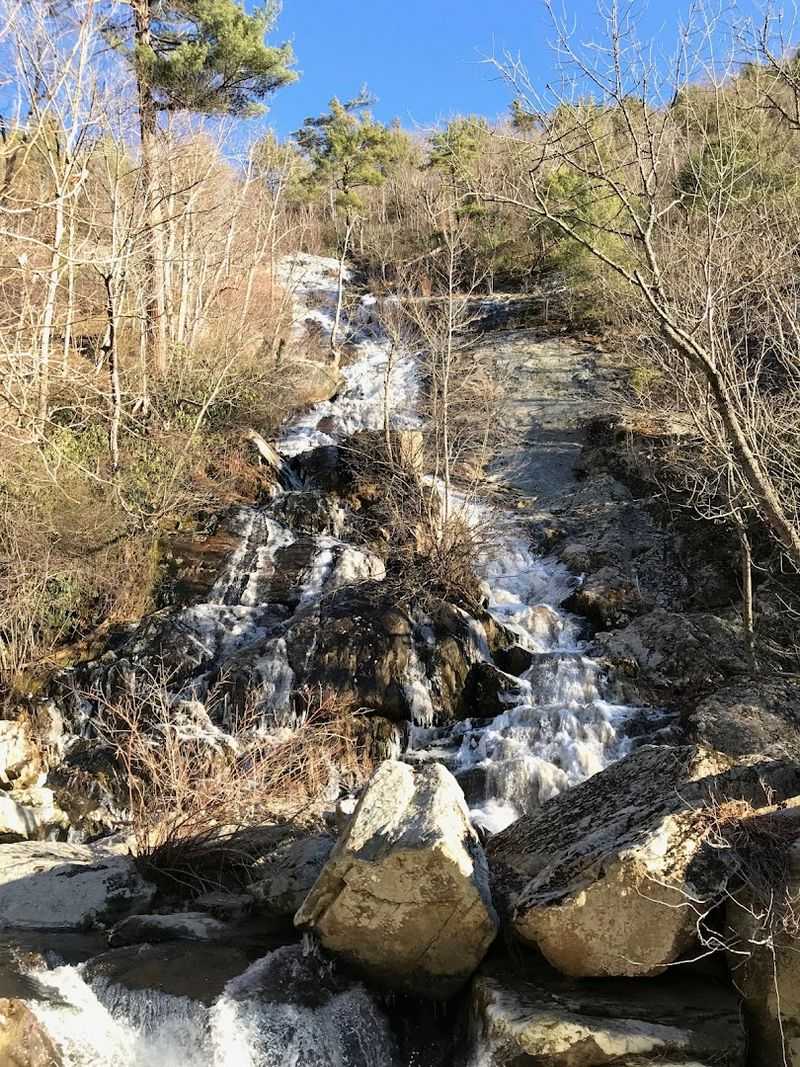
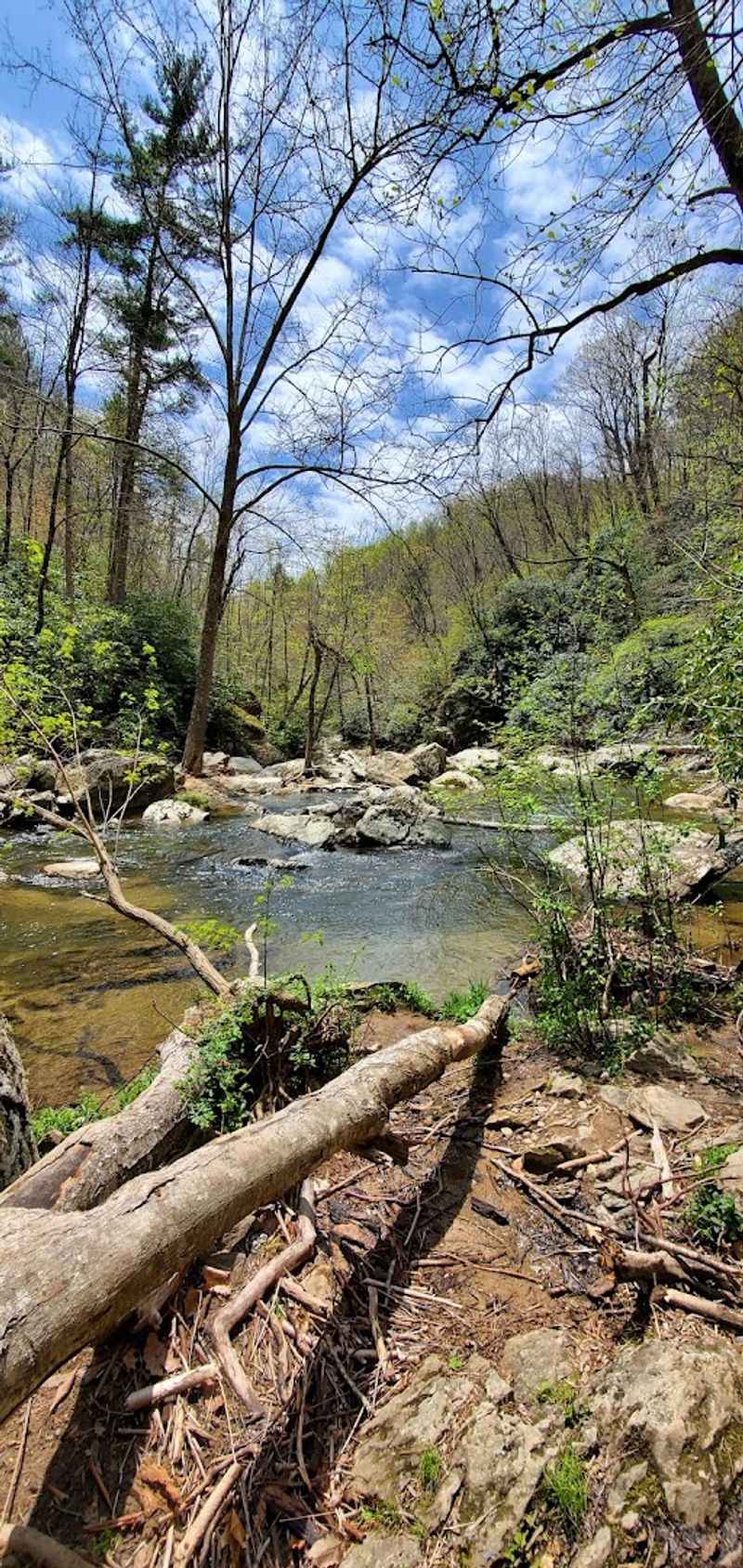
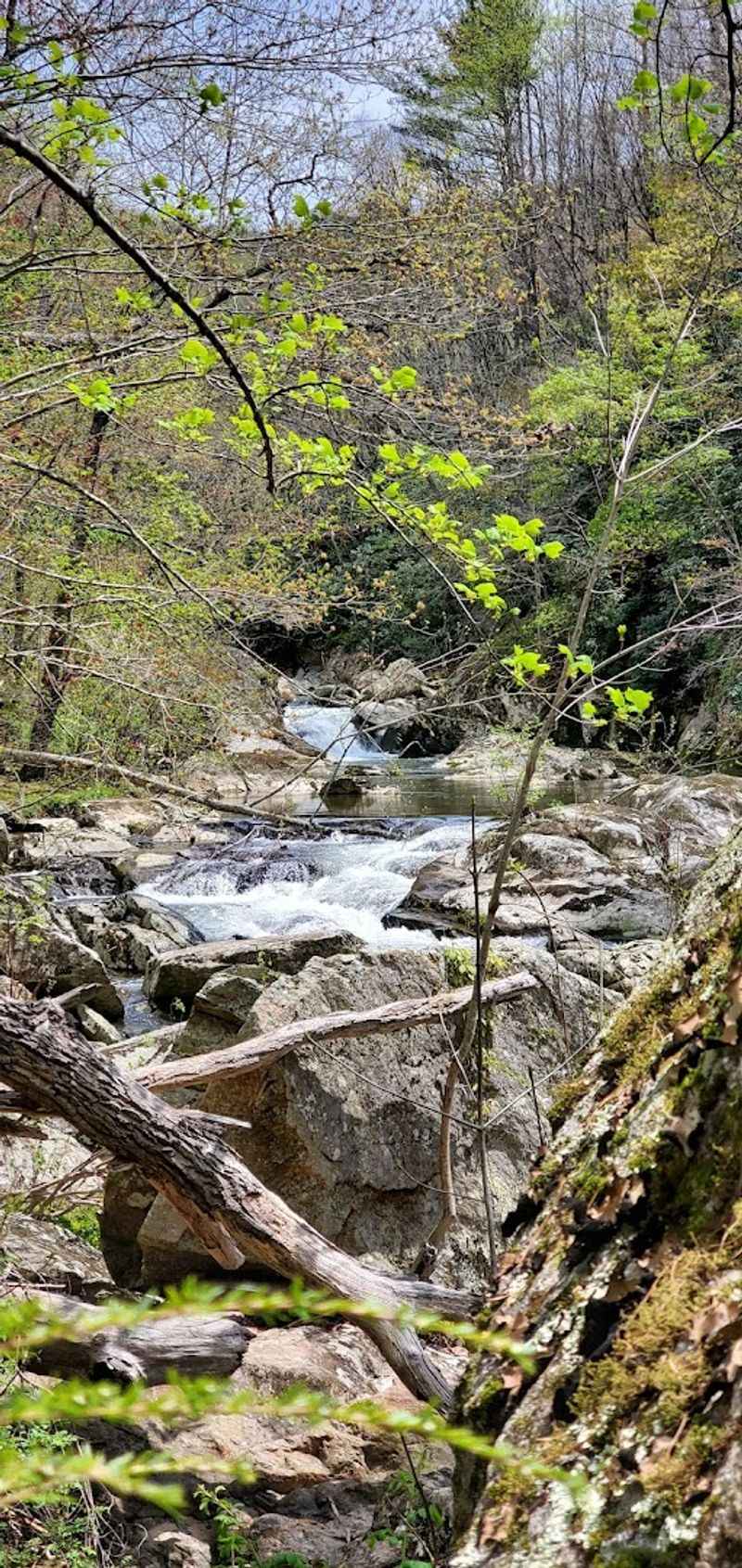
This series of stair-step, broad-basin waterfalls forms along Bottom Creek as the water tumbles downhill through the gorge. Each basin catches the flow before releasing it to the next drop, creating a rhythm that feels almost musical.
The sound carries through the forest like a constant, soothing backdrop to the whole hike.
Bottom Creek itself is no ordinary stream. It holds a Tier III water quality designation, which is the highest classification for exceptional water quality in Virginia.
That means the water running through these basins is genuinely clean and ecologically significant.
Visitors hiking the Yellow Trail get the closest views of the creek and its rocky banks. Some spots along the trail allow access to the water’s edge, where flat rocks make for a natural resting spot.
Sitting beside The Kettles for a few quiet minutes is hard to beat.
Five Miles Of Trails That Each Tell A Different Story
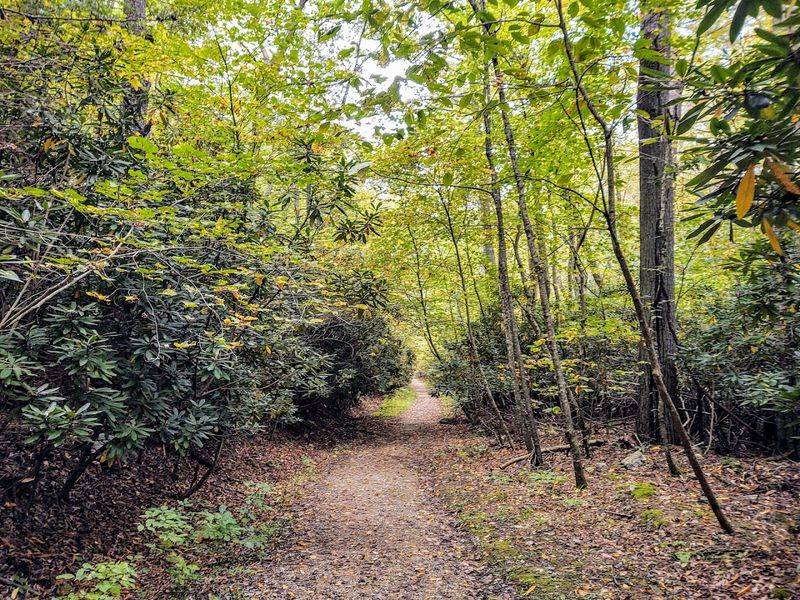
The preserve contains roughly five miles of trail in total. The main loop covering the key highlights runs approximately four miles.
The preserve’s trails are color-coded, with the Yellow Trail hugging the creek, the Red Trail climbing toward the waterfall overlook, and the Blue Trail winding through quieter forest past the old community ruins. A fourth route, the Black Trail, serves as the entrance road to the site.
Trail markings are clear and consistent, which helps since cell service can be unreliable in this area. Downloading a map before arriving is a smart move.
Most of the hiking rates as moderate, with some steeper sections that add a bit of cardio challenge without being overwhelming.
The total loop covering all trails runs roughly four miles. Hikers who take their time, stop at the creek, and pause at the overlook can easily spend several hours exploring without feeling rushed.
Old-Growth Hemlocks And The Forest That Time Left Behind
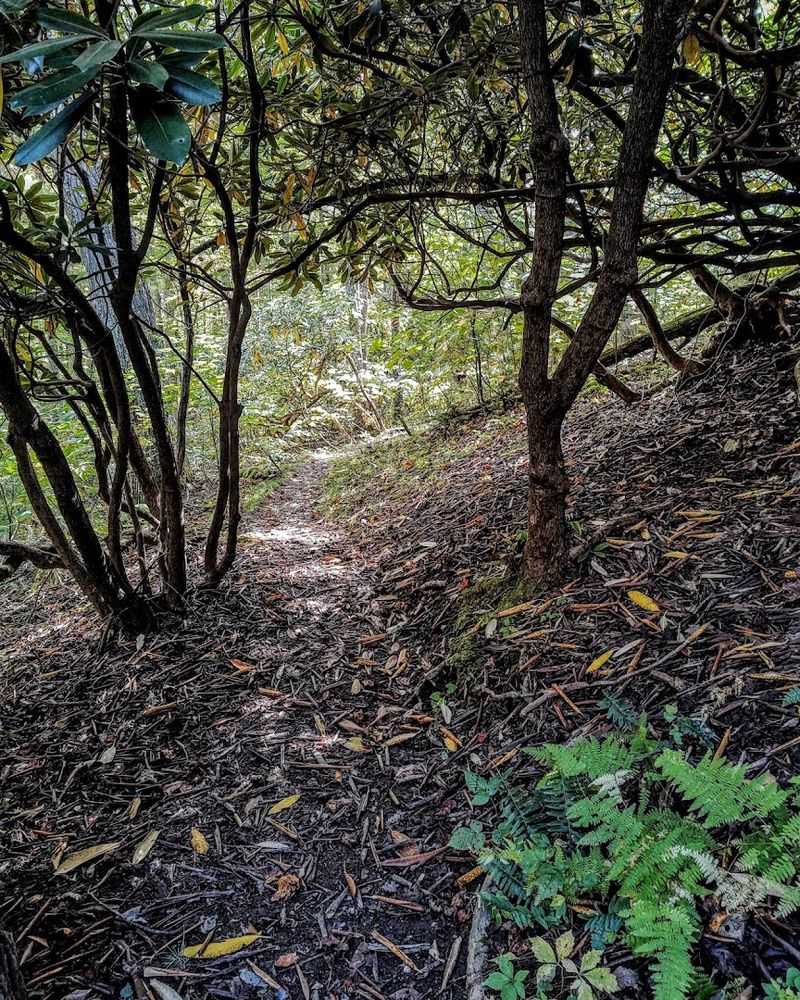
Old-growth forests are rare. Finding one that feels genuinely ancient and completely undisturbed is even rarer.
Bottom Creek Gorge Preserve protects stretches of old-growth hemlock forest that have never been logged. These trees grow tall and thick, their canopy blocking out most of the sky and creating a cool, cathedral-like atmosphere even on warm days.
Walking beneath them feels noticeably different from hiking through younger second-growth woods.
Mixed hardwoods fill in the rest of the forest, shifting with the seasons. Spring brings fresh green growth and wildflowers along the trail edges.
Summer turns the canopy dense and shady. Autumn transforms the hillsides into something that looks almost painted.
Rhododendron thickets crowd the lower sections near the creek. In late spring and early summer, when these plants bloom, the gorge takes on an entirely different character.
The dense evergreen leaves stay year-round, making even a winter hike feel lush and sheltered. This forest rewards repeat visits across every season.
Rare Fish, Rare Ferns, And A Half-Acre That Matters A Lot
This preserve protects more than scenery. It shelters species that exist almost nowhere else on Earth.
Bottom Creek supports four native fish species of significant conservation concern: the orangefin madtom, bigeye jumprock, riverweed darter, and Roanoke darter. Native brook trout also thrive here, along with roughly ten percent of all fish species found across Virginia.
That is a remarkable concentration of aquatic biodiversity in a single watershed.
On land, a half-acre shale barren within the preserve hosts the chestnut lipfern, a globally rare plant. This small patch of rocky, exposed ground supports a species that very few places on the planet can claim.
It is easy to walk past without knowing its significance, which is exactly why The Nature Conservancy works to protect it.
Fishing is prohibited throughout the preserve to protect these fragile populations. Dogs are also not permitted, as they can disrupt soil chemistry and stress wildlife.
These rules exist for good reasons and help keep the ecosystem genuinely intact.
Ghosts Of A Forgotten Community Hidden In The Trees
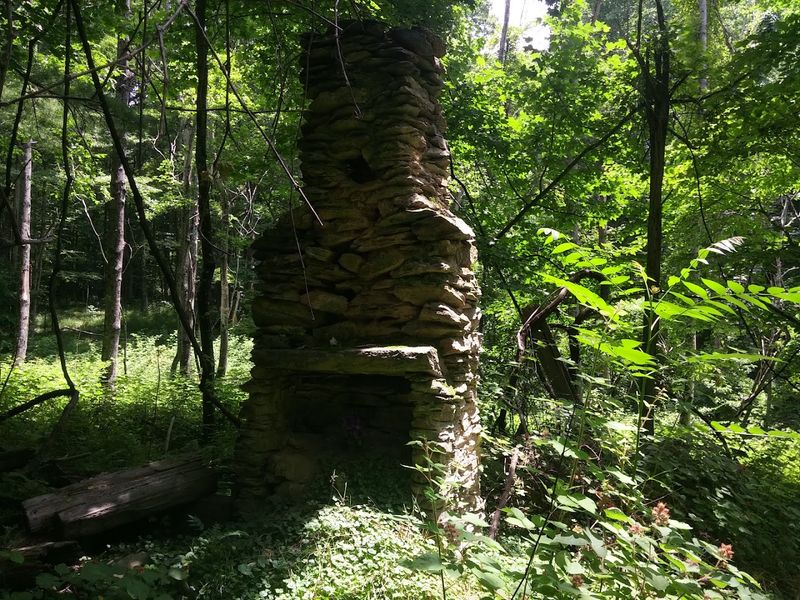
History did not leave this gorge untouched. It left behind fragments that feel genuinely haunting in the best possible way.
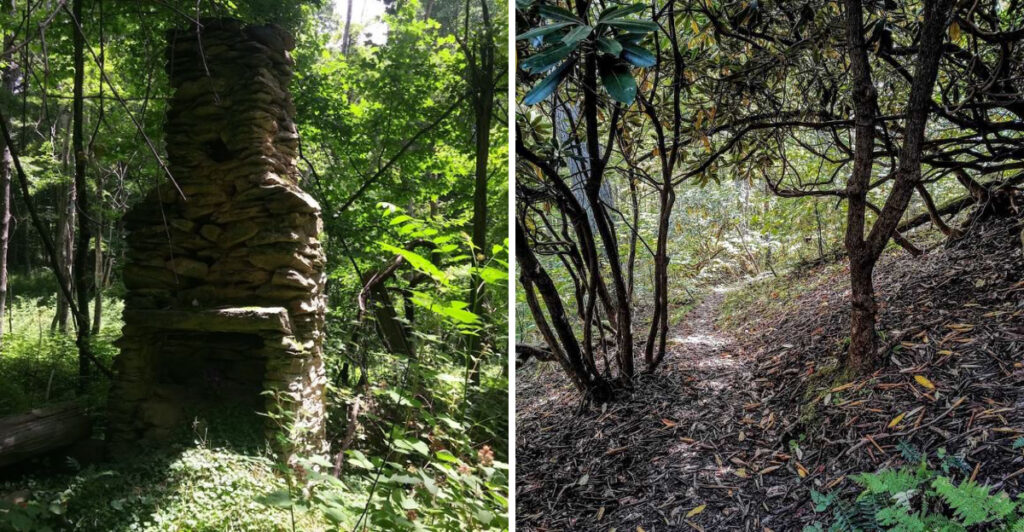
Hikers on the Blue Trail eventually pass the ruins of an old community that once existed within what is now the preserve. A crumbling chimney rises from the forest floor.
The remains of an old cabin sit partially reclaimed by the surrounding vegetation. A small family cemetery rests quietly among the trees.
These remnants are not marked with dramatic signage or interpretive panels. They appear without announcement, which makes stumbling upon them feel surprisingly personal.
The contrast between the wild forest and these signs of past human life is striking.
The cemetery, in particular, prompts a moment of reflection. Small and overgrown, it serves as a reminder that this land has a layered past beyond its natural features.
Visitors who take the Blue Trail specifically to seek out these ruins often describe it as one of the more memorable parts of the entire hike. Quiet history adds depth to the experience.
Solitude So Complete It Feels Almost Surreal
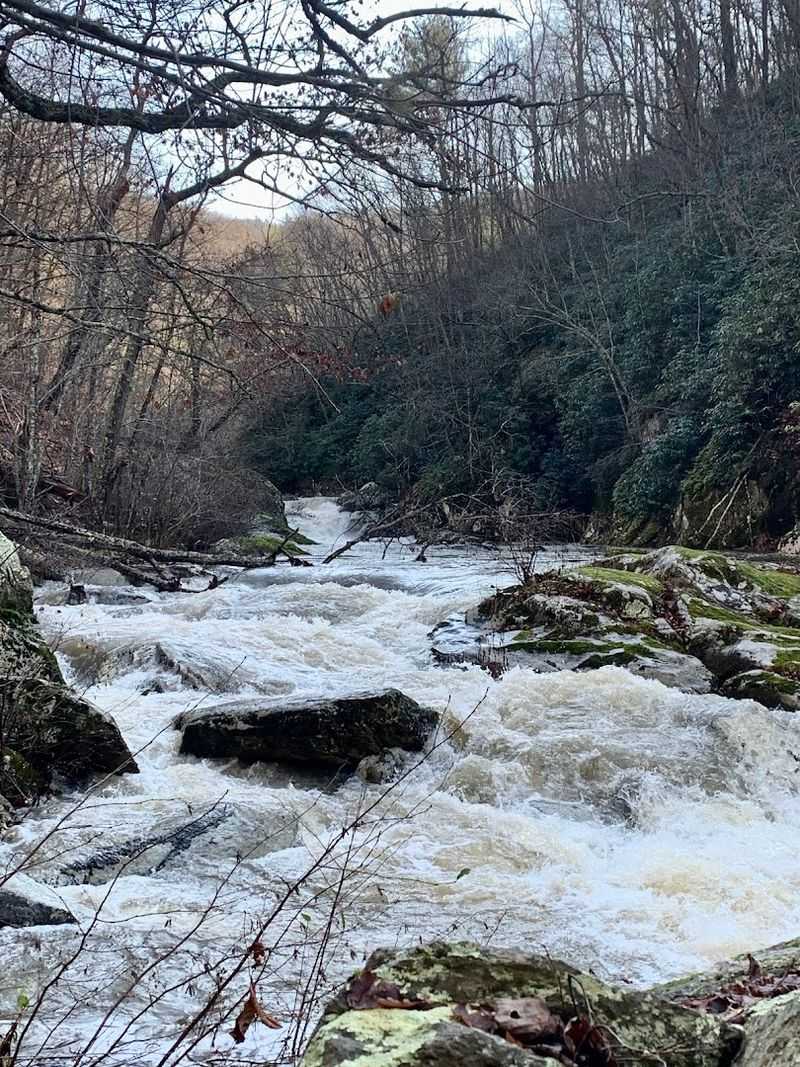
Crowds are the enemy of a good hike. Bottom Creek Gorge has figured out how to keep them away almost entirely.
Visitors regularly report arriving at the parking lot to find it empty or nearly so. On weekday mornings especially, the trails can feel completely private.
The preserve is not heavily advertised, and its location near Shawsville keeps it off the radar of most casual day-trippers looking for a quick outing.
The parking area is small, with room for roughly ten vehicles. That natural limit on capacity helps preserve the quiet atmosphere that makes the place so appealing.
Even on busier weekend days, the trail network spreads visitors out enough that solitude is easy to find.
There are no restrooms or shelters on-site, which further discourages visitors who prefer more developed facilities. For hikers who appreciate raw, unfiltered outdoor experiences, that lack of infrastructure is actually a selling point.
The preserve stays wild precisely because it has not been softened for convenience. That trade-off is absolutely worth it.
What The Different Seasons Do To This Place
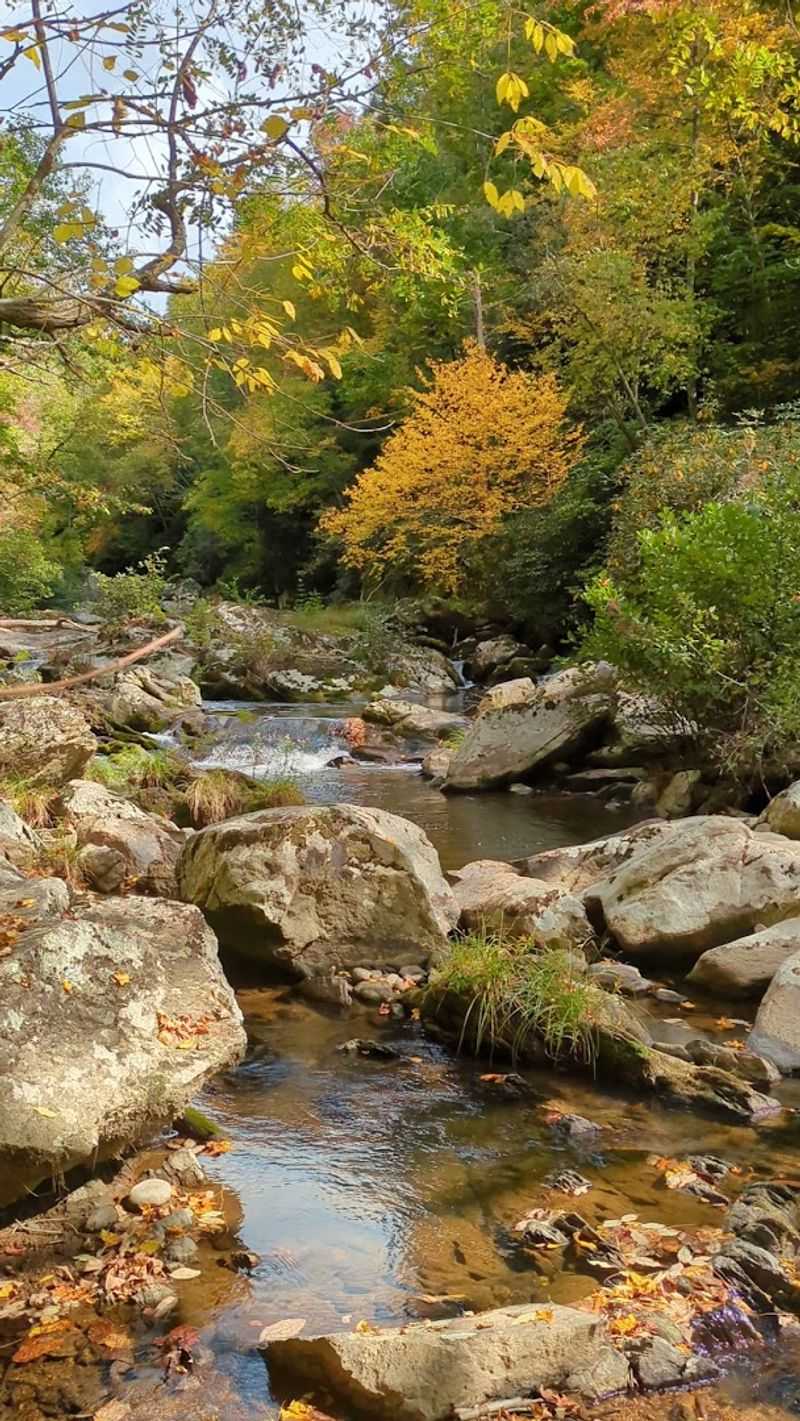
Every season transforms this gorge into something slightly different, and every version is worth seeing.
Spring brings wildflowers to the trail edges and fills Bottom Creek with snowmelt runoff, making the waterfalls louder and more powerful. The rhododendrons bloom in late spring, draping the lower gorge in clusters of pink and white flowers that feel almost tropical against the rocky backdrop.
Summer cools down quickly inside the gorge, where the canopy and creek air combine to keep temperatures noticeably lower than the surrounding area. It makes for a refreshing escape during Virginia’s humid summer months.
Autumn is widely considered the peak season. Mid to late October brings vivid color to the hillsides, and with the leaves thinning, the waterfall views from the overlook open up significantly.
Winter strips the trees back further, revealing the full dramatic structure of the gorge. Cold-weather hikers get the clearest views of Bent Mountain Falls and often the most complete solitude the preserve has to offer.
Practical Things To Know Before You Go
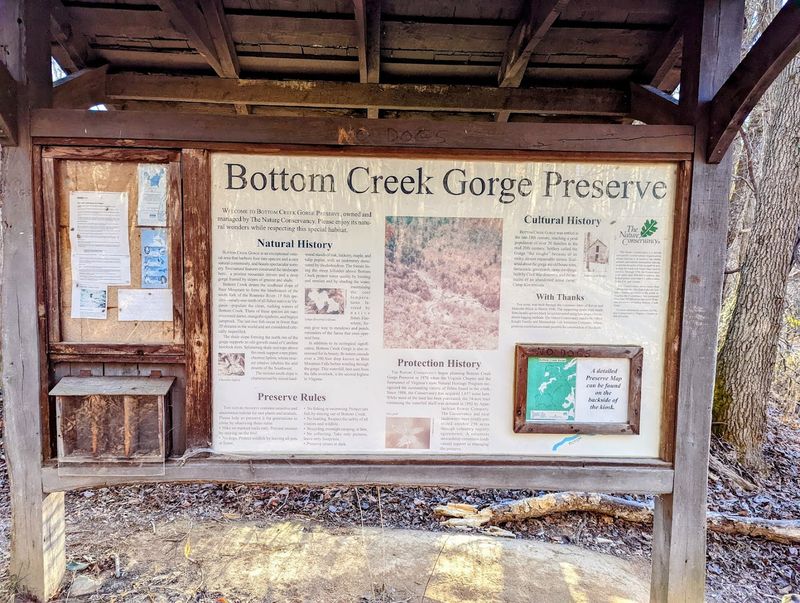
A little preparation goes a long way at a preserve this remote and this rewarding.
Cell service is unreliable throughout the gorge, so downloading a trail map before leaving home is strongly recommended. The parking area near the trailhead is small and mostly unpaved.
Vehicles with higher clearance handle the entrance road more comfortably, particularly after rain or in winter when road conditions can become challenging.
Dogs are not permitted anywhere in the preserve. This rule protects the rare plant life along the trails, as soil chemistry disruption can have real consequences for sensitive species.
Fishing is also prohibited to safeguard the exceptional aquatic habitat in Bottom Creek.
There are no restrooms, no water stations, and no shelters on-site. Packing enough water, snacks, and layers for changing weather is essential.
The trails are well marked, but the terrain can become slippery near the creek and at the overlook edge. Sturdy footwear makes the difference between a confident hike and a cautious one.
Why The Nature Conservancy Chose This Spot
Not every beautiful place gets protected. Bottom Creek Gorge earned that protection for very specific reasons.
The Nature Conservancy has managed this preserve since 1988, drawn by the rare combination of exceptional water quality, biodiversity, and relatively undisturbed habitat. Bottom Creek’s Tier III designation reflects water purity that supports species found almost nowhere else in the region.
That kind of ecological integrity does not happen by accident.
The preserve functions as a living laboratory for conservation. The rare chestnut lipfern, the native fish species, the old-growth hemlock stands, and the shale barren all represent ecological communities that need active protection to survive.
Virginia’s development pressures make preserves like this increasingly important.
Visitors who understand what they are walking through tend to treat the place with more care. The rules around dogs and fishing are not arbitrary restrictions.
They reflect a genuine understanding of what makes this ecosystem fragile and worth protecting. Respecting those boundaries is the most meaningful thing any visitor can do here.
Getting There And Making The Most Of Your Visit
Finding this place requires a bit of commitment, and that commitment starts paying off the moment the trailhead comes into view.
Bottom Creek Gorge Preserve sits near Shawsville in Montgomery County, Virginia. The access road is unpaved and narrow in sections.
Arriving with a downloaded map and a fully charged phone battery makes navigation significantly easier. The preserve does not have prominent roadside signage, so paying close attention to directions is important.
Morning visits on weekdays offer the best combination of solitude and lighting. The forest is quieter, the creek sounds carry further, and the overlook at Bent Mountain Falls catches early light in a way that afternoon visits simply cannot replicate.
Plan for at least two to three hours to do the full loop and pause at the key spots along the way. Rushing through this gorge means missing what makes it special.
The creek bank, the ruins, the waterfall overlook, and the old-growth forest each deserve unhurried attention. This is not a place to speed through.