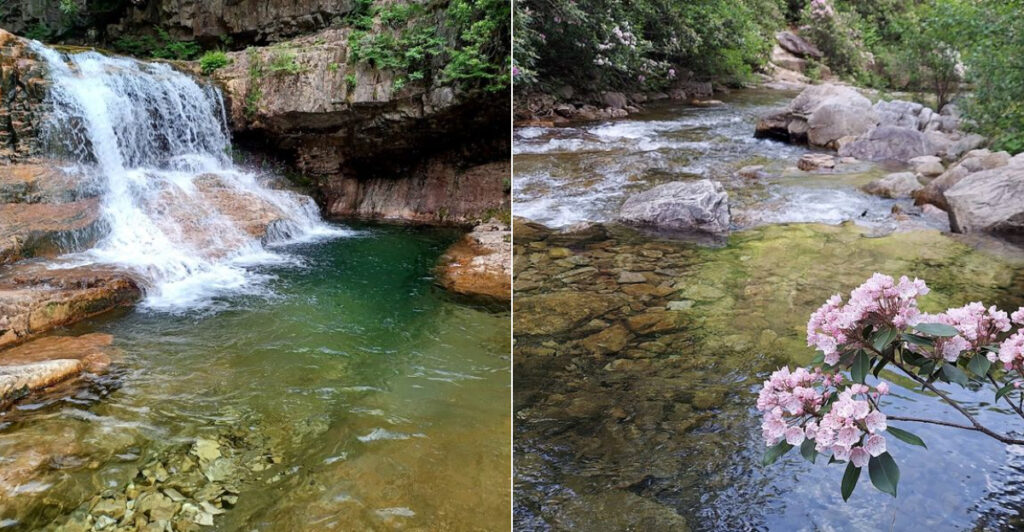
Water so clear the bottom is visible in waist-deep pools. A 35-foot waterfall waiting at the end of the trail.
Virginia is hiding something genuinely spectacular inside a national forest that most people have never thought to explore. Rocky gorges, fern-covered banks, and mountain pools cold enough to make every summer day feel manageable.
This wilderness trail delivers the kind of raw, honest nature experience that no resort or visitor center can package or replicate. It has to be found on foot and earned step by step.
Most hikers have never heard of this place. That is entirely its advantage.
The trail stays quiet, the pools stay clear, and the whole experience carries that specific satisfaction of finding something real without a crowd already waiting there ahead of you.
Virginia rewards the hikers who go looking beyond the obvious trails. This one is the reward.
Sturdy shoes, a towel, and a free afternoon.
That is genuinely all it takes.
The Trail That Surprises You
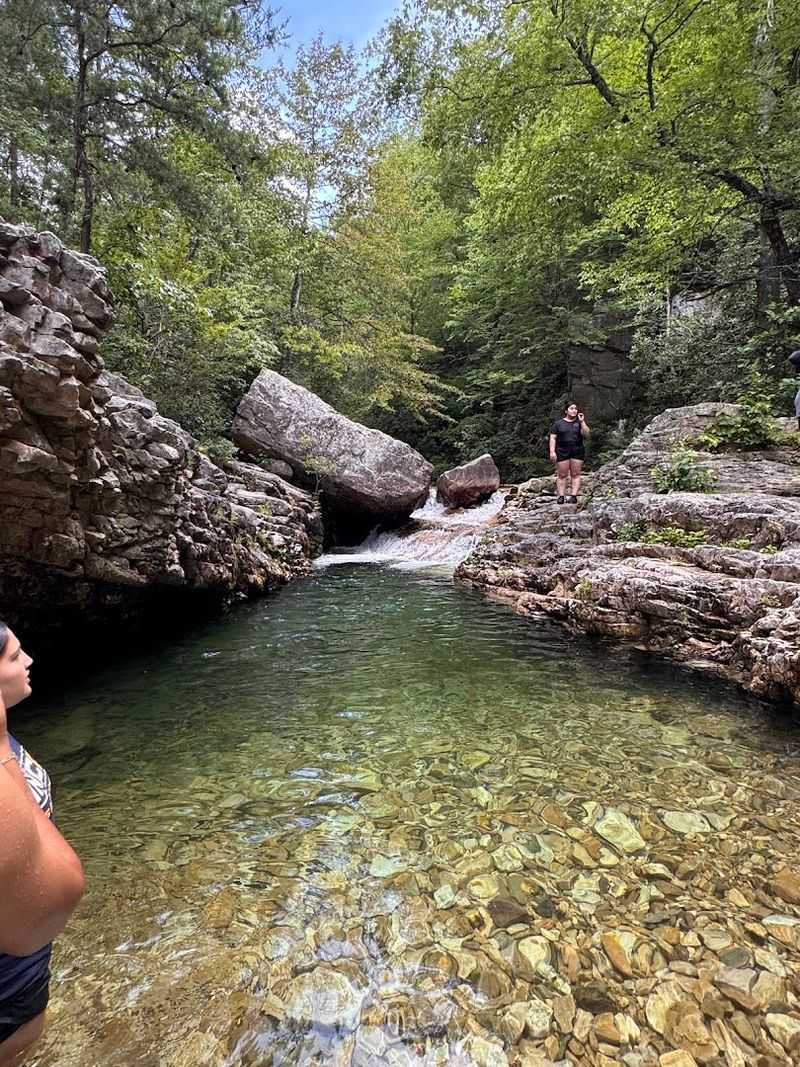
Not every great adventure starts with a dramatic entrance. The St. Mary’s Falls Trail begins quietly, almost modestly, off an unnamed road near Raphine, Virginia.
The trailhead has limited parking, roughly a dozen spots, so arriving early on a weekend is a smart move. Cars often line the access road for a quarter-mile on busy summer days.
The hike itself is about 4.3 to 4.7 miles out and back. The elevation gain sits around 300 to 400 feet, making it moderate rather than brutal.
Rocky stretches keep you alert. After rain, the path gets slippery and more demanding, so dry-weather visits are ideal for first-timers.
Orange trail markers appear in some spots, but not always. Visitors say the best navigation tip is simple: follow the river and you will find your way.
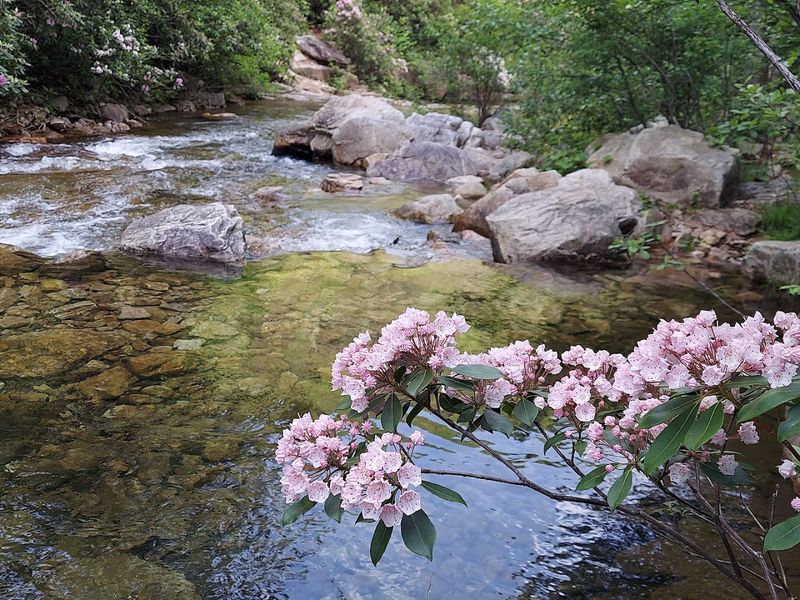
The forest closes in around you as you walk. Rocky cliffs rise on either side, and mountain laurel lines the path with quiet elegance.
By the time you reach the first pool, you already feel like you earned it. The trail has a way of building anticipation with every step forward.
Five River Crossings Await
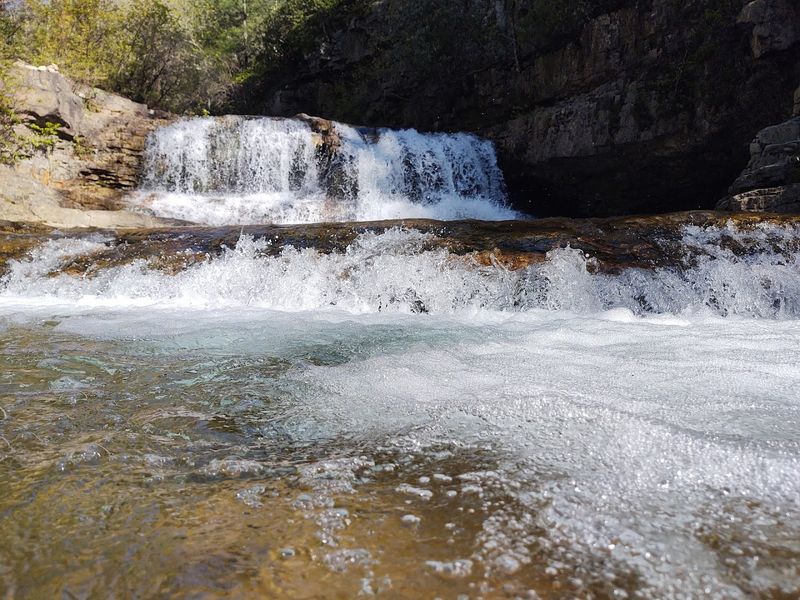
Here is something most trail maps forget to mention: you will get your feet wet. The St. Mary’s River has no bridges, and crossing it is simply part of the deal.
Hikers cross the river five times each way on the route to the falls. That means ten crossings total on a full out-and-back trip.
The rocks underfoot are slippery, especially after rain. Visitors consistently say that sturdy hiking shoes with hard soles outperform water sandals on this rocky terrain.
Hiking poles help with balance on the crossings. If you have a pair gathering dust in the garage, this is the hike that justifies bringing them out.
The crossings are not dangerous under normal conditions, but they do require attention. Water depth can be deceiving because the water is so clear it looks shallower than it really is.
Spring crossings tend to run higher and faster than summer ones. Plan accordingly if you visit early in the season.
Dogs are welcome on the trail and apparently love the river sections. One visitor described watching their dog swim happily through every crossing with zero hesitation, which honestly sounds like the right attitude for everyone.
Each crossing brings you closer to something worth seeing. The effort is real, and so is the reward waiting just ahead.
The 35-Foot Waterfall
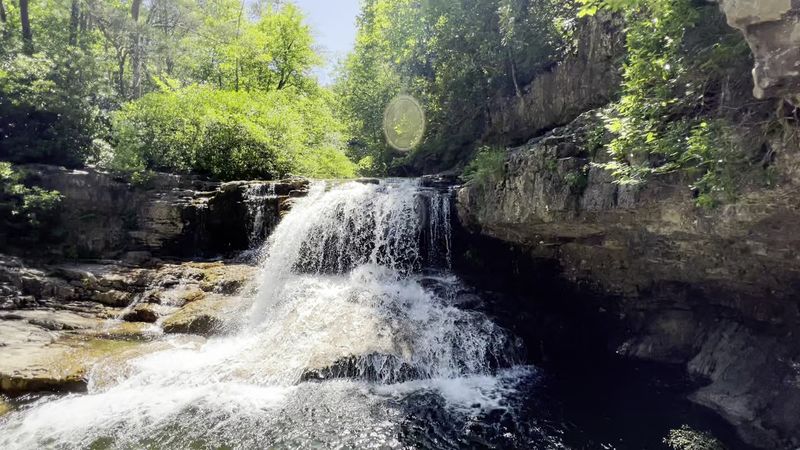
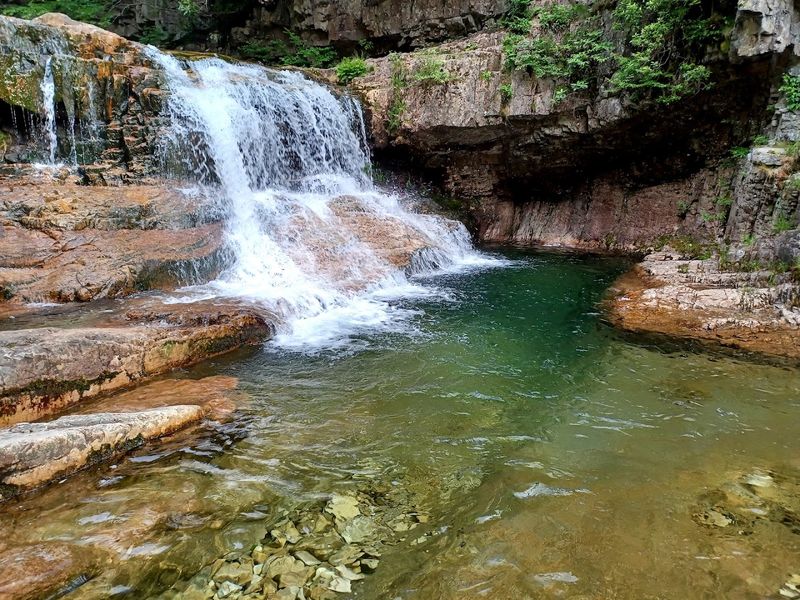
St. Mary’s Falls is the headline act of this whole adventure. Standing 35 feet tall, the waterfall drops over dark rock faces into a pool that catches the light in a way that feels almost unreal.
The pool at the base is shallow enough to stand in near the edges, making it accessible for most visitors. It is cold, reliably cold, even on the hottest summer days in Virginia.
Two jump spots exist near the falls area. Visitors say the higher one delivers more excitement, though both require careful footing on the surrounding rocks.
The falls are the most crowded section of the trail on peak weekends. Weekday visits offer a noticeably quieter and more personal experience with the waterfall.
Photographing the falls rewards patience. Morning light hitting the mist creates a soft glow that afternoon crowds rarely get to enjoy in peace.
The surrounding rock walls frame the scene naturally. Ferns grow from every crack, and the sound of the water echoes off the stone in a way that feels deeply satisfying.
Camping near the falls is not permitted within 500 feet, which helps preserve the area around them. That boundary exists for good reason, and most visitors respect it without complaint.
Once you see the falls in person, every rocky crossing and muddy shoe suddenly makes complete sense.
The Natural Water Slide
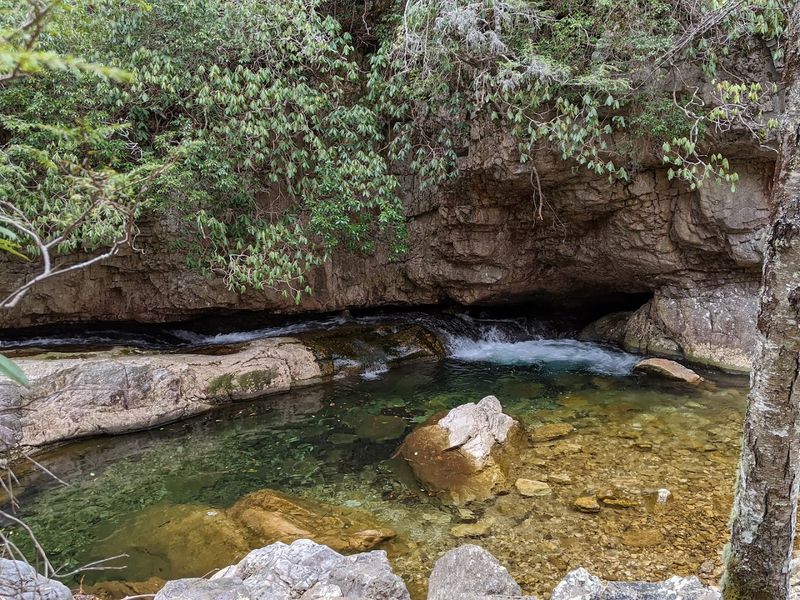
About 0.3 miles before the main falls, the trail offers something that guidebooks rarely highlight enough. A natural water slide carved into the rock sends you directly into a plunge pool roughly six feet deep.
It is the kind of feature that makes people stop mid-hike and stare for a moment before grinning. Kids and adults both tend to forget their tired legs the second they spot it.
The plunge pool here is less crowded than the main falls area. Visitors who know about it often prefer this spot for swimming because it feels more private and the dog-friendly depth makes it popular with four-legged hikers too.
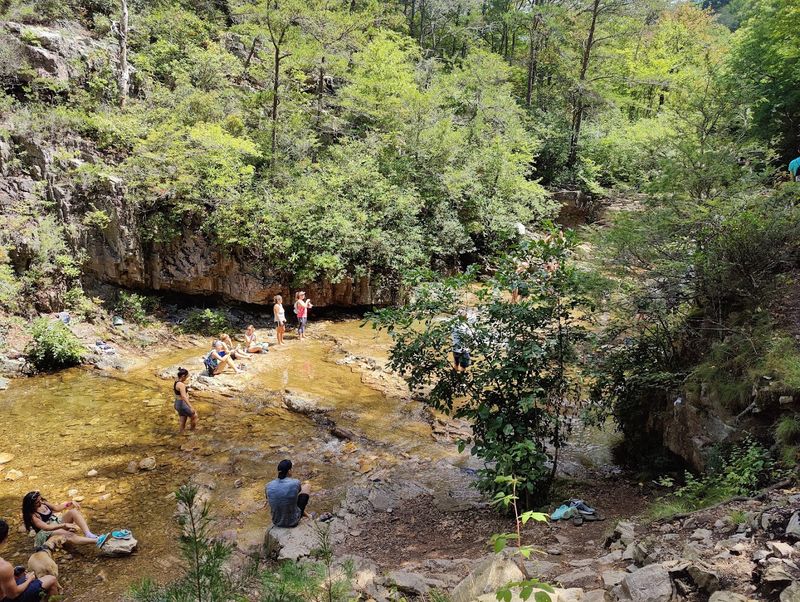
Flat sunning rocks line the banks nearby. After a cold plunge, stretching out on warm stone in the middle of a Virginia forest is a genuinely simple pleasure.
The water slide itself is smooth and natural, shaped by years of river flow. It is not steep enough to be alarming, but it is fast enough to make you want a second turn.
Jumping from the low rocks here puts you in about four to four and a half feet of water. That depth is manageable for most adults while still delivering the satisfying splash everyone came for.
This spot rewards hikers who pay attention to the trail rather than rushing straight to the falls. The best surprises here tend to show up before the obvious destination does.
Crystal Clear Mountain Water
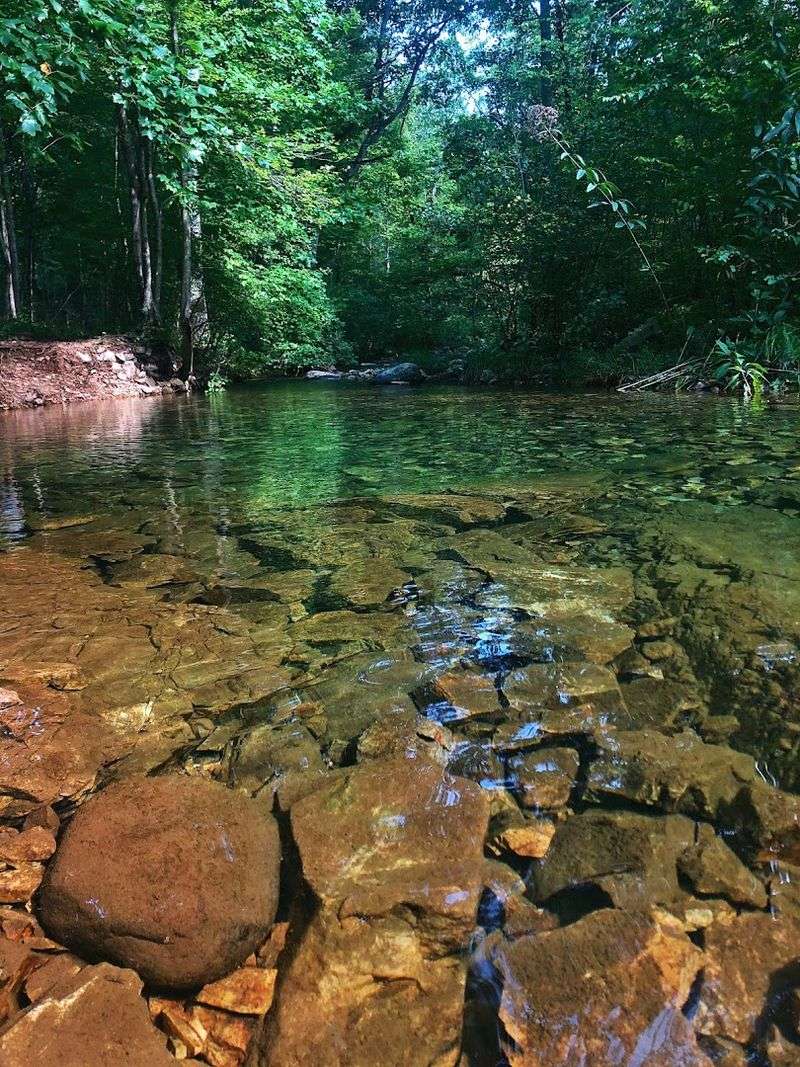
The water in the St. Mary’s River is the kind of clear that makes people do a double-take. One visitor put it simply: even standing in waist-deep water, they could still see their feet clearly below.
That visibility comes with a catch. The clarity creates an optical illusion that makes the water look shallower than it actually is, so wading in carefully the first time is always the right call.
Mountain water this cold stays refreshing long into summer. Even on sweltering Virginia afternoons, the pools maintain a temperature that wakes you up fast.
The coldness is part of the appeal for most visitors. That first full-body contact with the water is a shock in the best possible way, and it makes every warm rock you lie on afterward feel like a luxury.
Multiple pools line the trail between the trailhead and the falls. Each one has its own character, depth, and surrounding scenery, so there is no single right place to stop and swim.
The river runs cleaner here than most mountain streams because the wilderness designation limits development and foot traffic away from the water. That protection shows in every pool you encounter.
Watching the light move through the current over pale river stones is quietly mesmerizing. Sometimes the best thing about a place is the detail you notice when you finally slow down enough to look.
History Beneath The Forest
Not everything in this forest is about swimming. The St. Mary’s River gorge has a past that most visitors walk right past without realizing it.
Iron and manganese ore were mined from this area until the 1950s. Remnants of those old operations are still visible in parts of the wilderness for those paying close attention to what sits off the trail.
The contrast between industrial history and current wilderness is striking. What was once a working extraction site is now nearly 10,000 acres of protected forest inside George Washington National Forest in Virginia.
The gorge itself was shaped as much by geology as by history. Deep rock cuts and exposed cliff faces tell a long story of water, pressure, and time that predates any human activity in the valley.
Knowing the history changes how the trail feels underfoot. Every rusted fragment or unusual stone formation becomes a small piece of a larger story about how landscapes transform over decades.
The wilderness designation came after mining ended, giving the land time to recover. The forest has reclaimed most of what was taken from it, and the result is a landscape that feels genuinely wild again.
Hikers who appreciate context get more out of this trail than those who only come for the water. The forest rewards curiosity just as generously as it rewards the willingness to get your feet wet.
Best Time To Visit
Timing a visit to St. Mary’s Wilderness can make or break the whole experience. The parking area holds only about a dozen vehicles, and on peak summer weekends it fills up fast.
Arriving early, ideally before 9 a.m., gives you the best chance at a spot and a quieter trail. By midday on a hot Saturday, the swimming holes near the falls can feel more like a public pool than a wilderness retreat.
Weekdays are consistently calmer. Visitors who go on a Tuesday or Wednesday in July often describe having entire pools to themselves for stretches of time.
Late spring is a sweet spot for the water. The river runs full and lively, temperatures are still cool, and the trail vegetation is at its most vivid green.
Summer remains the most popular season for obvious reasons. The cold water is most appealing when the air is hot, and Virginia summers provide plenty of motivation to wade in.
Winter visits are possible for hikers who enjoy a quiet forest walk, but the water is too cold for swimming and the river levels can be low. Spring is when the swimming season really opens back up.
Avoiding the trail after heavy rain is consistently recommended. The rocky path gets significantly more slippery when wet, and river crossings become less predictable after a storm rolls through.
What To Pack And Wear
Gear choices matter more on this trail than on most casual hikes. The combination of rocky terrain and multiple river crossings means footwear deserves serious thought before you leave home.
Sturdy hiking shoes with hard soles are the consistent recommendation from everyone who has done this trail. Water sandals feel logical given the river crossings, but they leave your feet exposed on the sharp, uneven rocks between pools.
A second pair of lightweight shoes for the crossings is one option some hikers use. Others simply accept that their hiking shoes will get wet and move on, which works fine in warmer months when drying time is short.
Hiking poles earn their weight on the river crossings. Balance on slippery river rocks improves dramatically with a pole in each hand, and your confidence on the trail goes up with it.
Pack a towel and a dry change of clothes for after the swim. Sitting in wet hiking gear for the return walk is manageable but not particularly comfortable, and dry clothes at the car feel like a small celebration.
Sun protection matters more than people expect on this trail. Open sections near the water reflect sunlight directly, and the hike takes long enough that exposure adds up without you noticing.
The trail inside St. Mary’s Wilderness runs through George Washington National Forest, so no fees or permits are required. Just solid footwear, a sense of adventure, and the willingness to get a little wet.