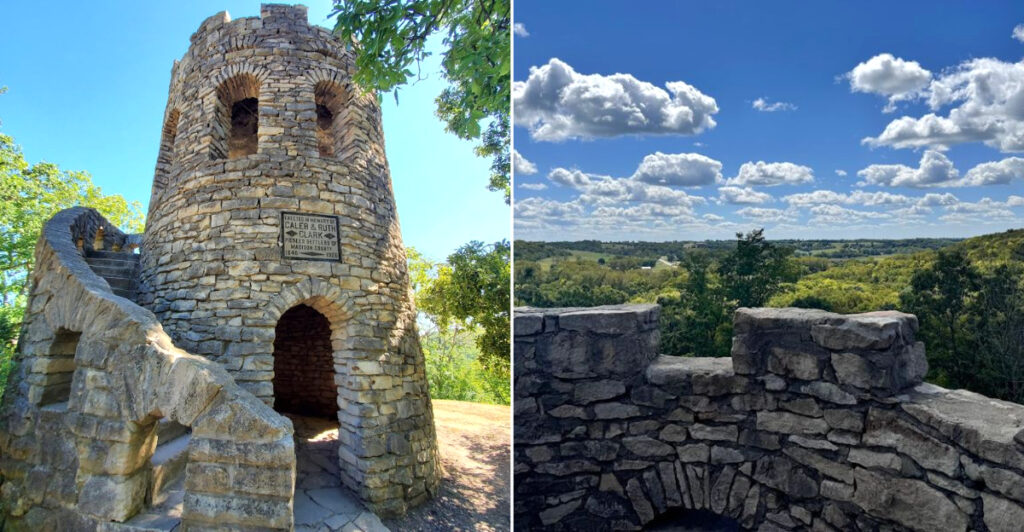
Madison County may be famous for covered bridges, but one of its most charming surprises waits a little higher up the hill. In a quiet Winterset park, a rough-cut stone tower rises above the trees like it wandered in from a fairy-tale sketchbook and decided Iowa suited it just fine.
The tower is small, only about 25 feet tall, but it has presence. Built in 1926 to honor the Clark family, it brings together local history, wooded trails, rolling views, and just enough mystery to make the climb feel more interesting than a regular park walk.
The fun is in the approach as much as the tower itself. Hike up through the trees, take the winding road carefully, or pair the stop with nearby covered bridges for a Madison County day trip that feels quietly memorable without trying too hard.
What Clark Tower Actually Is and Where to Find It
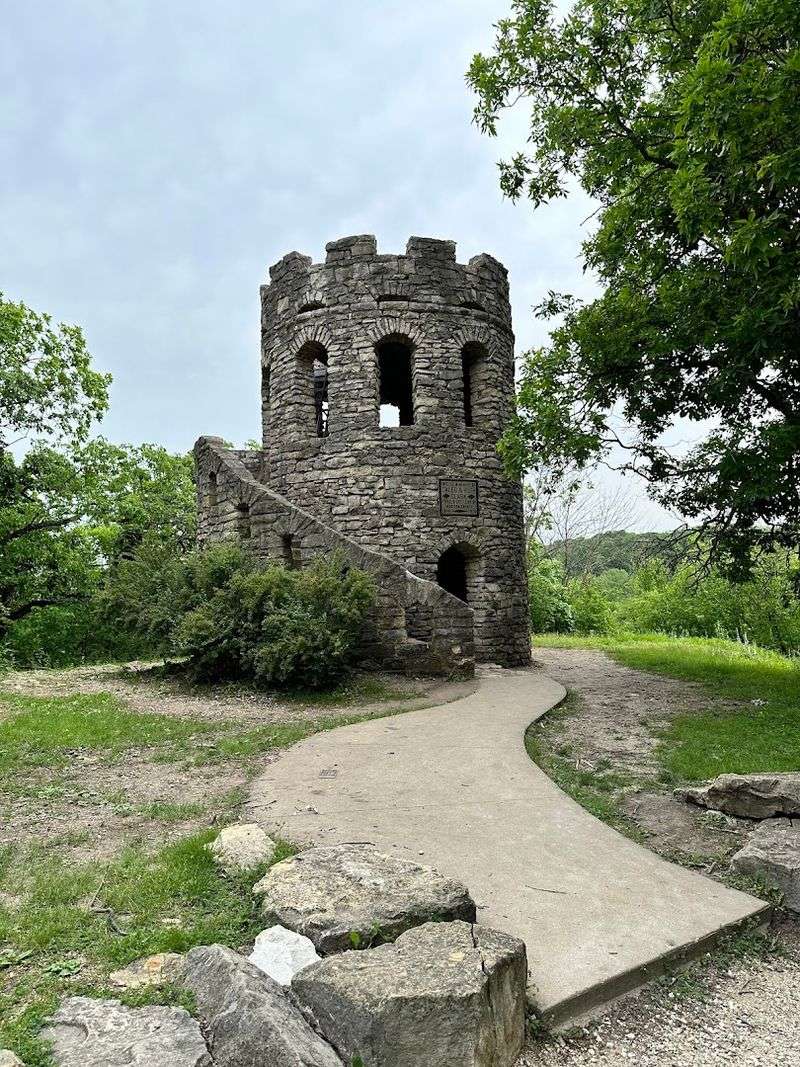
Most lookout towers in the Midwest come with a ranger station, a gift shop, and a parking lot the size of a football field. Clark Tower has none of that, and that is exactly why it works.
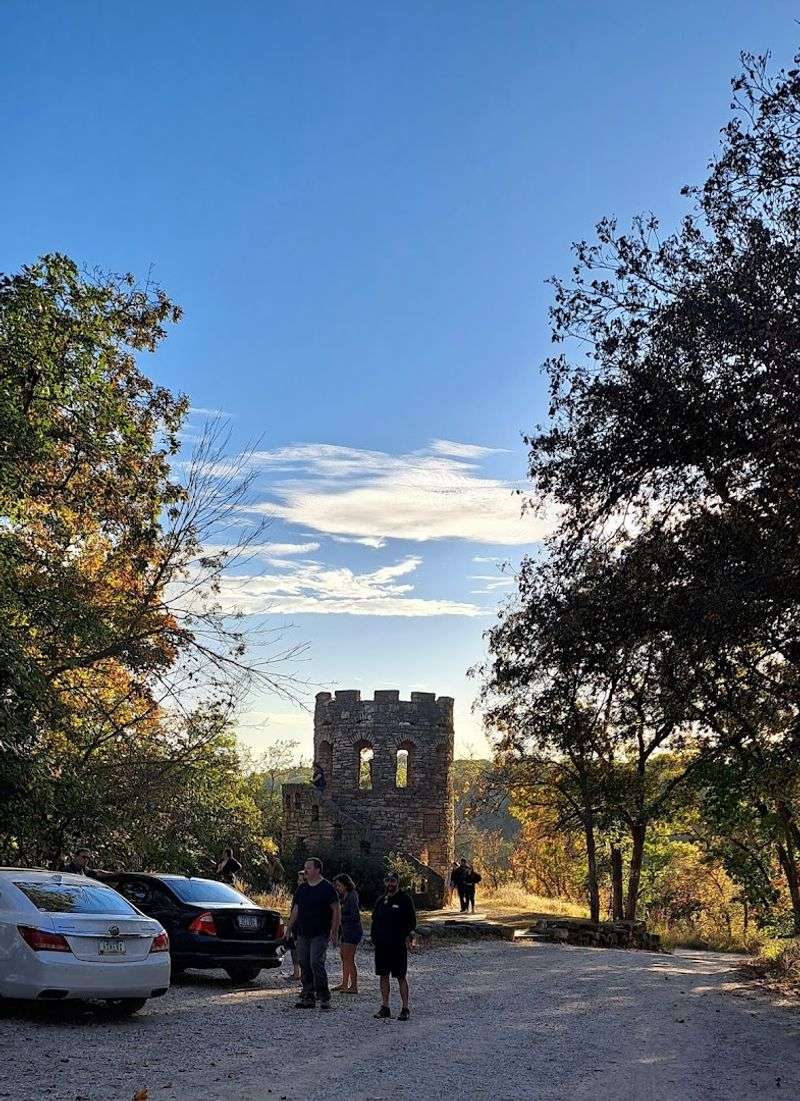
Built in 1926, this 25-foot limestone tower was constructed to honor Caleb and Ruth Clark, who were among the first pioneer settlers in Madison County.
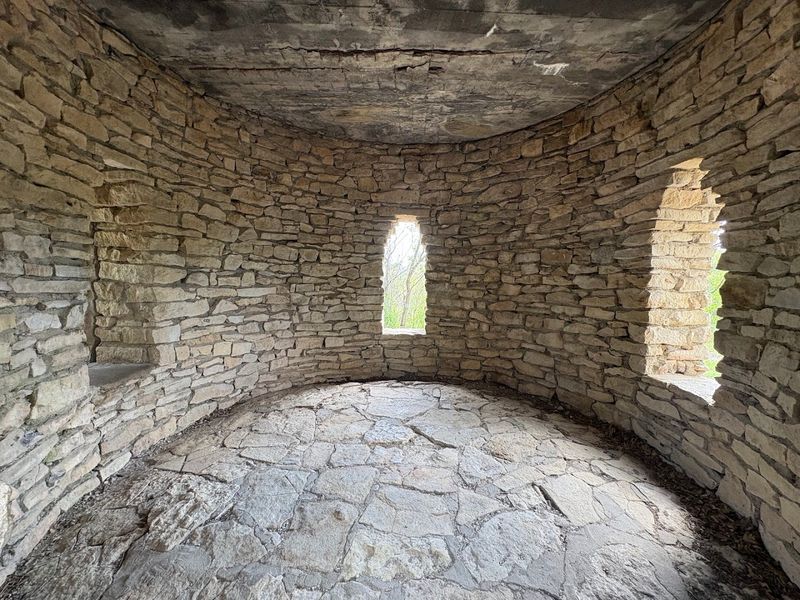
The structure is made from rough-cut local stone and has an old-world look that makes you feel like you stumbled onto a medieval castle set piece dropped into a cornfield state.
The tower sits inside Winterset City Park in Winterset, Iowa, and the park’s official address is 300 South 9th Street, Winterset, IA 50273. You can reach more details about the park through the city’s parks and recreation page at winterset.gov.
The surrounding area is wooded and hilly, which adds to the sense that you have wandered somewhere genuinely off the beaten path.
Clark Tower has strong visitor ratings, which tells you that the people who find it tend to leave happy.
The Clark Family Legacy Behind the Stone Walls
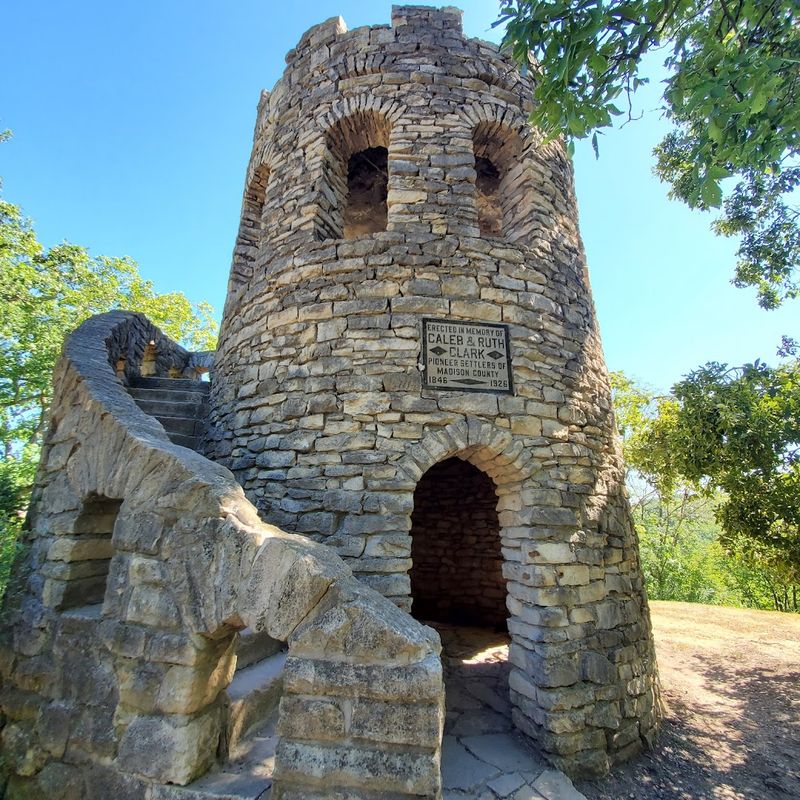
A tower without a story is just a pile of rocks. Fortunately, Clark Tower has a good one.
The Clark family were among the earliest European-American settlers to plant roots in what would become Winterset, the county seat of Madison County, Iowa.
The tower was erected in 1926 as a tribute to their contributions to the community, which makes it one of the older intentional historical monuments in this part of the state.
Unlike a lot of historical markers that get a bronze plaque bolted to a post and call it a day, Clark Tower got an actual structure you can climb. That choice says something about how the community felt about the family’s impact.
Learning this history before your visit changes the way you look at the tower when you finally stand in front of it. It stops being a quirky stone novelty and starts feeling like a real piece of place-making.
The people of Winterset wanted something you could see from a distance, and they got exactly that.
The Two Ways to Get There and Why Each One Is Worth Considering
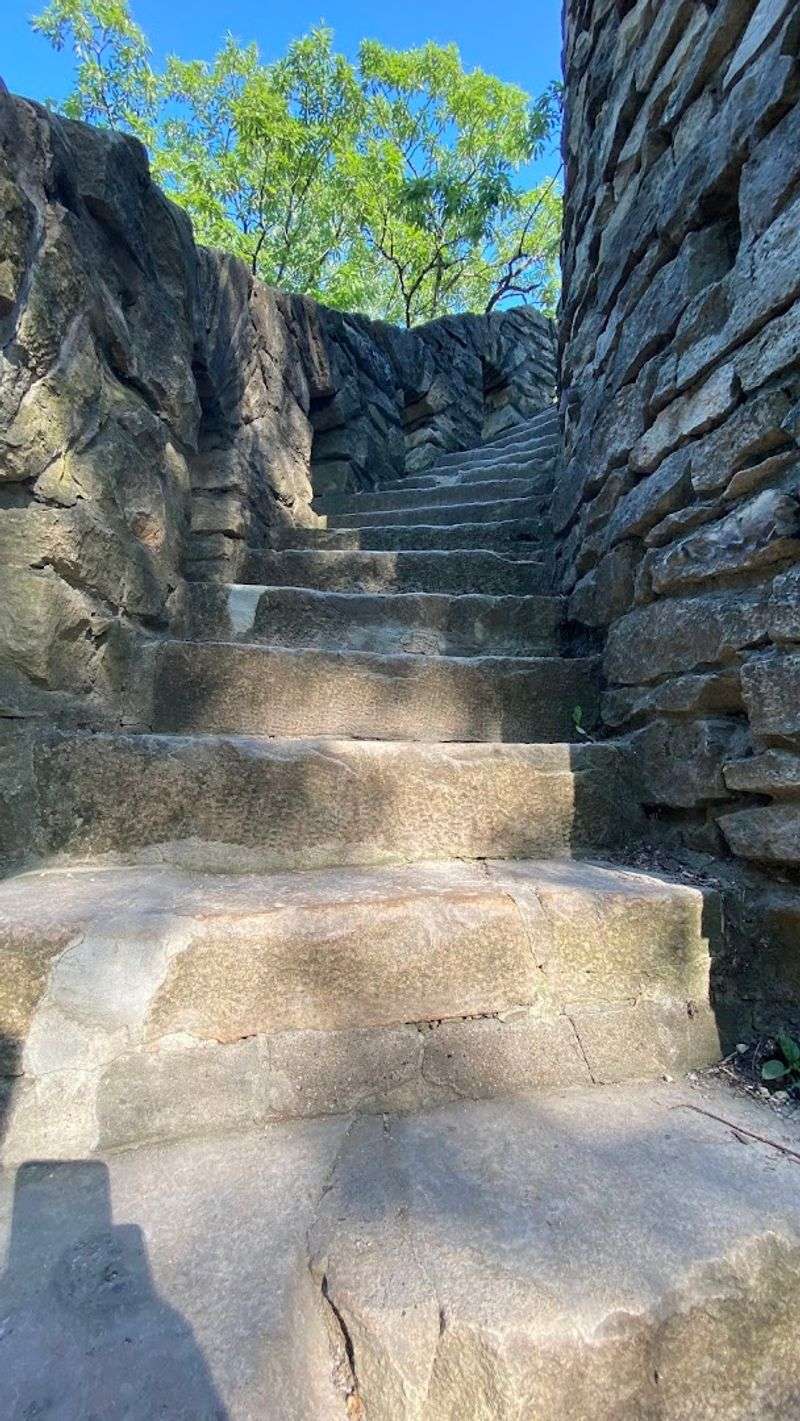
Getting to Clark Tower is half the fun, depending on your definition of fun.
Option one is going on foot. The route to the tower follows a narrow dirt road through wooded terrain, with the official tourism page describing it as one mile up and one mile down.
The path climbs steadily, so expect a genuine uphill push rather than a casual stroll. The reward at the top is a view that earns the effort, especially in fall when the tree canopy turns orange and gold.
Option two is driving. A narrow, winding road curves its way through the trees up toward the tower.
The official tourism page says Clark Tower can be reached by foot, bicycle, or vehicle, but it also notes that vehicles should be nothing larger than a minivan. That means RVs, campers, trailers, and large trucks are better left out of this particular little adventure.
Both routes pass through the same wooded landscape, but the walk lets you notice details that blur past when you are focused on navigating tight curves. Either way, the journey feels intentional and a little adventurous.
What the View from the Top Actually Looks Like
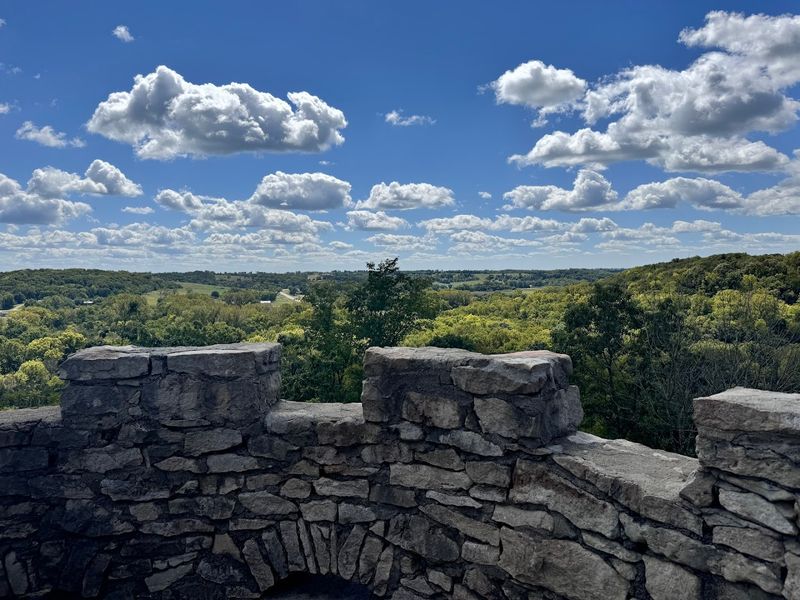
Honest disclosure: Clark Tower is 25 feet tall, not 250. You are not going to see three counties from the top on a clear day.
What you do get is a treetop-level view of the surrounding wooded hills that feels genuinely satisfying after the hike up.
The landscape around Winterset is rolling and green, and from the tower’s open top you can see across the canopy in a way that ground level simply does not allow.
One visitor noted with some humor that a house was built in the direction of the best view, so that structure does appear in photos from a certain angle. It is a minor quirk rather than a dealbreaker, and most of the sightlines are clear enough to make the climb feel worthwhile.
Early November visits get high marks for the fall color display, and early autumn mornings offer soft light that photographers tend to love.
The tower’s stone parapet gives you something to lean against while you take it all in, which is a small but appreciated detail on a windy Iowa afternoon.
The Park at the Base of the Hill and What You Will Find There
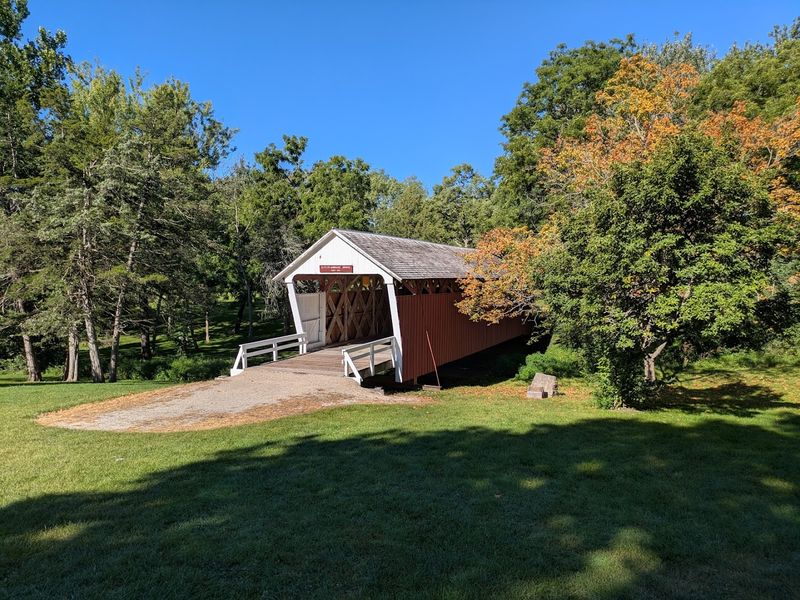
Clark Tower gets most of the attention, but the park at the bottom of the hill deserves its own moment.
Before you even start the hike, there is a kids’ playground where younger visitors can burn off energy, along with a covered shelter that works well for a picnic lunch.
The lower park area is flat and easy to navigate, which makes it a good starting point for families who want to split up, with some members hiking and others relaxing in the shade.
The park also sits near one of the famous covered bridges of Madison County, which means you can combine two very different Iowa landmarks in a single outing without driving more than a few minutes between them. That kind of double-feature day is hard to argue with.
Bringing a cooler and setting up at one of the picnic spots before or after the hike is a smart move, especially in warmer months.
The shelter provides shade, and the grassy area around it is open enough that kids have room to run around while adults recover from the uphill climb.
How the Tower Survived an EF4 Tornado in 2022
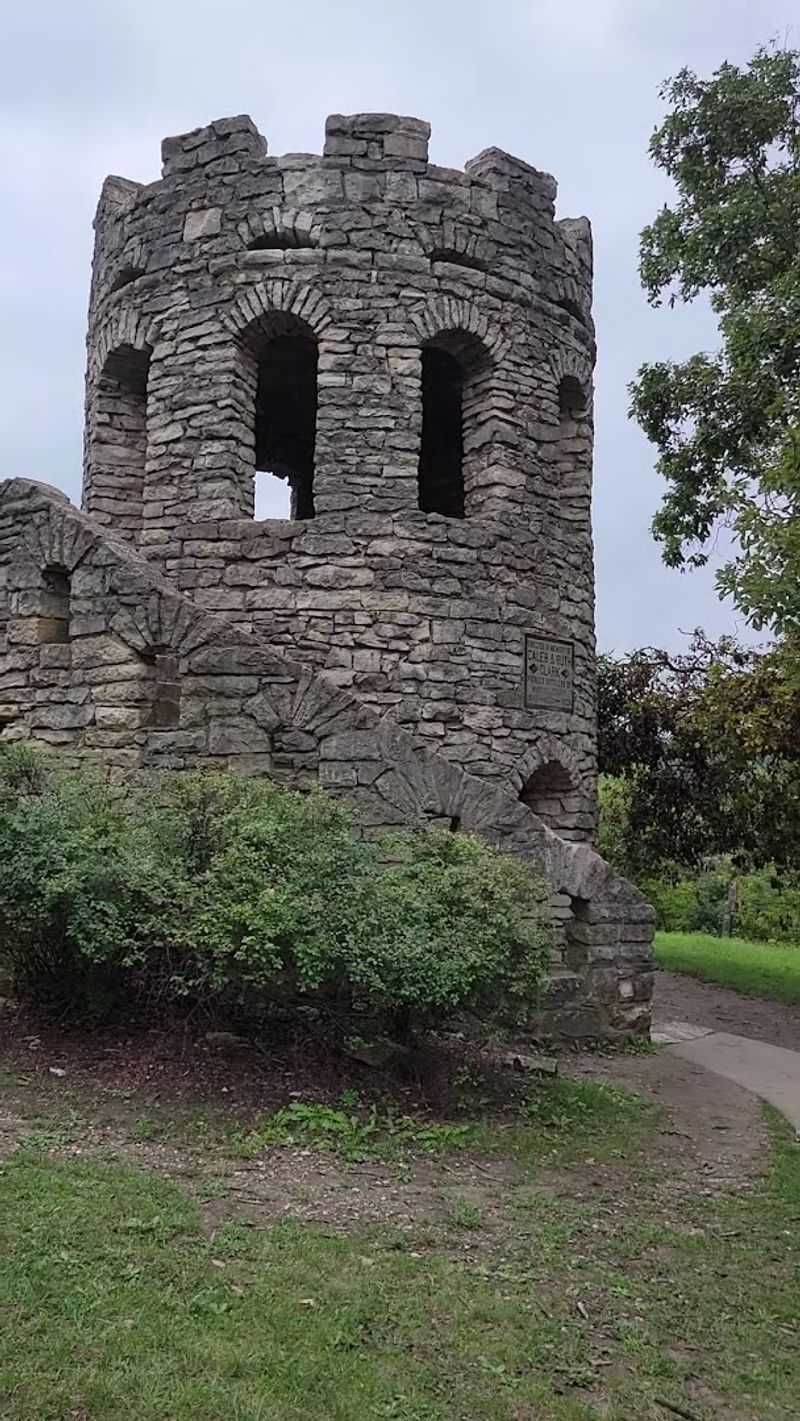
On March 5, 2022, an EF4 tornado moved through the Winterset area and left a path of serious destruction in its wake. Clark Tower, built from rough-cut stone nearly a century earlier, stood through it.
That fact alone changes how you think about the structure when you are standing next to it. The tower was not built with modern engineering software or steel reinforcements.
It was built in 1926 by people who knew how to stack stone, and that turned out to be enough to outlast one of the most powerful tornado ratings on the scale.
The surrounding landscape took a harder hit than the tower itself, and the recovery process for the broader Winterset community was significant.
The tower’s survival became one of those small, concrete pieces of good news that people in the area held onto during a difficult time.
Standing at the base of Clark Tower after knowing this history gives the structure a different kind of weight. It is not just old.
It is tested, and it passed.
Birdwatching and Trail Time in the Surrounding Woods
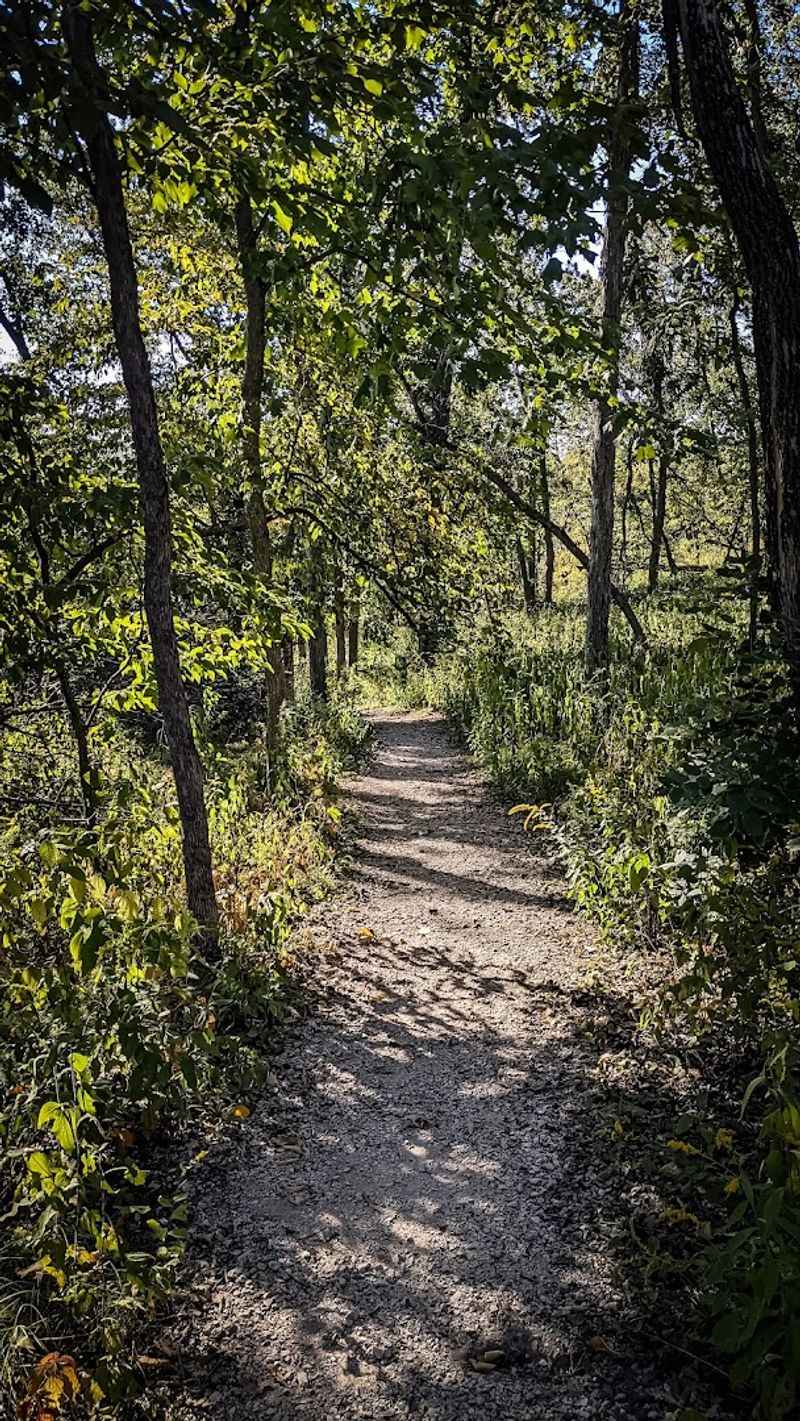
The trail up to Clark Tower passes through a stretch of wooded terrain that is genuinely good for birdwatching, especially during spring migration and early fall.
The tree canopy along the path is dense enough to support a solid variety of woodland bird species, and the relative quiet of the area means you can actually hear them without competing with road noise or crowds. Bringing a small pair of binoculars makes the hike feel twice as productive.
The two-mile wooded drive that winds through the park adds another layer of nature access for people who want to spend more time in the trees without committing to a full hike.
That loop gives you a slower, more contemplative way to move through the landscape, and it is especially atmospheric in the early morning when mist hangs low between the trunks.
The park also has a maze feature that shows up in visitor descriptions, adding a playful element to what might otherwise feel like a straightforward nature walk.
It is a small detail, but it makes the overall park feel more thought-out than the average municipal green space.
Combining Clark Tower with the Covered Bridges of Madison County
Madison County, Iowa is most famous for its covered bridges, and Clark Tower sits close enough to several of them that combining both into one day trip is an obvious move.
The covered bridges have drawn visitors to this part of Iowa for decades, partly because of the novel and film that made them internationally known. But the bridges and the tower offer very different moods.
The bridges are low, intimate, and close to water. Clark Tower is elevated, open, and surrounded by forest.
Doing both in one day gives you a fuller picture of what this corner of Iowa actually looks like.
The park at the base of Clark Tower is reportedly visible from or near at least one of the covered bridges, which makes the transition between the two landmarks feel natural rather than like a detour.
You can plan a loop that hits a bridge in the morning, has lunch at the park shelter, and ends with the hike up to the tower in the afternoon light.
Madison County has done a solid job of keeping these landmarks accessible, and the combination makes for a well-rounded day out.
Practical Tips Before You Go to Clark Tower
A few practical notes can make the difference between a smooth visit and an annoying one.
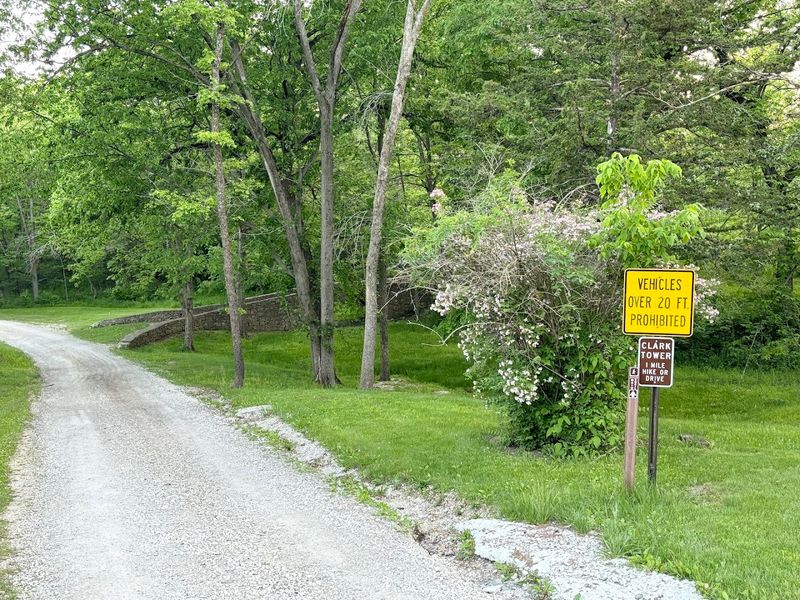
First, the road to the tower is narrow with tight curves, and the official tourism page says vehicle access is limited to nothing larger than a minivan.
If you are driving an RV, a large truck, or towing anything, stick to walking rather than attempting the drive.
The road to Clark Tower closes each night at sunset and remains closed during the winter months, although the park’s main drive stays open year-round. That matters if you are planning a late-day visit or a cold-weather stop.
The route is about one mile up and one mile down, so wear actual walking shoes rather than sandals. Bringing water is a good call, especially in warmer months.
The route is not paved, so expect gravel and natural terrain underfoot.
Clark Tower is free to visit and open to the public, which means no reservations, no tickets, and no entry fees. The park is managed by the city of Winterset, and more information is available through the city’s parks and recreation department.
Cell service in the wooded sections can be spotty, so download a map before you head in.
Why Clark Tower Sticks With You After You Leave Winterset
Clark Tower is not the tallest thing you will ever climb. It does not have a rooftop cafe or a gift shop or a viral photo wall.
What it has is a specific, honest character that most roadside stops have lost somewhere along the way.
The stone was stacked by hand nearly a century ago to honor people who built something from nothing in a place that was still being figured out. The tower survived a tornado that leveled parts of the surrounding area.
The trail to reach it winds through actual woods rather than a manicured path with numbered markers every 50 feet.
All of that adds up to a place that feels earned rather than curated. You put in a little effort, you get a view that suits the effort, and you leave knowing something specific about Winterset and the people who shaped it.
Iowa has a lot of parks, and most of them are worth your time. Clark Tower just happens to be the one with a 25-foot stone fairy-tale tower at the top of a wooded hill, and that detail tends to stay with you.