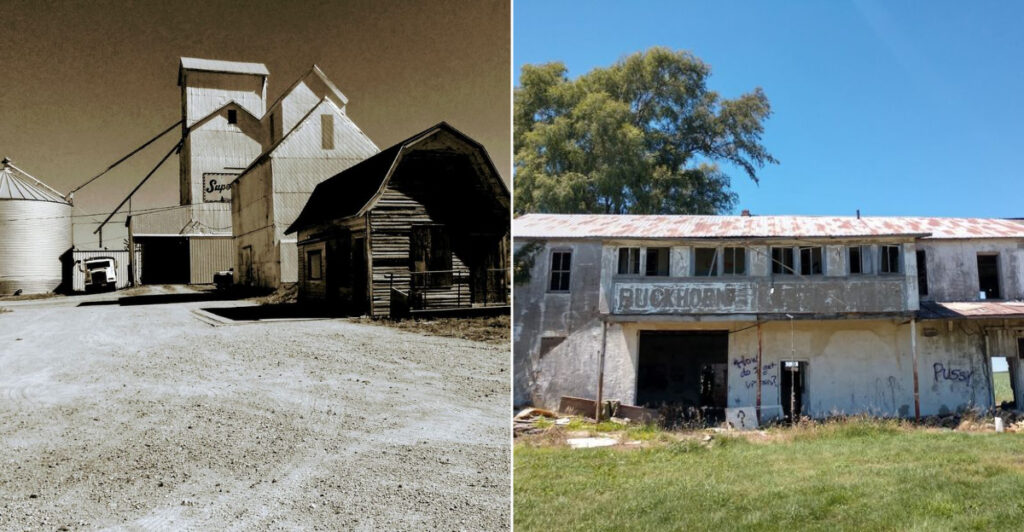
Some Iowa road trips are all pie shops, pretty parks, and cheerful main streets. This one takes a quieter turn, following back roads to places where old town grids, empty foundations, weathered landmarks, and nearly forgotten stories still linger in the landscape.
These five former communities offer a different kind of history lesson.
Elkport tells a story shaped by floodwater, Buxton reveals one of Iowa’s most fascinating mining-era chapters, and smaller places like Monmouth, Sunbury, Downey, Kinross, and Buckhorn show how railroads, farming shifts, and changing travel routes could reshape a town’s future.
Bring a full tank, a patient curiosity, and a camera ready for details that are easy to miss from the main highway.
This is not the glossy postcard version of Iowa, but it may be one of the most memorable ways to understand how much history still waits along the quieter roads.
1. Elkport
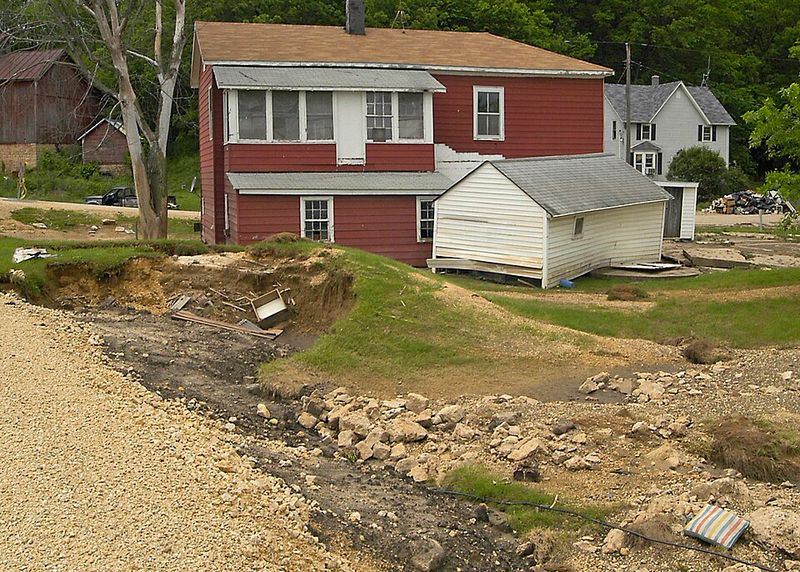
Most towns fight to stay on the map, but Elkport essentially got erased by floodwater.
Located along the Turkey River area in Clayton County in northeastern Iowa, this tiny community was repeatedly vulnerable to flooding, most notably in 2004, when severe flood damage changed the town’s future for good.
After that disaster, residents accepted a federal buyout, and most of the remaining buildings were demolished rather than rebuilt.
What you find today is a strange and striking emptiness. Concrete slabs sit where homes and businesses once stood, and the streets are still technically there, running through a ghost neighborhood that nature is slowly reclaiming.
A handful of structures survived the buyout, including the old St. Patrick Catholic Church, which still stands as a quiet landmark for visitors who make the drive out here.
The surrounding scenery along the Turkey River valley is genuinely beautiful, with rolling bluffs and dense woodland framing the river corridor. It is the kind of backdrop that makes the town’s story feel even more bittersweet.
Elkport was never a large place, but it had a post office, a bar, a school, and a community identity that stretched back to the mid-1800s. Generations of families called it home before the water made that impossible.
If you are road tripping through Clayton County, the drive to Elkport takes you through some of the most scenic terrain in northeastern Iowa. Combine it with a stop at Pikes Peak State Park nearby for a fuller day of exploration.
There is something unexpectedly moving about standing on a street where a whole neighborhood used to breathe with daily life. Elkport does not shout its history at you, but it whispers it in a way that sticks with you long after you drive away.
2. Buckhorn
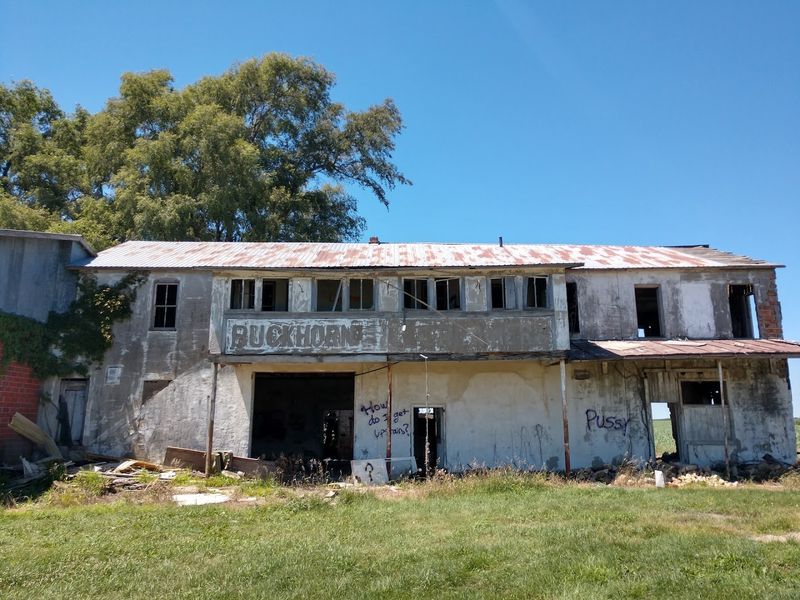
Some ghost towns go out with a bang, but Buckhorn in Jackson County in eastern Iowa simply faded out with a long, quiet exhale.
The community sits off Highway 64 near Maquoketa, and finding what remains of it feels like a small personal victory for the curious traveler.
Jackson County is one of Iowa’s most historically rich and quietly scenic regions, and Buckhorn sits within a landscape that still carries the feel of a much earlier era.
The area around Buckhorn is best known today for a few surviving traces, including the old creamery, the church, and the cemetery. Getting here means navigating rural roads that wind through timber and crop fields in equal measure.
What helped shape Buckhorn was the agricultural life around it. The Buckhorn Creamery became the community’s most recognizable feature, serving area farmers and giving the little settlement a practical reason to exist.
Over time, rural commerce shifted, transportation changed, and small local businesses could not hold the same pull they once had. The creamery eventually closed, and the community slowly slipped out of everyday use.
For road trippers, pairing a stop at Buckhorn with a visit to Maquoketa or Maquoketa Caves State Park makes for a genuinely satisfying day. This corner of eastern Iowa has enough bluffs, back roads, and quiet history to keep the detour interesting.
Buckhorn may be just a name on the map now, but standing near what remains gives you a real sense of how hard those early communities worked and how much they invested in a future that did not always cooperate with their plans.
3. Sunbury
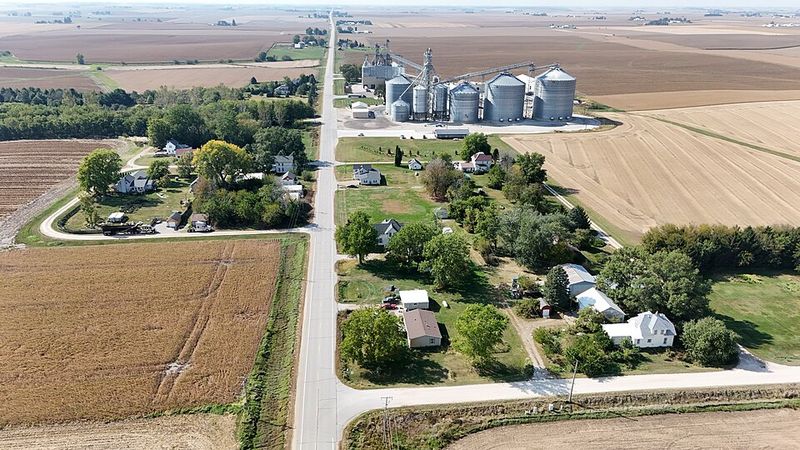
Not every ghost town has a dramatic story involving floods or fires. Sunbury, located in Cedar County in eastern Iowa, represents the quieter and perhaps more common kind of small-town disappearance, the kind driven by decades of gradual economic attrition.
Sunbury sits in the southeastern part of the county, southeast of Bennett and north of Durant, and it grew around the railroad era rather than a big boomtown dream.
At its modest peak, Sunbury had enough local life to feel like a functioning rural community. It had a bank, a dance hall, nearby farms, and the kind of everyday gathering places that once gave small railroad hamlets their rhythm.
But the basics were never quite enough to compete once better transportation connected people to larger trade centers. Over time, it became easier for residents in the area to travel elsewhere for goods, services, and social life.
The old Sunbury Dance Hall closed in the 1960s, and the bank building, long abandoned, was eventually razed in 2014. Those details say a lot about how slowly a place can fade without one single dramatic turning point.
The landscape around Sunbury is gently rolling and heavily farmed, with the kind of wide-open views that make you understand why settlers found this part of Iowa so appealing in the first place. The soil here is some of the richest in the country.
Cedar County has several other points of interest nearby, including Tipton, Durant, and West Branch, which makes Sunbury easy to fold into a slower eastern Iowa road trip.
Sunbury asks nothing dramatic of its visitors. It simply sits there in the landscape, a quiet reminder that not all history is loud, and that the most ordinary stories of rise and decline can be just as worth remembering as the extraordinary ones.
4. Downey
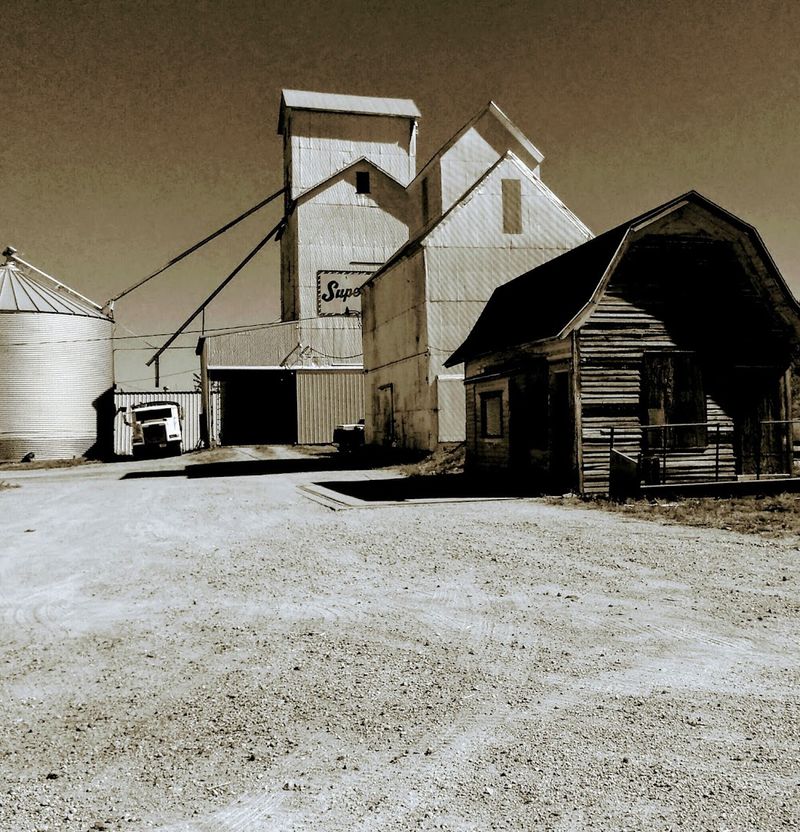
Cedar County in eastern Iowa is home to Downey, a small railroad-era community that never completely vanished but now feels much quieter than its early promise might have suggested.
Downey was established in 1856, shortly after the Chicago, Rock Island and Pacific Railroad was built through the area. That railroad connection gave the community a practical boost and helped shape its early identity.
Grain elevators, farm supply activity, and a small commercial life took shape around the tracks, and for a time, the town felt like it had a real future ahead of it.
But railroad towns lived and faded by the same logic. As rail traffic changed and roads improved, the economic advantages of having a depot in your backyard diminished.
Residents could reach Iowa City, Tipton, West Branch, or other nearby communities more easily, and small local businesses had a harder time competing with that convenience.
What remains of Downey today is modest but tangible. The grain structures near the tracks still serve as a landmark visible from the surrounding fields, a sturdy reminder of the agricultural economy that gave the community its reason for existing.
Downey is still a census-designated place with residents, so it is not a completely abandoned ghost town. Even so, its reduced footprint and quiet railroad setting make it a reasonable stop for readers interested in Iowa’s nearly forgotten small-town history.
Cedar County as a whole is an interesting place to explore for history-minded road trippers. The county seat of Tipton has a well-preserved historic downtown, and the broader region offers a window into how eastern Iowa developed during the 19th and early 20th centuries.
Downey rewards the traveler who pays attention to small details, the rural tracks, the grain structures, and the quiet layout of a community that still exists, even if its busiest days are far behind it.
5. Buxton
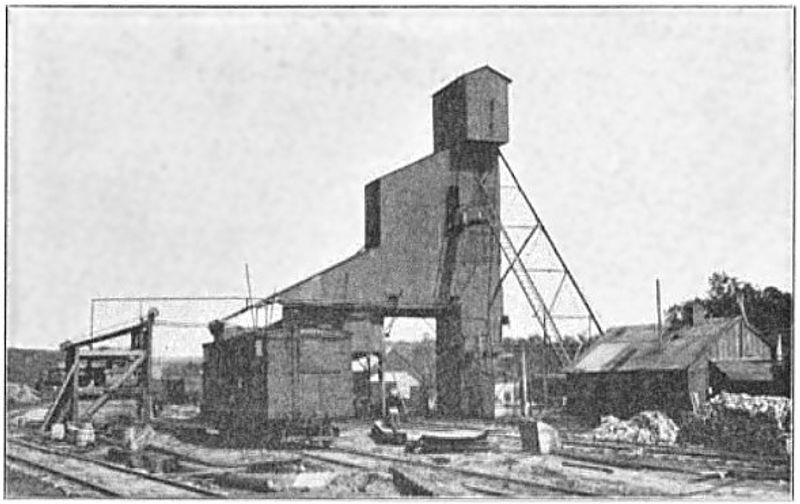
Out of all the ghost towns on this road trip, Buxton carries the most remarkable and layered history.
Located in Monroe County in south-central Iowa, Buxton was once home to a population of several thousand people and stood as one of the most unusual communities in the entire Midwest at the turn of the 20th century.
The town was built around coal mining, developed by the Consolidation Coal Company, and at its height in the early 1900s, it had a population that was largely African American, making it a genuinely rare example of a racially integrated company town in that era.
Black and white miners and their families lived side by side in Buxton, attended the same schools, and shopped at the same stores.
For its time and place, this was extraordinary, and historians have spent decades studying what made Buxton work in ways that so many other communities did not.
The town had a YMCA, a hospital, a newspaper, and a commercial district that served a population of roughly 5,000 at its peak. It was not a small outpost but a genuine, functioning town with real civic ambition.
When the coal seams ran out and the mining company moved on, Buxton collapsed with startling speed. By the 1920s, the town was essentially gone, the buildings dismantled or abandoned, the population scattered to other communities.
Today, the site is mostly open farmland, but Monroe County historical organizations have worked to document and commemorate Buxton’s story. Interpretive materials and local museum resources help visitors understand what once stood here.
Buxton is the kind of place that changes how you think about Iowa’s history. It proves that the state’s past is far more complex, surprising, and worth knowing than most people ever expect.