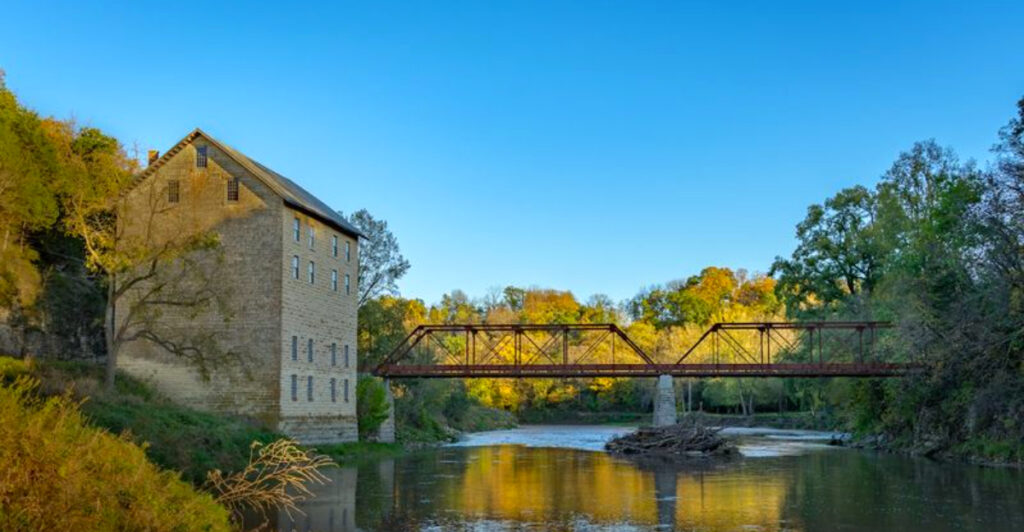
If you like old stone, river noise, and the kind of quiet that lets you hear a crow two fields over, read on.
I spent a day wandering a 1860s mill complex in Iowa and kept finding small surprises – a rebuilt iron bridge, stacked stone walls with moss, and friendly staff who knew the stories.
This piece will walk you through what I actually saw, when to go, and how to make the most of a visit in northeast Iowa.
Stick with me, and I promise useful tips, honest observations, and a clear sense of why this place called for a slow afternoon drive.
First glimpse and arrival
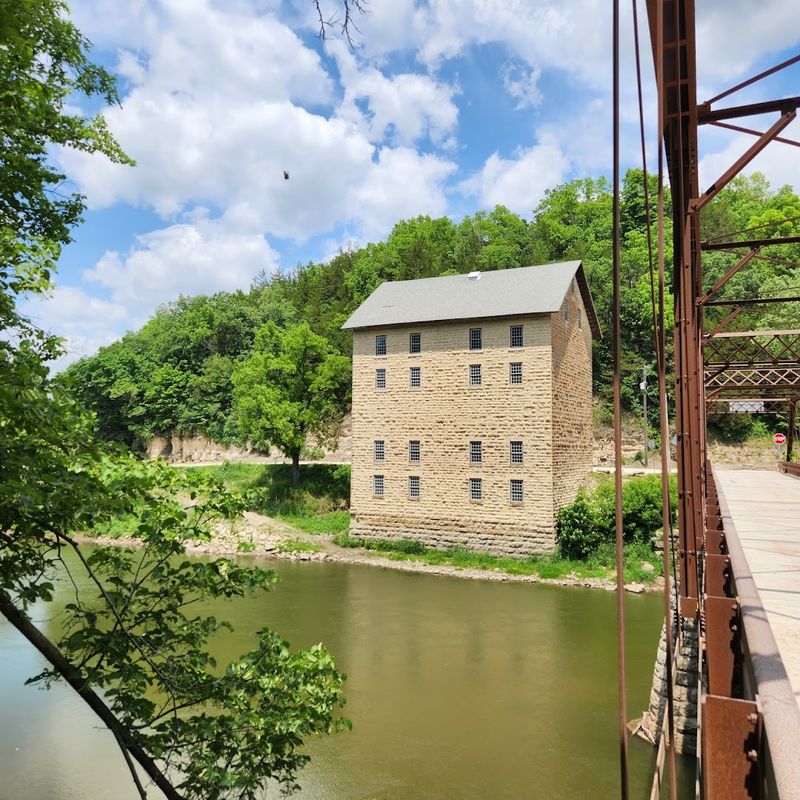
I remember turning off a quiet back road and spotting the old mill before any signs explained it.
The stones read like pages of weathered text, each block differently stained from decades of river spray and sun, and I felt foolish for expecting a postcard that matched an online photo entirely.
The lane into the parking area is short but rustic, with a sturdy pullout and enough room for a small group of cars without fuss.
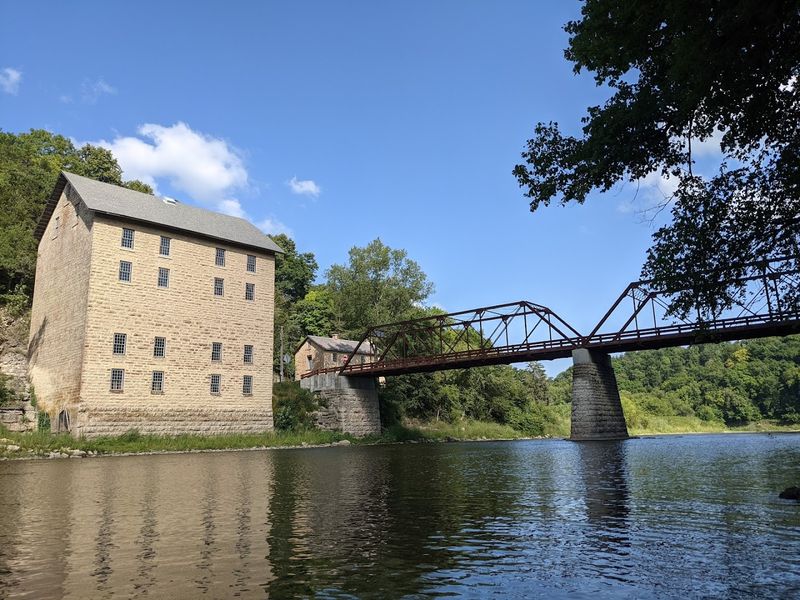
Walking toward the property, the restored one-lane metal bridge comes into view and acts like a promise being kept; it crosses the Turkey River with a gentle clank that felt oddly theatrical in the open air.
I learned right away that the layout is a blend of preserved ruins and careful restoration, where you can photograph from public vantage points and still respect closed areas. The grounds are groomed but not manicured, which helps the mill appear honest and unforced.
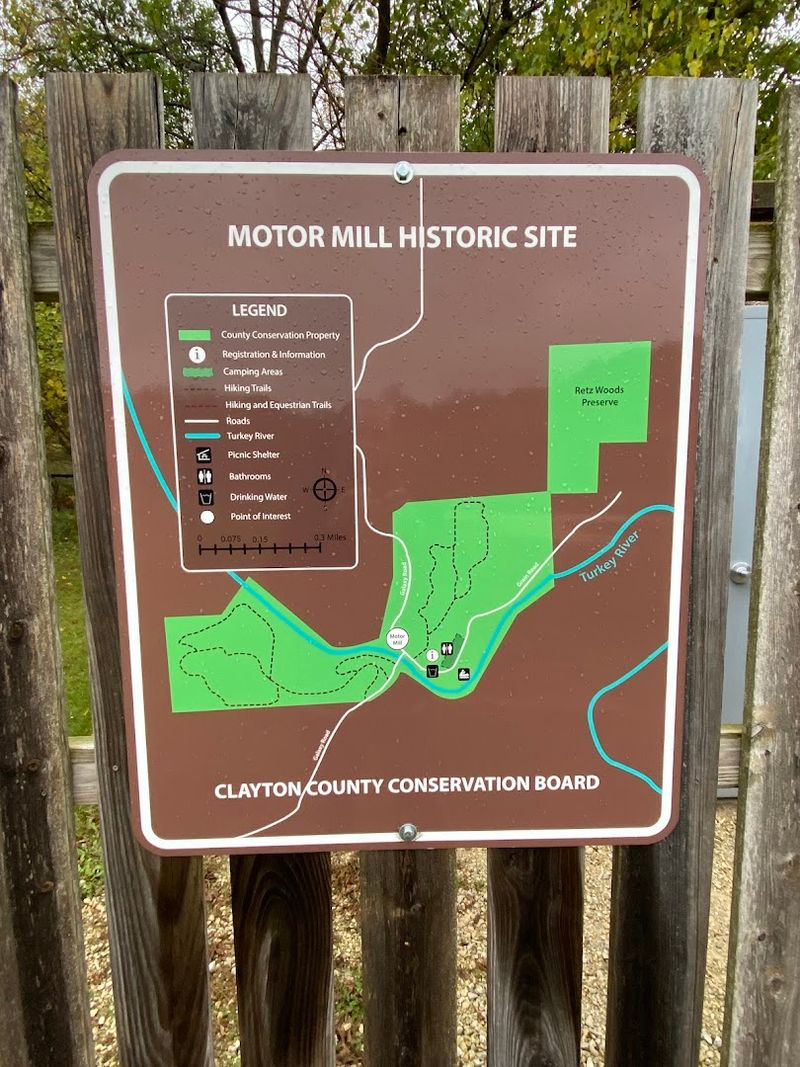
Near the end of my first circuit I checked the posted map and noted the full address listed for the place: Motor Mill Historic Site, 23002 Grain Rd., Elkader, IA 52043.
That first glance set the tone for the day: historic without being precious, quiet without being empty, and clearly a place that rewards a slow, observant pace.
I left the parking area feeling like I had permission to wander and to take notes for future visitors who might prefer specifics over praise.
The mill building up close
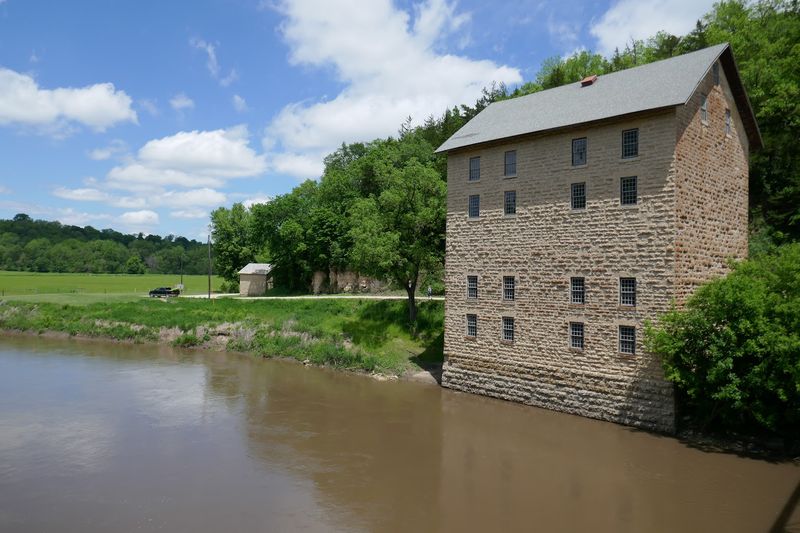
Stepping closer to the main mill, I was struck by how the stonework reads like someone left a city block in miniature – stacked, squared, and slightly askew in ways that feel human rather than engineered.
The building’s sheer mass is easier to grasp when you stand near the riverbank and look up at the six-story limestone structure, each course telling a season’s worth of storms and freezes.
I noticed subtle repairs where modern mortar had been matched to older tones; the conservators tried to make the interventions discreet, which I appreciated because it leaves the old fabric legible.
There are interpretive panels around the mill that explain milling mechanics without drowning you in jargon, so I learned what the turbines, bolters, and milling equipment once helped achieve and where the miller would have spent long hours checking grain.
Current visitor information says the Welcome Center and Mill are open for self-guided visits during posted seasonal hours, while guided tours are offered on a more limited schedule.
On my visit, staff volunteers answered practical questions about floods and foundations and pointed out where later repairs re-used original stones.
Walking the perimeter gave me a clearer sense of how the mill functioned within the landscape rather than as an isolated monument; its location beside the Turkey River was never accidental, and seeing that connection close up made the history more concrete.
The iron bridge and crossing
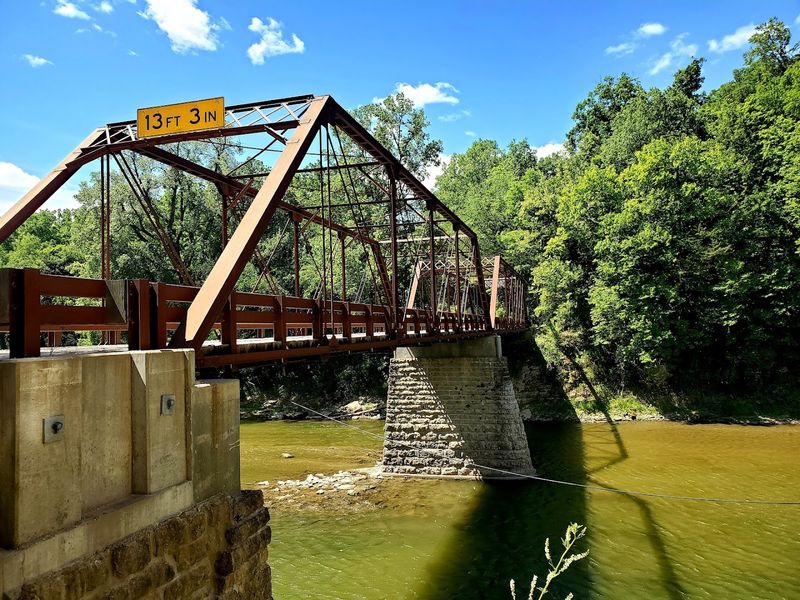
The reconstructed iron bridge felt like an actor returning to its role; it’s narrow, low, and demands that anyone crossing slow down and look.
When I walked onto the span I could feel the rhythm of the decking underfoot and hear a soft timbre as bicycles and footsteps passed, which made the walk feel appropriately ceremonial.
From the center of the bridge the Turkey River opens up in a broad, ribboned view where kayakers sometimes glide by and where the mill’s silhouette frames the far bank, so pausing mid-crossing is almost required.
Practical detail: the bridge is one lane wide, so drivers need to yield and move slowly if they use it. During my visit a small group paused halfway, taking photos and trading historical tidbits they’d read on the interpretive signs.
The bridge also functions as a viewpoint for photographing the mill with the river in the foreground; I spent a good ten minutes there, switching lenses and trading compositions with another person who’d come from a nearby trailhead.
Leaving the bridge, I thought about how literal crossings like this encourage a different pace – you have to slow down, look, and commit to a direction – which fit the mill’s mood perfectly.
The mill inn and welcome area
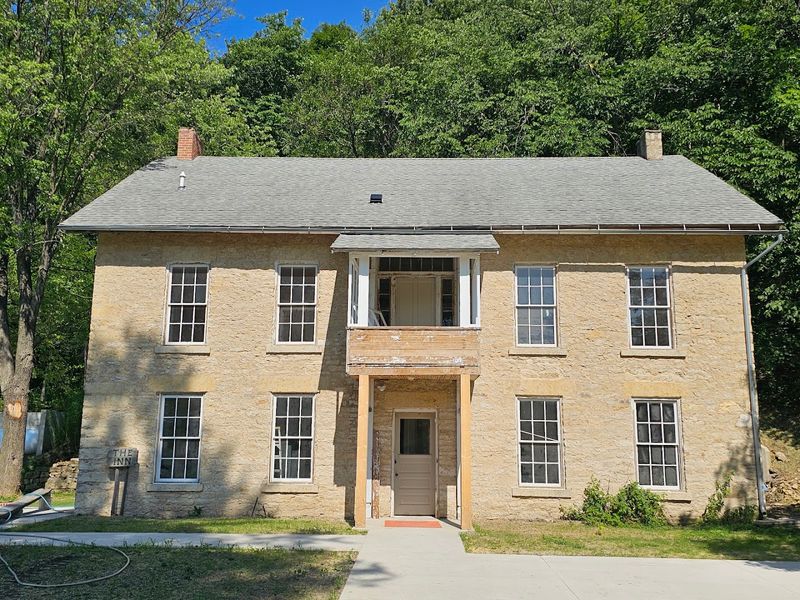
I tacked the inn and welcome area onto the end of a loop because I heard someone mention a new restoration, and that turned out to be a good call.
The restored three-story Motor Mill Inn now has a visitor center, gift shop, public restroom, and foundation office on the main floor, while the upper two floors can be rented together for lodging.
I poked my head inside during open hours and found a volunteer swapping brochures and offering tips on where to stand for photos, which made orientation fast and friendly.
The inn sleeps up to 12 guests, and day-use rentals can also be arranged by calling Clayton County Conservation. The site also has a renovated stable available for gatherings, so visitors may see the complex being used for more than casual touring.
Restroom facilities were available, and the welcome center had a small seating area where I could sit, read the interpretive pamphlet, and plan the next trail without feeling rushed.
It’s a compact operation that feels thoughtful; the team that runs it clearly balances preservation with making visitors comfortable enough to linger and learn more about the mill’s story.
Trails and riverside walking
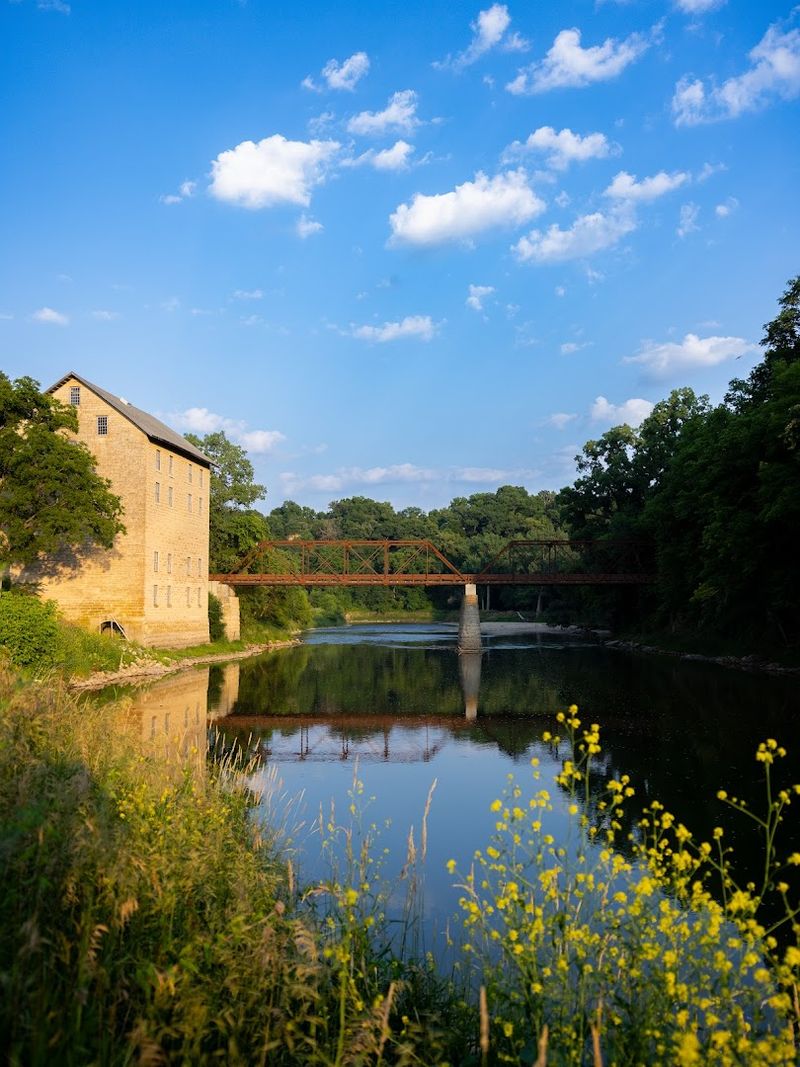
I spent time on the trails around the mill and realized the paths are varied enough to feel like a real outing without turning the visit into an all-day expedition.
Official park information describes more than 4 miles of trails across the 155-acre site, with routes on both the north and south sides of the Turkey River.
I kept a small pair of walking shoes in the car and was glad I did; the routes move through forests, prairies, and savanna, and the ground can be uneven in places after rain.
Along the way there are interpretive signs offering bits of local lore, from flood history to how the mill’s operators managed water flow.
I paused to watch a family set up a picnic while a couple of kayakers drifted by, and it felt like everyone was tuning the day to their own pace.
The trails are maintained by county conservation efforts, and the mix of river views, blufftop scenery, and historic structures gives the site more range than a quick stop might suggest.
For a short outing that still feels like a small adventure, the walking options around the mill are ideal; take layers, because the river corridor can be cooler than nearby open fields.
When to visit and timing tips
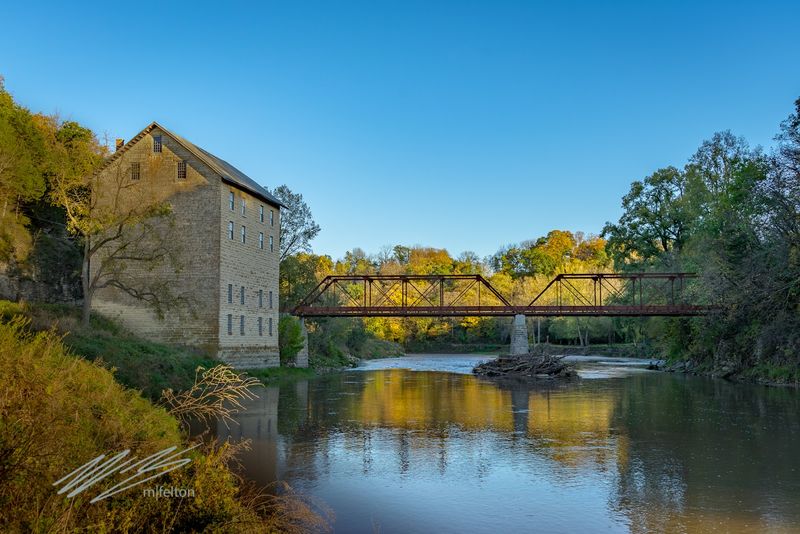
Timing matters at Motor Mill because parts of the complex open seasonally and tours follow a posted schedule, so I planned my visit to match what I wanted to see.
Current visitor information lists the Welcome Center and Mill as open Monday through Sunday from 10 a.m. to 5 p.m. through October 13, with guided tours offered Saturdays and Sundays from noon to 5 p.m. during the main summer season and on select fall Saturdays.
If your aim is photography, early morning brings mist and softer light, while late afternoon gives warmer tones and fewer shadows on the stone surfaces.
Packing practicalities include checking seasonal access and weather: heavy spring runoff can make some low-lying paths soggy, and winter conditions may limit interior access even when the grounds are still worth seeing.
On the day I visited late in spring, the grounds were accessible, but I was still glad I had checked the schedule before making the drive.
Weekdays are quieter if you prefer solitude; weekends attract a steady trickle of families and history buffs, especially when the mill offers a guided program.
In short, decide whether you want a quiet photo walk, a guided history tour, or a picnic by the river, then plan your timing accordingly to match that goal and avoid disappointment.
Family friendly features
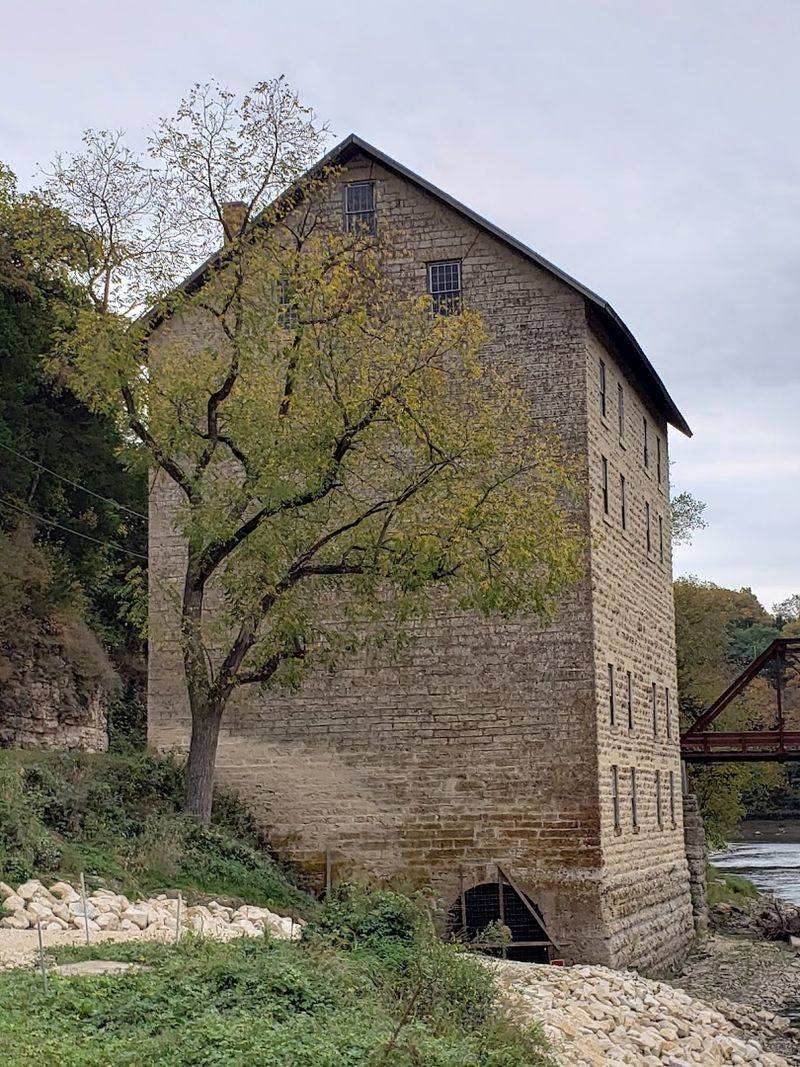
I took a family-oriented approach on a second visit and noted how the place fits different ages with minimal hassle.
The grounds offer enough open space and shorter walk options for a relaxed visit, while the larger trail system gives older kids and active adults more room to explore.
I noticed a couple of families using the picnic area and smaller kids inspecting safe, low rock walls while adults checked interpretive panels, which made the visit feel flexible rather than strict or formal.
Safety-wise the main riverbank areas have gentle slopes but no formal guardrails, so supervising children near the water is sensible.
The property includes restroom facilities and a modest parking area, which helped when a group arrived for a family event at the inn.
Staff mentioned that some special programs cater to school groups, with shorter guided talks and hands-on demonstrations during peak season.
If you bring little ones, pack water, snacks, and a change of shoes in case a puddle becomes irresistible; thoughtful preparation turns a quick stop into a relaxed half-day for families of mixed ages.
Practical access and facilities
Parking and basic facilities make a difference when you visit rural historic spots, and Motor Mill handles the essentials without overselling them.
The parking area is gravel and level, with space for several cars and a couple of larger vehicles if needed; I arrived midday and found room without circling.
Restrooms are available near the welcome center and appear clean and well maintained, which I appreciated after a morning on the trails.
Signage throughout the grounds is clear; maps show the main loop, interpretive points, and where access is restricted for preservation reasons.
The property is managed by Clayton County Conservation, and their staff operates the welcome center during posted hours.
I checked their phone number and web address on the kiosk to confirm upcoming tour times, and found a volunteer who explained how to reserve the inn for group events.
Accessibility is reasonable in parts of the property, but some historic areas require stepping and uneven ground, so mobility aids may need assistance on certain routes.
Overall, the practical side of visiting is straightforward: come prepared for country roads, check hours ahead of time, and you’ll have what you need for a comfortable visit without surprises.
History highlights and succinct facts
I like history that tells a clear story without burying readers in dates, and the interpreted panels at the mill do exactly that by focusing on how milling shaped local life.
The exhibits note that the complex operated in the 19th century and that the river played both a productive and challenging role, with flood events impacting operations over time.
I found the panels helped me understand the mill’s place in regional agriculture and why its size and stone construction mattered for durability and storage capacity.
The visitor center and mill exhibits display artifacts, photographs, and interpretive materials that ground the narrative in everyday work rather than abstract timelines.
Recent visitor information also notes milling-related exhibits, including models that help explain how grain processing worked inside the mill.
The materials also explain later conservation efforts and how local groups reconstructed the bridge to facilitate access for future generations.
These concise history highlights gave me a practical feel for the mill’s timeline and helped me appreciate how preservation choices keep the story visible without reconstructing everything in modern materials.
Nearby spots and how to extend a day
I decided to extend my visit by looping through nearby county highlights and found that Motor Mill pairs well with a few short local stops.
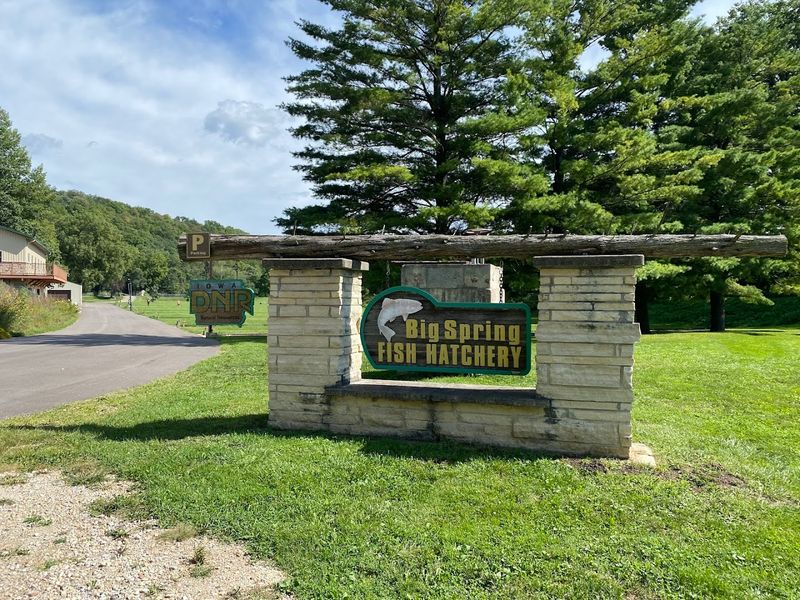
Big Spring Trout Hatchery sits 10 miles northwest of Elkader, which makes it a good add-on if you want trout ponds, river access, and a different angle on local conservation work.
Local roads connect the mill to nature areas, trailheads, and scenic overlooks, so if you want more walking or a picnic in varied settings, it’s easy to build a half-day itinerary without long drives between points.
If you’re planning a full day, check nearby towns for a café break or to grab a sandwich; Elkader has modest options that suit a casual palate and local shops.
I flagged a small nature center route and a scenic drive along ridgeline roads that offered different panoramas of the river valley, which helped me avoid feeling like I’d exhausted every angle at the mill.
Some travelers combine a kayaking trip on the Turkey River with a mill visit, since the water trail runs past the historic district and the park has river access near the campground.
Bottom line: the mill works well as a focal point for a slow day of regional wandering, with complementary stops reachable in manageable driving segments that keep the pace relaxed and scenic.