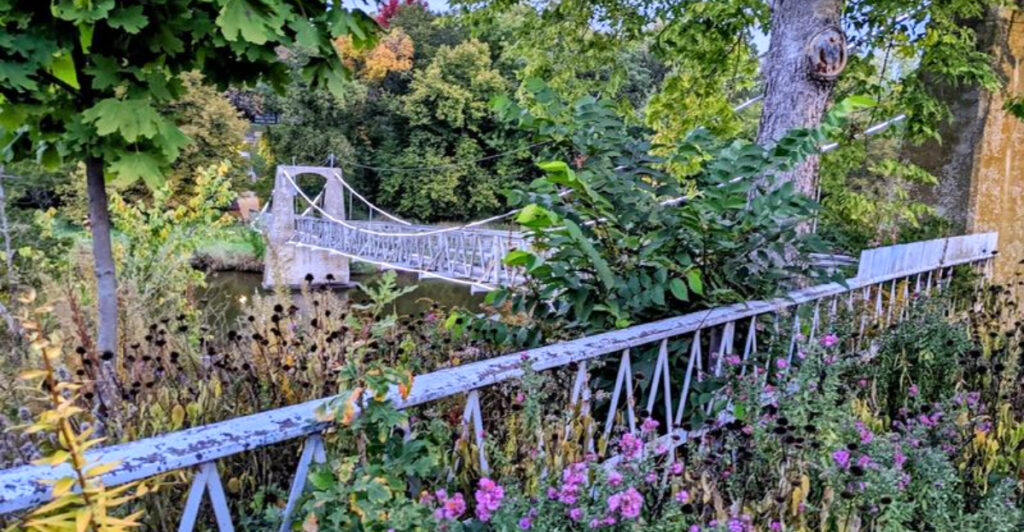
Iowa has plenty of quiet little stops that do not look dramatic at first, but this one adds just enough movement to make the visit memorable. In Iowa Falls, a historic pedestrian bridge stretches over the river and gives walkers a gentle sway with every step.
That wobble is not a problem to overlook. It is part of the charm, and it is the reason so many curious road-trippers, families, and local walkers keep coming back to cross it.
With river views, a nearby waterfall, a playground, and a totem pole sculpture all close by, this small-town stop feels surprisingly full for a quick detour.
It is easy to visit, fun to photograph, and just unusual enough to make the whole crossing stick with you.
What the Swinging Bridge Actually Is
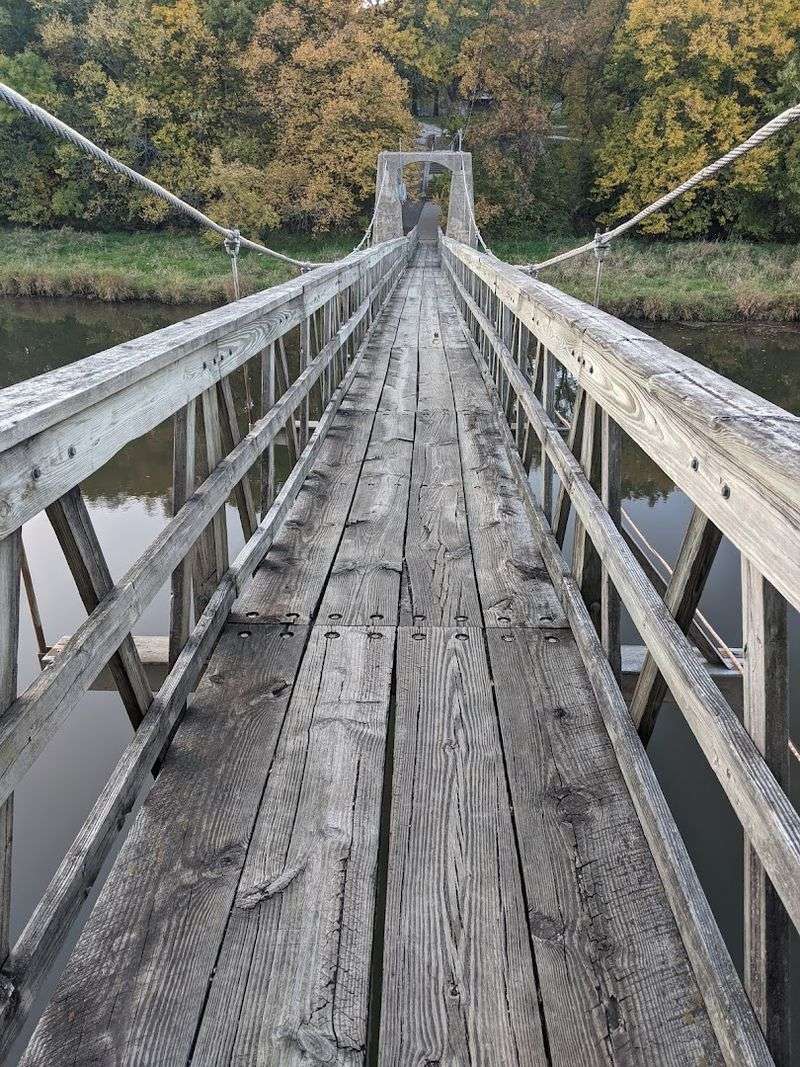
A lot of bridges just sit there. This one moves.
The Iowa Falls Swinging Bridge is a historic pedestrian suspension bridge that spans the Iowa River, connecting the Rocksylvania Avenue side of town with Assembly Park through a structure that has a very deliberate, very noticeable sway when you walk across it.
The bridge is not a thrill ride, but it is more engaging than your average footbridge. Each step sends a small ripple of motion through the cables and planks, which keeps you alert and makes the crossing feel like an actual event rather than just getting from point A to point B.
The bridge is reached from the Rocksylvania Avenue area in Iowa Falls, IA 50126, with Assembly Park serving as the more practical access point for many visitors.
People come specifically to cross it, take photos, and soak in the river views that open up from the middle of the span.
The History Behind the Bridge
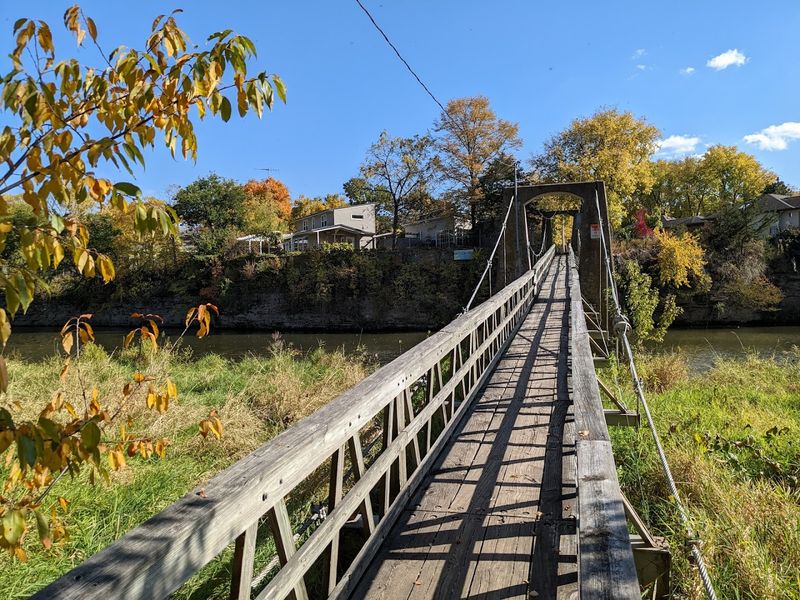
Old bridges carry stories in their cables. The Iowa Falls Swinging Bridge was first built across the Iowa River in 1897, which gives this small-town crossing more history than its playful sway might suggest.
It represents a style of pedestrian bridge construction that was practical for small river towns before modern road infrastructure made simple foot crossings less of a daily necessity.
The bridge has been rebuilt several times over the years, including in 1909, 1925, 1956, and 1989. That long cycle of repair and reconstruction says a lot about how much the town has valued keeping this unusual crossing alive.
The bridge connects a residential neighborhood to the park system on the opposite bank, which tells you something about how the town was laid out and how people moved through it before cars dominated every decision about infrastructure.
A pedestrian suspension bridge in the middle of a neighborhood is a remnant of an era when getting across the river on foot was a real daily need.
Today, the historical significance adds a layer of context to the visit. You are not just crossing a novelty bridge.
You are walking a route that Iowa Falls residents have used for generations, which gives the crossing a quiet sense of continuity that no new bridge could replicate.
The View From the Middle of the Bridge
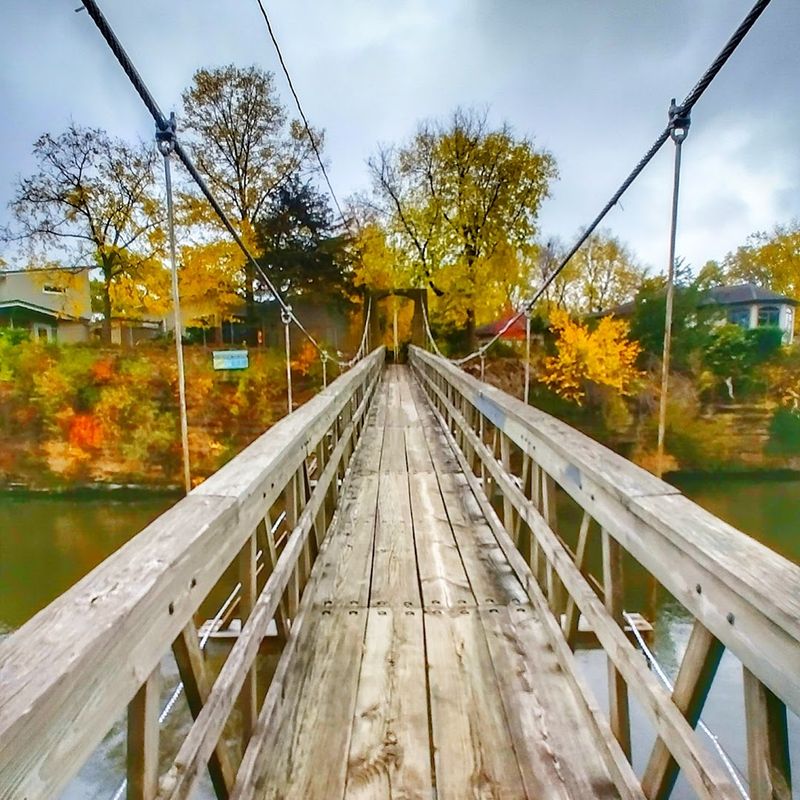
Stop halfway across and look down. The Iowa River moves below you, framed by limestone bluffs and tree-covered banks that make the view feel bigger than the town around it.
In summer, the water catches the light and jet skiers occasionally cut through the scene, which adds a lively layer to what could otherwise be a still landscape.
The cliffs on the west bank are the real visual anchor. They rise sharply above the river and give the whole area a more dramatic topography than you might expect from central Iowa.
The bridge puts you at eye level with the treetops, which is a perspective you rarely get unless you are on a boat or a high bank.
Fall is when the view really shifts. The bluffs turn orange and gold, the river reflects the color, and the light through the trees hits differently than any other season.
Winter visits are quieter but the bare branches open up longer sightlines, and the bridge has its own kind of stark appeal when the river runs cold and clear.
The Waterfall You Might Almost Miss
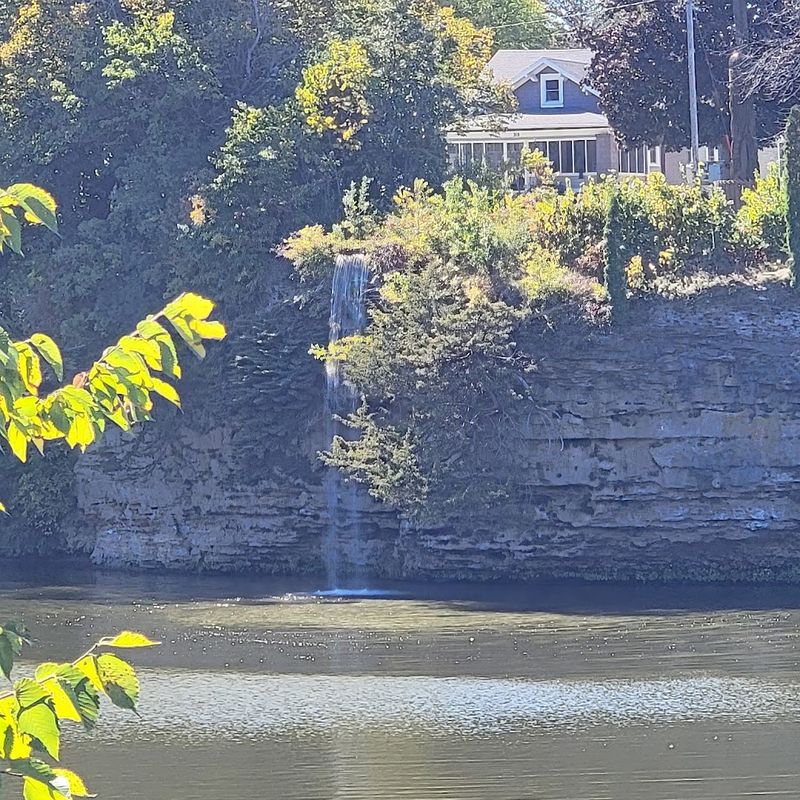
Most people come for the bridge, but the man-made waterfall along the Iowa River corridor is worth a slow look on its own.
It is not a massive wild cascade, but it adds movement, sound, and another layer of scenery to a stop that already has plenty going for it.
The waterfall is part of the riverfront landscape rather than a remote natural feature tucked deep in the woods. That makes it easy to work into the same visit without turning a quick bridge stop into a full hiking project.
I noticed the waterfall on my first crossing and almost walked past it on the way back before catching the sound again.
It is easy to overlook when the bridge is drawing all the attention, but once you spot it, it becomes part of the reason the whole area feels cohesive rather than just a single point of interest with nothing else around it.
Assembly Park and the Playground on the North Side
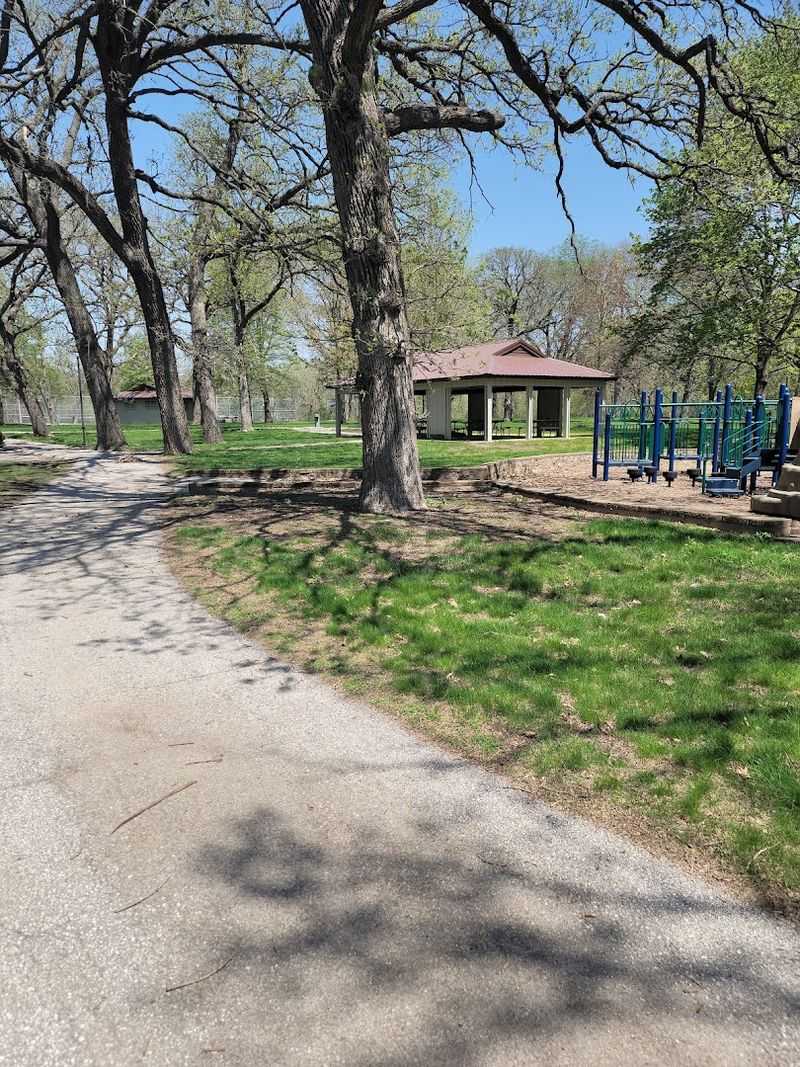
Cross the bridge heading north and you land in Assembly Park, which is the main parking area and the practical entry point for most visitors.
The park has a playground that makes this stop genuinely useful for families traveling with kids who need to burn some energy after a long stretch in the car.
The playground is not elaborate, but it is well-maintained and sits in a shaded area that stays cooler in summer.
Kids who are too young to fully appreciate the bridge sway tend to find the playground more interesting anyway, which means parents can take their time on the bridge without rushing.
Assembly Park also provides the most reliable parking in the area. Parking on the southwest side near Rocksylvania Ave is limited and can leave you on a road with no through access if you are not paying attention.
Coming in through the park side is the cleaner approach, especially on weekends when the area draws more foot traffic.
The park is open daily from 6 AM to 10:30 PM, giving you a wide window to plan around your schedule.
The Totem Pole Sculpture at the Memorial Park
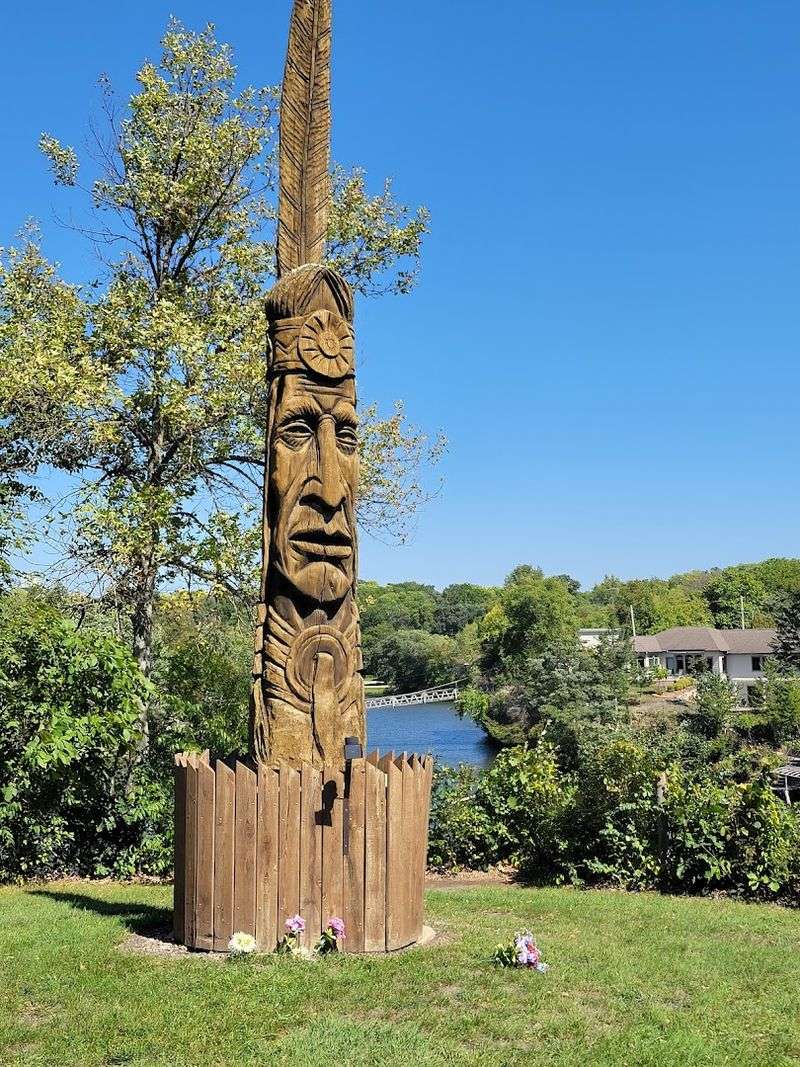
A short trip from the bridge area brings you to one of Iowa Falls’ more unexpected public art pieces: the Peter Toth monument from the Trail of Whispering Giants.
The carving is tall, distinctive, and part of a larger national series created by Hungarian-born artist Peter Toth.
Local visitor information identifies the Iowa Falls monument as an original Peter Toth Indian Monument dedicated on July 4, 1978. Including its pedestal, it stands 33 feet high, which makes it hard to miss once you know to look for it.
The sculpture adds a cultural and artistic dimension to the visit that goes beyond the bridge itself. It is the kind of detail that makes Iowa Falls feel like a town that takes its public spaces seriously, rather than just maintaining the minimum.
I spent more time at the monument than I expected to. The carving is layered with figures and symbols, and the setting around it is quiet enough that you can actually look at it without distraction.
It may not be the reason most people first come to Iowa Falls, but it is exactly the kind of nearby detail that turns a quick bridge stop into a fuller little detour.
What the Sway Actually Feels Like
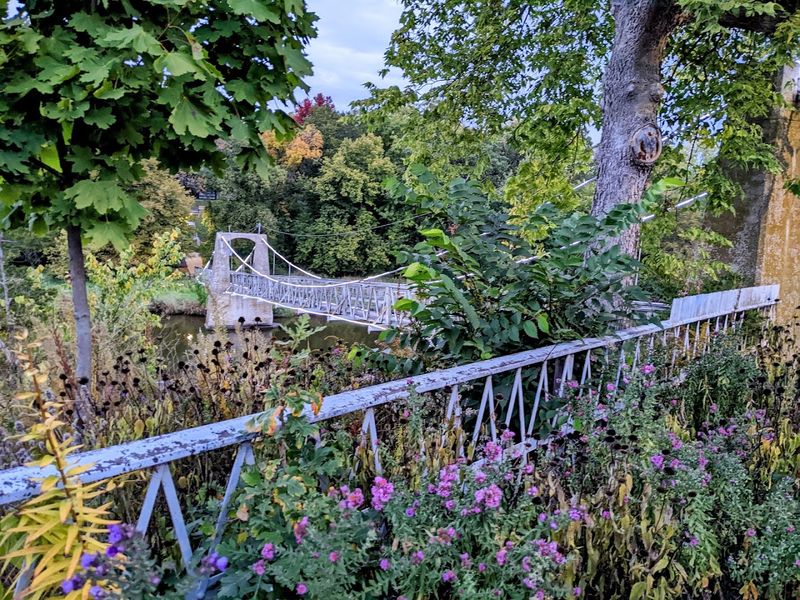
People who have never crossed a swinging bridge tend to picture something alarming. The reality at Iowa Falls is much more approachable than that.
The sway is real and consistent, but it is the kind of motion that makes you grin rather than grip the cables in panic. Kids love it.
Adults who were nervous about it usually laugh by the time they reach the middle.
The bridge moves most noticeably when multiple people are on it at once, especially if they are walking at different rhythms. A group of four or five people crossing together creates a gentle rocking that is hard to replicate on any other type of bridge.
Solo crossings are smoother but still have enough motion to remind you that this is not a standard footpath.
One practical note: the surface can get slippery in wet or icy conditions.
A few visitors mentioned the bridge being icy in winter, and the approach path on the south side has a steeper grade that gets tricky when it is wet.
Dry days are the most comfortable, but the bridge is open year-round for those willing to dress for the season.
Best Times of Year to Visit
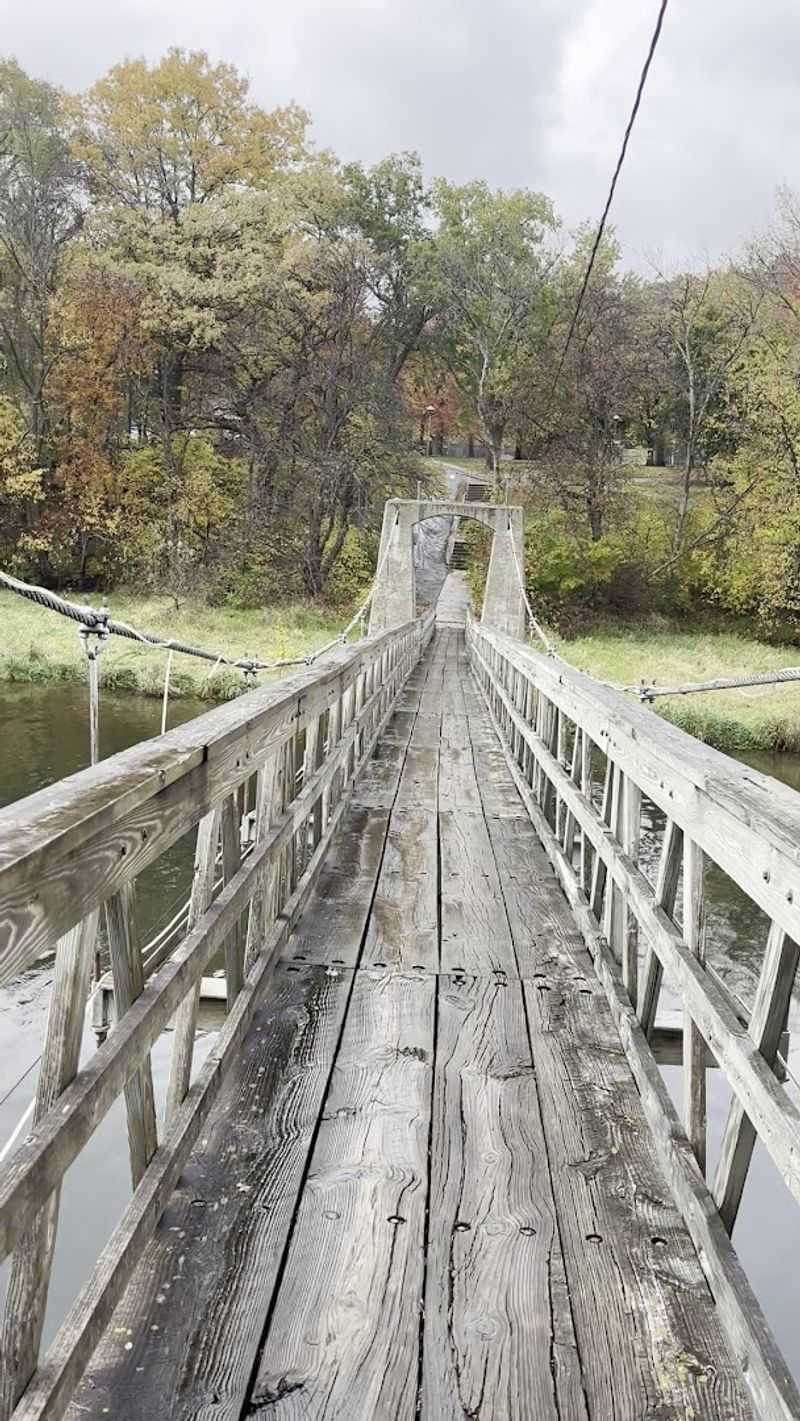
Every season at the Iowa Falls Swinging Bridge offers a different version of the same view, and the differences are significant enough that repeat visits make sense.
Fall is the most popular time, and for good reason.
The bluffs and surrounding trees shift into orange, red, and gold, and the combination of moving water, colored leaves, and swaying bridge creates a setting that photographs extremely well.
Summer brings the most activity. The river is lively, the park is in full use, and the area around the bridge hums with families and road-trippers stopping for a break.
The waterfall is at its most audible in spring when snowmelt and rain keep the flow strong.
Winter visits are quieter and require a little more preparation, but the bare trees open up longer views of the river and bluffs, and the bridge in a light snow has a quiet appeal. Evening visits are also worth considering.
The bridge is open until 10:30 PM, and the lighting along the river in the evening gives the crossing a different mood than a midday stop.
A few visitors specifically recommended the evening and winter combination as underrated.
Practical Tips for Planning Your Stop
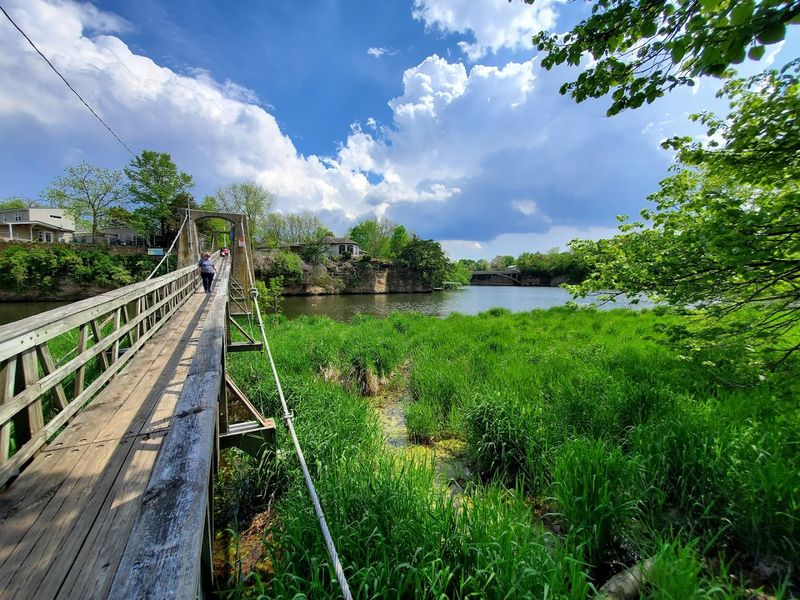
Getting to the bridge is straightforward, but a couple of details are worth knowing before you go.
Parking on the Rocksylvania Ave side is limited and can catch you off guard if you are navigating by phone and it routes you to the southwest end.
The better move is to head for Assembly Park on the north side, where there is a proper parking area and a clear path to the bridge.
The bridge and surrounding area are free to access. No tickets, no reservations, no admission fee.
It is a public landmark in a residential neighborhood, so the vibe is casual and low-key. The hours run from 6 AM to 10:30 PM every day of the week, which gives you plenty of flexibility to work it into a road trip stop or a morning walk.
Wear shoes with grip, especially if rain is in the forecast or if you are visiting in winter. The path on the south side has some incline, and the bridge deck can get slick.
A phone with a charged battery is your best tool here since the river views and bridge sway both make for strong photos that are worth capturing before you leave.
Why Iowa Falls Is Worth the Detour
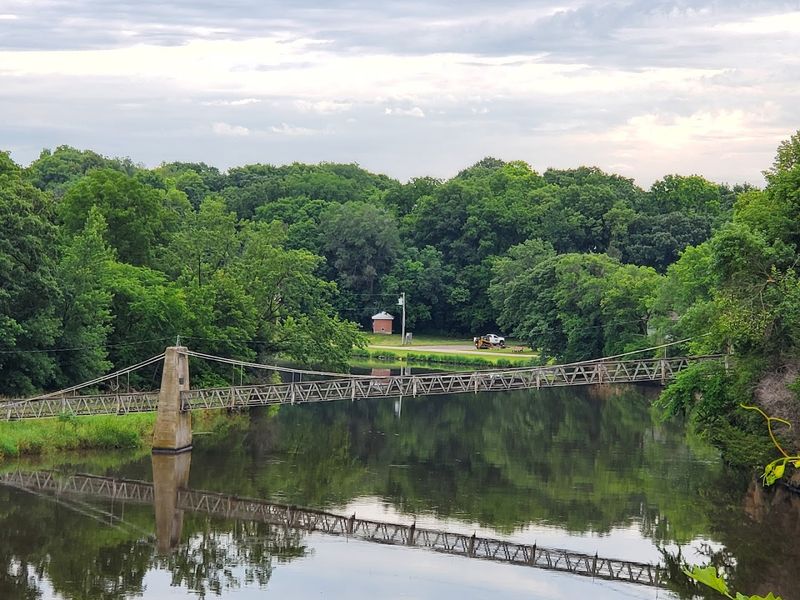
Iowa Falls sits in north-central Iowa on U.S. 65 and near four-lane U.S. 20, and for a lot of road-trippers it registers as a small town to pass through rather than stop in.
The swinging bridge changes that calculation.
It is the kind of stop that takes thirty minutes but sticks in your memory longer than a two-hour tourist attraction that tries too hard.
The town itself has a compact, unpretentious quality that works in its favor. The bridge is in a residential area, which means the visit feels like a genuine local discovery rather than something packaged for tourism.
The nearby park, the waterfall, the Peter Toth monument, and the river bluffs all exist close enough to build a small Iowa Falls detour around them, making the whole cluster of things feel like a mini-itinerary in a very small footprint.
Iowa does not always get credit for its river landscapes, but the Iowa River corridor through this part of the state has real visual character. The bluffs, the water, and a bridge that actually moves underfoot combine into a stop that earns its detour.
Pack a snack, check the weather, and add it to the route.