A quick walk can turn into something else when the rocks refuse to stay quiet.
That is what happened to me on this trail. At first, it looked simple enough.
Dark boulders. Open sky.
A path that seemed easy to follow.
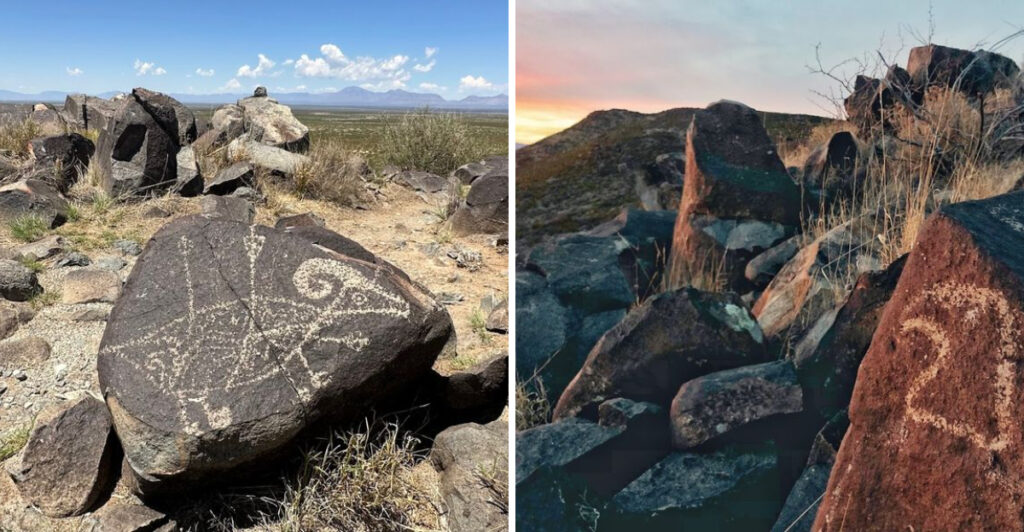
Then I noticed a carving.
After that, I could not stop seeing them. More than 21,000 marks cover the stone here, made by people who lived over a thousand years ago.
Each one feels small until you realize the whole ridge is covered in messages.
There is no dramatic setup. No museum glass.
No sign telling you exactly how to feel. You just stand there, close enough to touch time, and try to take it in.
I came expecting a short stop. I left thinking about the hands that carved those symbols, and how something so old can still pull a person closer long after the trail finally ends.
Desert Silence On Ancient Stone
Before I even reached the first carved rock, the silence hit me like a wall.
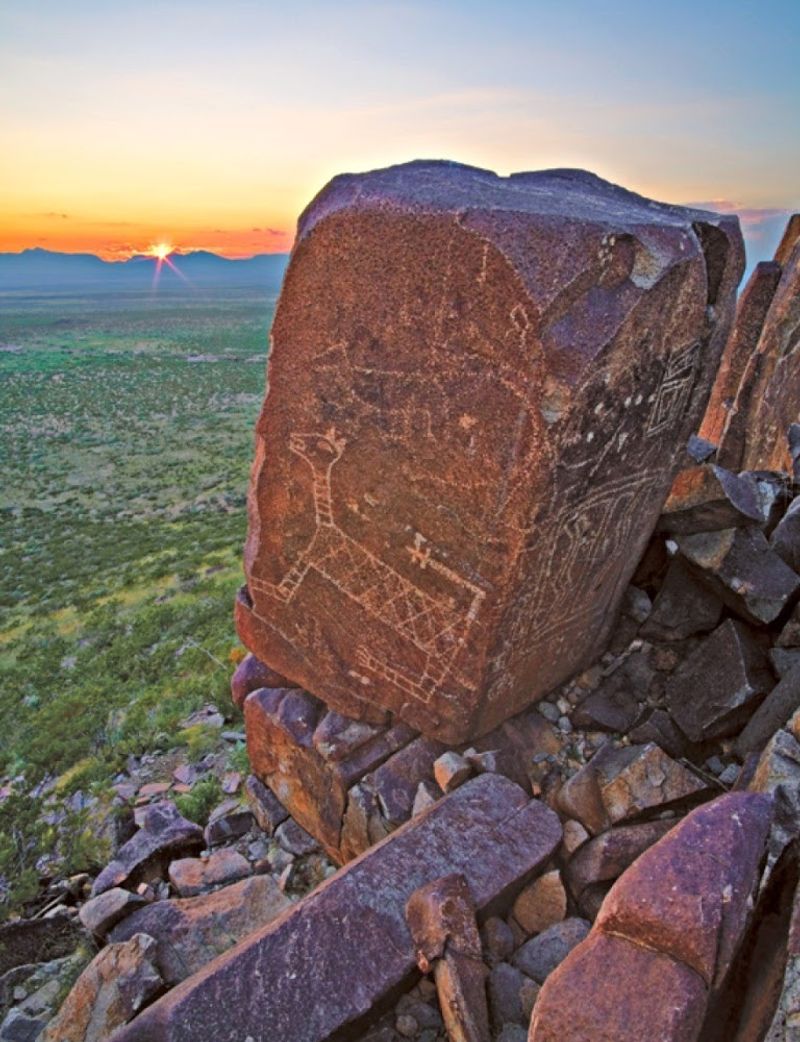
The wind moved through dry scrub and over dark volcanic boulders, and the whole landscape felt older than words could handle. The ridge rose above a wide desert basin, the kind of view that makes you pause because it feels almost unchanged by time.
Standing there, I kept thinking about the people who made these carvings. They stood on this same ground.
They looked out across this same open country. Then they pressed their stories into stone.
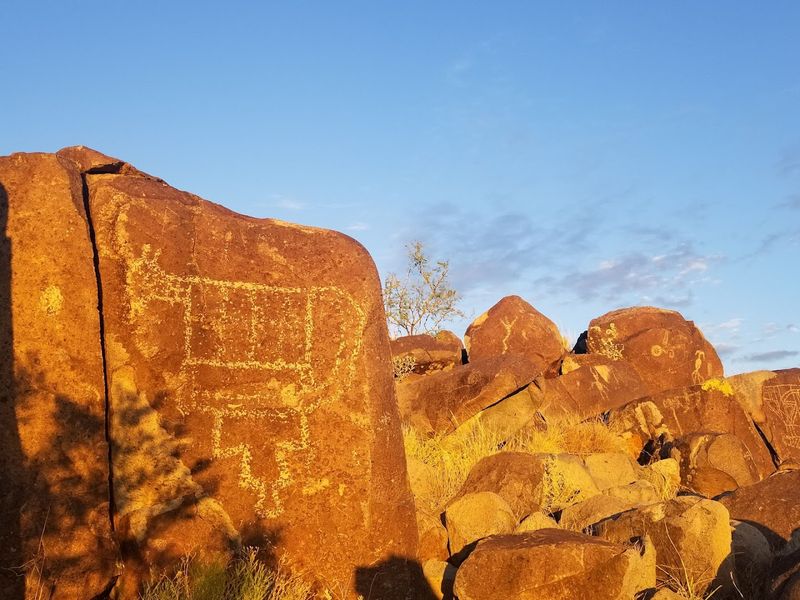
The basalt rocks are coated with desert varnish, a dark natural surface that made the carved lines stand out with surprising clarity. Some marks looked sharp enough to feel recent, even though many are broadly linked to the Jornada Mogollon people and often dated between 200 AD and 1450 AD.
The stillness changed everything. Gravel under my shoes sounded louder.
A bird crossing the sky felt impossible to miss. Nothing about it felt staged or rushed.
It felt personal, like the desert was letting me in on something it had kept for centuries, and the place is Three Rivers Petroglyph Site at 455 3 Rivers Rd, Tularosa, New Mexico 88352.
Stories Etched Into Basalt
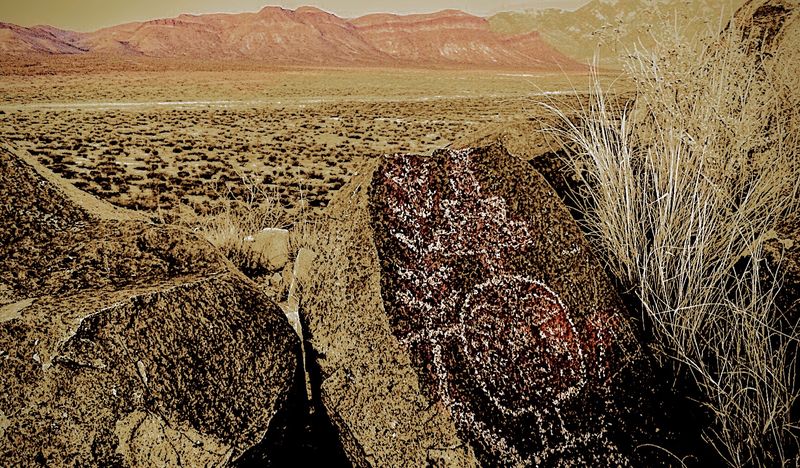
Over 21,000 individual petroglyphs cover the volcanic rocks along this ridge. That number never stopped surprising me, no matter how many times I repeated it to myself.
The Jornada Mogollon people were the primary artists here, and their creative range is genuinely impressive.
On a single boulder, you might find a detailed fish carved next to a geometric sunburst, a masked figure, and what looks like a handprint pressed into the stone with intention.
Birds, insects, deer, and abstract shapes appear around every corner of the trail, each one etched through the dark desert varnish to expose the lighter rock beneath.
What makes this site stand out from others I have visited is the sheer density of the carvings.
You are not searching hard for one or two examples behind a fence; they surround you completely.
The detail in some of the figures is striking, with fine lines suggesting feathers, facial features, and patterns that clearly meant something specific to the people who made them.
Researchers continue to study the images, though the full meaning of many remains open to respectful interpretation.
A Quiet Trail Through Time
The Petroglyph Trail runs about half a mile one way. The round trip is roughly a mile in total, though it feels longer once you start stopping for every carved rock.
I started the hike thinking I would finish in forty-five minutes, and two hours later I was still finding new images I had missed on the way up.
The path is rocky and uneven in places, so sturdy hiking shoes are genuinely worth wearing rather than just a suggestion.
A shaded rest spot along the route turned out to be a welcome place to pause, drink some water, and take in the surrounding desert landscape without rushing.
The trail is self-guided, and a numbered tour system helps point out some of the most notable carvings along the way.
Honestly, though, taking your time on the marked route and scanning the rocks carefully is half the fun.
The small visitor center helps make the whole experience feel organized without being overly structured, especially if you pick up a map before starting the trail.
Bring water, wear a hat, and plan for more time than you think you will need.
Symbols Beneath The Desert Sun
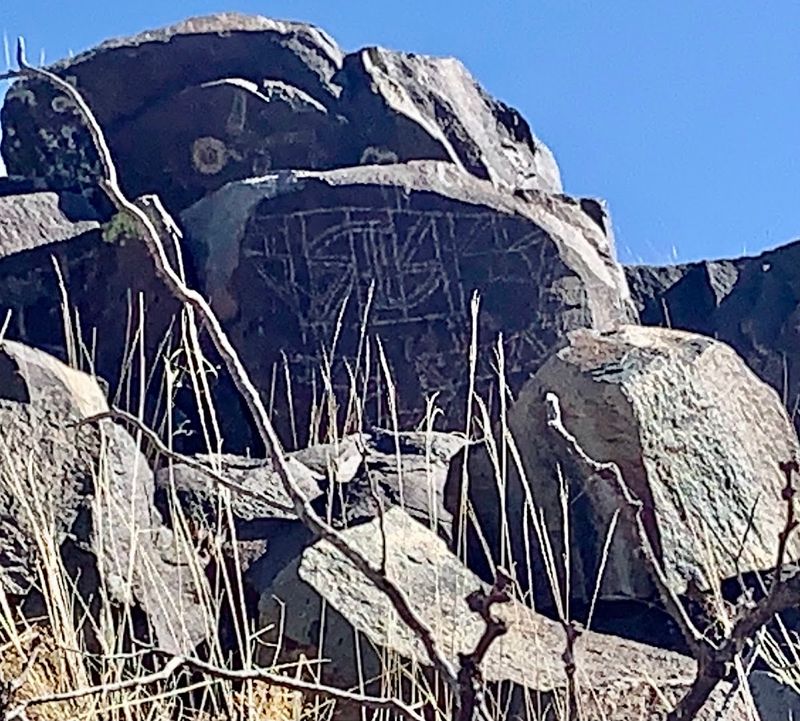
New Mexico sun has a particular quality to it, sharp and direct, that actually helps you see the petroglyphs more clearly at certain times of day.
The carved lines catch angled light in a way that makes the images practically jump off the surface of the rock, especially in the morning and late afternoon.
I noticed that some of the sunburst designs seemed almost intentionally placed to interact with the light, though whether that was deliberate or just a happy coincidence is something archaeologists still debate.
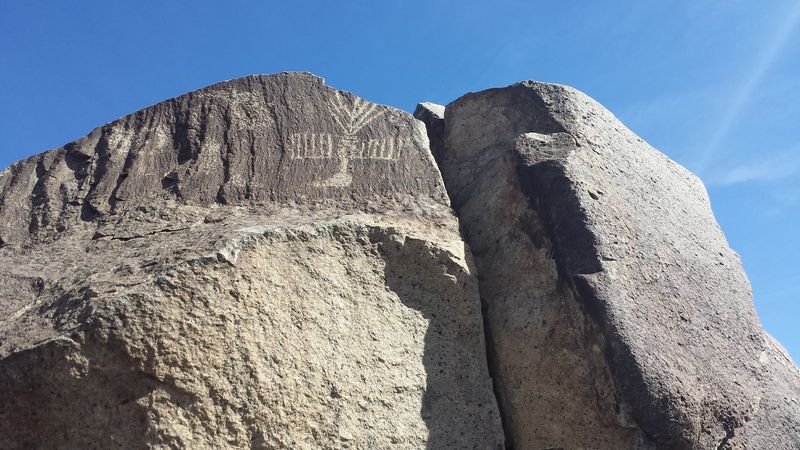
The imagery at this site covers a remarkable range of subjects: masks that look theatrical and expressive, birds with detailed wing patterns, fish that seem oddly out of place in a desert setting, and geometric shapes that repeat in ways suggesting some kind of system or language.
Handprints appear here and there too, and those always got to me the most.
Something about a human hand pressed into stone a thousand years ago feels more immediate than almost any other kind of ancient record.
The sun also means you should prepare properly before heading out, with sunscreen, a wide-brimmed hat, and more water than you think a short hike requires, especially in summer months when temperatures climb fast.
Old Marks On Rugged Rock
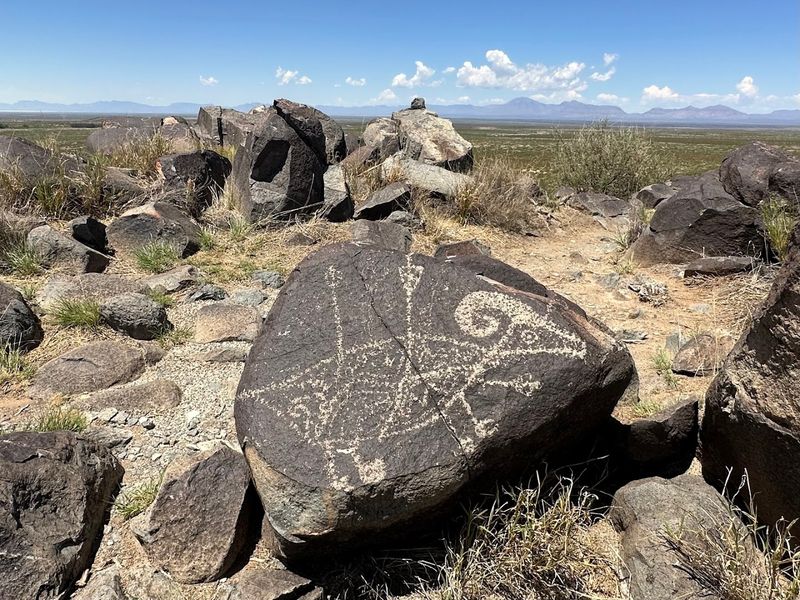
A rough volcanic rock can make history feel less like a textbook subject. Out here, it feels more like a real conversation across time.
The basalt here is rugged and irregular, full of cracks and natural hollows that the Jornada Mogollon artists worked around and sometimes incorporated into their designs.
A fish carved near a natural curve in the rock looks almost like it is swimming through a current, which may or may not have been intentional but feels deliberate once you notice it.
The variety of animals depicted is one of the things that surprised me most, since you would expect a desert culture to focus on land animals, yet fish, insects, and birds appear frequently throughout the carvings.
Some researchers suggest this diversity points to a rich spiritual worldview rather than a purely practical record of the local environment.
The carvings are often broadly dated between about 200 AD and 1450 AD, meaning many images are well over a thousand years old and still clearly visible today.
A separate short trail from the main path leads to a partially excavated Mogollon village, believed to be closely connected to the people who created these remarkable marks.
Wide Views From The Ridge
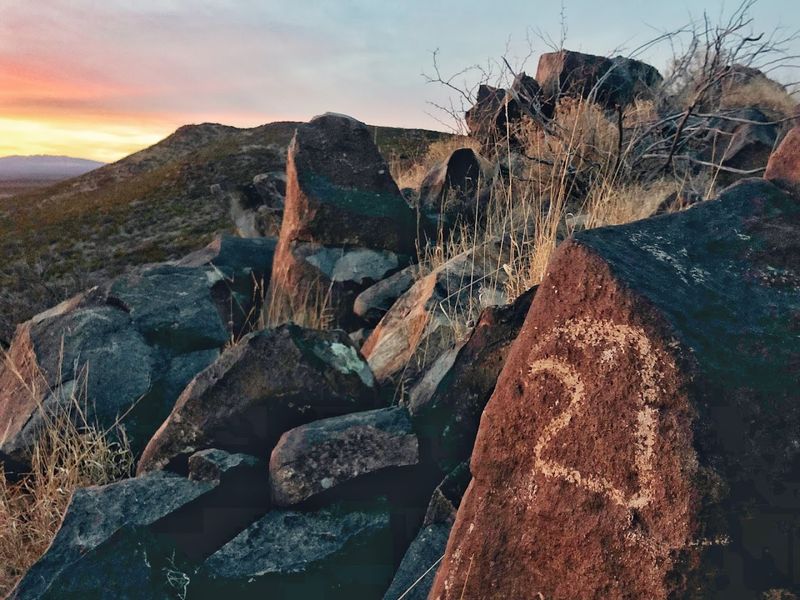
Halfway up the ridge, I stopped looking at the rocks for a moment and just turned around to face the valley below.
The Tularosa Basin spreads out in every direction with that particular New Mexico vastness that makes you feel very small and very lucky at the same time.
Sierra Blanca, the tall peak of the Sacramento Mountains, rises dramatically to the east, and on clear days the white expanse of White Sands National Park can appear as a pale shimmer to the west.
The dark lava flows of Valley of Fires sit to the north, adding another rugged landmark to the wider desert view from this part of the Southwest.
The views are not a side attraction here; they feel like part of the whole experience, and I think the Mogollon people chose this ridge deliberately for reasons beyond just finding good rock surfaces.
November through April tends to offer the clearest skies and the most comfortable temperatures for enjoying the panorama without squinting into brutal summer heat.
After sunset, with very little light pollution nearby, the stargazing from this location is the kind that makes you want to stay the night, which you actually can do at the small campground on site.
Hidden Details Along The Path
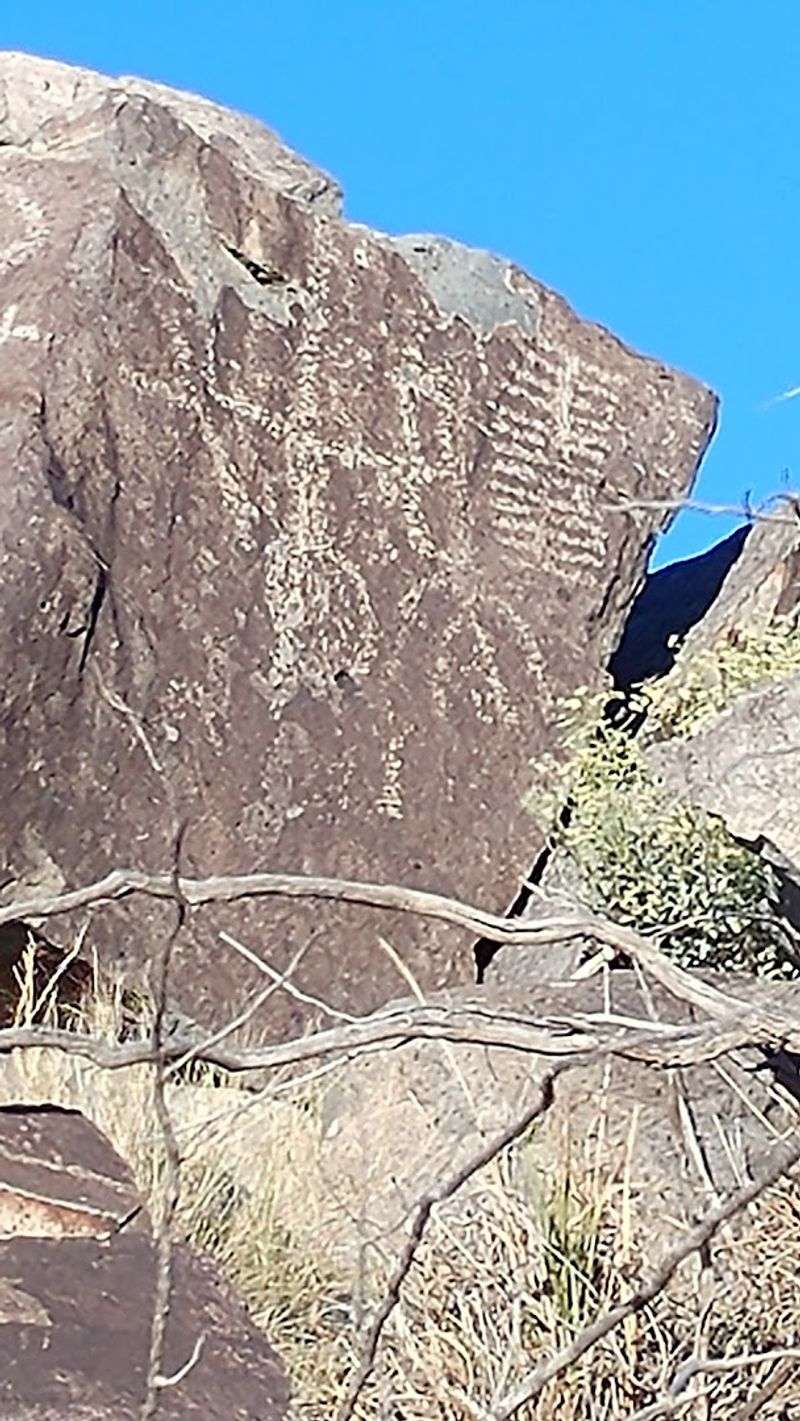
Part of the joy of walking this trail is realizing that the obvious carvings are just the beginning.
Once your eyes adjust to scanning dark rock surfaces, you start noticing smaller, more detailed images tucked into crevices, wrapped around the back side of boulders, or positioned low to the ground where they are easy to miss at a casual glance.
I found a tiny carved insect on the underside of a ledge that I only spotted because I crouched down to tie my shoelace.
Even people who know the site well can miss details on earlier visits, which makes every slow look across the rocks feel worthwhile.
That kind of discovery keeps the experience fresh on repeat visits in a way that most hiking trails simply cannot offer.
The site is recognized as one of the largest and most accessible rock art locations in the entire American Southwest, partly because visitors can walk close to the boulders rather than viewing everything from far behind barriers.
That access comes with responsibility, and the posted rules about not touching the carvings are worth taking seriously to preserve them for the next thousand years of curious visitors who will follow your footsteps down this rocky path.
Where Stone Holds Memory
Every travel destination offers something no other place quite replicates. At this site, it is the feeling of standing inside a continuous human story.
The carvings are not recreations or replicas; they are original marks made by real people who lived, worked, and thought deeply about the world around them more than a thousand years ago.
The visitor center is small but thoughtfully arranged, with displays that provide cultural context and help connect the images on the rocks to the people who made them.
Clean restrooms, a water fountain, a picnic area, and a small campground with a few electric hookup sites make this a surprisingly complete stop for travelers moving through southern New Mexico.
The day use fee is modest, with separate camping and RV hookup fees, so checking the current posted rates before visiting is still a good idea.
Pets are not permitted on the trail, so plan accordingly if you are traveling with animals.
Visiting in cooler months between November and April keeps the experience comfortable and the skies clear, though the site rewards visitors in any season.
All of this waits for you at Three Rivers Petroglyph Site, where stone has been holding memory longer than most of us can imagine.