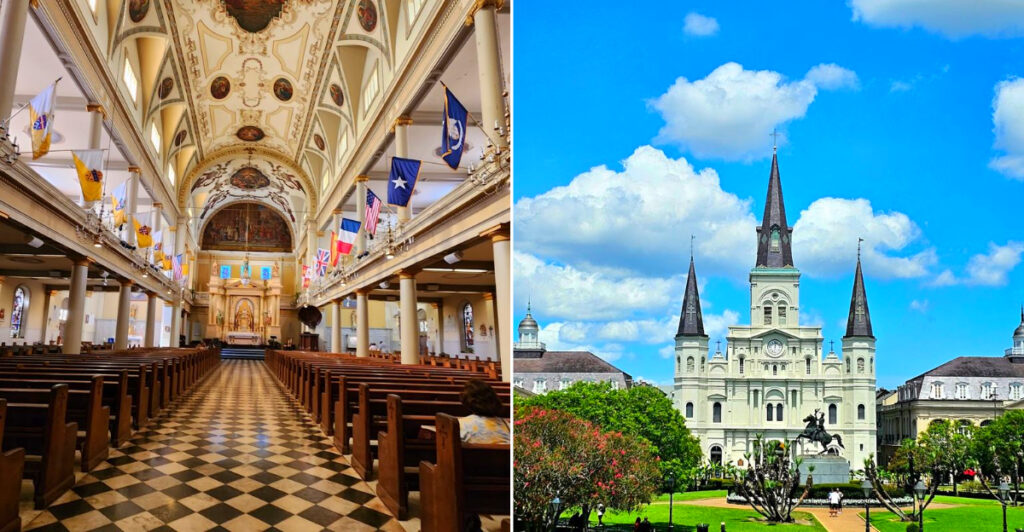
Some places carry a weight that goes far beyond their walls, and this historic church in Louisiana is one of them.
Standing in the heart of the French Quarter for nearly three centuries, it has witnessed hurricanes, epidemics, and personal hardships of every kind, yet its doors remain open to anyone seeking a moment of peace.
The soaring ceilings, stained-glass windows, and quiet side chapels invite visitors to slow down and reflect, whether they are lifelong parishioners or first-time wanderers who simply stepped inside looking for air and found something deeper.
Louisiana is home to many houses of worship, but few carry the layered history and enduring sense of comfort that this one does.
Locals light candles here for loved ones, travelers pause in the pews to collect their thoughts, and everyone who walks through the doors seems to leave feeling just a little lighter than when they arrived.
Arrive Early For Quiet

The first light through Jackson Square changes the cathedral. It feels smaller and more intimate before the day crowds arrive, the painted ceiling somehow fresher and the air cooler.
Walking up the path, you notice bench details and artists setting up their easels with a deliberate, slow rhythm.
Arriving early lets prayer and practice unfold without interruption, and staff move about with calm efficiency as they prepare for services. It is a good window for photography, reflection, or to simply sit and listen to a city waking around a sacred center.
Please remember the cathedral opens mid-morning on most days, so check hours before timing your visit to capture that stillness and respect liturgies in progress.
Jackson Square Does The Grand Entrance
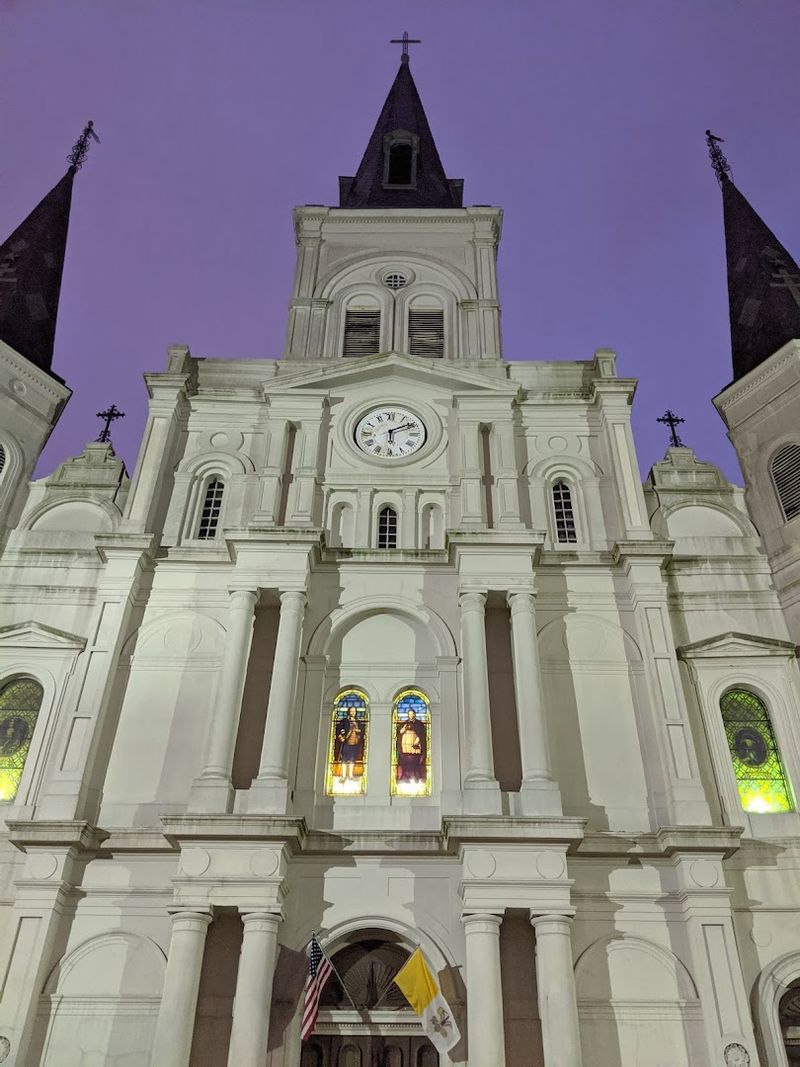
St. Louis Cathedral, 615 Pere Antoine Alley, New Orleans, Louisiana 70116, is easiest to approach on foot once you are already in the French Quarter.
Walk toward Jackson Square and let the spires come into view before you worry about the exact alley. That slow reveal is the whole point.
When you arrive, pause outside before going in. The building, the square, the street musicians, and the river nearby all make the stop feel bigger than a simple address.
Mind The Liturgical Rhythm
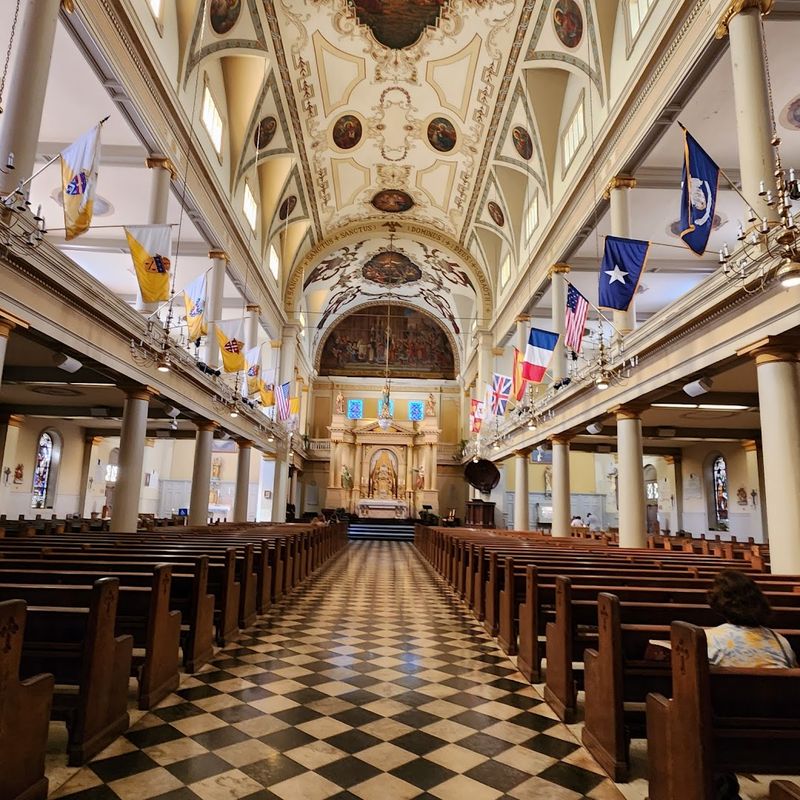
The cathedral is an active place of worship with daily masses and special liturgies, so attending respectfully changes how you experience the space. Schedules are posted and masses generally occur midday and on weekends; sometimes services limit visitor access for a short period.
When a mass is happening, the hush and ritual offer a different kind of access: you see the cathedral functioning as intended, with communal singing and homilies that reflect local culture. If you plan to enter between scheduled services, check the posted times to avoid disrupting prayer.
Quiet observation during a service can be a restorative counterpoint to the lively square outside, so allow the rhythm of the building to guide your visit.
Take In The Painted Ceiling
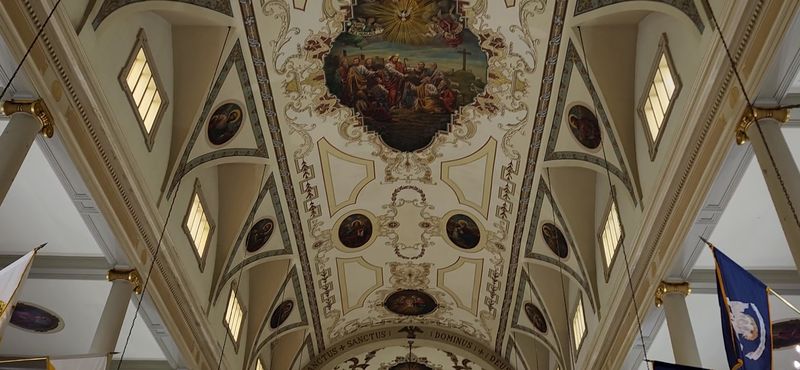
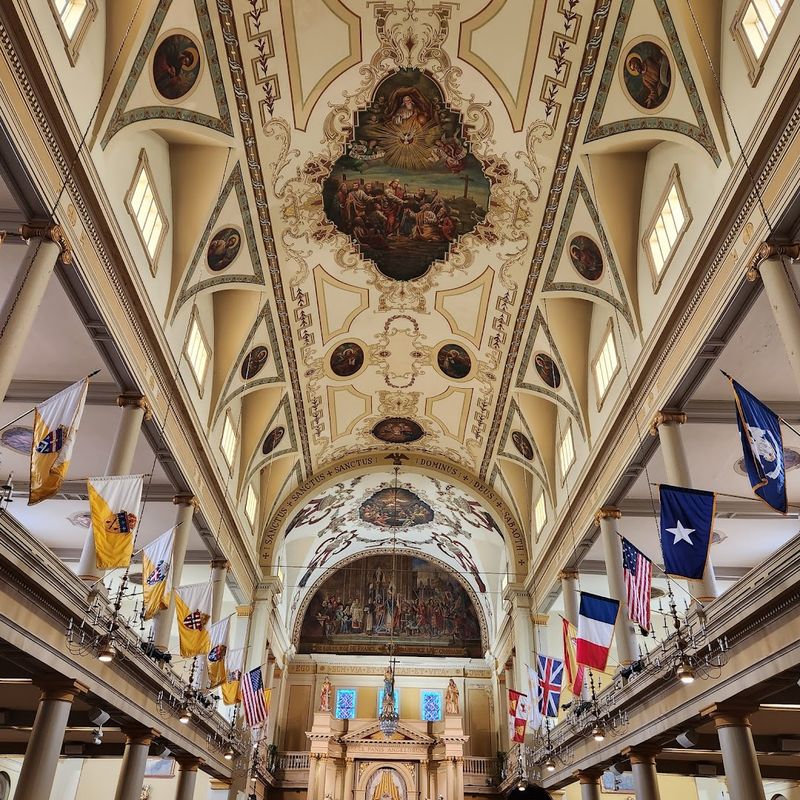
The painted ceiling and frescoes inside the cathedral reward a slow upward gaze; scenes and figures are rendered with a clarity that often surprises first-time visitors. I found myself staying longer than planned, tracing brushstrokes and iconography while the cool interior air settled around me.
These murals reflect devotional themes and the artistic tastes of 19th-century restorations, blending Rococo and classical touches with local ecclesiastical sensibilities. The gilded altar complements these painted narratives and helps orient the visual program toward the sanctuary.
Please maintain respect while photographing; the cathedral allows photos but asks for quiet during services. Viewing the ceiling deliberately is one of the simplest, most rewarding ways to connect with the building’s spiritual craftsmanship.
Watch Light Through Stained Glass
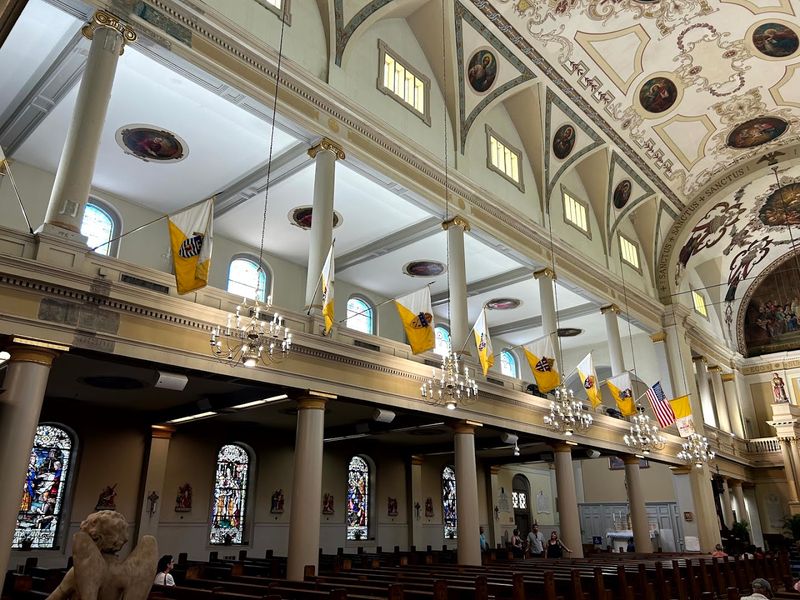
Light transforms the cathedral interior into a modest theater of color when the sun hits the stained glass just right. The windows are not enormous, but their effect is precise: colored beams trace the floors and pews, shifting with the hour and lending a quiet dynamism to a space that often feels still.
Timing a visit to catch this play of light rewards patience and observation; shadows lengthen and retreat, and details like carved railings take on a soft luminescence. Many visitors miss this because they hurry in and out of Jackson Square.
Pause in a pew and let the light move across the altar area. It’s a small, affordable miracle in a building sustained by centuries of care.
Respect The Burials Beneath
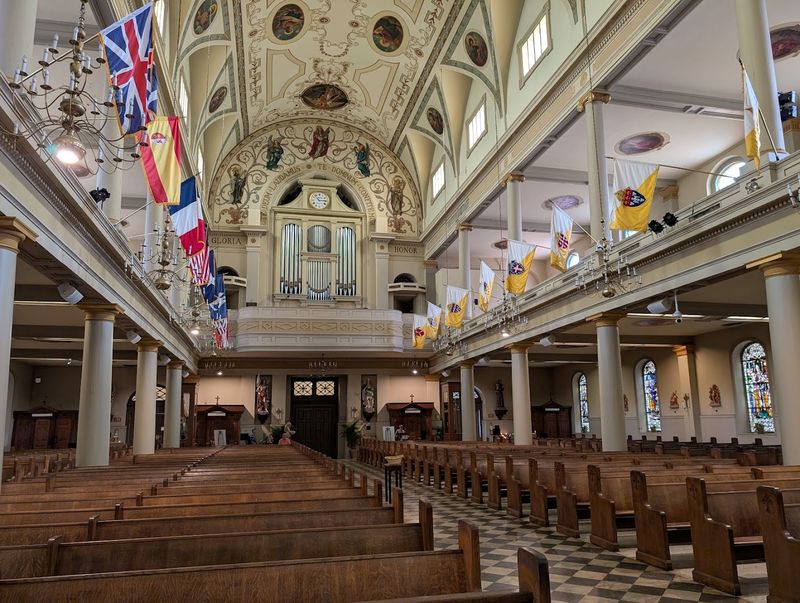
Underfoot there are quietly tended burials of early church and civic leaders, more than a hundred interments marked by plaques and preserved spaces. This subterranean history anchors the cathedral to the city’s civic memory and lends a solemn, human scale to liturgical grandeur.
Learning about these burials shifts how you move through the nave; benches that look ordinary are set above generations of residents who shaped New Orleans. Information panels explain a few notable figures and the practice of interment beneath churches in earlier centuries.
Approach with reverence, and allow the presence of these graves to temper casual behavior. It’s a reminder that the cathedral serves both as a living congregation and a resting place for the city’s past.
Listen For Unexpected Sounds
The cathedral collects sound in interesting ways: footsteps have a measured echo, whispered prayers feel private, and the occasional murmur of Jackson Square seeps through stone. On one visit I noticed a street performer’s rhythm gently dissolving at the doorway while a volunteer guided a small group through a quiet explanation of a chapel painting.
Sound adds context to visual cues and can transform a visit from sightseeing into an embodied moment. The organ and choir are used for special liturgies, so when music begins the atmosphere shifts palpably toward communal ritual.
Pay attention to these auditory layers; they are part of the building’s subtle personality and help you sense how the cathedral functions as a living civic and spiritual place.
Use The Visitor Resources
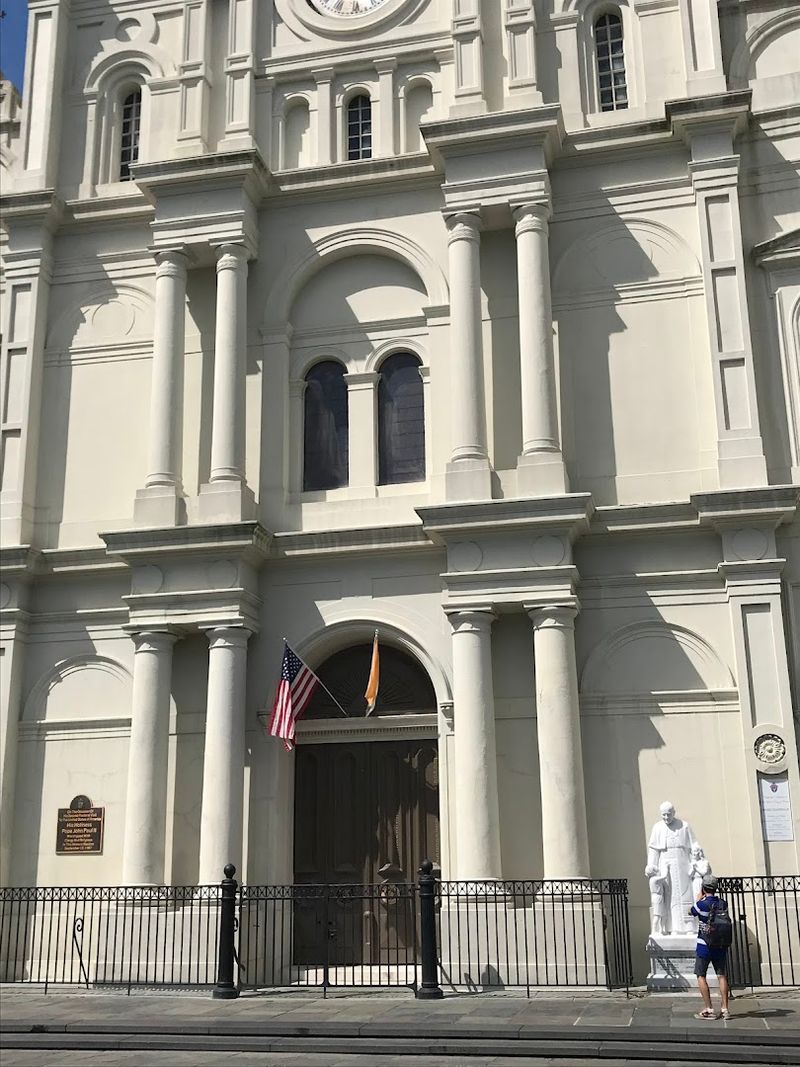
The cathedral operates visitor resources like information panels, a small gift shop, and occasional volunteer guides who can point out architectural or historical highlights. On several visits a volunteer offered concise facts and suggested quieter corners to explore, which made the visit feel curated without overbearing explanation.
Guided tours are available by appointment and sometimes include access to areas closed during services or maintenance. For spontaneous visits, self-guided materials and posted QR codes provide contextual reading that is accurate and succinct.
Treat the staff and volunteers with courtesy; their local knowledge enhances the experience and they help balance public visitation with ongoing worship life in this active cathedral.
Mind Conservation And Repairs
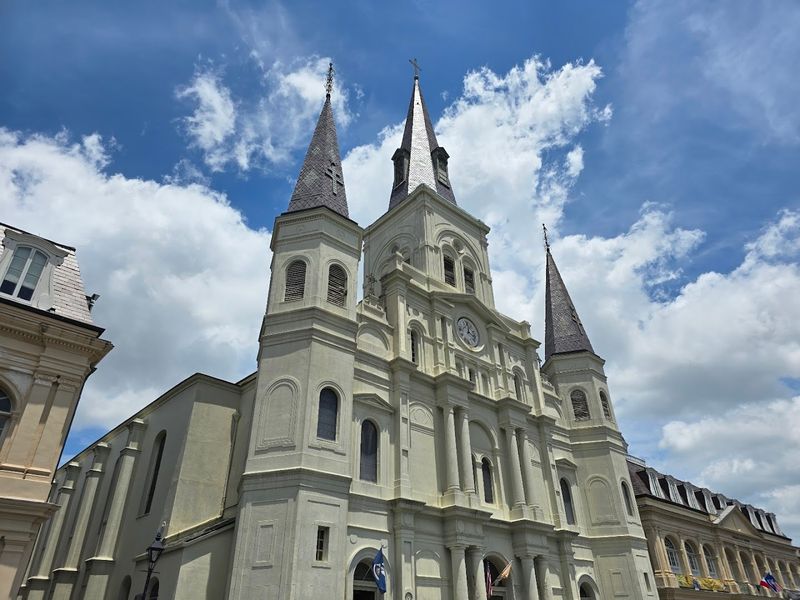
The cathedral’s history of storms, fires, and repairs means conservation work is ongoing and sometimes visible during a visit. Notices about temporary closures of chapels or limited access are routine, and at times scaffolding will be present where experts stabilize frescoes or maintain stonework.
Understanding that maintenance is part of the cathedral’s longevity helps shift frustration into appreciation; preserving painted ceilings, stained glass, and gilded altars requires careful, sometimes lengthy interventions. Staff often post clear timelines and updates online for planned repairs.
Before visiting, check the cathedral website or call to confirm access, especially if a specific chapel or feature is a priority. Planning around maintenance ensures you see what matters most to you.
Layer Visits With Jackson Square
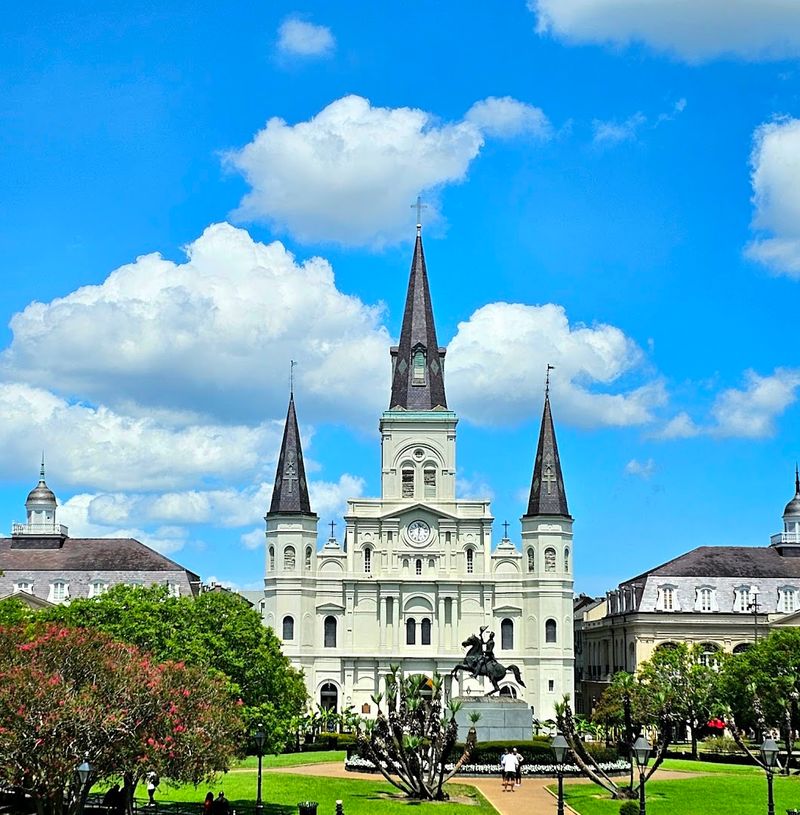
The cathedral sits within a public square that hums with artists, performers, and tourists, and layering a visit with time in Jackson Square provides richer context. Strolling the square before entering gives a sense of the cathedral as part of civic life rather than an isolated monument.
Artists sketch the facade, families linger on benches, and the open space frames the three spires against the sky. Observing this ebb and flow helps you appreciate how the cathedral’s presence shapes gatherings, weddings, and public moments in the French Quarter.
Allow extra time to sit and watch the square; the cathedral’s demeanor changes depending on the crowd and the season, and that interplay is a vital part of its charm.
Respect Photography Etiquette
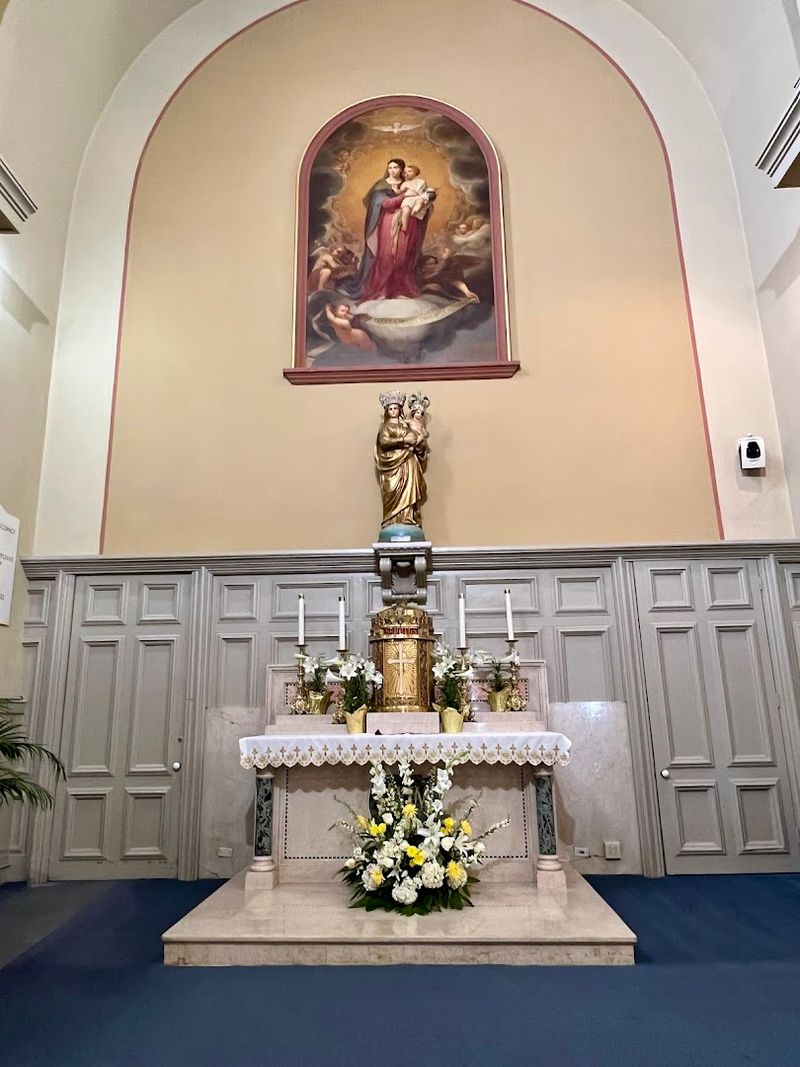
Photography is allowed in most parts of the cathedral, but respect for worshippers and guidelines is important: no flash during services, and keep movement quiet and unobtrusive. I noticed signage and polite volunteer reminders about camera etiquette; they exist to protect fragile artworks and the atmosphere for prayer.
When photographing, consider composition that includes context rather than sensational close-ups. Images that show people in reverent poses, the altar, or the painted ceiling convey the cathedral’s function and beauty without feeling invasive.
If you intend to use photos commercially or want special access, contact cathedral staff in advance for permissions and possible guided options that respectfully balance publicity and preservation.
Bring Curiosity And Patience
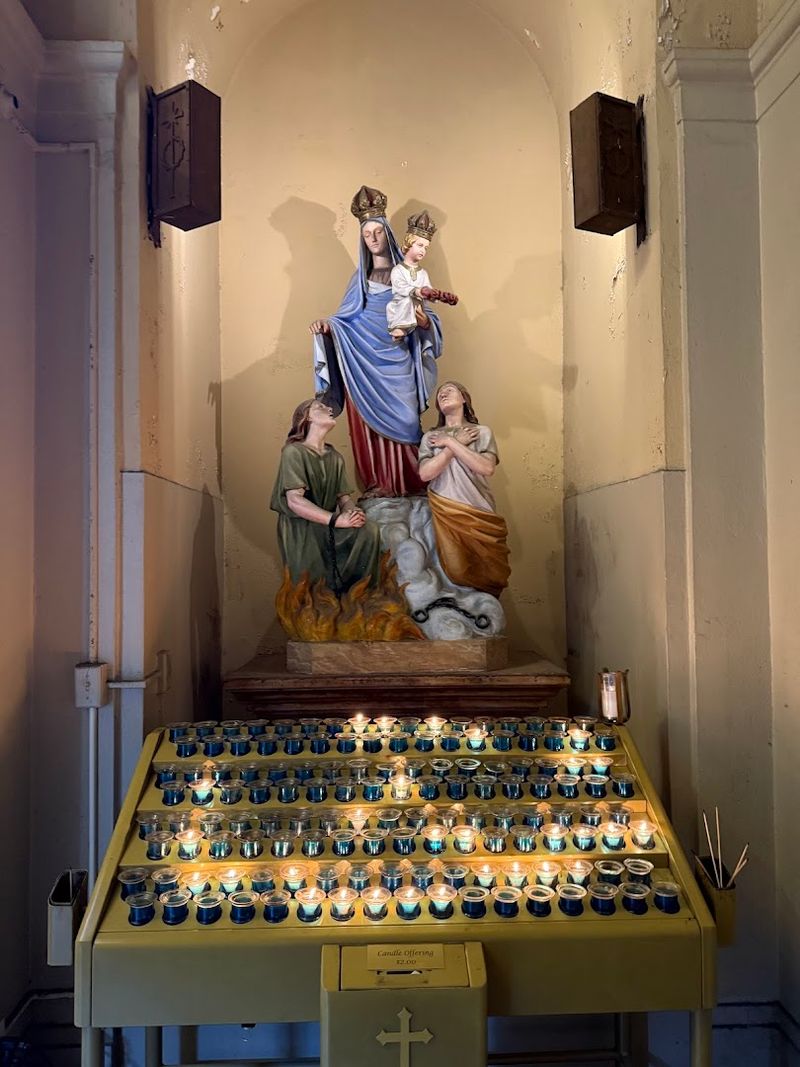
The best approach to the cathedral is a mix of curiosity and patience: slow down, read a plaque, speak briefly with a guide, and allow small discoveries to accumulate. Over several visits I found that short waits for quieter moments yielded deeper impressions than a single rushed stop.
Give yourself permission to sit, light a candle if you wish, or browse the modest gift shop for a tangible memory. The cathedral’s role as both spiritual center and historical landmark rewards repeated, attentive visits rather than one hurried photo op.
Approach this place as a living, breathing institution with schedules, rituals, and caretakers; your respectful attention helps sustain the warmth and openness you came to experience.