Ready to trade white gallery walls for Illinois prairie grass and sculptures large enough to interrupt the horizon?
Then you are in for an outdoor art adventure. This park turns twenty acres of meadow, forest, and native prairie into an open-air gallery. Here, the next surprise may be made from cedar or fifty carbon rods moving in the wind.
The collection spreads across the grounds instead of lining up politely in one room. You follow paths, cross lawns, and decide whether a sculpture resembles a Viking ship or something your imagination has not named yet.
This outing rewards an unhurried pace. An interactive map and a companion willing to debate abstract art are the only necessities you will need.
The trees provide the gallery walls. Your curiosity handles the admission ticket.
Twenty Acres Turn A Quiet Walk Into An Art Expedition
The adventure begins with a simple realization: there is no single front door.
The International Sculpture Park occupies twenty acres where meadow, forest, and native prairie divide the collection into outdoor rooms. A diagonal pathway guides visitors while each work commands its own patch of sky.
The setting changes how you approach the art. Clouds move, leaves cast shadows, grass reaches toward each base, and every angle changes as you walk. On windy days, even the quietest pieces seem newly animated.
Give yourself permission to wander before checking every title. Guess what a piece might represent, walk around it, then open the village’s interactive map and compare your theory with the artist’s story.
That little delay makes the visit more playful. You are not simply locating objects on a list. You are discovering strange landmarks across a miniature landscape.
Think of the park as a gallery with fresh air and a very generous floor plan.
Schaumburg Makes The Starting Point Easy To Find
A treasure hunt is more enjoyable when the first clue includes reliable parking.
Begin near the Al Larson Cultural Center at 201 Schaumburg Court, Schaumburg, Illinois. Parking is available by the cultural center, and the sculpture grounds spread through the surrounding municipal campus.
Open the interactive map before setting out because the works do not form a tight circle. Some sit near buildings, while others rise across open lawn. Pause at lawn edges, where distant shapes slowly change character.
The park is free, with benches and picnic tables available between discoveries. Bicycles are permitted, although walking makes it easier to circle each sculpture. Bring a picnic if you want the walk to linger.
Dogs can join the outing except during festivals. Keep the leash handy, bring water on warm days, and remember that a giant abstract sculpture is not an unusually artistic fire hydrant.
Once everyone has the map and a meeting point, the expedition officially leaves the parking lot.
Together Opens The Collection Like A Giant Cedar Doorway
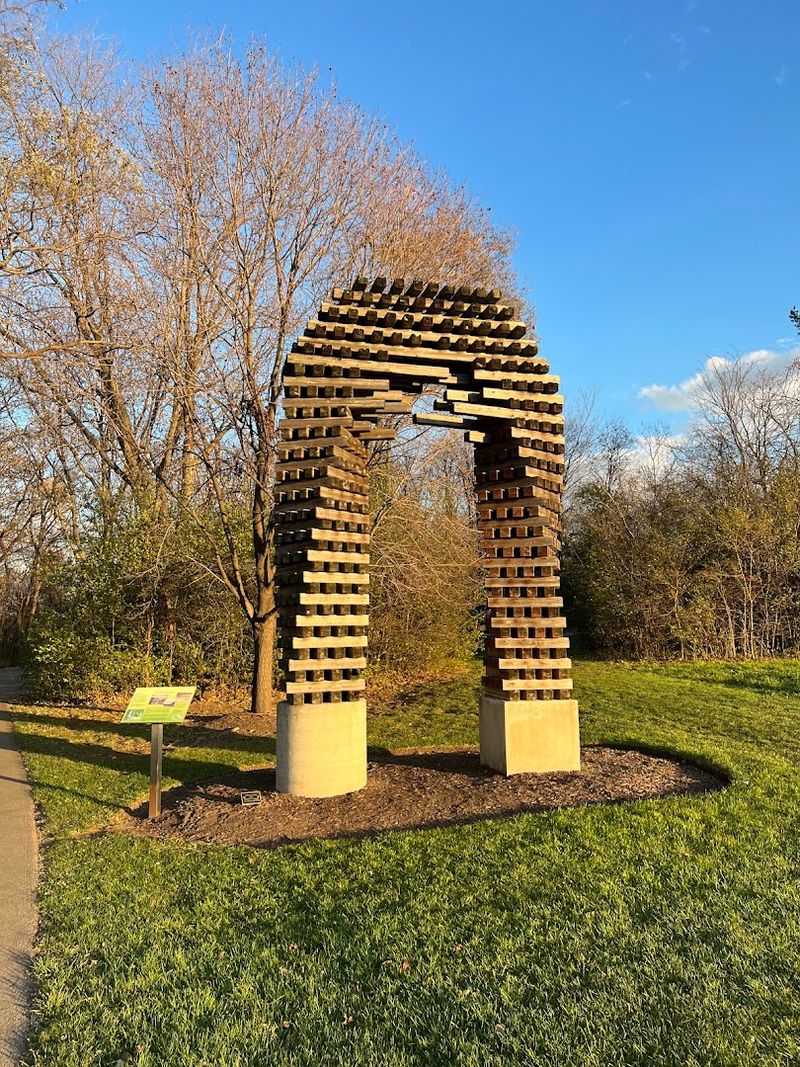
Every adventure deserves a gateway, and this one rises more than eighteen feet.
Together, created by Polish-American artist Jerzy S. Kenar, uses two colors of cedar that twist upward and interweave at the top. The structure marks the entrance to the sculpture park with the presence of an arch and the movement of something still growing.
Stand beneath it and look up before moving on. The wood grain and overlapping forms become clearer against the sky.
Its title offers an idea for the rest of the walk. Many pieces unite materials, histories, cultures, and landscapes that first seem unrelated.
Ask your walking companion what the arch resembles before reading the description. Hands meeting? Tree trunks turning?
Two ribbons caught in a very ambitious breeze? Children often invent titles before adults finish reading the map.
Together does not whisper that the art has begun. It raises a cedar flag and sends you onward.
Vinland Turns Fifteen Stones Into A Viking Voyage
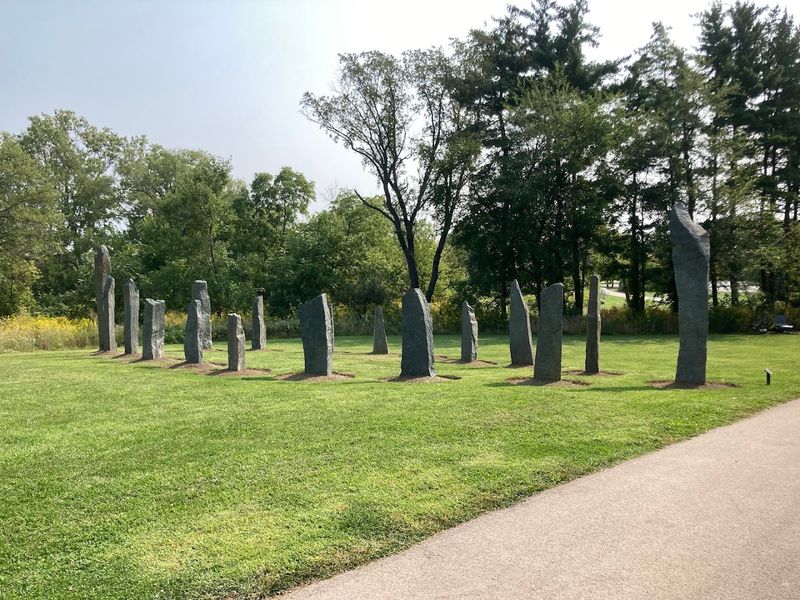
A cluster of giant stones may not sound like a ship until you step into the right position.
Norwegian artist Jarle Rosseland created Vinland as a Stonehenge-like arrangement shaped around the outline of a Viking vessel. Fifteen stones rise at different heights, forming a work connected to Leif Eiriksson and the Norse voyages to North America.
Its markings and arrangement also reference the sun, planets, and the passage of time across three millennia.
Walk along the outside first, then move closer to understand how the stones establish the vessel’s shape. Distance gives you the ship, while proximity reveals carved signs and individual surfaces.
For a stronger photo, move until the stones overlap like ancient sails and let the Illinois prairie play the ocean. Photographers should circle each work before choosing their final angle.
No boarding pass is required, although your imagination may insist the ship is ready.
The Nordic thread continues with SKÚLASKEIÐ, an enormous head chiseled from Icelandic palagonite by Páll Guðmundsson.
Its weathered face draws on Norse legend and looks less installed than unearthed, as though the prairie uncovered a traveler who arrived centuries before everyone else.
The village’s current interactive guide identifies fifteen works across the grounds. Use it as a compass, but let the unusual silhouettes pull you off the most direct route whenever curiosity wins.
Gothic Brings A Piece Of A Cathedral Into The Prairie
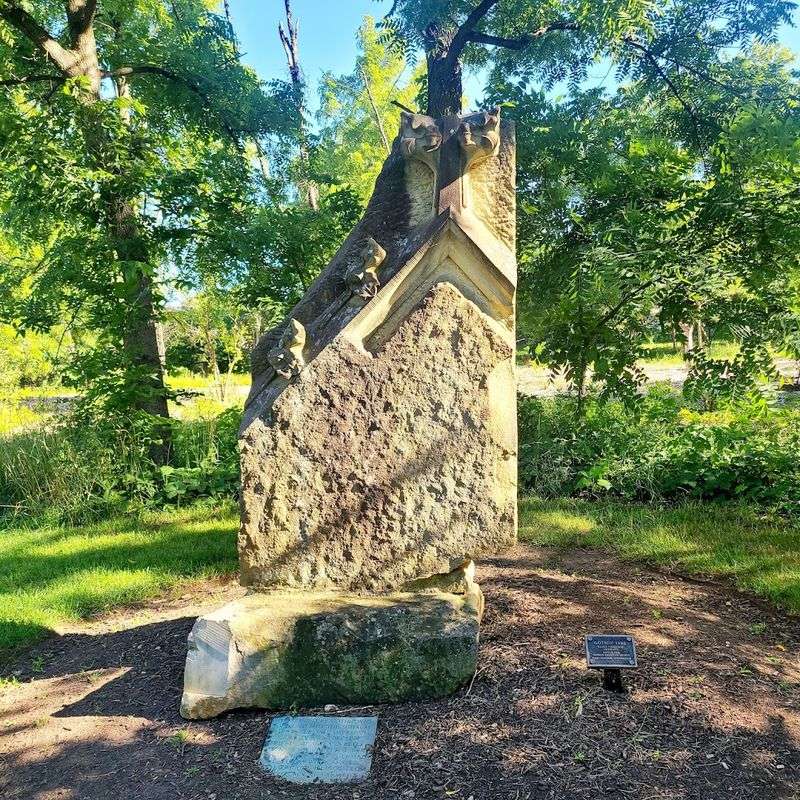
The next surprise looks as though a European cathedral misplaced part of itself in Illinois.
Gothic, created by German sculptor and stonemason Klaus Vieregge, stands eight feet high and weighs more than two tons. Its finely chiseled stone comes from the Obernkirchen region of Germany, whose name shares a connection with Schaumburg’s German sister city.
The work resembles a fragment from a larger sacred structure. Its unfinished quality lets your mind add imaginary walls, windows, and towers.
Look closely at the carving, then step back toward the grass. Stone that seems architectural from one angle can become almost abstract from another. After rain, darker surfaces gain richer color and stronger contrast.
This sculpture also shows why the landscape matters. A cathedral fragment inside a gallery would tell one story. The same form standing alone beneath moving clouds tells a stranger one.
Gothic travelled a long artistic distance to become the prairie’s most convincing missing wall.
Heavy Dog Kissing Makes Abstract Art Surprisingly Affectionate
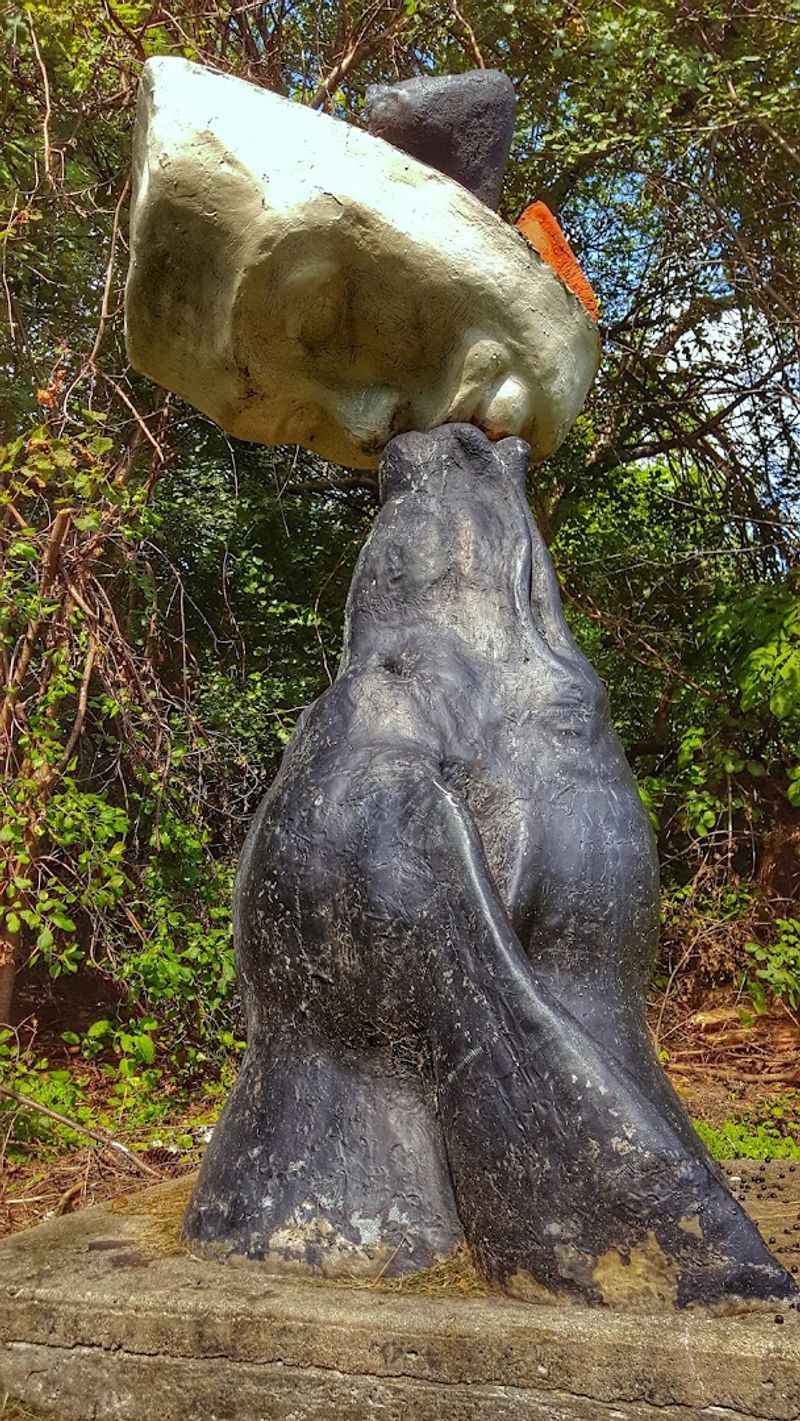
Just when the collection begins looking solemn, an enormous dog-related kiss enters the conversation.
Dennis Oppenheim’s Heavy Dog Kiss stands about seven feet high and uses painted fiberglass to explore the affection between a person and a pet. The exaggerated form carries enough humor to make even hesitant art viewers stop and smile.
Start with the title, look for the relationship between the forms, and notice how quickly the strange shape becomes emotionally familiar.
One of the park’s most popular works, it invites you through color, scale, comedy, and the familiar chaos of canine affection.
Pet owners may recognize the energy before anyone else. Their dogs may remain unconvinced by the artistic interpretation.
Heavy Dog Kiss proves that contemporary sculpture can be puzzling, playful, and slobbery in spirit at the same time.
Awaking Muse Invites You Into A Mythological Photo
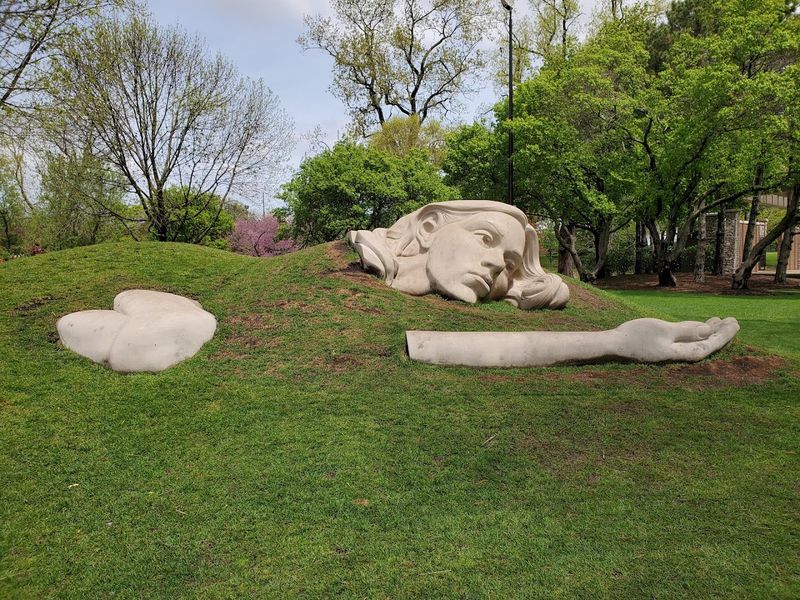
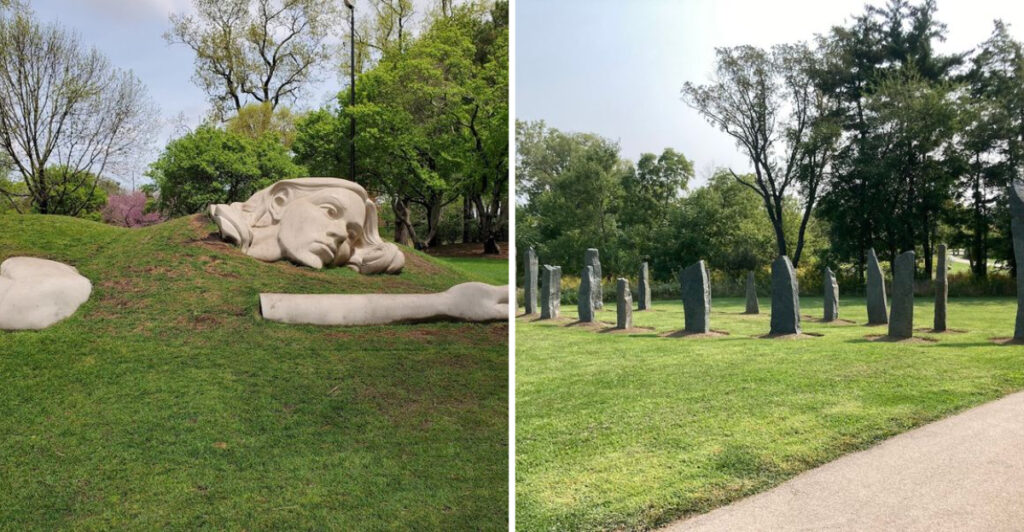
A giant figure reclines across the lawn as though the prairie interrupted a particularly inspiring nap.
Awaking Muse stretches roughly forty feet and depicts a woman inspired by Greek mythology. Created by Don Lawler and Meg White Sculpture Studios, the monumental form appears to rise from the ground instead of standing separately above it.
The scale becomes clearest when someone approaches. A gentle curve from far away becomes a hand, face, or body section large enough to reshape the lawn.
The story says the muse whispers inspiration to anyone who sits in her hand. A literal message is unlikely, but the photo opportunity is irresistible.
Use the wide landscape around her rather than cropping too tightly. The sleeping figure makes more sense when the meadow becomes part of the pose.
Art rarely offers to hold you while you think, so accept the invitation politely.
The Diver Turns Painted Aluminum Into A Midair Plunge
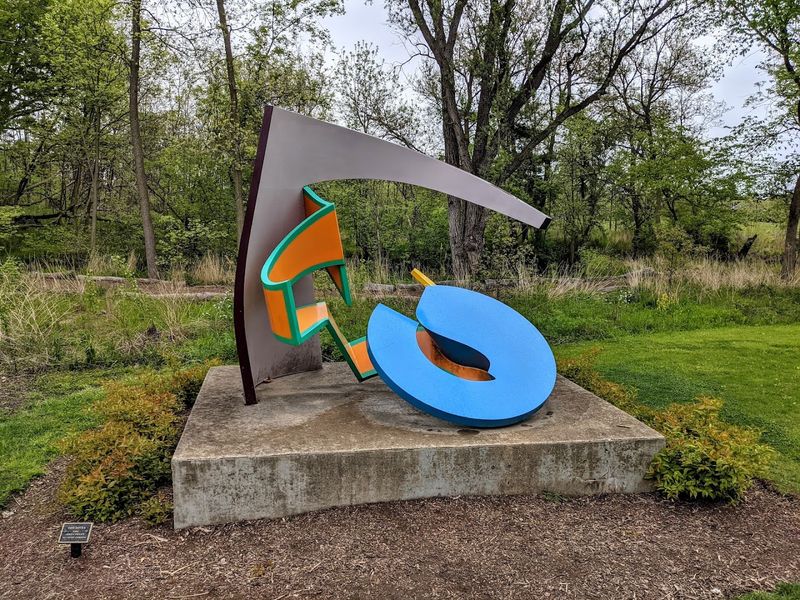
A splash waits beside the path, but there is no pool anywhere in sight.
Created by Chicago artist Jerry Peart, The Diver rises eight feet high and stretches nine feet wide. Painted aluminum bends, twists, and overlaps in a composition that captures motion without showing a literal swimmer.
Start several steps back and search for the plunge suggested by the title. The curved forms begin resembling a body cutting through space, while the brighter surfaces give the sculpture the energy of sunlight flashing across water.
Move closer and the illusion breaks into individual shapes, sharp angles, and sweeping pieces of metal. That shift is part of the fun. One moment you see a diver.
The next, you are negotiating with an especially athletic pile of geometry.
Peart became known for large lyrical works built from bent and twisted forms, with commissioned pieces also appearing in downtown Chicago.
The Diver gives the walk one final burst of color and motion. No lifeguard is required, but your imagination may still yell, “Jump!”