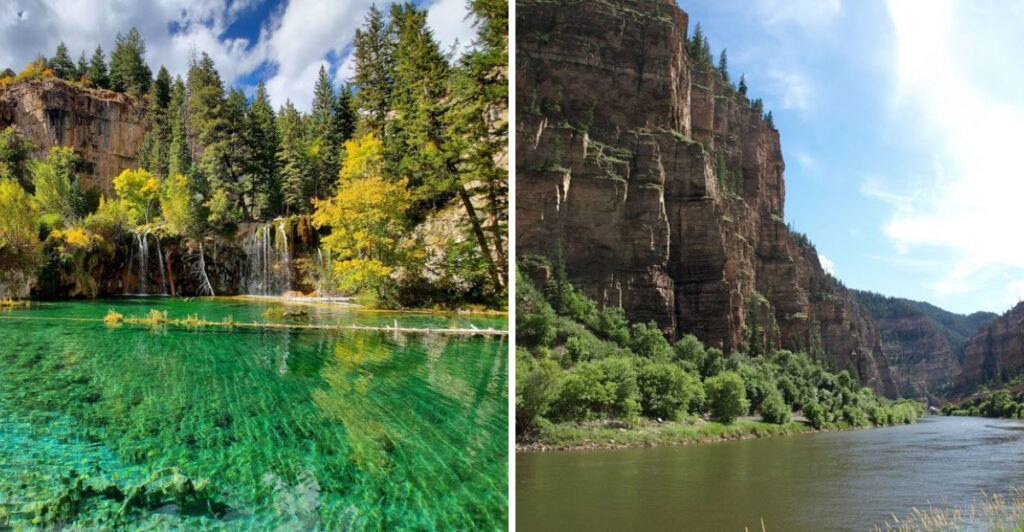
What does a lake look like when it refuses to follow the rules of nature? At Hanging Lake, the water glows a shade of blue-green so vivid it stops hikers mid-step.
It is the kind of color that makes you reach for your phone before you even catch your breath. Colorado earns its reputation for stunning landscapes, but this one belongs in its own category.
A steep rocky climb, seven creek crossings, and a dramatic cliff-face finale lead to a geological formation so rare it holds National Natural Landmark status. You will need a permit and proper footwear.
You will leave with one of the most memorable views Colorado has ever handed a visitor.
The Geology Behind That Jaw-Dropping Color
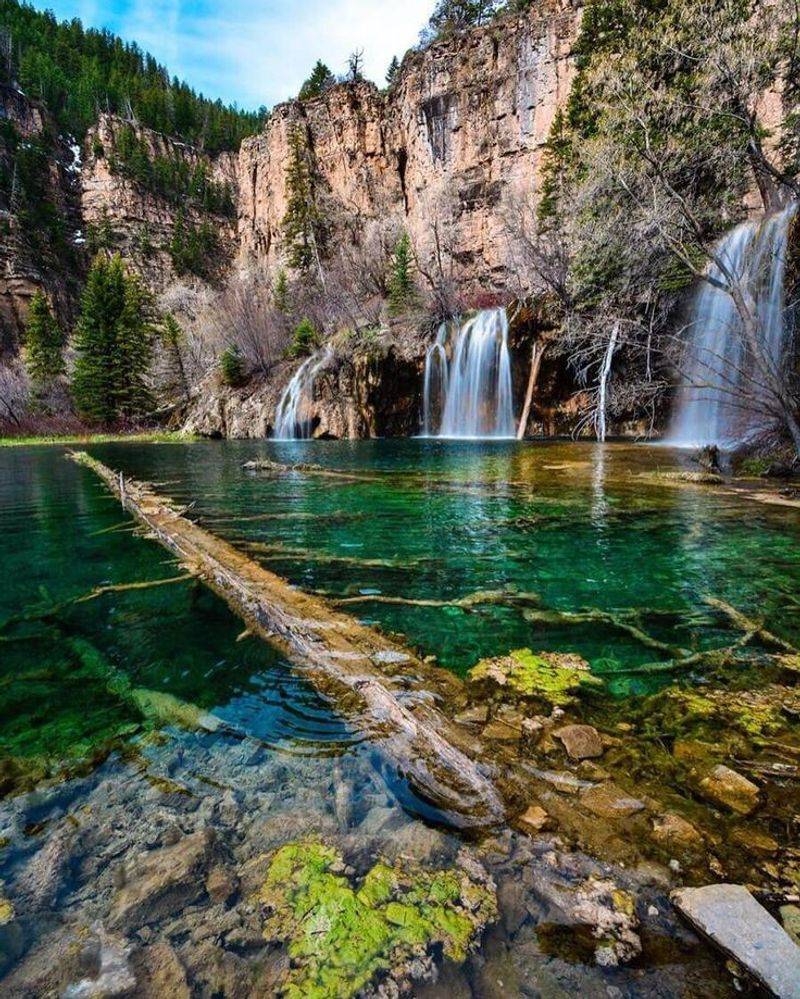
That electric blue-green color is not an accident. The water at Hanging Lake gets its stunning hue from dissolved carbonate minerals, specifically limestone and travertine, that have been building up over thousands of years.
As water flows through the surrounding rock, it picks up calcium and bicarbonate. When that mineral-rich water reaches the lake, it deposits travertine along the bottom and edges, creating a natural filter that keeps the water almost impossibly clear.
The process is slow, delicate, and ongoing. Bridal Veil Falls feeds the lake continuously, bringing a fresh supply of those minerals with every drop.
Spouting Rock, a larger waterfall just above the lake, also contributes water sourced from lower Paleozoic bedrock.
The result is a living, breathing geological display that looks more like a Caribbean lagoon than a Colorado mountain lake. Colorado is home to many beautiful lakes, but this one plays by entirely different rules.
A Rare Formation That Earned Official Recognition
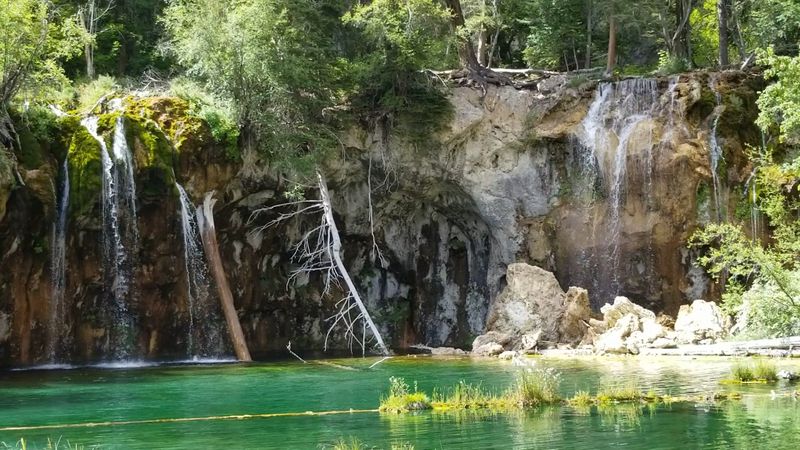
Hanging Lake is not just pretty. It is scientifically remarkable, which is exactly why it was designated a National Natural Landmark in 2011.
The lake formed through a geological fault. Part of the valley floor dropped away along that fault line, and over time, water and mineral deposits built up a travertine shelf on the side of the canyon wall.
That shelf is essentially what the lake sits on, which is where the name comes from.
This type of formation is considered extremely rare. Hanging Lake is recognized as a unique example of travertine deposition within the Southern Rocky Mountain biophysiographic province.
Very few places on Earth have formed this way.
That official landmark status is not just a badge of honor. It signals how seriously geologists and conservationists take this place.
Colorado has no shortage of scenic wonders, but Hanging Lake holds a category almost entirely to itself.
The Hike That Makes You Earn Every View
The trail to Hanging Lake starts at the CDOT rest area off I-70 in Glenwood Springs, CO 81601. From that parking area, the path climbs roughly 1,000 feet in elevation over about a mile and a half.
That number does not sound extreme on paper. On the trail, it feels very different.
Rocky steps, narrow walkways, and seven bridges mark the route as it follows a gorgeous stream lined with small cascading waterfalls.
The final stretch is the steepest. Large boulder steps and a handrail guide hikers up the last exposed section before the lake appears.
Most hikers take between 45 minutes and over an hour to reach the top, depending on pace.
Proper footwear is strongly recommended. The trail is rocky throughout, and sections near the top can feel intense.
Children and those uncomfortable with heights should be prepared for a real challenge. The reward, though, makes the burn in the legs feel completely worth it.
Why A Permit Is Required To Visit
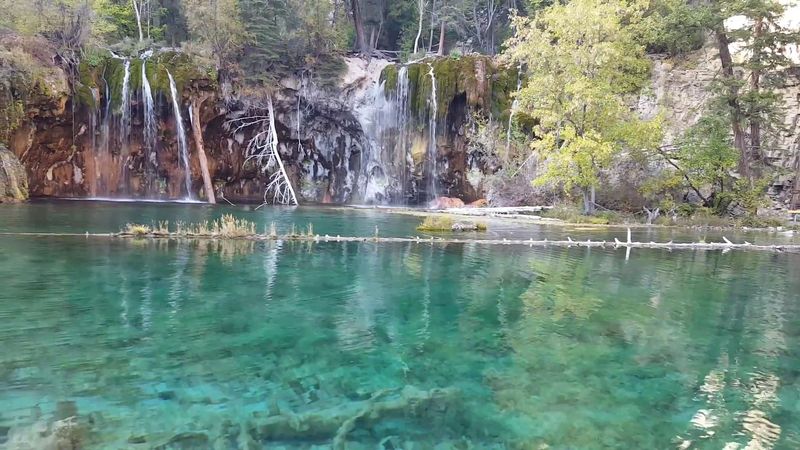
Hanging Lake is fragile. The travertine that gives it that magical appearance is also extremely sensitive to human contact.
Oils from skin alone can damage the delicate mineral layers that took thousands of years to form.
To protect the ecosystem, a permit system is required year-round for all hikers. The reservation process is straightforward and can be completed online.
Permits limit the number of visitors on the trail at any given time, which keeps the experience from feeling crowded and protects the lake from overuse.
Before the permit system existed, parking lots filled before sunrise on busy summer days. Lines stretched back onto the highway.
The trail became so packed that the experience suffered and the environment paid the price.
Booking early is strongly advised, especially for weekend visits. The permit system has made a noticeable difference.
Colorado has had to learn hard lessons about protecting its most visited natural spaces, and Hanging Lake is one of the clearest examples of that effort done right.
Rules That Protect The Magic
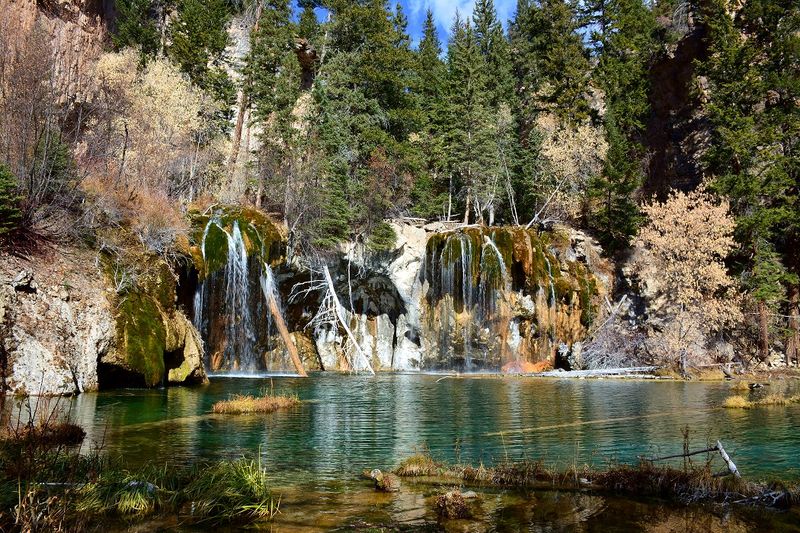
Standing at the edge of water that clear, the urge to touch it or wade in is completely understandable. But that is exactly what must not happen.
Swimming, fishing, and even touching the water are strictly prohibited at Hanging Lake.
Walking on the fallen log that extends into the lake is also banned. The boardwalk installed around the perimeter exists specifically to let visitors enjoy the view without causing any harm to the travertine layers beneath the surface.
These rules are enforced for good reason. The ecosystem here is genuinely one of a kind.
A single careless act can cause damage that takes centuries to repair naturally. Rangers are present to help visitors understand why the restrictions matter.
It can feel unusual to visit a lake and not interact with it directly. But Hanging Lake rewards a different kind of engagement.
Watching the water, studying its color, and listening to the falls creates an experience that no swim could ever replicate.
Bridal Veil Falls And Spouting Rock Up Close
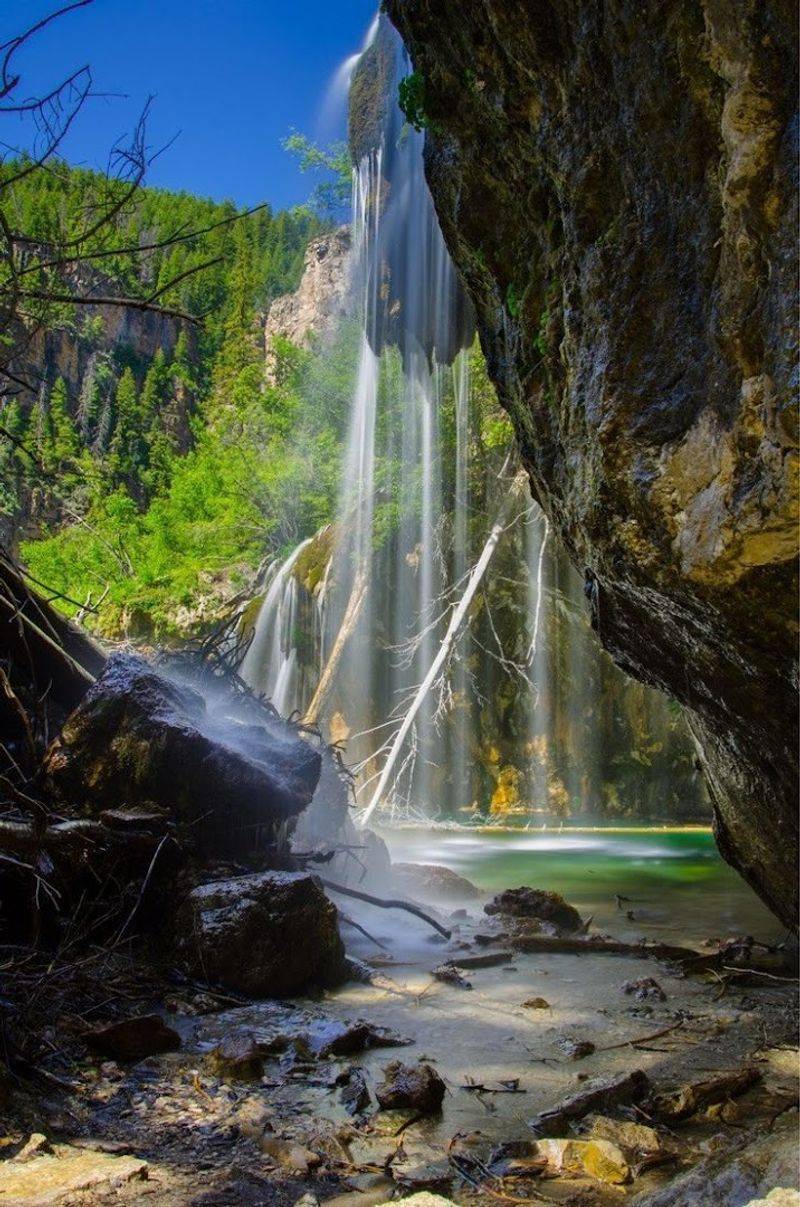
Two waterfalls share the spotlight at Hanging Lake, and both are worth the extra few minutes to appreciate fully. Bridal Veil Falls drops directly into the lake, feeding it with mineral-rich water that keeps the color vivid and the water clear.
Spouting Rock sits higher up and pushes water directly out of the canyon wall. It looks almost unreal, like the rock itself is breathing water.
The source is groundwater flowing through lower Paleozoic bedrock, and it carries dissolved calcium and bicarbonate that contribute to the travertine deposits below.
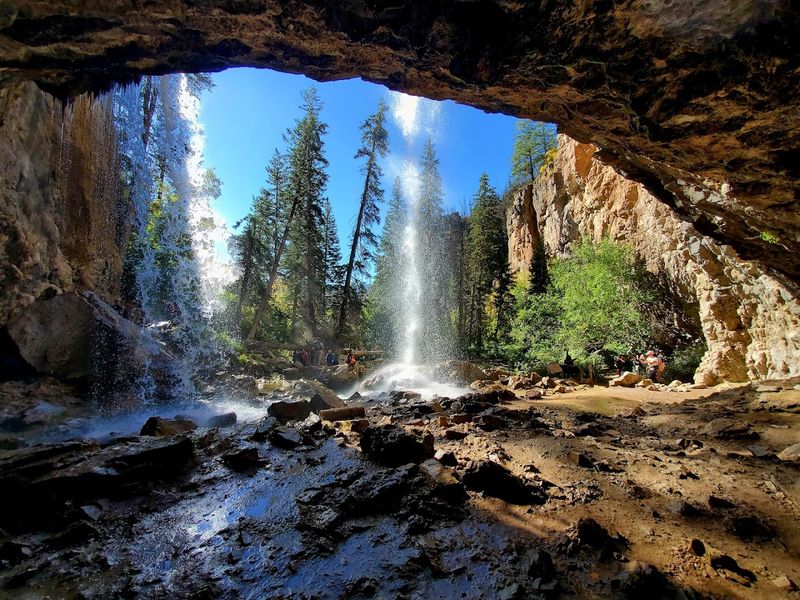
Visitors who hike slightly past the lake can get behind Bridal Veil Falls. That perspective flips the experience entirely.
Looking out through a curtain of falling water toward a turquoise lake framed by canyon walls is the kind of view that tends to stay with people for a long time.
Colorado produces dramatic landscapes regularly, but this particular combination of geology and water movement feels like something assembled with unusual care.
The Ecosystem Living In And Around The Lake
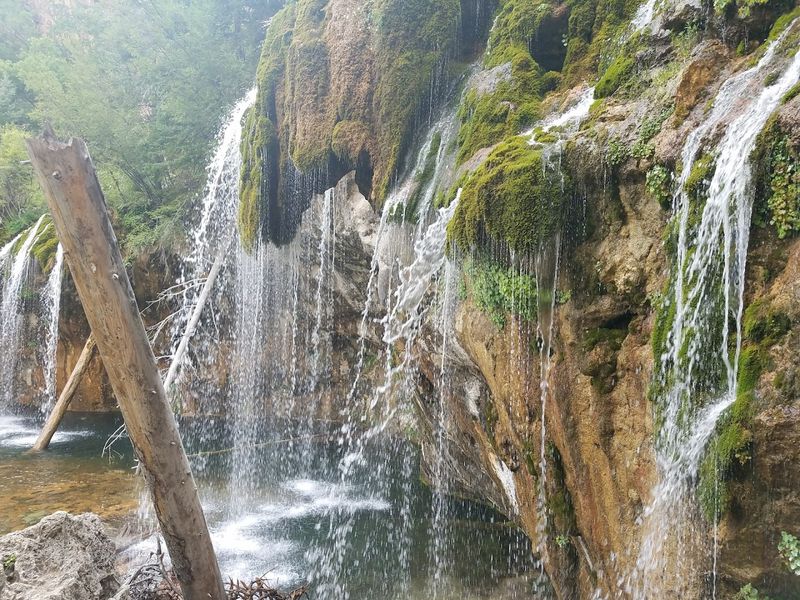
The area around Hanging Lake supports a surprisingly rich and delicate ecosystem. Mosses, ferns, and other moisture-loving plants cling to the travertine walls and surrounding rocks, fed by the constant mist from the waterfalls.
The combination of mineral-rich water, high humidity, and canyon shelter creates a microclimate that supports plant life rarely found at this elevation in Colorado. The green is almost theatrical, layered against the grey canyon walls and the vivid blue of the lake.
Wildlife makes appearances along the trail too. Chipmunks are a common sight near the top, bold enough to approach hikers.
Feeding them is strongly discouraged, as it disrupts their natural behavior and diet.
The trail itself follows a stream the entire way up, and that corridor of moving water supports its own chain of small plants and insects. Every section of the hike passes through a slightly different version of the same canyon environment.
The biodiversity packed into this short stretch of trail is genuinely impressive.
How The Lake Bounced Back After A Major Storm
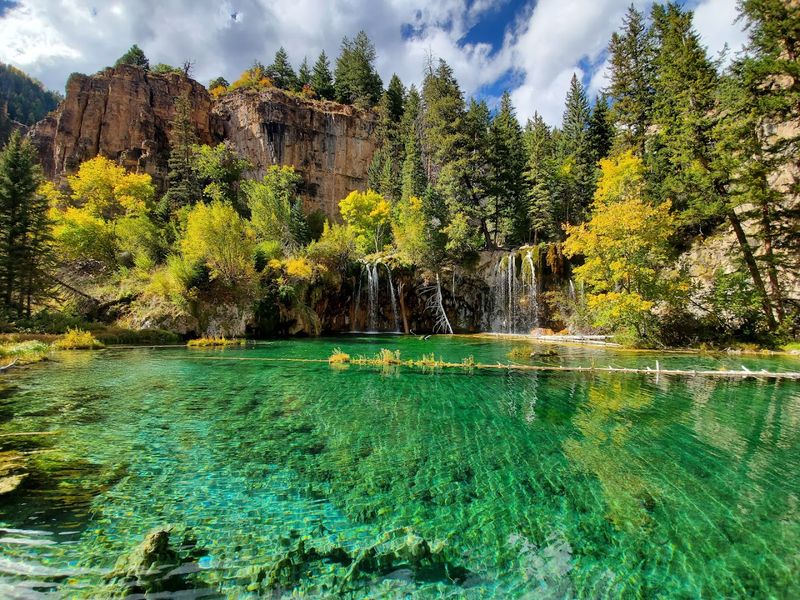
In 2021, a massive rain event sent debris pouring into the Hanging Lake area. The lake turned a murky brown, and there were real concerns about how long recovery might take.
Officials were genuinely surprised by what happened next. The continuous flow of mineral-rich water through the lake began filtering out the sediment faster than anyone expected.
The turquoise color started returning within a relatively short period, demonstrating just how resilient the natural system is when left to work on its own terms.
The event was described as a 500-year rain occurrence, meaning the kind of storm that statistically only happens once every five centuries. Even under those conditions, the lake’s natural filtration held up.
That recovery story changed how many scientists and conservationists think about the lake’s long-term durability. It is fragile in some ways and remarkably tough in others.
Colorado’s mountain environments have a way of surprising people, and Hanging Lake proved it can absorb a serious punch and still come back looking like itself.
What To Bring And How To Prepare
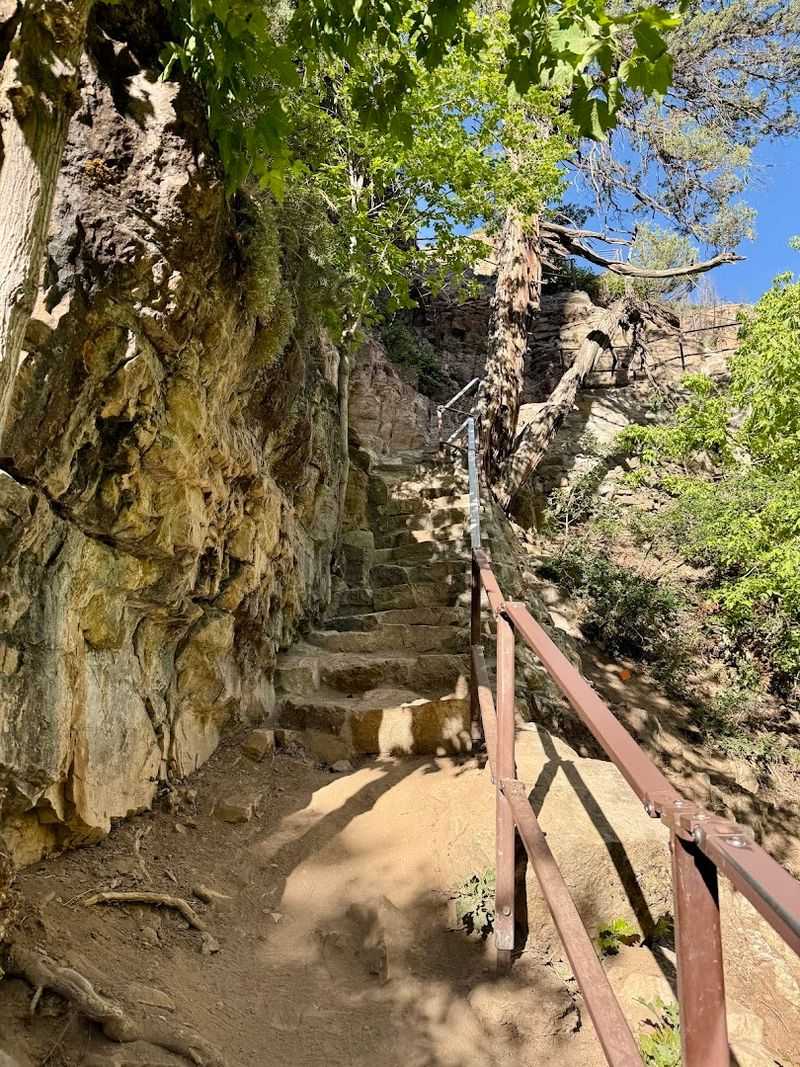
Preparation makes the difference between a miserable slog and a genuinely enjoyable experience on this trail. Water is non-negotiable.
The hike is physically demanding, and the elevation gain will push even moderately fit hikers harder than expected.
Sturdy hiking shoes with good grip are essential. The trail surface is rocky and uneven throughout, and the upper section involves large boulder steps.
Sneakers will technically get most people to the top, but proper footwear makes the descent much safer and more comfortable.
Snacks help, especially for hikers who plan to spend time at the top before heading back down. The round trip can take anywhere from two to three hours depending on pace and how long visitors linger at the lake.
Layering clothing is smart in Colorado, where mountain weather shifts quickly. A jacket tucked into a pack weighs almost nothing but becomes invaluable if clouds roll in.
Dogs are not permitted on the trail, so furry companions will need to sit this one out at home.
Best Time Of Year To Make The Trip
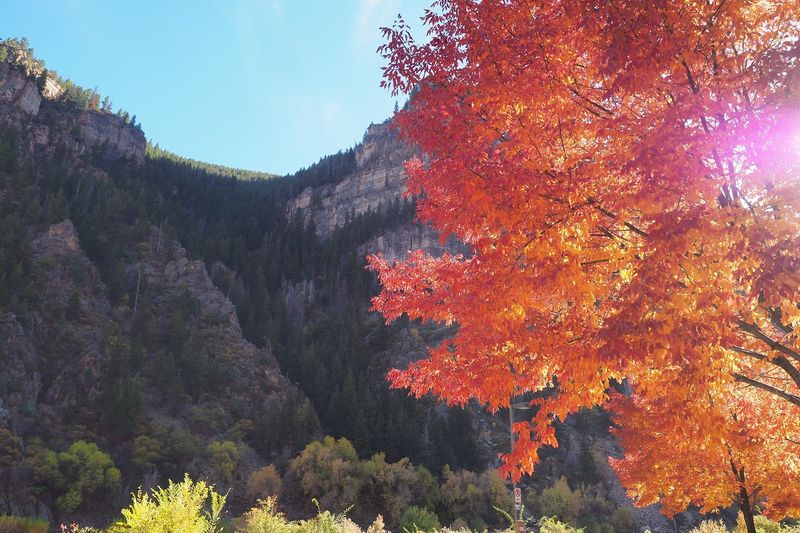
Hanging Lake draws visitors in every season, but the experience varies significantly depending on when the trip happens. Summer is the most popular time, and for good reason.
The trail is fully accessible, the waterfalls are flowing strong, and the surrounding greenery is at its peak.
The downside of summer is demand. Permits fill up quickly, and arriving without a reservation means turning around.
Booking well in advance is the only reliable strategy for a summer visit.
Fall offers something genuinely special. The canyon walls light up with golden and orange foliage, and the contrast against the blue-green water creates a color combination that photographers chase all season long.
Crowds are slightly thinner than in peak summer, making it one of the better windows for a more relaxed visit.
Spring brings snowmelt and higher water flow, which makes the waterfalls more dramatic. Winter access depends on trail conditions and should be researched carefully before attempting.
Colorado winters in canyon environments can be unpredictable and demanding.
Getting There And Navigating The Canyon
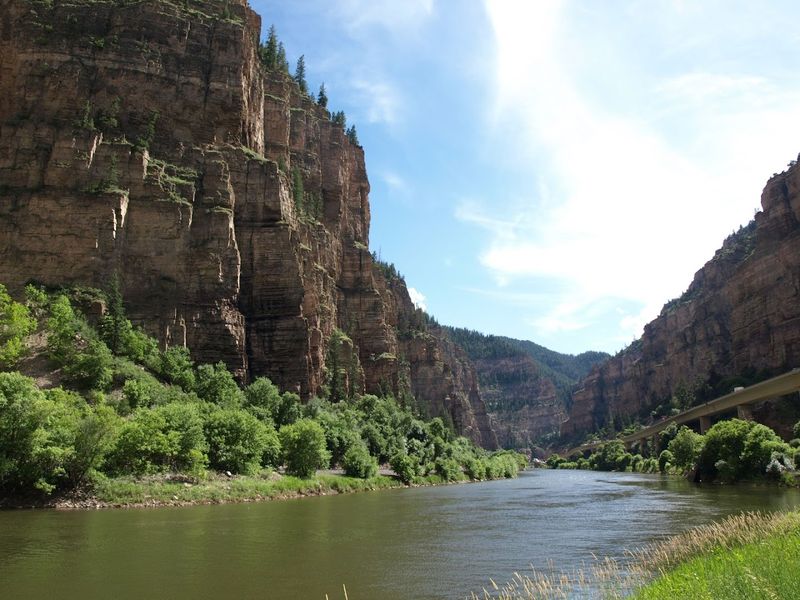
Glenwood Canyon is one of the most dramatic stretches of highway in the entire country. Interstate 70 cuts through sheer canyon walls for miles, with the Colorado River running alongside.
The drive alone is worth slowing down to appreciate.
The trailhead sits at the CDOT rest area accessible from I-70, just outside Glenwood Springs, Colorado. One important logistical note: the rest area is only directly accessible to eastbound traffic.
Westbound drivers need to exit, turn around, and re-enter heading east to reach the parking area.
Parking is limited and fills up fast, especially on summer weekends. The permit system helps manage flow, but arriving early is still a smart move.
The rest area does have restroom facilities, which is worth knowing before starting a climb of this length.
Cell service in the canyon can be spotty, so downloading maps and permit confirmation ahead of time is a practical step. Colorado canyon country has a way of making modern technology feel optional, and this stretch is no exception.