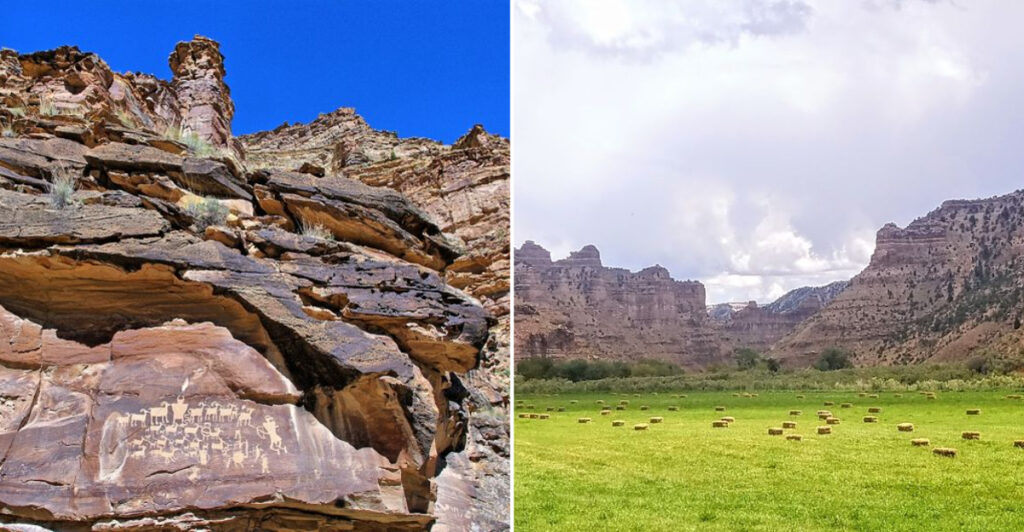
Some road trips do not end at a viewpoint, they end in front of a message carved by hands from another world of time. Out in Utah, this remote canyon feels less like a stop and more like an open-air archive, with sandstone walls covered in figures, symbols, animals, and scenes that have survived wind, heat, and centuries of silence.
The drive is dusty, the landscape is spare, and that only makes the arrival feel more powerful. Mile after mile, the canyon reveals ancient rock art left by early peoples who understood these cliffs as more than scenery.
They were memory, record, warning, story, and mystery. Utah often overwhelms visitors with scale, but here the wonder is intimate, found in the marks themselves.
Stand close enough to study the lines, and the distance between past and present suddenly feels much smaller than the road behind you.
The Canyon That Earns Its Reputation
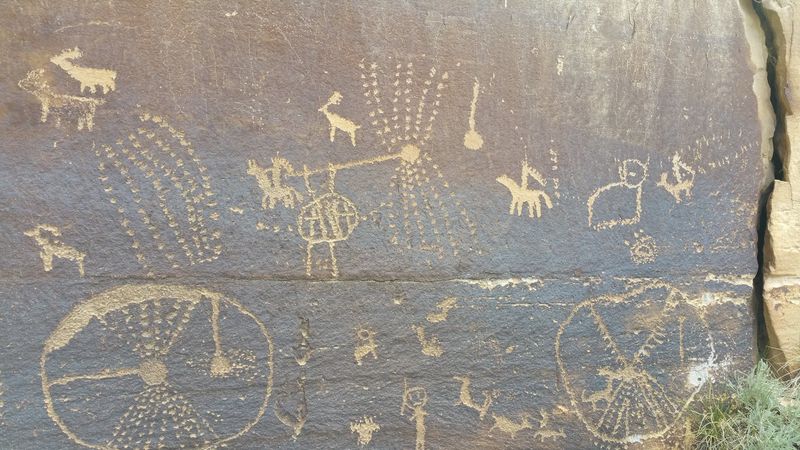
This place runs through Carbon County, Utah, starting near Wellington at Nine Mile Canyon Road, Wellington, Utah 84542, and winds its way through one of the most densely packed archaeological corridors in North America. The name is a bit of a geographic joke: the canyon is actually closer to 40 miles long, not nine.
The “nine” likely traces back to a surveyor named Milepost Nine, though historians still debate the origin with the kind of cheerful disagreement that only adds to the canyon’s charm.
What is not debatable is the sheer volume of rock art here. Researchers estimate there are more than 10,000 individual images etched or painted onto the canyon walls.
That number puts it in a category most archaeological sites can only dream about.
Why It Matters: This is not a reconstructed museum exhibit. Every panel you see is exactly where ancient hands left it, exposed to the same Utah sky for over a millennium.
Visiting here feels less like tourism and more like accidentally stumbling into a conversation that started long before you were born.
Who Made All This, Anyway
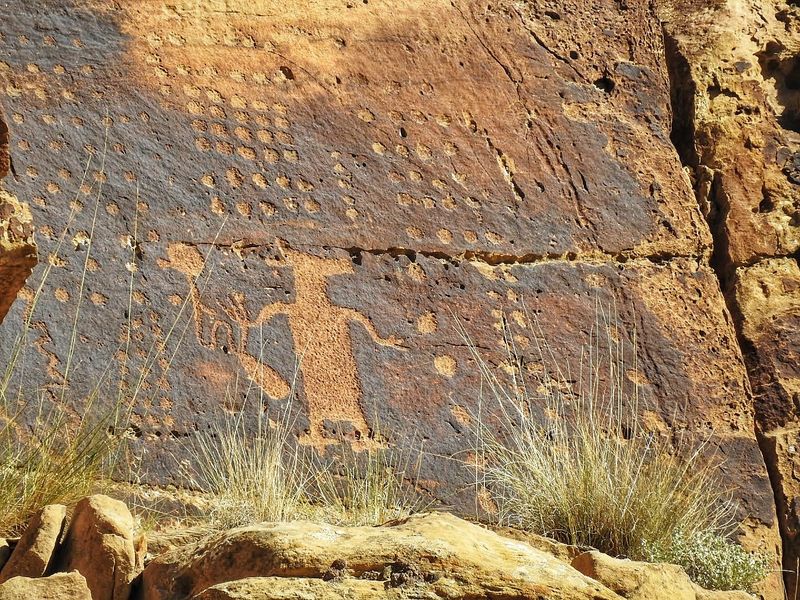
The primary artists behind Nine Mile Canyon’s rock art were the Fremont people, a culture that thrived across the Colorado Plateau and the Great Basin from roughly 600 to 1300 CE. They were skilled farmers, hunters, and remarkably expressive visual communicators.
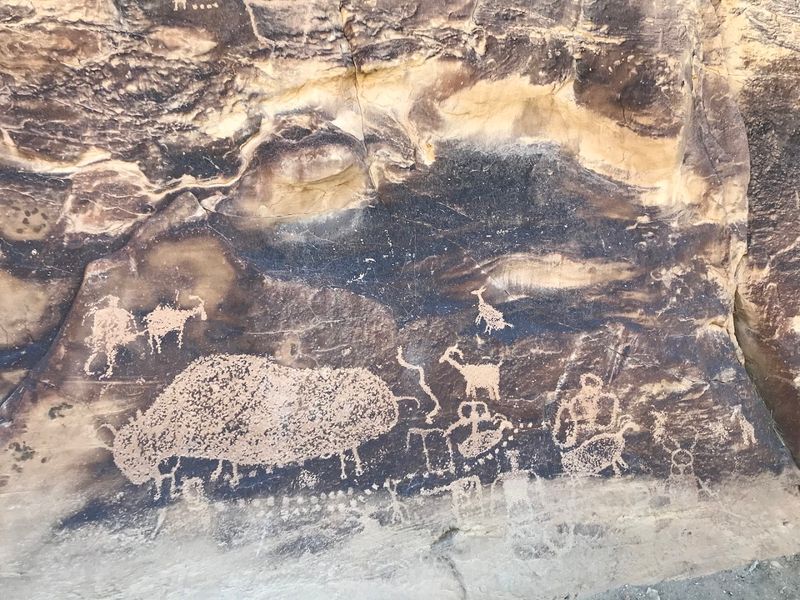
Their petroglyphs, images carved by pecking away the dark desert varnish on sandstone surfaces, show hunting scenes, human figures with elaborate headdresses, bighorn sheep, and symbols that researchers are still working to decode.
Pictographs, which are painted images rather than carved ones, also appear in the canyon and represent a different layer of human presence. Some panels combine both techniques, suggesting the walls were used and revisited across generations.
Quick Tip: Look for the trapezoidal human figures with broad shoulders and detailed ornamentation. Those are a hallmark of Fremont artistic style and appear repeatedly throughout the canyon.
Once you spot the pattern, you will start recognizing them everywhere, like a visual vocabulary you did not know you were learning.
Ancestral Puebloans also left their mark here, making the canyon a layered record of multiple cultures occupying the same remarkable corridor over centuries.
Reading The Walls Like A Road Sign
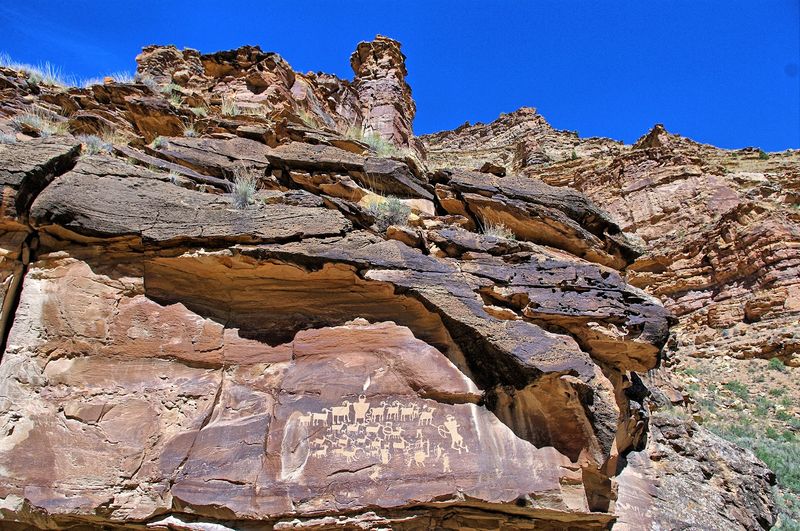
Knowing what to look for before you arrive makes the experience significantly richer. The canyon contains hunting scenes that read almost like sequential storytelling: a line of bighorn sheep being driven toward hunters, arrows mid-flight, figures frozen in motion.
Other panels show what appear to be ceremonial or cosmological imagery, figures with radiating lines, circular symbols, and abstract patterns that suggest a rich interior life beyond just survival.
Some of the most visited and photographed panels in the canyon include the Great Hunt panel, which stretches across a wide rock face and depicts one of the most elaborate hunting scenes in North American rock art. It is genuinely jaw-dropping in person, the kind of image that makes you stop mid-sentence.
Insider Tip: Bring binoculars. Many panels sit higher on the canyon walls than you might expect, and getting a closer look without physically approaching the rock is both respectful and practically rewarding.
The detail in some carvings only becomes clear once you zoom in, and you will notice elements that the casual glance completely misses.
Planning The Drive Without Losing Your Mind
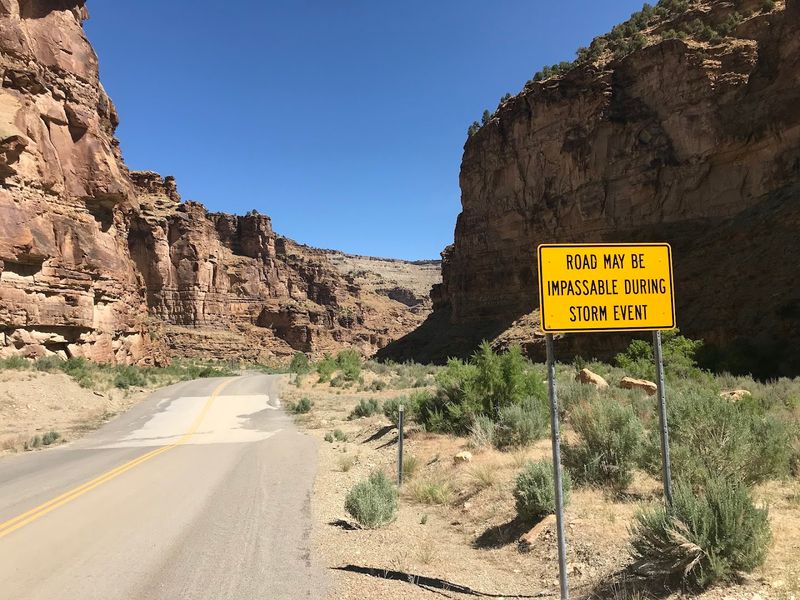
Nine Mile Canyon Road is mostly unpaved, and that detail matters more than it might sound. The road is generally passable for standard passenger vehicles during dry conditions, but it turns slippery and difficult after rain or snow.
Checking weather and road conditions before heading out is not optional here; it is the difference between a memorable adventure and an unscheduled overnight in the desert.
The full canyon drive from the Wellington end to the Myton end covers roughly 50 miles of road and can take anywhere from three to six hours depending on how many times you stop to stare at things. Most visitors choose to drive a portion of the road rather than the full length, and that is a perfectly reasonable approach.
The densest concentration of rock art panels appears in the lower canyon section, closer to the Wellington entrance.
Best Strategy: Start early in the morning. The canyon gets hot quickly in summer, and morning light hits the canyon walls at an angle that makes petroglyphs far easier to see and photograph.
A full tank of gas, a cooler with water and food, and a downloaded offline map are your three non-negotiable companions on this road.
The Canyon Halfway Through Surprises You Again
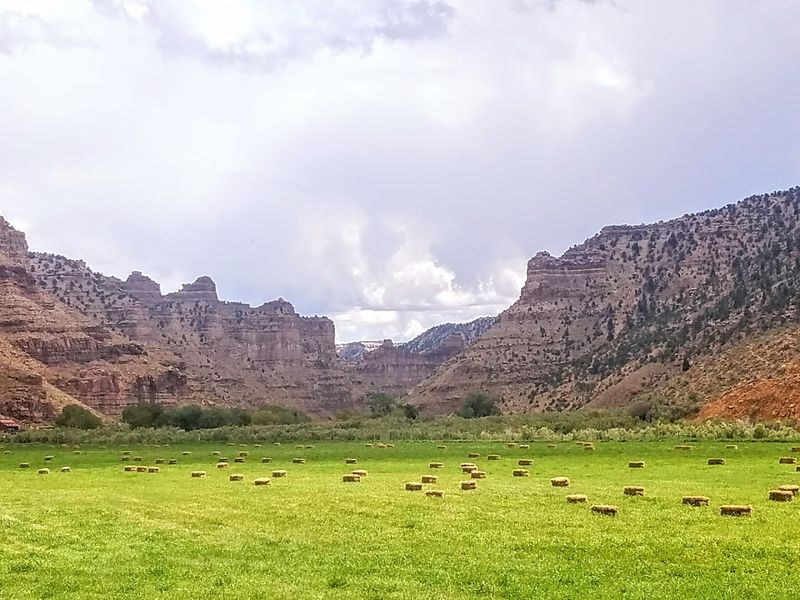
About halfway along the canyon, the rock art shifts in character and the landscape opens up into wider valley sections that feel almost agricultural. That is not a coincidence.
The Fremont people practiced farming in the canyon bottom, and remnants of their presence extend beyond the walls. Small stone granaries, used to store food, are tucked into cliff ledges throughout the canyon.
They are easy to miss if you are focused entirely on the walls at eye level, which is why slowing down and looking up and across the canyon becomes a habit worth developing.
This is also the stretch where the canyon feels most genuinely remote. Cell service disappears, the road narrows in places, and the silence becomes something you can almost lean against.
For families with kids who are old enough to appreciate the scale of what they are seeing, this section of the drive tends to generate the most questions and the most genuine awe.
Who This Is For: Curious travelers, history-minded families, and anyone who finds meaning in slow, attentive road trips. This is not the canyon for people who need constant stimulation or a gift shop at every turn.
It rewards patience and curiosity in roughly equal measure.
Respecting What You Came To See
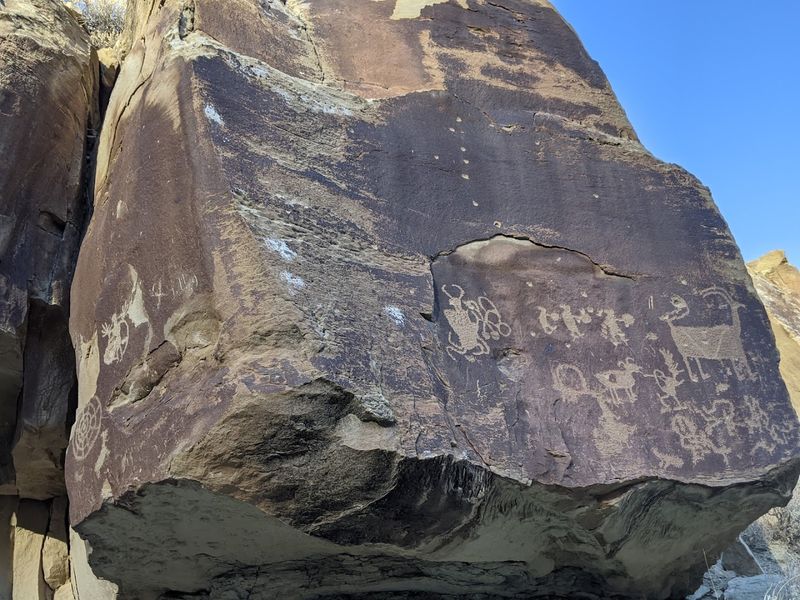
The rock art in Nine Mile Canyon is irreplaceable, and that word deserves to land with full weight. Some panels have already been damaged by visitors who got too close, touched the surfaces, or applied water or chalk to make images more visible.
None of those actions are acceptable, and all of them cause permanent harm to carvings that survived a thousand years of desert weather without human interference.
Federal and state protections cover the rock art under the Archaeological Resources Protection Act, and violations carry serious penalties. Beyond the legal dimension, there is a straightforward ethical point: these images belong to the story of human civilization, not to any individual visit or Instagram post.
Common Mistakes to Avoid: Do not touch the rock surfaces, even lightly. Do not apply any substance to enhance visibility.
Stay on established paths and viewing areas where they exist. Keep a respectful distance from all panels, and encourage kids to observe rather than approach.
The canyon has survived this long because of the desert’s indifference. It needs human visitors to bring a little active care to the equation.
Why Nine Mile Canyon Sticks With You
There is a particular feeling that settles in on the drive back out of Nine Mile Canyon, something that is hard to name precisely but easy to recognize. It is the quiet that follows an experience that was bigger than you expected.
The canyon does not announce itself with a visitor center, a parking structure, or a line of tour buses. It just sits there in the Utah desert, patient and indifferent, covered in evidence of people who lived full and complex lives long before the concept of a road trip existed.
Visitors who make the drive consistently describe it as one of the most underrated experiences in the American West, which is saying something in a region that includes Zion, Arches, and Canyonlands. The lack of crowds is part of the appeal, but the depth of what the canyon contains is what makes people talk about it for years afterward.
Quick Verdict: Nine Mile Canyon is the kind of place that rewards people who show up prepared and leave their expectations flexible. It is a long, dusty, occasionally bumpy drive through one of the most quietly extraordinary archaeological landscapes in the country, and almost everyone who makes the trip agrees: it was absolutely worth it.