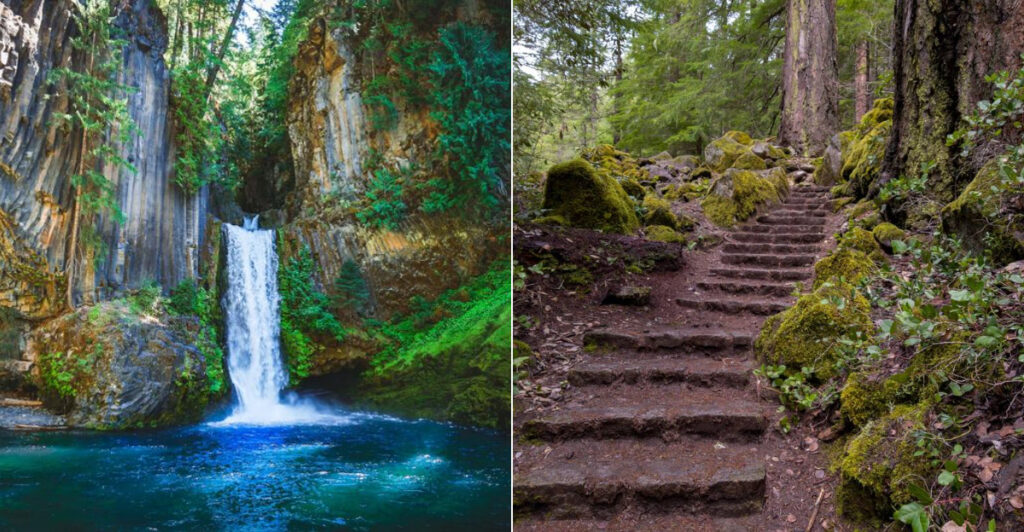
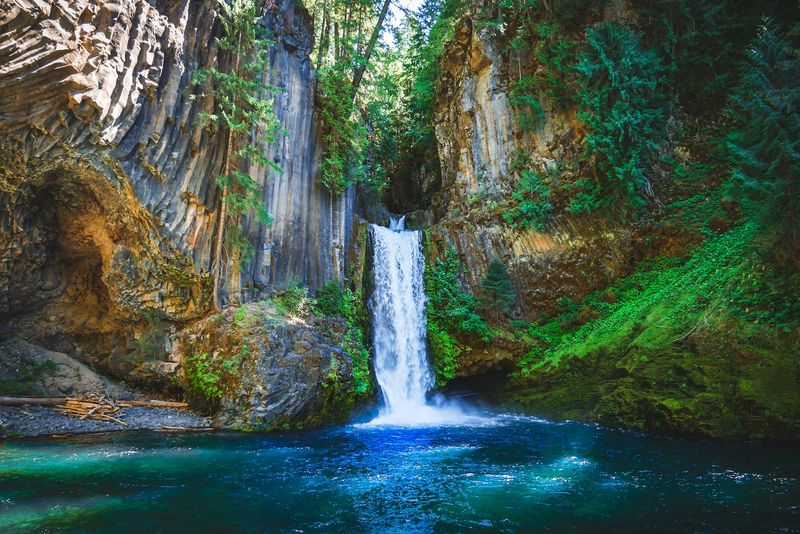
Less than a mile of trail through old-growth forest and suddenly a two-tiered waterfall is crashing 113 feet into a basalt canyon that looks carved by something ancient and powerful.
Oregon delivers moments like this and this one is genuinely hard to believe until it is standing right in front of you.
The roar hits before the falls even come into view. Columnar rock walls frame the whole scene like a natural stage built specifically for this moment.
Almost anyone can make this hike which makes the payoff feel almost unfairly generous. Families, solo travelers, and dogs on leashes have all stood at that viewpoint with the same expression of complete disbelief.
This is the kind of Oregon trail that earns its reputation every single day it is hiked. Read on for everything worth knowing before lacing up and heading into that forest.
The Name Says It All
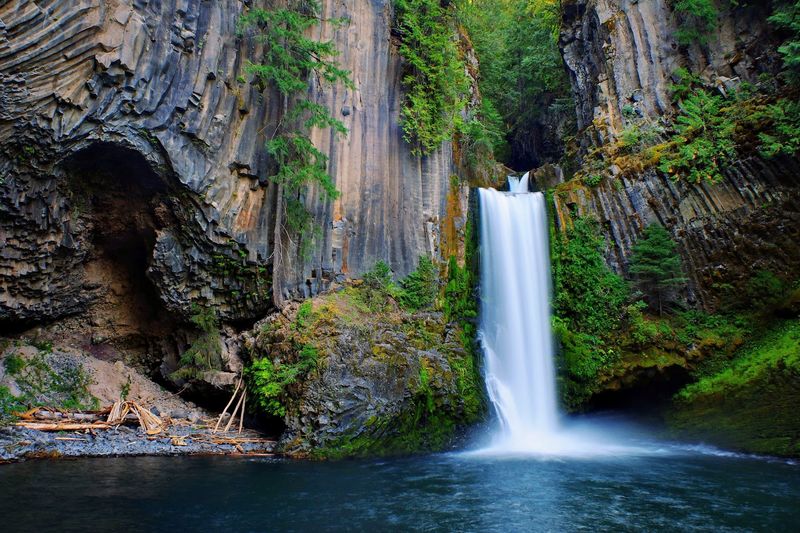
“Toketee” comes from a Chinook Jargon word meaning “graceful” or “pretty.” That name was not chosen by accident. The people who first named this waterfall clearly stood where you are about to stand and felt exactly what you will feel.
Toketee Falls sits inside the Umpqua National Forest, near Idleyld Park in Douglas County, Oregon. The address is simply Idleyld Park, OR 97447, and you can reach the trailhead by following the signs off Highway 138.
It is one of those places that rewards anyone who pays attention to small brown road signs.
The falls drop in two stages. The upper tier falls about 28 to 40 feet, and the lower tier plunges a dramatic 80 to 85 feet into a deep pool below.
Together, the total drop reaches between 113 and 120 feet.
What makes the whole scene so visually striking is the perfectly symmetrical wall of columnar basalt surrounding the falls on both sides. Ancient volcanic activity created those hexagonal columns thousands of years ago, and the North Umpqua River has been carving through them ever since.
No filter needed for photos here. The scene is already cinematic.
Have you ever stood somewhere and thought the landscape looked too perfect to be real? That is the exact feeling Toketee Falls delivers every single time.
The Trail Itself
Short does not mean boring. The Toketee Falls Trail proves that in the most satisfying way possible.
The round trip covers just 0.8 to 1.5 miles depending on your pace and how many times you stop to take photos.
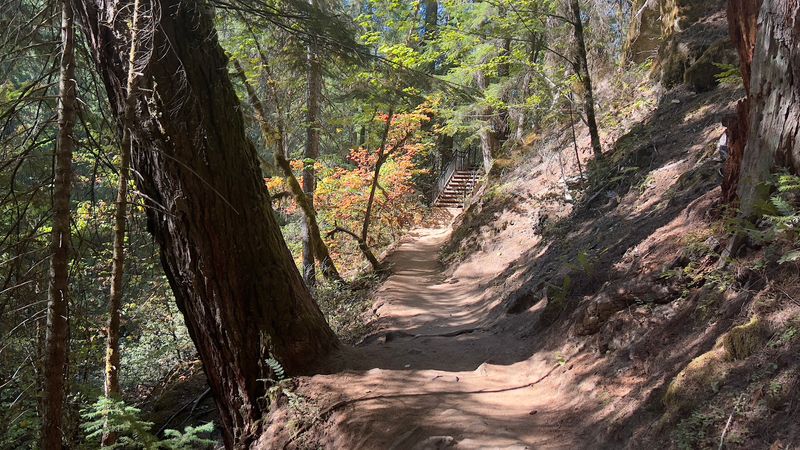
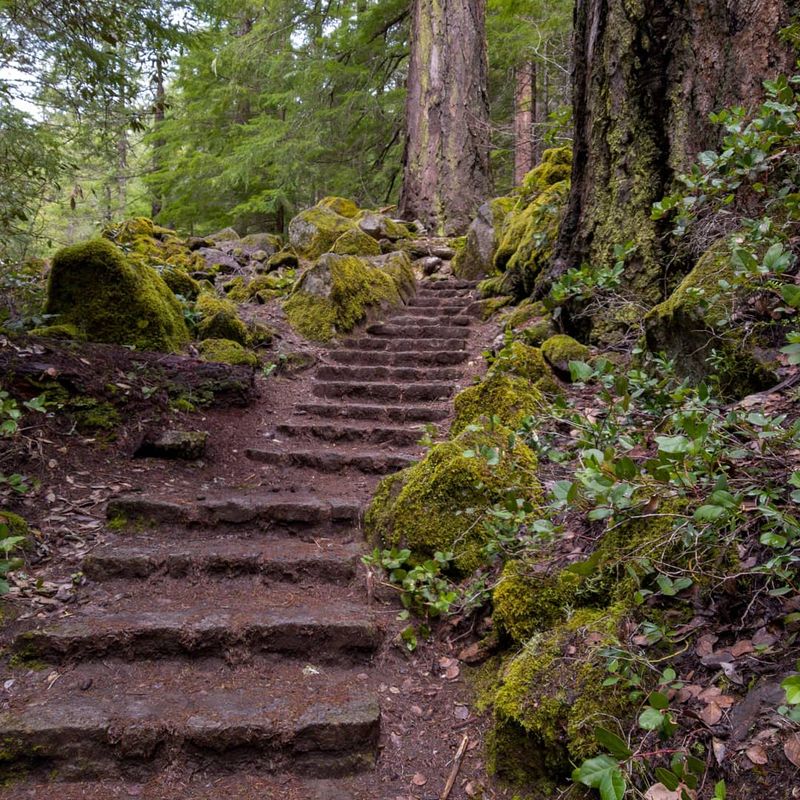
The path winds through a lush old-growth forest packed with Douglas fir, big-leaf maple, Western red cedar, and Pacific yew trees. Moss covers nearly every surface.
The forest floor feels soft and quiet, except for the sound of the North Umpqua River rushing through the gorge below. The trail starts wide and gradually narrows as it approaches the falls.
About 200 wooden steps appear as you get closer to the viewing platform. They are well-maintained and manageable for most hikers, but visitors with limited mobility may find them challenging.
Good shoes with solid grip make the experience far more comfortable, especially after rain when roots and rocks get slippery. Dogs are welcome on the trail, which makes this a fantastic outing for four-legged adventurers too.
The hike typically takes 30 minutes to one hour, depending on how long you linger. Most people linger quite a bit.
Along the way, small viewpoints offer glimpses of the river cutting through narrow rock gorges.
Could a trail this short really pack in this much scenery? Absolutely, and it does so without any fuss.
That Giant Pipeline
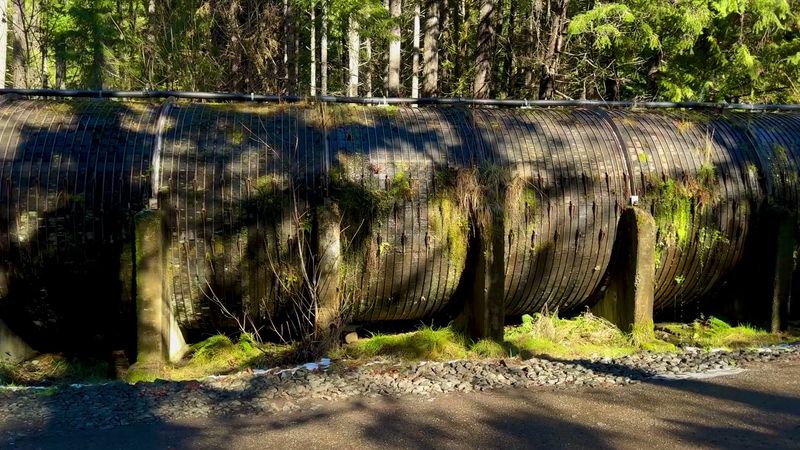
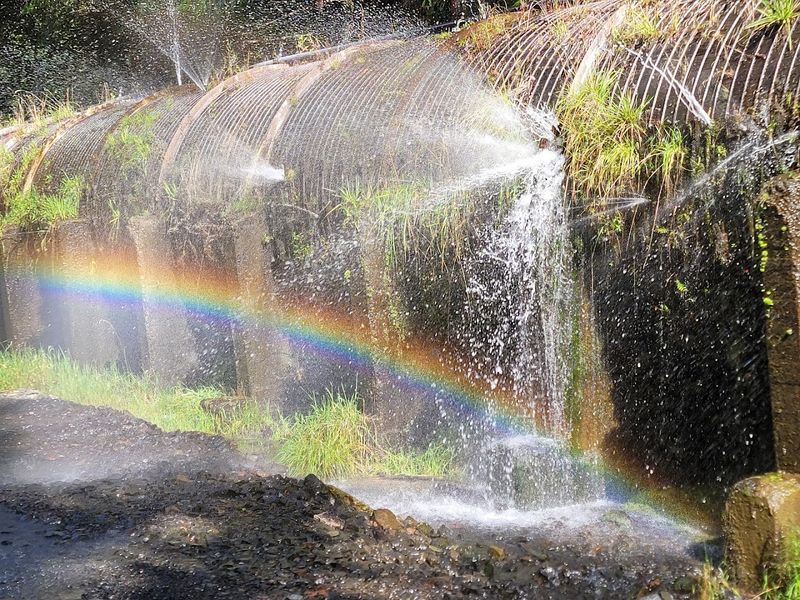
Before you even reach the forest trail, something completely unexpected greets you at the parking lot. A massive, rusted redwood-stave pipeline runs right through the area, and it looks like it belongs in a steampunk novel.
This pipeline is part of a hydroelectric project operated by PacifiCorp. The same dam system upstream is actually responsible for keeping Toketee Falls flowing consistently throughout the year.
Unlike many Oregon waterfalls that slow to a trickle by late summer, Toketee keeps its impressive volume in every season because of this regulated water supply.
The pipeline leaks in several spots, creating small sprays of water that catch the sunlight. Visitors have mentioned parking near it and accidentally getting a light misting on their car, which most people find more amusing than annoying.
It has become one of those unexpected highlights of the visit that nobody talks about in advance.
Seeing this industrial structure right next to a pristine forest trail creates a fascinating contrast. It is a reminder that nature and human engineering have been sharing this landscape for a long time.
The pipeline has been here for decades, slowly rusting and leaking, while the falls keep thundering away just down the path. How often do you start a nature hike by walking past something that looks like it belongs in an old factory?
At Toketee Falls, that is just the warm-up.
The Viewing Platform
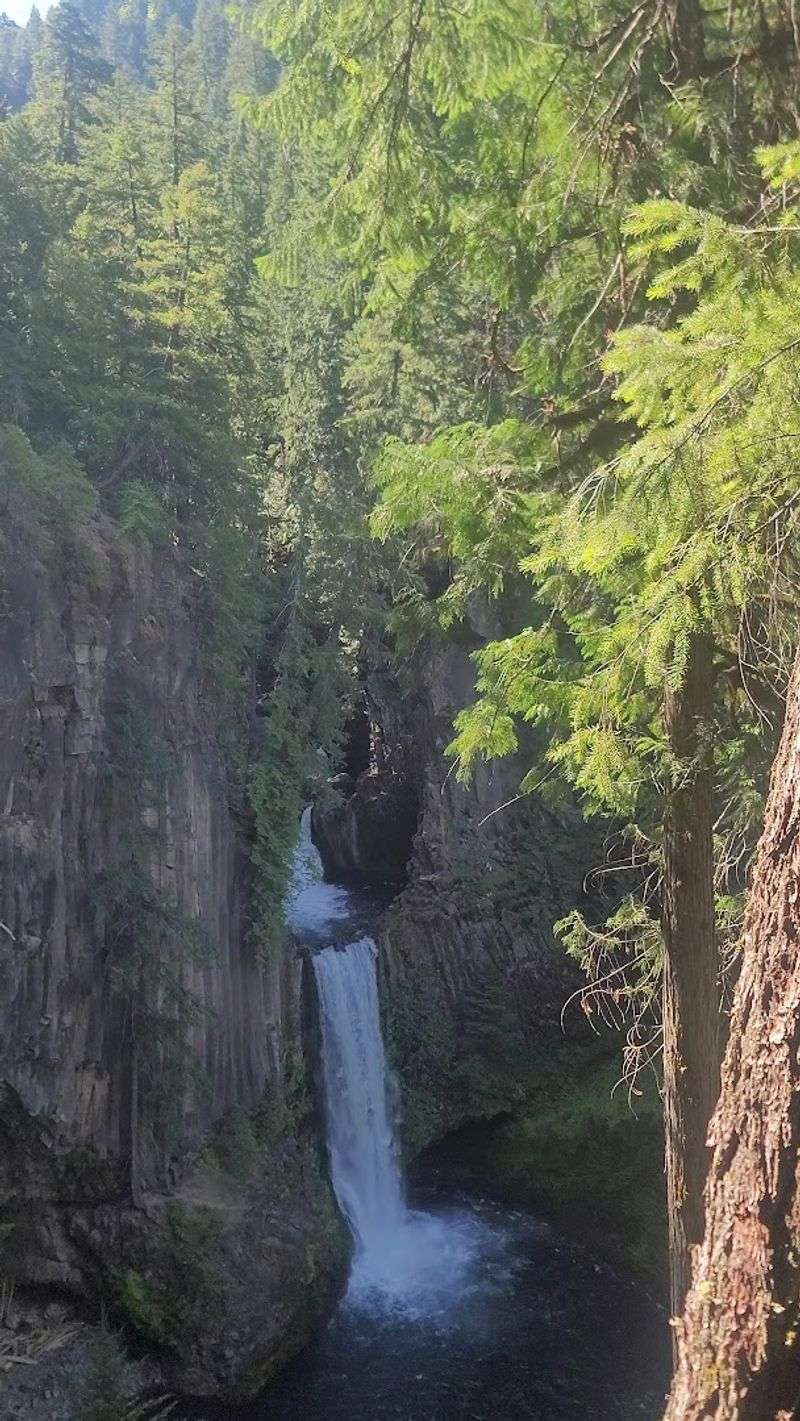
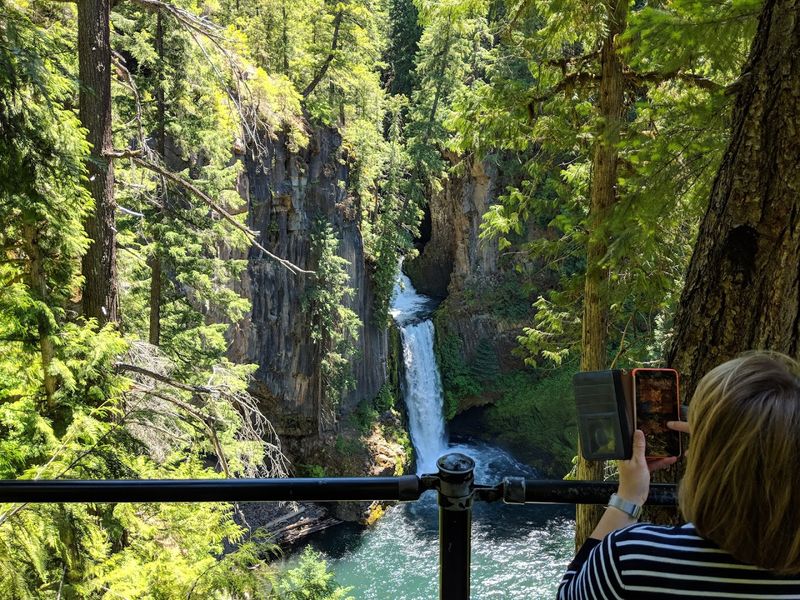
At the end of the trail, a well-built wooden viewing platform gives you a front-row seat to the main event. The platform sits elevated above the falls, offering a clear and unobstructed view of both tiers cascading down the basalt canyon wall.
A bench sits on the platform so you can stay as long as you want without your legs complaining. Most people spend far more time here than they planned.
The mist drifts up from the plunge pool below, cooling the air around the platform even on warm days. It is the kind of spot where you take one photo, then another, then realize twenty minutes have passed.
The platform is the official and safe end point of the trail. There is a fence at the edge, and that fence is there for very good reason.
An unofficial route exists that leads down toward the base of the falls, but the terrain is extremely steep, slippery, and unstable.
Rangers and park staff strongly discourage anyone from attempting it. The view from the platform is genuinely spectacular on its own.
Photographers especially love the framing that the platform provides. The basalt columns on either side of the falls act like natural borders, keeping the waterfall perfectly centered in every shot.
Sunrise and late afternoon light produce the most dramatic results. What is the best seat in the house at Toketee Falls?
The bench on that platform, every single time.
Best Seasons To Visit
One of the great advantages of Toketee Falls is that it stays impressive all year long. The regulated flow from the upstream dam means the waterfall never dries up, even during the driest months of summer.
That kind of reliability is rare and worth appreciating.
Spring and early summer bring the most dramatic water volume. The surrounding forest bursts with fresh green growth, wildflowers appear along the trail, and the energy of the falls feels at its most intense.
The air smells like pine and damp earth, which is a combination that Oregon does better than almost anywhere.
Fall transforms the trail into a different kind of beautiful. Big-leaf maples turn gold and orange, and the contrast between those warm colors and the dark basalt columns is genuinely stunning.
Visitors who hike in October often say the fall foliage alone makes the trip worth it, even before they reach the falls.
Winter visits are quieter and more solitary. Snow sometimes dusts the trees and the rock formations, creating a hushed, almost magical atmosphere.
The trail can get icy in colder months, so waterproof boots with solid traction are essential. Summer offers warm temperatures and long daylight hours, making it the most popular season for families.
Photography Tips Here
Toketee Falls is one of those locations that makes even a smartphone camera look like professional gear. The natural framing is already built in, and the light plays beautifully off the water and the dark basalt walls.
A few small adjustments can take your shots from good to genuinely impressive.
Early morning is the best time for photography. The crowd is smaller, the light is softer, and the mist from the falls catches the low-angle sun in a way that creates a natural glow around the water.
Late afternoon light works nearly as well. Midday shooting tends to produce harsh shadows inside the canyon, which flattens the texture of those incredible basalt columns.
A slow shutter speed will give the water a silky, flowing appearance rather than a frozen splash. If you are shooting on a smartphone, use portrait or pro mode and reduce your shutter speed manually.
A small tripod or a steady surface nearby helps a lot. The mist from the falls can coat your lens quickly, so keeping a microfiber cloth in your pocket is a smart move.
The secondary falls visible along the trail are also worth photographing. Some visitors say they spent more time photographing those smaller cascades than the main event.
The pipeline near the parking lot makes for a surprisingly artistic shot too, especially with the forest behind it. Are you ready to come home with your best outdoor photo yet?
Nearby Natural Wonders
Toketee Falls sits inside a region of Oregon that is absolutely packed with natural attractions. Making the drive out here opens the door to a full day or even a full weekend of exploration, if you are up for it.
Watson Falls is one of the closest neighbors. Standing at 272 feet, it is one of the tallest waterfalls in Oregon.
The trailhead is just a short drive from Toketee along Highway 138.
The hike to Watson Falls is slightly longer but still very manageable, and the height of the falls is genuinely jaw-dropping from the viewing area below.
Umpqua Hot Springs is another nearby attraction that many visitors combine with a Toketee Falls trip. The natural hot springs sit along the North Umpqua River inside the national forest.
The setting is scenic and the pools offer a relaxing contrast to the energy of the waterfall hike. Note that the area has specific rules and etiquette, so checking current conditions before visiting is always a good idea.
The North Umpqua River corridor itself is worth exploring slowly. Fishing, swimming in season, and simply walking along the riverbank are all popular activities in the area.
Camping options exist within the national forest for those who want to stay longer.
Oregon rewards slow travelers who take time to wander rather than rush. Could one short waterfall trail turn into a full adventure week?
Here, the answer is clearly yes.
Plan Your Visit Well
Getting to Toketee Falls requires a bit of planning, but nothing complicated. The trailhead is located off Forest Road 34, which branches off Highway 138 east of Roseburg in Oregon.
The drive along Highway 138 through the Umpqua National Forest is scenic on its own and well worth the journey.
Parking is free, but the lot is small and fills up quickly on weekends and during peak season. Arriving early in the morning gives you the best chance of finding a spot without waiting.
Weekday visits tend to be quieter and more relaxed. There are no parking fees, and no entry fee is required to access the trail.
Restrooms are available at the trailhead, which is a welcome detail for families with young children. The trail is dog-friendly, so your pet is welcome to join the adventure on a leash.
Pack water, wear layers, and choose shoes with good grip. The trail has tree roots, rocks, and over 200 steps, so comfort matters more than style here.
Visitors with limited mobility should note that the trail is not wheelchair accessible. A visit to Toketee Falls does not need to be elaborate to be unforgettable.
Sometimes the simplest adventures leave the biggest impression.