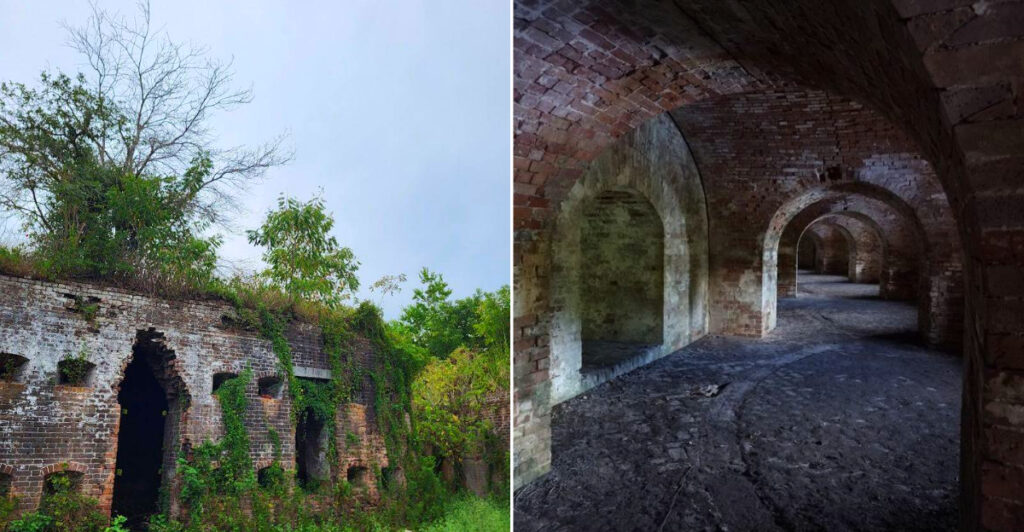
Some places look like they were designed by a set designer for a gothic novel and this decaying brick fort along a narrow waterway in Louisiana might be the most convincing one you will ever walk past.
Because nature has been slowly reclaiming it since the nineteenth century and the results are equal parts haunting and beautiful.
The moss hangs from the arches the brick walls crumble into the water and the silence inside the courtyard is the kind that makes you stop walking just to listen to the sound of your own footsteps echoing off stone that has witnessed more history than most buildings in the state.
There is no shortage of places in Louisiana where the past feels close enough to touch and this abandoned fort along the water is one of the most striking.
Vibe Of The Ruin
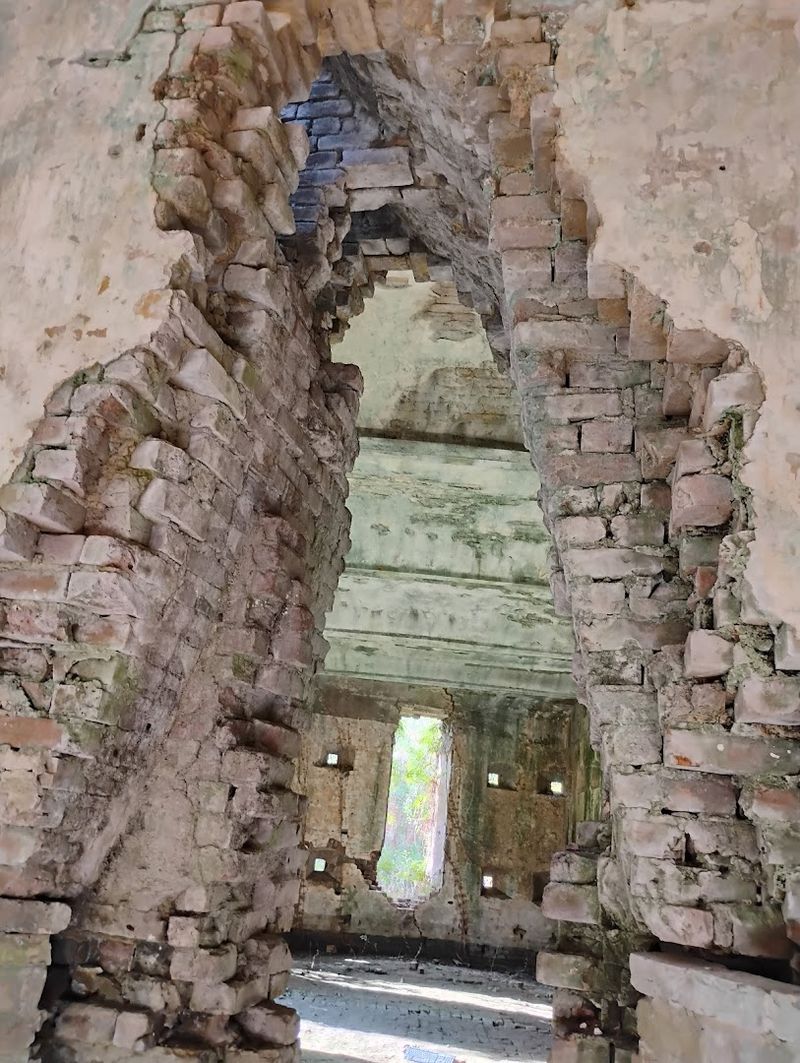
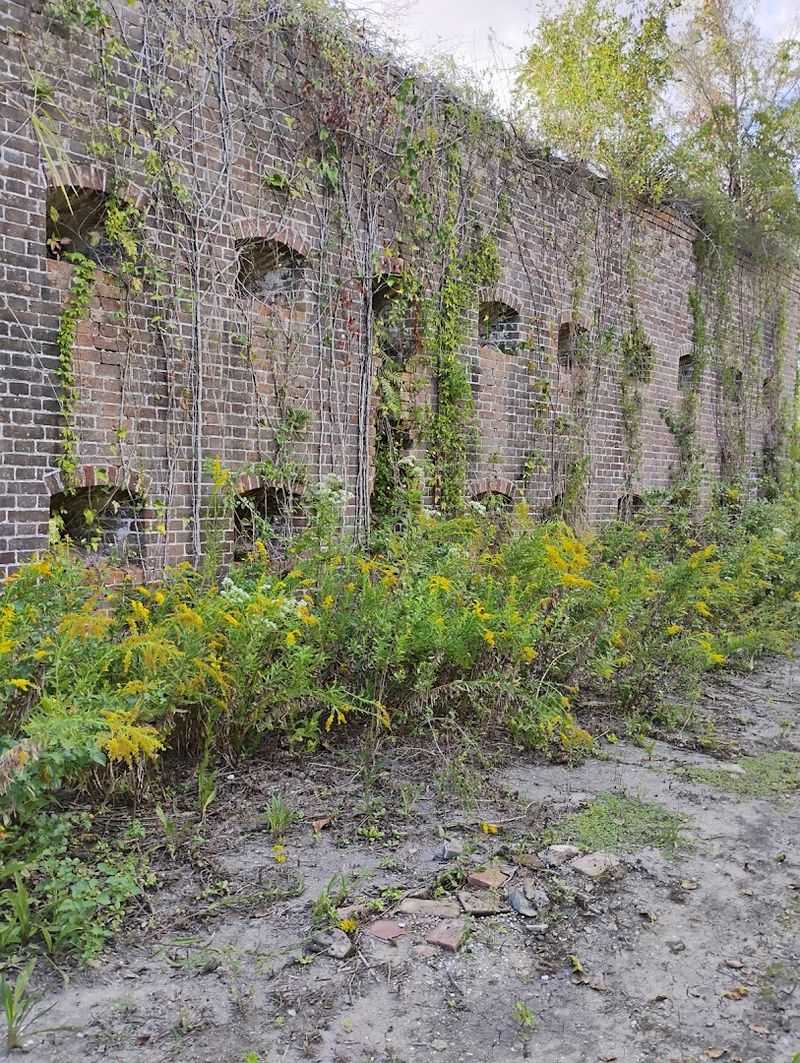
Walking the perimeter of Fort Macomb feels like moving through a paused performance where props have been left to age. The fort’s triangular silhouette and curved front face the Chef Menteur Pass with a quiet authority, while vines and young trees push through mortar joints and take back what was once exclusively military ground.
The damp air carries a mixture of salt and rot that seems almost like a seasoning for the place’s stories. At closer range the masonry reveals tool marks and repairs from different eras, a palimpsest of engineering choices by Simon Bernard and later hands who tried to keep the place whole.
Even locked and fragile, Fort Macomb projects a presence that feels both mournful and stubbornly proud, an object lesson in how landscapes remember human intention long after plans end.
A Ruin Best Approached With Distance
Fort Macomb has the kind of old, haunted-looking presence that makes the drive out feel stranger the farther you get from central New Orleans.
You’ll find it near 14890 Old Chef Menteur Hwy, New Orleans, Louisiana 70129, along the Chef Menteur Pass area, but this is not a walk-right-in attraction.
Treat the arrival as a view-from-a-distance stop, not an exploration plan. The fort is deteriorated and closed to the public, so the safest version is to appreciate the ruins from legal nearby vantage points and let the mystery stay behind the fence.
History In Layers
Fort Macomb’s timeline stretches from 1822 through a postbellum abandonment that leaves a visible scar. Construction began in the early 1820s as part of the Third System after the War of 1812, completing in 1827 to guard vital passages into New Orleans and to secure approaches from the Gulf of Mexico.
Originally called Fort Wood, it was renamed Fort Macomb in 1851 for Major General Alexander Macomb, reflecting a midcentury habit of commemorating military leaders. It saw service as a staging area for the Mexican-American and Seminole Wars and exchanged hands during the Civil War when Louisiana state forces seized it in January 1861.
The fort was never heavily engaged in battle, later used by Union forces and decommissioned in 1871. That quiet, intermittent use explains why much of its story is quiet, patchy, and best learned on site or in archive records nearby.
Military Role And Quiet Duty
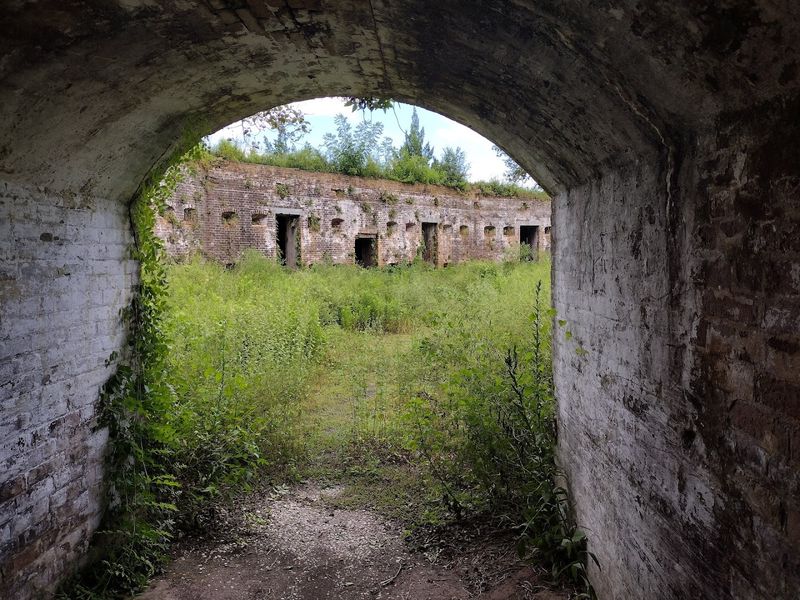
Fort Macomb never earned headlines for dramatic battles, yet its military role was nonetheless meaningful in a defensive network protecting New Orleans. It functioned as part of a chain of fortifications along the Rigolets and Chef Menteur Pass, intended to deny hostile fleets easy access to the city’s waterways.
During the Civil War the fort was seized by Louisiana state forces in 1861 and later occupied by Union troops after New Orleans fell, seeing use as a training and guard post rather than a battlefield focal point.
The First Louisiana Native Guard even served guard duty there, a notable example of the complex personnel histories tied to the fort during the war.
That pattern of limited engagement followed by gradual neglect helps explain why Fort Macomb feels like an elaborate but underutilized stage set: built for threats that never fully materialized at its walls.
Eerie Cannon Tunnels
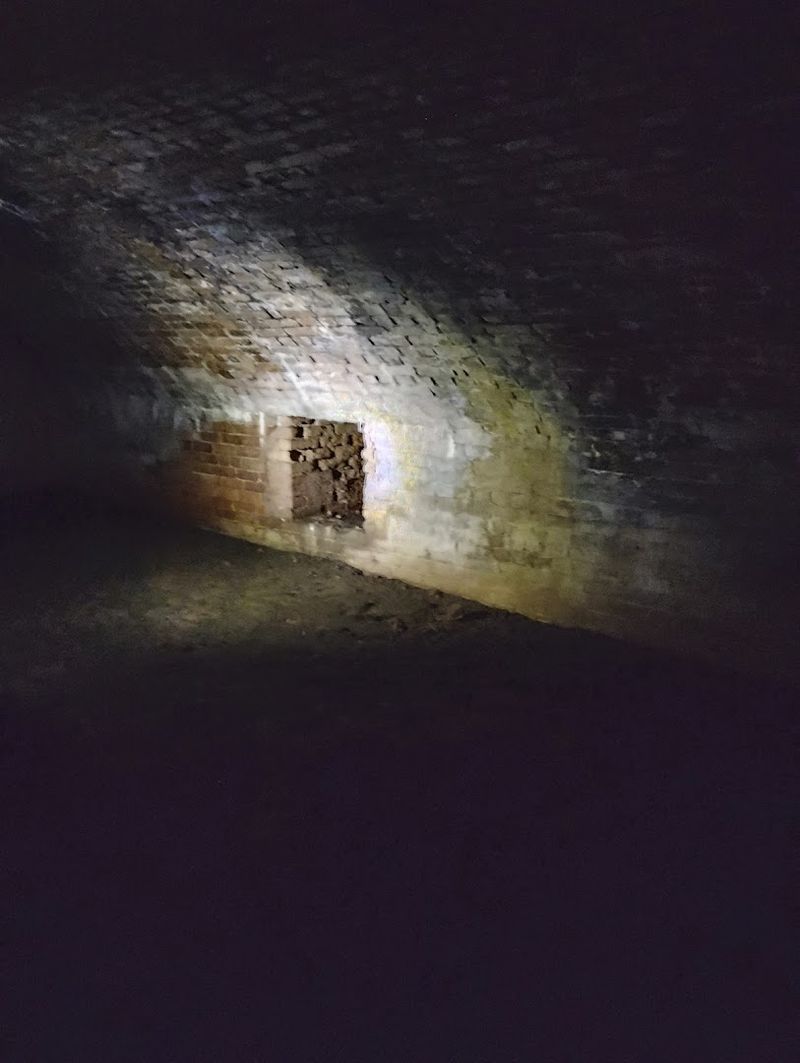
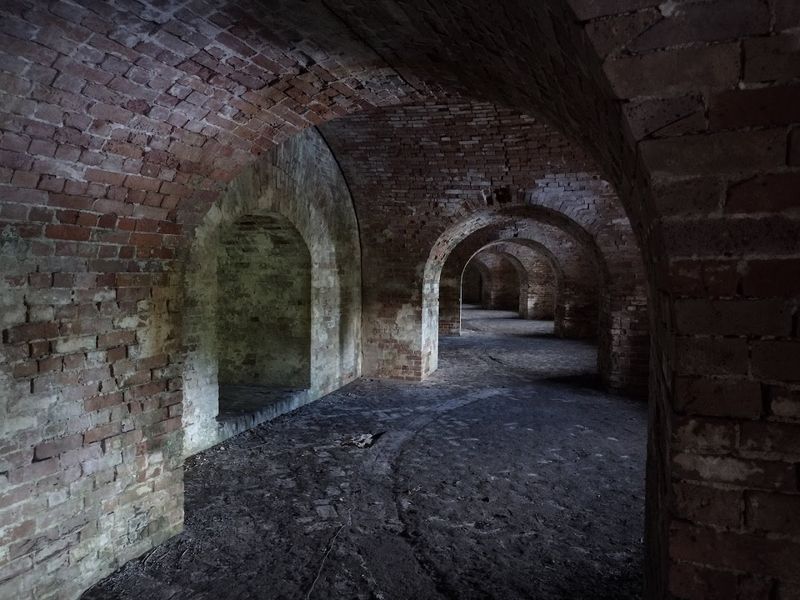
The cannon tunnels inside Fort Macomb are often described as dark, musty, and definitely creepy, and that characterization is accurate if you value atmosphere.
Narrow passages and low vaults create echoing corridors where sound behaves differently and light becomes precious, which heightens a sense of being inside something both ancient and functional.
There is a tangible chill and a damp smell that speaks to proximity with water and a history of being sealed from the elements. Those tunnels were engineered for utility: storing ammunition, moving ordnance, and protecting men and materiel; the functional intent is still legible despite decay.
When visitors mention the fort’s eerie vibe, they are usually recalling the tunnels; they concentrate the site’s mood and make palpable the passage of time in brick and shadow.
Access And Safety Realities
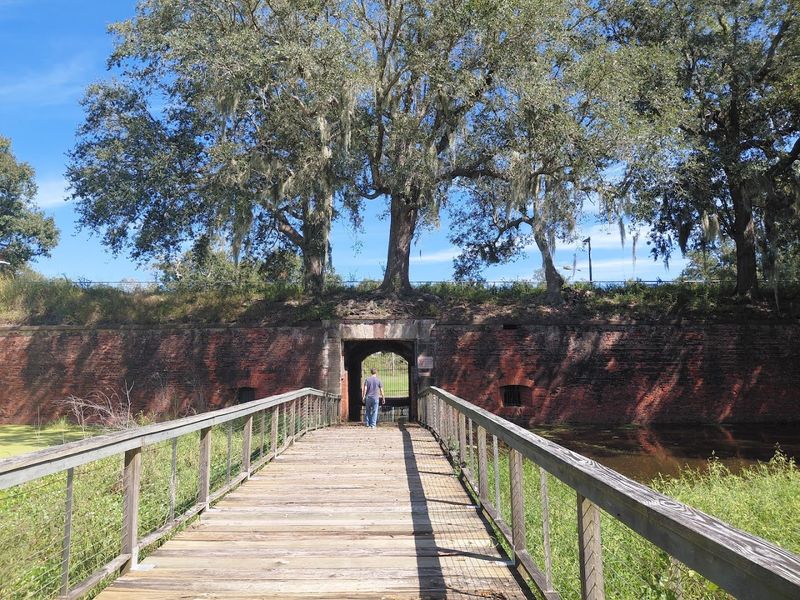
Officially Fort Macomb is closed to the public for safety reasons, a status that matters because the masonry is deteriorating and storms have taken their toll. Hurricane Katrina and other events accelerated erosion and structural issues, and the fort sits partially encroached by surrounding waters and vegetation.
Despite closure, evidence shows people still visit the site by foot or by informal access near the perimeter; those choices carry real risks from unstable walls, hidden drops, and wildlife like snakes and mosquitoes that reviewers have warned about.
Parking options are limited and some visitors report a muddy drive and uneven ground near the front field.
If you care about historic places and your own safety, respect closures and seek organized tours or permission from authorities rather than improvising entry to fragile ruins.
Filming And Pop Culture
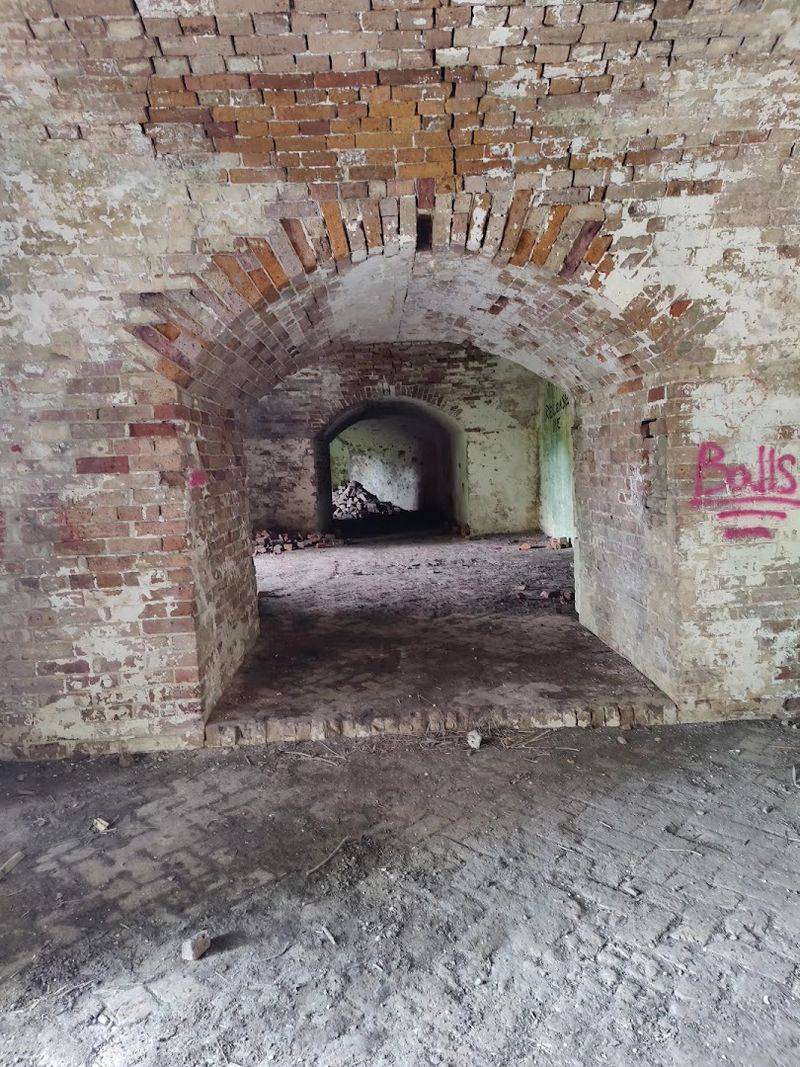
Fort Macomb’s mazelike quality and visual character have attracted filmmakers and music video directors who need a place that reads as eerie and atmospheric. Notably, it stood in for locations in the final episode of True Detective Season One and has appeared in other productions that sought its uncanny mix of ruin and marshland.
The site’s look benefits from controlled shoots where safety and preservation can be managed, producing images that emphasize texture, long shadows, and the way sunlight filters through openings. That visual shorthand feeds the fort’s modern reputation as a cinematic ruin.
When you encounter photos online, remember that production crews often cleared mud and stabilized areas for filming, which is not the same as general visitor conditions today.
Nature Reclaiming Space
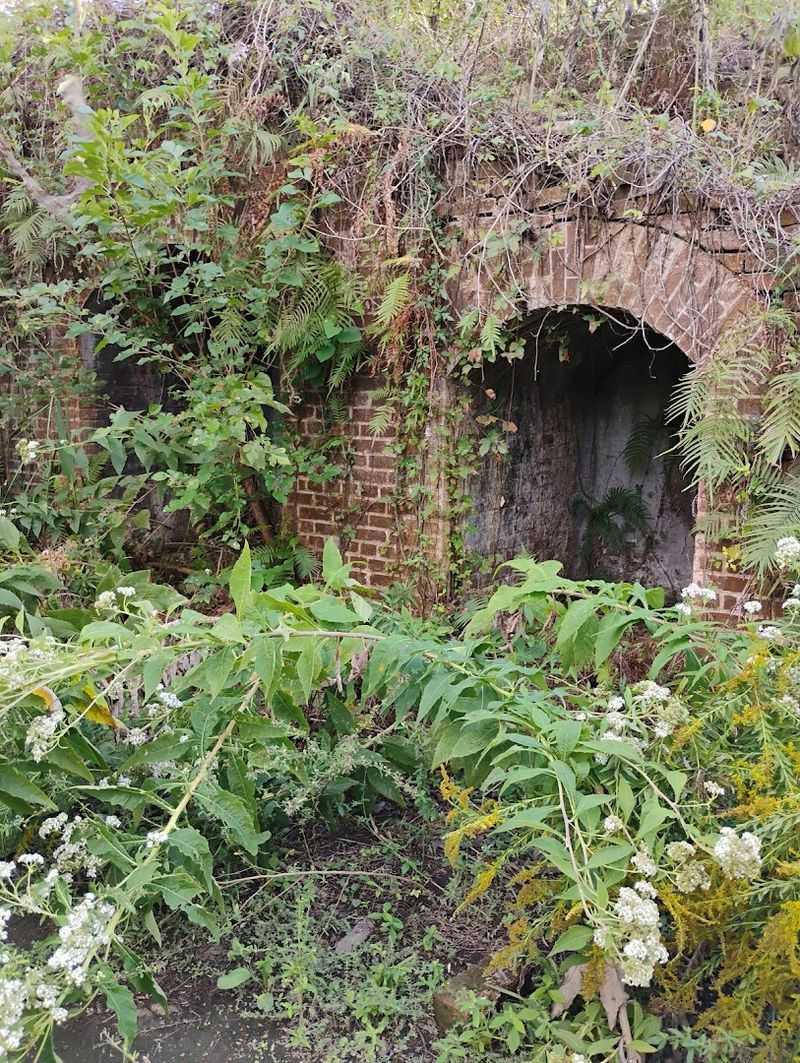
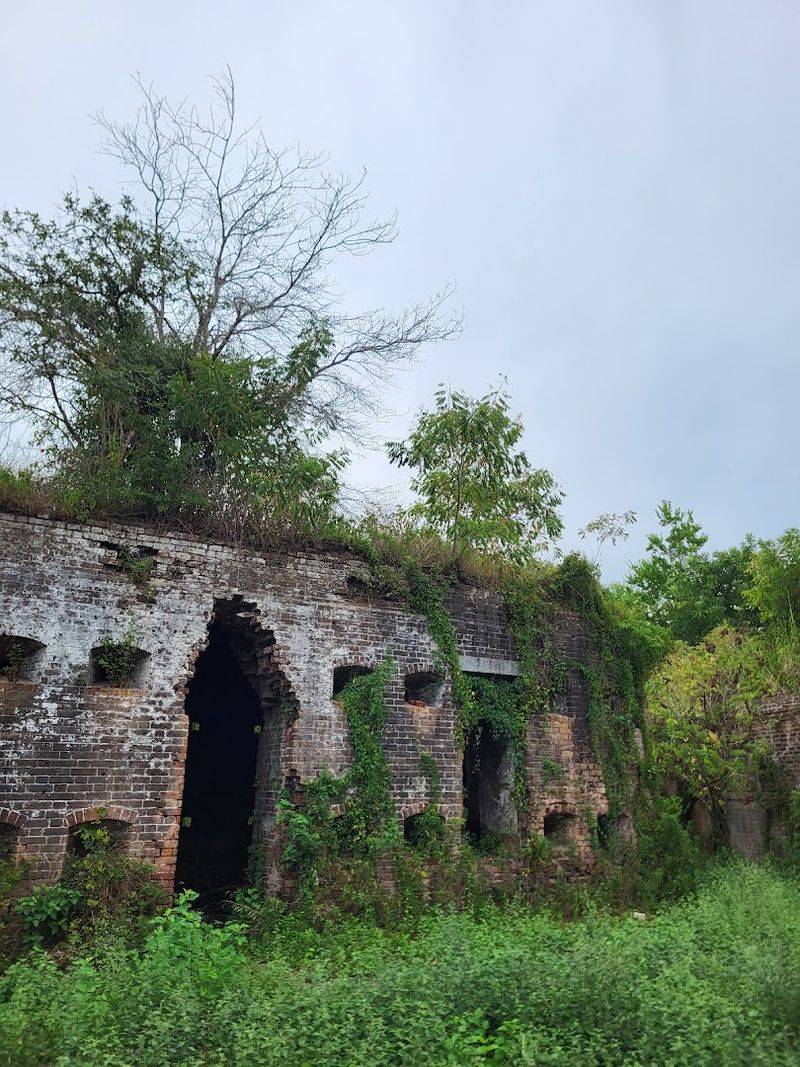
Vegetation at Fort Macomb has moved in with confident momentum, softening corners and lifting brick in places where roots find purchase. Reviewers often praise the site for its nature viewing and plant diversity, noting berry plants, shrubs, and young trees that colonize the old walls and moats.
The interaction between brick and root illustrates ecological succession in action; where maintenance has stopped, living things establish new patterns and microhabitats. That natural takeover also complicates preservation, because plants both conceal and pry apart mortar and stonework.
For those who enjoy both history and botany, Fort Macomb is a study in coexistence, an example of how cultural artifacts become part of a broader ecological story when human attention wanes.
Community And Local Memory
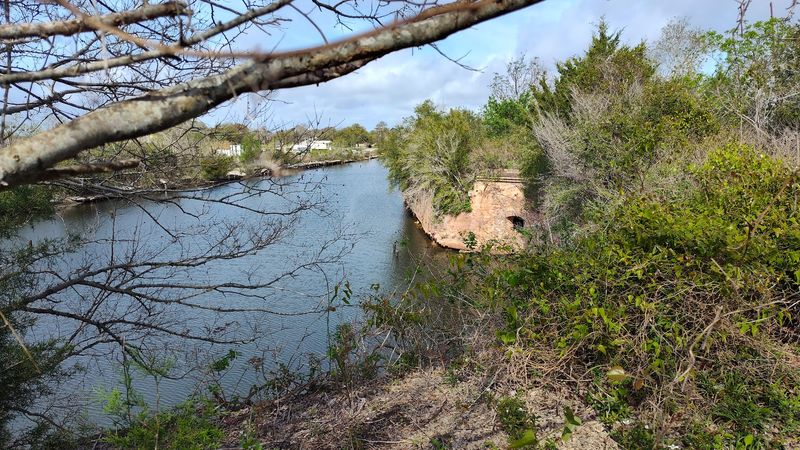
The fort occupies an odd place in local memory, a landmark that some neighbors visit seasonally and that families recall over generations. Several reviewers mention frequent visits and local attachment, which points to a relationship that mixes reverence, curiosity, and stewardship in small ways.
At times concern about graffiti and vandalism appears, and other residents describe efforts to keep the fort tidy. That tension between neglect and care is common with remote historic sites where formal funding is scarce but community interest persists.
If you approach Fort Macomb as a guest, paying attention to local expectations about respect and leave-no-trace behavior matters; small acts of consideration help keep fragile places worth visiting for the long term.
Practical Visiting Tips
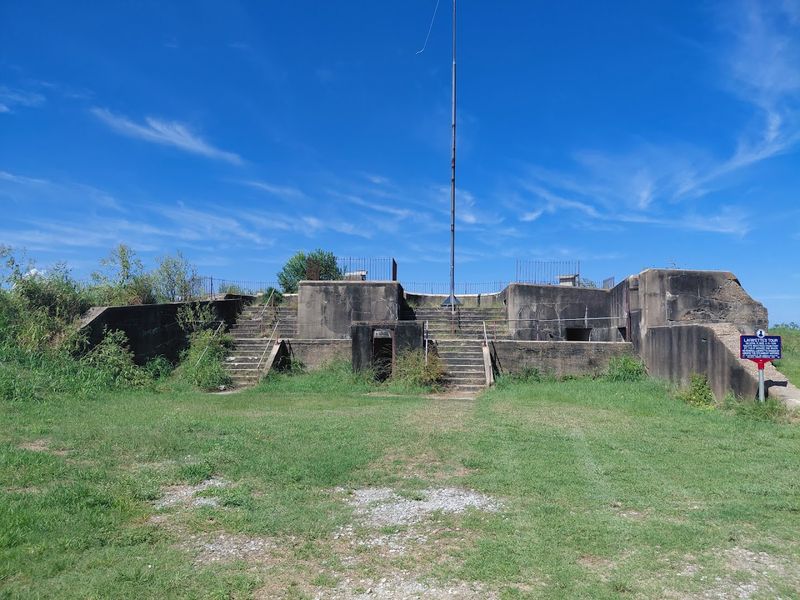
While the site is officially closed, practical realities shape how people experience the area around Fort Macomb: park in designated areas if permitted, prepare for muddy or uneven surfaces, and bring mosquito protection during warm months.
Several visitors advise caution about vehicle access and recommend using the front field or nearby bait shop area rather than driving into uncertain ruts.
Wear sturdy shoes and consider a flashlight for low-light spots if you are near the perimeter at dusk, but avoid entering fenced-off structures. A modest pair of binoculars and a camera with a zoom let you study details from safer distances.
Always check official resources or local authorities for current access status before planning a visit, and treat the place as both fragile and historically significant.
Seasonal Character
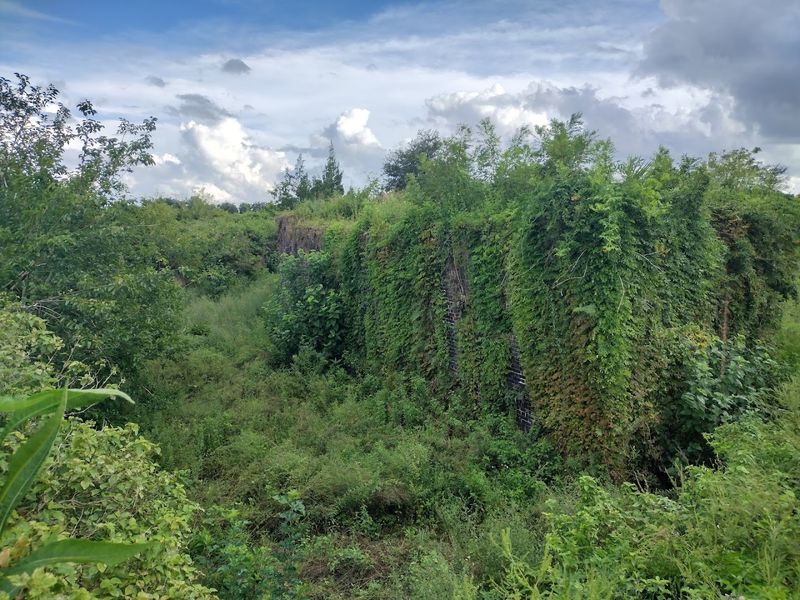
The fort’s personality shifts with the seasons, from lush growth and heavy insects in summer to stark silhouettes against low winter light. Wet seasons accentuate marshy conditions and encourage robust plant growth that can obscure pathways, while drier months reveal more of the masonry and the geometry that made Fort Macomb a coastal sentinel.
Seasonality also affects wildlife presence and visitor comfort: mosquitoes and snakes are more active in warm months, and storms can make access difficult or dangerous.
Photographic opportunities change accordingly, with dramatic skies and reflections more common after storms, and delicate light at dawn and dusk in cooler seasons.
Plan your visit around your tolerance for heat, insects, and muddy conditions, and you will find the fort interestingly different from one visit to the next.
Preservation And The Future
Fort Macomb is listed on the National Register of Historic Places, which recognizes its significance but does not by itself ensure active preservation or public access.
The site faces ongoing threats from erosion, storms, and vegetal growth that accelerate masonry failure, and any long-term solution requires funding, expertise, and careful planning.
Conservation approaches commonly start with stabilization of vulnerable walls, vegetation management that respects archaeology, and controlled public access to reduce vandalism while allowing educational programming.
Community involvement and partnership with state authorities can help create sustainable stewardship models that balance public interest with safety.
For anyone who cares about sites like Fort Macomb, supporting local historical organizations and advocating for measured conservation is the most practical way to help shape a responsible future for this evocative ruin.