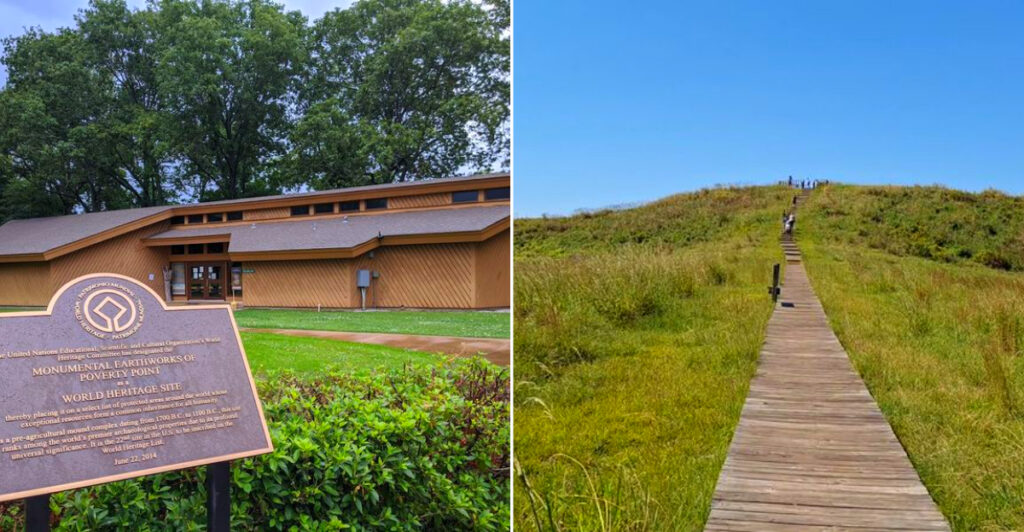
It is hard to imagine that the largest and most sophisticated settlement in all of North America three thousand four hundred years ago was not a pyramid on a plateau or a fortress on a coastline but a ring of earthen mounds tucked into a quiet corner of northeastern Louisiana.
Here the land is flat the bayous are slow and the nearest town is barely a dot on the map.
The people who built this place moved millions of cubic feet of earth by hand to create ridges and mounds that still hold their shape today which is more than can be said for most construction projects from any era.
Conversations about ancient civilizations do not usually bring up Louisiana but the earthworks at this site prove the state holds a story older than almost anywhere else in the country.
Approach And First Impressions
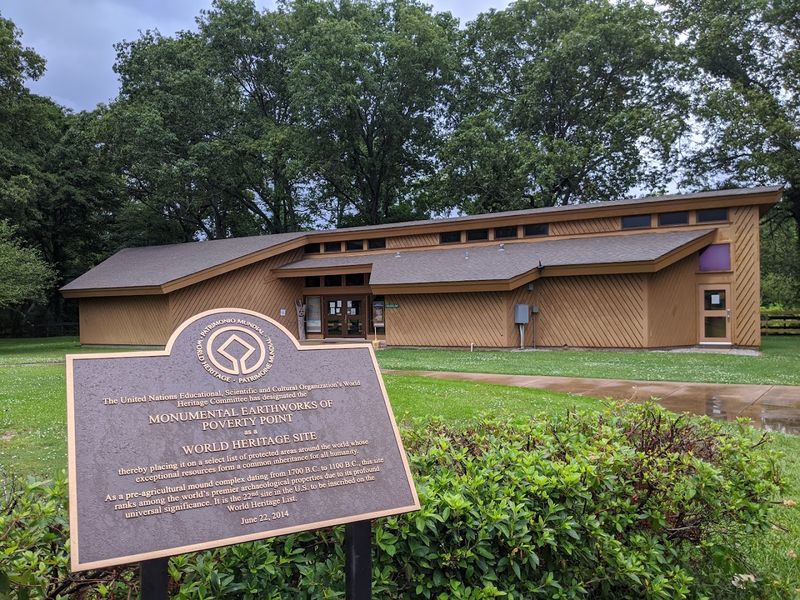
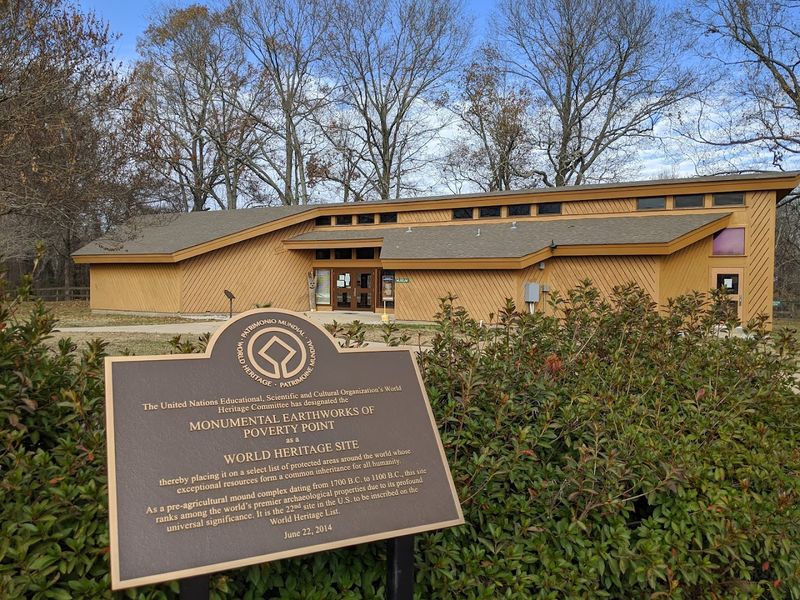
Pulling in to the Poverty Point parking area, the visitor center appears modest against an expansive flat horizon, and that low profile is part of the point.
The site does not rely on dramatic modern architecture to tell its story; instead, the earthworks themselves carry the narrative, so arriving with a slower pace helps you tune in to scale and context.
Start inside the museum to ground your visit with maps and artifacts before walking the complex. Staff are friendly and knowledgeable, and their brief orientation helps orient you to the route, shuttle options, and the rhythm of the site you are about to explore.
Ancient Earthworks At The End Of A Quiet Road
Poverty Point National Monument feels different before you even arrive, because the road into Pioneer has a way of making modern life back off a little.
You’ll find it at 6859 LA-577, Pioneer, LA 71266, the same location listed by the official Poverty Point World Heritage Site and Louisiana State Parks.
Park, start at the visitor center, and give the landscape time to explain itself. The mounds are not loud, flashy ruins, they are ancient shapes in the earth, and the best arrival is patient enough to notice them.
Walk slowly, look across the ridges, and let the scale settle in; the site works best when you resist rushing from point to point and allow the quiet geometry of the place to become part of the visit itself.
Museum And Orientation Film
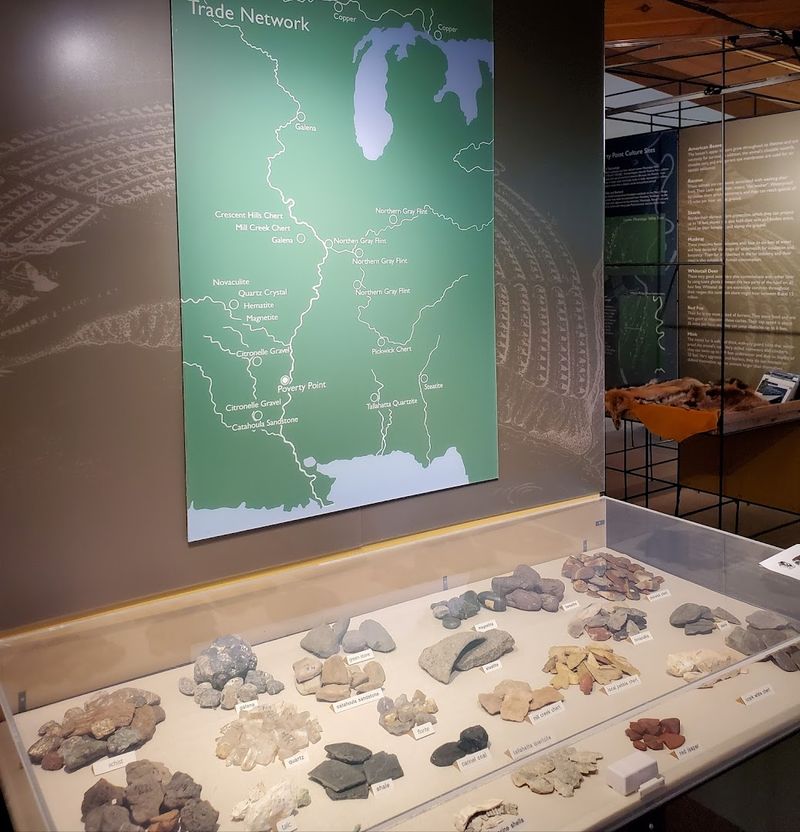
Begin with the short film and museum exhibits to absorb the timeline and significance of the site; the displays contextualize the scale of construction and the far-reaching trade networks.
Seeing thousands of Poverty Point Objects and trade raw materials on display helps you imagine labor and logistics that supported this pre-agrarian city.
The museum staff provide maps and a pamphlet with numbered stops for a driving or walking tour. Take a moment to study the map so you can sequence your route logically and catch interpretive markers that explain construction techniques, artifact finds, and cultural connections across the continent.
If time allows, ask a ranger which stops best fit your pace because the site can feel abstract until someone connects the mounds, ridges, artifacts, and daily life into one clearer story before you head back outside again for context.
Understanding The Scale
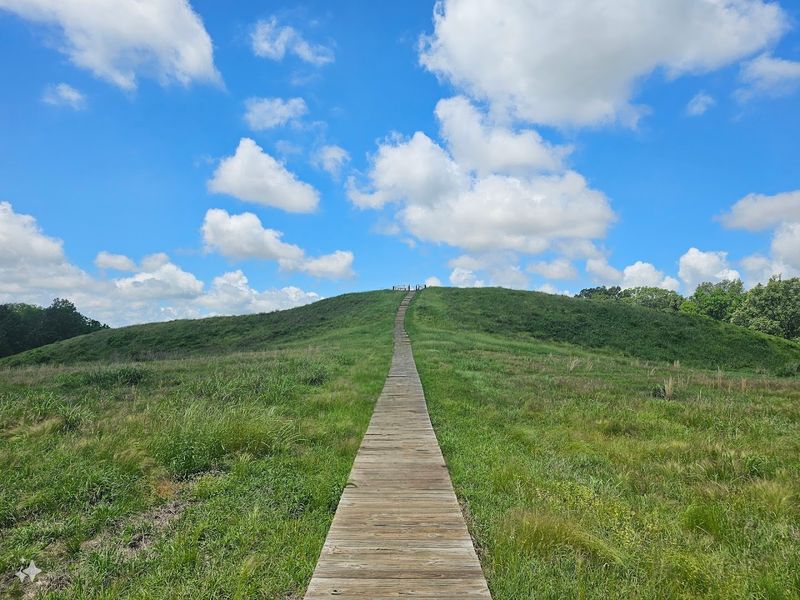
It helps to picture how six concentric C-shaped ridges plus several mounds once structured daily life across roughly two square miles. The outer ridge spans nearly three-quarters of a mile in diameter, creating a strong geometric footprint that reads differently at ground level versus from above.
Slowly walking or riding the tram along the ridges emphasizes how monumental this plan was for people without metal tools, draft animals, or wheeled vehicles.
Allow the scale to sink in; it reframes assumptions about social organization, labor coordination, and what hunter-gatherer societies could accomplish regionally during the Late Archaic period.
Notice how the pattern changes as you move, because the ridges stop feeling like lines on a diagram and become a lived-in terrain where movement, memory, work, and gathering may have shaped the rhythm of everyday life slowly over time.
Climbing Mound A
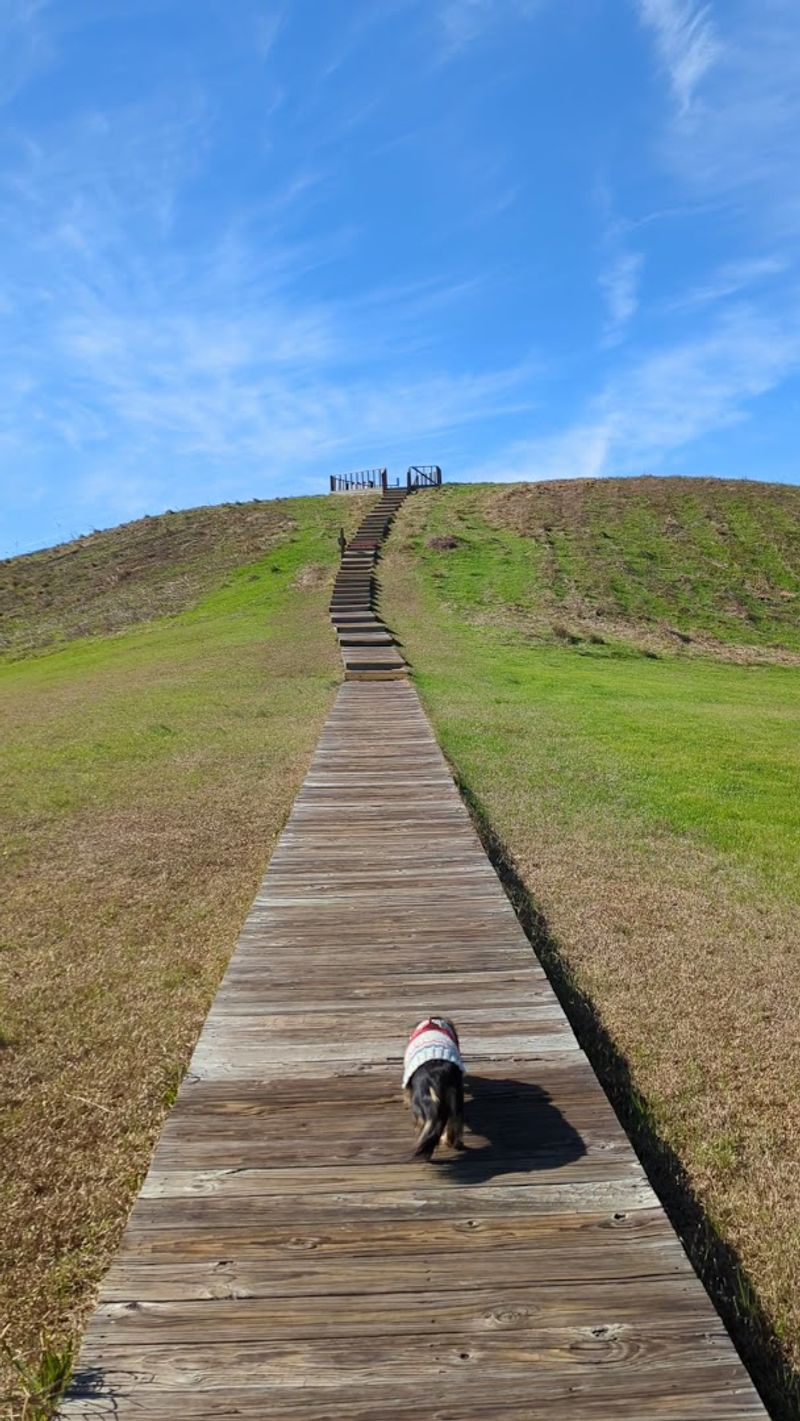
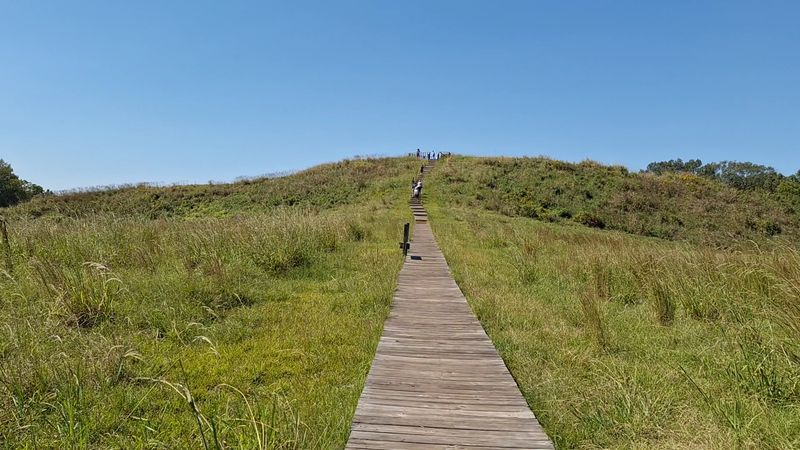
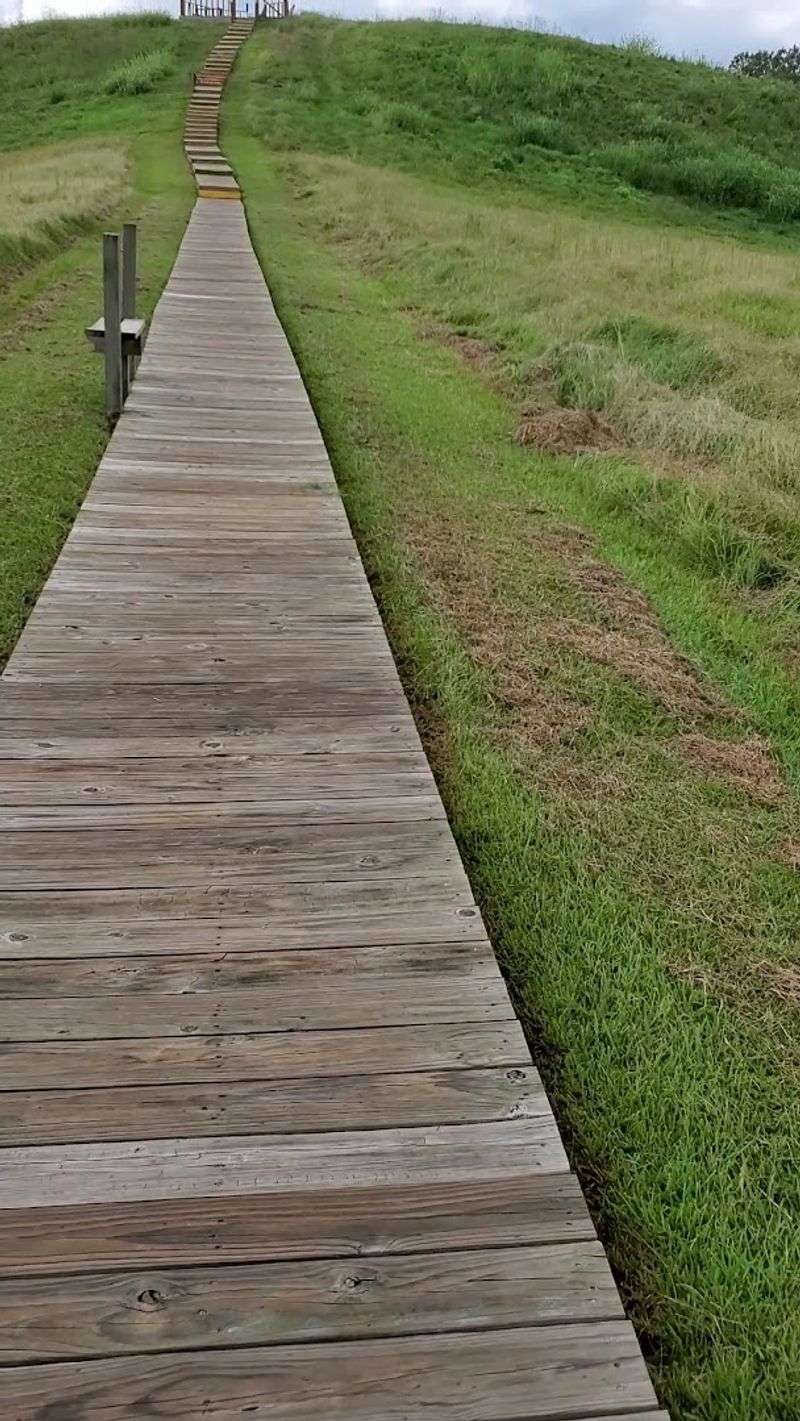
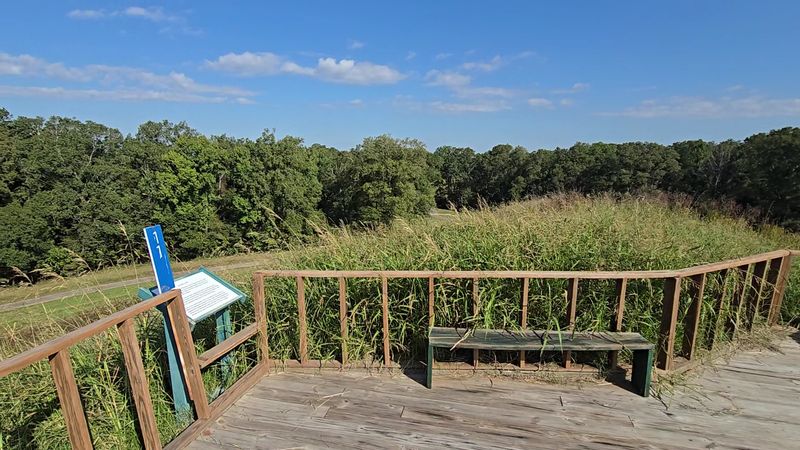
Climbing Mound A, often called the Bird Mound, is a compact way to appreciate vertical accomplishment; it rises roughly 72 feet and offers a panoramic view of the surrounding ridges.
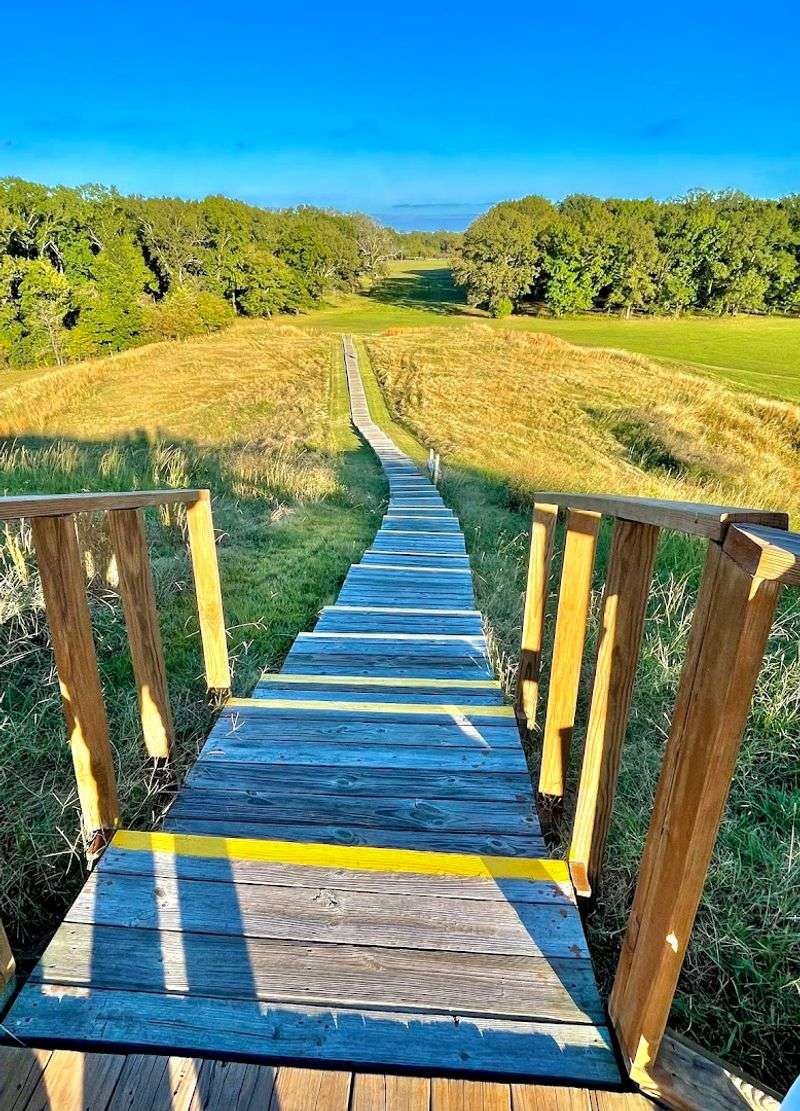
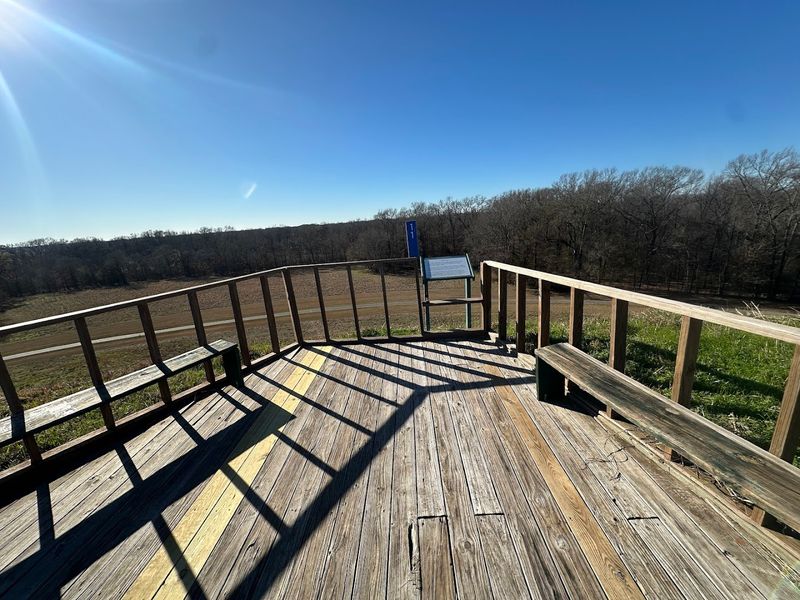
The climb is relatively short but rewarded by the top platform where you can look back across the carefully arranged earthworks and imagine gathering or ceremonial functions.
Wear sturdy shoes, and pause on the platform to read interpretive panels. The vantage clarifies how deliberate sightlines and placement would have mattered to the community that built these features, and it makes clear why archaeologists view the mound as a focal point of the complex.
From there, the surrounding landscape feels less like empty space and more like a designed environment, with distance, elevation, and open ground working together to show how impressive the construction still remains after thousands of years of weather and change.
Engineering And Materials
One striking detail is the builders mixing clays, silts, and sand to create resilient layers that resist erosion even after thousands of years. This deliberate selection and blending of soils demonstrates practical engineering knowledge and intentionality in construction techniques that have preserved the earthworks for millennia.
Interpretation panels and archaeological reports describe estimates that roughly 53 million cubic feet of soil were moved by hand, likely using woven baskets.
Pause to consider the organization and labor required for such projects without draft animals or wheeled transport; it reframes assumptions about social complexity in the pre-agricultural world.
Trade Networks And Materials
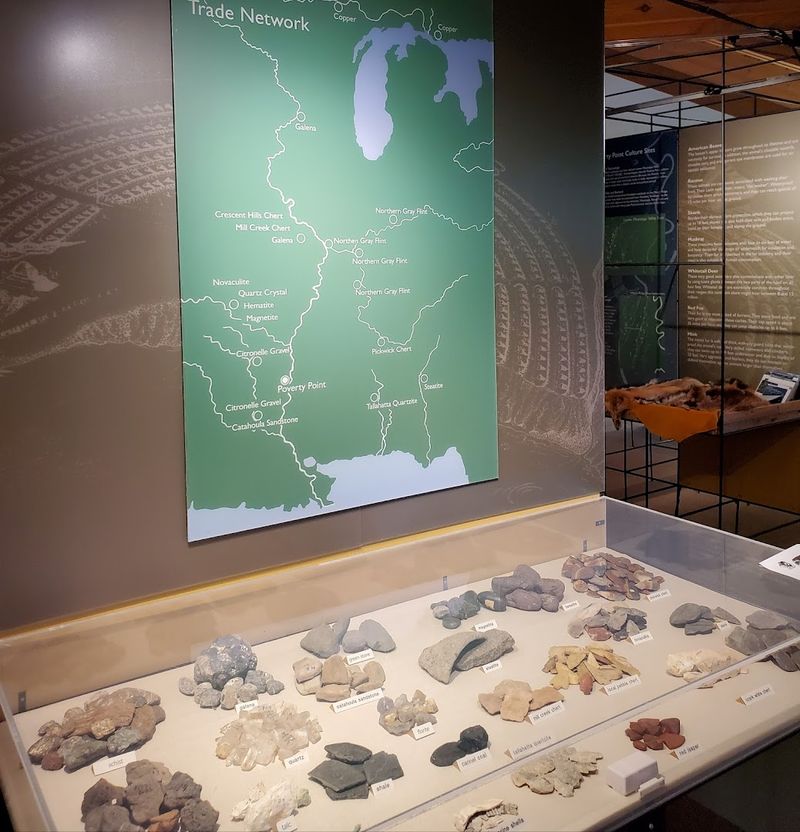
The array of imported materials found at Poverty Point is striking: copper, soapstone, and stone types traced to sources hundreds to over a thousand miles away. These finds reveal an extensive trade network reaching to the Ohio and Tennessee River valleys and beyond, underscoring the site’s central role in continental exchange.
Spotlight artifacts in the museum illustrate how connected this community was despite its hunter-gatherer economy. When walking the grounds, recall that many objects were not local, which points to sustained social ties, exchange mechanisms, and the prestige or political relationships that came with directing such flows of raw materials.
That background makes even a small artifact feel larger than itself, since each polished stone or shaped fragment hints at journeys, negotiations, obligations, and shared meanings that crossed distances far greater than the quiet fields now suggest to modern visitors.
Cooking Technology – Poverty Point Objects
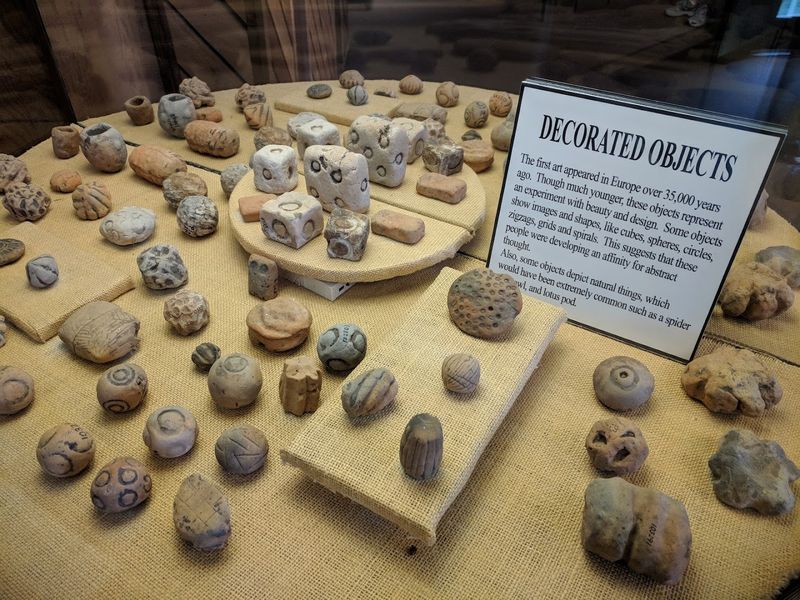
A curious practical innovation on display is the thousands of hand-molded fired clay cooking stones called Poverty Point Objects used where suitable stone was scarce.
These small baked clay pieces were heated and placed in cooking vessels as thermal transfer tools, showing adaptive ingenuity in culinary practice without local cooking stone.
Seeing them up close in the museum underscores everyday technology developed to meet environmental constraints.
Consider how routine tasks like preparing food were transformed by small but effective inventions and how archaeological contexts reveal both grand projects and mundane creativity alike.
Guided Tours And Staff
Park rangers and guides are resources you should use; they bring excavation updates, interpretive context, and on-site knowledge that enrich a visit. Guided tram tours or walking tours provide layered narratives about construction sequences, recent archaeological finds, and preservation challenges that are hard to glean solo.
When available, join a ranger talk or ask about ongoing digs and opportunities to speak with archaeologists. Interacting with staff connects you to current research, helps decode subtle landscape features, and highlights how public interpretation and preservation efforts work hand in hand on site.
Their perspective also reminds you that Poverty Point is not a finished mystery in a glass case, but a living research landscape where each season can refine the story, correct old assumptions, and make the earthworks feel freshly active again.
Preservation Challenges
Maintaining ancient earthen monuments involves ongoing conservation, and Poverty Point faces natural erosion, vegetation management, and funding needs.
The site’s survival owes much to deliberate preservation techniques, research-informed stabilization, and monitoring that balance public access with protecting fragile features.
Interpretive materials explain the choices park managers make, such as controlled vegetation and limited excavation, to ensure long-term integrity.
Observe and follow signage, stick to paths, and respect restricted areas; your small actions help preserve these vulnerable earthworks for future research and for visitors who will come after you.
Seasonal And Sensory Notes
Seasons change how the site reads: spring brings wildflowers and the pawpaw groves noted by visitors, while summer emphasizes heat and the scent of cut grass along the ridges.
Storms can transform the place quickly; some visitors recall sudden downpours that altered their tram tours and made the landscape feel remarkably alive.
Pack sun protection and water in summer and check weather before you go. Travelling in cooler months can offer crisper views and quieter trails.
The site’s sensory character shifts with light and weather, so consider seasonality when planning to match what you most want to feel and see.
Respect And Responsible Visiting
Visiting Poverty Point comes with responsibilities: this is a sacred cultural landscape and an archaeological site where careful behavior matters.
Follow posted rules, stay on designated paths, and refrain from touching exposed excavation areas or artifacts; these guidelines protect both the science and the cultural significance of the site.
Bring curiosity and humility, and consider how your visit supports broader recognition of Indigenous achievements. Buying a small museum item or donating to preservation programs are simple ways to contribute.
Leave no trace and share what you learn to help others appreciate this ancient, remarkable site.