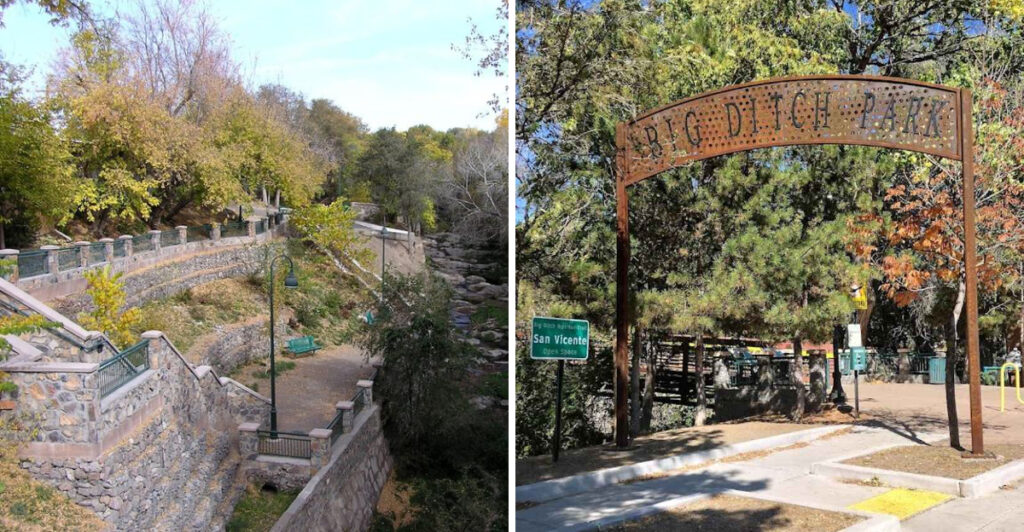
This is the kind of place that makes you pause mid-walk. Not because it is loud or flashy.
It is the opposite. The ground dips below the street, and the story slowly pulls you in.
In a small New Mexico town, this park sits where floodwaters once changed everything. Streets were damaged.
Buildings were lost. People had to look at a broken part of town and decide what would happen next.
They could have left it as a painful reminder. Instead, they made a park.
I kept thinking about that while walking through the shade. How do you take a place connected to loss and turn it into somewhere people now come to feel at peace?
That kind of choice says a lot about a community. Some parks are pretty.
This one feels like an answer. Honestly, that is why I could not stop thinking about it after I left.
A Shaded Walk Below Town
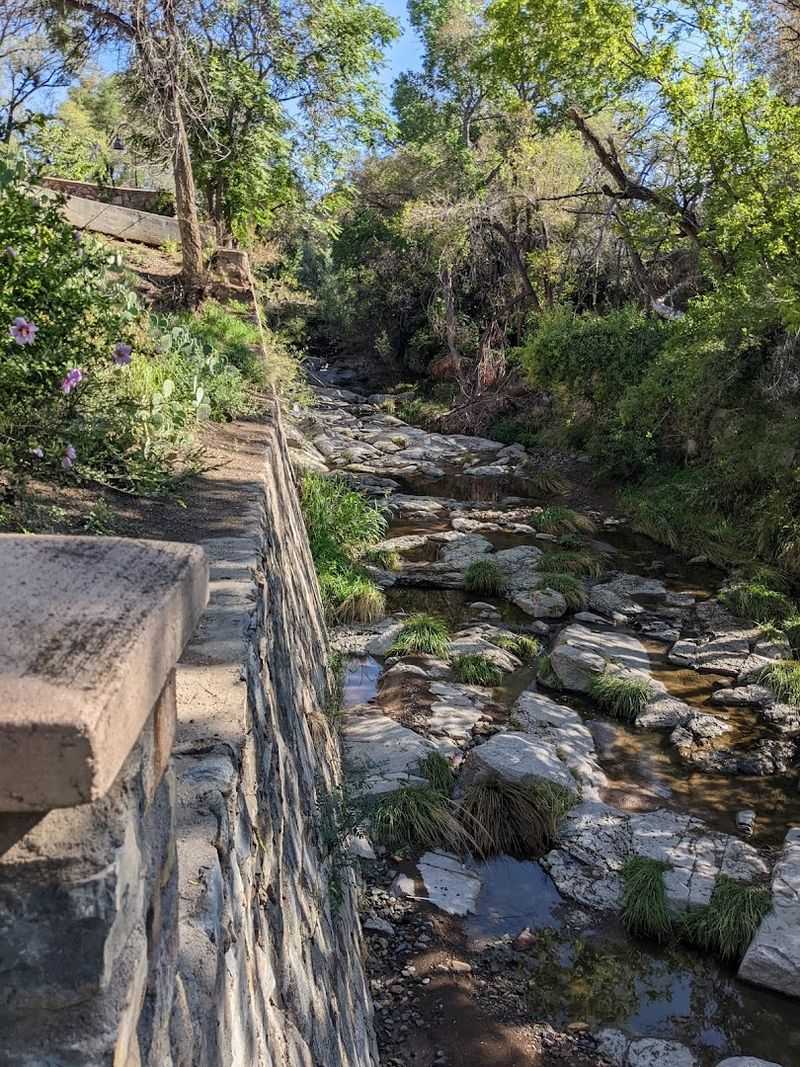
The path drops below the street, and the town above seems to disappear. What remains is shade, the sound of running water, and a trail that seems to belong to a slower era entirely.
The cottonwood trees here grow tall and lean over the trail in a way that creates a natural canopy, cutting the desert heat down to something surprisingly comfortable even on warm afternoons.
I visited on a bright Tuesday in late spring, and the contrast between the sun-baked streets above and the cool corridor below was immediate and almost startling.
Benches are scattered along the walkway at thoughtful intervals, giving you permission to simply sit, listen to the creek, and watch the light shift through the leaves without feeling like you need to be anywhere else.
Locals treat this path like a daily ritual, walking dogs, reading on benches, or just moving through it slowly, and that relaxed energy is contagious in the best possible way.
Early morning and late afternoon visits offer the most peaceful experience, when the light is soft and the path belongs mostly to you and the birds at The Big Ditch, 199 E Market St, Silver City, NM 88061.
Where Old Streets Became Green Space
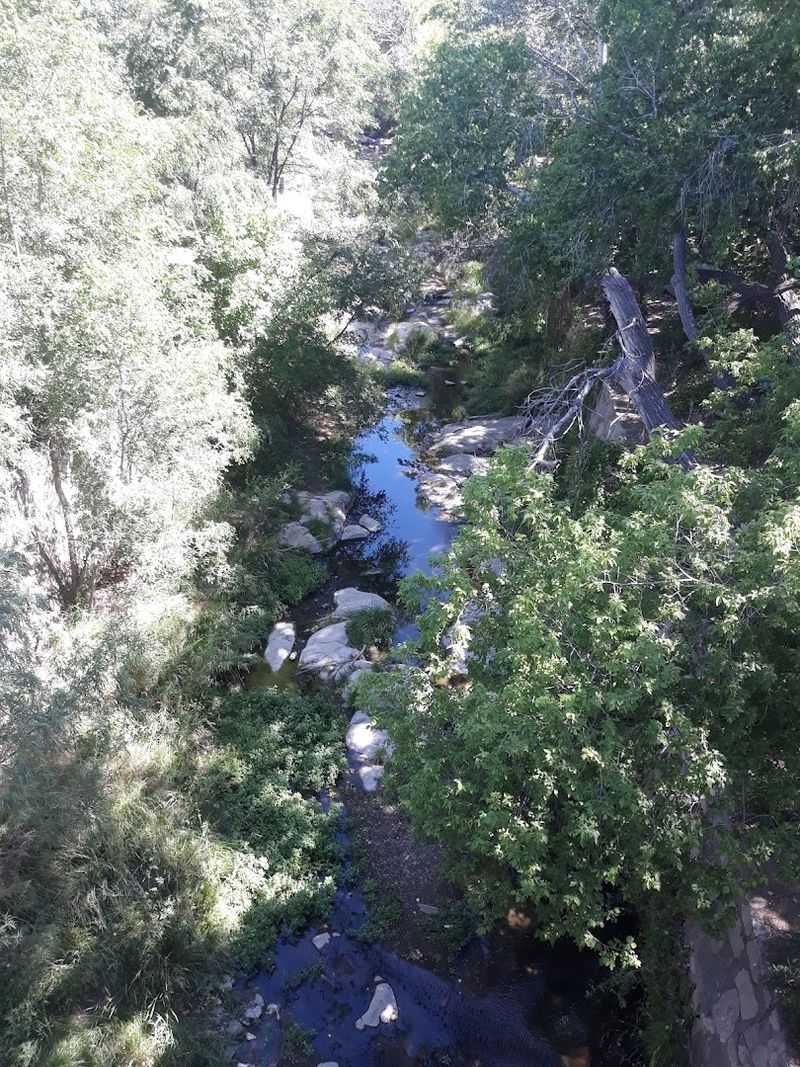
Silver City managed to turn one of its hardest chapters into a public treasure. That transformation still surprises people who stumble across the story for the first time.
What is now a leafy, creek-lined park was once the town’s main commercial street, laid out in the mid-1800s along a natural arroyo that locals assumed would behave itself.
It did not behave itself.
The 1895 flood and later erosion helped carve the street into a deep canyon, dropping parts of the channel as much as 55 feet below where the street had once sat, leaving storefronts stranded above a raw gash in the earth.
Businesses adapted by flipping their orientation entirely, turning their back doors on Bullard Street into their new front entrances, a practical workaround that still shapes the layout of downtown today.
For decades after the floods, the ditch served as a dump, which makes the transformation into a green corridor feel all the more remarkable when you are walking through it now.
The park stands as proof that a community’s willingness to reclaim a neglected space can produce something genuinely worth visiting, and that is a story worth knowing before you arrive.
A Quiet Canyon Through Downtown
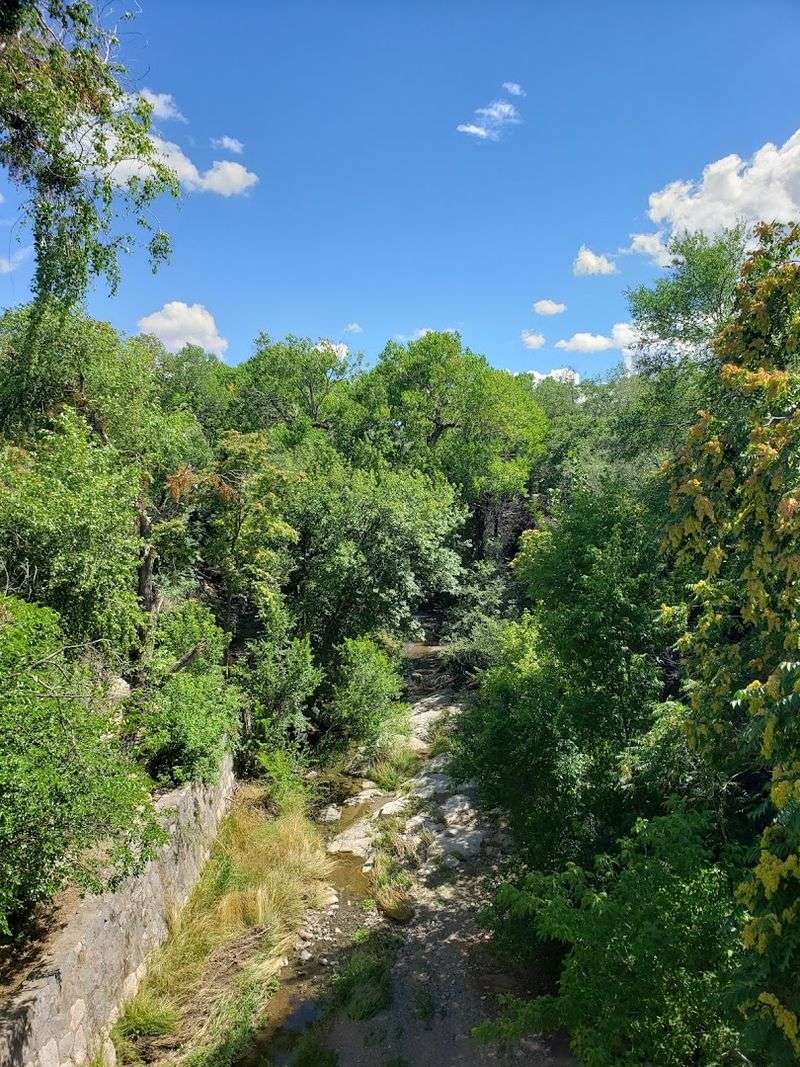
It feels almost surreal to stand in what looks like a canyon. Then you realize you are still in the middle of a downtown district, with storefronts and sidewalks just a short climb above your head.
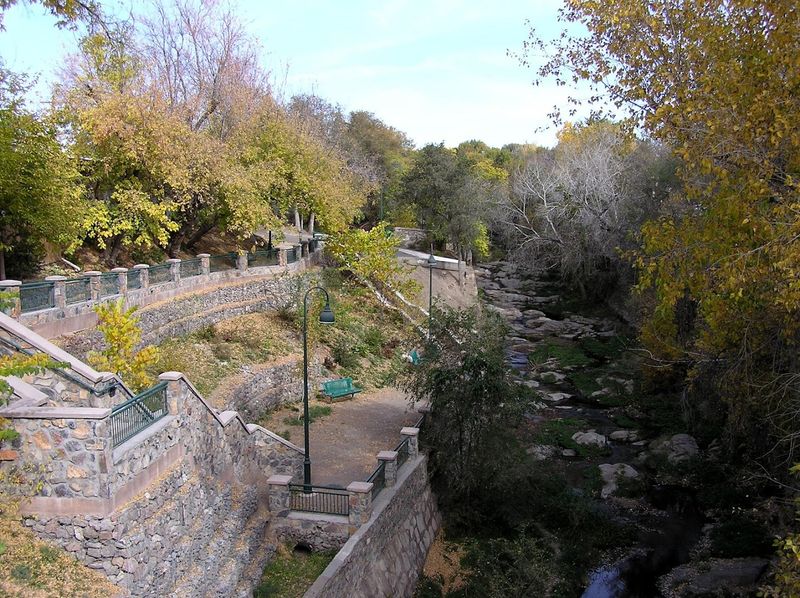
The walls of the ditch rise steeply on both sides, and the stone and earthen surfaces give the whole corridor a geological weight that makes the surrounding town feel like it was built around something ancient rather than something accidental.
San Vicente Creek runs along the bottom of this channel, and while it can be a modest trickle on dry days, it swells dramatically during monsoon season, reminding visitors why the original streets never stood a chance against the water.
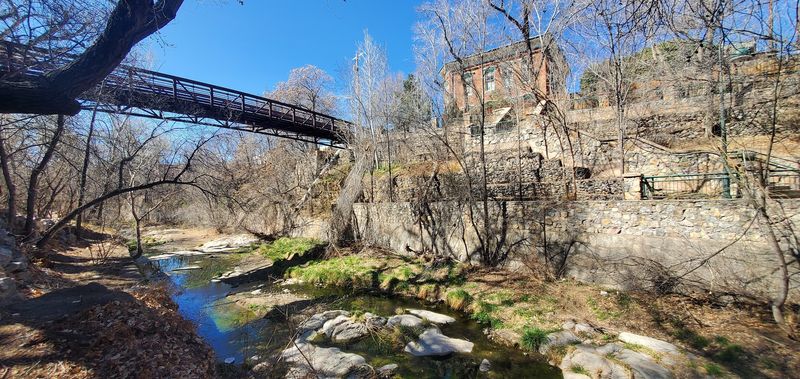
Multiple bridges cross the ditch at various points, connecting the park to the streets above and making it easy to drop in and climb out at several locations along the route.
The interpretive signs posted throughout the park help tell the flood story without being overwhelming, so even a short visit gives you a solid sense of what happened here and why it matters.
As I moved through this quiet canyon, I kept thinking that the town did not just survive its flooding history, it absorbed it completely and turned it into something you can stroll through on a Tuesday afternoon.
Stone Walls And Tree-Lined Paths
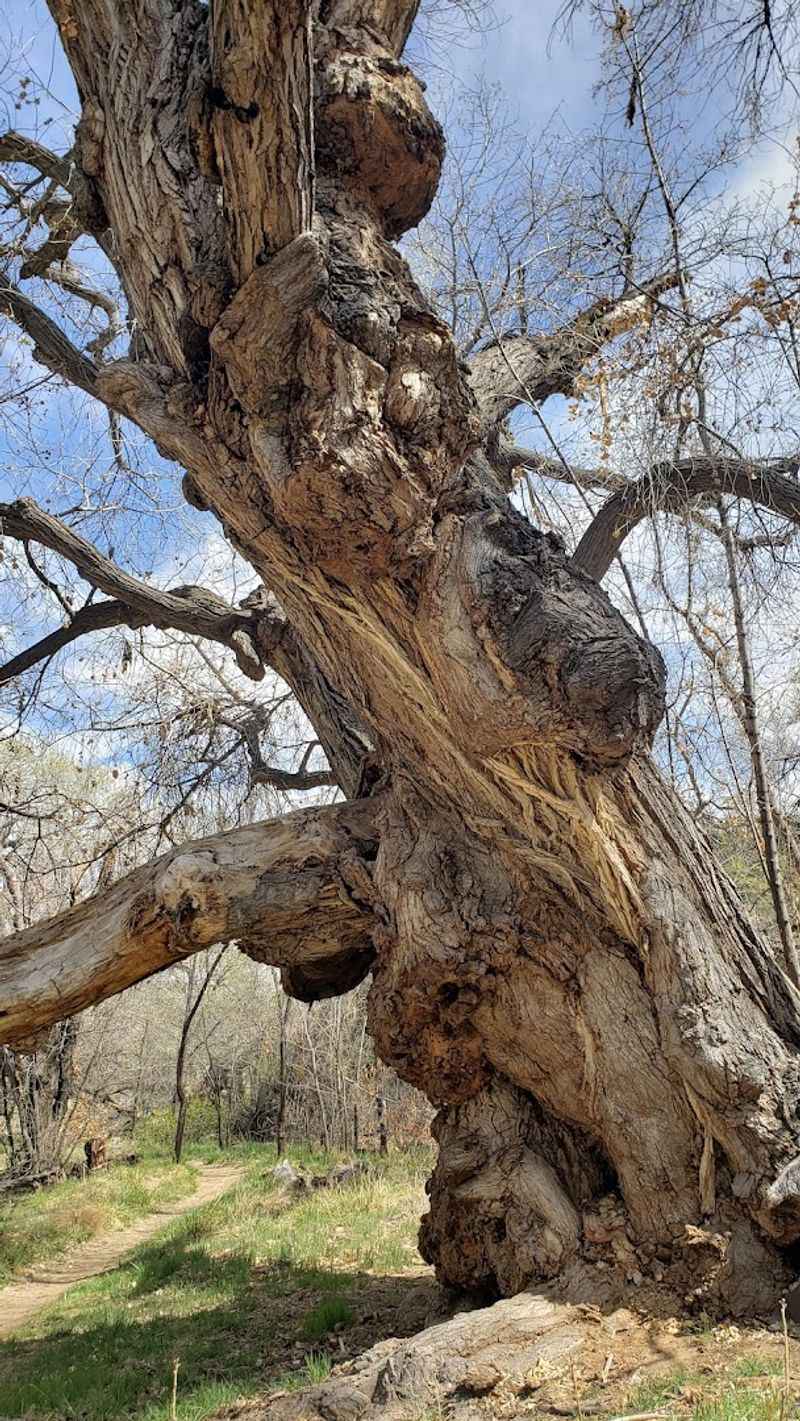
The physical texture of this park is one of the first things that catches your attention once you are actually inside it. The combination of rough stone walls and tall, rustling trees creates a setting that feels assembled over time rather than designed all at once.
Stone retaining walls line sections of the path, their surfaces weathered and patchy with lichen, and they carry the look of something that has been holding ground for a very long time without asking for any credit.
Trees planted during earlier restoration efforts have had decades to mature, and their canopies now reach across the width of the ditch in places, turning the path into a cool green tunnel that is genuinely refreshing on a warm afternoon.
Roots push up through the soil near the trail edges, and the path surface shifts between packed earth and stone in a way that feels organic rather than overly maintained.
I found myself slowing down without meaning to, pausing to run a hand along the wall surfaces or look up through the branches at the narrow strip of sky visible above the canyon rim.
The entire environment rewards a slow pace, and visitors who rush through miss the quiet satisfaction that comes from paying attention to the small, specific details this place offers.
A Creek Beneath Historic Storefronts
One of the odd pleasures of visiting this park is looking up from the creek level. Above you, the backs of old commercial buildings perch along the rim, their foundations exposed in a way that makes the whole scene feel slightly theatrical.
San Vicente Creek is the quiet engine of this entire place, the same waterway whose surges in the late 1800s transformed a functioning main street into an open wound in the earth.
On a calm day, the creek can look almost too gentle to have shaped so much history, but the height of the canyon walls gives you a very clear sense of what the water was capable of doing when conditions turned serious.
The creek adds a layer of sound to the park that is easy to underestimate until you are sitting on a bench beside it and realize how much it changes the atmosphere compared to a dry trail.
Visitors who follow the park farther from the downtown entrance eventually move away from the historic storefronts and into a more natural riparian corridor, where the creek and vegetation become more noticeable.
The relationship between the water, the historic buildings above, and the park below is what makes this place feel layered in a way that a simple green space never could, and that layering is worth experiencing firsthand.
Hidden Steps Into Local History
History hides in plain sight here, and the ground itself feels like the exhibit. The story it tells is more dramatic than anything you would expect from a quiet afternoon stroll.
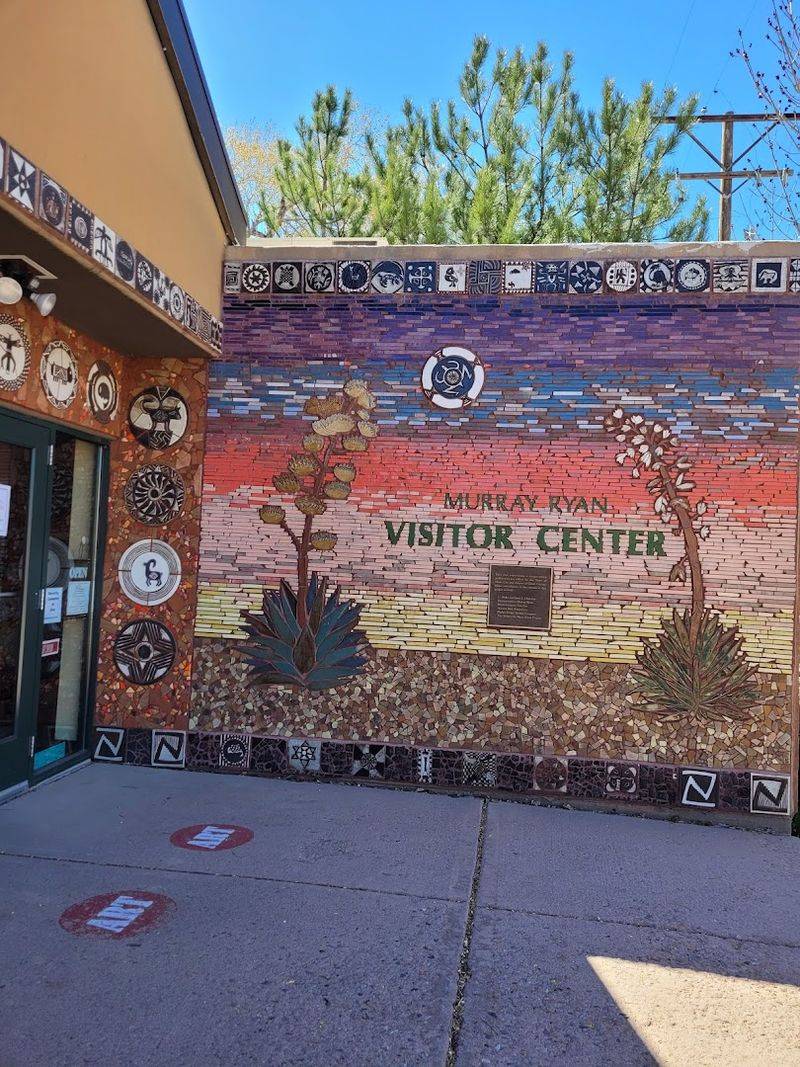
A mosaic mural installed along the trail tells the story of the Big Ditch floods with colorful tile work that manages to be both visually striking and genuinely informative, the kind of public art that earns its place rather than simply occupying it.
The 1895 flood is the pivotal chapter in this story, and flooding and erosion eventually dropped parts of the former Main Street channel by as much as 55 feet, permanently redrawing the geography of downtown Silver City.
Interpretive signs scattered along the path fill in the context around the mural, covering topics like the role of logging and overgrazing on the surrounding hills in stripping away the vegetation that had once slowed runoff.
Those signs made me feel the weight of how interconnected decisions about land use, town planning, and drainage all fed into a disaster that nobody saw coming in quite the form it arrived.
The park manages to make that history accessible without being heavy-handed, and leaving with a clearer understanding of how Silver City came to look the way it does today feels like a genuine reward for showing up.
Cool Shade In The Desert Air
Silver City sits at an elevation of around 5,900 feet, which already softens the heat found in many lower-elevation towns. The Big Ditch adds another layer of relief that feels almost extravagant by desert standards.
The combination of tree canopy, canyon walls that block direct sun for much of the day, and the presence of running water creates a microclimate that feels noticeably cooler than the streets above.
I arrived on a warm May afternoon and spent nearly two hours in the park without once feeling the need to leave for shade, which is not something I can say about many outdoor spaces in the Southwest.
The benches positioned throughout the park are well-placed for catching whatever breeze moves through the corridor, and several of them face the creek directly, which adds the sound of moving water to the sensory experience of cooling down.
Families with kids, dog walkers, and solo readers all seem to gravitate toward the shadiest stretches of the path, and the atmosphere is relaxed enough that nobody feels out of place regardless of how they choose to use the space.
For anyone traveling through southwestern New Mexico during warmer months, this shaded corridor is the kind of unexpected comfort that earns a place on the itinerary just for how good it feels to be inside it.
A Forgotten Main Street Reimagined
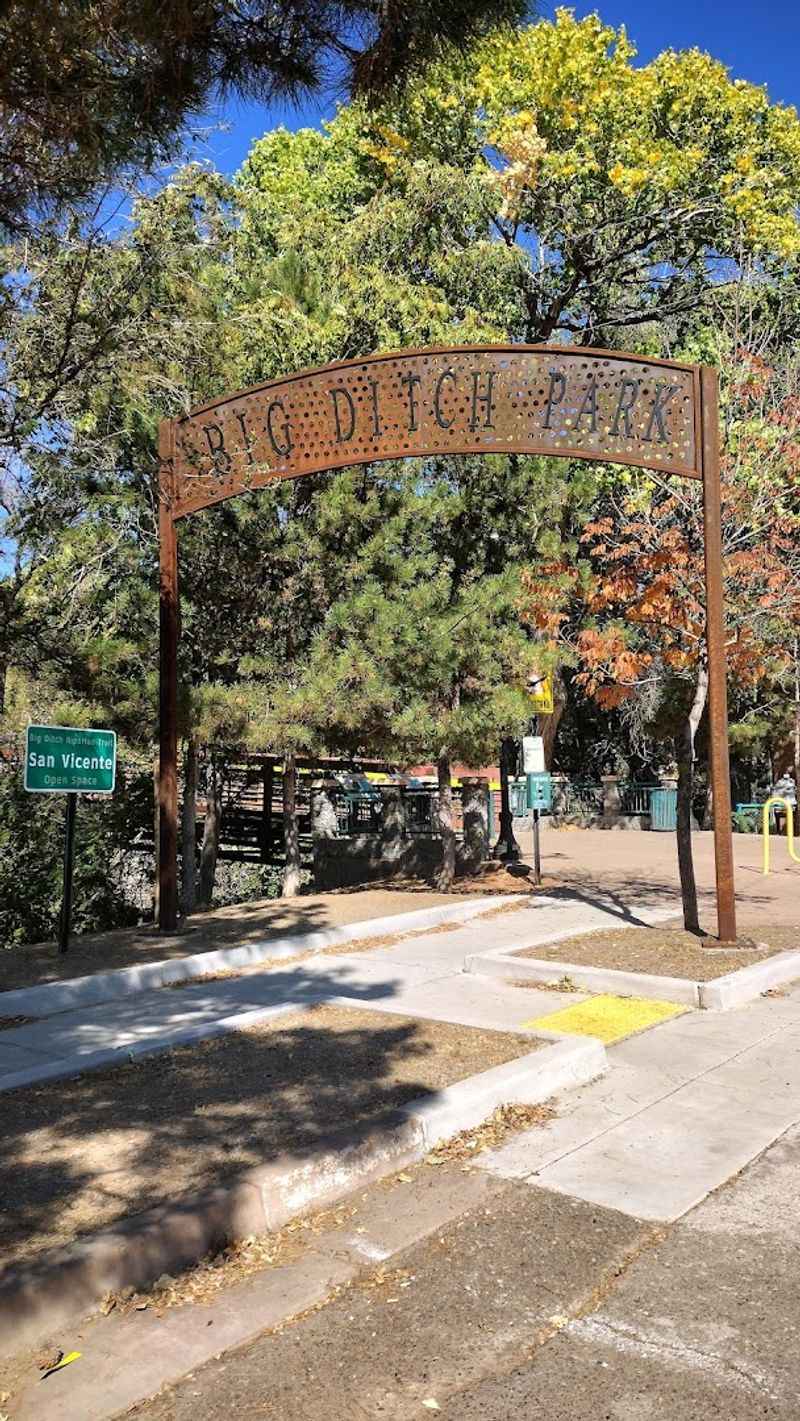
Few urban spaces carry as much narrative tension as a place that was once the center of town. This one later became a dump, then eventually transformed into a park that people now describe as one of the city’s most unusual public spaces.
The Big Ditch completed that full arc, and today, surrounded by mature trees and the sound of San Vicente Creek, the dump years feel almost impossible to connect to what the space has become.
The restoration effort that cleaned up the site and planted the trees was driven by local preservation advocates who saw potential where most people saw a problem, and the results of their work are visible in every corner of the park today.
Community events including a Farmers Market and art fairs have taken root in the space over the years, giving the park a social dimension that goes beyond simple recreation and ties it back into the daily life of the town.
Bridges cross the ditch at multiple points, and the ease of moving between street level and the park floor means the boundary between downtown Silver City and its most unusual green space stays intentionally porous.
The Big Ditch rewards visitors who come for the history, the shade, the creek, or just the quiet, offering every kind of visit something genuinely worth remembering.