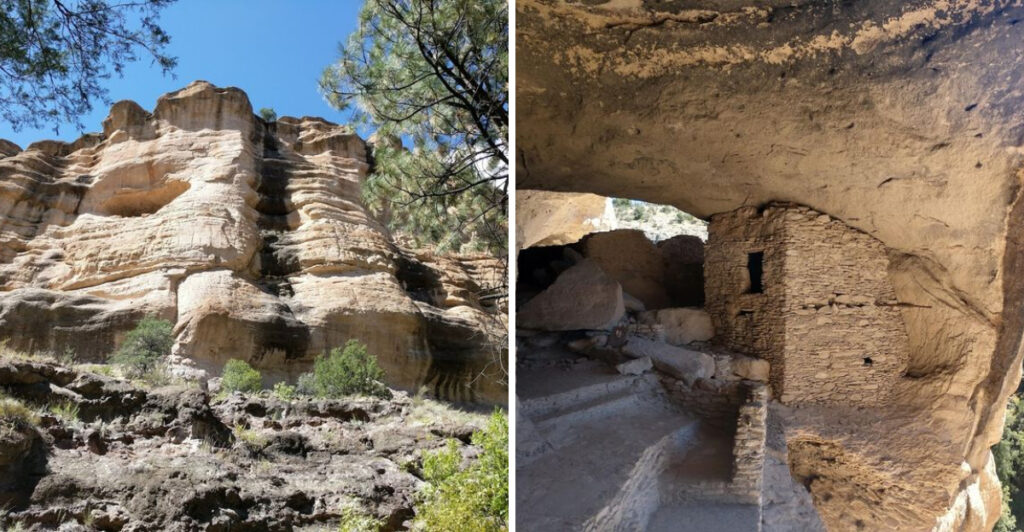
I did not expect a one-mile trail in New Mexico to stay with me like this. The drive out already feels like a commitment.
You leave the busy roads behind, follow the canyon country deeper in, and start wondering what could possibly be waiting at the end. Then the cliff wall opens up, and there they are.
Ancient stone rooms, still holding their place after more than 700 years. The Mogollon people built these dwellings high above the canyon floor, and this short hike makes that history feel startlingly real.
Seeing them in person changes the way you think about the past. It stops feeling distant.
It feels close enough to touch. I kept slowing down, looking up, trying to picture daily life in that rock shelter.
Not in a movie way. In a real, human way.
Some places do not need loud signs or big crowds. They just need you to stand there and pay attention long after leaving.
Ancient Rooms Carved Into Stone Walls
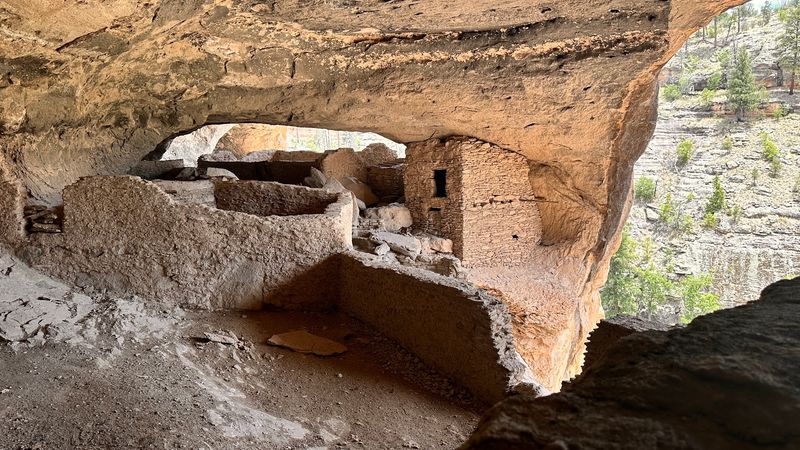
Rooms like these make your brain do a slow, quiet double-take, especially when you realize they were built by hand more than 700 years ago.
The dwellings at this site were built and occupied by the Tularosa Mogollon, a branch of the broader Mogollon culture that thrived across the ancient Southwest.
Tree-ring evidence dates many of the wooden beams to the late 1200s, with occupation generally placed from the 1270s into the early 1300s.
Builders used local stones, original wooden beams that are still visible today, and a sandy clay mortar to assemble about 40 to 42 rooms tucked inside natural cave alcoves.
What makes this place so striking is how intact much of the construction remains, with wooden supports still holding their position after centuries of desert heat and winter frost.
Small details are easy to miss if you move too quickly, including storage spaces and everyday features that make the rooms feel deeply human.
The craftsmanship feels deliberate and personal, as though each stone was chosen with care rather than convenience. That attention to detail still speaks clearly across the centuries at Gila Cliff Dwellings National Monument, located at 26 Jim Bradford Trail, Mimbres, NM 88049.
A Quiet Trail Through Canyon Scenery
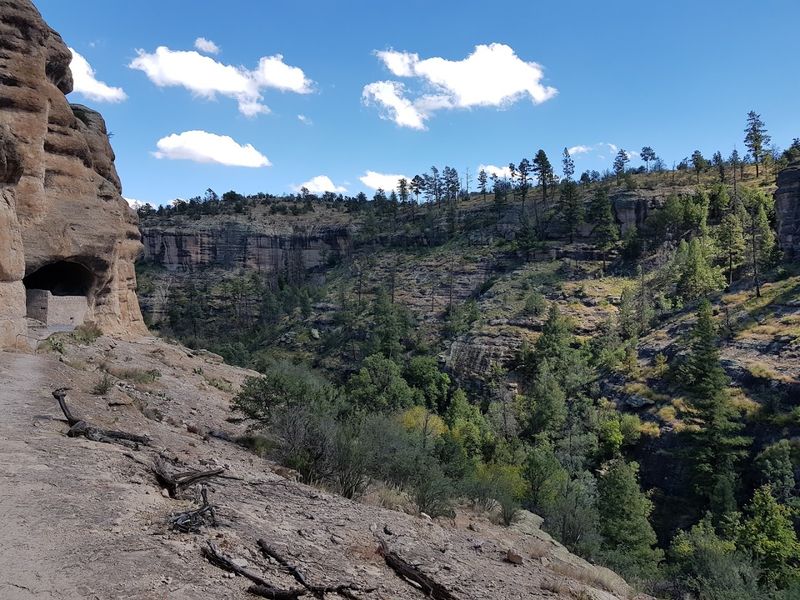
Before you even reach the dwellings themselves, the trail earns its keep with some genuinely beautiful canyon walking that I was not fully expecting.
The Cliff Dweller Trail is a moderately strenuous one-mile loop that takes most visitors between one and two hours to complete, though I personally would take longer because the canyon views ask you to slow down.
The path crosses wooden bridges over a small, clear stream, and the sound of moving water mixing with birdsong gives the whole hike a calm, unhurried quality.
A 180-foot elevation gain means you will feel the climb, especially as you approach the cave entrances. Uneven stone steps and steep sections are part of the experience, so be ready to move carefully.
Benches and resting points along the route help visitors pace themselves, but the trail still requires steady footing, patience, and attention to the changing surface underfoot.
The canyon walls rise steadily around you as you move deeper into the trail, and by the time the dwellings come into view, the scenery has already made a strong case for itself.
Cliffside Views With Desert Drama
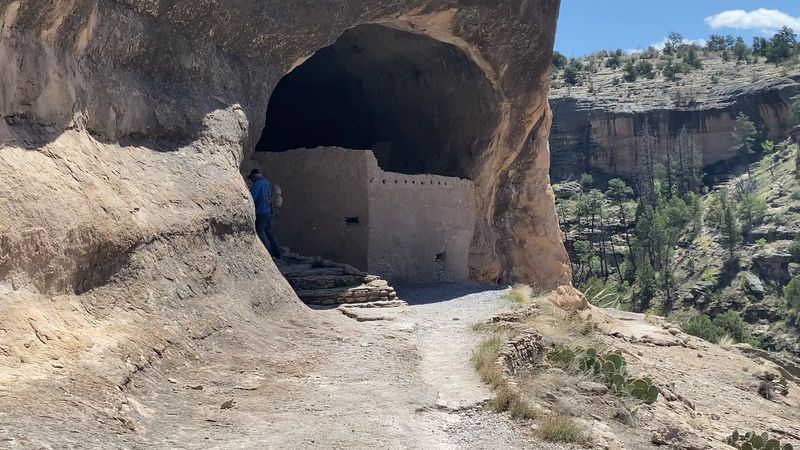
Partway up the trail, the cliff dwellings appear for the first time, framed by canyon walls and open sky. I genuinely had to remind myself to keep breathing.
The natural caves sit high above the canyon floor, carved into the face of a massive volcanic tuff cliff, and the contrast between the warm rust-colored rock and the deep shadow of the cave openings is something a photograph struggles to fully capture.
From certain angles on the trail, you can see multiple cave entrances at once, each one hinting at the rooms and passageways hidden inside, which builds a satisfying sense of anticipation as you climb.
The surrounding landscape stretches into the vast Gila National Forest and the Gila Wilderness, the world’s first designated wilderness area, which gives the views an uninterrupted, almost untouched quality.
Desert scrub, ponderosa pines, and canyon oaks share the slopes, creating a layered visual texture that shifts as the light changes throughout the day.
Arriving in the morning when the sun hits the cliff face at a low angle turns the stone a deep amber color that makes the whole scene feel almost theatrical.
Weathered Stone And Historic Shelter
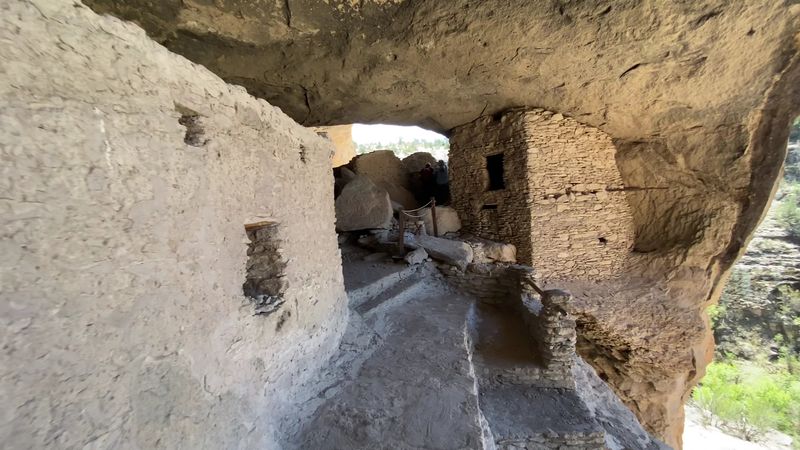
The stone walls inside these caves make it easy to notice how much thought went into choosing this specific location for a home.
The natural cave overhangs provided built-in shelter from rain, wind, and the intense New Mexico sun, and the Mogollon builders made smart use of every inch of that protection when assembling their rooms.
The sandy clay mortar holding the stones together has survived more than seven centuries, which says something both about the material and about the relatively stable conditions inside the caves.
Many of the original wooden roof beams are still in place, which is remarkable given the age of the structure, and they give the interior spaces a warm, almost domestic feeling that is easy to connect with.
Archaeologists commonly estimate that a small community, often described as roughly 10 to 15 families or about 40 to 60 people, lived here for one or two generations before moving on around 1300 CE.
Drought, changing resources, or other pressures may have played a role, though the exact reason remains unknown. The walls carry the quiet weight of that history, and time inside them feels less like touring a ruin and more like visiting a place that still remembers being lived in.
Hidden Corners Beneath The Overhang
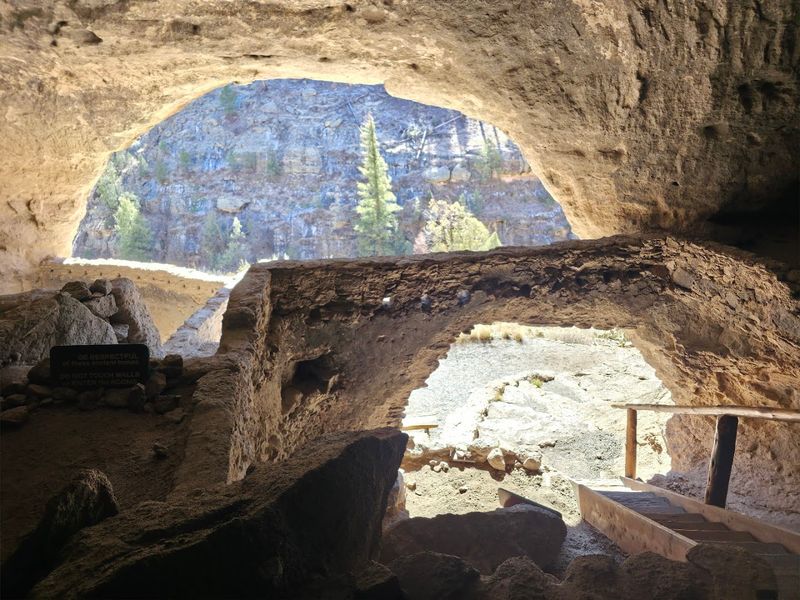
The rooms reveal more than you expect. Once you move past the obvious front spaces, the darker corners beneath the overhang start showing smaller details.
The dwellings occupy several natural cave alcoves, and the rooms within them vary from relatively open spaces to low, narrow chambers that make you instinctively slow down and look more carefully.
Soot marks on the ceilings, small storage alcoves, and traces of everyday use give the interiors a lived-in feeling that is easy to miss if you rush through.
Some sections are narrow or uneven, and current access is limited to the areas visitors are allowed to explore, which helps protect the rooms that have survived for centuries.
The corn cob storage bin is one of those small discoveries that somehow makes the whole place feel more real. It reminds you that these rooms held everyday life, not just ceremonial significance.
Every shadowed corner beneath that overhang holds something worth pausing for, and rushing through would mean missing most of what makes this site so quietly fascinating.
A Walk Into Southwestern History
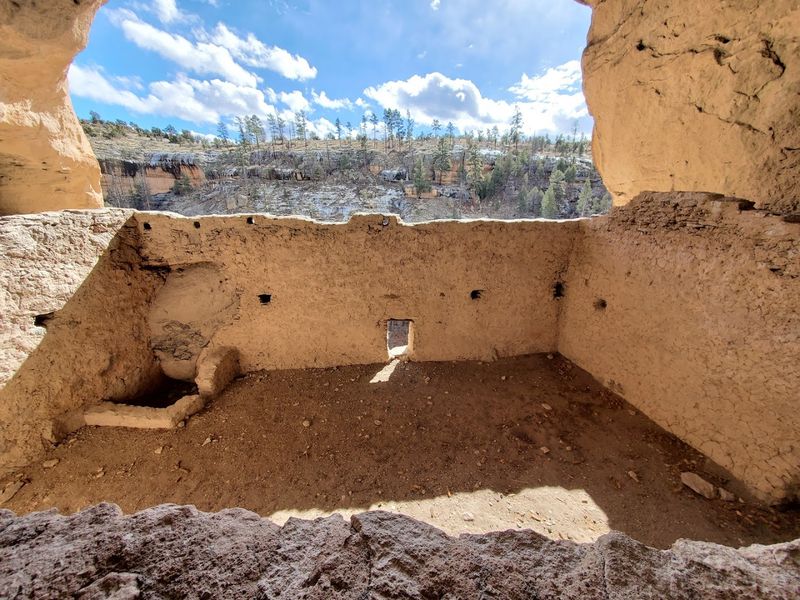
President Theodore Roosevelt established this monument on November 16, 1907, specifically to protect the site from vandalism and further damage, which tells you that people recognized its cultural weight even at the turn of the twentieth century.
Gila Cliff Dwellings National Monument holds a distinction that no other unit in the National Park System can claim, as it is the only NPS site dedicated to preserving Mogollon cultural heritage in this form.
That context adds a layer of significance to the hike that goes beyond scenery, because you are walking through a place that represents an entire cultural tradition with no direct equivalent elsewhere in the park system.
The visitor center, about two miles from the trailhead, does an excellent job of setting the historical stage before you start the hike.
Stopping there first is something I strongly recommend, not as a formality, but because the background information makes every detail inside the caves more meaningful once you arrive.
History at this scale rarely comes with a one-mile price tag, and the walk into Southwestern history that awaits you here is worth every step of that elevation gain.
Rugged Cliffs And Timeless Silence
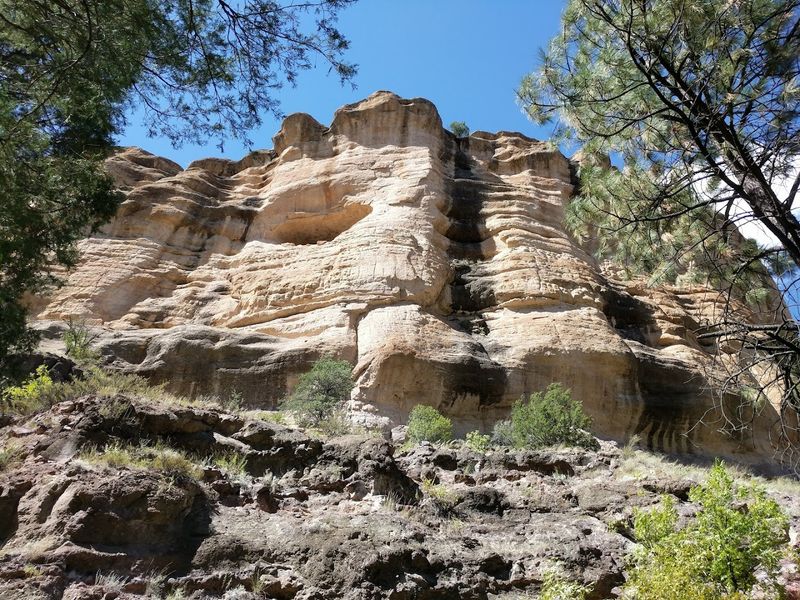
Remote is not just a descriptor for this place, it is part of the experience, and the 44-mile drive from Silver City through winding mountain roads sets the tone long before the trailhead comes into view.
The road demands your attention and rewards your patience, passing scenic overlooks, lake views, and occasional wildlife sightings that can include deer, coyotes, javelina, and even a roadrunner making a spirited roadside appearance.
Once you park and start the trail, the surrounding Gila Wilderness absorbs almost every trace of modern noise, and what replaces it is a kind of stillness that feels earned rather than accidental.
The cliffs themselves are composed of volcanic tuff, a compressed ash rock that is softer than it looks and that natural forces of erosion carved into the deep cave alcoves the Mogollon eventually called home.
At the base of those cliffs, the dwelling openings above you make the landscape feel enormous in the best possible way.
The silence here is not empty, it is full of geological time and human story, and both of those things are worth sitting with for a moment before heading back down the trail.
Sunlit Caves Above The Canyon Floor
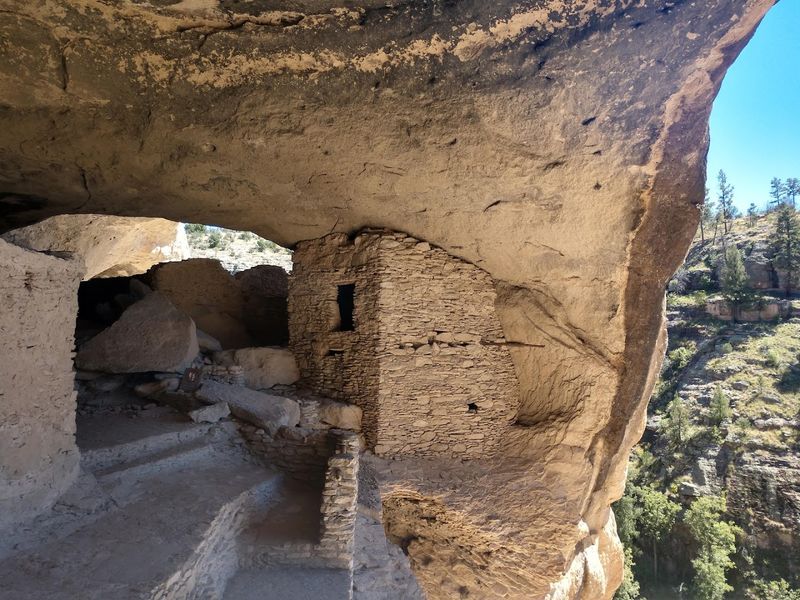
When the morning sun angles into the cave openings and lights up the interior walls, the whole place takes on a warmth that feels almost welcoming, which is probably not a coincidence given how carefully the Mogollon chose this south-facing site.
The orientation of the caves captures sunlight during cooler months while the deep overhang provides shade in summer, a passive climate design that was working long before anyone invented a technical term for it.
From the canyon floor below, the illuminated cave openings glow against the shadowed cliff face like windows in a building, and that visual contrast is one of the most photographed views along the entire trail.
The site is open daily from 9 AM to 4 PM, and arriving early in the morning gives you both the best light and the quietest experience before other visitors make their way up the ladders and into the rooms.
Park hours are firm, so planning to arrive with enough time to complete the full loop and explore each cave at a relaxed pace is something every visitor review strongly echoes.
You can find all the information you need to plan your visit at the official NPS page or by calling ahead to Gila Cliff Dwellings National Monument at 26 Jim Bradford Trail, Mimbres, NM 88049.