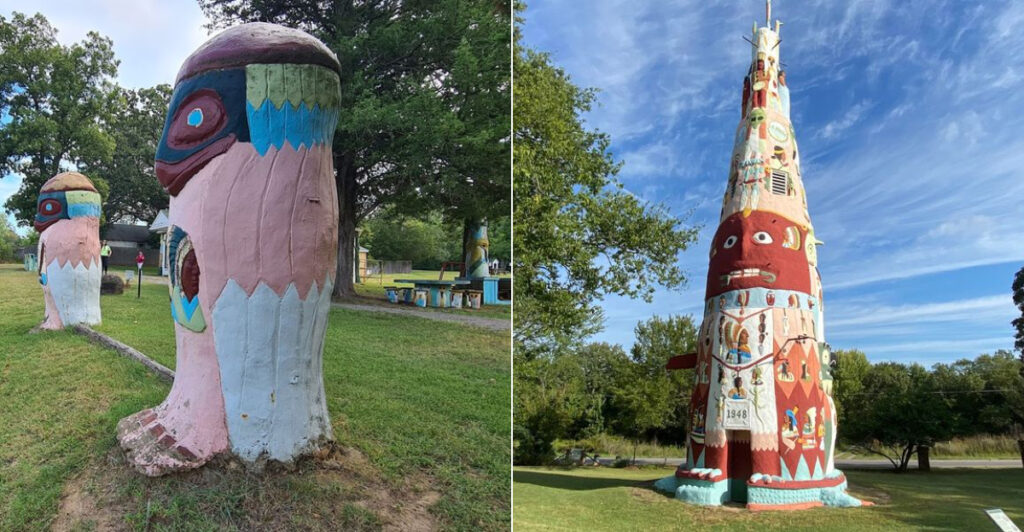
Picture this: you are cruising down a quiet country road in Oklahoma, and suddenly a 90-foot concrete totem pole appears out of nowhere. One man built that entirely by hand, and it is every bit as incredible as it sounds.
No theme park, no velvet ropes, no entry fee. Just raw, colorful, jaw-dropping folk art standing in the open air waiting for anyone curious enough to stop.
One person spent decades turning a personal vision into something the whole world should see. That kind of dedication deserves more than a quick glance from the car window.
This is the kind of stop that turns a regular road trip into a story worth telling. Northeast Oklahoma is holding something truly one-of-a-kind, and it is completely free to visit.
The Man Behind It All
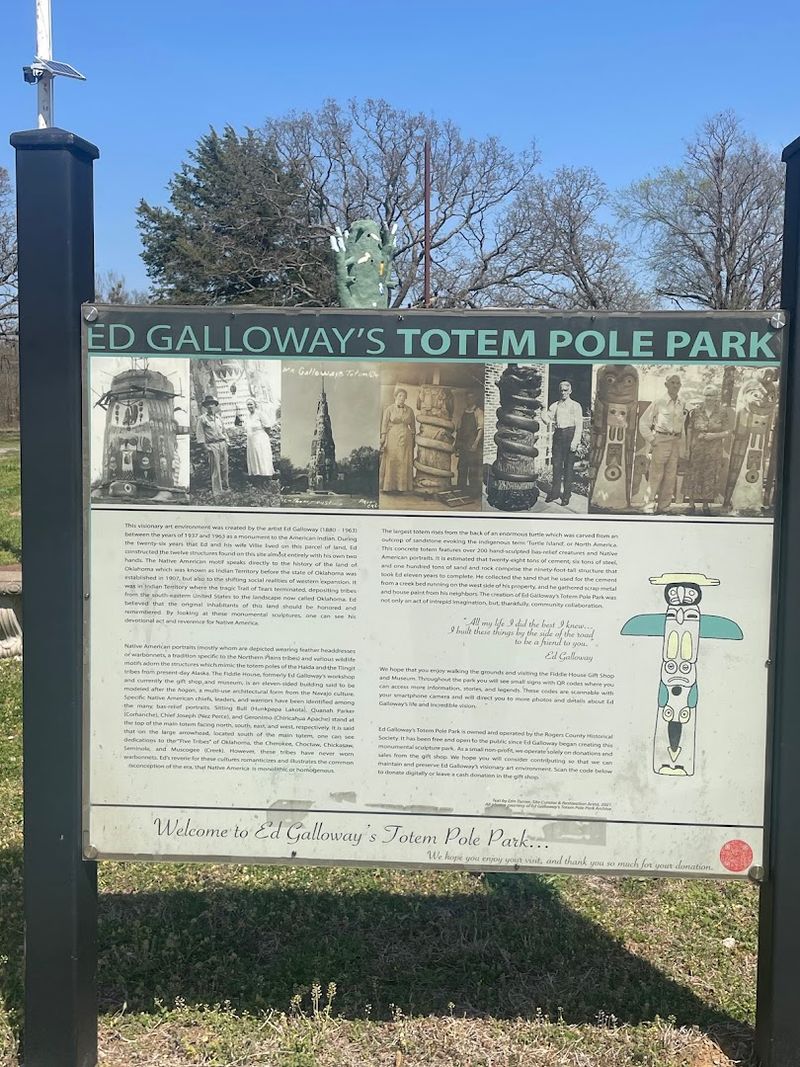
Ed Galloway was not a professional sculptor. He was a U.S.
Army veteran and a manual arts teacher who spent over 20 years teaching woodworking to children at the Sand Springs Home in Oklahoma.
When he retired in the late 1930s, he did not slow down. Instead, he moved to a parcel of land near Chelsea with his wife Villie and got to work on something extraordinary.
Galloway wanted to honor Native Americans, a people whose history he deeply respected. He drew inspiration from postcards and National Geographic magazines, studying imagery and symbols he had never seen in person.
Starting in 1937, he began building what would become a nine-acre outdoor folk art park. He did most of the work himself, hauling sand and rock from a nearby creek with a wheelbarrow to mix his own concrete.
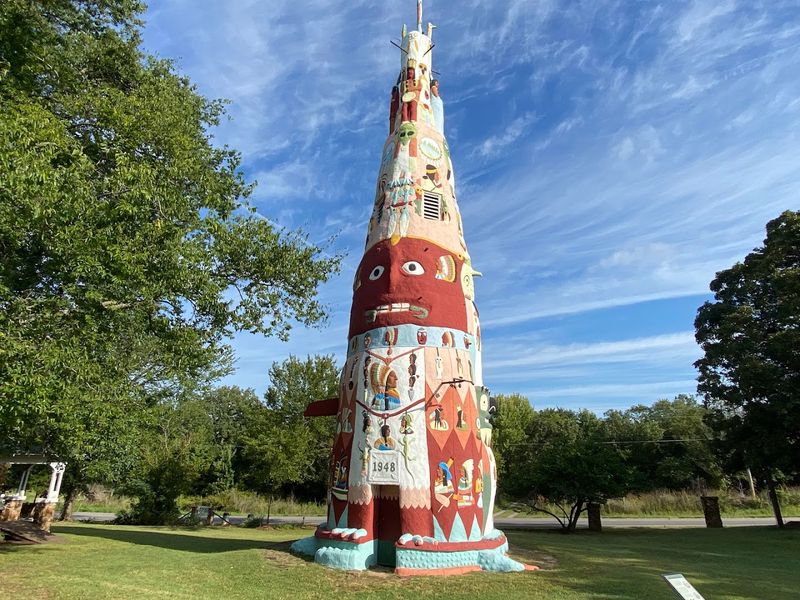
Can you imagine one person doing all of that? Galloway worked on the main totem pole alone for 11 years, finishing it in 1948.
He continued adding to the park until shortly before his passing in 1962.
His story is not just about art. It is about what a person can accomplish with patience, purpose, and a deep sense of dedication.
Visitors who read the information placards around the park often say they leave feeling genuinely moved by his commitment.
The Totem Pole That Defies Belief
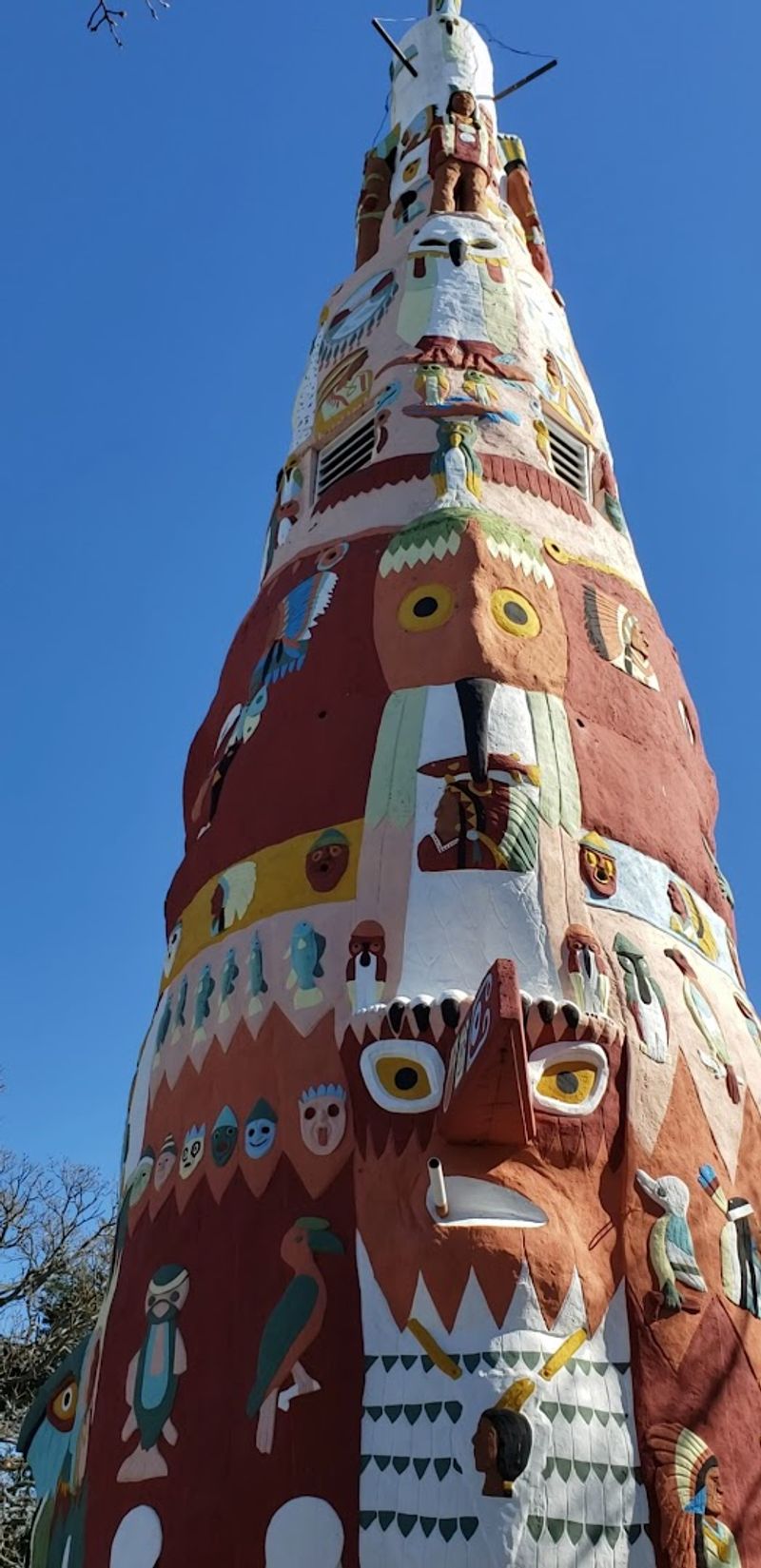
Nothing prepares you for the first time you look up at this thing. The World’s Largest Concrete Totem Pole stands over 60 feet tall with an 18-foot base, and it rises from the back of a giant kelly-green and aqua-painted concrete turtle.
Galloway used 28 tons of cement, six tons of steel, and 100 tons of sand and rock to build it. That is not a typo.
One man sourced most of that material from a creek nearby, trip by wheelbarrow trip.
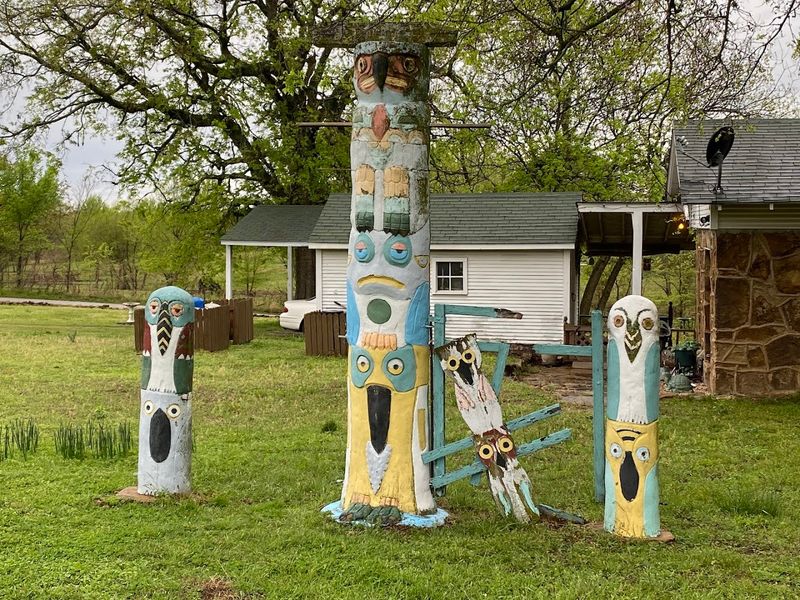
The surface is covered with around 200 bas-relief images. You will spot Native American portraits, animal figures, tropical birds, and reptiles, all carved directly into the concrete and painted in vivid, eye-catching colors.
What makes it even more surprising is what is inside. The totem pole is hollow and contains nine floors, each decorated with painted murals.
Visitors who have gone inside say looking up at the old wooden staircase still sends chills down their spine.
Four nine-foot-tall Indian Chiefs stand at the base, watching over the park like permanent guardians. Have you ever stood next to something and felt genuinely small in the best possible way?
This totem pole is that experience. It is the centerpiece of the park and the main reason people stop, but it is far from the only reason they stay and keep exploring.
A Park Full Of Surprises
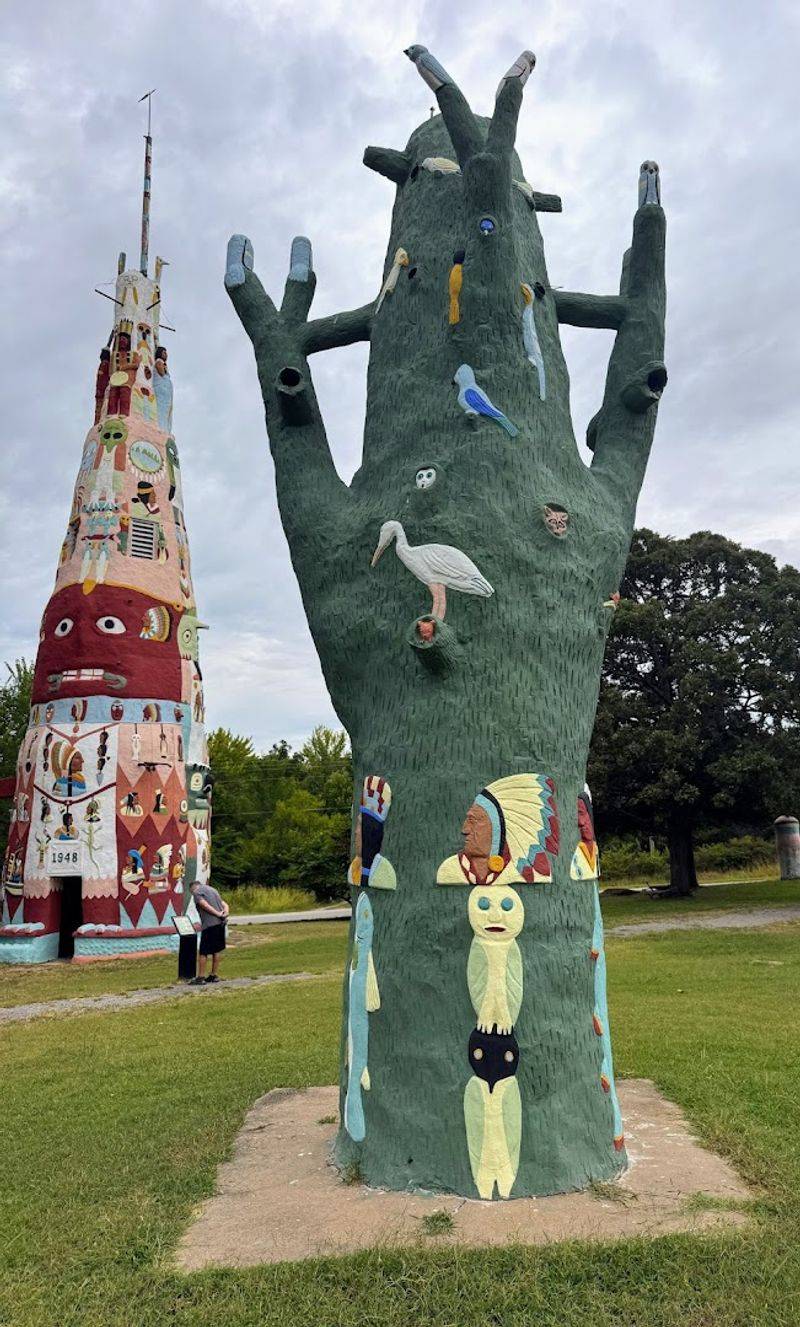
The giant totem pole grabs all the attention, but the rest of the park is packed with personality too. Spread across nine acres, you will find a whole collection of concrete sculptures that Galloway built over the years.
There is an Arrowhead Totem, a Birdbath Totem, a Fireplace Totem, Gate Totems, and even a Tree Totem. Each one has its own character and its own detailed carvings.
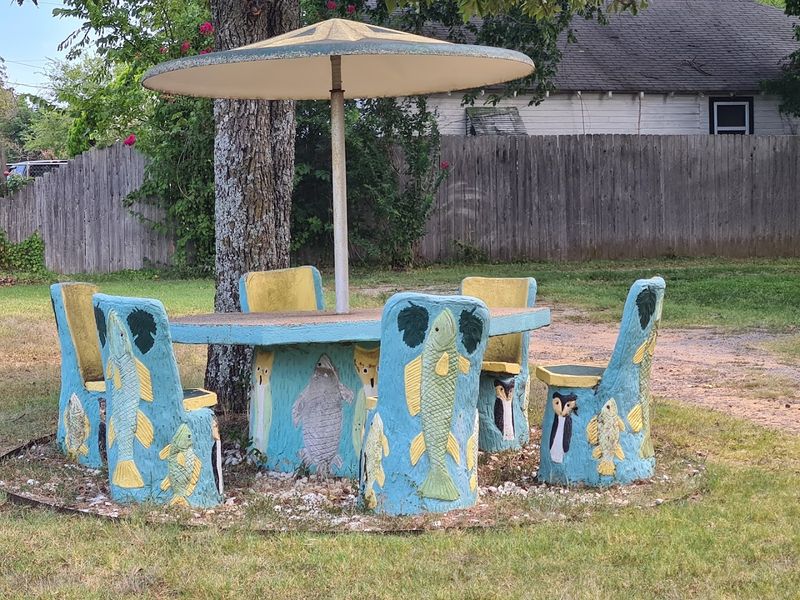
The picnic tables are not your average park furniture either. Galloway designed them with animal-form seats built right into the concrete.
Sitting at one feels like sharing lunch with a cast of stone creatures.
There is also a Child’s Playhouse on the grounds, which gives younger visitors their own little corner of the park to enjoy. Families with kids say the whole property feels like a giant outdoor playground with an art history lesson baked in.
What angle do you want to photograph first? Every direction you turn, there is another colorful, unexpected creation waiting to be discovered.
All of Galloway’s works are built from concrete and stone, reinforced with steel rebar and wood. The paint has been refreshed over the years by restoration teams, so many pieces look surprisingly vivid and fresh today.
The Eleven-Sided Fiddle House
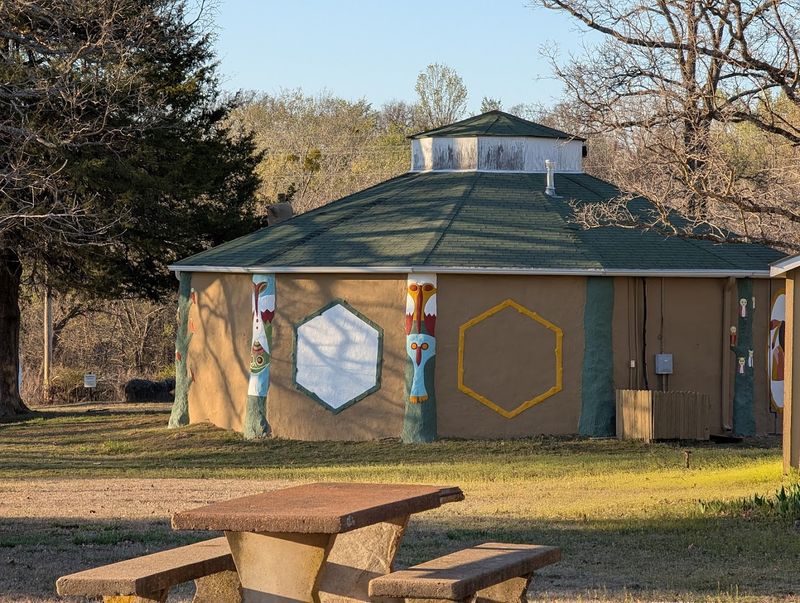
You might walk past the Fiddle House thinking it is just a quirky little building. Stop and look more carefully, because this structure is remarkable on its own terms.
The Fiddle House Museum is eleven-sided, inspired by the shape of a Navajo hogan. It is supported by 25 small concrete totem poles that Galloway built himself, and every angle of the exterior has something carved into it.
Inside, the walls are lined with hand-carved fiddles that Galloway made throughout his lifetime. Visitors say the collection is astonishing, with some accounts mentioning over 300 violin designs, each crafted from different types of wood.
Galloway taught woodworking for over 20 years before retirement, and the fiddles prove he never stopped refining his craft. The detail in each instrument is precise, personal, and quietly stunning.
Beyond the fiddles, the museum holds handmade furniture, historical photographs, and artifacts that paint a fuller picture of who Galloway was as a person and an artist. Have you ever seen a room where every single object was made by the same pair of hands?
The staff inside are known for being warm and genuinely knowledgeable. One visitor shared that the woman working the counter told stories from her own childhood memories of watching Galloway work.
That kind of living history is rare, and it makes the Fiddle House one of the most memorable stops in all of Oklahoma.
Route 66 Connection
Ed Galloway’s Totem Pole Park sits just a couple of miles off historic Route 66 in northeastern Oklahoma, making it a natural stop for road trippers traveling the Mother Road.
The park is located at 21300 OK-28 A in Chelsea, Oklahoma, positioned between Route 66 to the west and I-44 to the east. From either highway, you can reach it in under 20 minutes.
Route 66 travelers often say this is one of the most rewarding detours on the entire stretch through Oklahoma. The drive itself is peaceful, winding through open countryside that feels a world away from the interstate.
Road trips along Route 66 are all about discovering the unexpected. This park delivers that feeling in a big way, offering something you simply cannot find anywhere else on the route.
What makes it especially satisfying is that the park is completely free to visit. You do not need to plan a big budget stop.
Just pull off, park, and start exploring.
The park has ample parking behind the property, including space for buses, so it works well even for group trips or school outings. Visitors traveling with children say the stop is easy and stress-free.
If you are mapping out a Route 66 road trip through Oklahoma, mark this one early. It is the kind of place that turns a good trip into a great story.
Restoration And Living History
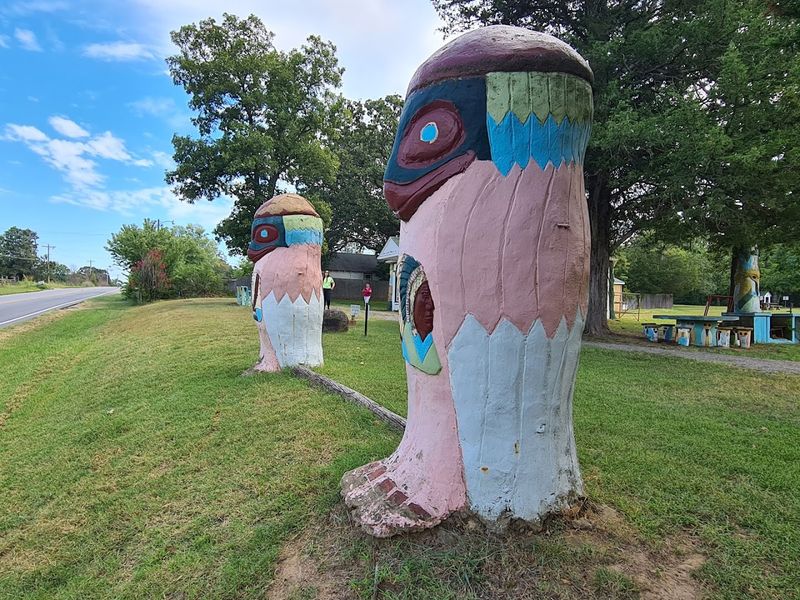
After Galloway passed away in 1962, the park was left without a caretaker for years. Vandalism and weather took a toll on the structures, and for a while it looked like the whole place might disappear.
The Rogers County Historical Society stepped in and acquired the park in 1989. Working alongside the Kansas Grassroots Arts Association, they launched a major restoration effort that ran from 1988 to 1998, with ongoing work continuing since then.
Today, many of the totems and sculptures have been freshly repainted, and the colors are striking. Visitors note that the restoration has been handled with real care, preserving the original spirit of Galloway’s vision.
The park is currently owned and operated by the Rogers County Historical Society, which keeps it open and free to the public year-round. That kind of community commitment is something worth appreciating out loud.
Did you know that Galloway originally painted the totem pole with leftover house paint donated by neighbors? As the paint weathered, he would repaint using whatever colors were available, which is why the surface evolved over time.
That personal, improvised approach is part of what makes the park feel so alive. Nothing here was factory-made or corporate-planned.
Every layer of paint tells a small story, and every restored surface is a thank-you note to the man who spent his retirement building something truly unforgettable for the state of Oklahoma.
Practical Tips For Visitors
Planning a visit is easy, and the park rewards a little preparation. The grounds are open year-round, seven days a week, from dawn to dusk, and admission is always free.
The Fiddle House Gift Shop and Museum are open daily from March through December, with hours typically running from 9:00 AM to 4:00 PM.
The park has picnic pavilions, a pet park, a half-mile wooded nature trail, and bus parking available. Families, solo travelers, and school groups all have space to enjoy the property comfortably.
Dogs are welcome in the designated pet area across the gravel road from the main park. It is a thoughtful setup that makes the stop accessible for visitors traveling with pets.
Reading the information placards around the park before or during your visit adds a lot of context. Visitors who come prepared say the experience feels much richer when you understand the story behind each structure.
Is there a gift shop worth browsing? Absolutely.
The small shop inside the Fiddle House carries souvenirs including totem pole magnets, arrowheads, and other keepsakes that make for meaningful mementos.
Donations are accepted and go directly toward maintaining the park for future visitors. If this place moves you the way it moves most people, leaving a little something behind is a great way to say thank you.
Why This Place Sticks With You
Some roadside stops are fun for five minutes and forgotten by dinner. Ed Galloway’s Totem Pole Park is not one of those places.
Visitors consistently say they leave feeling something they did not expect. It is not just the size of the totem pole or the number of sculptures.
It is the weight of one person’s singular, stubborn creative vision.
Galloway was not trying to be famous. He was not building a tourist attraction.
He was honoring a people he admired, using his hands, his skills, and materials from the ground beneath his feet.
That kind of sincerity is hard to find anywhere, let alone on a highway detour in rural Oklahoma. Children who visit often return as adults and bring their own kids, passing the experience down like a family tradition.
What will you remember most when you drive away? Maybe it is the turtle at the base of the giant totem.
Maybe it is the wall of hand-carved fiddles inside the museum. Maybe it is the story itself.
Whatever sticks with you, the park has a way of making Oklahoma feel like a place full of hidden creative energy just waiting to be found.
Ed Galloway spent decades building something for everyone. The least you can do is spend an afternoon enjoying it.