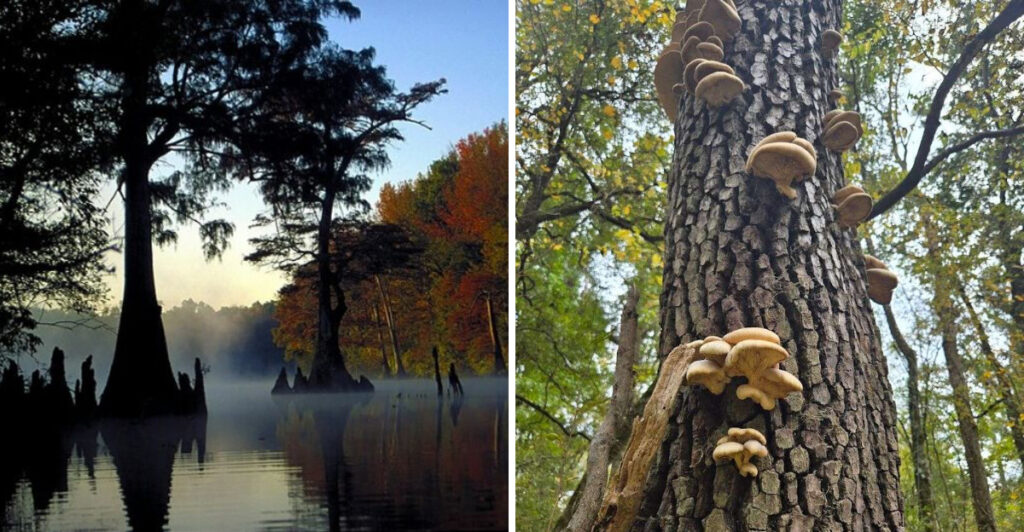
What if the best road trip in Arkansas had no crowds, no pavement noise, and no cell signal? Deep in the bottomlands of Arkansas, a 160,000-acre wildlife refuge runs for 90 miles along a winding river, and most road trippers have never heard of it.
That is the whole appeal. Think flooded cypress forests, 356 lakes, dirt roads that beg you to slow down, and a sky that turns dark with mallards every winter migration.
Black bears roam here. Otters drift past canoes.
Herons stand motionless in the shallows at first light like they own the place, because they do. This is the kind of Arkansas drive that rewards the curious and the patient.
Worth adding to your Southern road trip radar.
The Wild Heart Of The Refuge
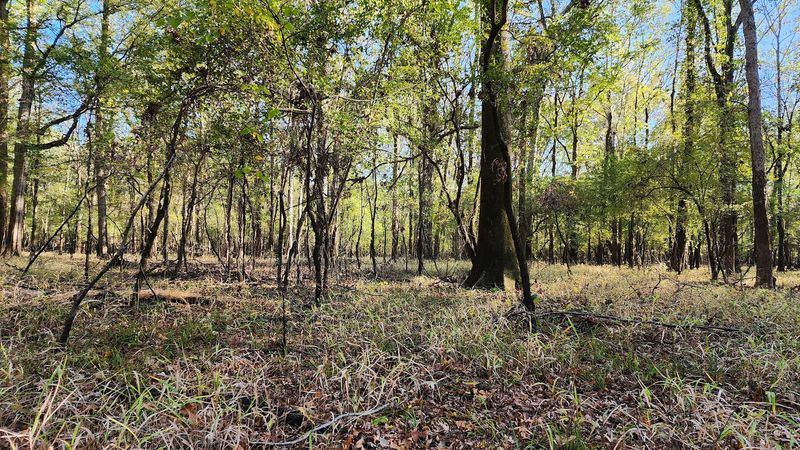
Forget manicured parks with gift shops and paved overlooks. This refuge runs on raw, unfiltered wildness, and it makes no apologies for that.
Established in 1935, the Dale Bumpers White River National Wildlife Refuge sits near St. Charles, Arkansas, covering around 160,000 acres of the Mississippi River Alluvial Plain. The address at 57 C C Camp Rd, St. Charles, AR 72140 puts visitors right at the doorstep of one of the largest remaining bottomland hardwood forests in the entire country.
The landscape here operates on its own schedule. Flooding shapes access roads, seasonal changes shift wildlife patterns, and the forest itself feels ancient and unbothered.
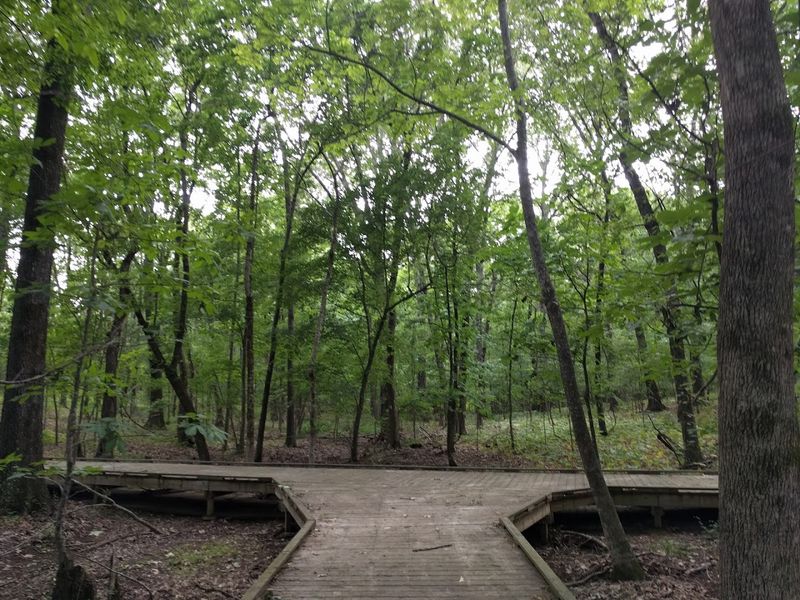
Roads wind through dense tree canopy, past still water and tangled roots.
This is not a destination for those expecting convenience. But for those who show up ready to pay attention, the refuge delivers an experience that feels genuinely rare in modern America.
The wild heart of this place beats loud and steady.
Bayou Roads That Actually Deliver
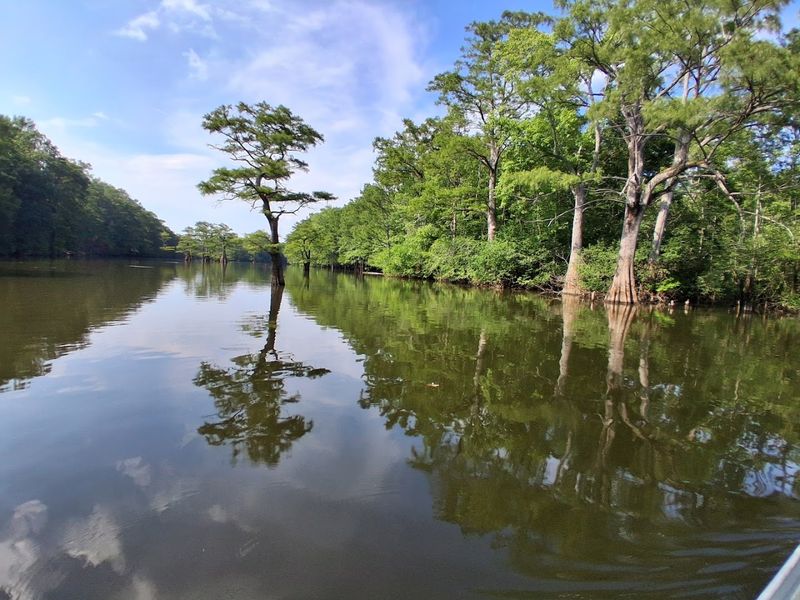
Road trips live or fall on the quality of the road itself. Lucky for visitors, the refuge delivers something genuinely special behind the wheel.
Hundreds of miles of trails and dirt roads cut through the property, open to land vehicles where marked. The Wildlife Drive just beyond the visitor center gives drivers a focused route through the Demonstration Area, complete with access to an observation tower.
Many refuge roads in the South Unit open from March through mid-December, though flooding can change access without much warning.
The speed limit caps at 25 mph throughout the refuge. That feels slow at first, until the first raccoon trots across the road or a great blue heron lifts off from a roadside slough.
Slow driving here is not a frustration. It is the whole point.
The roads force visitors to look sideways, to notice the water shimmering between tree trunks and the turtles lined up on half-submerged logs like tiny commuters waiting for a bus.
356 Lakes Hidden In Plain Sight
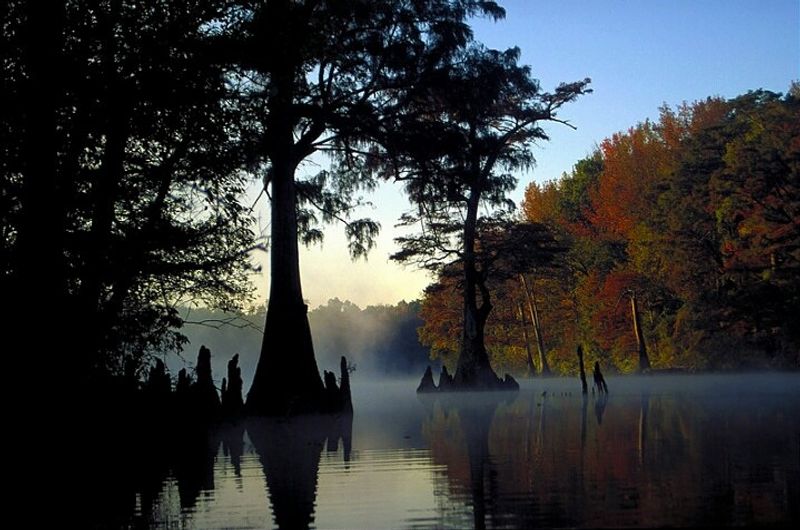
Most refuges have a pond or two. This one has 356 lakes covering roughly 4,000 acres, and each one carries its own mood and character.
These lakes range from man-made impoundments managed for waterfowl habitat to natural oxbow lakes carved out by the White River over thousands of years. From a car window or a canoe, they all share one quality: stillness.
The kind of stillness that makes noise feel rude.
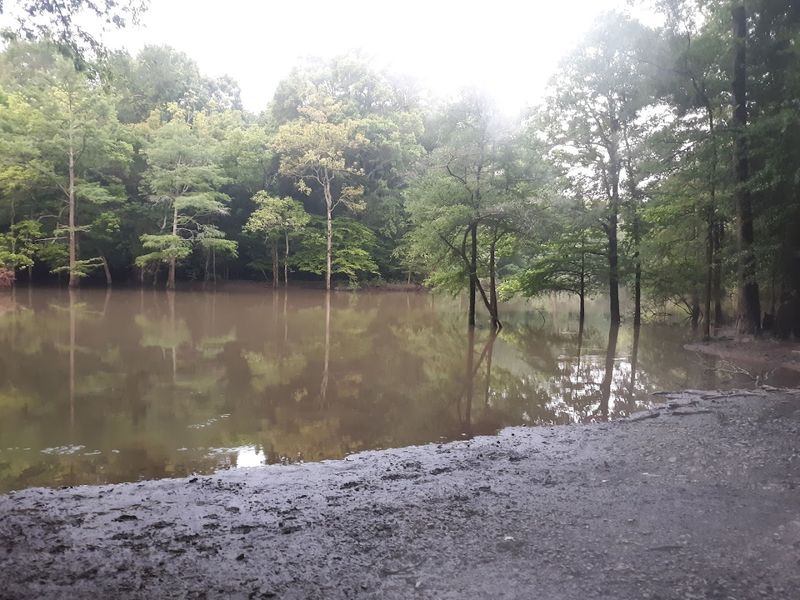
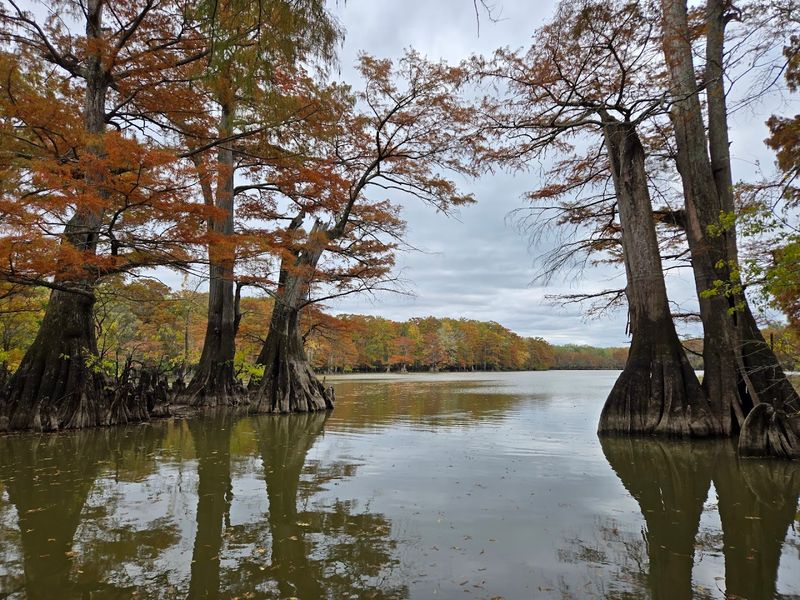
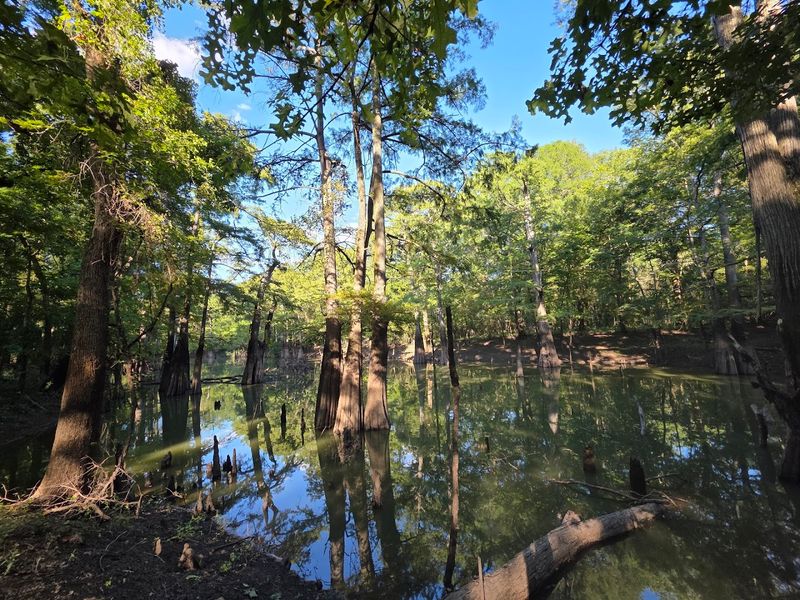
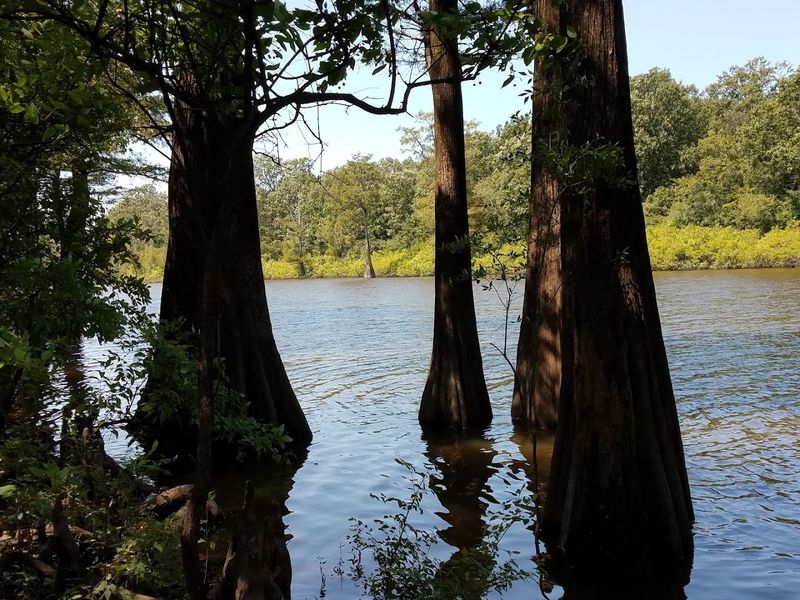
Bald cypress trees line many of these shorelines, their knobby roots poking up through shallow water like something from a prehistoric landscape. Early morning light turns the surface of these lakes into something almost surreal, with mist sitting low and herons standing motionless along the edges.
Anglers have known about these waters for generations. Fishing here requires an Annual Public Use Permit, available online before visiting.
The lakes hold catfish, bass, and crappie, and the fishing pressure stays remarkably low compared to more well-known Arkansas waterways. That quiet advantage is hard to overstate.
Arkansas’s Only Native Black Bear Population
Black bears in Arkansas call this refuge home, and not just as occasional visitors. The White River refuge supports the only native black bear population in the entire state.
That fact alone makes this drive worth planning. Bears here move through the bottomland forest with a comfort that speaks to generations of undisturbed habitat.
Sightings are not guaranteed, but the possibility adds a genuine edge to every slow turn through the trees.
Wildlife managers have worked carefully to maintain the forest conditions that support this population. Large tracts of undisturbed hardwood forest, plentiful mast crops like acorns and berries, and low human development all contribute to a healthy environment for bears to thrive.
Visitors should treat any sighting with respect and distance. Bears here are wild, not habituated to people, and that wildness is exactly what makes an encounter meaningful.
Seeing a black bear move through the Arkansas forest on its own terms is the kind of memory that does not fade quickly.
Mallard Season Turns The Sky Dark
Duck hunters have whispered about this place for decades, and the numbers back up the reputation. The White River refuge ranks among the most significant wintering grounds for mallard ducks in all of North America.
During peak migration, the sky above the flooded fields and sloughs fills with birds in numbers that feel almost impossible to process. Thousands of mallards drop into the refuge’s wetlands each winter, drawn by the combination of flooded timber, abundant food sources, and protected habitat.
The sound alone, the overlapping calls and wing beats of countless ducks, is something that sticks with a person long after leaving.
Even for non-hunters, this spectacle ranks among the great wildlife shows Arkansas has to offer. Watching from a roadside pullout or the observation tower during peak season requires no permit, no gear, and no experience.
Just a willingness to sit still and watch something ancient and unstoppable play out overhead. Waterfowl season here is nothing short of extraordinary.
The Observation Tower That Changes Perspective
Elevation changes everything in flat country. Even a modest tower can turn a wall of trees into a panoramic window onto an entire ecosystem.
The observation tower accessible via the Wildlife Drive offers exactly that kind of perspective shift. From the top, the Demonstration Area spreads out below in a patchwork of water, forest, and open wetland.
Birds that were invisible from road level suddenly become obvious. Movement in the treeline reads differently from above.
The Wildlife Drive and tower operate seasonally, generally from March through October. That timing aligns nicely with spring migration, nesting season, and the peak of summer wildlife activity.
Mornings tend to offer the most action, with birds and mammals active before the midday heat settles in.
Bringing binoculars to the tower makes a significant difference. The refuge covers a massive area, and animals here maintain their natural wariness of humans.
A good pair of binoculars closes that distance without disturbing anything. The tower rewards patience more than speed, which is a recurring theme throughout this entire refuge.
Camping Where Cell Service Goes To Rest
Camping at the refuge strips things back to basics in the best possible way. Cell service is unreliable, stores are nowhere nearby, and the nearest town of St. Charles offers minimal amenities.
That is the honest truth, and also the whole appeal. Campsites here sit close to the water and deep in the forest, putting visitors genuinely inside the habitat rather than adjacent to it.
Nights bring a darkness that city dwellers rarely experience, and the soundscape of frogs, owls, and distant water replaces the usual background noise of modern life.
Campsite conditions lean rustic, and mud is a near-constant companion regardless of season. Visitors who pack accordingly, with waterproof gear, sturdy footwear, and enough food for the stay, tend to have the best experiences.
The refuge requires an Annual Public Use Permit for campground use, obtainable before arrival.
Waking up inside 160,000 acres of bottomland forest with nothing on the agenda except watching Arkansas wildlife do its thing is a kind of reset that most people do not know they need until they try it.
Canoeing The Sloughs Like A Local
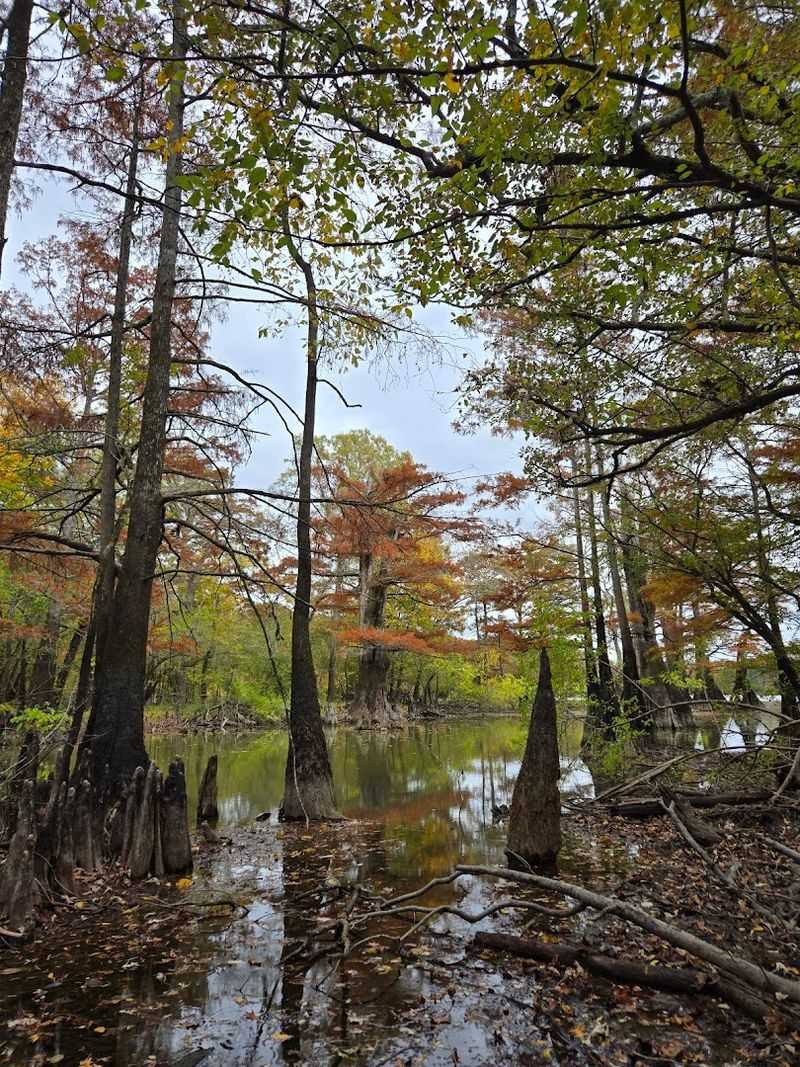
Roads only tell part of the story here. The real bayou experience unfolds on the water, specifically on the network of sloughs and backwater channels that thread through the refuge like veins.
Canoeing and kayaking give visitors access to areas that no vehicle can reach. Narrow channels wind between cypress knees and overhanging hardwoods, opening occasionally into wider lake sections before narrowing again.
The pace on the water matches the refuge’s overall rhythm: slow, deliberate, and full of small surprises.
Otters, turtles, and wading birds are common companions on these waterways. Paddlers who move quietly and stay patient tend to see far more wildlife than those who rush.
The refuge’s boat ramps provide access points, and water levels vary seasonally, so checking conditions before launching is always a smart move.
Floating through this Arkansas bayou landscape feels genuinely removed from the modern world. The water absorbs sound, the canopy filters light, and the whole experience carries a timeless quality that is increasingly difficult to find anywhere in the South.
The Visitor Center That Actually Teaches Something
Visitor centers at wildlife areas can feel like afterthoughts. This one is different, and worth the stop before heading out into the refuge.
The center near the refuge entrance on CC Camp Road offers interactive displays focused on the White River ecosystem, the history of the refuge, and the wildlife that depends on this landscape. The bottomland hardwood forest that surrounds the refuge is one of the largest remaining tracts of its kind in the Mississippi River Delta, and understanding that context makes the drive through it feel more meaningful.
Staff at the center can offer current information on road conditions, water levels, and wildlife activity, all of which change frequently in a flood-influenced environment like this one. That kind of local knowledge is genuinely useful and not something a map app can provide.
First-time visitors who skip the center often miss context that would have made their entire experience richer. Spending even a short time inside before hitting the roads and trails pays dividends throughout the rest of the visit.
Knowledge sharpens observation in ways that are hard to quantify but easy to feel.
What To Know Before You Go
Showing up unprepared at a refuge this remote is a recipe for frustration. A little planning turns a potentially difficult trip into a genuinely smooth adventure.
The refuge requires an Annual Public Use Permit for hunting, fishing, boat launching, and campground use. Permits are available online before visiting, and obtaining one in advance saves time and confusion on arrival.
Vehicle speed limits top out at 25 mph throughout the property, and road conditions shift dramatically with seasonal flooding.
Fuel up before leaving the highway. St. Charles is a small community, and options for food and supplies thin out quickly once heading toward the refuge.
Packing extra water, snacks, and a paper map is genuinely practical advice rather than overcaution.
Bug spray earns its place in the bag, especially during warmer months when the bottomland environment breeds insects enthusiastically. Waterproof footwear handles the near-constant mud.
The payoff for all this preparation is access to one of the most underrated natural landscapes in Arkansas, a place that rewards those willing to meet it on its own terms.