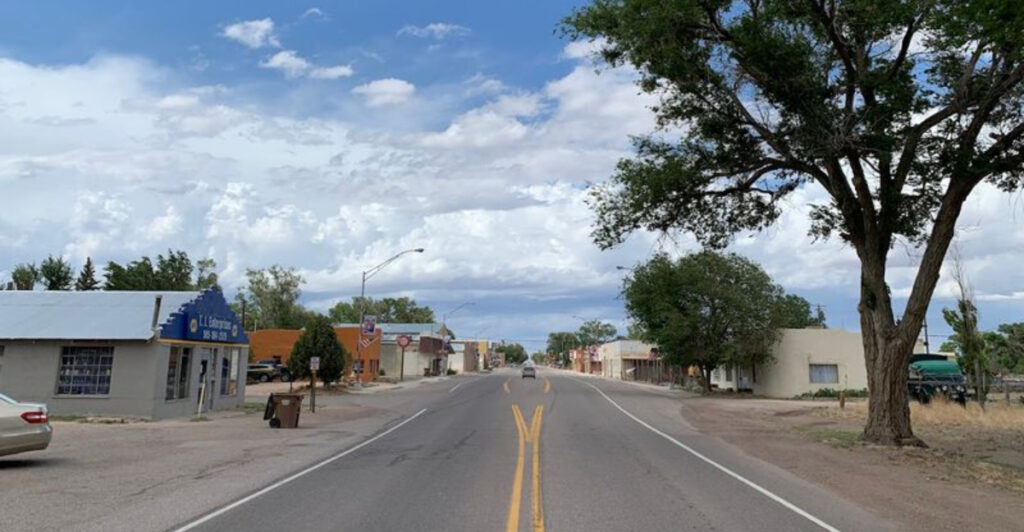
This New Mexico town feels like a place you have to meet slowly. Drive in too fast and you might miss the good part.
Stay a little longer and it starts talking. The sky stretches wide.
The streets settle into their own pace. History lives here through railroads and pinto beans, carried forward by families who kept showing up when the work got hard.
I walked around, ate what locals pointed me toward, and listened more than I talked. That felt right here.
Nothing about the town seems interested in putting on a show. It has its own rhythm, shaped by fields and weather, with the kind of pride people do not need to announce.
This article follows that rhythm through the food and everyday moments that make the place feel alive long after the visit ends, following you back into a day you thought you already knew somehow already.
Wide Desert Skies
Not every town gets to say a railroad helped build it. This one can say it with quiet pride.
The New Mexico Central Railroad once ran right through the valley, connecting an agricultural community to larger markets and giving farmers a real way to move their pinto bean harvests to buyers across the region.
That railroad was more than a business line. It was a lifeline that shaped local identity and gave growers a sense that their work mattered beyond the valley floor.
After the tracks were taken over by the Atchison, Topeka and Santa Fe Railway in 1926, sections of the line were abandoned over the following decades, with much of that rail story fading by the World War II era.
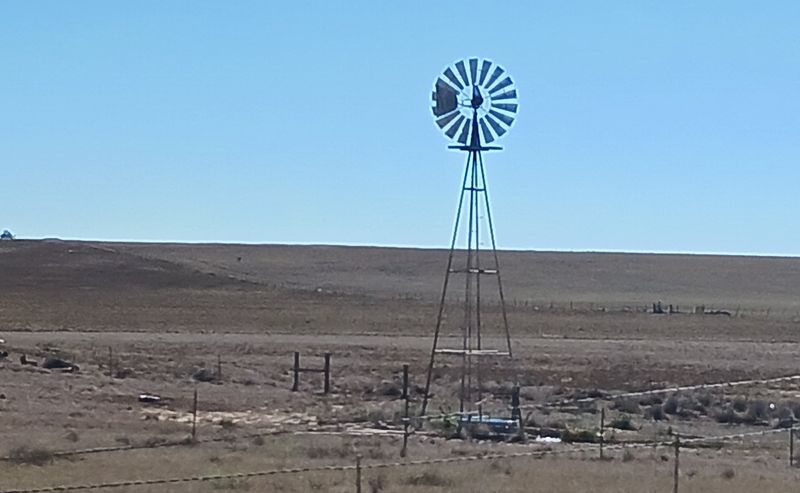
Stand near the edge of town today, look out at those wide desert skies, and it is easy to imagine a locomotive cutting through the morning silence.
The trains are gone, but their story still runs through the place now known as Estancia.
A Slow Morning On Main Street
A town like this makes slow mornings feel like part of the point. Nobody seems eager to rush you out the door.
On the main stretch of Estancia during a weekday morning, I noticed that people actually made eye contact, said hello, and seemed genuinely unbothered by the clock.
The storefronts are modest and practical, the kind that sell what people need rather than what they are convinced they want, and that simplicity gives the whole street a refreshingly honest character.
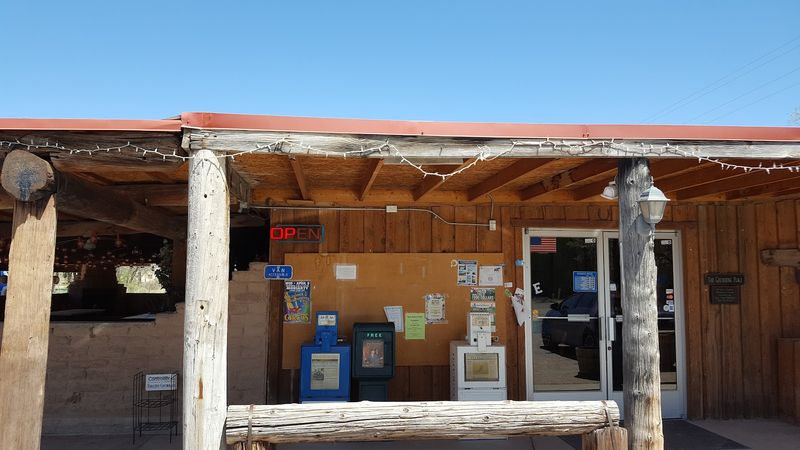
Local spots serve coffee and breakfast plates that lean heavily on green chile, eggs, and tortillas, which is exactly the kind of fuel that makes sense when your day starts at sunrise on a farm.
Because Estancia remains affordable and low-key, the businesses here feel community-focused rather than tourist-driven, and that difference shows in how warmly people interact with strangers.
By the time the morning light shifts to midday gold, you realize that a slow Main Street in a small New Mexico town can teach you more about contentment than any busy city block ever could.
Small-Town Charm In The High Desert
Estancia sits at an elevation that puts it firmly in high desert territory. Its character feels part rugged landscape and part neighborly warmth.
The town is the county seat of Torrance County, which means it holds a civic importance that feels a little bigger than its population of roughly 1,242 residents might suggest at first glance.
Community events here are taken seriously, and the annual Torrance County Fair draws families from across the region who come to celebrate livestock, produce, and the shared rhythms of rural life.
The Annual Estancia Punkin Chunkin’ is another beloved tradition that brings out the town’s playful side, with pumpkins launched into the air and laughter filling the open fields around town.
Residents talked about their events, not as attractions for outsiders, but as celebrations they do because they love doing them.
That distinction matters, and it is what gives this high desert town a warmth that feels completely authentic rather than performed for anyone passing through on a road trip.
Old Rail Stories And Quiet Corners

The railroad era has a way of leaving behind quiet landmarks, and Estancia holds onto that history with a kind of understated respect.
Even though the tracks themselves are long gone, the stories attached to them linger in local conversations and in the collective memory of families who have lived in the valley for generations.
A longtime resident talked about the railroad with the kind of warmth people show when they are sharing a piece of history that still feels personal.
That old line gave the valley its first real economic momentum, turning what could have been an isolated agricultural outpost into a connected community with ambition.
Local photos and preserved stories still bring the depot era into focus, making the past feel surprisingly close, like it happened just a few decades ago rather than nearly a century.
Those quiet corners where history settles are one of the small rewards of slowing down and paying attention to a town that does not shout about its story but tells it willingly to anyone who asks.
Green Chile And Cozy Tables
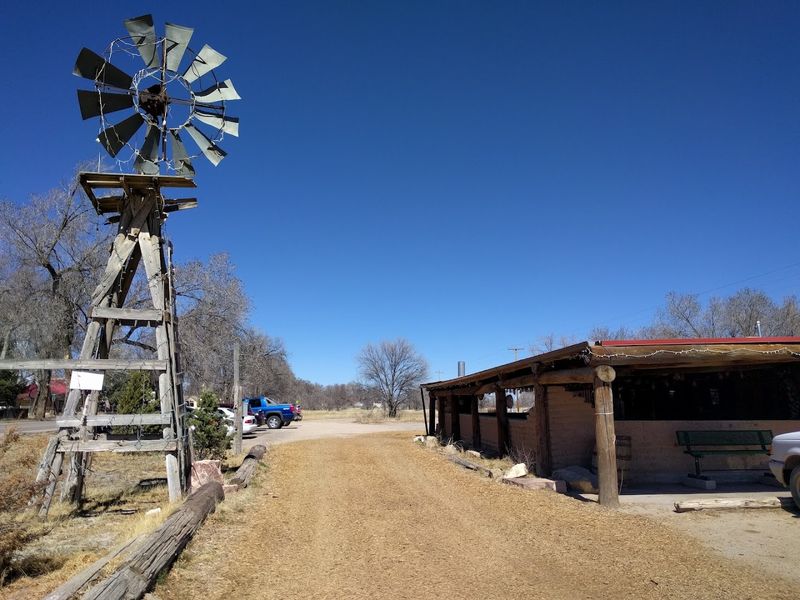
Food in Estancia is not fancy, and that is precisely the point.
The meals I ate here were rooted in the land itself, built around pinto beans, green chile, and corn in ways that felt like the recipes had been passed down through kitchens for generations, because they had.
Pinto beans from the Estancia Valley are considered some of the finest in New Mexico, with local farms producing beans that have earned a real reputation for quality among cooks who care about their ingredients.
At a small table in a local spot, I ate a bowl of beans seasoned simply and served with warm tortillas, and I understood why this crop holds such cultural weight in the region.
Green chile is a familiar New Mexican presence on local menus, layered over eggs in the morning and spooned onto plates at lunch with a casual confidence that suggests no meal is truly complete without it.
The cozy, no-fuss atmosphere of eating in Estancia reminded me that the best food experiences are rarely about presentation and almost always about the honest, satisfying flavors that come from cooking with ingredients you genuinely trust.
Historic Streets With A Rural Soul
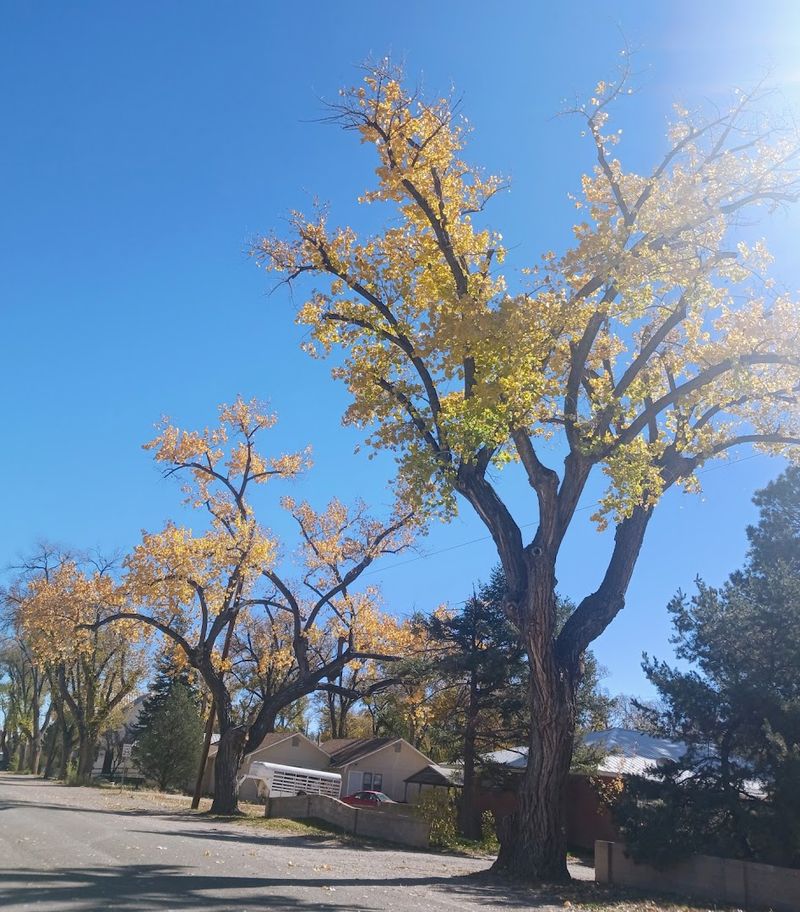
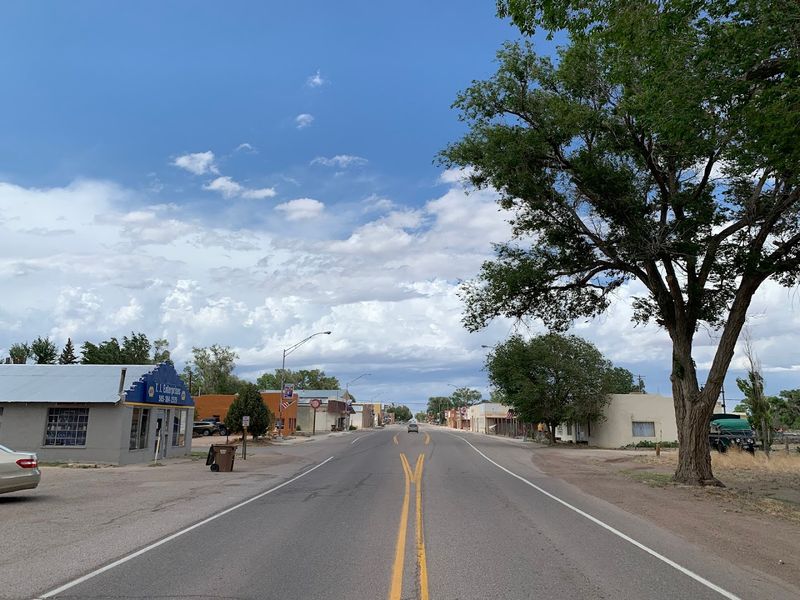
Older streets in Estancia feel like a well-loved book. The edges are slightly worn, full of character, and clearly lived in.
Because the town serves as the county seat of Torrance County, its historic core has a civic gravity, with government buildings and community spaces that anchor the downtown area and give it a sense of continuity across decades.
Modest older buildings, practical storefronts, and wide streets built for everyday use all contribute to a streetscape that feels genuinely rooted in the landscape around it.
The buildings here do not try to look newer than they are, and that honesty gives the whole town a grounded, rural soul that is increasingly rare in places polished for outside attention.
Estancia’s local history runs deep, tied to Spanish land grants, agricultural settlement, and the steady work of families who chose this valley and built their lives here without much fanfare.
Each cracked sidewalk and sun-faded sign along those historic streets carries a quiet story, and together they form a portrait of a community that has always known exactly what it is.
Open Plains And Golden Light
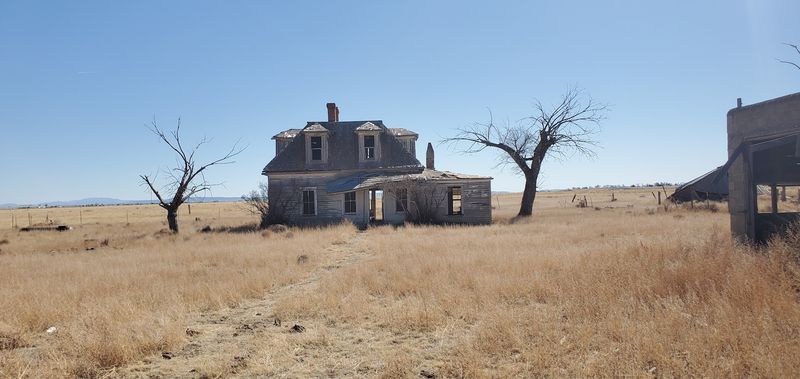
Few things prepare you for the sheer openness of the Estancia Valley until you are standing in the middle of it with nothing but flat land and sky in every direction.
The valley sits at roughly 6,100 feet above sea level, and that elevation gives the light here a particular quality, clear and sharp in a way that makes colors pop and shadows stretch long and dramatic across the fields.
Agricultural plots spread across the valley floor in a patchwork of greens and browns, with bean fields and grasslands creating a texture that changes with the seasons and rewards patient observation.
I visited during late summer, when the fields were full and the afternoon light turned everything to gold, and I genuinely stopped walking just to look at the landscape for a few minutes without any other agenda.
The Manzano Mountains rise to the west, giving the valley a natural backdrop that adds depth to what might otherwise seem like a purely flat environment.
That combination of open plains, golden light, and mountain silhouettes is the kind of visual reward that makes the long drive to Estancia feel entirely worth every mile of the journey.
Where Farm Roots Meet Railroad History
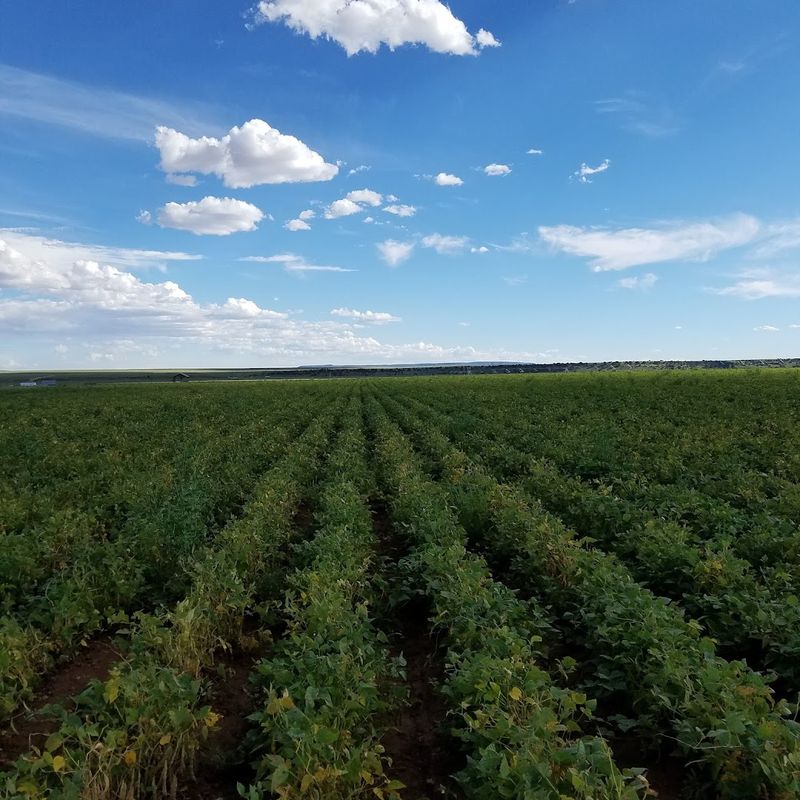
Estancia’s identity is built on two pillars that seem different on the surface. In the town’s history, they are deeply connected.
Agriculture and the railroad grew up together here, with the old rail line giving Estancia Valley bean farmers the distribution network they needed to turn a local crop into a regionally recognized product.
Nearby Moriarty’s Pinto Bean Fiesta celebrates that same valley heritage, offering a tribute to the pinto bean with food, music, and the kind of community gathering that reminds everyone why small-town life has real value.
Pinto beans from this valley are not just a food item; they are a cultural marker, tied to New Mexican culinary tradition and to the specific soil and climate conditions that make Estancia-grown beans stand apart from others.
I picked up a bag of locally grown pinto beans from a small roadside stand, and cooking them back home felt like carrying a piece of the valley with me.
That is the thing about Estancia, located in Torrance County along the heart of the Estancia Valley. It gives you something real to take with you, whether that is a bag of beans, a story about old rails, or just the memory of standing under that enormous, unhurried sky.