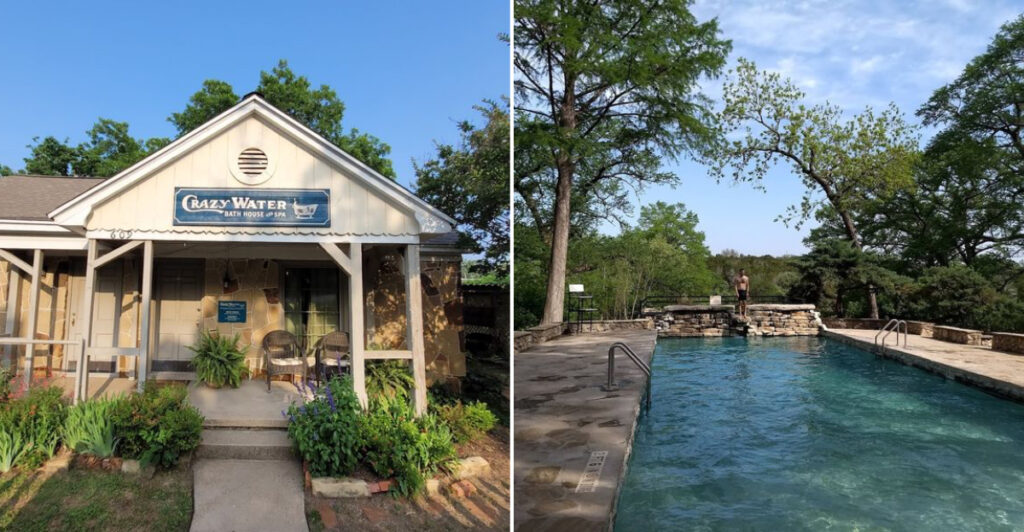
Texas has never been shy about turning natural wonders into local legends.
Give Texans a spring bubbling up from underground with a strange mineral taste, a whiff of sulfur, or a story that sounds too unbelievable to be true, and chances are someone built a town, a resort, or at least a roadside attraction around it.
For more than a century, mineral springs have shaped communities across the state in ways that go far beyond swimming holes and bathhouses. Some drew visitors arriving by train in search of relief from every ailment imaginable.
Others became gathering places, rehabilitation centers, or landmarks that helped entire towns carve out an identity.
A few owe their fame to accidents, proving that sometimes the most important discoveries happen when people are looking for something else entirely.
These Texas mineral springs reveal how water, folklore, ambition, and a little bit of luck helped leave a lasting mark on the Lone Star State. The stories are often just as fascinating as the springs themselves.
1. Hot Wells Of Bexar County
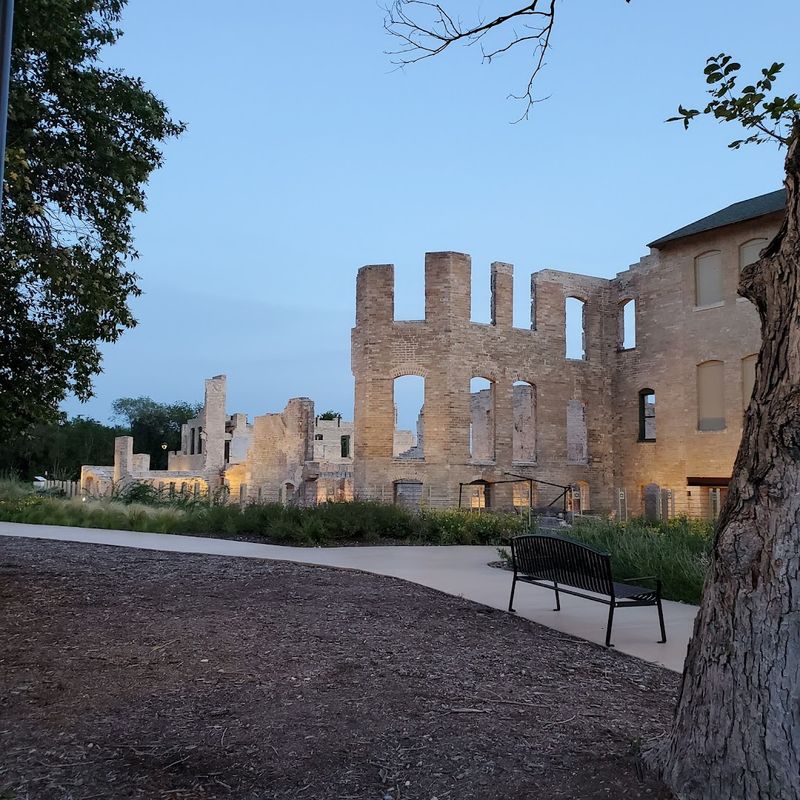
Hot Wells began with an oil drilling mistake that changed San Antonio history. In 1894, developers struck hot sulfur water instead of petroleum and turned the site into a resort that drew wealthy visitors, politicians, and film stars.
The point is simple. A 2,000-foot-deep well produced sulfur water at about 104 degrees, hot enough to anchor an entire health destination.
The resort borrowed ideas from Arkansas bathhouse culture and expanded across ten acres near the San Antonio River.
It offered three swimming pools and 45 private bathrooms, numbers that show how large the operation became for South Texas. Midway through the site story, the exact location matters. 5503 S Presa St, San Antonio, Texas.
Remember this place.
The guest list included Theodore Roosevelt, Charlie Chaplin, J.P. Morgan, and Douglas Fairbanks.
That kind of attention helps explain why Hot Wells was more than a bathhouse with good luck underground.
It became a social stage, a wellness experiment, and a piece of San Antonio ambition wrapped in steam, sulfur, tile, and river air. Then the momentum faded after World War I and during Prohibition, and the property eventually closed in 1977.
Today the ruins survive as Hot Wells Park, and local preservation efforts have focused on bringing therapeutic bathing back through a new well.
2. San Solomon Springs
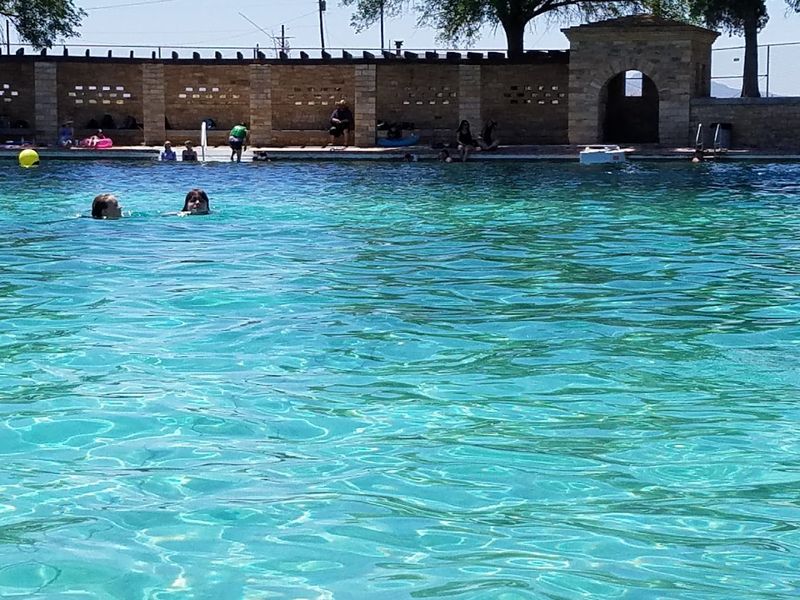
Balmorhea State Park sits in a stretch of West Texas where water feels almost out of place until you learn what is happening underground.
San Solomon Springs rises from the vast Edwards-Trinity Aquifer system, where groundwater travels through limestone and fault lines before surfacing under natural pressure. The result is one of the largest spring-fed pools in the world, with a constant flow that keeps the water clear, cool, and continuously moving.
That consistency is the first thing visitors notice. The second is how alive the pool feels for something so carefully managed.
Fish drift through submerged grasses, turtles appear along the edges, and the water shifts between deep blue and pale turquoise depending on the light.
The Civilian Conservation Corps helped develop the site in the 1930s, building the concrete pool that still anchors the spring today. It was designed not to control the water, but to frame it, turning a natural outflow into a public swimming space without interrupting its source.
Unlike many Texas mineral springs tied to sulfur or heat, San Solomon Springs is defined by clarity and flow rather than temperature or scent. The appeal is less about curing anything and more about the simple fact that a desert can sustain this much water in motion.
In a region known for dust and distance, the experience feels almost improbable.
3. Crazy Water Bath House & Spa
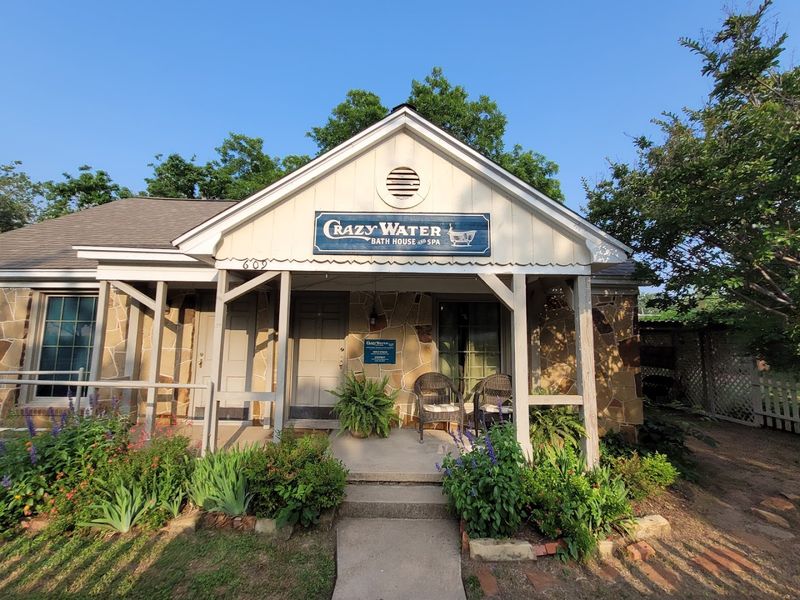
Mineral Wells is built on one unusual local legend located at 609 NW 1st Ave, Mineral Wells, Texas.
A woman reportedly drank from a local well, felt restored, and residents began calling it Crazy Water.
That tale gave the town a name people still recognize, but its modern reputation counts for much more.
By the late 1800s, Mineral Wells had grown into a nationally known health resort promoted with the slogan, “Where America Drinks Its Way to Health.”
The current Crazy Water Bath House & Spa connects directly to that history because the Famous Mineral Water Company, founded in 1904, still sells the water.
Local wells contain notable lithium, a fact often cited because lithium compounds later became part of modern treatment for certain mood disorders.
That does not prove the old cure claims, but it explains why the water drew such serious attention.
The appeal was partly medical, sure, but also pure curiosity.
People were buying into a mineral profile, but also into the idea that a rough North Texas town had discovered something rare under its own streets.
Then the resort era expanded.
The Crazy Water Hotel opened in 1927, and the Baker Hotel followed in the late 1920s, bringing celebrity names such as Clark Gable, Judy Garland, and Lawrence Welk into a North Texas town built on geology.
If you want the old story in one sip or one soak, this is the place to test your curiosity.
4. Comal Springs
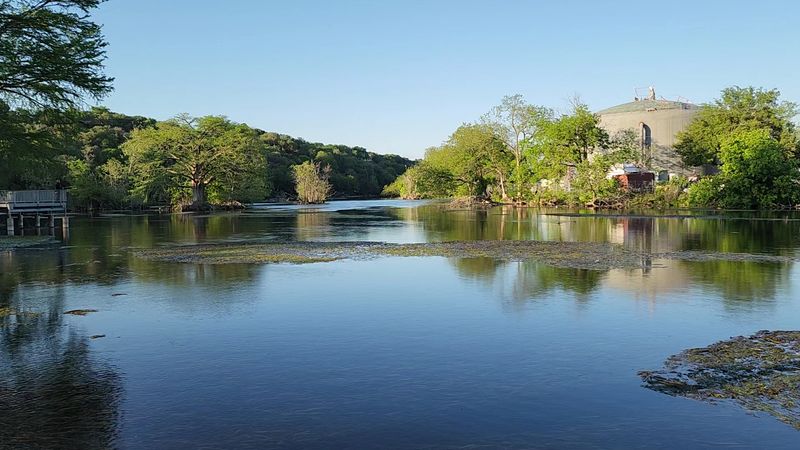
New Braunfels is often described as a river town, but the real beginning of that story sits beneath Landa Park, where Comal Springs pushes water up from the Edwards Aquifer in a steady, unbroken flow.
Unlike smaller seeps or seasonal springs, Comal Springs is a full system, a cluster of artesian outlets that together produce one of the largest spring flows in Texas. The water rises through fractured limestone, carrying the quiet signature of underground geology rather than any dramatic surface feature.
It does not announce itself with steam or sulfur, only with clarity and motion.
That flow is powerful enough to form the Comal River almost immediately, turning a park landscape into a moving body of water within a few steps. Fish, aquatic plants, and constant current give the area a sense of continuity that feels closer to a living system than a single attraction.
Landa Park, at 164 Landa Park Dr, anchors the experience with walkways, shaded banks, and easy access to the spring-fed waters. What makes Comal Springs remarkable is not spectacle, but scale.
Water here does not gather in a pool waiting for visitors. It becomes a river while you are still standing beside it.
5. Hancock Springs
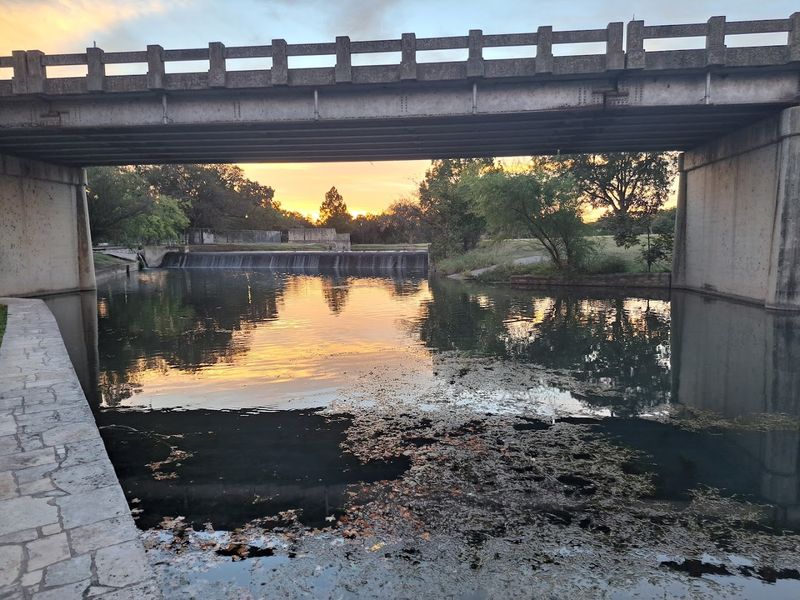
Hancock Springs gives you one of the clearest measurable facts in the state: its spring-fed pool holds a steady temperature of about 69 degrees year-round.
That consistency helps explain why Lampasas developed such a strong identity around mineral water.
In a story full of folklore, a constant temperature is hard data.
Lampasas had already built a health resort reputation by the late nineteenth century.
People believed sulfur water there could help rheumatism, digestive problems, and skin ailments, and records show that more than 6,000 baths were taken at nearby Hanna Springs in 1888 alone.
Those numbers tell you the spring trade was organized, not casual. Hancock Springs Park had a bathhouse and swimming pool by 1911, and the city acquired the property in the 1930s.
The pool now has the status of the oldest spring-fed pool in Texas, a line worth checking because it links recreation to verified local heritage.
That steady chill also gives the place a practical memory: generations of swimmers knew the shock before they knew the history.
The water made summer afternoons feel almost civic, tying courthouse-square Lampasas to a spring culture that was physical, social, and surprisingly well documented across decades of local public use.
Their message is clear: Lampasas did not treat spring water as a novelty.
6. Frankston Artesian Well
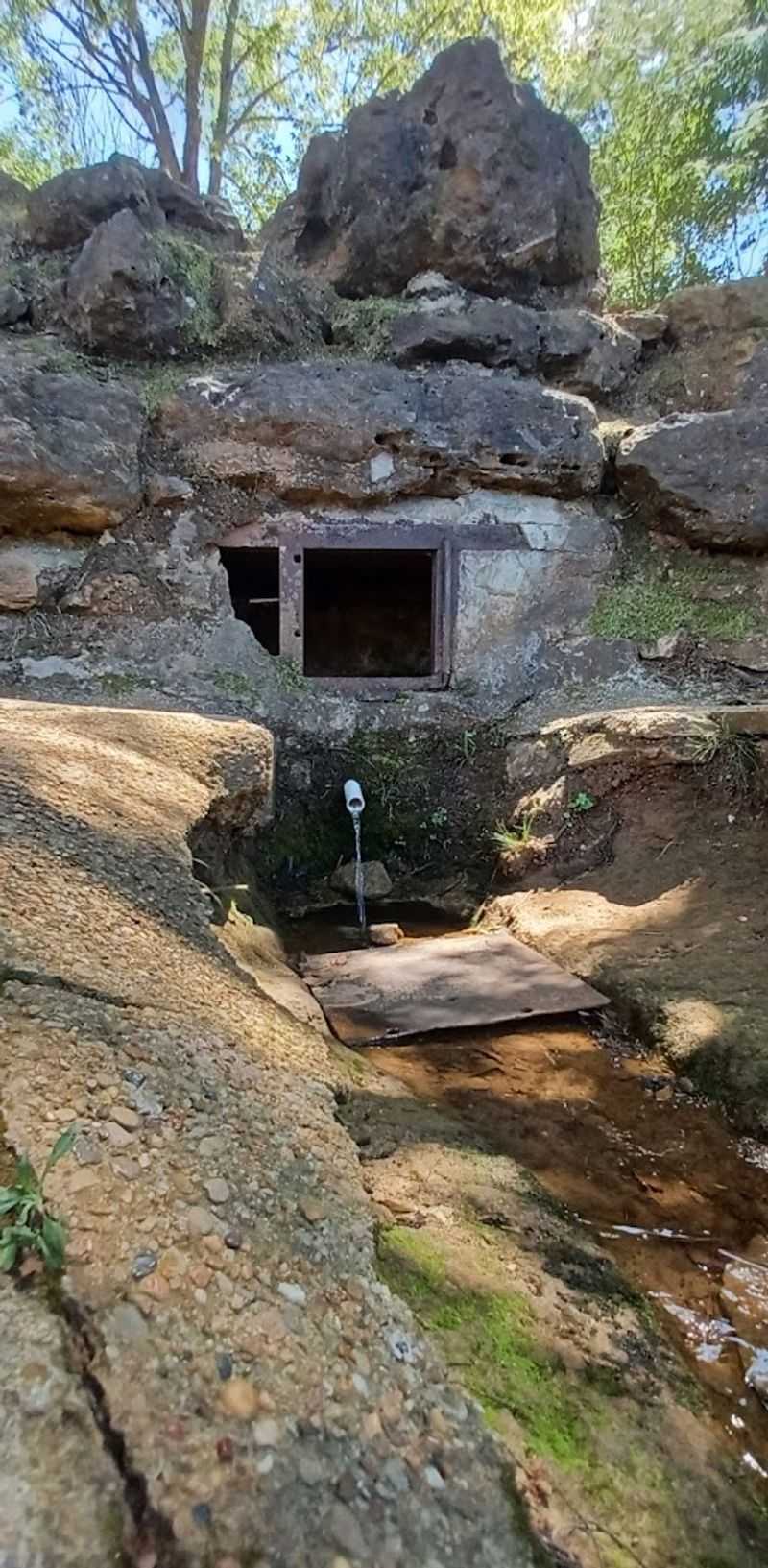
Frankston Artesian Well belongs to a different branch of the water story because artesian flow depends on underground pressure, not hype.
That pressure pushes water upward naturally when a confined aquifer gets tapped.
So the central fact here is mechanical and geological at once.
Set along US-175 in Frankston, the well turns roadside travel into a quick lesson in hydrogeology.
Artesian wells helped many Texas communities secure water before modern systems reached every corner, and they often became landmarks because the water arrived without continuous pumping.
A spring can be scenic, but an artesian source also proves how the aquifer behaves.
East Texas gets that.
This region receives more rainfall than West Texas, yet dependable public water sources still mattered for settlement, farming, and highway growth. Paying homage to that practical history, the Frankston well reads less like a spa destination and more like civic infrastructure with a memorable face.
You can fold it into a day of regional eating without forcing the point. Look for smoked sausage, fried catfish, or a slice of buttermilk pie in town, and then stop at the well with a better question in mind.
What if the most interesting water site is the one that explains pressure, aquifers, and local survival in a single glance?
7. Ottine Mineral Springs
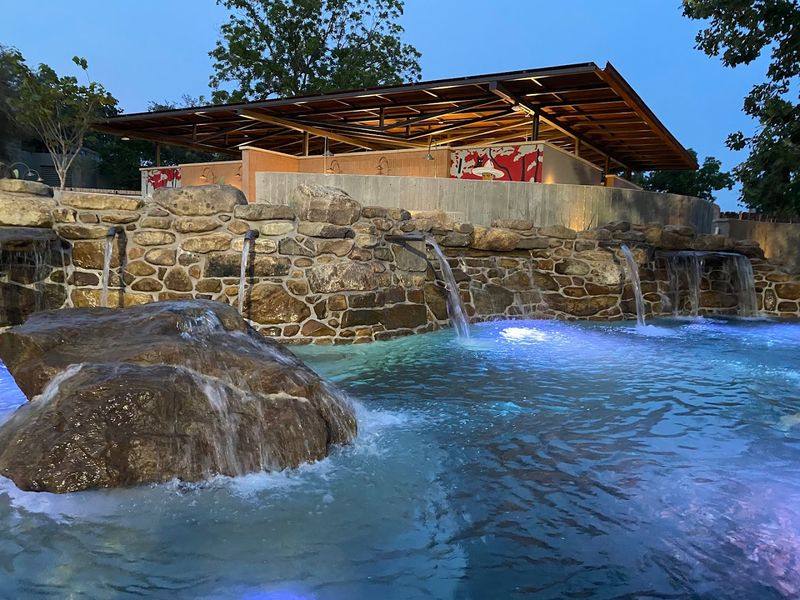
Ottine Mineral Springs started with an accident in 1909.
Oil drillers struck a 106-degree artesian spring flowing at about 100 gallons per minute, and that single event gave 2033 FM1586, Gonzales, Texas a resource nobody had set out to find. Few origin stories explain themselves so neatly.
Development took time.
Roughly three decades passed before the warm mineral water became part of a public therapeutic project, and the turning point came during the 1930s polio epidemic.
The Gonzales Warm Springs Foundation established a nationally recognized care facility here, using the water in treatment and rehabilitation. That medical purpose is what gives the site its strongest identity.
The spring was not just promoted as a pleasant soak or a weekend curiosity. It became part of a larger story about recovery, mobility, and how communities responded when modern medicine still had limited answers.
The water contains magnesium, sodium bicarbonate, and salt, minerals commonly linked in spa literature to easing muscles, helping circulation, reducing joint pain, and supporting skin health. It shows how Texas connected natural resources to formal health care in a very specific era.
Today, the spring still anchors wellness use, but history gives the place its real weight.
How often do you get to trace a straight line from an oil rig mistake to a polio-era therapy center built around hot water?
8. Krause Springs
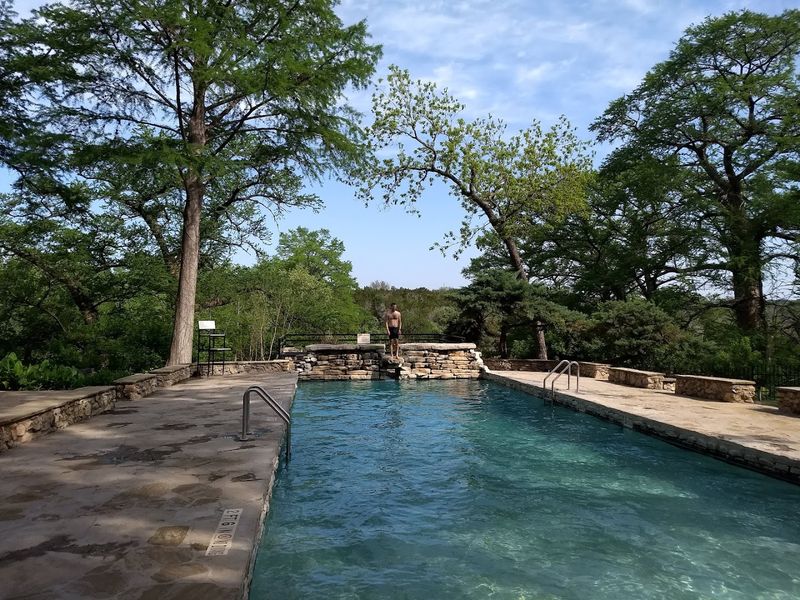
Spicewood does not announce itself with much ceremony, but Krause Springs has been changing that rhythm for decades.
The property is fed by a network of natural springs rising through the limestone of the Texas Hill Country, where groundwater moves slowly underground before surfacing in steady, cool flows. Those springs collect into swimming holes, small cascades, and a manmade pool that blends easily into the surrounding terrain.
What makes Krause Springs feel different is the layering. One section feels engineered for swimming, while another looks almost untouched, with mossy rock edges and clear water slipping through shaded groves of cypress and oak.
The springs do not arrive as a single dramatic source.
They appear in multiple points across the land, each adding to the system that eventually feeds into Cypress Creek.
The temperature holds steady year-round, close to 70 degrees, which makes the contrast with Texas heat immediate and almost physical. Visitors step in expecting relief, then stay longer than planned because the water does not feel like a single attraction so much as a continuous environment.
Krause Springs sits at 424 Co Rd 404, Spicewood, Texas, and its appeal is not about spectacle or history alone. It is about the simple persistence of water in a landscape that otherwise prefers to stay dry.
9. Jacob’s Well
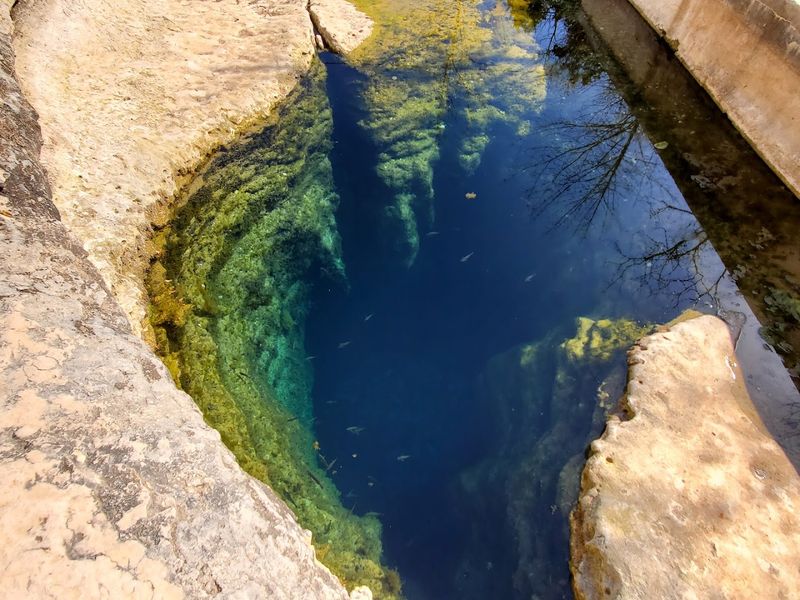
Wimberley has no interest in making things easy to interpret, and Jacob’s Well proves that quickly.
At first glance, it looks like a perfectly calm pool tucked into the Hill Country limestone. The surface barely moves, and the color shifts between clear blue and deep green depending on the light.
But beneath that stillness is a vertical cave system carved into the Trinity Aquifer, where groundwater rises under pressure through narrow limestone passages.
The spring itself is part of a larger underwater network, and that is what gives Jacob’s Well its reputation. It is not a simple pool fed by surface runoff or seasonal rain.
It is an artesian spring connected to a submerged cave system that has been explored only to significant depths before narrowing into tight, flooded passages.
Water emerges here at a steady temperature year-round, shaped by long underground travel through rock rather than exposure to open air.
That geological journey is what gives the spring its clarity and its sense of depth, even when standing at the surface.
Located at 1699 Mt Sharp Rd, Jacob’s Well is now carefully managed, with seasonal swimming and strict protection rules designed to preserve both safety and water flow. It is one of those rare places where the surface tells almost none of the story, and the real structure exists entirely below your feet.
10. Barton Springs Pool
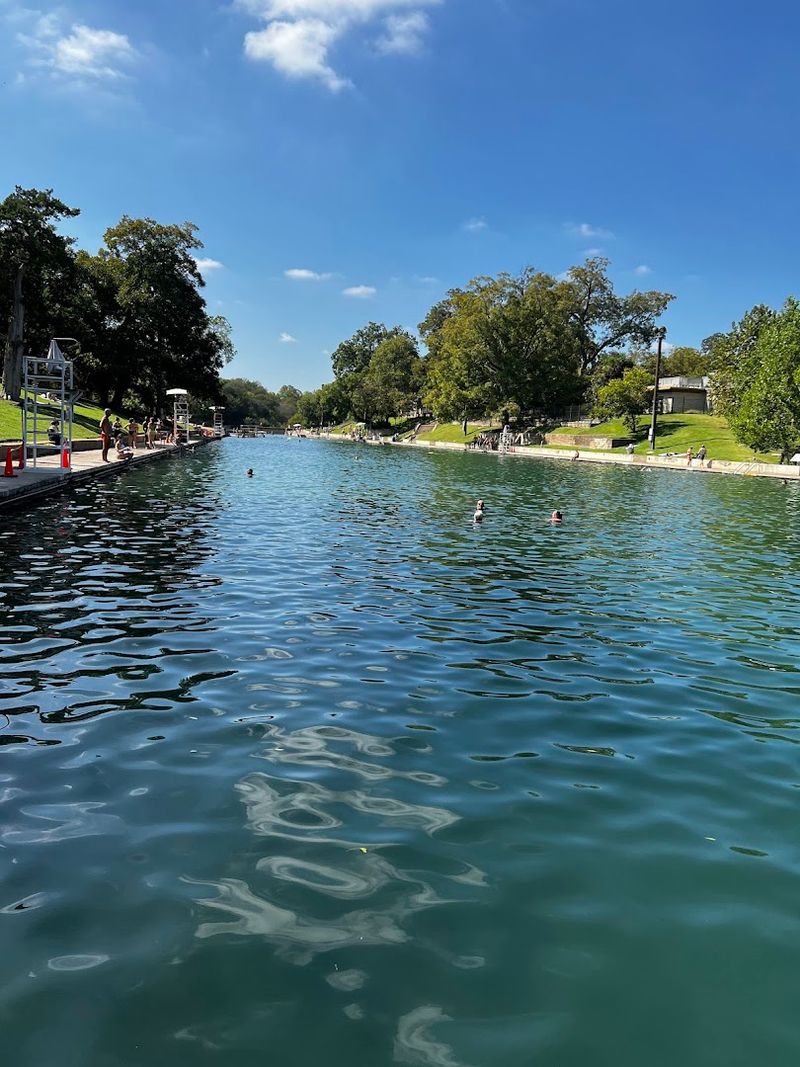
Austin likes to present itself as modern and fast-moving, but Barton Springs Pool runs on an entirely different rhythm.
The pool is fed by Barton Springs, a cluster of natural outlets connected to the Edwards Aquifer, where groundwater travels through limestone and fault lines before surfacing in steady, pressurized flow. That water has been on a long underground journey, filtered and cooled by rock layers before it ever reaches the surface.
What arrives in Zilker Park is a body of water that does not behave like a typical swimming pool. It stays remarkably consistent in temperature year-round, sitting in the comfortable range that makes it usable in both summer heat and winter air.
The clarity shifts with weather and light, but the source remains constant, driven by geology rather than season.
The pool itself was shaped around the spring system, not the other way around. Concrete edges frame what was already there, turning a natural outflow into a public space without stopping its flow.
Fish and aquatic life still move through the deeper sections, reminders that this is not just treated water held in place.
Located at 2131 William Barton Dr, Austin, Texas, Barton Springs Pool sits in Zilker Park as both recreation and infrastructure. It is one of those rare places where a city built a swimming pool, but the earth kept the final word on how it behaves.