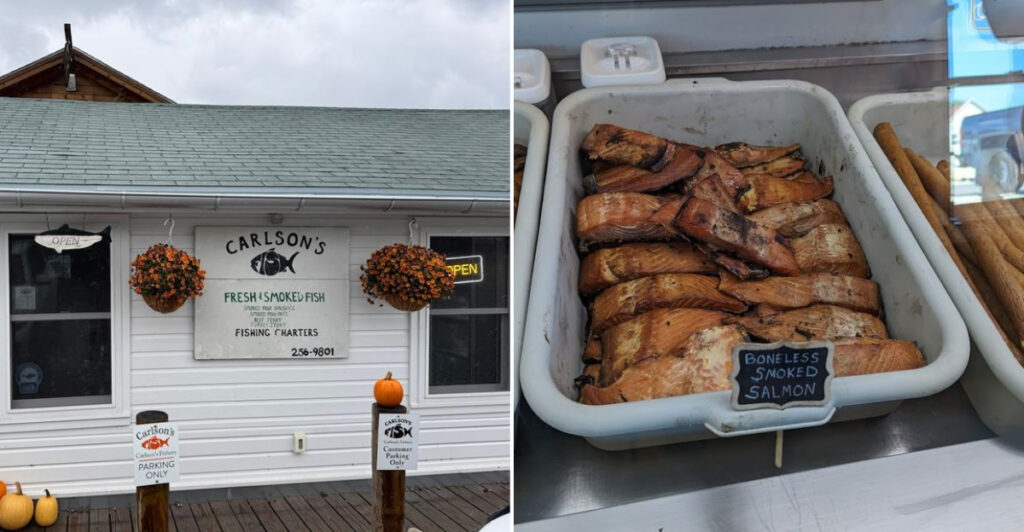
What is it about a Michigan smoked fish shop that turns a quick stop along the water into something people start craving?
Along the Lake Michigan shoreline, small smokehouses keep things simple with whitefish, salmon, and local catches prepared in traditional smokers and sold fresh from the counter.
Passerbies don’t even plan to stop until the smell drifts out toward the parking lot and makes the decision for them.
That shoreline pull turns a simple visit into something that feels familiar the moment you arrive. The flavors stay with you longer than expected, enough to make the next visit feel less like a decision and more like something already scheduled.
Isn’t that what makes a place worth coming back to?
The Smoked Whitefish That Keeps People Coming Back Every Single Week
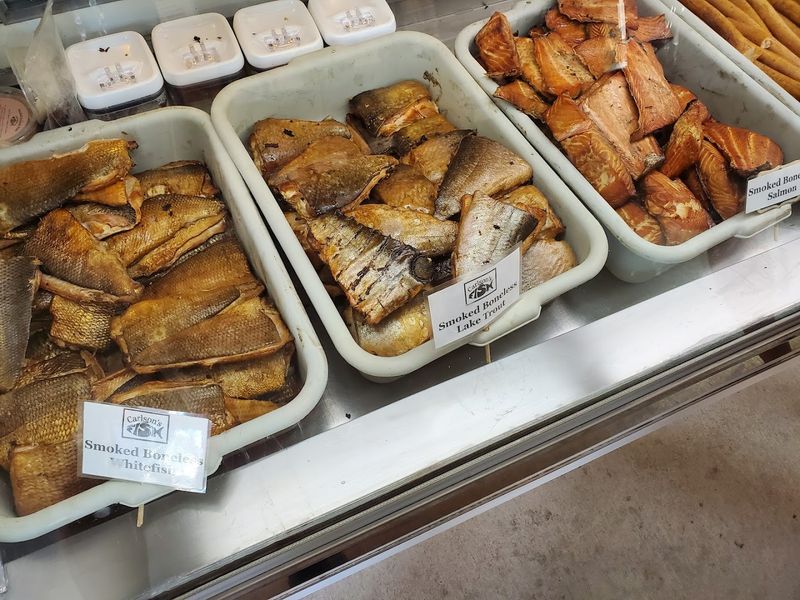
Smoked whitefish is the product that built Carlson’s reputation, and it is not hard to understand why repeat buyers schedule their trips around it.
Lake Michigan whitefish has a naturally mild, slightly sweet flavor, and the smoking process at Carlson’s draws that fat to the surface, creating a texture that is buttery without being greasy.
The fish gets smoked in a historic shanty right on the Leland waterfront, which means the process happens steps away from where the catch arrives. That proximity matters.
Small-batch smoking in a dedicated structure rather than a commercial facility preserves the fish’s moisture in a way that industrial smokers rarely replicate.
Regulars know to ask whether the whitefish came in fresh that morning, because the quality difference between a same-day catch and a frozen one is noticeable.
The skin crisps up differently, and the flesh pulls apart in larger, cleaner flakes. Pairing smoked whitefish with local cheese curds is a combination you should definitely try.
It turns a simple market purchase into a genuinely satisfying meal.
Families who have visited Leland for decades will tell you that smoked whitefish is the one product that never disappointed them across generations. Kids who once turned their noses up at the smell came back as adults craving it.
That kind of loyalty does not come from good marketing. It comes from a product that actually delivers on its promise every single time you open the package.
Stock up, no matter what you think, because one portion is never enough.
A Working Fishery On A Historic Street You Can Actually Buy From
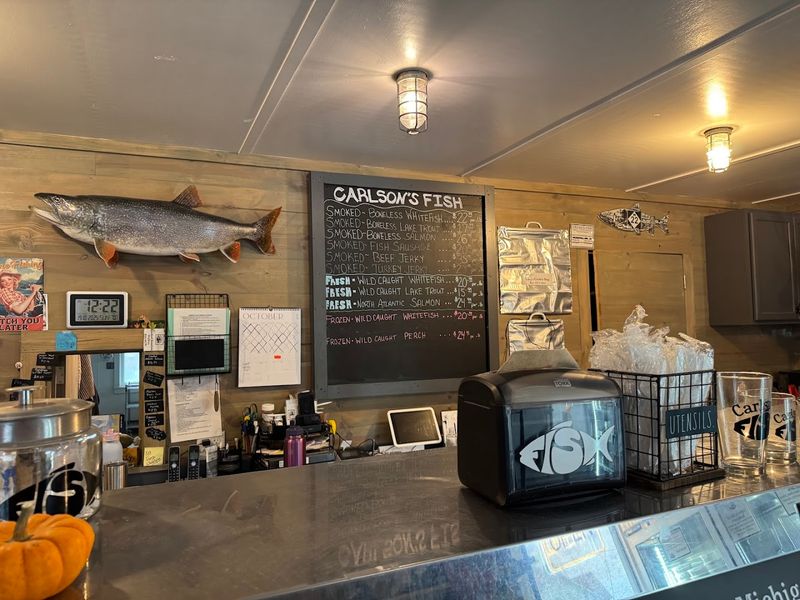
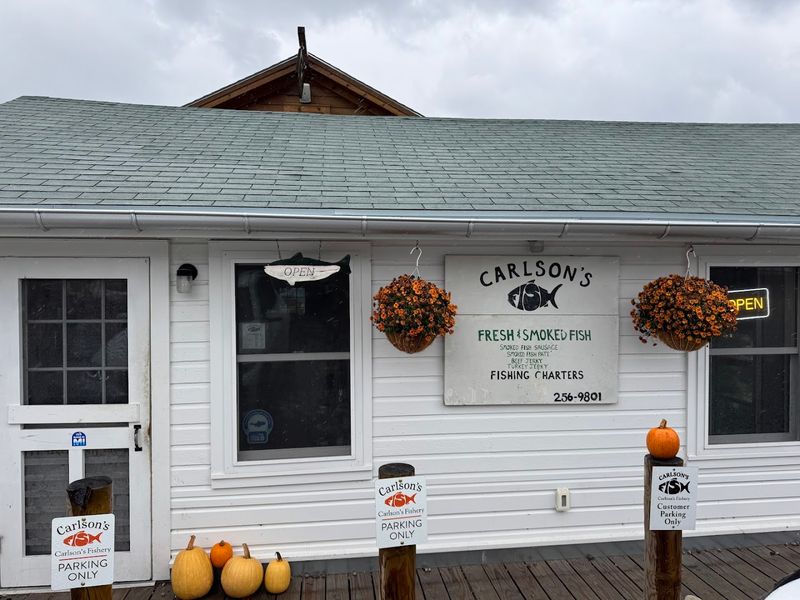
Most fish markets source their product through distributors. Carlson’s Fishery at 205 W River St, Leland, Michigan, operates out of a historic shanty in Fishtown and sources directly from its own tugboat crew working Lake Michigan.
How authentic is that?
That is a distinction that changes everything about what ends up behind the counter.
Fishtown itself is a registered historic district, and the wooden shanties lining the river have housed commercial fishing operations since the late 1800s.
The Odawa (Ottawa) people have long inhabited the region, and the area’s strong fishing heritage later evolved into a commercial lake-to-table tradition.
When a boat comes in carrying Lake Trout, customers who happen to be at the market at the right moment can buy a whole fish directly.
That level of access to the actual catch is almost impossible to find anywhere else in the region.
The building itself is part of what makes the purchase feel different. Buying smoked fish from a machine-cooled grocery case and buying it from a wooden structure that has smelled like brine for over a century are two entirely different experiences, even if you close your eyes.
The product carries the credibility of its location.
Leland’s maritime identity runs deep, and Carlson’s sits at the exact geographic and historical center of it. Come on a weekday morning, and you might catch the catch arriving.
That isn’t a photo opportunity. Here, that is just another regular Tuesday.
Smoked Salmon That Is Worth The Drive
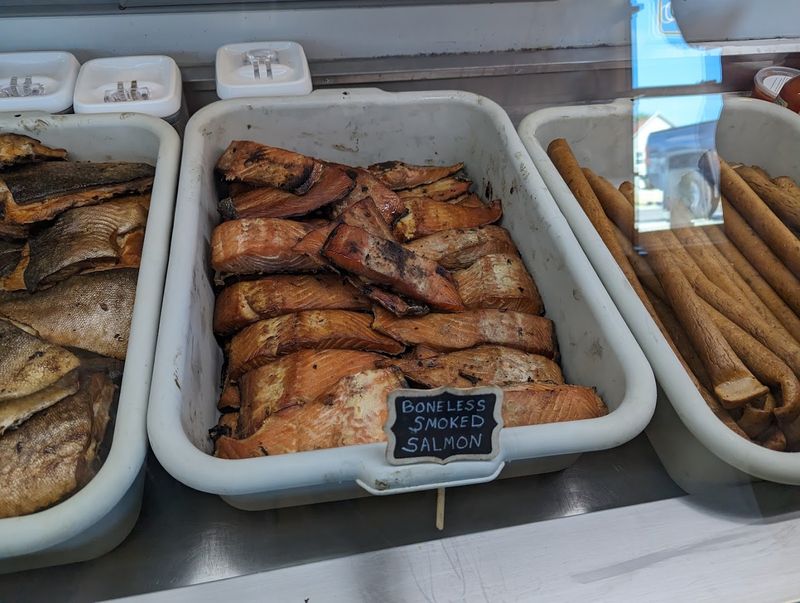
People drive from the region specifically for the smoked salmon at Carlson’s Fishery.
The salmon here uses Atlantic fish, which some purists note upfront, but the smoking technique produces a result that even skeptics describe as naturally oily and full of flavor without any of the sharp, overpowering fish taste that turns people away from smoked fish in the first place.
The texture lands somewhere between silky and firm. It pulls apart cleanly and holds up well on a cracker without falling apart.
That balance is harder to achieve than it sounds. Over-smoked salmon turns dry and chalky.
Under-smoked salmon tastes raw and flat. Carlson’s version lands in a consistent middle zone that has earned it a loyal following well beyond Leelanau County.
Self-described non-fish-eaters have tried the smoked salmon here and walked out converts. That says something specific about the preparation.
The smoke profile does not overwhelm the fish, it complements it, the way a good dry rub enhances meat without masking it.
Smoked salmon pairs well with the whitefish pate that Carlson’s also carries, and buying both gives you a spread that works for anything from a lakeside picnic to a proper appetizer plate at home.
The smoked salmon travels well in a cooler, making it a practical take-home product even for buyers coming from a distance.
If a six-hour round-trip drive from another state sounds excessive for fish, ask the people who made that trip. They will explain it better than any menu description could.
Fish Sausage Is The Product That Surprises Everyone Who Tries It
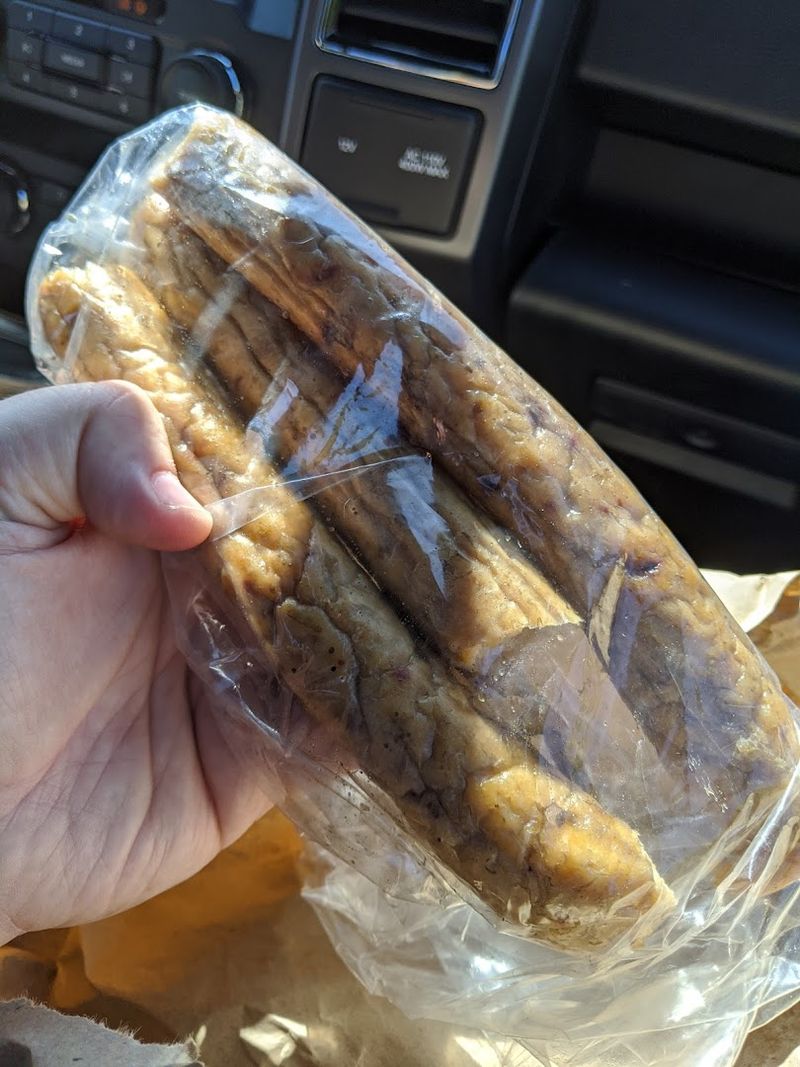
Fish sausage sounds like a culinary experiment that should not work, right?
At Carlson’s, it works so well that customers who buy one pound routinely come back for two more before they leave the building.
Some people have come all the way from Flint, from car clubs, from family trips, people who had no plan to buy fish sausage and left with it as the highlight of their visit.
The product uses smoked fish as its base, which gives it a flavor profile that sits closer to a quality smoked meat sausage than anything you might expect from a fish-based product. The smoke integrates into the blend rather than sitting on the surface, which produces a more complex, savory result.
Carlson’s fish sausage has become one of the market’s signature items alongside the smoked whitefish and the pate. Visitors who ask for recommendations at the counter consistently get pointed toward it, especially those who express any hesitation about fish in general.
It serves as an accessible entry point for buyers who want something familiar in format but distinctive in flavor.
One note worth taking, though, the sausages hold their shape best when handled carefully. Buying them fresh and keeping them cold on the way home preserves both texture and flavor.
They also cook well on an open fire, which several campers and cottage visitors have discovered and reported back enthusiastically. Any opportunity to hold a barbecue is a good opportunity.
Try one link before committing to a full purchase. You will certainly not stop at one.
The Whitefish And Salmon Pate That Earns Its Own Fan Base
Carlson’s makes two pates. Smoked whitefish pate and smoked salmon pate.
Both have their devoted buyers, but the whitefish version gets more love as it is the product that captures what Fishtown tastes like in a single scoop.
It’s the food equivalent of Lake Michigan’s breeze. Familiar, clean, and impossible to replicate anywhere else.
Pate from a commercial fish processor tends to taste uniform and slightly artificial, the way canned seafood does when the seasoning overcompensates for mediocre source material.
Carlson’s version uses the same smoked fish that anchors the rest of the menu, which means the base ingredient quality carries directly into the spread.
Smoked fish pate travels exceptionally well. It stays fresh in a cooler for a road trip home, and it holds in the refrigerator long enough to justify buying in quantity.
People who visit seasonally stock up specifically so they can stretch the supply between trips.
Spread it on a cracker, add a thin slice of hard cheese, and you have an appetizer that takes under two minutes to prepare and tastes as if considerably more effort went into it. Grab an extra container, future you will be grateful.
Beef And Turkey Jerky From A Smoked Fish Shop That Actually Competes
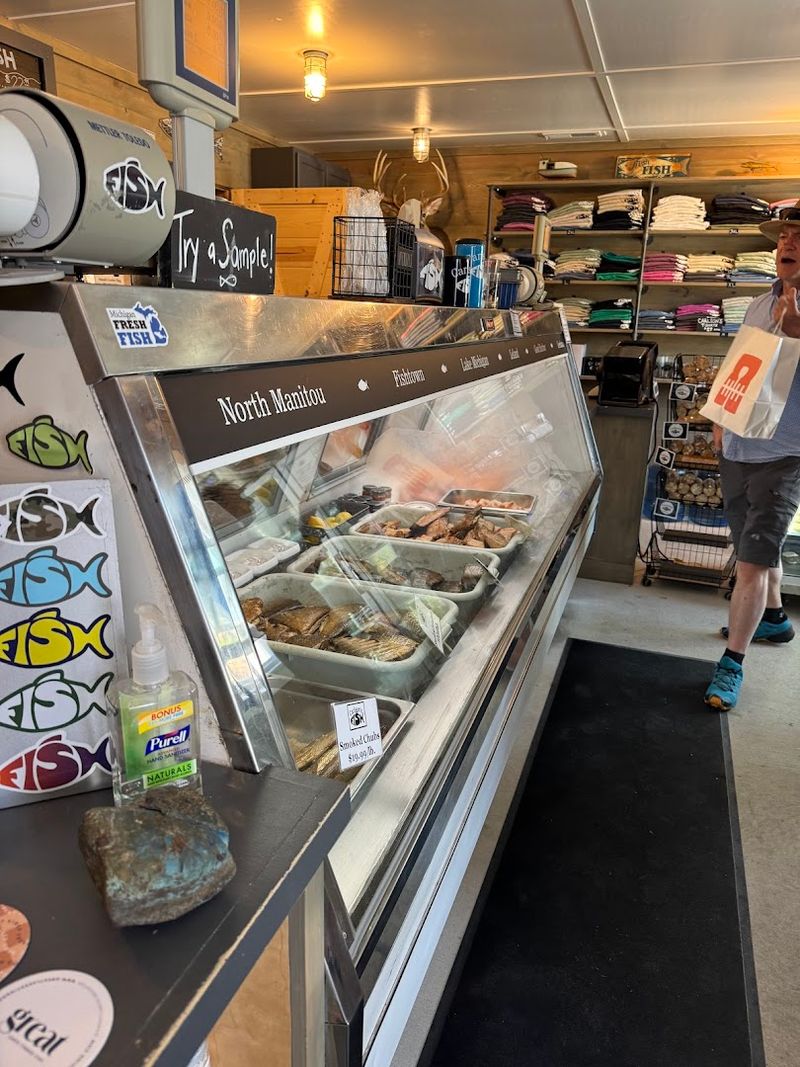
Carlson’s produces both beef and turkey jerky using the same smoking infrastructure that handles the fish. The smoke profile that makes the whitefish and salmon so distinctive carries over into the jerky, giving it a depth of flavor that differs noticeably from mass-produced jerky products.
The turkey version gets particular attention from buyers who want a leaner option without sacrificing the smoky intensity. Jerky from a dedicated smoking operation tends to have better moisture control than jerky made in a commercial dehydrator.
The result is a chew that has texture without being tough, and a smoke flavor that builds gradually rather than hitting all at once.
For visitors who do not eat fish or who want to bring home something for family members with different preferences, the jerky solves the problem neatly. It also keeps well, which makes it a practical road-trip purchase for buyers heading back to Chicago, Detroit, or anywhere else with a long drive ahead.
Carlson’s built its name on fish, but the jerky has developed its own following completely independent of the seafood menu. Pick up a bag alongside your smoked fish order and see which one disappears from the cooler first.
Fresh Catch Available Straight From Lake Michigan On The Right Morning
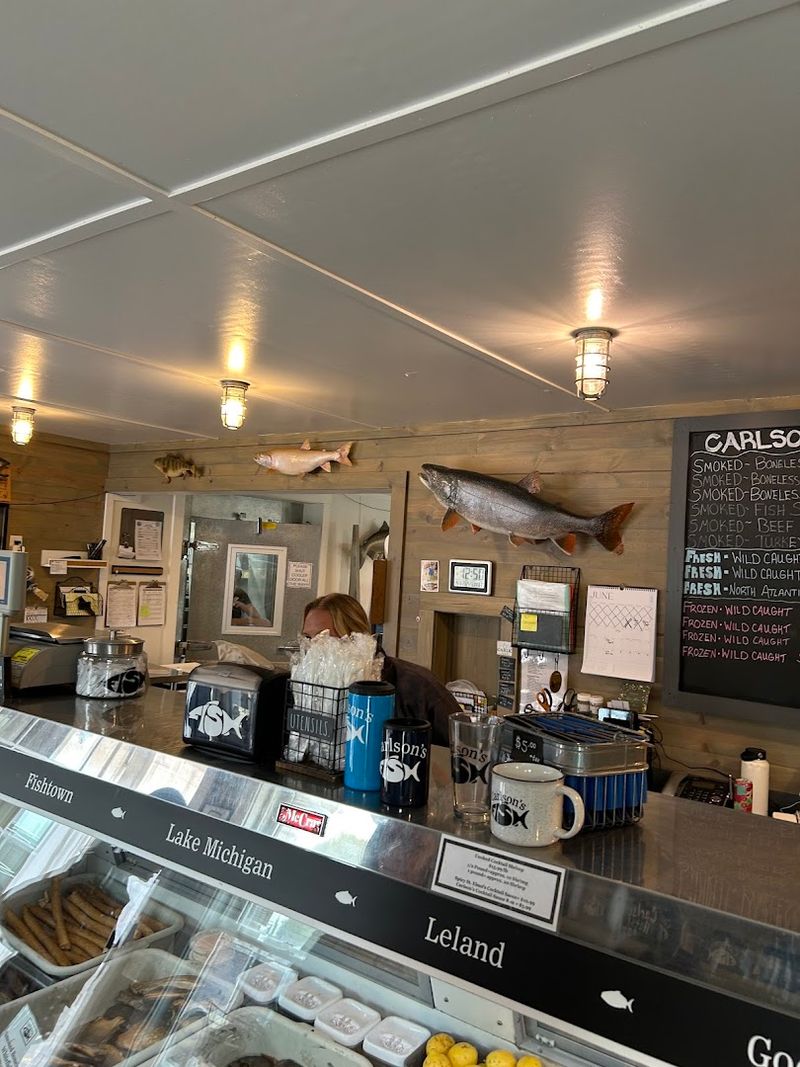
Buying smoked fish at Carlson’s is the expected move. Buying a whole, fresh Lake Trout that arrived by boat that same morning is the kind of purchase that turns a market visit into a story worth telling.
Fresh fish availability at Carlson’s depends entirely on what the boats bring in. Lake Trout and whitefish show up most consistently, but the inventory reflects actual catch conditions rather than a fixed supply chain.
That variability is the point. A fish market connected to working boats does not guarantee a specific product on a specific day.
No. It guarantees freshness when the product is there.
One practical tip that experienced buyers pass along is to ask at the counter whether the fresh fish came in that morning or from frozen.
The answer changes the buying decision, and the counter staff answers the question directly. Fresh Lake Trout cooked over an open fire the same evening it came off the boat is a different meal than frozen fish thawed and pan-fried at home.
Carlson’s sits within walking distance of the Leland River spillway, where fish can sometimes be spotted jumping in the water. That proximity between the wild source and the market counter is the entire premise of what Fishtown was built to be.
Show up early. The best fresh fish goes to the people who ask first.