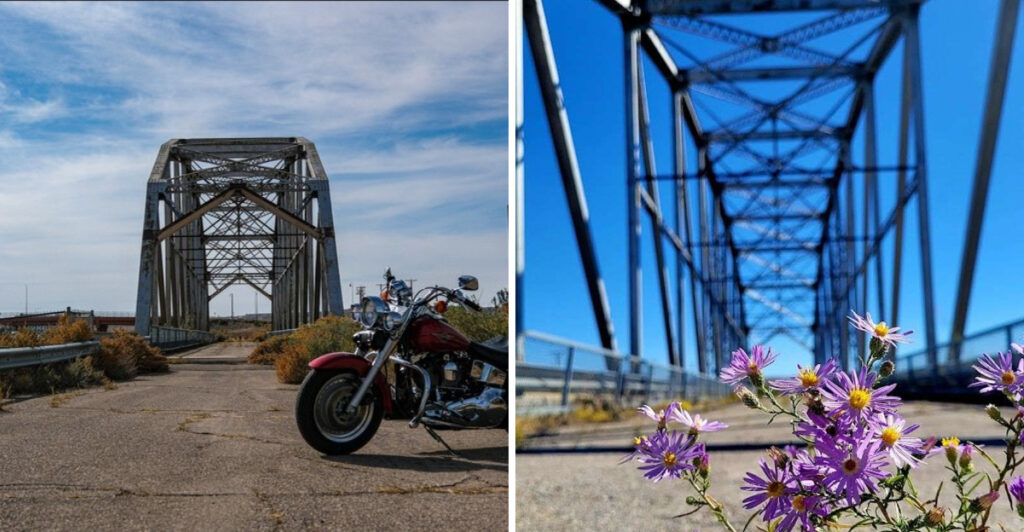
This is the kind of Route 66 stop you might almost miss, then think about for miles. An old steel bridge rises over a desert riverbed with the modern highway running close by.
The contrast does most of the work. One road hurries past.
The older one asks you to slow down. Built in 1933, the span once carried travelers heading across New Mexico, long before the interstate took over the faster route.
Today, visitors can walk the preserved bridge and feel how much history can live in a simple crossing. Look through the trusses and back toward the old pavement.
The scene does not need a dramatic setup. It just needs a little attention.
After a few minutes, Route 66 does not feel gone at all. It feels quieter now, waiting beside the rush for anyone willing to stop on purpose.
Steel Arches Over Desert Silence
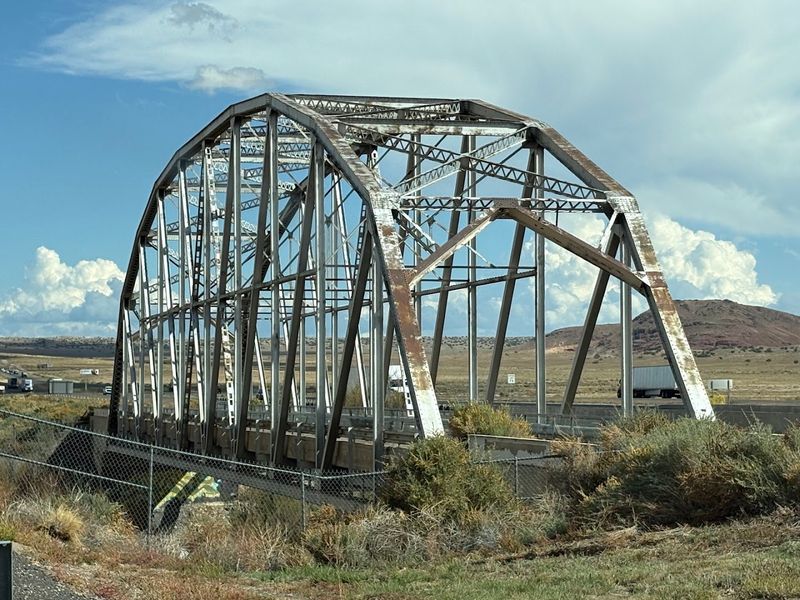
Few structures earn the word “landmark” quite the way a 250-foot single-span steel truss bridge does when it rises out of a flat desert landscape with nothing but sky behind it.
The Rio Puerco Bridge is a Parker through truss design, a style chosen specifically because it could span the entire river without requiring a center pier in the channel below.
That mattered a great deal here, because the Rio Puerco is known for violent flooding and severe erosion that would have threatened any support sitting in the riverbed.
The Kansas City Structural Steel Company fabricated the bridge components, and F.D. Shufflebarger of Albuquerque oversaw the construction work that wrapped up in 1933.
Standing beneath those arching trusses, you feel the weight of real engineering problem-solving, not just decoration.
The steel overhead frames a long rectangle of open blue sky, and the geometric pattern of the riveted members creates a kind of industrial artwork that no architect planned on purpose.
You can reach this historic crossing at 14311 Central Ave NW, Albuquerque, NM 87121, and it is open around the clock every day of the week.
Old Highway Views And Open Sky
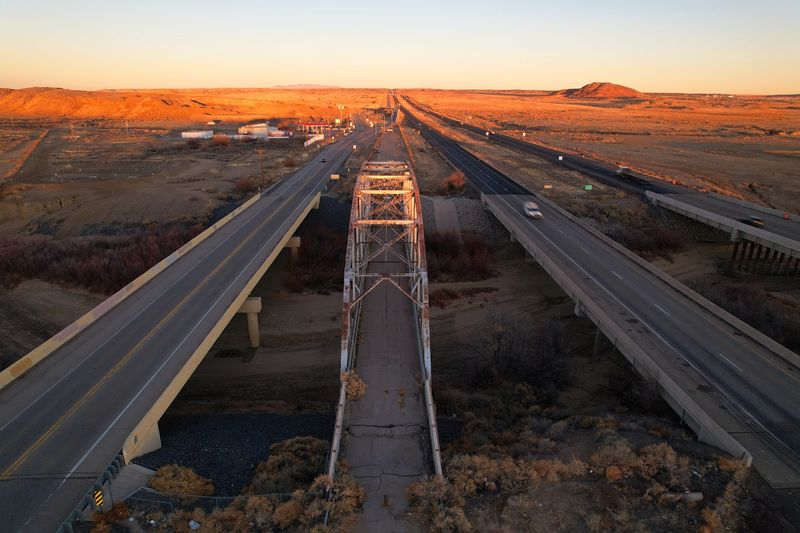
Standing on the bridge deck and looking west, the old Route 66 pavement stretches out ahead in a faded, cracked line that disappears into the scrubland.
That view is something a modern freeway overpass simply cannot offer, because here the road is quiet, the wind moves without competition, and the horizon sits right at eye level with nothing blocking it.
The Laguna Cutoff, the new direct east-west routing that became part of U.S. Route 66 in 1937, shortened the transcontinental drive by a remarkable 107 miles, and this bridge was central to making that happen.
Travelers who once pointed their cars toward California passed right over this spot, reading the same sky you are reading now.
The pavement on either side has seen better days, but the rough texture underfoot actually adds to the feeling that you are stepping back into a specific chapter of American travel culture.
New Mexico keeps the site accessible and the bridge preserved, so the open-sky experience remains available to anyone willing to take Exit 140 off I-40.
The view from up here rewards patience in a way that a roadside billboard never could.
Weathered Trusses With Route 66 Soul
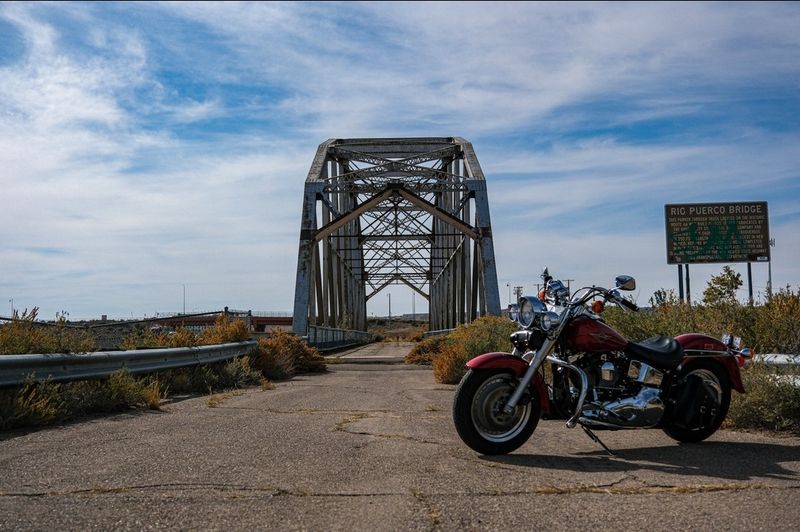
Rust has a way of telling time more honestly than any plaque, and the patina covering the Rio Puerco Bridge trusses communicates nearly a century of desert sun, flash floods, and dry winter winds.
The bridge was completed in 1933 using federal emergency funds that President Franklin D. Roosevelt directed toward highway construction during the Depression era, making it a product of both engineering ambition and economic necessity.
That origin story is baked right into the steel, because every rivet and cross-member was fabricated to meet government specifications at a moment when quality and durability were non-negotiable priorities.
Route 66 carried buses, trucks, and family sedans across this span for decades before Interstate 40 gradually redirected traffic and left the old road to quiet down.
The trusses did not disappear with the traffic, though, and today they carry a different kind of weight: the accumulated memory of every journey that once rolled across them.
Photographers regularly stop here because the warm tones of oxidized steel against a pale desert sky create a composition that feels genuinely earned rather than staged.
The soul of the Mother Road lives in steel like this.
A Quiet Walk Above The Riverbed
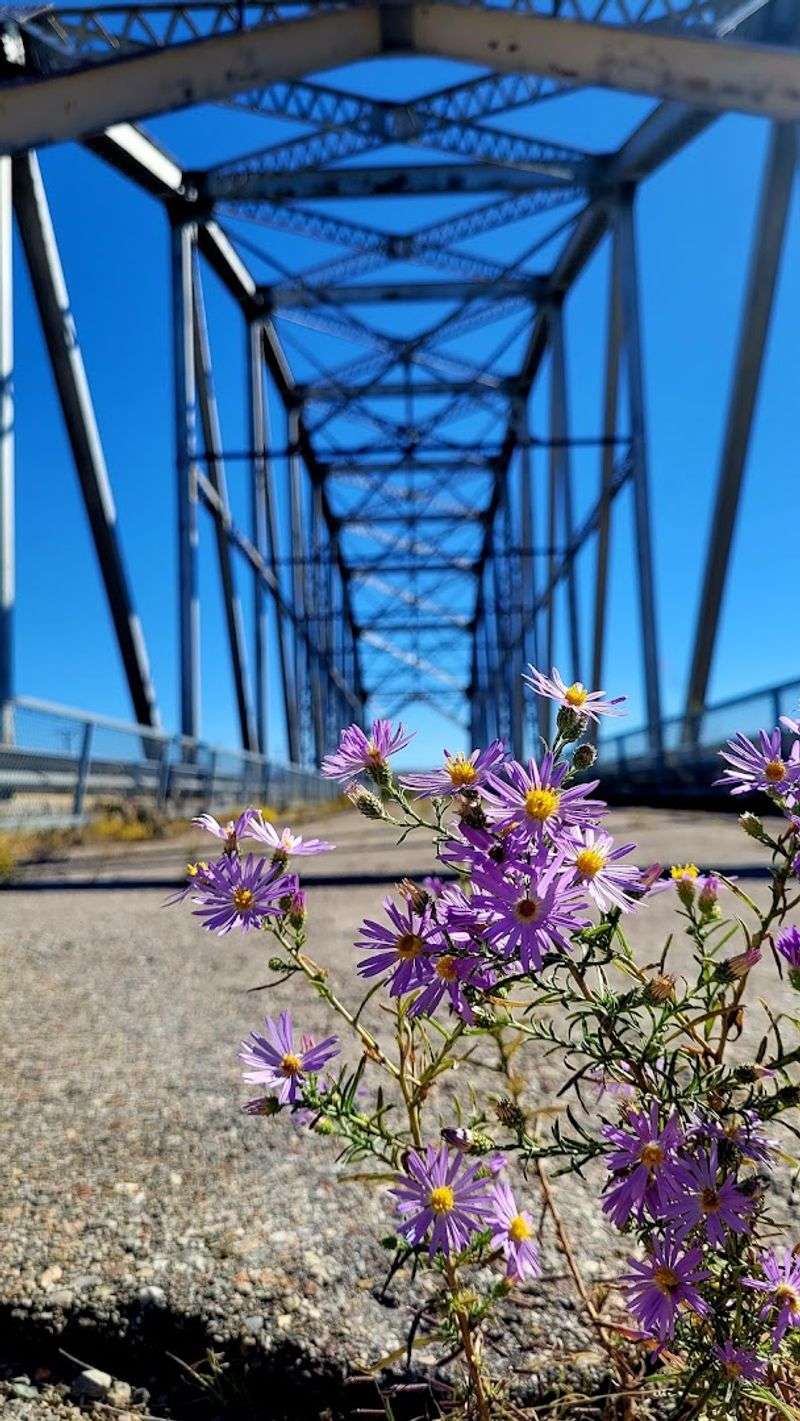
Crossing the bridge on foot is a completely different experience from glancing at it from the car window, and it takes only a few minutes to walk the full 250-foot span.
The deck is narrow, a reminder that this was originally a two-lane road built at a time when vehicles were smaller and drivers were more patient with tight clearances.
Looking down through the open sides of the truss, the Rio Puerco riverbed spreads out below in shades of tan and gray, sometimes dry and sometimes carrying a surprising amount of water after a desert rainstorm.
One visitor tip worth passing along: warm-weather walks on the bridge and the old road surface nearby can occasionally turn up snakes, so keeping an eye on the ground is a smart habit rather than a reason to stay away.
The pedestrian experience here feels meditative in a way that busy tourist sites rarely manage, because the surrounding desert absorbs sound and the structure itself does not demand anything from you.
New Mexico preserved this crossing specifically so that future generations could have exactly this kind of unhurried encounter with history.
The riverbed below holds its own quiet kind of beauty.
Desert Light On Historic Steel
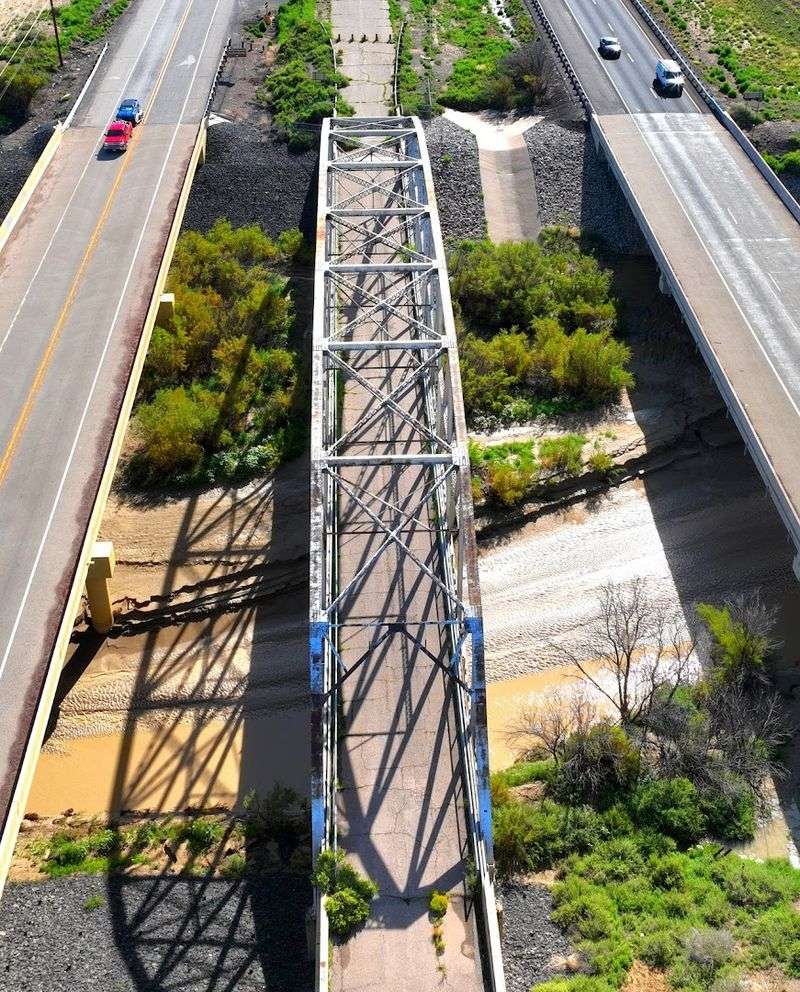
Morning and late afternoon are the two best windows for experiencing how desert light transforms the Rio Puerco Bridge into something that feels almost cinematic.
At those hours, the low sun angles through the diagonal truss members and casts long geometric shadows across the bridge deck and the sandy ground below, creating a pattern that shifts minute by minute as the sun moves.
The steel itself changes color with the light, shifting from a flat brown in midday shade to a rich amber and copper glow when the sun catches the oxidized surface at a low angle.
Photographers who visit specifically for the light often arrive early and stay longer than planned, because the combination of open desert, unobstructed sky, and textured steel offers a wide range of compositions within a small area.
The bridge was listed in the National Register of Historic Places in 1997, a recognition that its value extends well beyond simple engineering into cultural and visual history.
That official status has helped keep the structure intact and accessible rather than quietly removed to make way for something newer.
Good light on old steel is a combination that never gets old.
Curving Roadlines Into The Horizon
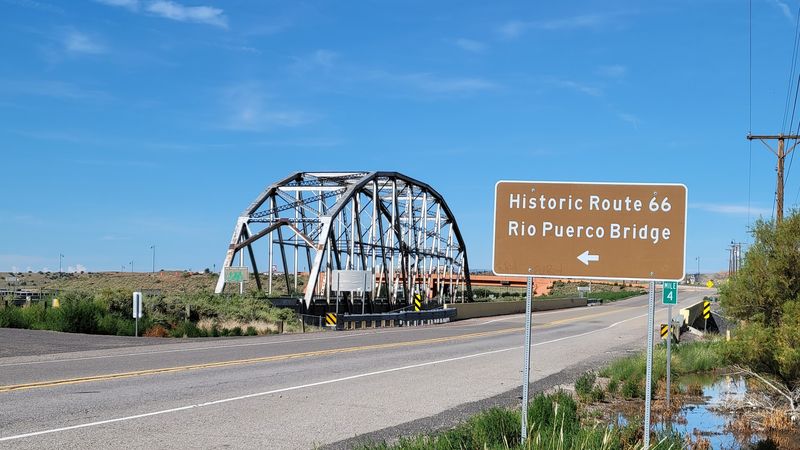
Old road alignments have a particular pull on the imagination, and the section of original Route 66 pavement connected to this bridge is a good example of why.
The road does not shoot straight in the way that modern interstates do; it curves gently with the land, following a logic that was determined by surveyors working with the actual terrain rather than engineering software flattening everything into a grid.
That curve draws the eye outward and forward in a way that feels inviting even when the pavement is cracked and the painted lines have long since faded into the asphalt.
The Laguna Cutoff that this bridge helped establish in 1937 was a significant rerouting of the transcontinental path, trimming 107 miles off a journey that millions of Americans were making by car for the first time in their lives.
Standing at the edge of that old road surface, it is easy to picture a procession of vehicles heading west with everything they owned packed into the back seat and the trunk.
The horizon here is wide, flat, and completely uncluttered, which makes it one of the more meditative roadside views in New Mexico.
Old roads know things that new ones do not.
Vintage Roadside Views In The Southwest
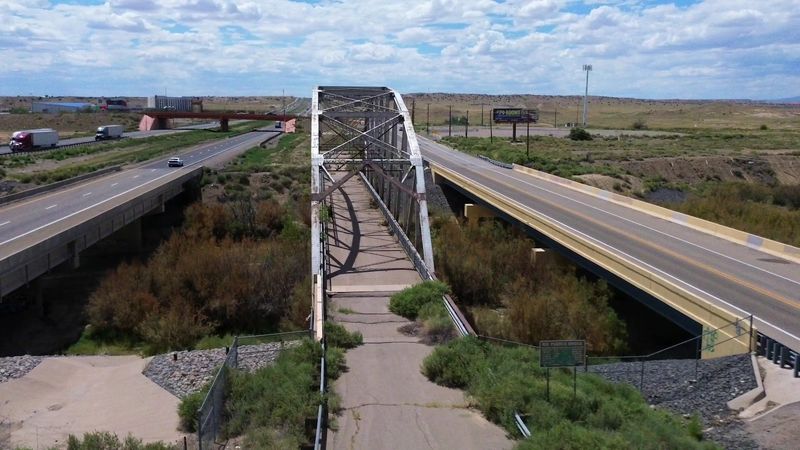
The Southwest has a specific brand of roadside scenery that involves flat land, sparse vegetation, distant mesas, and a sky that seems bigger than it has any right to be.
The area around the Rio Puerco Bridge delivers exactly that, and the presence of the old steel structure in the middle of that landscape adds a human-made element that sharpens rather than interrupts the natural scene.
Parking is available on the west side of the bridge along the old Route 66 roadway, and there is also a larger parking area on the east side near the Albuquerque approach, giving visitors options depending on which direction they arrive from.
The site sits just off Exit 140 on I-40, making it a practical stop rather than a detour requiring significant extra time or planning.
Roadside spots like this one tend to attract a mix of Route 66 enthusiasts, history buffs, photographers, and travelers who simply want to stretch their legs somewhere that offers more than a rest stop.
The vintage character of the place is genuine rather than manufactured, which makes the stop feel rewarding in a way that a themed attraction rarely does.
Southwest desert has a way of making even a brief stop feel like a full experience.
Hidden Corners Of A Preserved Crossing
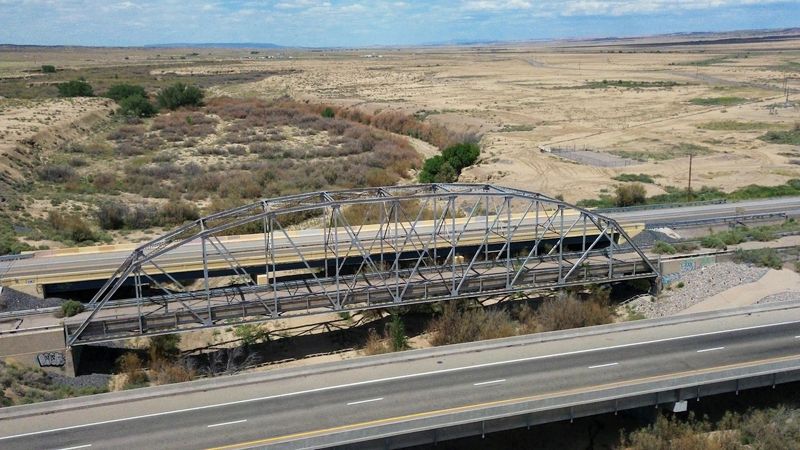
Up close, the bridge reveals details that a quick drive-by or a distant photo will never show you.
The riveted steel connections at the portal frames, the worn concrete of the abutments, and the way the desert plants have begun to reclaim the edges of the old roadway all tell a story about time and persistence that no interpretive sign could fully capture.
The bridge stopped carrying vehicle traffic in 1999 when a new bridge on the frontage road replaced it for active use, but the decision to preserve the historic structure rather than remove it gave it a second life as a pedestrian landmark.
That choice reflects a broader commitment to keeping physical evidence of the Route 66 era intact, and visitors who take the time to walk the full span and examine the structural details up close will appreciate exactly why that commitment matters.
Graffiti has appeared on some of the signage over the years, which is a reminder that preservation requires ongoing attention from both caretakers and visitors.
The Rio Puerco Bridge at 14311 Central Ave NW, Albuquerque, NM 87121 remains open every day, all day, and every careful look at its hidden corners adds another layer to a visit that already punches well above its weight.