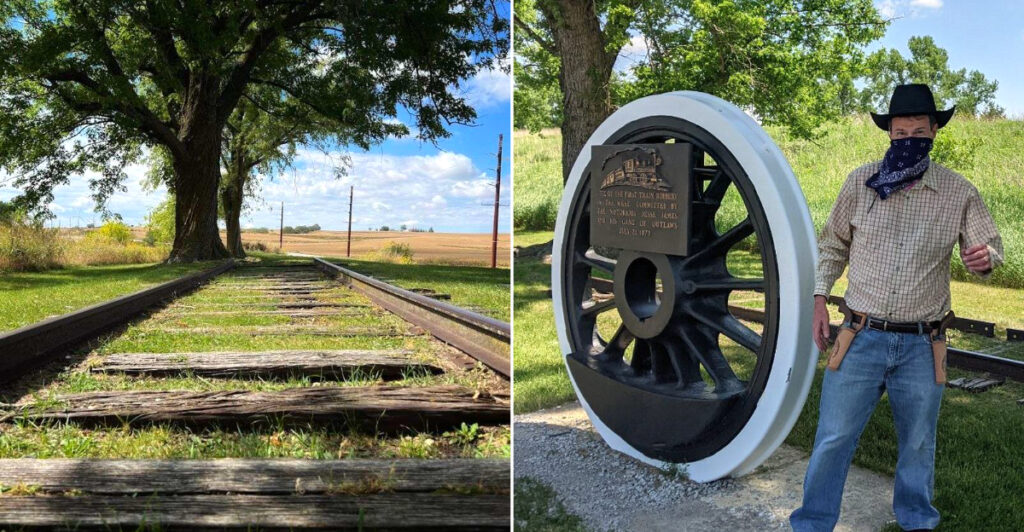
Most highway stops ask for five minutes and a vending machine decision.
This one brings an outlaw, a derailed train, and a story that feels wildly too big for such a quiet patch of Iowa. You pull off I-80 expecting a marker.
Then the 1870s tap you on the shoulder.
Small park. Big “wait, that happened here?” energy.
There is no grand museum production waiting at this roadside stop. Just shade, a historical sign, a piece of old railroad track, and enough Jesse James lore to make the next stretch of driving feel a lot less ordinary.
It is quick. It is strange.
It is exactly the kind of history break that makes a road trip memorable.
The Story Behind The Robbery That Shocked A Nation
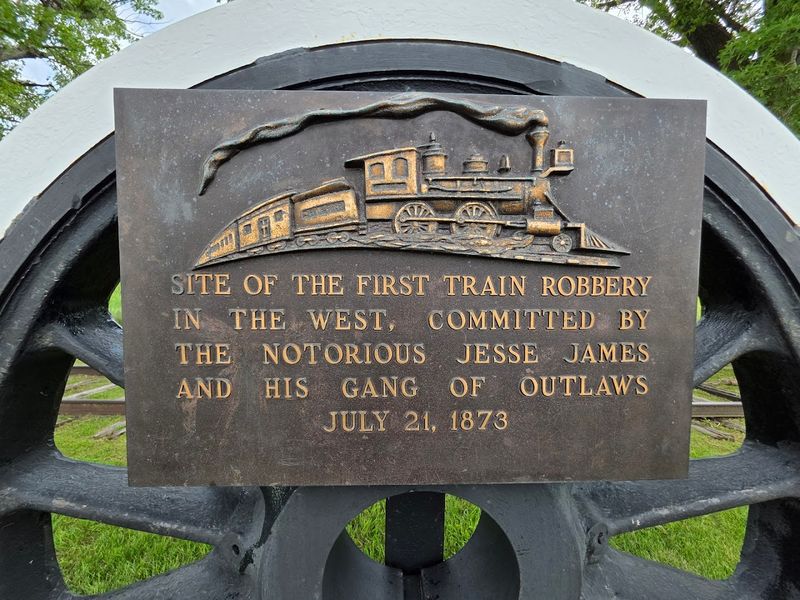
On a warm July night in 1873, Jesse James and the James-Younger gang targeted a section of the Chicago, Rock Island and Pacific Railroad west of Adair, Iowa, removed rail hardware, and used a rope to pull part of the track out of place as an oncoming train approached.
Adair County describes the robbery as the world’s first robbery of a moving train, and the site marker calls it the first train robbery in the West.
Engineer John Rafferty of Des Moines was killed in the crash, and fireman Dennis Foley later died of his injuries, making this more than just a dramatic heist story.
The gang had reportedly hoped for a much larger gold shipment, but the official county account says they found about two thousand dollars in the express car and collected about three thousand dollars total after also robbing passengers.
What makes the story stick is how boldly the plan was executed. Jesse James was not hiding in a cave plotting small crimes.
He was thinking big, and he picked a remote stretch of Iowa farmland to prove it.
After that night in Adair County, the robbery became part of national railroad and outlaw history.
What You Actually See When You Arrive
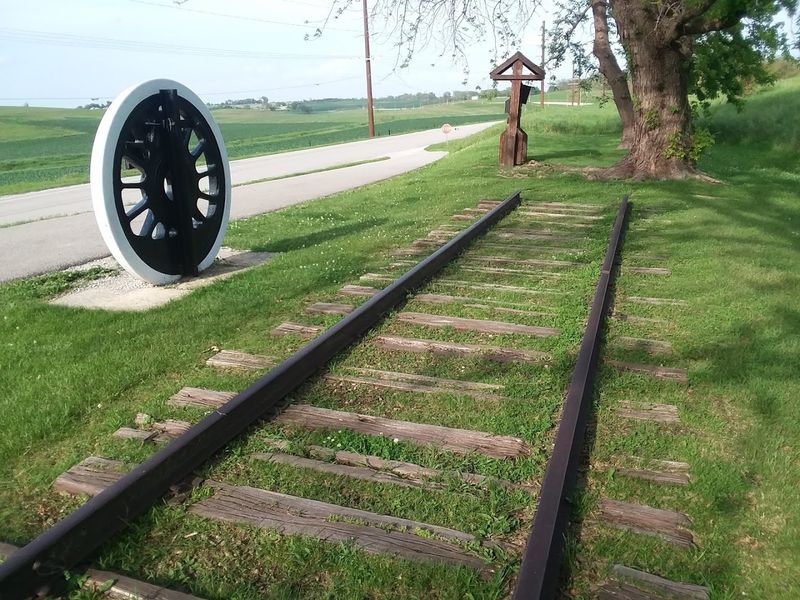
Pull off the road west of Adair and you will find a tidy little park with a compact, straightforward setup. It is small, but thoughtful.
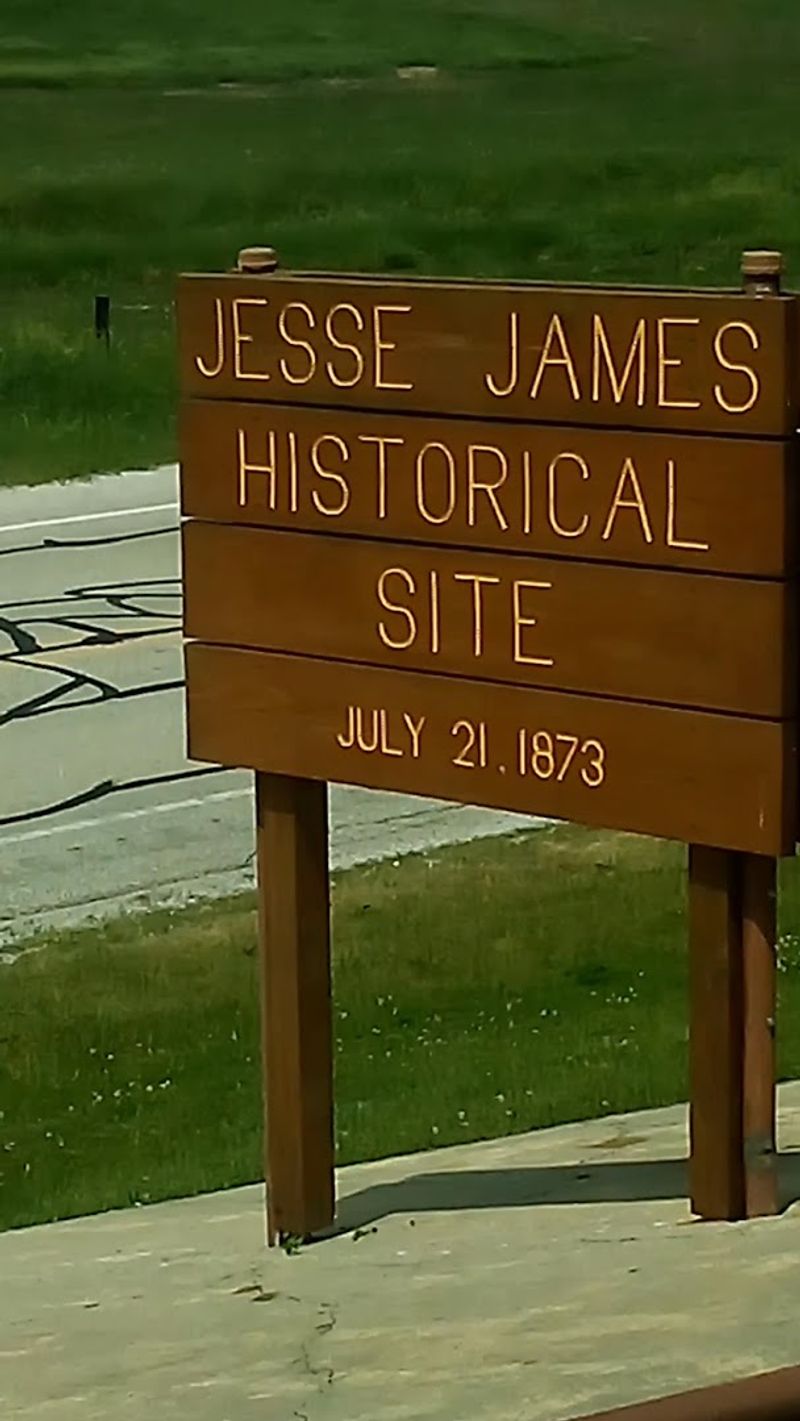
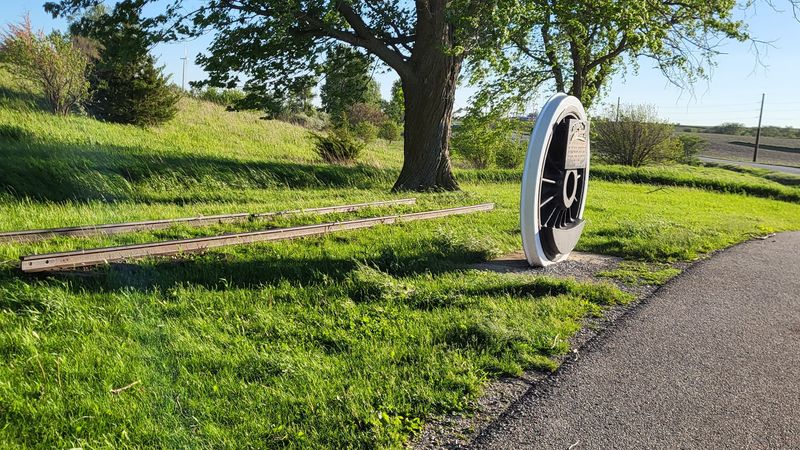
A large historical marker explains the robbery in clear, straightforward language, and a locomotive wheel with a plaque marks the site connected to the 1873 train robbery.
That physical marker is the real crowd-pleaser. Standing beside a railroad artifact tied to the story gives the visit a tangible connection to the past that a plain roadside sign simply cannot replicate.
One detail that genuinely surprised me was the selfie shelf mounted on the signpost. Somebody thought ahead and installed a small ledge where you can prop your phone, step back, and get yourself in the frame with the marker.
It sounds minor, but it is one of those practical touches that shows the park was designed with real visitors in mind, not just historical preservation committees.
How To Find It Without Getting Lost
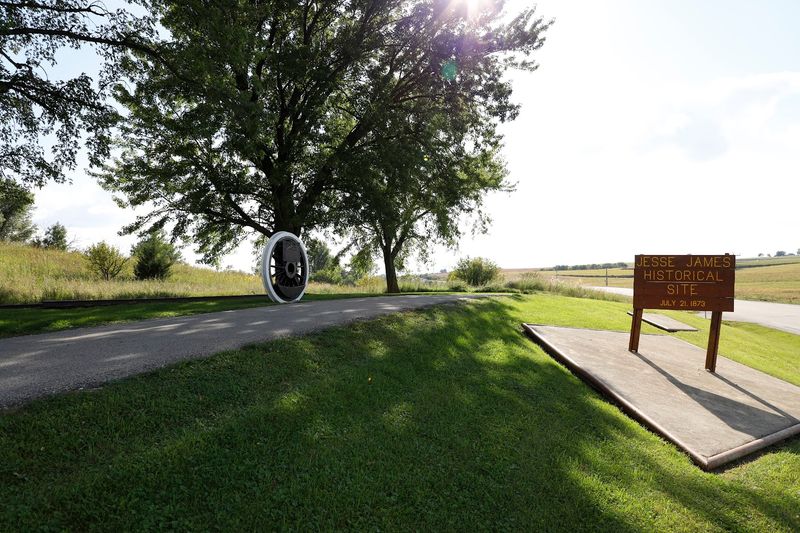
Getting here is straightforward once you know the trick. Take the Adair exit off I-80 and follow the road west toward the historic site.
Some mapping services and travel listings use slightly different road names or address formats for this rural stop, so it helps to search for Jesse James Historical Park or Jesse James Train Robbery Site rather than relying on the street address alone.
The official Adair County listing gives the address as 1156 Anita-Adair Rd., Adair, Iowa 50002, while Travel Iowa lists the site at 1156 White Pole Road.
There are no large signs advertising it from the interstate, so do not expect highway billboards counting down the miles.
You need to know you are looking for it.
The park sits just a few minutes from the town of Adair itself, and the whole detour from I-80 adds only a short break to your drive, which is a very reasonable trade for a genuine piece of American frontier history.
A rest area with restrooms is located a few minutes east on I-80, which is worth knowing since the park itself has no facilities.
The Atmosphere Of The Park Itself
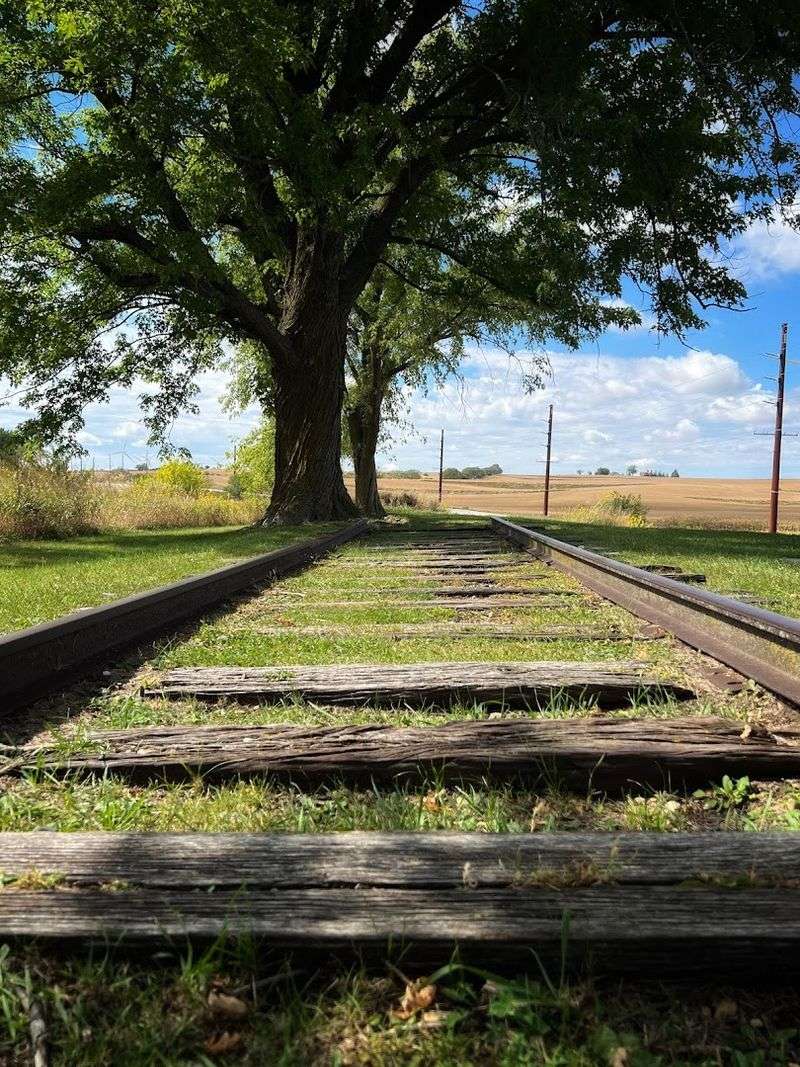
One visitor described it as a nice, shady historical marker, and that is an accurate summary. The park has a calm, unhurried feel that suits the setting perfectly.
Tall trees provide cover on warm days, and the surrounding Iowa farmland stretches out in every direction, giving you a real sense of just how remote and exposed this location must have felt to a train crew in 1873.
In 2026, a local history group also searched the area for artifacts connected to the robbery, which shows that the site still draws serious interest from people who care about preserving the story.
You never know what you might stumble into at a place like this.
The park is well maintained and the grounds are clean. It does not try to be more than it is, and that restraint is part of what makes it feel honest.
No gift shop, no admission booth, no interpretive center with a gift bag at the end. Just a marker, a railroad wheel, a shady spot, and a story that holds up on its own.
How Long You Should Plan To Stay
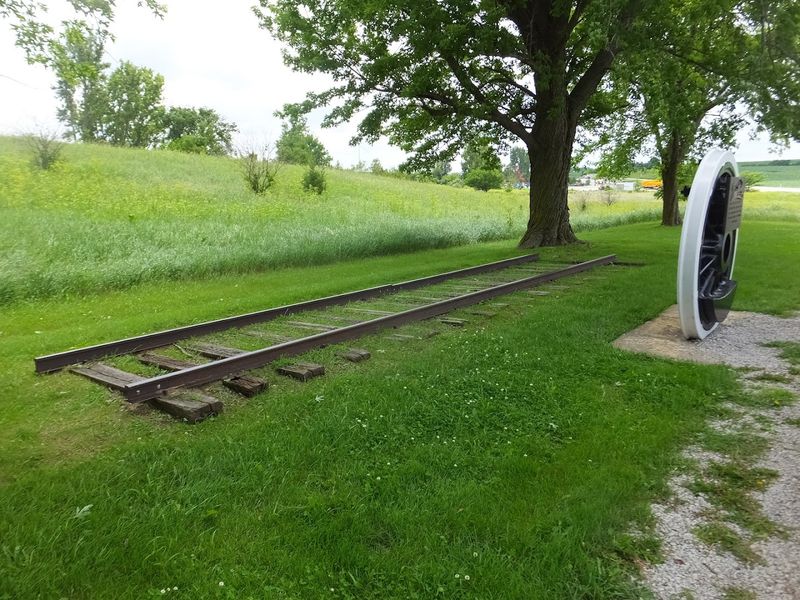
Honest answer: plan for about fifteen to twenty minutes. That is enough time to read the marker, look at the railroad wheel display, take your photos, and soak in the setting without feeling rushed.
If you fall into conversation with other visitors or happen to visit during a special history-related activity, you might stretch it longer.
The park is not designed for a half-day excursion. It is a focused, purposeful stop that delivers its story efficiently and then sends you back on your way.
Road-trippers who appreciate that kind of editorial restraint in a roadside attraction will feel right at home here.
Families with kids who have short attention spans will find the pacing ideal.
The information is presented in digestible chunks, the railroad wheel is something kids can actually see up close, and the selfie shelf means everyone gets a photo without the usual fumbling around trying to find a flat rock to balance a phone on.
Plan your visit on a dry day if possible, especially if you want the easiest footing around the small park area.
Why The Railroad Track Fragment Matters
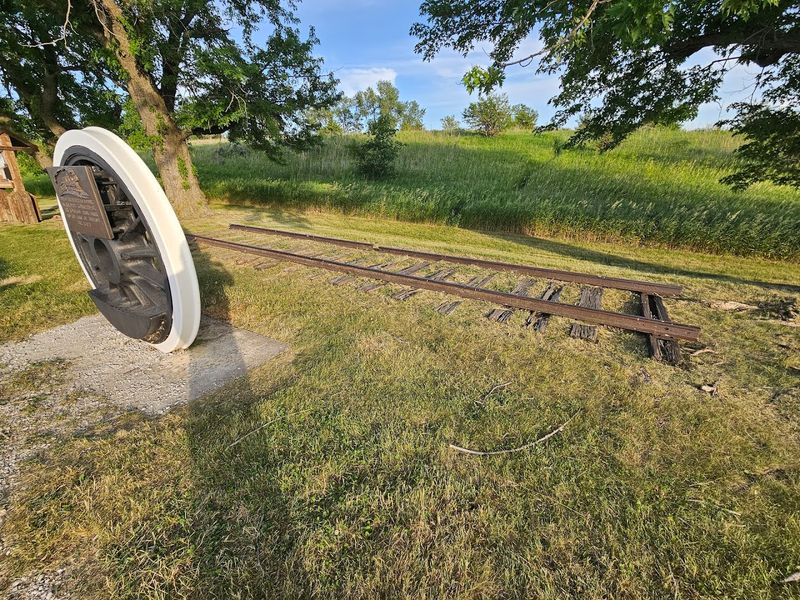
A lot of roadside historical markers are just that: markers. A sign, a plaque, and a parking spot.
What elevates this park above the average highway-side history lesson is the presence of a physical railroad marker connected to the story.
The large locomotive wheel with its plaque does more storytelling than any paragraph of text could manage.
It reminds you that this was not just outlaw folklore floating around the Midwest.
It was a real derailment, on a real railroad line, in a real patch of Iowa countryside where people were injured and lives were changed.
Recent artifact searches near the site have also turned up railroad-related pieces from the area, adding another layer to the preservation story.
The wheel display remains the anchor of the park, and it earns its place.
That physical marker connects the present moment to a specific night in 1873 in a way that is hard to dismiss.
The Best Time Of Year To Visit
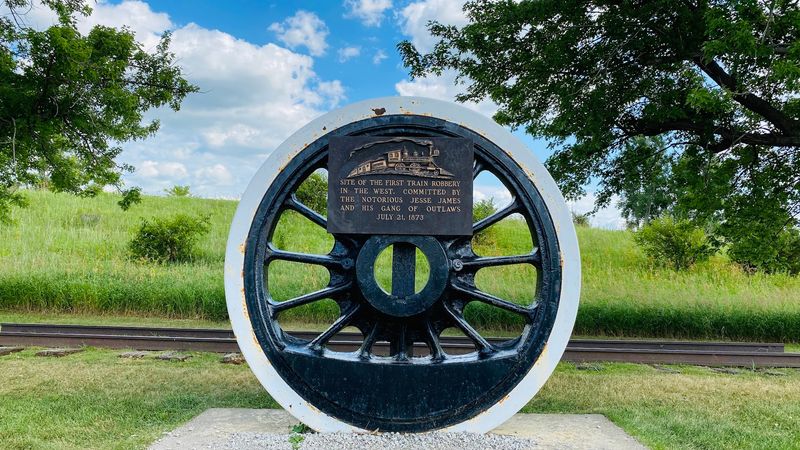
Late spring through early fall is the sweet spot for this stop. The shade trees are in full leaf, the grounds look their best, and the weather along the I-80 corridor in Iowa is generally cooperative between May and September.
One visitor mentioned stopping in the cold and keeping it brief, with a note to return once things warmed up, which is a fair assessment of how the season affects the mood here.
Summer works especially well for families on cross-country road trips, since the kids are out of school and the longer daylight hours mean you are not racing the sunset.
The park does not have lighting, so arriving in the evening when the sun is low is fine, but arriving after dark would make the marker hard to read.
Fall has its own appeal. Iowa farmland in October takes on a golden, amber quality that makes the rural setting feel almost cinematic.
The crowds, such as they are, thin out after Labor Day, so a September or October stop means you likely have the place to yourself.
That kind of quiet suits the gravity of what happened here in the summer of 1873.
Why This Stop Works For Road Trippers Specifically
Road trips along I-80 through Iowa can feel like an endurance test of flat landscape and identical rest areas.
A stop like this one breaks the rhythm without demanding a major detour or a significant chunk of your schedule.
Less than two miles off the highway, fifteen minutes of your time, zero admission cost, and you leave with a story worth telling at dinner.
The selfie shelf is a small but telling detail about who this park was designed for. It is not aimed at academic historians who want a three-hour deep read on Reconstruction-era outlaw culture.
It is built for curious road-trippers who want to connect with something real and then get back on the road feeling like they did something worthwhile.
That said, the stop does reward people who come prepared. Brushing up on Jesse James before you arrive makes the marker far more interesting.
His story is genuinely layered, a Civil War guerrilla fighter turned outlaw who became a folk hero to some and a wanted criminal to others.
Knowing that context before you read the plaque turns a quick photo stop into something that actually sticks with you on the drive west.
A Few Practical Notes Before You Go
No admission fee, no reservation required, and no staff on site. The park is essentially self-guided and best visited during daylight, when the marker is easiest to read.
Adair County park rules list county parks as open 24 hours, with quiet hours from 11 p.m. to 7 a.m., but this particular stop is much more practical in daylight.
Parking is available in the small roadside park area, and larger vehicles should take the entrance slowly.
There are no restrooms at the park. The nearest option is a rest area a few minutes east on I-80, so plan accordingly.
Cell service in this part of rural Iowa is generally decent, but do not count on it for navigation once you leave the highway. Download your directions before you exit.
Because different sources may show different road names or address formats, search for Jesse James Historical Park or Jesse James Train Robbery Site and confirm that you are heading west of Adair.
Arriving here is half the adventure, and knowing what to expect makes the whole stop run smoothly.