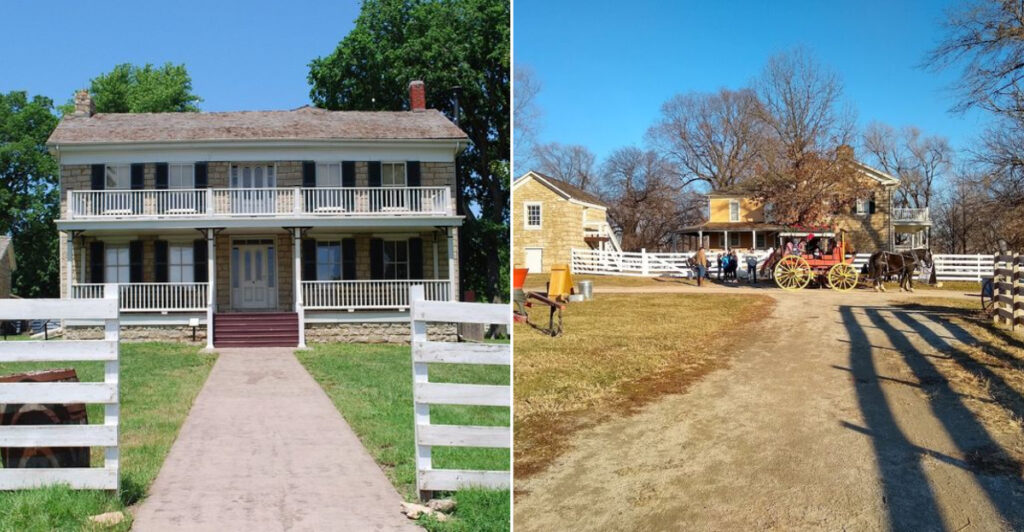
History feels a lot more interesting when it comes with wagon wheels, open fields, and the sense that travelers once passed through with everything they owned in motion.
This Kansas farmstead gives visitors a rare look at life along the historic Santa Fe Trail, turning a familiar chapter of the past into something you can actually picture.
The appeal is not just old buildings or preserved details. It is the way the place makes frontier travel feel practical, difficult, and surprisingly human.
A stop like this gives history texture, which is exactly what makes it memorable. You can read about the trail anywhere, but standing where that story unfolded changes the whole feeling.
I am always drawn to places that make the past feel less polished and more real, because that is when history finally starts to stick.
The Last Surviving Stagecoach Stop On The Santa Fe Trail
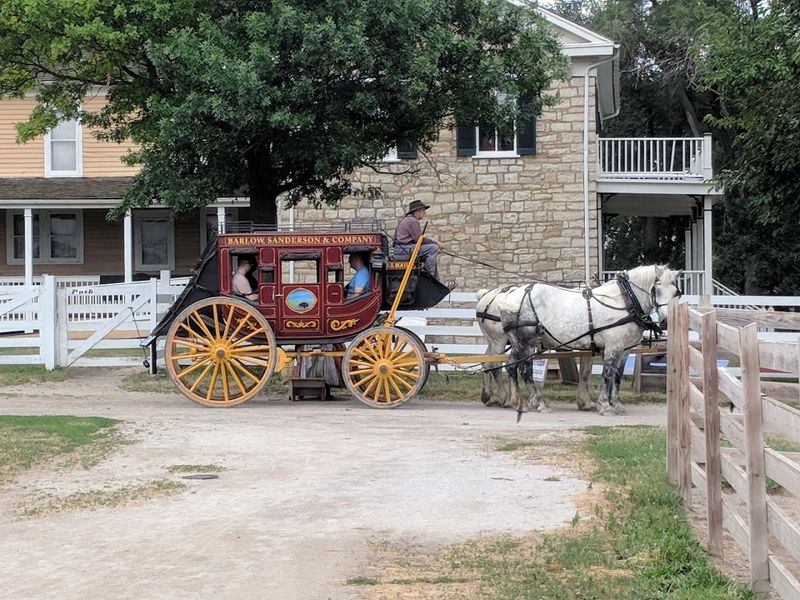
Most historic trails have markers and monuments, but the Mahaffie Stagecoach Stop & Farm Historic Site offers something far more tangible.
It holds the remarkable distinction of being the only remaining stagecoach stop along the entire Santa Fe Trail that is still open to the public today.
The Santa Fe Trail stretched roughly 900 miles from Missouri to Santa Fe, New Mexico, and was one of the most important trade and travel routes in 19th-century America.
Stops like this one were lifelines for exhausted travelers and their horses.
While many similar stops have crumbled or been demolished over the decades, this Kansas farmstead has survived, giving modern visitors a real, physical connection to that era.
Standing on the same ground where stagecoach passengers once rested their tired legs is a genuinely humbling experience that no textbook can fully replicate.
The Mahaffie Family Built This Farm In The 1860s
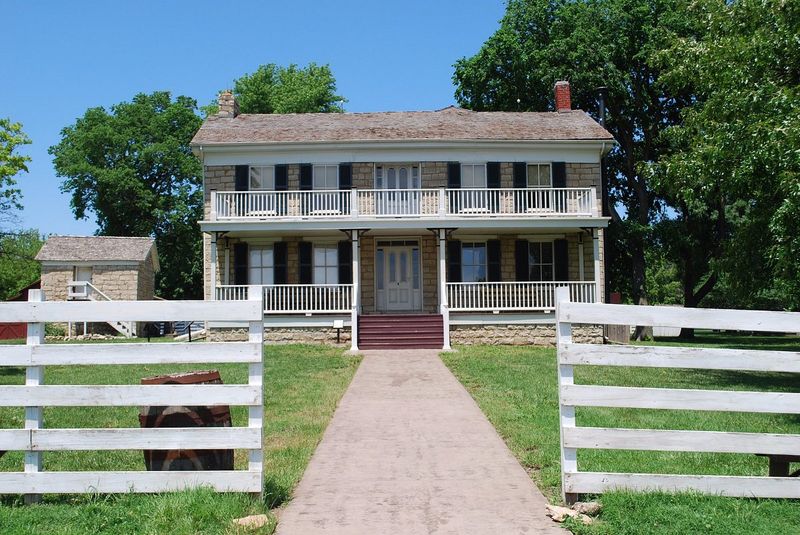
Behind every great historic site is a family whose story makes it personal.
James and Lucinda Mahaffie established this farm around 1858, and by the early 1860s it had grown into one of the busiest stagecoach stops along the Santa Fe Trail route through Kansas.
James Mahaffie was a savvy entrepreneur who recognized that travelers needed food, rest, and fresh horses.
The farm served meals to passengers and provided overnight lodging, making it an essential hub on a grueling journey across the plains.
Lucinda and her children carried much of the daily workload, cooking enormous meals and managing the household while the trail traffic rolled through.
Their story is not just about history in the abstract. It is about a real family navigating the chaos and opportunity of frontier life, and that human dimension is exactly what makes this site so compelling to explore.
Stagecoach Rides Are Still Available For Visitors
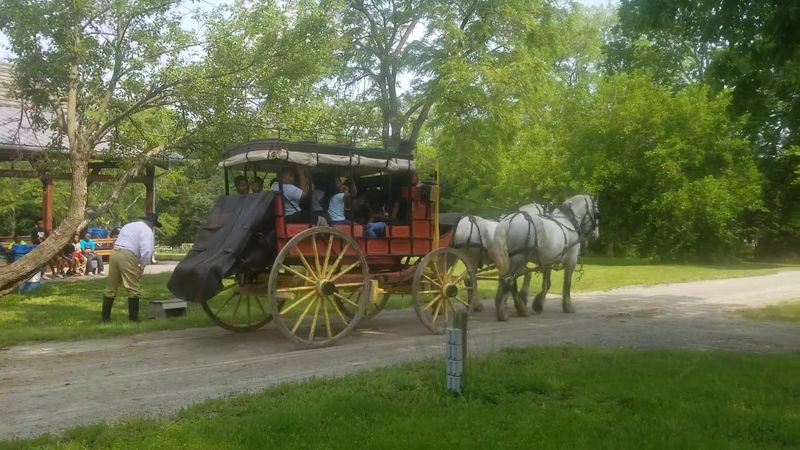
Not many history museums let you climb aboard a stagecoach and actually go for a ride, but the Mahaffie Stagecoach Stop & Farm Historic Site does exactly that.
Seasonal stagecoach rides give visitors a firsthand feel for how bumpy and cramped frontier travel truly was.
It is easy to romanticize stagecoach journeys when reading about them in books, but sitting inside one of these wooden carriages as it rolls across uneven ground tells a very different story.
Passengers in the 1800s endured hours, sometimes days, of this kind of travel with their luggage piled on top and strangers pressed in on all sides.
The rides at Mahaffie are short and supervised, making them perfectly safe and enjoyable for kids and adults alike.
It is one of those rare hands-on experiences that turns a historical fact into something you can actually feel in your bones.
The Farm Operates As A Living History Museum
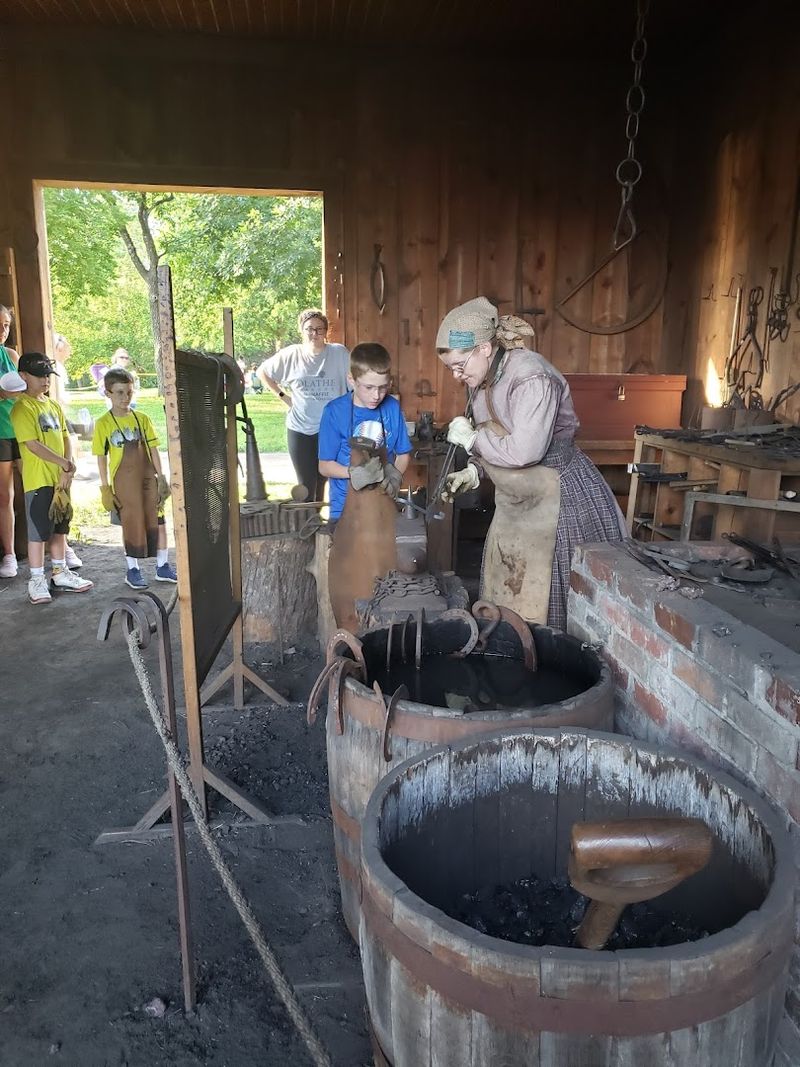
Walking into the Mahaffie Stagecoach Stop & Farm Historic Site feels less like entering a museum and more like stepping through a time portal.
On living history days, staff and volunteers dress in 1860s clothing and demonstrate real frontier skills during scheduled activities.
Blacksmithing, cookstove demonstrations, hand laundry, and other seasonal farm chores are just a few of the interpretations that bring this farm to life. These are not daily guarantees.
They are carefully presented glimpses of the daily physical labor that kept frontier households running smoothly.
Living history museums like this one are rare because they require a significant commitment from both the staff and the site itself.
Everything from the tools to the techniques is researched for accuracy, which means visitors walk away with a much deeper understanding of 19th-century life than they would get from reading a wall plaque.
The farm truly earns its living history title.
Hands-On Activities Make Learning Fun For All Ages
One of the things that sets this site apart from a typical museum is just how much you can actually do.
Visitors can grind corn, make chicken feed, play games from the 1800s, learn how laundry was done without a washing machine, and interact with the farm animals roaming the grounds.
These activities are especially popular with school groups and families, but adults tend to get just as absorbed in them.
There is something genuinely satisfying about trying to do a chore the old-fashioned way and realizing very quickly how much effort it required every single day.
The Mahaffie Stagecoach Stop & Farm Historic Site is designed so that learning happens through doing rather than just observing. That approach works remarkably well for all ages.
Kids who might zone out during a standard lecture find themselves completely engaged when they are the ones doing the grinding, feeding, and playing.
The Farmstead Is Home To Real Livestock
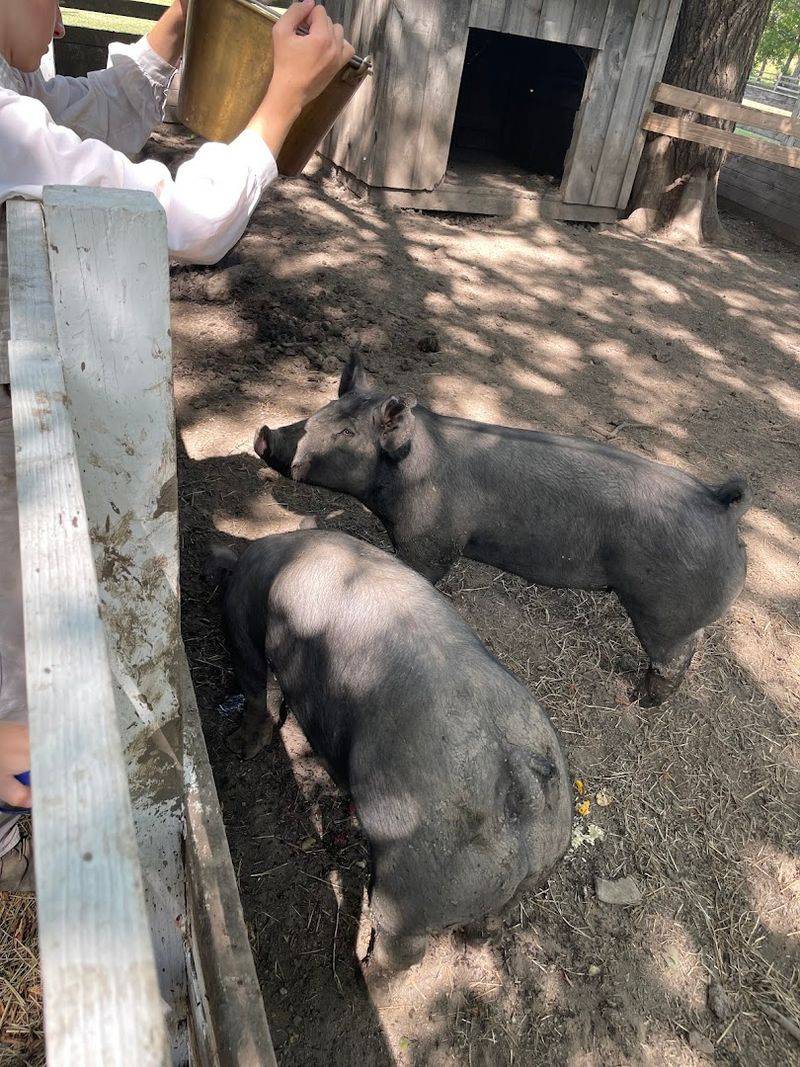
History feels a lot more alive when there are animals involved.
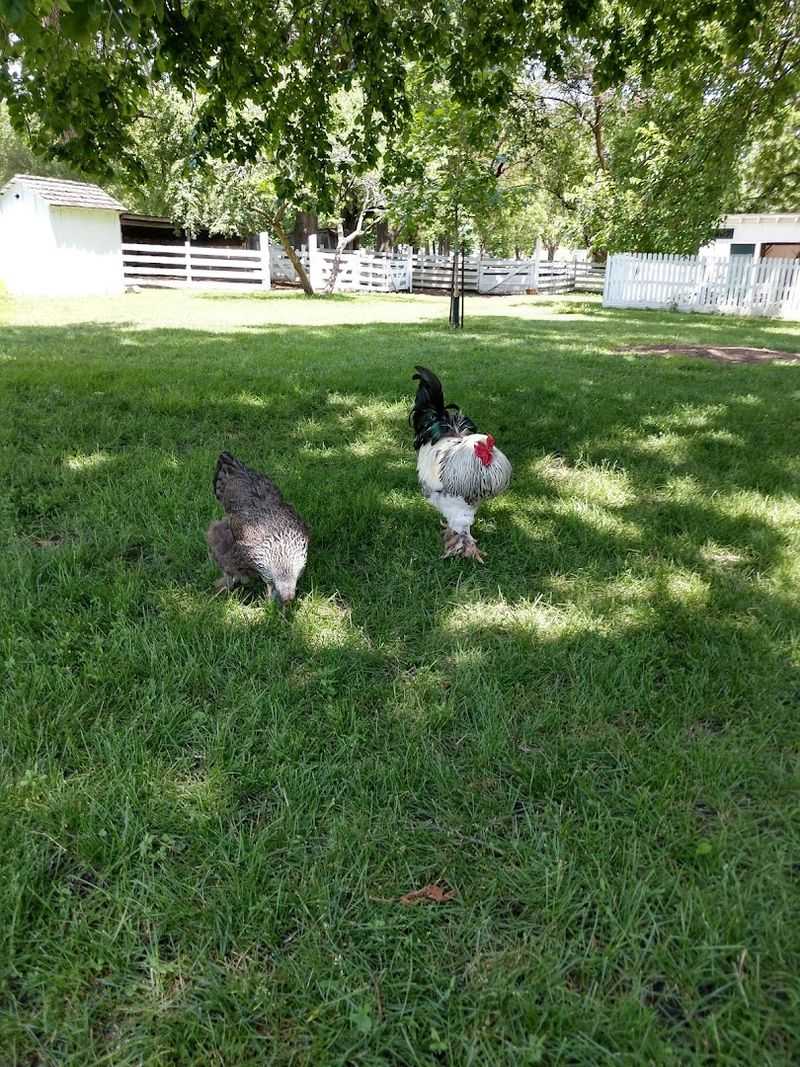
The grounds at Mahaffie are home to horses, sheep, chickens, and other era-appropriate livestock, all of which are well cared for and accessible to visitors in a way that feels natural rather than zoo-like.
For many young visitors, seeing the horses or watching chickens scratch around the yard is an absolute highlight.
Farm animals were central to 19th-century life, providing food, labor, transportation, and materials like wool and leather, so their presence here is historically accurate as well as undeniably charming.
The animals also add a layer of unpredictability that keeps every visit slightly different from the last. You never quite know which critter will be out and visible.
For families traveling with young children, this combination of history and animals makes the Mahaffie site a genuinely memorable stop that kids will talk about long after the drive home.
Special Events Throughout The Year Add Extra Excitement
Beyond the regular farm experience, the Mahaffie Stagecoach Stop & Farm Historic Site hosts a rotating calendar of special events that draw visitors back throughout the year.
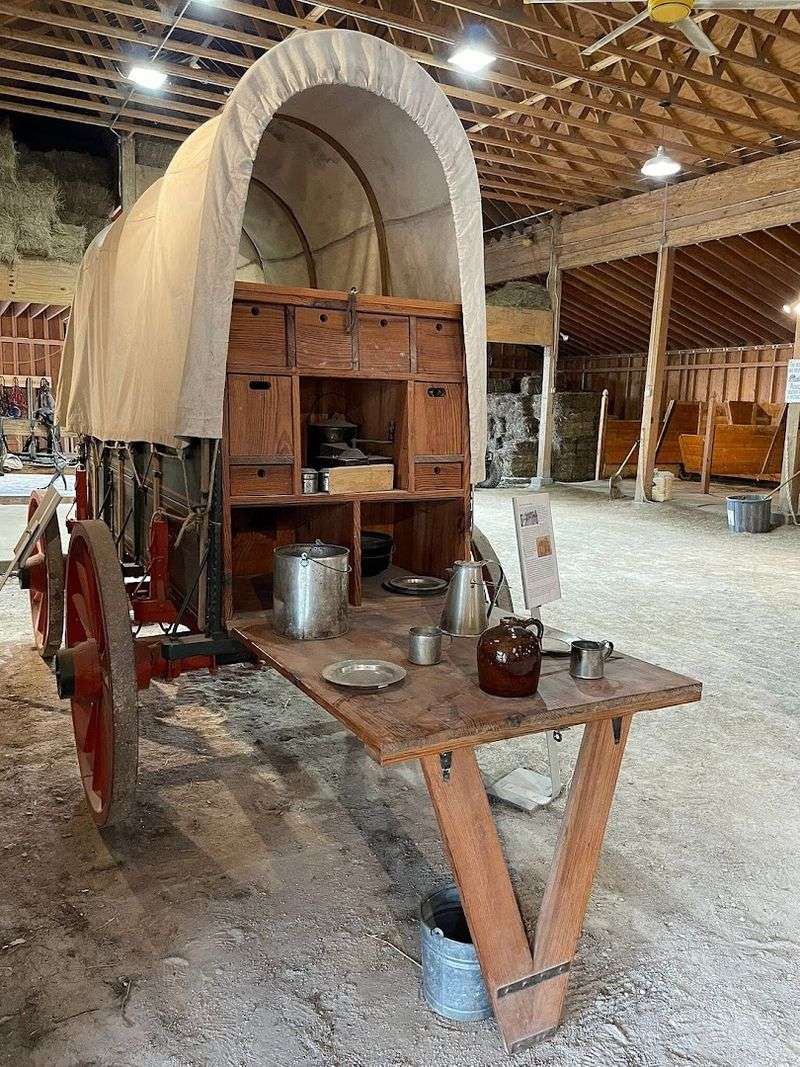
From July 4 living history to Chuckwagon Cookoffs and sorghum harvests, there is often something extra happening on the grounds.
The Chuckwagon Cookoff is a particular crowd favorite, bringing together wagon teams and historic food traditions in a setting that fits the site perfectly.
Visitors can enjoy the atmosphere while seeing how food, work, and travel connected on the Kansas frontier.
Seasonal events like Christmas programs and open-house activities add yet another memorable dimension to the site, making it a place well worth returning to across different times of year.
Each event is designed to highlight a specific aspect of 19th-century life, so every visit adds new context and new memories to your understanding of frontier Kansas.
The Historic Stone Farmhouse Is A Architectural Treasure
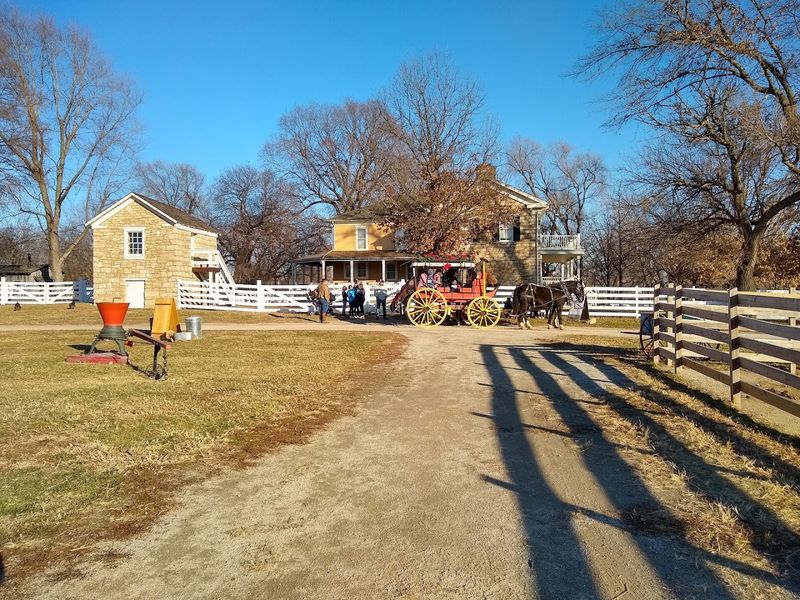
The main farmhouse at this site is a striking piece of 19th-century Kansas architecture.
Built from locally quarried limestone, it was designed to be both practical and durable, and it has held up remarkably well for a structure that has been standing since the 1860s.
Touring the interior reveals period-accurate furnishings, kitchen equipment, and personal items that paint a vivid picture of daily life for the Mahaffie family.
The basement kitchen, in particular, draws a lot of attention because it shows how food preparation worked before modern appliances existed.
Limestone construction was common in this part of Kansas because timber was scarce on the open prairie.
The builders had to work with what the land provided, and the result is a farmhouse that feels rooted in its landscape in a way that modern buildings rarely achieve.
Architecturally and historically, this structure alone is worth the trip to Olathe.
The Site Connects Kansas History To A Broader National Story
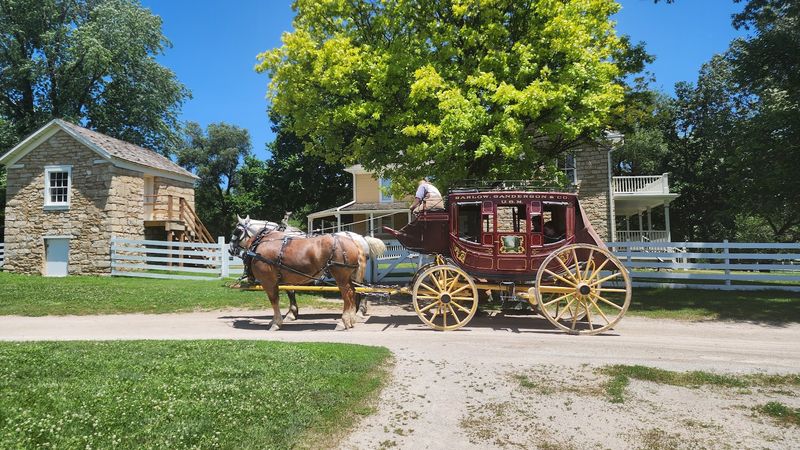
The Santa Fe Trail was not just a Kansas story. It was a thread in the larger fabric of American westward expansion, connecting commerce, culture, and communities across a vast stretch of the continent.
The Mahaffie Stagecoach Stop & Farm Historic Site puts visitors right at the center of that narrative.
The Heritage Center includes exhibits about the Mahaffie family, early Olathe and Johnson County, the western trails, stagecoach travel, and the Border War era.
Those local stories and interpretive videos add emotional depth to what could otherwise feel like dry historical data for modern visitors today.
Understanding how a single farmstead in Olathe fits into the story of an entire nation is one of the more quietly powerful things this site accomplishes.
It reminds visitors that big history is always made up of small, specific, human-scale moments, and that places like this one are where those moments actually happened on Kansas soil long ago.
Practical Visitor Information For Planning Your Trip
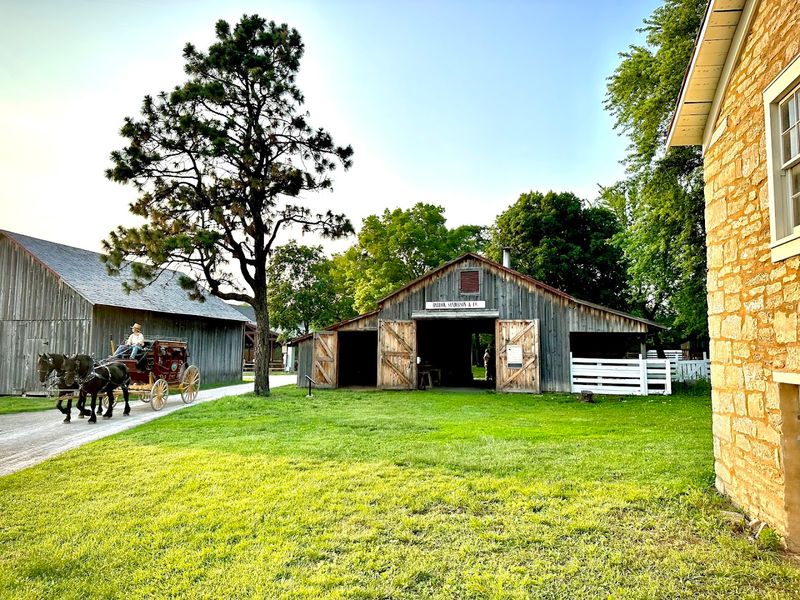
Planning a trip to the Mahaffie Stagecoach Stop & Farm Historic Site is straightforward, and the site is very family-friendly.
The farm is located at 1200 E Kansas City Rd, Olathe, KS 66061, and is open Monday through Saturday from 10 AM to 4 PM, with Sundays closed.
Admission is considered very affordable for what the experience delivers, and the covered pavilion with picnic tables makes it easy to pack a lunch and spend a full afternoon on the grounds.
There is also a gift shop and a small but well-curated museum near the entrance.
If you happen to be driving through the Kansas City area, this is one of those stops that consistently rewards visitors with more than they expected to find.