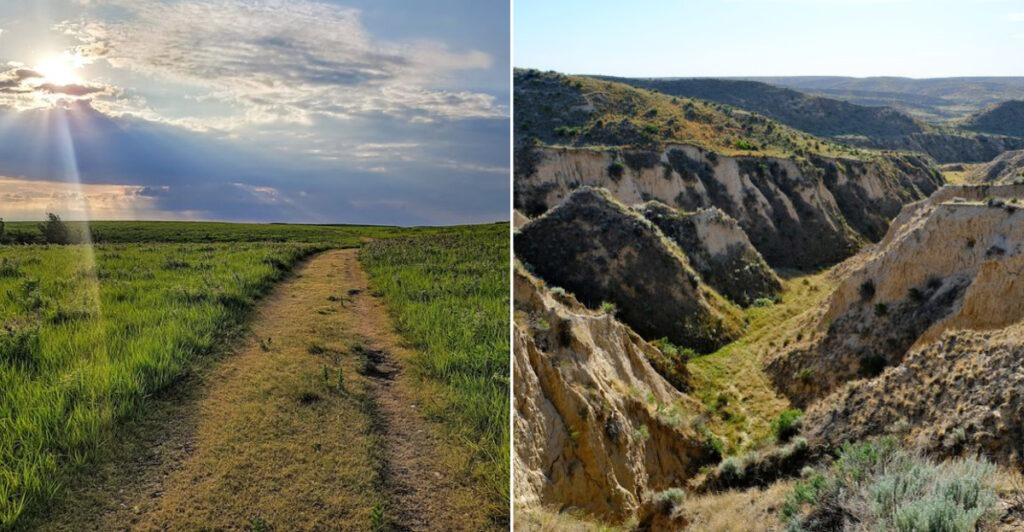
Kansas gets underestimated by people who have only pictured it from a distance. Then the landscape shifts, the horizon changes shape, and suddenly every lazy assumption starts falling apart.
This state has scenery that can feel rugged, strange, wide-open, peaceful, dramatic, and completely unexpected, sometimes all in the same trip. That is what makes these places so exciting.
They do not match the flat, one-note version people imagine. They prove Kansas has cliffs, wetlands, prairies, canyons, lakes, trails, and views with real personality.
A good landscape should make you look twice, and these spots do exactly that.
I love destinations that catch me being confidently wrong, because nothing makes a road trip more satisfying than realizing a place had way more range than I gave it credit for.
1. Monument Rocks / Chalk Pyramids, Oakley Area, Kansas
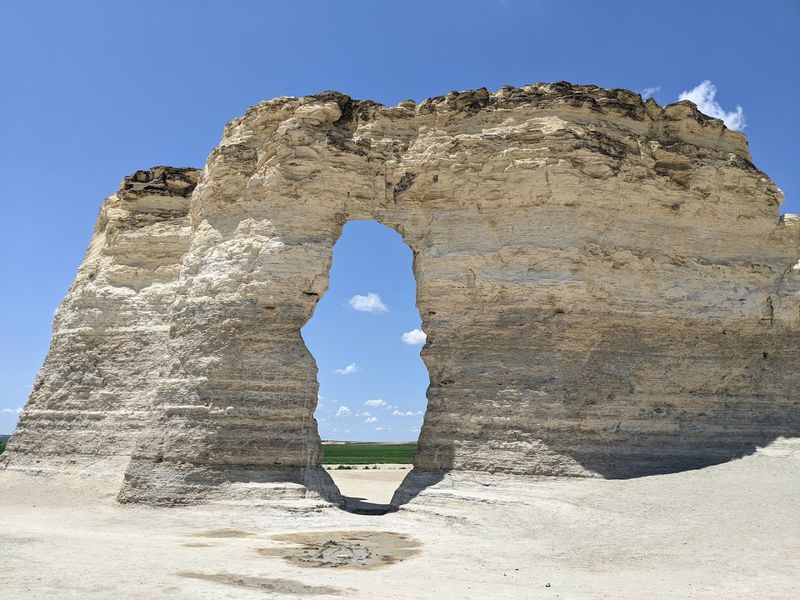
Rising straight out of the Kansas plains like something from a prehistoric dream, Monument Rocks stands as one of the most jaw-dropping natural landmarks in the entire state.
Chalk formations near Oakley stretch to about 50 feet high and were shaped from sediments left by an ancient inland sea that once covered the Great Plains millions of years ago.
Fossils of mosasaurs, plesiosaurs, pterosaurs, ancient fish, clams, and other marine animals are tied to these chalk beds, which makes a visit feel equal parts scenic and scientific.
Monument Rocks sits on private land, but landowners allow public access free, which makes it one of Kansas’s most generous surprises.
The best light hits the chalk pyramids during golden hour, when the warm tones make the formations glow against the open sky.
Standing at the base of Monument Rocks, you quickly realize that Kansas has been quietly holding onto something extraordinary all along.
2. Little Jerusalem Badlands State Park, Oakley Area, Kansas
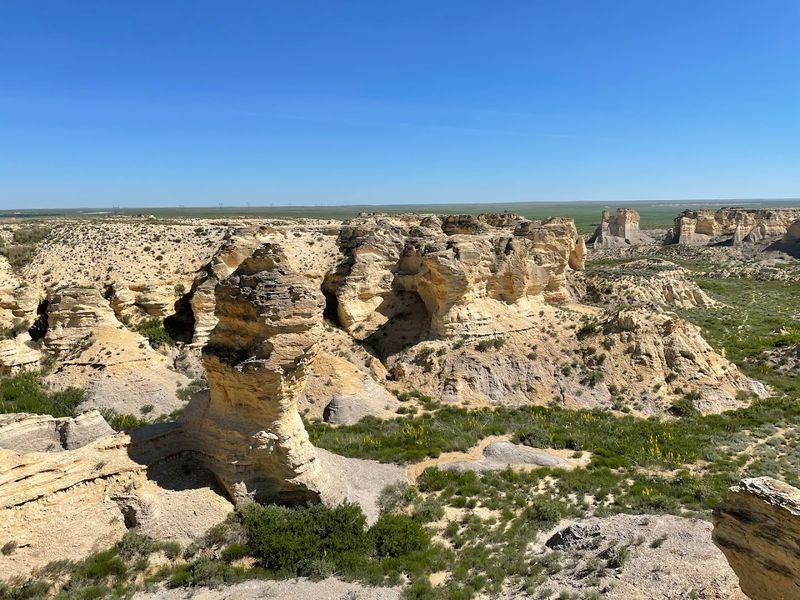
Just a short drive from Monument Rocks, Little Jerusalem Badlands State Park packs an incredible visual punch for a place that opened to the public in 2019.
The park protects the largest remaining exposure of Niobrara Chalk in Kansas, and the jagged white spires scattered across the landscape give the area a surreal, almost otherworldly character.
Little Jerusalem Badlands earned its name because early settlers thought the skyline of chalk formations looked like the ancient city of Jerusalem on the horizon.
Crushed-rock and natural-surface trails wind through the park, making it possible to explore without disturbing the fragile geology underfoot.
Birdwatchers may spot ferruginous hawks, rock wrens, and Say’s phoebes around the chalk cliffs, adding a wild energy to an already striking scene.
Little Jerusalem Badlands is proof that Kansas keeps finding new ways to rewrite its own story, one breathtaking formation at a time.
3. Mushroom Rock State Park, Brookville, Kansas
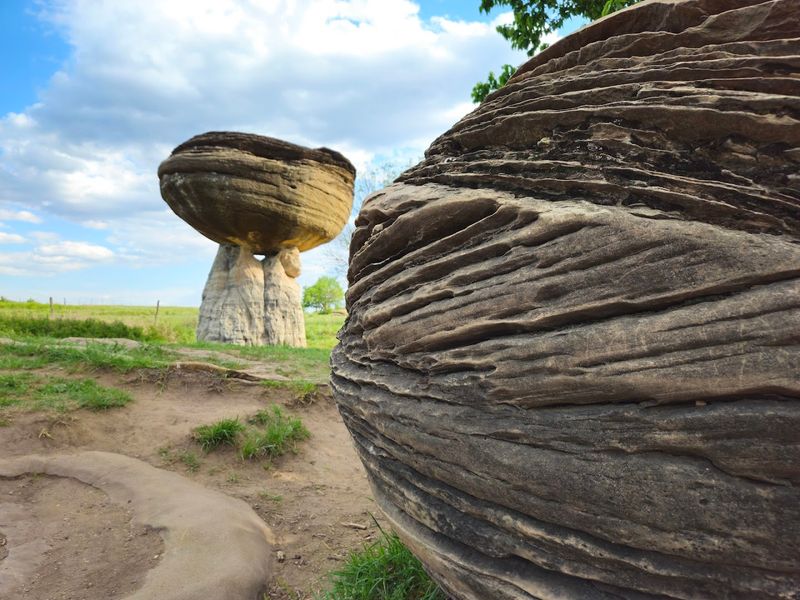
Forget everything you thought you knew about Kansas geology, because Mushroom Rock State Park near Brookville is serving up some of the most wonderfully strange rock shapes you will ever see.
The park features massive sandstone concretions that have been sculpted by centuries of wind and water erosion into unmistakable mushroom shapes, with wide caps balanced on narrower bases.
Mushroom Rock State Park is actually one of the smallest state parks in Kansas, covering just five acres, yet it draws visitors from all over the country.
The largest rock here measures about 27 feet across, which is genuinely impressive for a formation that nature built entirely on its own schedule.
Historically, Native Americans and early pioneers used these rocks as meeting places and landmarks, including famous western travelers John C. Fremont and Kit Carson.
Mushroom Rock State Park rewards visitors who appreciate the quiet magic of geology doing something completely unexpected in the middle of the Kansas plains.
4. Rock City Park, Minneapolis, Kansas
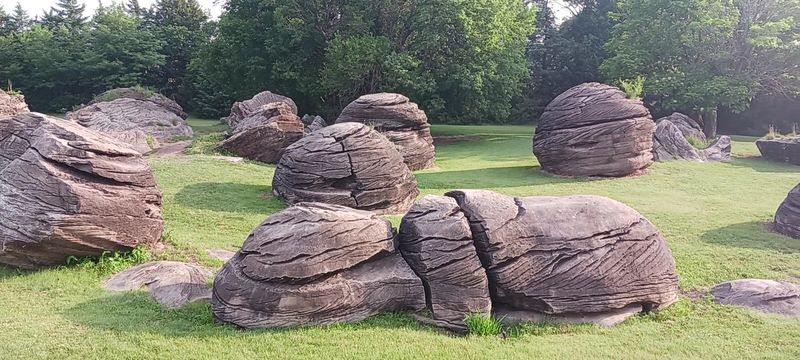
Scattered across a rolling hillside near Minneapolis, Kansas, Rock City Park looks like a giant left a bag of enormous marbles behind and never came back for them.
The park contains roughly 200 spherical Dakota sandstone concretions, some reaching up to 20 feet in diameter, making it one of the most concentrated collections of this type of formation anywhere on Earth.
Rock City Park is a National Natural Landmark, which means scientists and geologists agree that this place is genuinely one of a kind.
The boulders formed roughly 100 million years ago when groundwater deposited limy cement in ancient seabed sand, creating rounded shapes more resistant to erosion over time.
Visitors can walk among the boulders, explore the grounds, and enjoy the unusual scale up close, which gives the park a relaxed, discovery-driven atmosphere that kids especially love.
Rock City Park makes it very hard to argue that Kansas is anything less than geologically fascinating.
5. Tallgrass Prairie National Preserve, Strong City, Kansas
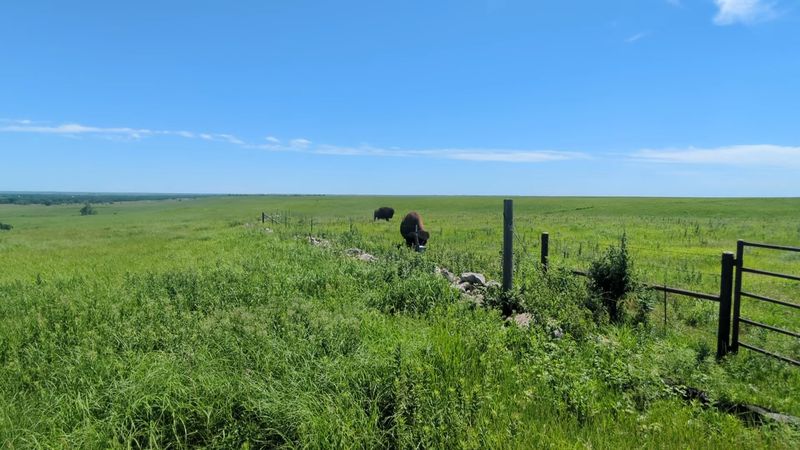
There is a kind of quiet power in standing at the center of the Tallgrass Prairie National Preserve near Strong City, with grass stretching to every horizon and the wind moving through it like a slow, steady breath.
This preserve protects one of the last remaining large tracts of tallgrass prairie on Earth, a landscape that once covered 170 million acres of North America but has since been reduced to less than four percent of its original range.
The grasses here can grow taller than a person, and the biodiversity hiding within them is staggering, with hundreds of plant species, bison herds, and over 150 bird species calling the preserve home.
Tallgrass Prairie National Preserve also includes a historic 1881 ranch house and stone barn, adding a layer of human history to the natural grandeur.
Hiking the trails here at sunrise, when the light turns the grasses amber and gold, is the kind of experience that quietly resets your perspective on what beauty looks like.
6. Konza Prairie Biological Station, Manhattan, Kansas
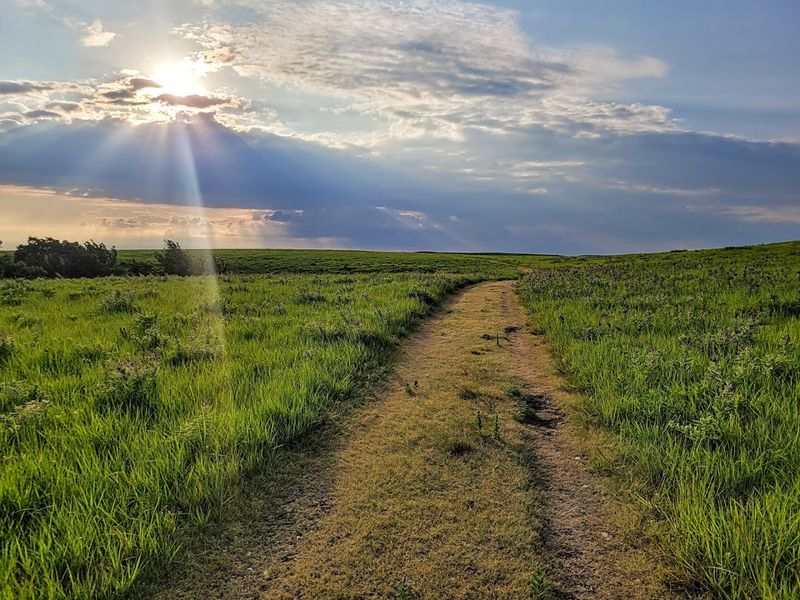
Located just south of Manhattan, Kansas, Konza Prairie Biological Station is one of the most important grassland research sites in the world, and it also happens to be strikingly beautiful.
The preserve covers nearly 8,600 acres of native tallgrass prairie in the Flint Hills region, where the rocky limestone soil made farming difficult and inadvertently saved the prairie from being plowed under.
Konza Prairie is managed through a combination of controlled burns and bison grazing, both of which are essential tools for keeping the ecosystem healthy and authentic.
Public hiking trails wind through the preserve, offering views of rolling hills, seasonal wildflowers, and the kind of open sky that makes you feel genuinely small in the best possible way.
Spring is particularly spectacular at Konza Prairie, when the post-burn landscape erupts in fresh green growth and the wildflowers begin their colorful takeover of the hillsides.
Konza Prairie is where science and scenery shake hands, and both come out looking impressive.
7. Kanopolis State Park, Marquette, Kansas
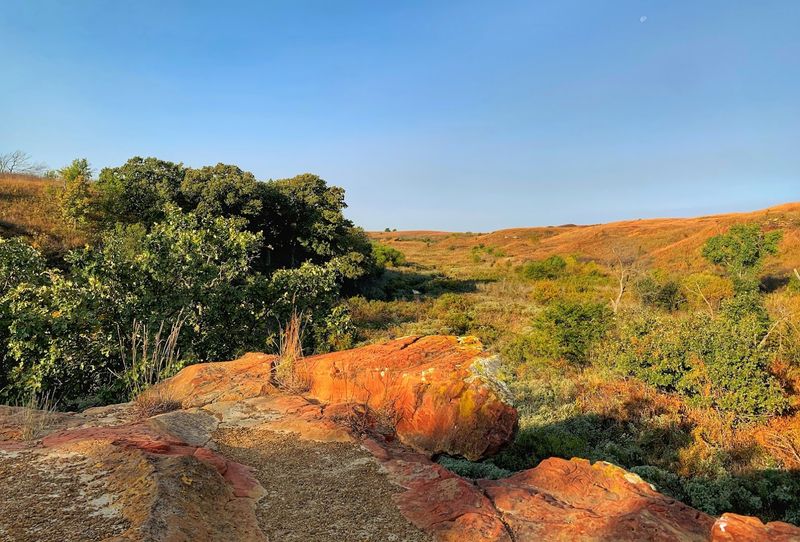
Red sandstone canyons, cedar-lined trails, and a sparkling reservoir make Kanopolis State Park near Marquette one of the most visually diverse outdoor destinations in Kansas.
Kanopolis is the first state park in Kansas, and it has been quietly delivering spectacular scenery to those willing to explore its more than 30 miles of trails and nearby wildlife-area routes.
The canyon walls here glow a deep rust-red color, especially in afternoon light, and the contrast against the green cedars and blue sky creates a scene that feels more like Utah than central Kansas.
Horseback riding is a beloved tradition at Kanopolis State Park, and the trail system is open to hikers, mountain bikers, and riders without crowding every group.
The nearby Kanopolis Reservoir adds a water element to the experience, with fishing, boating, and swimming all available for visitors who want more than just a hike.
Kanopolis State Park is the kind of place that locals keep to themselves just a little too successfully.
8. Elk City State Park, Independence, Kansas
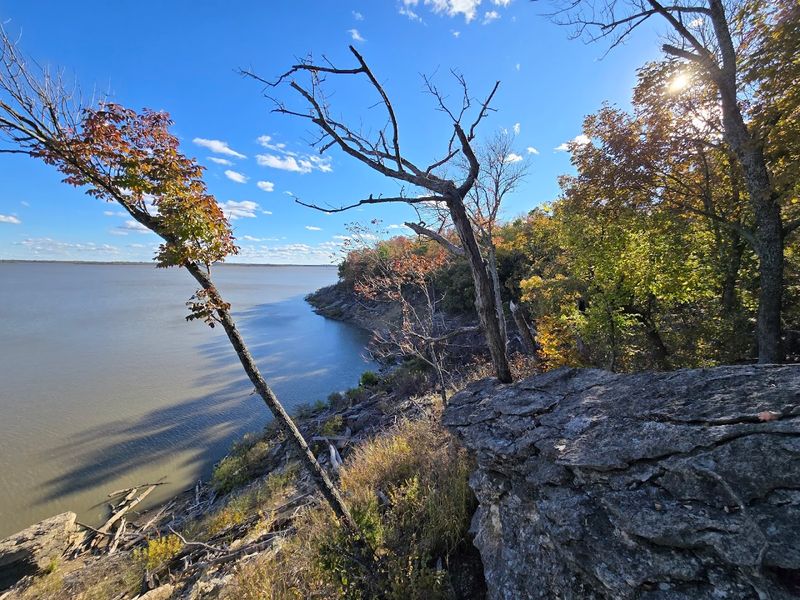
Tucked into the southeastern corner of Kansas near Independence, Elk City State Park offers a forested, lake-centered landscape that surprises nearly everyone who visits for the first time.
The park sits on the east shore of Elk City Reservoir, a 4,500-acre lake that serves as the centerpiece for swimming, fishing, kayaking, and paddling through calm coves.
Elk City State Park brings dense oak and hickory woodlands together with rolling native-grass meadows, creating a wooded landscape that feels more like the Ozarks than the open Great Plains.
The 15-mile Elk River Hiking Trail is one of the most celebrated backpacking routes in Kansas, winding from the dam toward the US-160 bridge with rewarding views along the way.
Fall is genuinely stunning here, when the hardwood forest shifts into deep reds and oranges that reflect off the still surface of the lake below.
Elk City State Park is southeastern Kansas doing its very best impression of a woodland paradise, and the impression holds up beautifully.
9. Wilson State Park, Sylvan Grove, Kansas
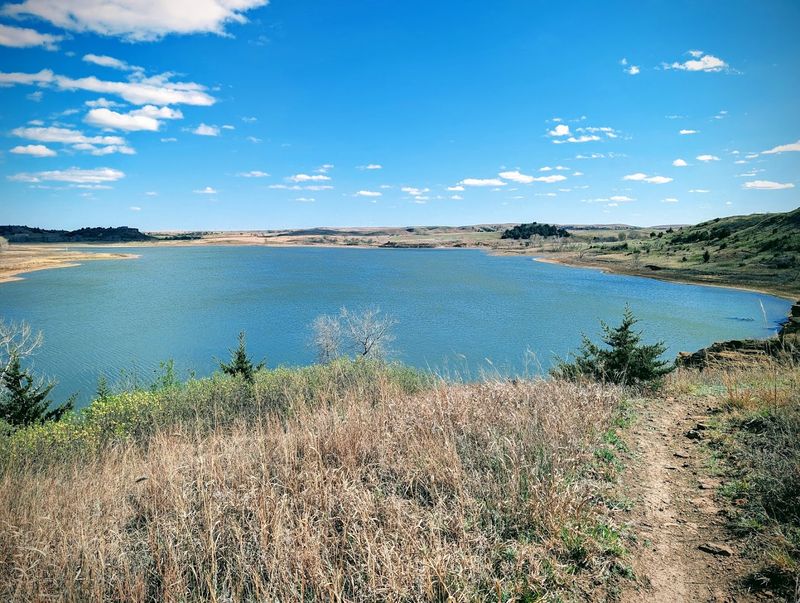
Wilson State Park near Sylvan Grove sits on the shore of Wilson Reservoir, a Smoky Hills lake widely considered one of the most scenic places in Kansas today overall, period.
The reservoir’s striking color and rugged shoreline stand out, while surrounding cliffs, rocky outcrops, and cedar-covered hills create a dramatic backdrop that photographers absolutely love.
Wilson Reservoir is also known for fishing, with current state information listing striped bass and walleye among notable targets, and the open water remains popular with boaters and wind-loving visitors.
Wilson State Park offers several distinct camping areas, each with its own character, from shaded woodland spots to open lakeside sites with direct water views.
The rugged terrain around the park includes hiking trails that climb above the shoreline and deliver panoramic views of the lake and the surrounding Smoky Hills landscape.
Wilson State Park is the kind of place where you show up for a weekend and start rearranging your schedule to stay just a little bit longer.
10. Cheyenne Bottoms Wildlife Area, Great Bend, Kansas
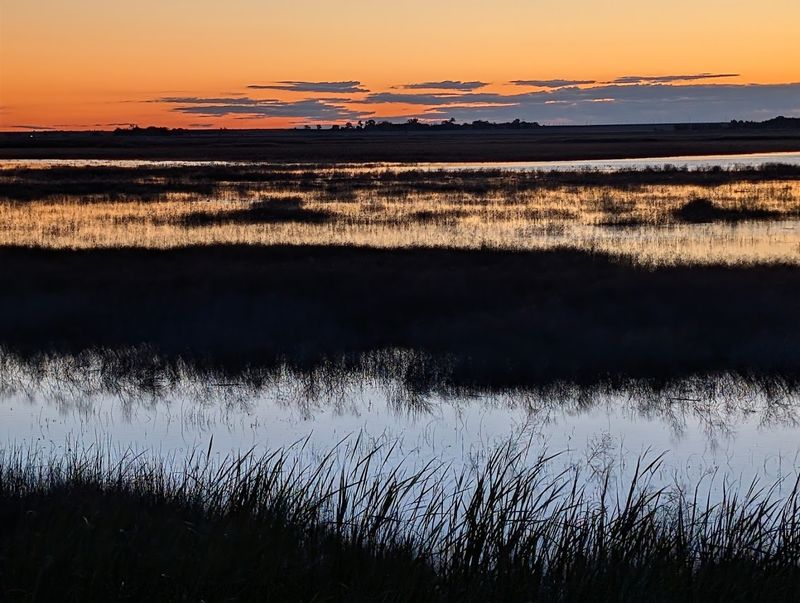
Every spring and fall, Cheyenne Bottoms Wildlife Area near Great Bend transforms into one of the most important bird migration stopovers in the Western Hemisphere, and the spectacle is genuinely hard to put into words.
The broader Cheyenne Bottoms basin covers more than 41,000 acres, with over 28,000 acres managed by Kansas wildlife officials and The Nature Conservancy along the important Central Flyway route.
Cheyenne Bottoms has been designated a Wetland of International Importance under the Ramsar Convention, which puts it in the company of some of the most ecologically significant places on the planet.
At peak migration, the skies above Cheyenne Bottoms fill with massive flocks of sandpipers, dowitchers, waterfowl, and other birds that move like living clouds across the horizon.
Even outside of migration season, the wetlands offer excellent wildlife viewing, with deer, coyotes, and great blue herons making regular appearances along the viewing roads.
Cheyenne Bottoms is Kansas doing something truly global from a very quiet corner of the Great Plains today.
11. Gypsum Hills Scenic Byway, Medicine Lodge Area, Kansas
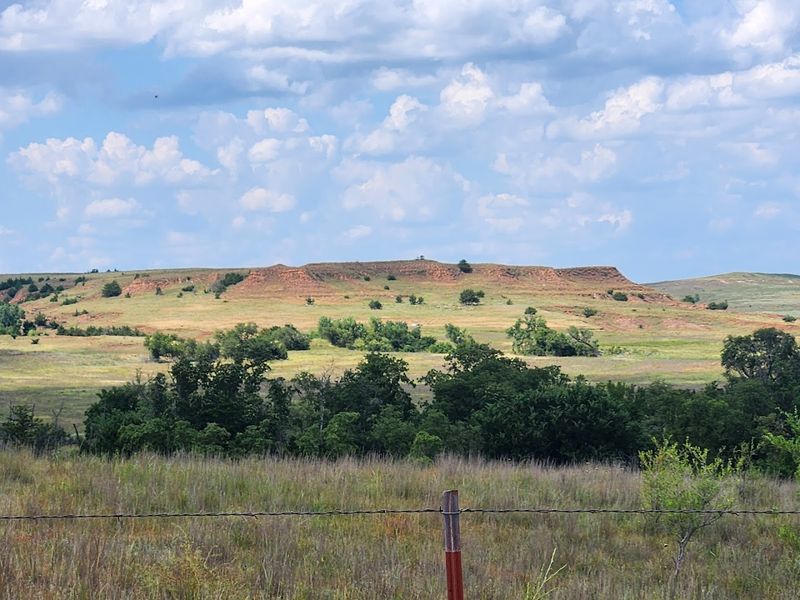
The Gypsum Hills Scenic Byway near Medicine Lodge runs through a landscape so rugged and red that first-time visitors often pull over just to make sure they are still in Kansas.
This 42-mile route winds through a terrain of cedar-covered mesas, red clay hills, buttes, and gypsum-capped formations that glow in shades of crimson and amber, especially during golden hour before sunset.
The Gypsum Hills region is sometimes called the Red Hills, and the nickname is well earned, as red soil and rocks give everything here a warm, fiery tone that shifts with the light throughout the day.
Longhorn cattle still roam some of the ranches along the byway, adding an authentic working-West character to the scenic drive that no theme park could replicate.
Streams and draws cut through parts of this landscape, and the combination of water, cedar, and red rock creates pockets of surprising beauty around nearly every bend.
The Gypsum Hills Scenic Byway is the road trip Kansas never fully advertised, which somehow makes it even better.
12. Arikaree Breaks, St. Francis Area, Kansas
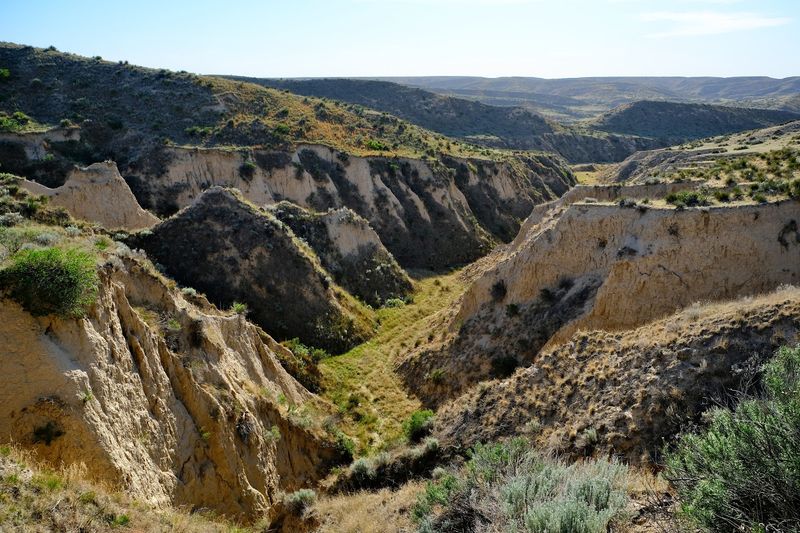
Out in the far northwestern corner of Kansas near St. Francis, the Arikaree Breaks cut through the otherwise flat High Plains in a way that feels like the land suddenly decided to do something unexpected.
The Breaks are a series of eroded gullies, ravines, and rock formations shaped from loess deposits and erosion, creating a dramatic, rumpled terrain unlike anything in the state.
The Arikaree Breaks region supports a surprising range of wildlife, including swift foxes, mule deer, prairie rattlesnakes, and a wide variety of grassland birds that thrive in the broken terrain.
This area stretches along the extreme northern edge of Cheyenne County and represents one of the most remote and least-visited landscapes in all of Kansas, which gives it a raw, undiscovered quality that travelers find appealing.
Access requires navigating public county roads through mostly private ranch land, so checking current access information and respecting fences before visiting is strongly recommended.
The Arikaree Breaks reward those willing to seek them out with a version of Kansas that most people never knew existed.