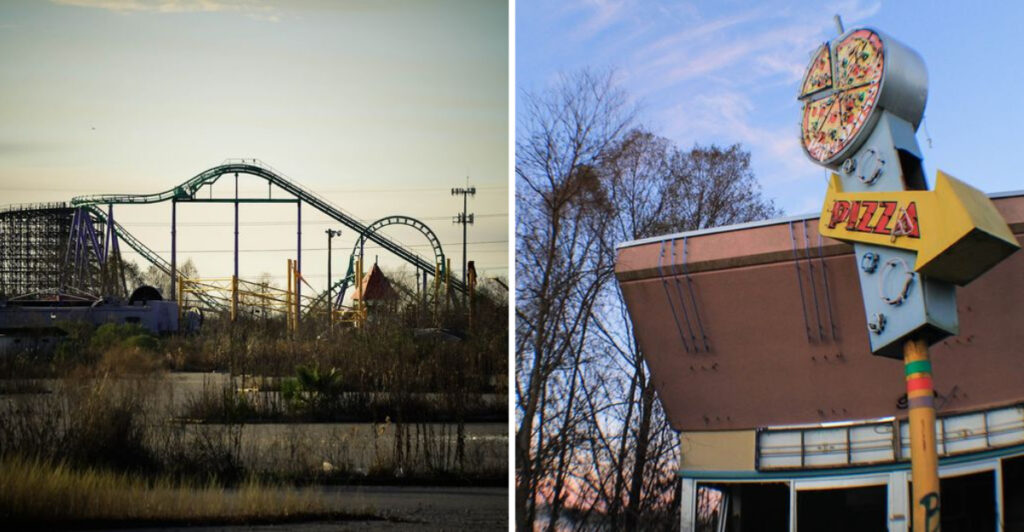
Long after the ticket booths went quiet, the twisted ride structures here kept holding their ground against the sky. In Louisiana, this abandoned park still looks like a place that expects people back any minute, which is exactly what makes it so hard to forget.
Nature has slowly moved in, softening edges and changing the look of something that once felt full of energy and noise. It is not just empty space.
It feels like something paused rather than finished. The scale alone makes it impossible to ignore, stretching far beyond what most people expect to find sitting unused for this long.
Louisiana has seen its share of change, and this site has become one of its most talked-about reminders of what can happen when plans shift and time takes over. Now, something new may finally begin to take shape here.
The Origin Story
Before the rust and the silence, this place had a real heartbeat. Jazzland opened its gates in May 2000 as a Louisiana-themed amusement park, designed to celebrate the culture and spirit of New Orleans with rides, music, and Southern flair.
The park sat on a sprawling 140-acre plot in eastern New Orleans, a part of the city that was still growing and full of promise at the time.
Families from across Louisiana and neighboring states made the trip, eager to check out the newest addition to the regional entertainment scene.
Just two years after opening, the park struggled financially and was purchased by Six Flags in 2002, rebranding as Six Flags New Orleans. New rides were added, and attendance picked up for a short while.
It felt like the park had found its footing. What nobody could have predicted was that a single catastrophic storm would shut everything down just three years later, leaving the whole place locked in an eerie standstill.
The park is located at 12301 Six Flags Pkwy, New Orleans, LA 70129.
Hurricane Katrina Changed Everything
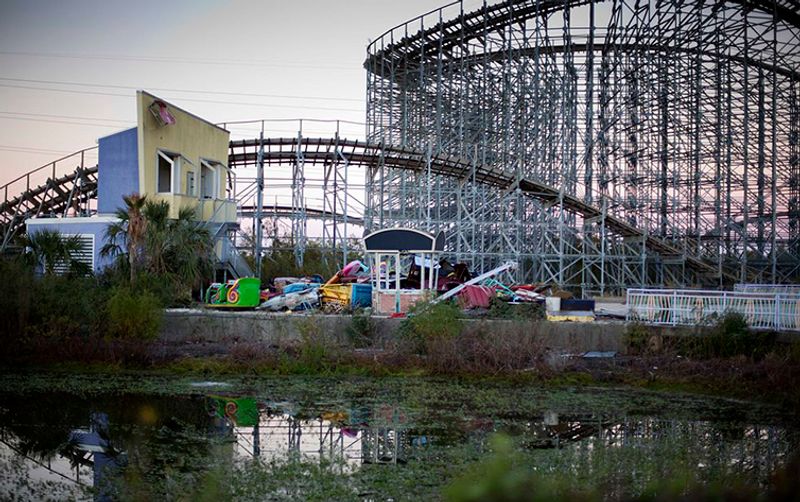
August 2005 brought Hurricane Katrina crashing into Louisiana, and very little in its path was left unchanged. The Six Flags New Orleans park sat in one of the lowest-lying areas of eastern New Orleans, and floodwaters reached as high as seven feet inside the park grounds.
The water lingered for weeks, soaking deep into every structure, every ride motor, every electrical panel, and every painted surface.
By the time the floodwaters receded, the damage was so severe that Six Flags officially abandoned the site and terminated its lease with the city of New Orleans.
The company cited the impossible cost of rebuilding, and the city was left holding a massive, waterlogged property with no clear plan. What followed was nearly two decades of negotiations, failed development deals, and a whole lot of waiting.
The park became a symbol of post-Katrina struggles, representing both the destruction that hit Louisiana and the slow, complicated road toward recovery that followed.
The Eerie Beauty Of An Abandoned Park
There is something undeniably haunting about a place built for joy that now sits completely still.
The former Six Flags New Orleans site became one of the most visually striking abandoned locations in the United States, drawing urban explorers and photographers from around the world.
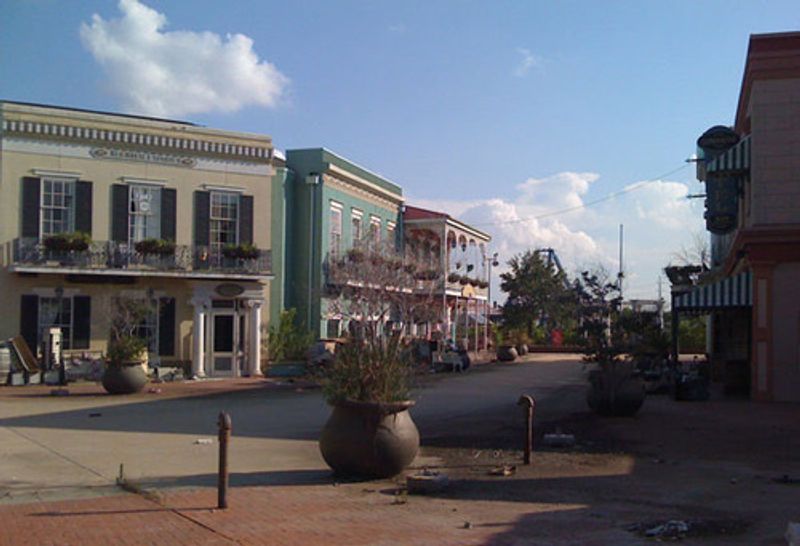
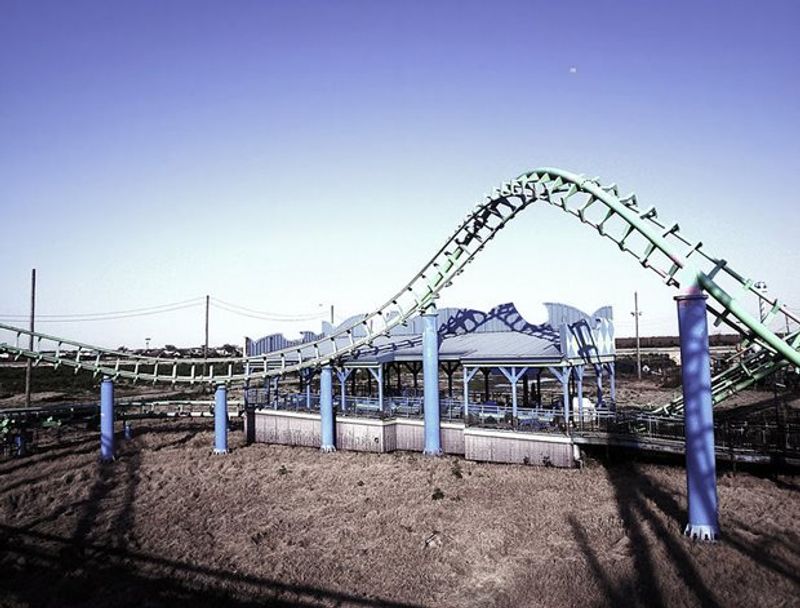
Roller coaster frames draped in vines, ticket booths peeling under the Louisiana sun, and faded murals barely visible beneath years of weather damage created a landscape that felt almost cinematic.
The site was so visually compelling that it was used as a filming location for several movies and television productions.
The contrast between the park’s original purpose and its current state gives it a unique kind of atmosphere. It does not feel like a typical ruin.
It feels like a story that got interrupted mid-sentence, and every crumbling structure is a chapter that never got finished.
The images captured here have circulated widely online for years.
Years Of Failed Redevelopment Plans
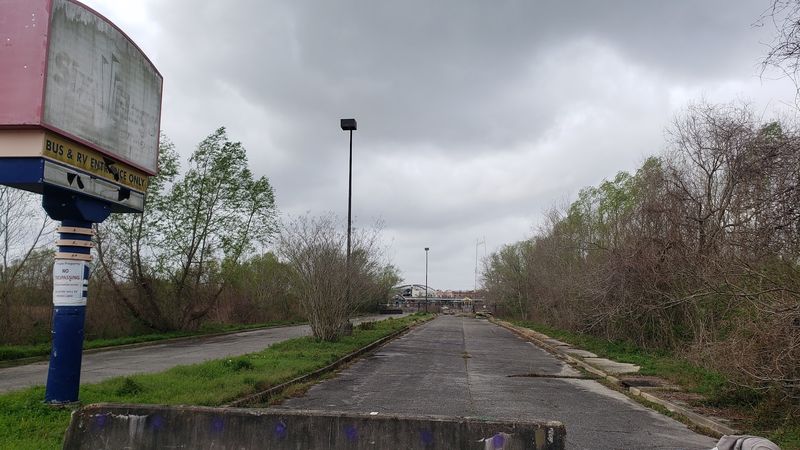
Getting this property back into productive use has proven far more difficult than anyone initially expected. Over the years, the city of New Orleans received numerous proposals for redeveloping the site, ranging from a new theme park to a shipping and logistics hub to a large-scale retail complex.
None of these plans ever moved past the proposal stage. Financing fell through, developers backed out, environmental assessments raised concerns, and the sheer scale of the cleanup required kept scaring off potential investors.
The city extended deadlines and renegotiated terms multiple times without a solid outcome.
For residents of eastern New Orleans, the stalled redevelopment became a source of real frustration.
The neighborhood surrounding the site had its own recovery challenges after Katrina, and the presence of a massive abandoned park did little to help attract new investment to the area.
Each failed proposal felt like another chapter in a very long book that nobody seemed able to finish. Progress always seemed to be just around the corner.
What The Site Looks Like Today
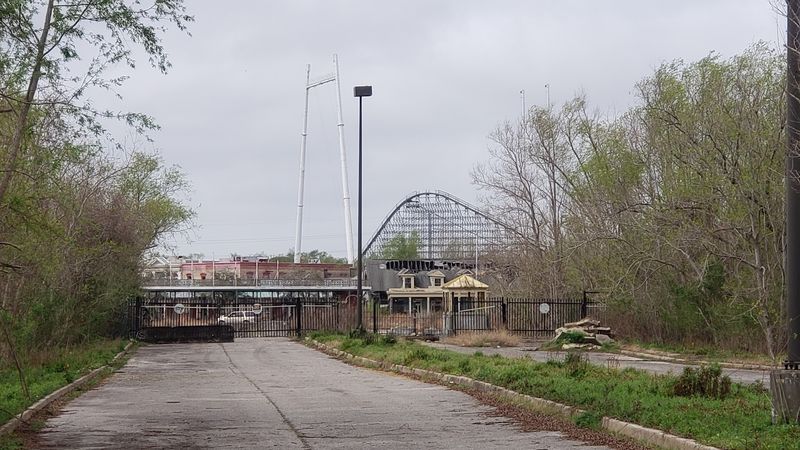
Time has been doing its own kind of work here. The roller coaster skeletons are still visible above the tree line, their orange and red paint long since faded to a dull, weathered brown.
Pavement that once carried thousands of visitors each day has cracked and buckled under years of Louisiana heat and humidity.
Vegetation has taken over large sections of the property, with tall grasses and young trees pushing up through what used to be pathways and parking lots.
Several of the larger ride structures remain largely intact from a distance, though up close the deterioration is obvious.
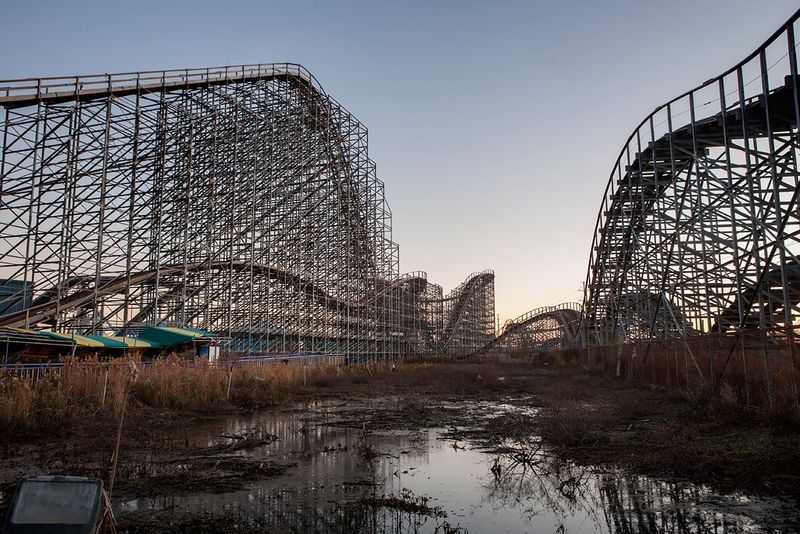
Metal has rusted through in many places, and the wooden components of older attractions have rotted significantly. The park’s signature structures, including the remains of the Mega Zeph wooden roller coaster, are still recognizable to anyone who visited during the park’s operating years.
Time has not been gentle here.
The Mega Zeph And Other Iconic Rides
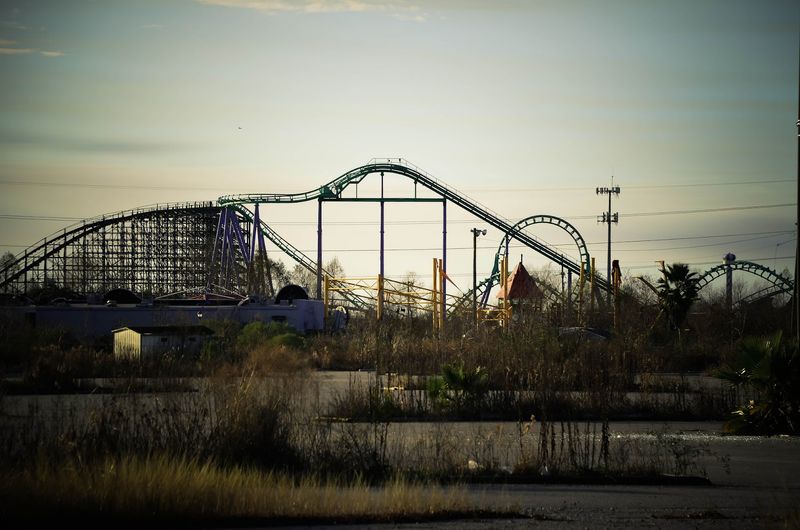
Among all the attractions that once operated at this park, the Mega Zeph wooden roller coaster held a special place in the hearts of Louisiana thrill-seekers.
Named as a nod to the legendary Zephyr coaster that once ran at Pontchartrain Beach, it was one of the largest wooden coasters in the region when it opened.
The ride featured steep drops and fast turns that made it a crowd favorite during both the Jazzland and Six Flags eras.
Today, its wooden structure still rises above the overgrowth, a ghostly reminder of the excitement it once delivered to thousands of riders.
Other notable rides included the Batman: The Ride steel coaster, which Six Flags installed after the rebranding, along with water rides, a Ferris wheel, and various family attractions scattered across themed zones. Most of these structures are now too deteriorated to be salvaged.
They stand as artifacts of a brief but memorable era in Louisiana amusement park history, frozen at the moment everything stopped.
The Transformation Plan That Has People Talking
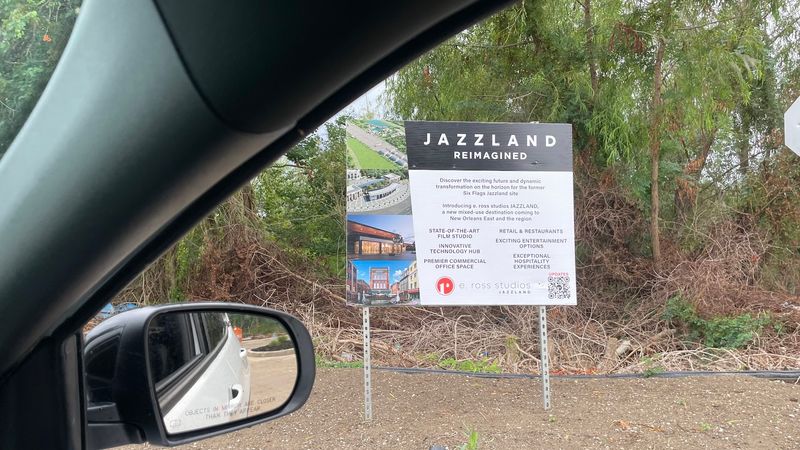
After nearly two decades of stalled plans and broken promises, a new proposal for the former Six Flags New Orleans site has generated more serious momentum than anything that came before it.
The project, backed by a development group with significant resources, envisions transforming the 140-acre property into a major mixed-use destination.
Plans reportedly include a combination of retail space, entertainment venues, residential units, and green public spaces.
The goal is to create something that serves the surrounding eastern New Orleans community directly, rather than just importing visitors from outside the area.
City officials in Louisiana have expressed cautious optimism, noting that this proposal appears more financially grounded than previous attempts.
Environmental remediation of the site would need to happen first, which adds both time and cost to the timeline. Still, the level of engagement from both public and private stakeholders feels different this time.
The conversation has shifted from “if” to “when,” and that alone represents a meaningful change in tone for a site that has waited so long.
What Eastern New Orleans Needs From This Site
The land does not exist in a vacuum. The neighborhoods surrounding the former Six Flags New Orleans site in eastern New Orleans have faced their own long recovery since Hurricane Katrina, and residents have strong opinions about what should replace the abandoned park.
Community members have consistently called for development that brings jobs, services, and amenities to an area that has historically been underserved compared to other parts of the city.
Community discussions around the site have emphasized everyday needs in New Orleans East, including better access to groceries, services, and youth recreation, even though the public redevelopment plan has focused more clearly on sports, entertainment, hotels, shopping, and dining.
The risk with large-scale development projects is that they can sometimes benefit investors and outside visitors more than the people who actually live nearby.
Local advocates in Louisiana have pushed hard to make sure that any redevelopment agreement includes specific commitments to the surrounding community, from hiring local workers to reserving affordable housing units.
The site represents a genuine opportunity, but only if the people closest to it have a real voice in shaping what comes next.
What The Future Could Actually Look Like
Imagining what this site could become is the most exciting part of the entire conversation. A well-executed redevelopment could turn one of Louisiana’s most talked-about eyesores into a genuine destination that serves both locals and visitors in meaningful ways.
Some proposals have included an indoor entertainment complex, sports facilities, and a public park component that would give eastern New Orleans residents a green space they currently lack.
Others have floated the idea of preserving one or two of the original ride structures as historical landmarks or public art installations, acknowledging the site’s cultural history rather than erasing it.
Whatever ultimately gets built here, the sheer scale of the property means the impact will be significant. A 140-acre development in a major American city is not a small thing.
If the current momentum holds and the right partners stay committed, the former Six Flags New Orleans site could shift from being a symbol of what went wrong in Louisiana to a symbol of what genuine, community-driven renewal can look like when everyone finally pulls in the same direction.