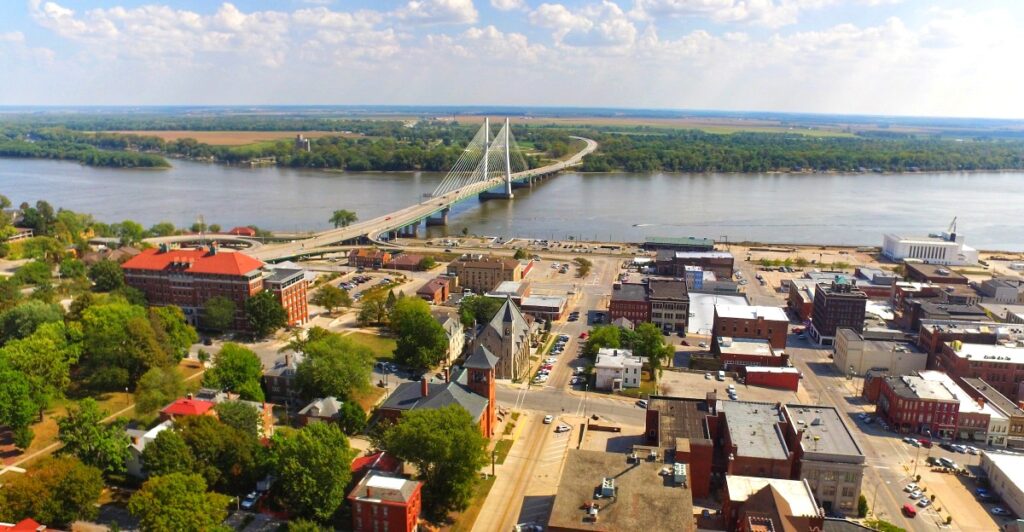
I had driven through enough eastern Iowa river towns to think I knew what was waiting around the next bend. This one changed that before I had even found a parking spot.
The reason was hiding in plain sight. Long before Des Moines became Iowa’s capital, lawmakers were meeting here above the Mississippi and making decisions for the brand-new Iowa Territory.
That little piece of history was enough to send me off my original route.
Once I arrived, the story kept getting stranger in the best way. Brick streets climbed the bluffs, one famously crooked lane twisted downhill, and traces of the city’s brief political importance were scattered around town without much fanfare.
That is what makes this such a satisfying Iowa road-trip detour. You can arrive expecting another river stop and leave wondering how a former territorial capital managed to stay this far under the radar.
The River City That Governed A Territory
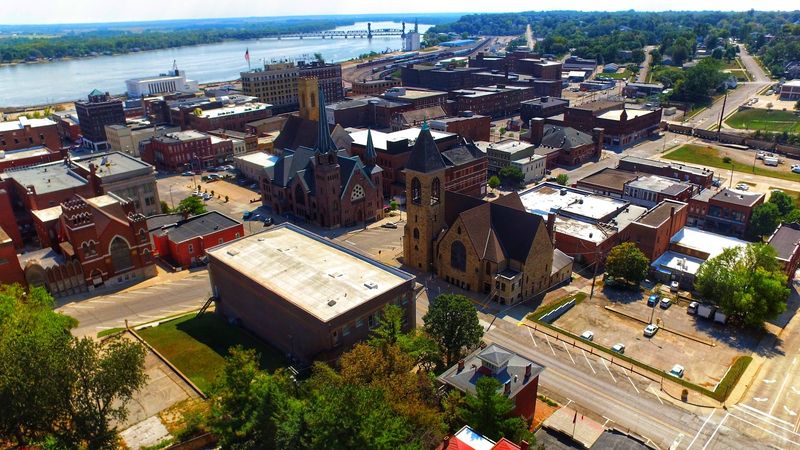
Before Des Moines existed as a capital, lawmakers met here on the Mississippi bluffs and hammered out the rules for a brand new territory.
Burlington served as the first capital of the Iowa Territory in 1838, after briefly serving as the temporary meeting place of the Wisconsin territorial legislature beginning in 1837.
Old Zion Church downtown hosted those early Iowa territorial sessions. The original building is gone, but a historic marker remains near the site, and it takes about two minutes of standing there for the scale of it to sink in.
What surprised me most was how quietly the city carries the fact. No giant arch, no theme park, just plaques, a well kept museum or two, and locals who will happily tell you more if you ask at a coffee counter.
The city sits in Des Moines County in southeast Iowa, roughly an hour south of the Quad Cities, with a population of just under 24,000 as of the 2020 census.
You will find it simply as Burlington, Iowa, USA, right where Highway 34 crosses the Mississippi, and the city website at burlingtoniowa.org lists current events if you want to time a visit.
Snake Alley And Its Famous Curves
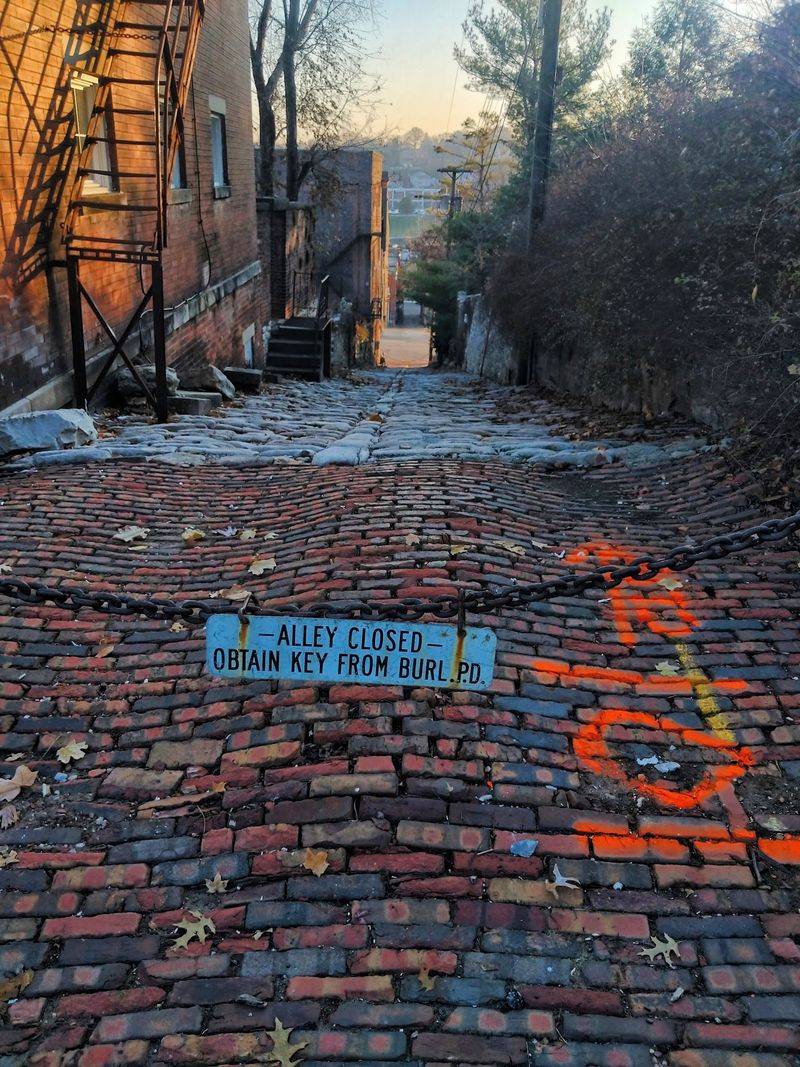
Five half curves and two quarter curves packed into less than 300 feet of brick.
Snake Alley drops down a steep hillside between Columbia and Washington Streets, and it was built in 1894 by German immigrants who missed the switchback vineyard roads back home.
Ripley’s once called it the crookedest street in the world, which started a long friendly argument with San Francisco’s Lombard Street. Locals here are not interested in conceding anything.
I walked down instead of driving, and I recommend that. The bricks are set on edge at an angle so horses could get a grip, and you can still feel the ridges through your shoes.
Driving it is legal but one way downhill only, and the turns are tighter than they look in photos. My sedan managed fine.
A long pickup would be sweating.
Every Memorial Day weekend, cyclists race up it in the Snake Alley Criterium, a lung punishing event that draws riders from all over.
Go early morning if you want photos without a car parked mid frame.
Where The Territorial Lawmakers Actually Met
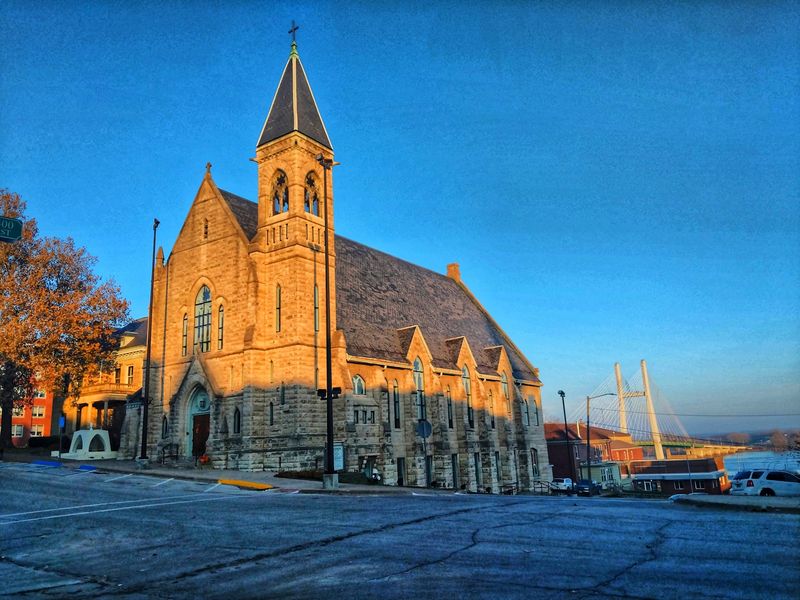
Old Zion Methodist Church gets one modest marker and deserves a parade.
The earlier territorial capitol building in Burlington had burned in 1837, and Old Zion was completed in time to provide space for the new Iowa Territorial Legislature in 1838.
Standing on the west side of Third Street between Washington and Columbia, I tried to picture men in heavy coats arguing about county boundaries while a stove struggled to heat the room. Iowa winters were not kinder in 1838.
The church was torn down in 1881, and a historic marker now identifies the site. It is free, open air, and takes ten minutes at most.
Pair it with a stop at the Des Moines County Heritage Center Museum a few blocks away, where the territorial story gets proper display cases and context.
Admission there is modest and the staff volunteers are the kind who will pull out a map to show you where the old capital boundaries ran.
Parking downtown is mostly free street parking, and on a weekday morning I had my pick of spots within a block of everything.
Crapo Park And The Bluff Top Views
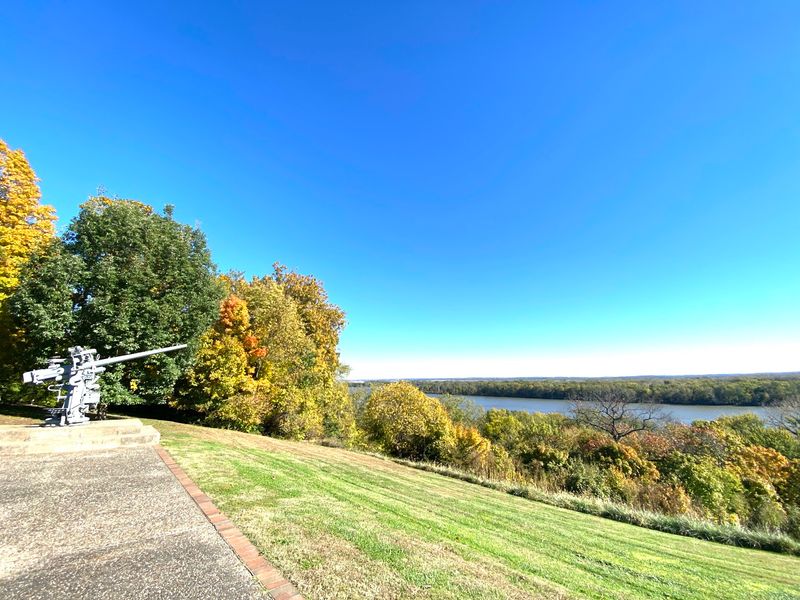
Ask anyone in town where to watch the river and they point uphill.
Crapo Park covers about 85 acres on the southern bluffs, with paved loops, a lagoon, picnic shelters and overlooks that sit well above the Mississippi.
Hawkeye Log Cabin sits inside the park. Built in 1909 as a meeting place for the Hawkeye Natives Association, it now offers visitors a glimpse of early settler life and opens seasonally.
The park also holds a spot called Black Hawk Spring, reached by a set of stairs down the bluff face. My knees noticed the return trip.
Entry is free, restrooms are available in season, and the main drive is easy to navigate with a stroller or a slower walker in tow.
Autumn is the strongest season here. Oaks and maples go gold, and the river shows up through the branches instead of hiding behind a wall of green.
Bring a blanket, because the picnic tables fill up fast on warm Sunday afternoons in Iowa.
The Great River Bridge At Night
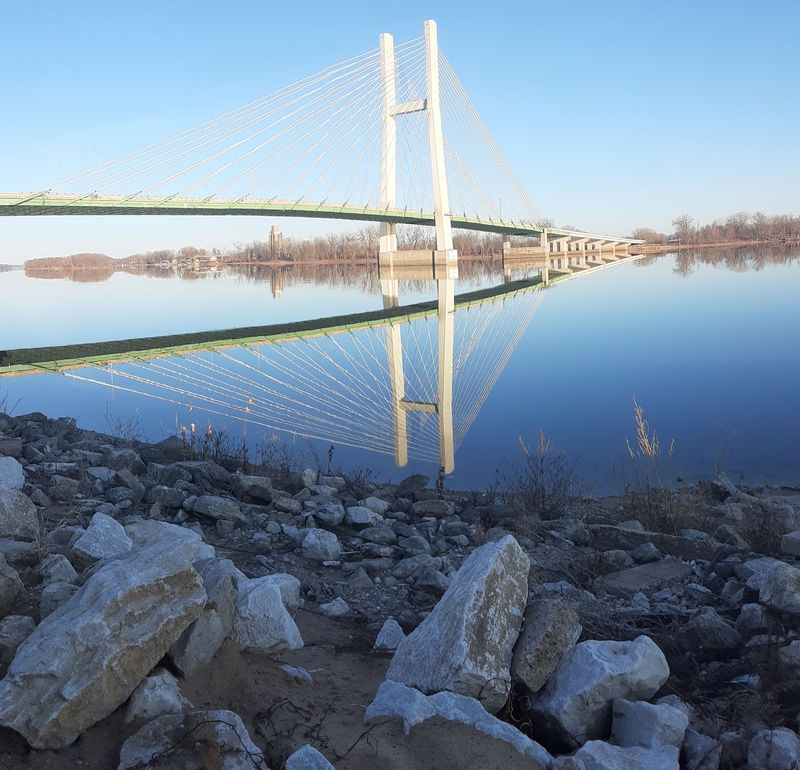
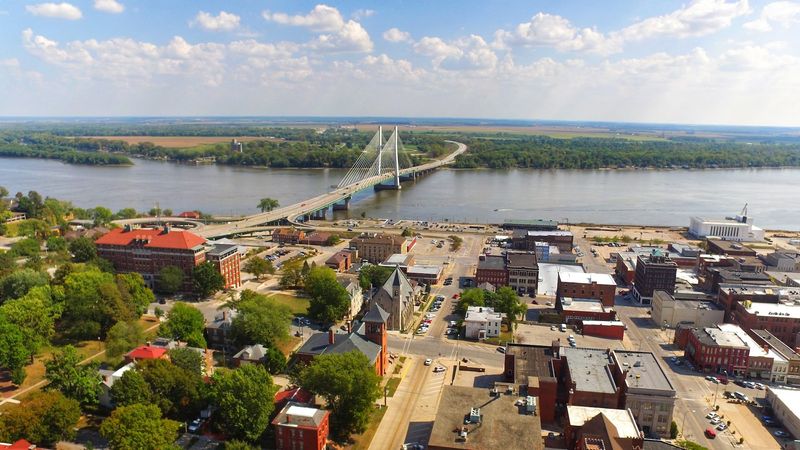
Cable stayed and lit from below, the Great River Bridge carries Highway 34 across the Mississippi into Illinois and gives the skyline its one dramatic vertical line.
It opened in 1993 and replaced an older span, and the single tower with its fan of cables is visible from most of downtown.
My favorite view came from the riverfront walkway just after sunset, when the lights come on and the water turns into a long smear of reflection.
The riverfront itself has been reworked in recent years with a promenade, benches, and an amphitheater area that hosts summer concerts and events.
Barge traffic passes regularly, and if you stand there long enough you will watch a tow push a line of barges under the bridge with very little room to spare.
Parking along the riverfront is free and plentiful, which is one of the quiet advantages of a city this size in Iowa.
Bring a light jacket even in July, because the wind off the water has opinions after dark.
Heritage Hill And The Brick Streets
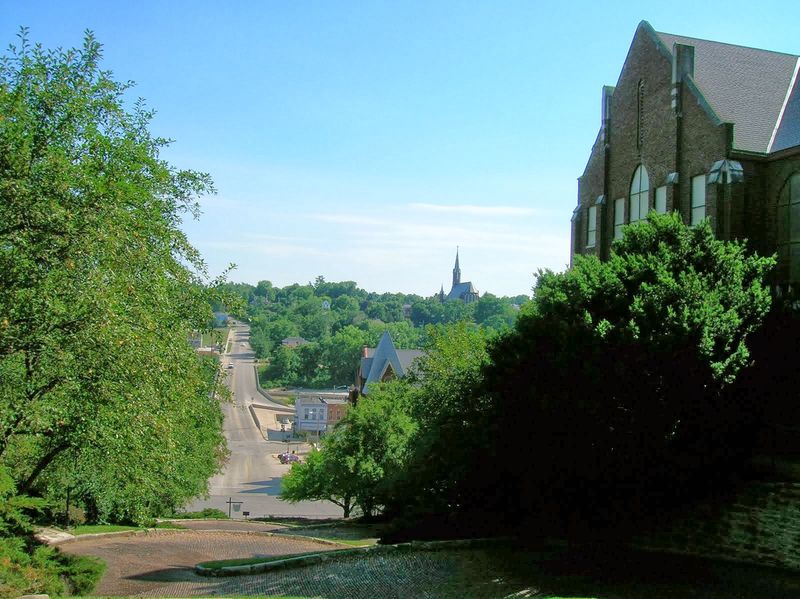
Steep, shaded, and stubbornly old fashioned, the Heritage Hill Historic District climbs the bluff just north and west of downtown.
The district contained 141 structures when it was listed on the National Register, including 113 residences, with styles ranging from Italianate to Queen Anne.
Several streets still wear their original brick, and driving them at low speed is a small massage for your suspension.
I spent an hour just walking with no plan, counting turrets and iron fences. One house had a carriage step at the curb with the owner’s name still carved into the stone.
The district is residential, so keep voices down and stay on sidewalks. People live here, and they are used to camera phones but not to strangers in their yards.
Walking tour maps are available through local tourism resources, and following one gives the wandering some shape.
Wear real shoes. The grade is serious in places, and a few sidewalks tilt in ways that surprise flat land walkers.
Late spring, when the porch flowers come out, is the prettiest stretch of the year up here.
Downtown Storefronts And Where To Eat
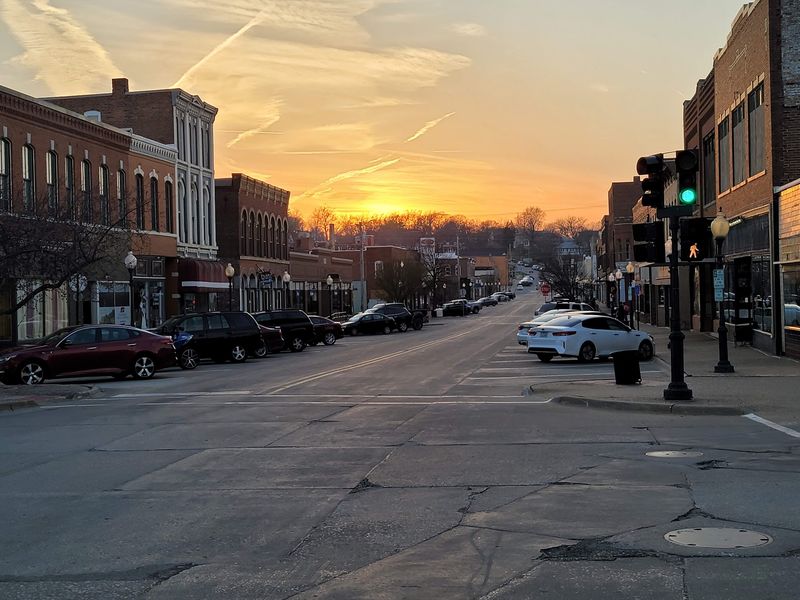
Jefferson Street holds the bones of a 19th century commercial district, tall brick fronts with decorative cornices and upper windows that have watched a lot of history.
Not every storefront is filled, which is honest for a river city of this size, but the occupied ones are worth your time. Coffee shops, antique dealers, and a few long running family restaurants share the block.
I ordered a breakfast plate at a counter where the server knew four customers by name and asked about a fifth one’s dog.
The Capitol Theater, a restored 1937 movie house, anchors the street and hosts films and live shows, so check the schedule before you assume evenings are quiet.
Most places downtown are casual, cash friendly, and priced well below what you would pay two states east.
Street parking is free and rarely a fight. That alone makes wandering easier.
Plan a weekday lunch if you want conversation with staff, or a Saturday if you want more shops actually open across southeast Iowa’s river towns.
Planning A Visit Without Guesswork
Two days covers the city comfortably, one if you move fast and skip the museums.
Late April through October gives you open seasonal attractions, riverfront events, and the log cabin hours. Winter strips the trees for better river views but closes a fair number of doors.
Hills define the layout, so pick lodging near downtown or along Highway 34 and accept that you will drive between the river level and the bluff top more than once.
Accessibility varies. Crapo Park’s main drive and the riverfront walkway are manageable for wheels, while Snake Alley and the Heritage Hill sidewalks are not.
Dogs are welcome on leash in the parks, and I saw plenty of them on the riverfront path.
Fill the tank before you arrive if you are coming from the Illinois side, since crossing the bridge drops you straight into downtown.
My honest takeaway is that the territorial capital angle gets you here, but the brick streets and the barge traffic are what make you stay a second night in Iowa.