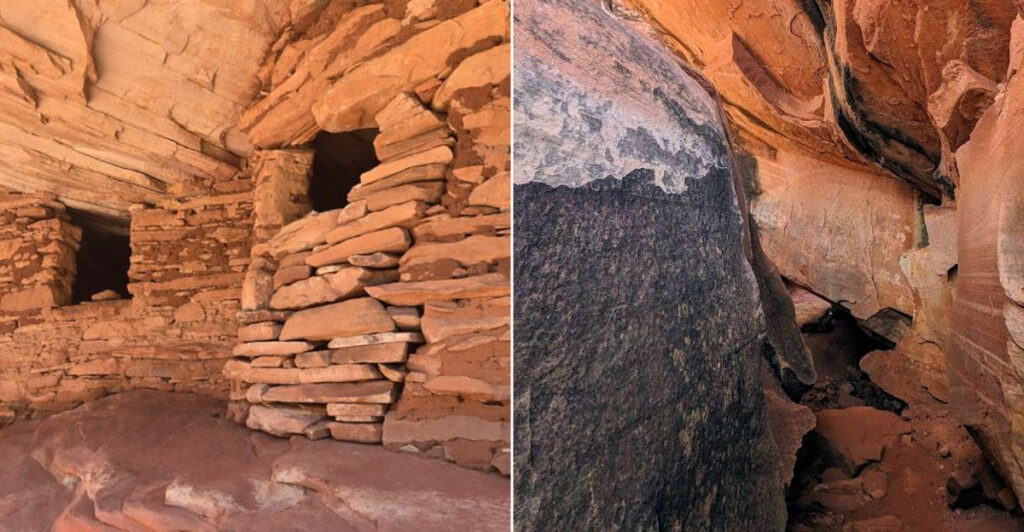
Some hikes save their best trick for the final minute. In southeastern Utah, this short walk leads to an ancient cliff dwelling with a view so strange and beautiful it almost feels staged for maximum effect.
Around midday, sunlight catches the rippled sandstone ceiling above the ruins and suddenly the whole scene seems to ignite, glowing with streaks of orange, gold, and ember tones that look uncannily like real flames. It is the kind of sight that makes people stop talking and just stare.
Better yet, getting there does not require heroic effort. The trail is short, mostly flat, and gentle enough to feel inviting instead of punishing.
That easy approach makes the payoff even sweeter. Utah’s canyon country is packed with memorable stops, but few offer this kind of visual drama paired with such accessible adventure.
It is history, geology, and pure wow-factor wrapped into one very worthwhile detour.
The Trail That Does Most of the Work For You
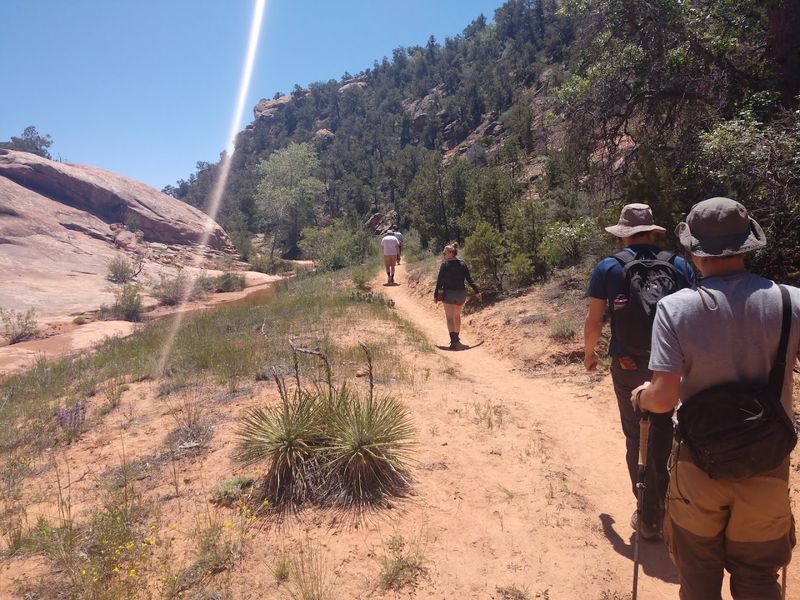
Not every great destination requires suffering to reach it, and the South Fork of Mule Canyon is living proof of that generous principle. The trail runs roughly one mile from the trailhead off County Road 263, also known as Texas Flat Road, off Utah State Route 95 near Blanding, Utah 84511.
It follows a dry canyon wash that is almost entirely flat, with no meaningful elevation gain to speak of.
The path moves through a corridor of oak trees and sandstone walls, and the canyon itself does the navigating for you. You are essentially walking the canyon floor, which means route-finding is refreshingly straightforward.
Light scrambling appears near the end, but nothing that would slow down a reasonably mobile person.
Quick Tip: The trail runs about two miles out and back total. Budget roughly an hour for the round trip under normal conditions, though recent flood activity in 2025 has altered some sections of the wash, adding river crossings and sandbanks that can extend the hike to closer to two hours.
Best For: Families with kids, older hikers, first-time canyon visitors, and anyone who wants a high-reward experience without committing to a strenuous day.
What “House on Fire” Actually Means When You See It
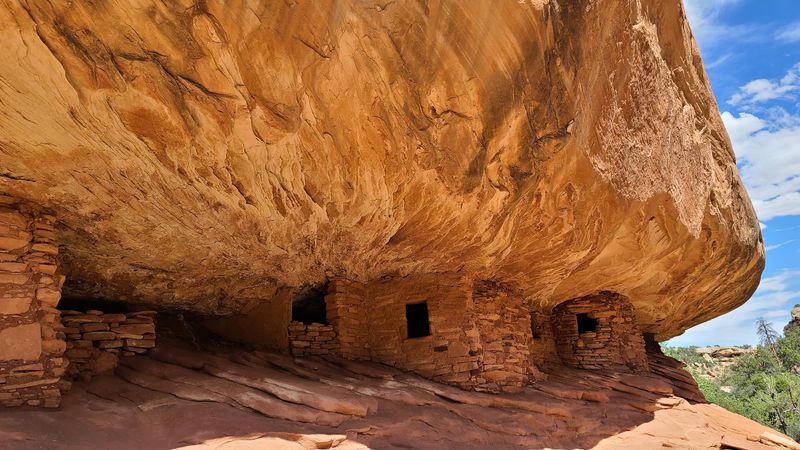
The name sounds like marketing until you actually stand in front of it. The House on Fire Ruin is an Ancestral Puebloan cliff dwelling built into a natural alcove in the canyon wall.
What makes it visually extraordinary is the ceiling of that alcove, which is layered with wavy bands of sandstone in shades of rust, copper, and cream.
When the sun reaches the right angle, typically around midday, those layers catch the light and appear to ripple like actual flames above the stone structures below. The effect is entirely natural, caused by the angle of sunlight hitting the curved rock ceiling.
Photographs of it circulate widely online, but seeing it in person carries a different weight entirely.
Why It Matters: The flame effect is time-dependent. Visitors who arrive early morning or on overcast days will still see impressive ruins, but the signature fire illusion requires direct sun hitting the overhang.
Midday visits during sunny conditions deliver the full visual impact the ruin is famous for.
Insider Tip: One visitor noted that the effect is not visible to the naked eye from certain angles. Bring a camera and check your screen to catch the full color range the rock produces.
The Ruins Themselves and Why They Still Stand
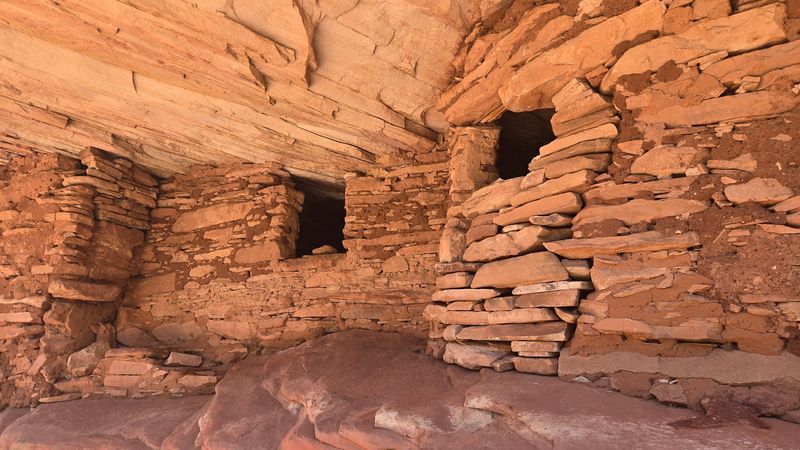
Beyond the light show, the actual architecture here is worth slowing down to study. The House on Fire Ruin is an Ancestral Puebloan structure, sometimes referred to as Anasazi, built into a protected alcove that has shielded the masonry from centuries of weathering.
The stone walls are remarkably intact, and the construction quality is evident even to an untrained eye.
The alcove setting was not accidental. Ancestral Puebloan builders understood that a south-facing overhang provided shade in summer and warmth in winter, while also protecting the structure from direct rain.
The canyon’s dry desert climate has done the rest, preserving details that would have eroded long ago in a wetter environment.
Visitors consistently describe the ruins as well-preserved and accessible in a way that feels genuinely close and personal, not roped off at a frustrating distance.
Common Mistakes to Avoid: Do not touch, climb on, or remove anything from the ruins. These are protected cultural sites within Bears Ears National Monument.
The site depends entirely on visitor respect to remain open and accessible for future generations, and the social expectation among visitors here is clear and consistent on that point.
Timing Your Visit to Catch the Glow
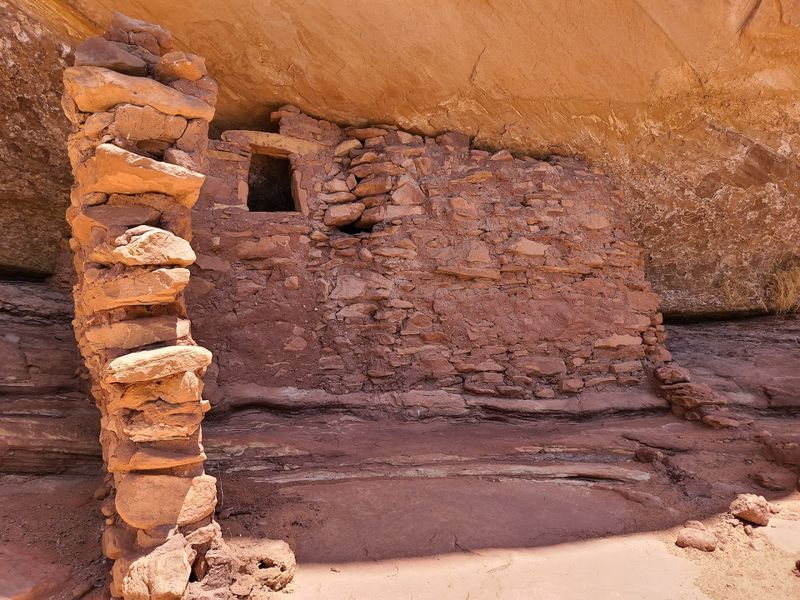
Timing is genuinely everything at this particular ruin, and it is the one variable that separates a good visit from an unforgettable one. The flame-like light effect that gives the site its name occurs when direct sunlight hits the curved sandstone overhang above the dwellings.
This typically happens around midday, though the exact window shifts with the season.
One visitor spent the morning at the site waiting from around 8:30 a.m. and did not catch the right light until nearly noon. That is not a complaint, just useful calendar math.
Arriving mid-morning and settling in to wait is a perfectly reasonable strategy, especially since the canyon itself is pleasant to explore while you hold your position.
Planning Advice: Check the weather forecast before you go. Overcast skies will block the effect entirely.
Clear, sunny days are the only reliable condition for the full visual experience. A Tuesday morning in November, as one visitor noted, can mean almost no crowds on the trail, which is a genuine bonus if solitude matters to you.
Pro Tip: The site is open 24 hours, so technically a sunrise visit is possible, but the light geometry favors midday. Plan accordingly and bring more water than you think you need.
Who Makes the Trip and Why They Come Back
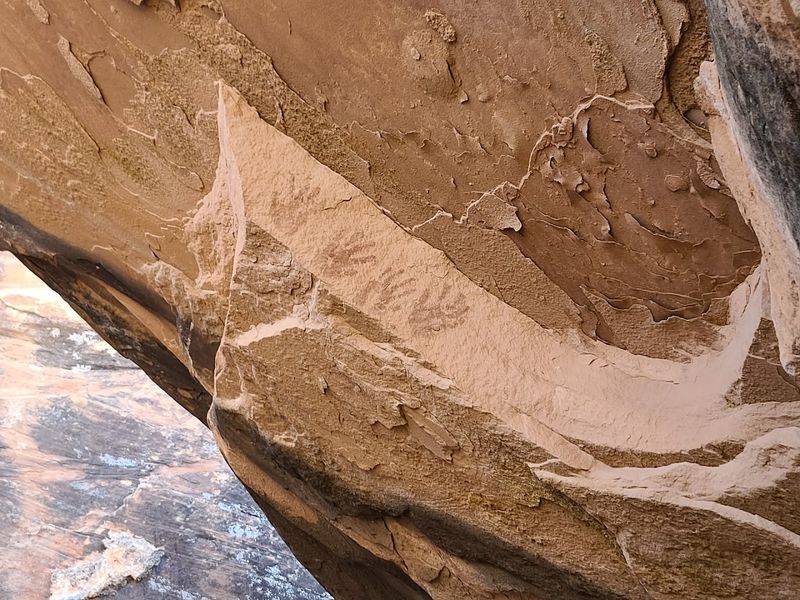
The trail draws a notably varied crowd, which is itself a signal worth reading. Families with young children make the trip because the flat terrain removes the usual anxiety about small legs giving out halfway.
Couples use it as a low-pressure afternoon that still produces genuinely impressive photographs. Solo hikers and photographers come specifically for the light conditions and often linger longer than anyone else.
Visitors who have toured other ruins in the region, places like Butler Wash or Navajo National Monument, frequently describe the House on Fire as the most accessible of the group without any sacrifice in visual reward. That combination of easy entry and high payoff is what keeps people recommending it to friends and returning themselves.
Who This Is For: Anyone with a moderate interest in history, photography, or canyon scenery who wants a manageable, satisfying half-day outing. The trail works for most fitness levels and most age groups.
Who This Is Not For: Visitors seeking a strenuous backcountry challenge or those unwilling to wait for optimal lighting conditions. If you need the fire effect and the sky is cloudy, the experience will still be good, but the signature moment will not appear.
Getting There Without Getting Lost
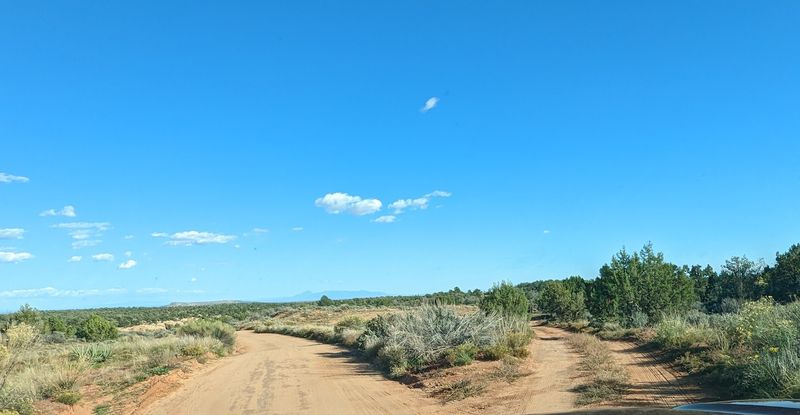
The trailhead sits off County Road 263, also called Texas Flat Road, which branches from Utah State Route 95 near Blanding, Utah 84511. State Route 95 is a scenic highway that cuts through Bears Ears National Monument and connects Blanding to Natural Bridges National Monument, making this stop a natural fit on any southern Utah road trip itinerary.
Parking at the trailhead is limited. Visitors who arrive mid-morning on popular days, particularly in spring and fall, have reported tight parking conditions.
Getting there early solves most of that problem neatly. The trailhead itself has been noted as lacking clear signage, so downloading an offline map or confirming directions at a visitor center in the area before heading out is a smart move.
Best Strategy: Treat this as a purposeful stop on a broader Bears Ears or southeastern Utah driving route rather than a standalone destination requiring a long detour. State Route 95 puts you in the neighborhood naturally, and the short trail length means it fits into almost any itinerary without eating the whole day.
Quick Tip: Blanding is the nearest town with services, fuel, and food. Stock up before heading out on County Road 263, as amenities disappear quickly once you leave the main highway.
A Place Worth Protecting and Planning Around
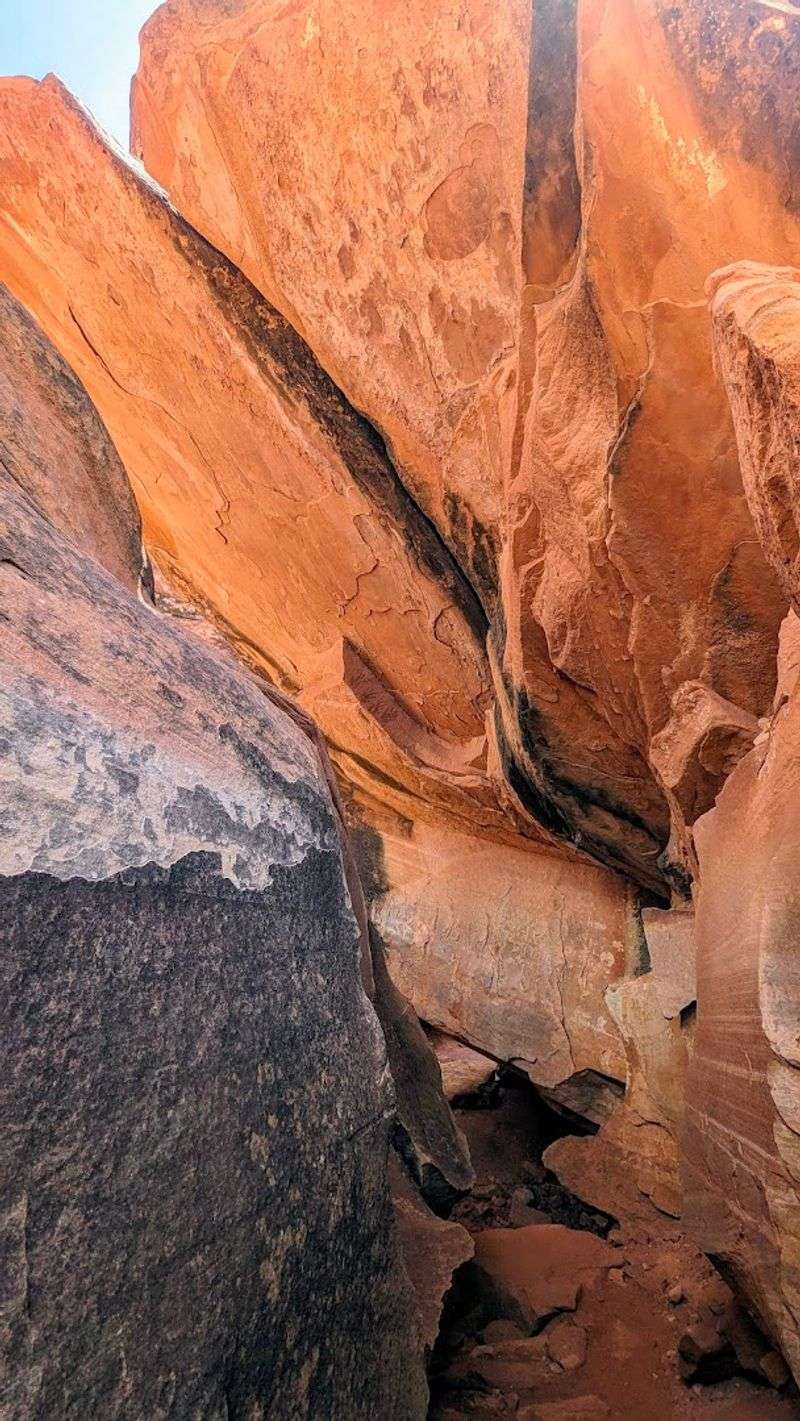
The House on Fire Ruin sits within Bears Ears National Monument, and that designation carries real meaning for how the site is managed and experienced. The monument status brings a level of federal protection that visitors have explicitly noted as important for the ruin’s long-term survival.
The site remains open and accessible precisely because enough people treat it with the respect it deserves.
Foot traffic has increased significantly as Bears Ears gained national attention, which makes the etiquette conversation more relevant than ever. Staying on established paths, keeping a respectful distance from the masonry, and packing out everything you pack in are the baseline expectations.
The canyon and its ruins are genuinely irreplaceable, and no photograph is worth physical contact with the structures.
Quick Verdict: The House on Fire Ruin is one of the most visually striking and physically accessible ancient sites in the American Southwest. The hike is short, the ruins are impressive, and the light effect, when conditions cooperate, is the kind of thing that makes people stop mid-sentence to describe it to someone who was not there.
Planning Advice: Pair this stop with Natural Bridges National Monument or a drive along State Route 95 for a full day in one of Utah’s most undervisited and genuinely spectacular corners.