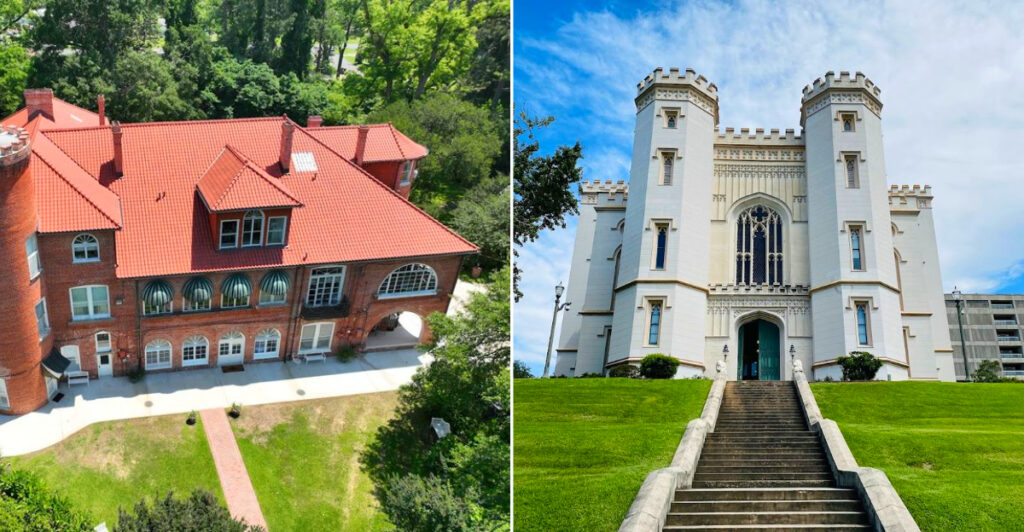
Nobody expects to find castles in a state known for bayous and Spanish moss, yet Louisiana holds a small but genuine collection of turrets, battlements, and Gothic towers that would look more at home along the Loire than along the Mississippi.
A former state capitol built like a medieval fortress anchors downtown Baton Rouge, a private residence in Monroe doubles as a museum of antiques behind stone walls, a purpose-built event venue in Franklinton replicates a European castle down to the suits of armor lining the halls.
New Orleans claims its own miniature stone fortress on the edge of City Park, while a ruined fort in St. Bernard Parish stands guard over open water.
Farther south, a Sulphur chateau and a Mermentau cottage round out the list with architectural quirks that make drivers pull over for a second look. These eight structures cover the spectrum from grand public landmark to private passion project, and none of them require a passport to visit.
Louisiana is not the first place people picture when they hear the word castle, but these eight structures tell a different story.
1. Old Louisiana State Capitol
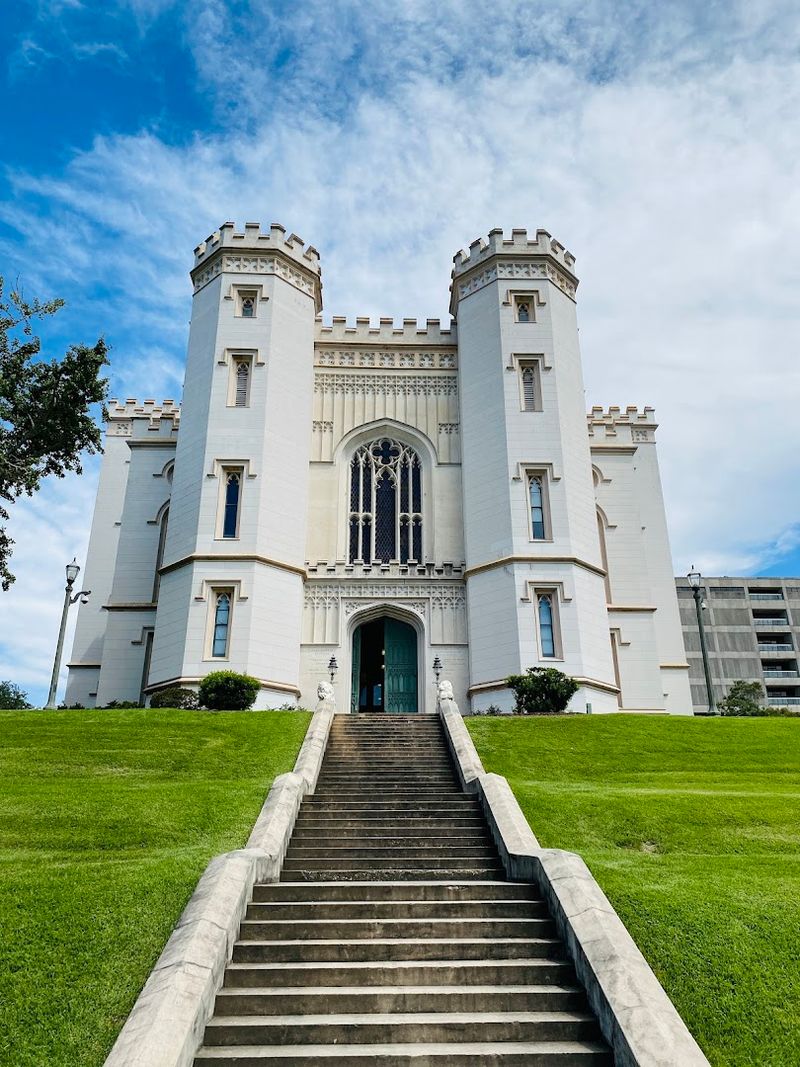
Rising above downtown Baton Rouge with Gothic towers and a fortress-like roofline, Old Louisiana State Capitol, 100 North Boulevard, Baton Rouge, LA 70801, looks less like a government building than a medieval fantasy placed beside the Mississippi River.
That dramatic silhouette is exactly why people still call it the Castle on the River, and the nickname fits before you even step inside.
The building dates to the 19th century and carries the kind of layered history that makes architecture feel alive rather than decorative. Fire, war, restoration, politics, and preservation all shaped what visitors see today.
Inside, the stained-glass dome and cast-iron staircase create a visual payoff that feels almost theatrical after the stone exterior.
As a museum, the site gives visitors more than a pretty shell. Exhibits explain Louisiana political history, the building’s turbulent past, and the civic ambition that produced such an unusual capitol.
Go slowly rather than treating it as a quick photo stop. The best experience comes from pairing the river-facing exterior with the interior’s color, ironwork, and sense of historical drama.
2. Layton Castle
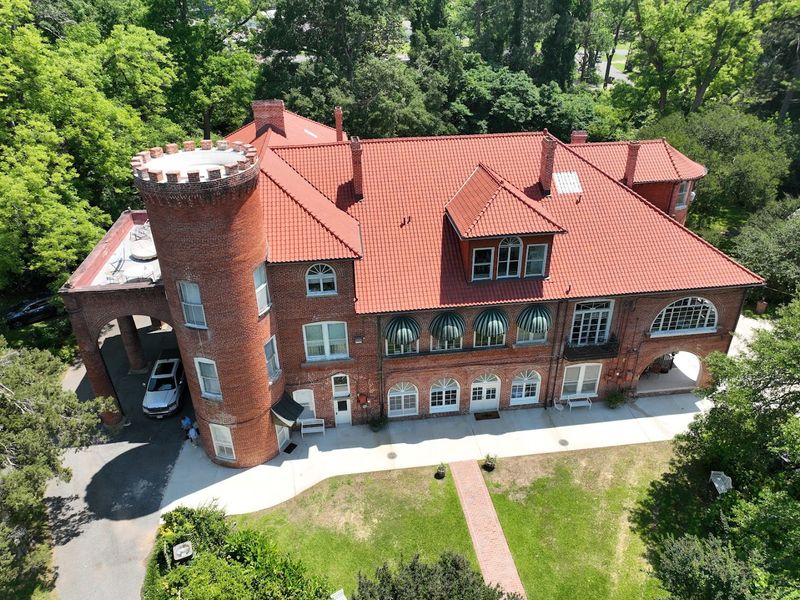
In Monroe, the surprise of finding Layton Castle, 1133 S Grand Street, Monroe, LA 71202, is part of the pleasure. The property does not sit like a remote European ruin; it rises within a lived-in Louisiana city, which makes its turrets, masonry, and old-world personality feel even more unexpected.
The story stretches back to early 19th-century origins tied to the Bry family, and later changes gave the property its more explicitly castle-like character. That long timeline matters because the building is not simply a novelty structure.
It has shifted roles over generations, moving through domestic, communal, event, and residential uses while keeping its visual drama intact.
Today, the property functions as apartments, an event venue, and a historic site with scheduled tour opportunities. That adaptive use gives it a different feeling from a frozen museum house; the place still belongs to everyday Monroe life while carrying an unmistakable sense of old romance.
Plan ahead before visiting, because access depends on tours, events, and privacy considerations. When timed correctly, it offers one of Louisiana’s most unusual blends of preservation and living architecture.
3. Louisiana Castle
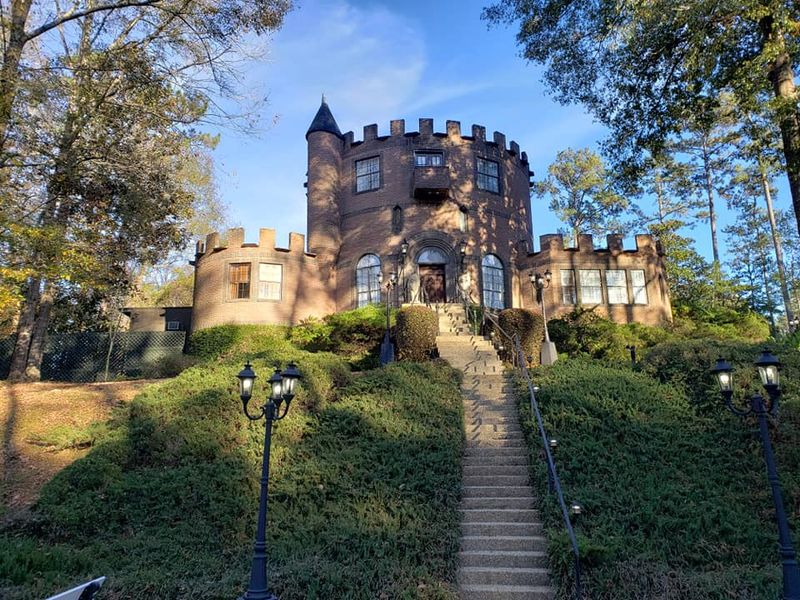
Down a quiet road in Washington Parish, Louisiana Castle, 47168 LA-10, Franklinton, LA 70438, makes no attempt to hide its fantasy. The building was created to evoke a European castle, with towers, formal spaces, manicured grounds, and interiors designed for pageantry rather than subtlety.
The site’s current identity is strongly tied to weddings and events, which makes sense the moment you see it. This is not a ruin, a government landmark, or a converted old residence.
It is a purpose-built dream space where guests are meant to arrive, look up, and feel as if the day has stepped outside ordinary Louisiana architecture.
That theatricality is the whole point. Ballrooms, gardens, castle-style details, and hosted-event polish turn the structure into a backdrop for ceremonies, photographs, and celebrations. It may not be ancient, but it understands the emotional language of castles perfectly.
Visitors should contact the venue before planning a stop, since access is generally tied to tours, bookings, or scheduled events. For anyone chasing Louisiana’s most convincing fairytale setting, this Franklinton landmark earns its place.
4. Fisherman’s Castle
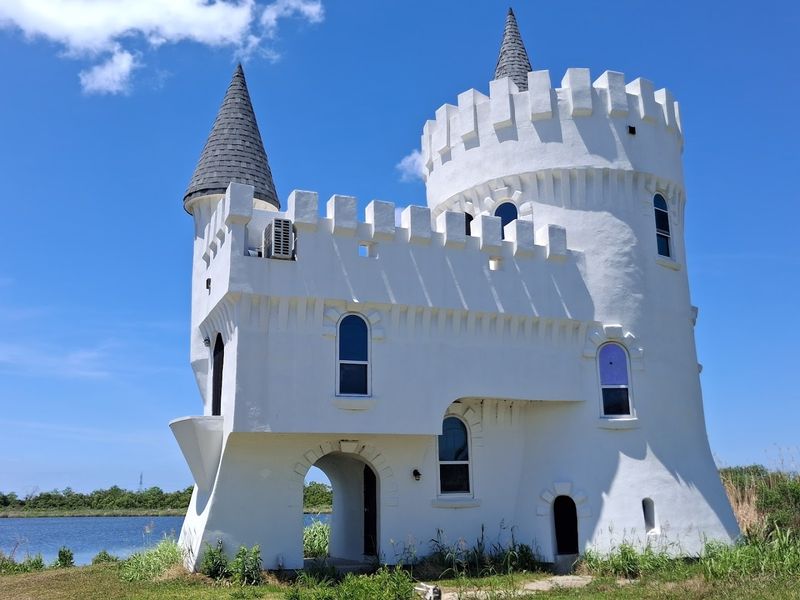
Drivers near Irish Bayou often spot Fisherman’s Castle, 3262 Ridgeway Boulevard, New Orleans, LA 70129, before they fully understand what they are seeing. A compact white castle appears beside the water, looking more like a roadside fairy tale than a conventional Louisiana fishing-camp structure.
The small building is also known as the Irish Bayou Castle or Little White Castle, and its scale is part of the charm. It does not overwhelm the landscape; it interrupts it.
Against the open sky, highway movement, and bayou setting, the castle silhouette becomes memorable precisely because it is so unlikely.
Built in the early 1980s and associated with the lead-up to the 1984 World’s Fair era, the structure has passed through phases of attention, renovation, and private ownership. Its coastal setting also gives the story a resilience angle, since the building has been noted for surviving major storms better than many surrounding structures.
This is a view-from-the-road curiosity, not a standard public attraction. Enjoy it from public vantage points along the highway, take photos respectfully, and do not treat the private property as open access.
5. Beauregard’s Castle (Fort Proctor)
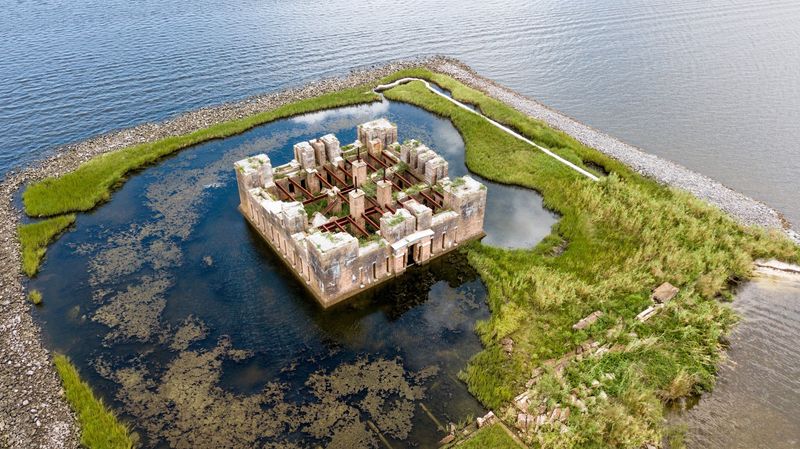
Out in the water near Shell Beach, Beauregard’s Castle, better known as Fort Proctor, Lake Borgne, Shell Beach, St. Bernard Parish, LA 70085, feels less like a destination than a ghost of military ambition. The brick ruin rises from the marshy edge of Lake Borgne, isolated by water and weather.
The fort was planned in the 19th century as part of the coastal defense system protecting routes toward New Orleans. Construction delays, hurricane damage, and the Civil War meant it never fully served the role originally imagined for it.
Time has made that failure visually powerful.
What remains now is atmospheric: arched openings, weathered masonry, water all around, and the strange beauty of a structure slowly separated from the land it was built to defend. Its castle nickname comes naturally, even though it is technically a fort.
Reaching it requires boat or kayak access, and conditions can change with weather and water levels. Many visitors are better served by viewing it from a safe distance around Shell Beach or going with someone who knows the area. The ruin rewards respect, caution, and patience.
6. Chateau De Bon Reve
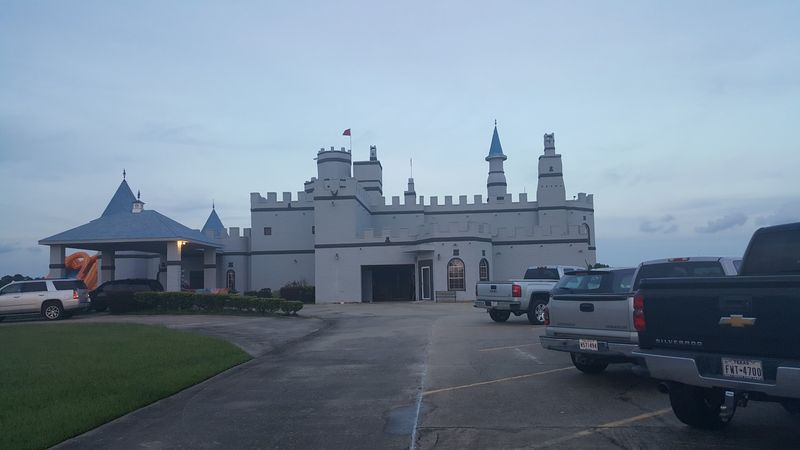
Behind its gates in Sulphur, Chateau De Bon Reve, 1995 N Claiborne Street, Sulphur, LA 70663, shows how castle architecture can become a modern Louisiana dream project. The name means “house of good dreams,” and the building leans into that idea through its turrets, rooflines, and large-event personality.
For years, the property was known as a wedding and reception venue, which explains the scale of its spaces and the sense of visual drama built into the exterior. It was created to impress from the approach, with a castle-like silhouette that feels deliberately theatrical rather than accidentally eccentric.
The important thing now is access. Current listings and public references indicate that the property is closed or private, so it should not be treated like an open attraction.
That does not make it uninteresting; it simply changes how it belongs in a travel list.
A respectful visitor should admire only from legal public vantage points and avoid any unauthorized entry. Its value here is as one of Louisiana’s boldest modern castle-inspired structures, even if the dream is no longer publicly staged.
7. Gothic Jail
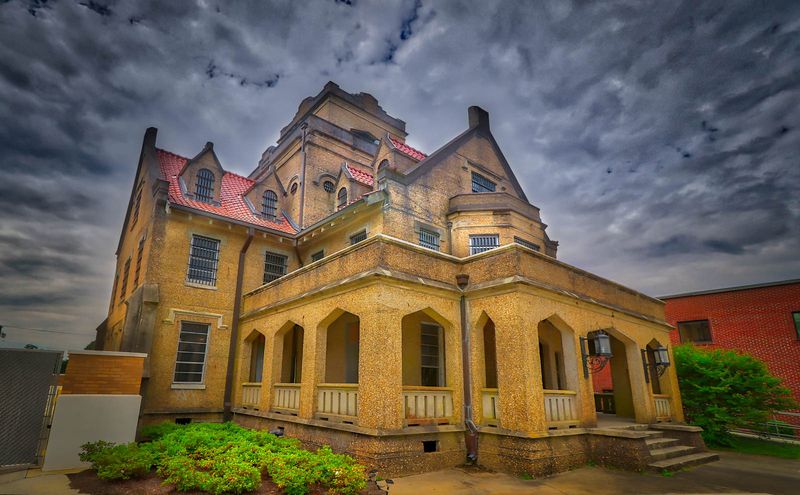
In downtown DeRidder, Gothic Jail, 313 W. First Street, DeRidder, LA 70634, looks more like a stern little castle than a former parish jail.
Pointed arches, heavy masonry, and a dramatic front stairway give the building a fortress-like presence, making it one of Louisiana’s most visually convincing castle substitutes.
The structureThe structure was completed in 1914 and is often called the Hanging Jail, but its strongest fit for this list is architectural rather than spooky. Its Collegiate Gothic style was an unusual choice for a jail, and that decision gave DeRidder a landmark with the kind of silhouette travelers actually stop to photograph.
Tours make it more practical than many private castle-style homes in Louisiana. Instead of asking readers to admire a restricted property from a distance, this entry gives them a place they can plan around, photograph, and understand through local interpretation.
8. Fort Jackson
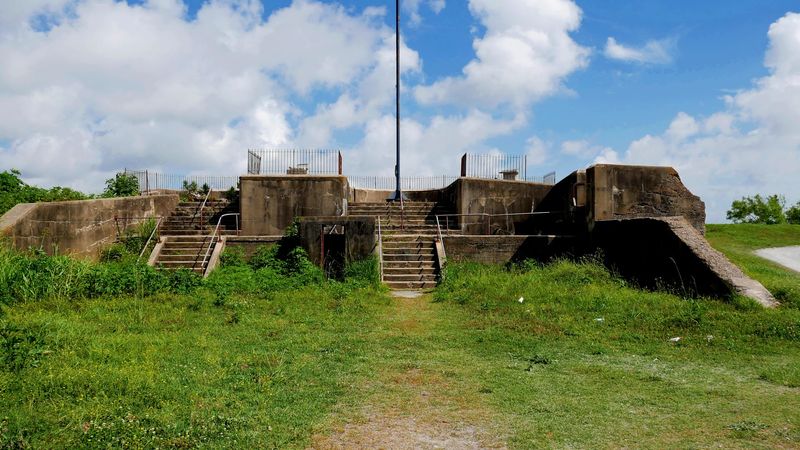
Far downriver from New Orleans, Fort Jackson, 38039 LA-23, Buras, LA 70041, brings a true fortress mood to the Louisiana castle list. Thick masonry walls, arched openings, and a broad defensive footprint give the site a castle-like presence, even though its real purpose was military rather than royal.
The fort was constructed in the 19th century to help defend the Mississippi River approach to New Orleans, and its location still feels strategic when you stand near the river and imagine ships moving toward the city.
Unlike a private fantasy home, this structure has the weight of public history behind it, with Civil War associations and a long connection to Plaquemines Parish.
Hurricane damage and preservation issues have affected access over time, so visitors should check current conditions before making the drive. The nearby Fort Jackson Museum and Welcome Center gives the stop more context and makes it easier to understand what you are seeing.
It may be a fort, but it absolutely carries the mood of a Louisiana castle ruin.