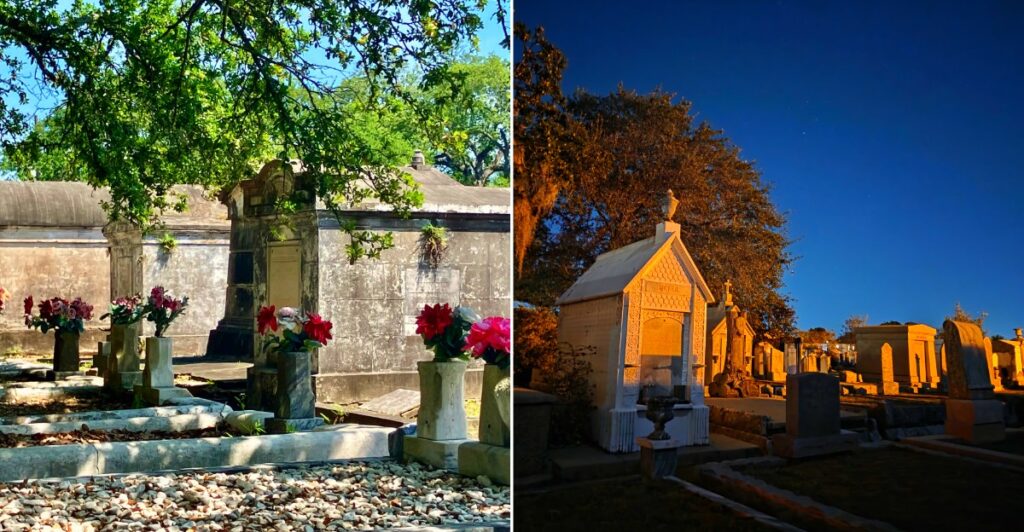
Old cemeteries have a way of making even confident visitors lower their voices. Across Louisiana, above-ground tombs, weathered markers, family plots, and generations of folklore create places that feel equal parts historic, personal, and quietly unsettling.
Some legends involve watchful spirits or mysterious lights; others follow figures so strange they sound invented, including one unfortunate ghost said to be searching for his missing head.
From New Orleans tombs to rural burial grounds, Louisiana cemeteries mix local history, family memory, and eerie folklore in unforgettable ways.
What makes these places compelling is the tension between fact and story. Some hauntings are rooted in local tradition, while others rest on thinner evidence and deserve a skeptical eye.
Either way, the atmosphere is hard to ignore. Walk respectfully, notice the details, and remember that behind every ghost tale is a burial ground where families have come to mourn, remember, and keep names alive.
10. St. Louis Cemetery No. 1 And Marie Laveau’s Lingering Legend
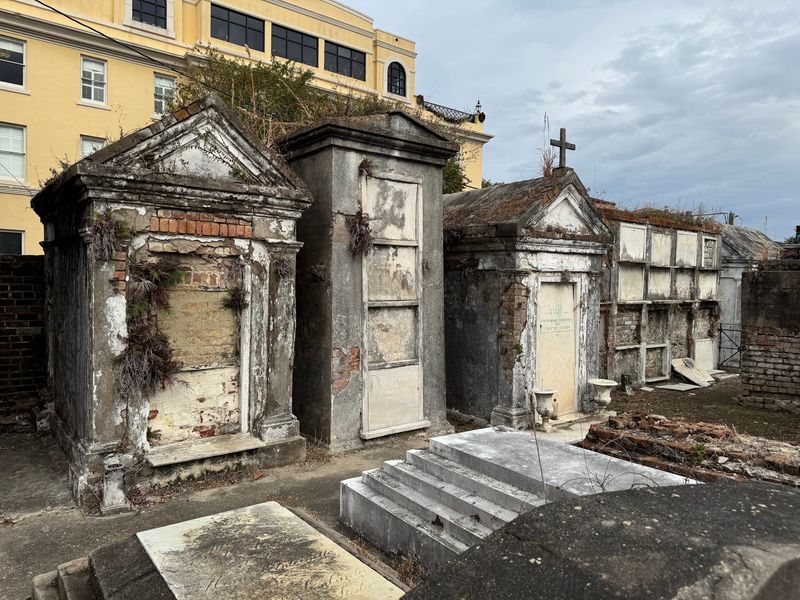
Narrow lanes between pale above-ground tombs make the city outside feel surprisingly far away. Established in 1789, this is New Orleans’ oldest surviving cemetery and the burial ground most closely associated with Marie Laveau, the nineteenth-century Voodoo practitioner whose life became inseparable from local legend after her death.
Stories claim her spirit continues to appear among the tombs or grant favors to visitors who approach correctly. Those accounts belong to folklore, while Laveau’s historical importance is much better documented than any supernatural encounter attached to her name.
Her reputed tomb also suffered years of damage from visitors scratching X marks into its surface. Whatever the origin of that custom, adding another mark is vandalism, not participation in a tradition.
Tourist access is now tightly controlled. St. Louis Cemetery No. 1 can only be entered through an authorized guided tour, with official tours departing from the Basin Street area rather than visitors simply wandering through the gates alone.
That restriction actually makes a visit more interesting. A knowledgeable guide can explain burial practices, family vaults, society tombs, yellow fever history, and the lives of people buried here before reaching the ghost stories.
9. St. Roch Cemetery No. 1 Where Faith Meets Folklore
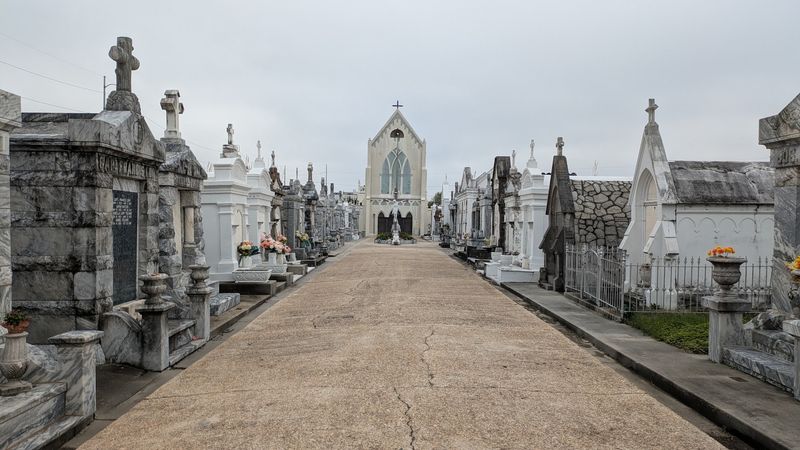
Wax limbs, crutches, braces, and other anatomical offerings can look unsettling until you understand why they are there. Inside the chapel connected with St. Roch Cemetery No. 1, these objects are ex-votos, expressions of gratitude left by people who believed Saint Roch helped them recover from illness or injury.
The cemetery was established in 1874 by Rev. Peter Leonard Thevis, whose predominantly German congregation had survived the devastating yellow fever epidemic of 1867.
The chapel was dedicated as part of that religious response to disease, giving the site a history rooted more strongly in healing than haunting.
That has not stopped supernatural stories from accumulating. Visitors have reported uneasy sensations, unexplained sounds, and a feeling that the small chapel holds more than the physical objects inside it, but those experiences remain personal accounts rather than evidence.
The cemetery stands at 1725 St. Roch Avenue in New Orleans. Catholic Cemeteries currently lists its administrative office at 3421 Esplanade Avenue, and visitors should confirm gate and chapel access before making a special trip.
Move quietly around the grounds and never handle the offerings. The plaster feet, hands, hearts, and braces may look strange to modern visitors, but they represent somebody’s fear, recovery, or prayer.
8. Metairie Cemetery And The Statue With A Strange Reputation
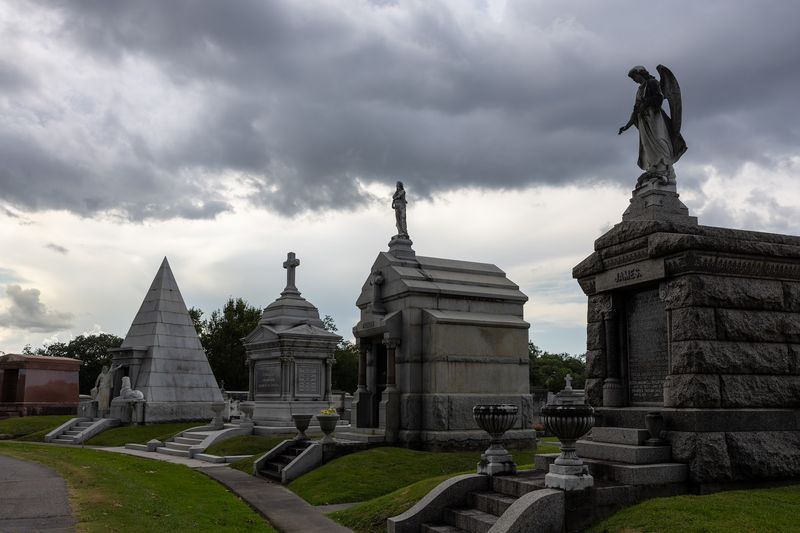
A bronze woman standing beside the entrance to a tomb has inspired enough stories to become one of New Orleans’ most memorable cemetery figures. The monument was originally created for Josie Arlington, whose complicated life and elaborate memorial helped generate decades of rumors about strange lights and supernatural activity.
One enduring tale claims the statue glows or changes position after dark. Another suggests it once turned its back on Arlington’s tomb, though versions of the story vary wildly depending on who tells them.
None of that is established fact, but the monument barely needs a haunting to remain striking. Metairie Cemetery opened in 1872 on land that had previously been used as a horse-racing track, and the old oval layout still influences the cemetery’s shape.
Massive mausoleums, sculptures, stained glass, military memorials, and elaborate family tombs make it feel more spacious and monumental than many older New Orleans burial grounds. Some structures resemble miniature temples rather than graves.
The entrance is at 5100 Pontchartrain Boulevard, despite the cemetery’s name suggesting it sits in the neighboring city of Metairie. Current cemetery information lists access from sunrise to sunset.
7. Springfield Cemetery Keeps Its Stories Quiet
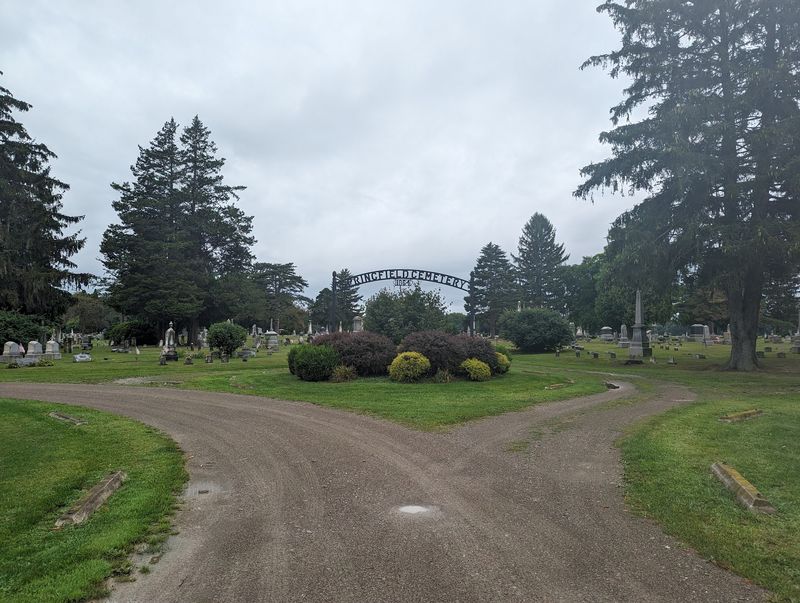
A small-town cemetery can feel more unsettling than a famous tourist graveyard simply because there is so little competing for your attention. In Springfield, one local legend centers on the grave of a boy named Michael Brown and unusual markings said to identify people connected with his death.
Versions of the story claim Brown was killed in a hit-and-run accident and that mysterious writing appeared on his headstone afterward. Some tellings go further, suggesting his ghost somehow exposed the driver or continues searching for justice.
The cemetery itself does not provide clear historical evidence for the supernatural parts of that story. Online versions contradict one another, which is usually a good sign that folklore has been doing some enthusiastic editing over the years.
That uncertainty is part of what makes the legend interesting. Instead of one polished ghost-tour narrative, Springfield Cemetery carries the kind of story passed between locals, teenagers, paranormal enthusiasts, and websites until nobody can say exactly where every detail began.
The burial ground is in Springfield, Louisiana, in Livingston Parish. Confirm the exact route and public access before visiting rather than relying solely on a map pin or ghost-site directions.
6. Big Woods Cemetery And The Gatekeeper Tale
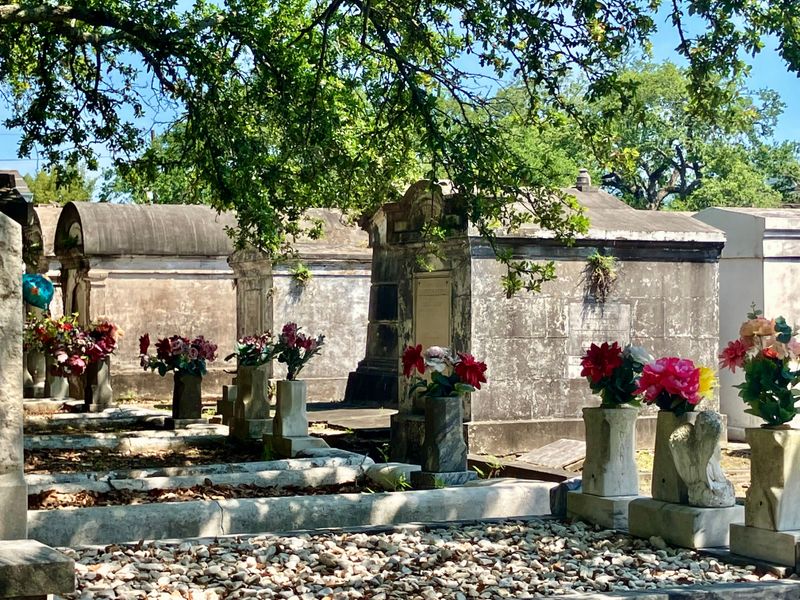
Old oak trees and a narrow connection between burial grounds provide exactly the kind of landscape where ordinary movement can become something much stranger in memory. Big Woods Cemetery near Edgerly in southwest Louisiana has one of the region’s more elaborate collections of ghost stories.
The best-known legend describes a shadowy figure called the Gatekeeper. According to local lore, seeing a dark shape cross near the old passage between Big Woods and Antioch cemeteries is a warning that whoever sees it should turn around rather than continue.
Other stories add mysterious lights, electronic equipment malfunctioning, unexplained sounds, driverless vehicles, and cars that refuse to start. Those details make excellent campfire material, but none establishes a supernatural explanation.
The history is easier to support. Big Woods is an old burial ground associated with a local church, with graves dating back to at least the nineteenth century, and it remains connected to families in the area.
That fact should determine how visitors behave. This is not an abandoned movie set simply because trees and weathered stones create an eerie atmosphere.
Confirm the legal access route before heading into the area, particularly because rural roads and property boundaries are not always obvious.
5. Miller Cemetery’s Headless Wanderer
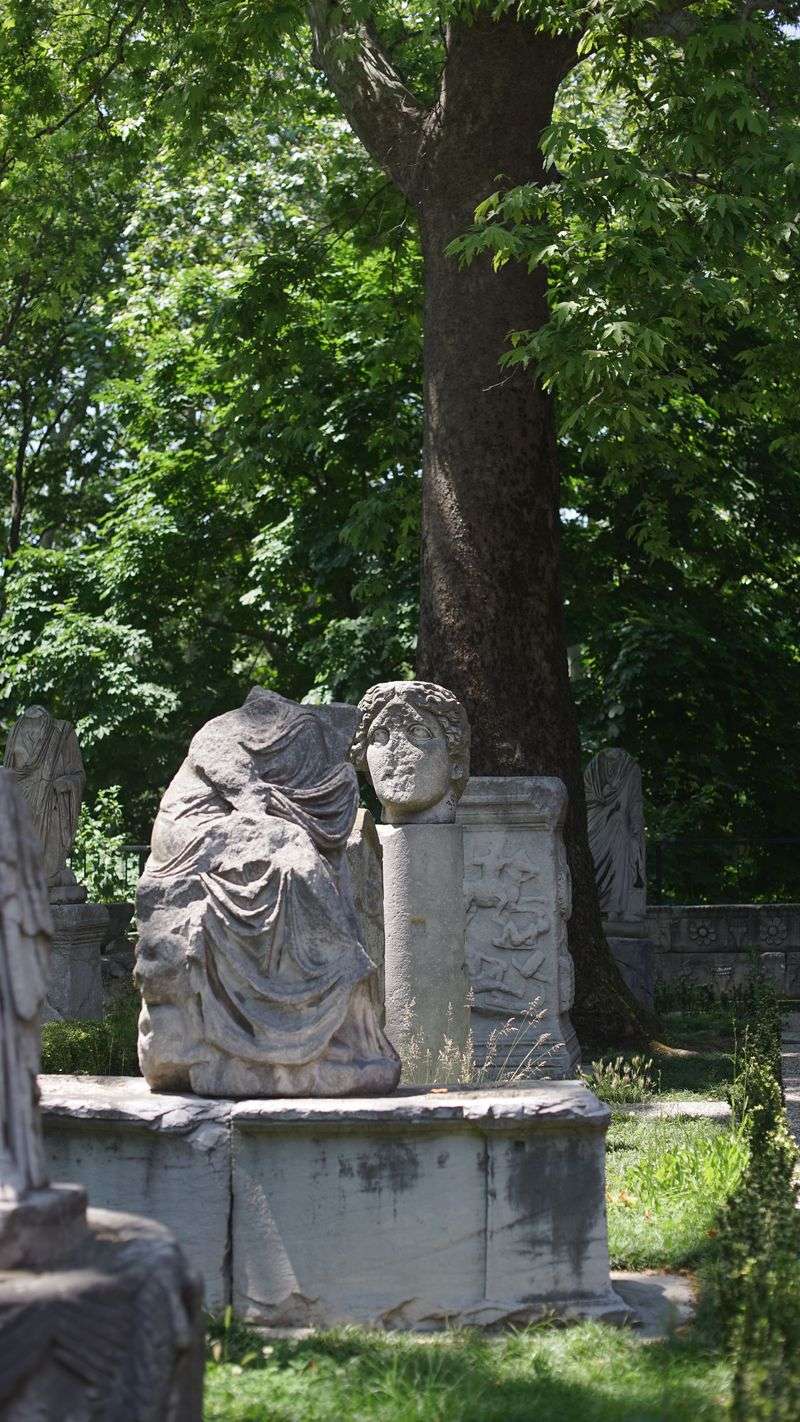
A barred road disappearing beneath trees already provides enough atmosphere before anyone mentions the headless ghost. Miller Cemetery near Eunice has become known locally as Headless Cemetery, a nickname tied to stories of an apparition wandering among the graves without the most important part of his anatomy.
One version claims the spirit cannot locate his own resting place because an image on his grave marker became damaged beyond recognition. Other accounts simply describe a headless man appearing around the burial ground or along the road.
The legend also gives vehicles a suspicious amount of personality. Stories claim cars stall, refuse to restart, or develop unexplained mechanical problems after visitors stop near the cemetery.
A documented cemetery does exist here. Louisiana’s official cemetery database lists Miller Cemetery on Miller Cemetery Road in Eunice, while local reporting has described the rough gravel approach and the longstanding “Headless Cemetery” nickname.
The paranormal explanation remains folklore, but the rural setting does plenty of atmospheric work without assistance. Trees close over the road, the burial area is small, and darkness would make navigation considerably less sensible.
Do not visit after hours or ignore barriers to chase the story. Older accounts specifically warn that nighttime access is prohibited.
4. Lafayette Cemetery No. 1 Behind The Garden District Gates
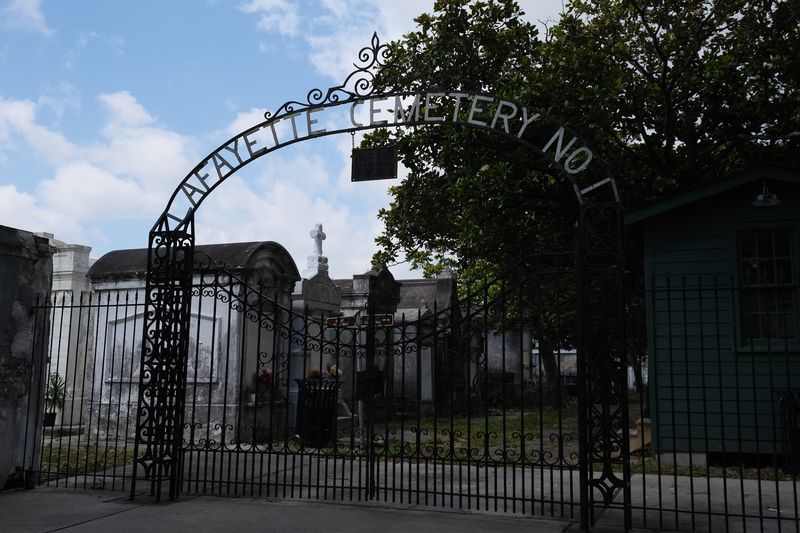
Rows of above-ground tombs form narrow corridors that look almost like small streets inside the Garden District. Founded in 1833, Lafayette Cemetery No. 1 preserves generations of New Orleans family history and became one of the city’s most recognizable burial grounds through photographs, literature, and film.
Its atmosphere naturally encouraged ghost stories. Visitors have described shadowy figures, footsteps, strange feelings, and indistinct presences among the tombs, although no single haunting dominates the cemetery’s folklore the way Marie Laveau does at St. Louis Cemetery No. 1.
The documented history is more compelling anyway. Family tombs, society vaults, inscriptions, epidemics, immigration, and nineteenth-century burial practices all remain visible within a remarkably compact space.
There is one important 2026 detail that older travel guides frequently get wrong. Lafayette Cemetery No. 1 at 1400 Washington Avenue remains closed to the general public while repairs and improvements continue.
The City of New Orleans currently allows family members of people interred there to arrange visits by appointment, but ordinary sightseeing access is not available.
That means the locked gate should be treated as exactly what it is. Do not follow outdated blog posts encouraging self-guided entry or try to slip inside with another group.
3. Holt Cemetery’s Handmade Remembrances
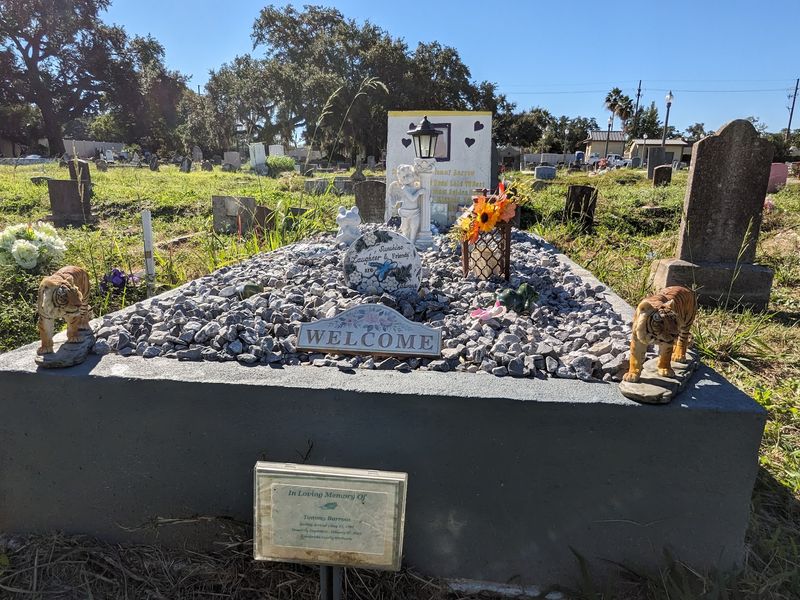
Hand-painted boards, concrete markers, personal objects, and simple decorations give this burial ground a completely different visual language from New Orleans’ grand marble cities of the dead. Holt Cemetery was established in 1879 to provide burial space for people of limited financial means, and many graves remain marked by families rather than professional monument companies.
That intimacy has also made the cemetery vulnerable to sensational storytelling. Tales about spells, supernatural activity, and unsettling discoveries circulate online, but most lack the kind of documentation that would justify treating them as anything more than rumor.
What is real is far more interesting. Graves here reflect working-class New Orleans history, individual creativity, family remembrance, and burial traditions shaped by economic circumstances very different from those represented by elaborate mausoleums elsewhere in the city.
The cemetery is municipally managed and located at 527 City Park Avenue. Current city information lists weekday hours from 7:30 a.m. to 2:45 p.m., with visitors expected to follow municipal cemetery rules.
Photography requires more thought here than in a monumental cemetery. Handmade memorials can include deeply personal photographs, messages, toys, flowers, and keepsakes that were never arranged for tourists.
2. Odd Fellows Rest And Its Symbol-Filled Entrance
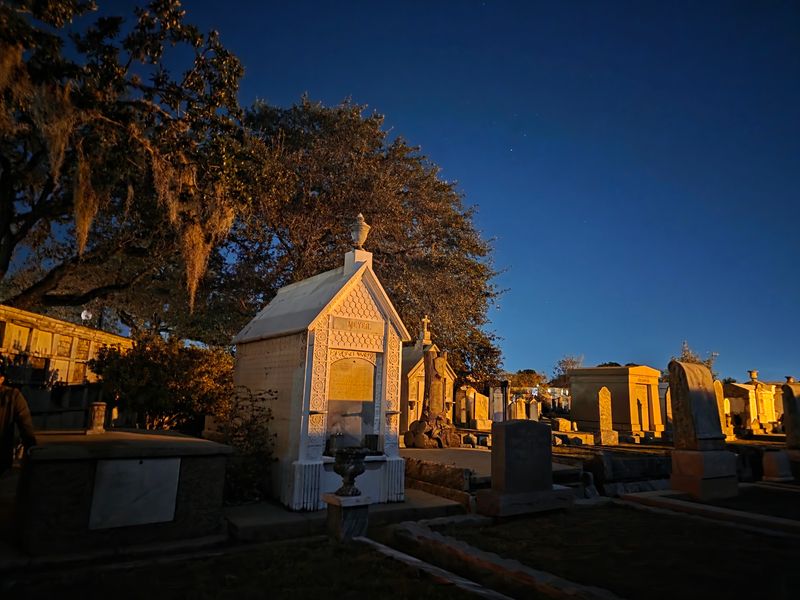
Eyes, beehives, links, and other unfamiliar symbols can look vaguely sinister when their original meaning has been forgotten. Odd Fellows Rest on Canal Street was established in the nineteenth century for members of the Independent Order of Odd Fellows, a fraternal organization whose visual language appears throughout the cemetery.
Those symbols were not designed as occult decoration. Fraternal groups frequently used images representing fellowship, labor, mortality, vigilance, charity, and shared moral ideals, and interpreting every eye or unusual emblem as proof of something supernatural misses the actual history.
The cemetery dates to 1849 and contains burials connected with some of the most difficult periods in New Orleans history, including devastating yellow fever epidemics. That alone gives the grounds a somber atmosphere without inventing a resident ghost.
General paranormal stories have accumulated around the property, but a single well-documented haunting is difficult to identify. Most accounts rely on the cemetery’s age, enclosure, symbolism, and appearance rather than one historical event tied to a particular apparition.
Odd Fellows Rest is located at 5055 Canal Street. Access has often been restricted, so the gates should never be assumed open simply because a map identifies the location.
1. Greenwood Cemetery’s Unusual Ghost Story
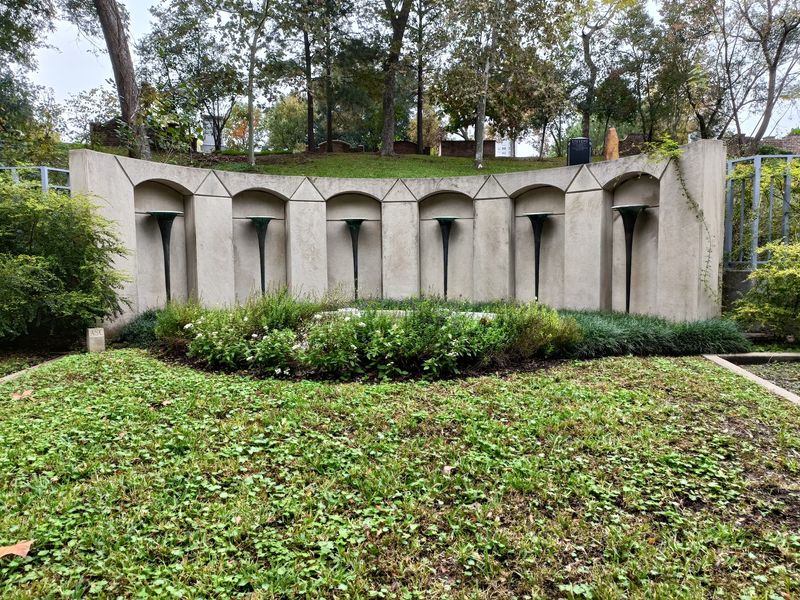
A giant bronze elk standing high above one burial plot is strange enough before the ghost stories even begin. Greenwood Cemetery at 5190 Canal Boulevard contains elaborate monuments, mausoleums, iron tombs, and fraternal memorials that make wandering the grounds feel almost like exploring an outdoor sculpture collection.
One of the cemetery’s stranger supernatural tales involves an old account of a sexton encountering shaggy creatures gathered around a pale figure. It is exactly the sort of bizarre story that survives because nobody quite knows what to do with it.
Treat it accordingly. The tale belongs to cemetery folklore rather than documented evidence, and it should not overshadow the real history represented by the thousands of people buried here.
Greenwood was established in 1852 by the Firemen’s Charitable and Benevolent Association. The organization’s connection with New Orleans firefighters helps explain several memorials and sections within the cemetery.
The grounds remain actively maintained and open to visitors. Current cemetery information lists daily hours beginning at 8 a.m., with closing around 4 to 4:30 p.m., so this is firmly a daytime destination rather than somewhere to test ghost stories after dark.
Maps are available, and the large grounds make using one worthwhile if you want to locate a particular monument.