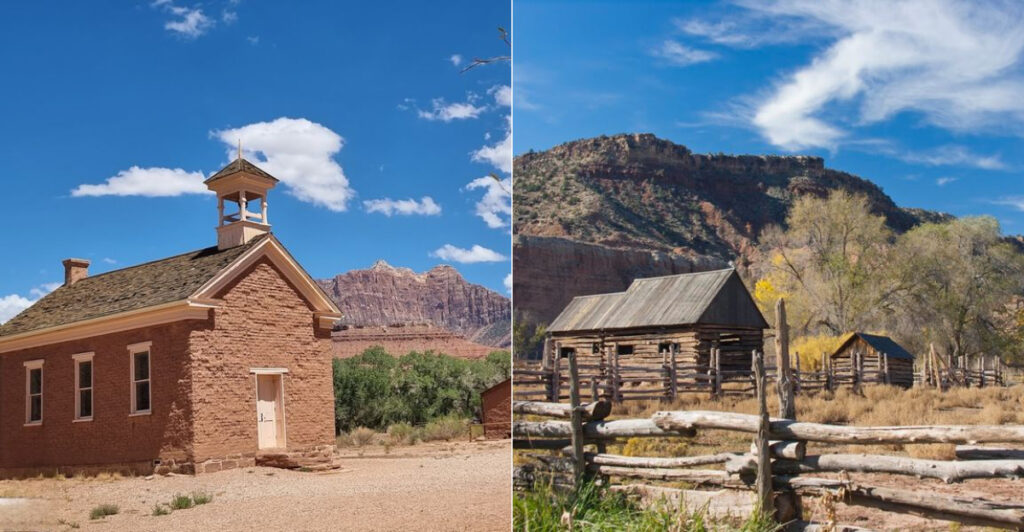
Some abandoned places feel empty; this one feels as though the past simply stepped outside for a moment. Reached by a winding dirt road in southern Utah, the settlement dates to 1859, when pioneer families built homes, planted roots, and tried to outlast the river that repeatedly flooded their land.
By the mid-1900s, the community had gone quiet, but its adobe and brick buildings remained beneath towering red cliffs. That survival is what makes the visit so striking.
You are not looking at a replica or a polished attraction. You are walking through real structures shaped by persistence, disaster, and time.
Admission costs nothing, yet the experience carries more weight than many ticketed stops. Utah’s desert light gives every wall, window, and weathered doorway a cinematic stillness.
Anyone already traveling through the region should make the detour, because some places stay with you precisely because they almost disappeared for good.
The Dirt Road That Earns You the Destination
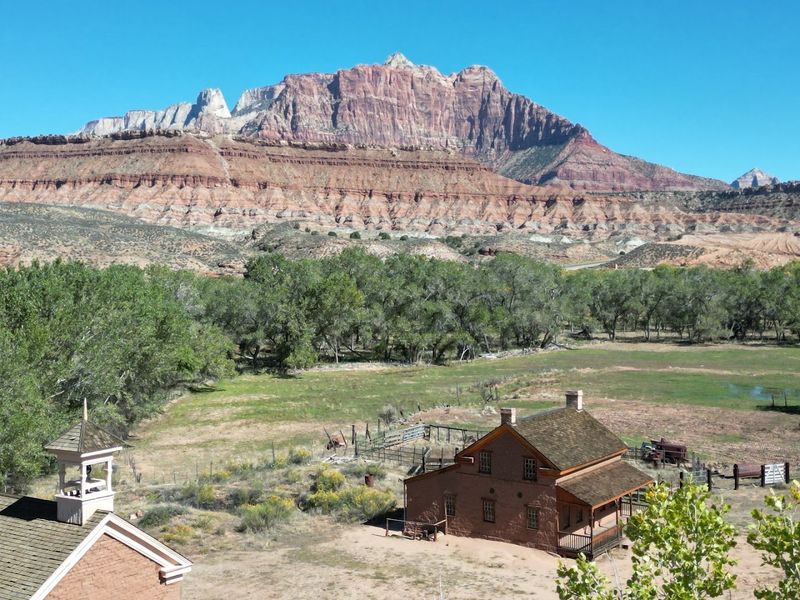
Some places make you earn the experience, and this is one of them. The approach from Rockville is a dirt road that winds past scrubby desert brush and sun-baked rock, and that mild inconvenience is actually part of the charm.
It filters out the casual crowd and leaves behind the genuinely curious.
The road is passable by most vehicles, so no off-road beast is required. Visitors consistently note that the rough stretch feels less than a mile once you’re on it, which is far shorter than the anticipation builds it up to be.
Quick Tip: Stop at a gas station before turning off the main road. There are no bathrooms at the site, and the nearest facilities are back in town.
Plan accordingly and you’ll enjoy every minute without the mental countdown.
The drive itself sets the mood in a way a paved parking lot never could. By the time the first weathered building appears on the horizon, framed by those massive red cliffs, you’ll understand exactly why people keep making this detour on their way to or from Zion.
A Pioneer Cemetery That Stops You Cold
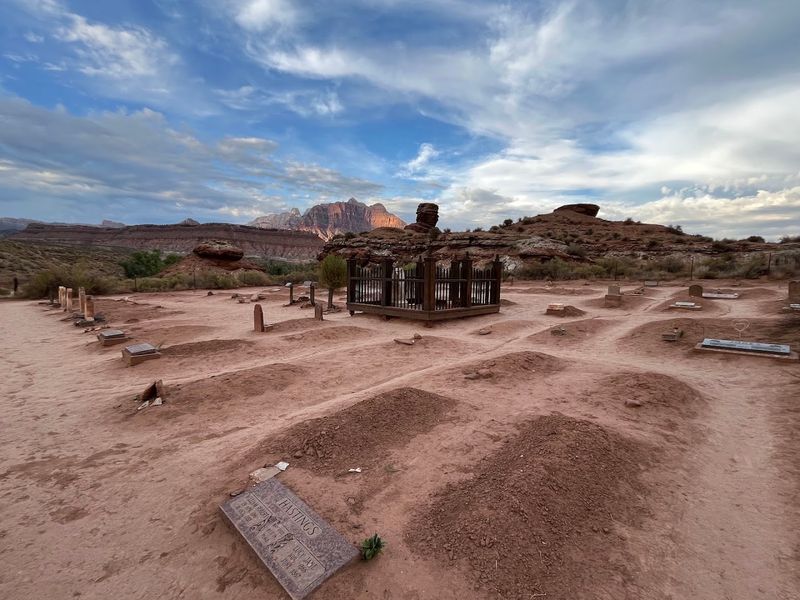
Before you even reach the main town site, the cemetery appears on the left side of the road, and it has a way of quietly demanding your full attention. The headstones are old, the names are faded, and the dates tell a story that no informational sign could fully capture.
Many of the people buried here died young. The proximity of those dates, clustered together across hard seasons, speaks to just how brutal frontier life along the Virgin River actually was.
Visitors often leave coins and small offerings on the graves, a spontaneous tradition that has developed organically over the years.
Why It Matters: The cemetery is not a side note; it is the emotional anchor of the entire visit. Reading those names and dates reframes everything you see in the town buildings afterward.
Bring a camera, but also bring a moment of genuine stillness. The setting, with Zion’s red walls rising behind the graves, is visually striking and quietly sobering.
It’s the kind of place that makes modern inconveniences feel embarrassingly small by comparison.
The Adobe Buildings Still Standing Against All Odds
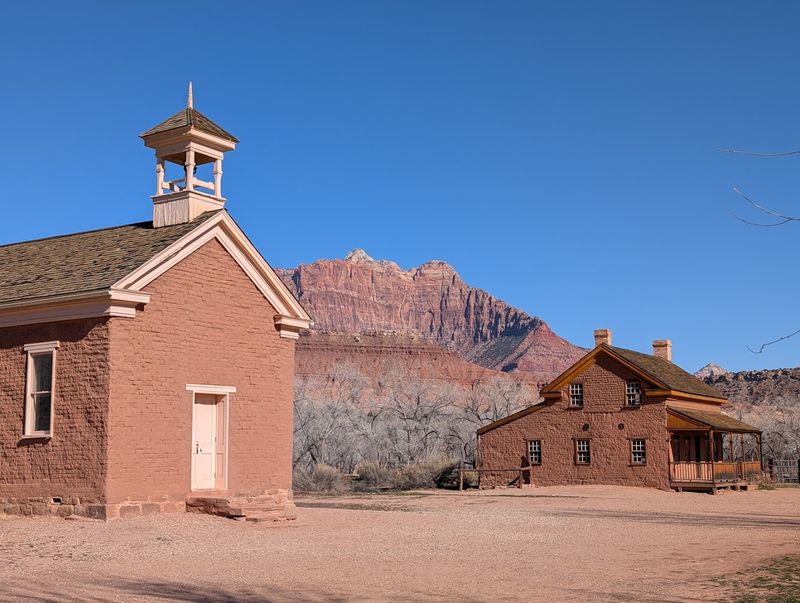
There are roughly four to six structures still standing at Grafton, and the fact that any of them survived floods, desert heat, and a century of abandonment is its own quiet miracle. The buildings include a schoolhouse-church, a large main house, and several smaller homestead structures that have been carefully restored.
The church building is typically locked, but a photograph posted on the door shows the interior so visitors aren’t left entirely in the dark. The big house next to it is open and contains informational signs that walk you through the history of the site in clear, readable detail.
Insider Tip: Watch your footing inside the outbuildings. The floors in some structures are stable but uneven, and a little awareness goes a long way toward keeping the visit enjoyable rather than eventful.
What makes these buildings feel different from a reconstructed museum set is the texture. The walls still carry the weight of real use.
The wood grain, the crumbling plaster, the hand-hewn beams, all of it reads as genuinely old rather than carefully staged. That authenticity is rare and worth the detour alone.
The Butch Cassidy Connection That Surprises Most Visitors
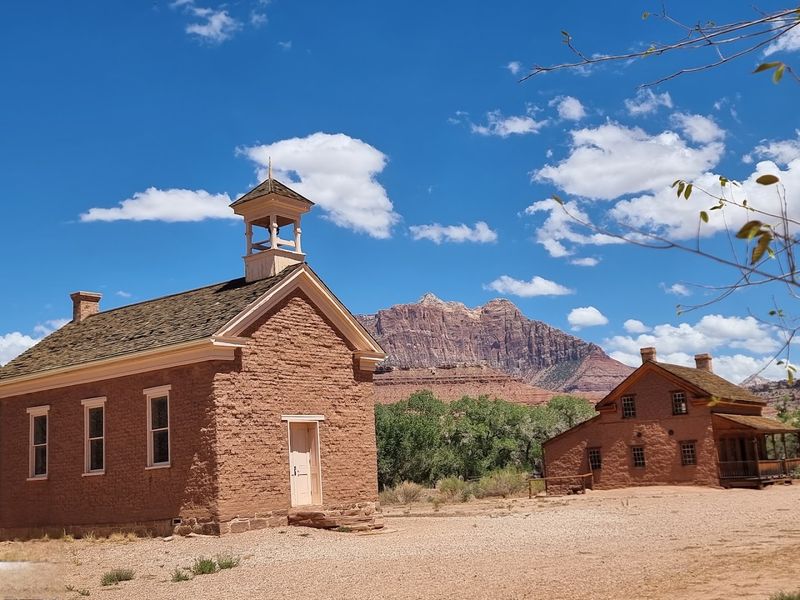
Most people arrive at Grafton for the ghost town atmosphere and leave with an unexpected film trivia story to tell at dinner. The site served as a filming location for the 1969 classic Butch Cassidy and the Sundance Kid, specifically the lighthearted bicycle scene set to Raindrops Keep Fallin on My Head.
The church building and the main house are the structures most visibly connected to that filming. Standing in front of them with that piece of knowledge lodged in your brain gives the whole place an extra layer of personality that pure history alone doesn’t always deliver.
Fun Fact: Some visitors have reportedly met relatives of the original property owners during their visit, which adds a living, breathing human connection to a place that could otherwise feel entirely frozen in the past.
It’s a genuinely unexpected bonus for a free, self-guided stop. The site doesn’t lean heavily on the Hollywood angle, which actually makes discovering it feel like your own small find rather than a marketed attraction.
That restraint is refreshing in an era when everything gets a gift shop.
What Free and Self-Guided Actually Means Here
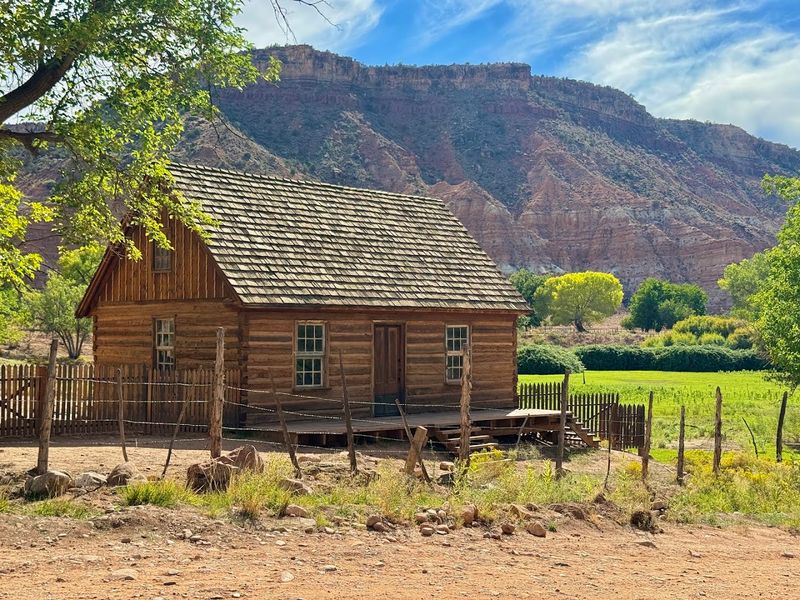
Grafton costs nothing to enter, which in today’s national park economy feels almost suspicious. No ticket booth, no timed entry reservation, no ranger waiting to hand you a pamphlet.
You simply arrive, park, and start walking at whatever pace suits the moment.
The site is open around the clock, every day of the week, which makes it a genuinely flexible stop whether you’re an early riser chasing golden light or someone who wandered off the highway later in the afternoon. Informational signs throughout the grounds do the guiding work efficiently and without being overwhelming.
Best For: Families who want history without a structured tour, couples who prefer to set their own pace, and solo travelers who enjoy reading at their own speed without feeling rushed by a group itinerary.
Donations are encouraged and genuinely appreciated. The Grafton Heritage organization maintains the site, and a few dollars dropped in the donation box helps ensure those buildings keep standing for the next round of curious visitors.
Think of it as paying forward the experience for someone who hasn’t discovered this place yet.
Fitting Grafton Into Your Zion National Park Trip
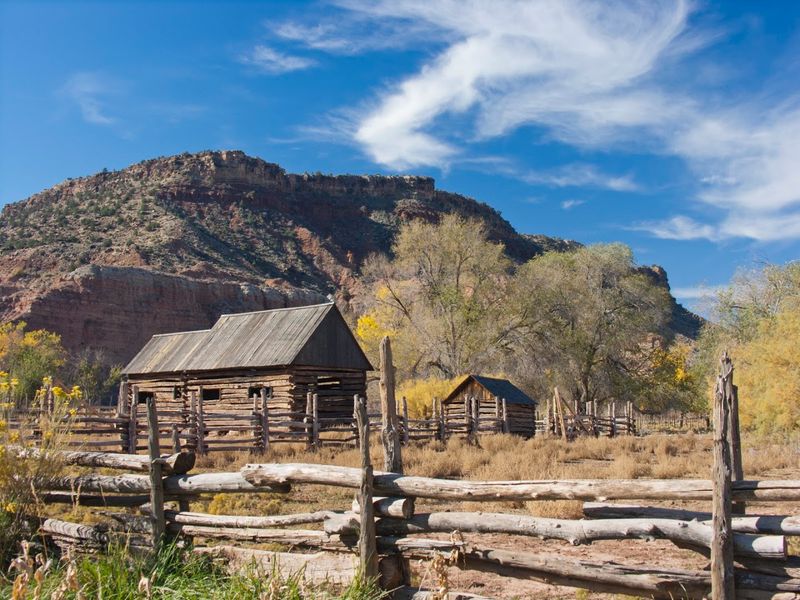
Grafton sits roughly twenty minutes from Springdale, which makes it an almost effortless addition to any Zion-anchored itinerary. The standard advice from visitors is consistent: swing by on your way out of the area rather than treating it as a dedicated destination requiring its own full day.
Thirty minutes is genuinely enough time to walk the cemetery, read the signs, step inside the open buildings, and take photos that will confuse your friends back home who can’t figure out where exactly you were. The red cliffs of Zion rising behind the pioneer structures create a backdrop that photographs almost unfairly well.
Planning Advice: Go earlier in the day if you want the site to yourself. A steady stream of visitors passes through, particularly during peak Zion season, but the space is open enough that it rarely feels crowded.
Mid-morning on a weekday is the sweet spot.
Pair it with a stop in Rockville on the way back and you’ve built a genuinely satisfying half-day loop that costs almost nothing and delivers the kind of low-effort, high-memory experience that road trips are supposed to produce but rarely do.
Why Grafton Stays With You Long After You Leave
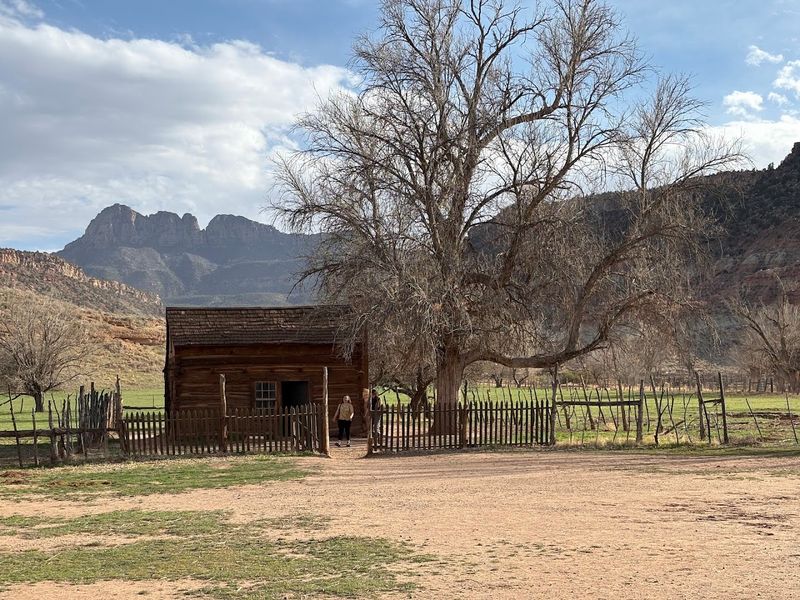
There is something about Grafton that resists easy explanation. The buildings are small.
The grounds take maybe thirty minutes to cover. And yet visitors consistently describe a magnetic quality that keeps them lingering longer than planned, rereading signs they already read once, circling back to the cemetery for one more look.
Part of it is the landscape. The red walls of Zion rising directly behind a cluster of abandoned pioneer structures create a visual contrast so dramatic it feels almost theatrical.
Part of it is the vegetation: overgrown grapevines, old fruit trees, and milkweed still growing where a homestead once actively tended the land.
Common Mistakes to Avoid: Don’t skip the cemetery thinking the main buildings are the real attraction. Don’t wander onto property marked as private, as some structures across the road are not part of the public site.
And don’t leave without at least glancing at the donation box near the entrance.
Grafton earns its reputation not through spectacle but through stillness. It’s the kind of place a friend texts you about with three words and complete confidence: just go there.
That’s the whole recommendation, and it turns out to be more than enough. Anyone already traveling through the region should make the detour, because some places stay with you precisely because they almost disappeared for good.