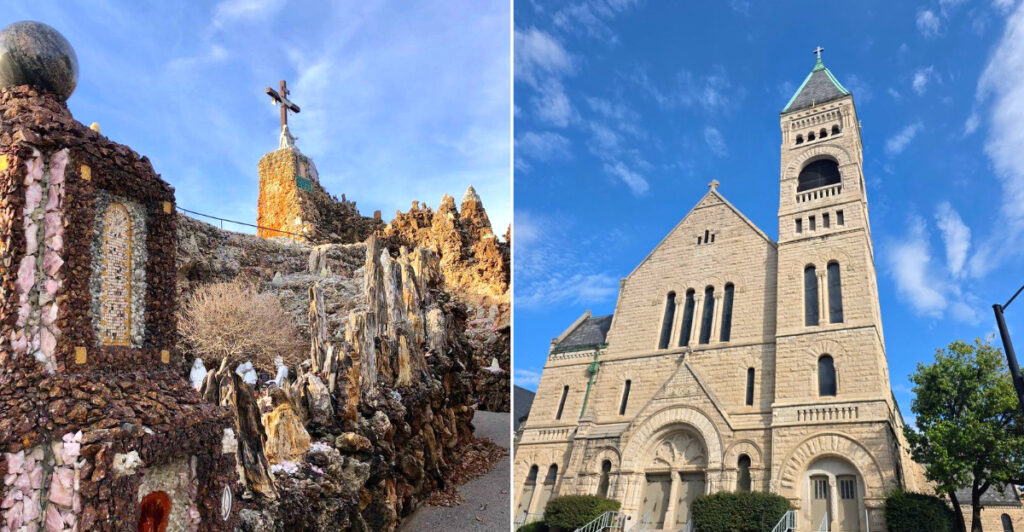
Iowa road trips get a lot more memorable when the stops come with stained glass, stone towers, and a little quiet built into the walls.
These basilicas, cathedrals, and shrines are not just pretty places to photograph before moving on. They carry immigrant history, local devotion, serious craftsmanship, and the kind of stillness that makes you lower your voice without being told.
For a meaningful 2026 Iowa drive, these sacred spaces bring beauty, history, and reflection together in a way that stays with you long after the road opens back up.
1. Basilica of St. Francis Xavier, Dyersville
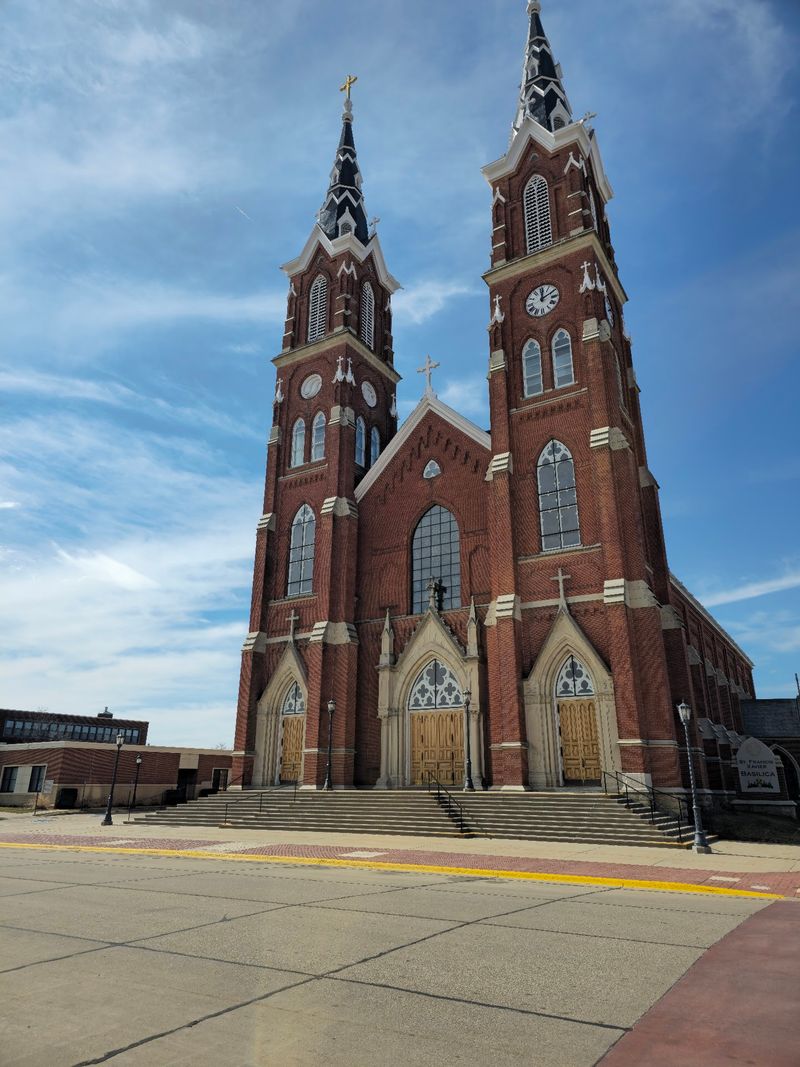
Few small-town churches in America can claim the title of minor basilica, but the Basilica of St. Francis Xavier in Dyersville, Iowa earns it with absolute confidence.
Completed in 1889 and designated a basilica in 1956, this stunning Gothic Revival structure features twin spires that soar 212 feet into the Iowa sky, making it visible from miles around.
The interior is equally jaw-dropping, with hand-painted murals, ornate altars, and magnificent stained glass windows that fill the nave with color on a sunny afternoon.
Dyersville itself is a charming small town of about 4,000 people, perhaps best known for the Field of Dreams movie site nearby, so combining both stops makes for a fantastic day out.
Guided tours of the basilica are available and highly recommended, since the docents share fascinating stories about the German immigrant community that built this masterpiece brick by brick.
Spring and early fall are ideal times to visit, when the light is soft and the surrounding landscape looks its most picturesque.
Parking is easy, the grounds are well-kept, and there is a peaceful garden area perfect for a quiet moment of reflection before or after you step inside.
If you only pick one stop on this entire road trip, make it Dyersville, because this basilica is simply unforgettable.
2. Basilica of St. John, Des Moines
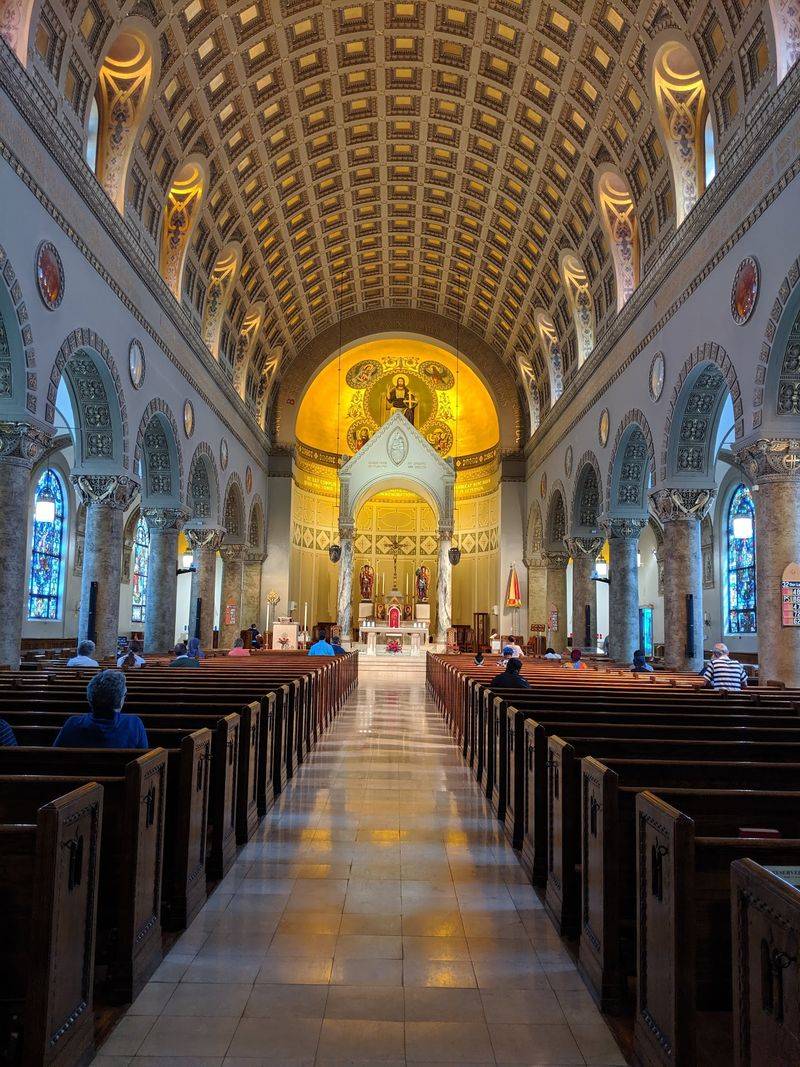
Sitting proudly on University Avenue in Des Moines, the Basilica of St. John has been a cornerstone of Iowa’s Catholic community since its construction in the early twentieth century.
Granted basilica status in 1989, this Lombardy Romanesque building draws visitors with its Indiana limestone exterior, rounded arches, and a 115-foot campanile that has marked time for generations of neighborhood residents.
Step inside and you are greeted by a rich interior featuring detailed woodwork, marble accents, a gold coffered ceiling, and beautiful stained glass that casts jewel-toned light across the pews during morning Mass.
The basilica serves an active parish, so visitors are welcome but should be mindful of scheduled services when planning their arrival time.
Des Moines itself offers plenty to explore around the visit, from the nearby Drake University neighborhood to local cafes and restaurants within a short drive.
History buffs will appreciate knowing that the parish dates back to 1905 and that the current church was dedicated in 1927.
The surrounding neighborhood has a lived-in, welcoming character that makes the whole experience feel grounded rather than purely touristy.
A visit here pairs wonderfully with a stop at St. Ambrose Cathedral, also in Des Moines, turning the capital city into a mini pilgrimage of its own.
3. Cathedral of St. Raphael, Dubuque
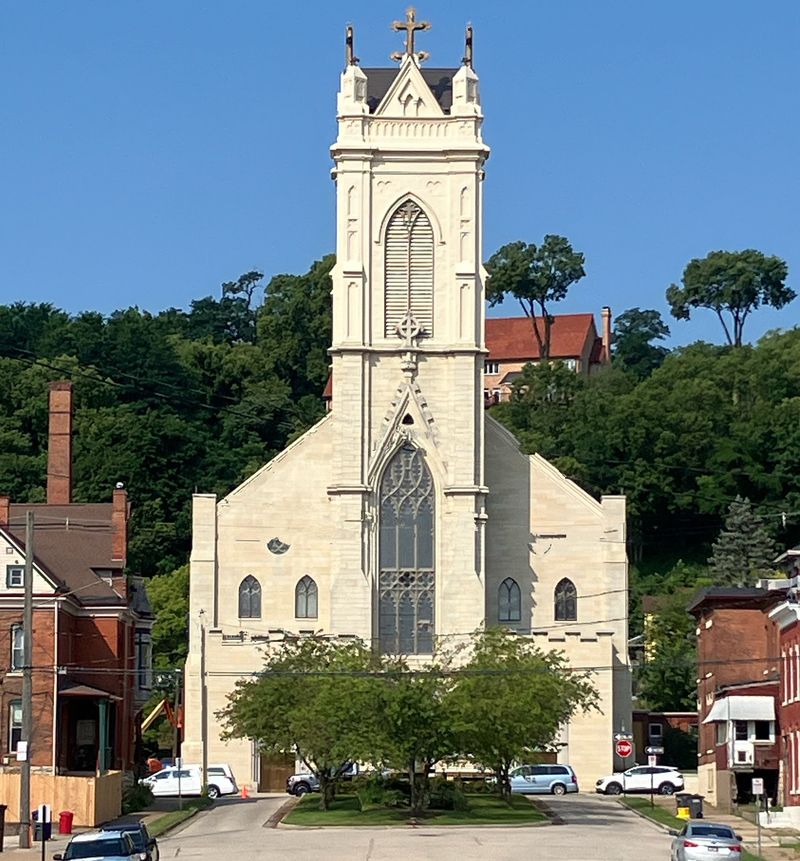
Dubuque is one of Iowa’s oldest and most architecturally rich cities, and the Cathedral of St. Raphael fits right into that legacy with impressive ease.
Located on Bluff Street, this Gothic Revival cathedral has served as the mother church of the Archdiocese of Dubuque since the original St. Raphael church became a cathedral in 1837.
The present cathedral was begun in 1857 and reflects multiple phases of construction and renovation, giving it a layered character that architecture lovers will find genuinely fascinating to study up close.
Inside, the cathedral features a soaring nave, elegant side chapels, stained glass, and a refined decorative scheme that balances grandeur with reverence.
The cathedral stands only a few blocks from the Mississippi River, and the surrounding Cathedral Historic District offers plenty of handsome architecture to explore after your visit.
The city also has excellent local restaurants and a vibrant arts scene, making it easy to turn a cathedral visit into a full weekend getaway.
A virtual tour is available online, and visitors planning a more formal visit should check with the parish office before arriving.
For anyone serious about Iowa’s religious and architectural heritage, St. Raphael is an absolute must on the 2026 road trip list.
4. Sacred Heart Cathedral, Davenport
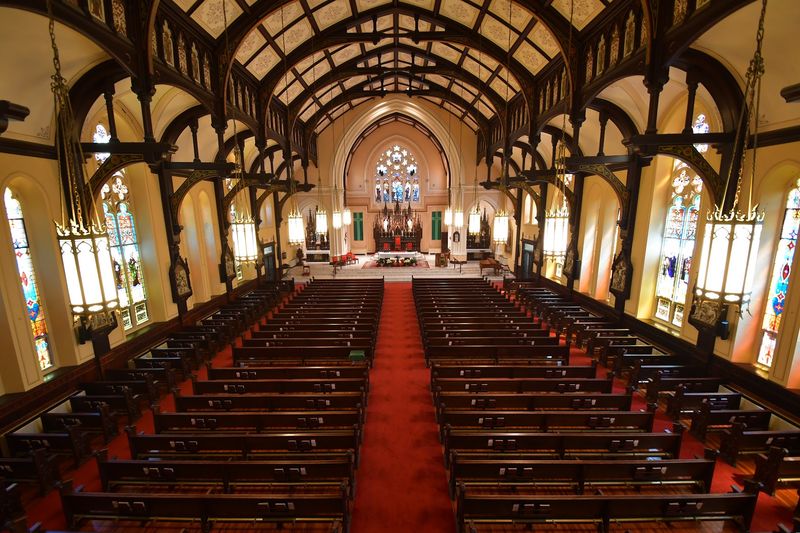
Anchoring East 10th Street in Davenport, Sacred Heart Cathedral carries the weight of history with a grace that makes every visit feel special.
As the mother church of the Diocese of Davenport, this cathedral has been central to Catholic life in eastern Iowa since the diocese was established in 1881.
The building features a sturdy brick Gothic exterior that speaks to the craftsmanship of the era, while the interior rewards closer inspection with detailed decorative elements and a peaceful, contemplative atmosphere.
Davenport is part of the Quad Cities metropolitan area, sitting right on the banks of the Mississippi River, which means you have a scenic backdrop for your entire visit.
The riverfront area is just a short drive from the cathedral, so pairing your spiritual stop with a walk along the Mississippi is an easy and rewarding plan.
Local history enthusiasts will appreciate that Davenport has a rich immigrant heritage, much of which is reflected in the artwork and records preserved within the cathedral walls.
Masses are held regularly, and the parish community is known for being warm and welcoming to visitors who show up with respectful curiosity.
If you are already planning to visit Trinity Episcopal Cathedral in Davenport, combining both stops into a single day makes perfect logistical sense.
5. St. Ambrose Cathedral, Des Moines
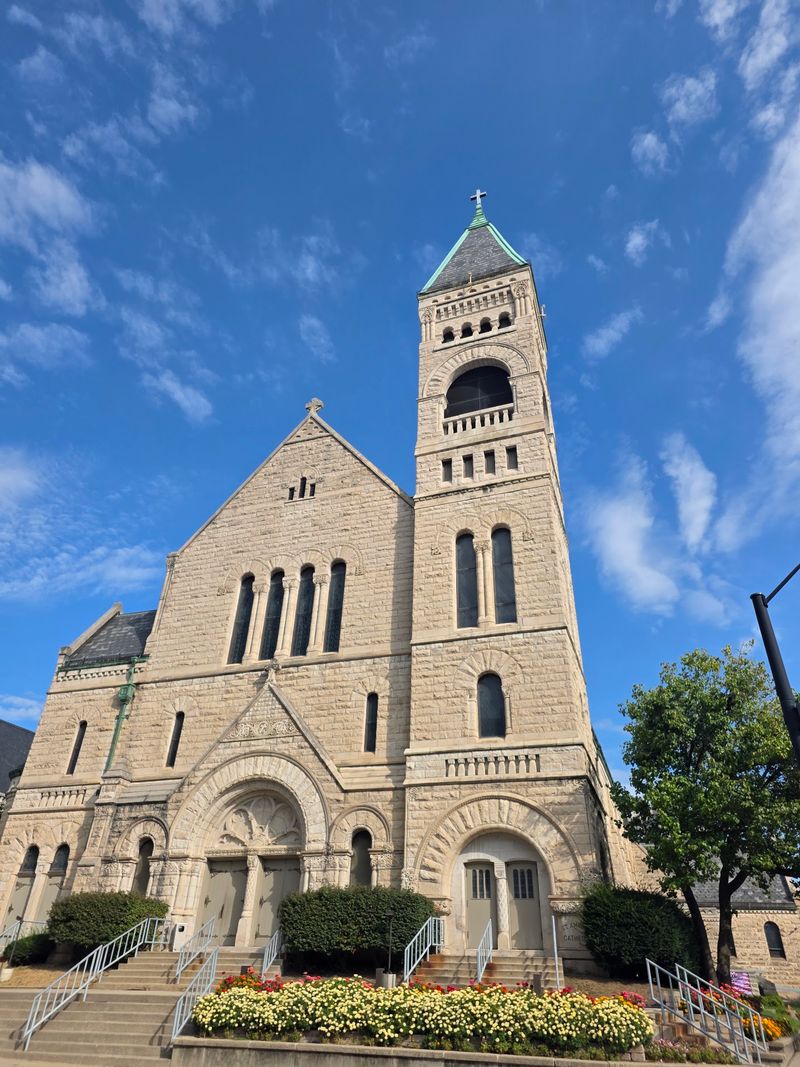
High Street in Des Moines is home to a cathedral that manages to feel both commanding and inviting at the same time, which is not an easy architectural trick to pull off.
St. Ambrose Cathedral serves as the seat of the Diocese of Des Moines, and its Richardsonian Romanesque design gives the building a sturdy, timeless quality that photographs beautifully in almost any season.
The interior features broad rounded arches, richly painted surfaces, and stained glass windows that illustrate biblical scenes and the history of Catholic life in Iowa.
The cathedral sits in downtown Des Moines, so a morning spent exploring the church can flow naturally into an afternoon visiting other central-city attractions, with the Iowa State Capitol a short drive away.
Des Moines has grown considerably as a cultural destination in recent years, with strong restaurant and coffee shop scenes that make it easy to build a full day around your cathedral visit.
Formal group tours can be arranged through the cathedral office, and a self-guided visitor guide is also available for people who prefer to explore independently.
Parking is available behind the cathedral, while additional parking options depend on the day and time of the visit.
6. Cathedral of the Epiphany, Sioux City
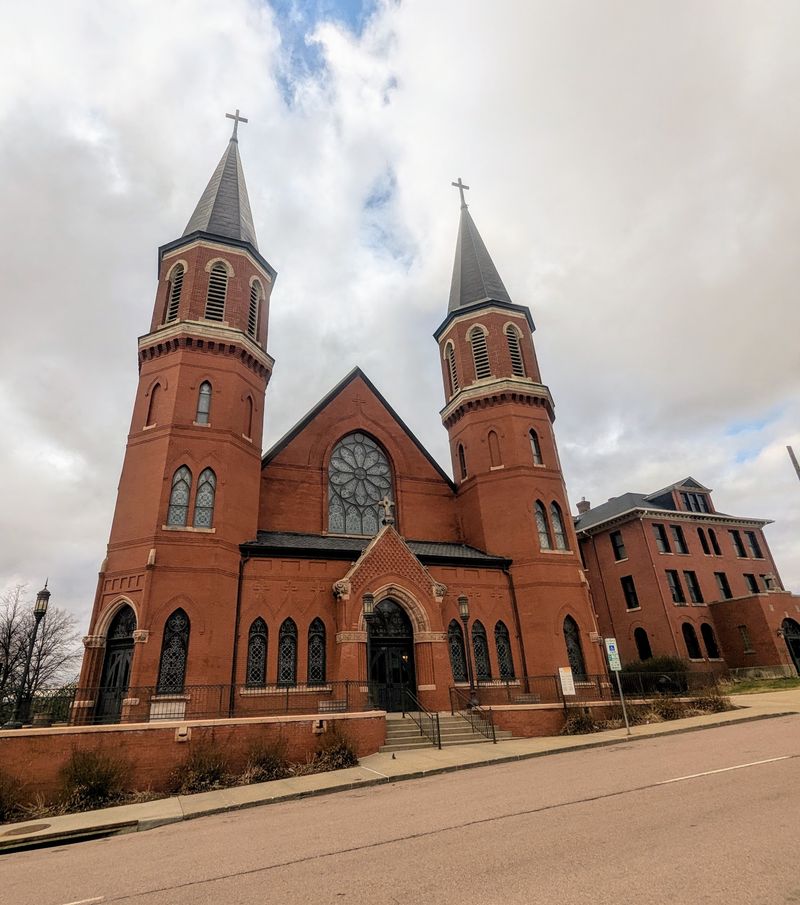
Sioux City sits at the northwestern corner of Iowa where three states meet. The Cathedral of the Epiphany stands as a fitting landmark for a city with that kind of geographic swagger.
Serving as the seat of the Diocese of Sioux City since the diocese was created in 1902, the Cathedral of the Epiphany on Douglas Street has been a spiritual home for generations of families in the region.
The building’s exterior presents a dignified stone facade that holds its own against the surrounding urban landscape, while the interior offers a calm, detailed space filled with religious art and fine craftsmanship.
Sioux City itself is a city of about 85,000 people with a lively downtown area, a well-regarded art museum, and easy access to the Missouri River, all of which make it worth more than just a quick drive-through visit.
The cathedral is an active parish, so timing your visit around a Sunday morning can give you the full experience of a community gathered together in a beautifully appointed space.
History fans will want to know that Sioux City played a significant role in the westward expansion era, and the cathedral’s history reflects that broader story of growth and settlement.
Combining this stop with Trinity Heights Queen of Peace Shrine, also in Sioux City, turns the city into a two-stop spiritual highlight of the whole road trip.
7. Cathedral Church of St. Paul, Des Moines
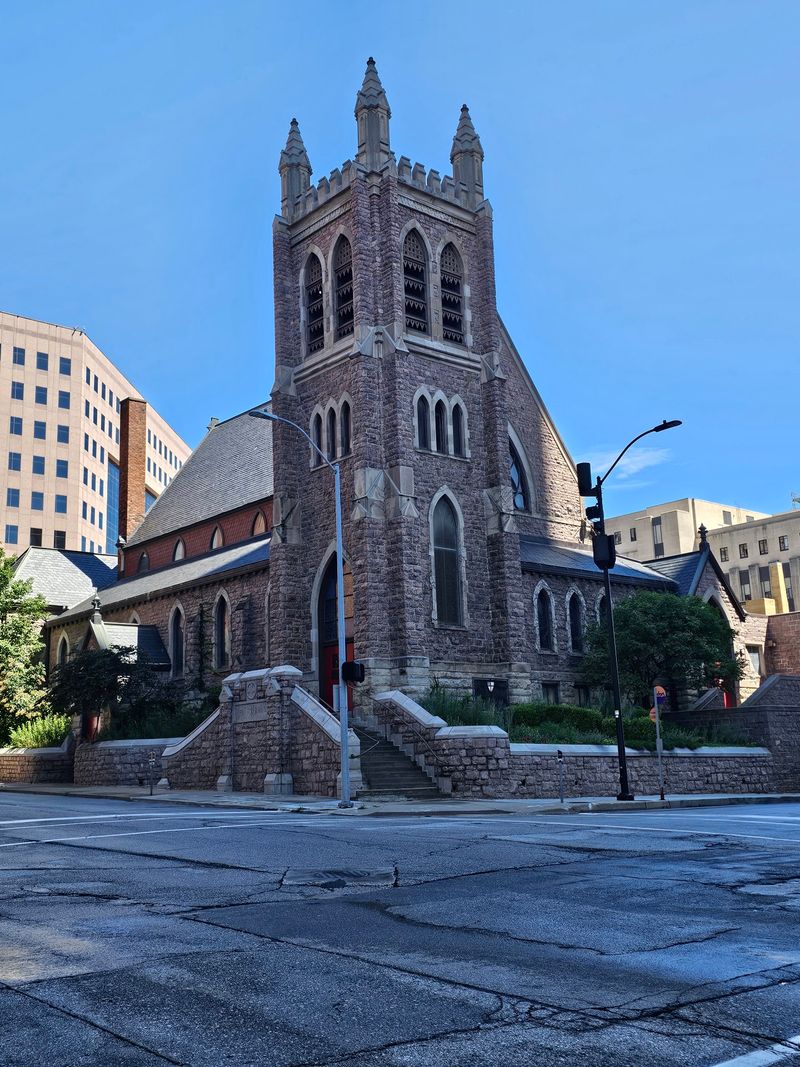
Not every cathedral in Iowa belongs to the Catholic tradition. The Cathedral Church of St. Paul in Des Moines makes a strong case for why the Episcopal tradition deserves equal attention on this road trip.
Located on High Street, just steps from St. Ambrose Cathedral, St. Paul’s serves as the seat of the Episcopal Diocese of Iowa and brings a distinctly English Gothic sensibility to the Des Moines skyline.
The stone exterior is elegant and understated, and the interior carries that same restrained beauty, with fine woodwork, gorgeous stained glass, and a choir program that has earned an excellent regional reputation.
Because St. Paul’s and St. Ambrose are practically neighbors, visiting both on the same afternoon is not just convenient, it is genuinely fun to compare the two traditions side by side.
The cathedral hosts regular public services, concerts, and community events, making it an active hub of cultural and spiritual life rather than a static museum piece.
Architecture enthusiasts will appreciate the careful attention to Gothic detailing throughout the building, from the carved stone elements to the proportions of the nave and transept.
Des Moines rewards slow, curious travelers who take the time to look past the obvious attractions, and St. Paul’s Cathedral is exactly the kind of discovery that makes a road trip feel truly worthwhile.
8. Trinity Episcopal Cathedral, Davenport
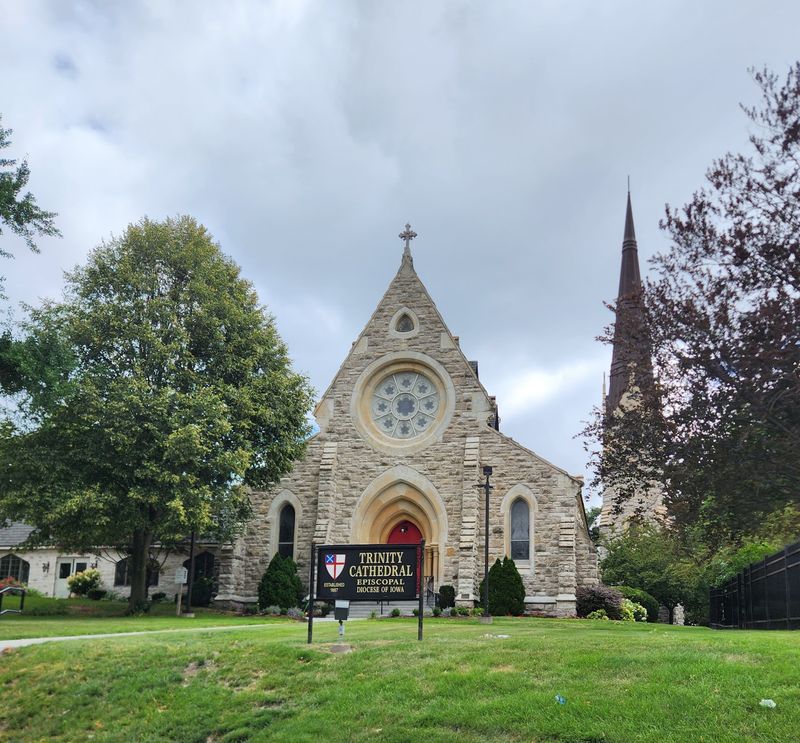
There is something wonderfully rooted about Trinity Episcopal Cathedral in Davenport, a church that has been gathering its community on West 12th Street since the nineteenth century.
Designated the Historical Cathedral of Iowa in 1992, Trinity carries significant institutional history, while St. Paul’s in Des Moines serves as the Episcopal Diocese of Iowa’s liturgical cathedral.
The Gothic stone exterior is handsome and well-maintained, and the interior features the kind of warm wood tones and carefully chosen stained glass that make you want to sit down and stay a while.
Davenport’s location on the Mississippi River gives the whole city a scenic quality, and Trinity’s neighborhood on West 12th Street has a quiet residential character that contrasts nicely with the busier riverfront areas.
The cathedral community is active and engaged, with regular worship, musical programs, and outreach work that keep the historic building connected to modern community life.
For anyone interested in American ecclesiastical architecture, Trinity represents an important example of how Gothic forms were adapted to fit the Midwest’s particular landscape and culture.
Weekday visitors can use the north entrance during posted office hours and ring the buzzer for assistance, while the main entrances are open during scheduled services.
9. Shrine of the Grotto of the Redemption, West Bend
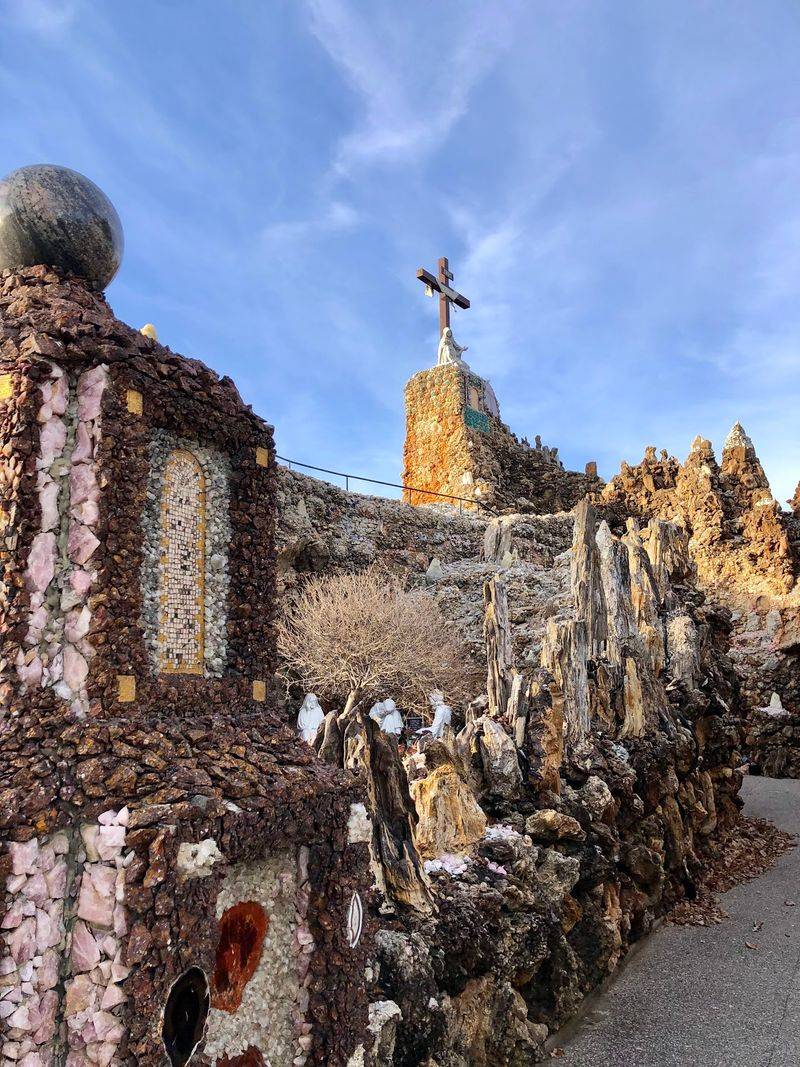
Calling the Grotto of the Redemption in West Bend, Iowa a mere roadside attraction would be a serious understatement, because this place is unlike anything else in the entire country.
Built by Father Paul Dobberstein over a period of 42 years starting in 1912, the grotto is a massive outdoor shrine constructed from precious stones, minerals, and petrified materials gathered from around the world.
Nine separate grottos make up the complex, each depicting a Christian scene connected with humanity’s fall and redemption, and the site holds one of the largest collections of precious stones and gems found in a single location.
West Bend is a small north-central Iowa town, which makes stumbling upon this extraordinary creation feel all the more surprising and memorable.
A museum on the grounds explains the history of the grotto’s construction and showcases additional mineral specimens, early photographs, and tools used by Father Dobberstein.
The outdoor shrine is open throughout the year, while seasonal guided tours generally run from April through the end of October.
Plan to spend at least two hours here, because rushing through the grotto means missing countless small details that reward careful, unhurried attention.
This is the kind of place that genuinely surprises people, and most visitors leave saying they wish they had known about it sooner.
10. Trinity Heights Queen of Peace Shrine, Sioux City
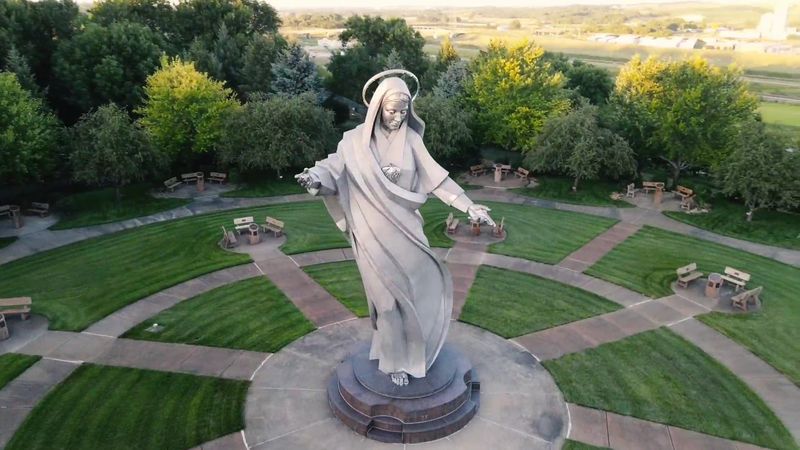
Perched on a quiet hillside in Sioux City, the Trinity Heights Queen of Peace Shrine offers something that most urban destinations simply cannot, a genuine sense of stillness within the city.
The centerpiece of the shrine is a striking 30-foot statue of the Immaculate Heart of Mary Queen of Peace, which serves as a visual anchor for the beautifully landscaped property.
The grounds include a 33-foot statue of the Sacred Heart of Jesus, more than two dozen shrines and memorial spaces, religious statuary, and walking paths that invite visitors to move through the site slowly and thoughtfully. Inside the St. Joseph Center and Museum, visitors can also see a 22-foot-long, life-size carving of the Last Supper.
Trinity Heights is owned by Queen of Peace, Inc., a nonprofit organization formed by laypeople. Development began in the mid-1980s, the grounds welcomed their first visitors in 1990, and the site became an established center for prayer in the early 1990s.
The Sioux City location means you can pair this visit with the Cathedral of the Epiphany for a spiritually rich and architecturally varied day in the city.
Visiting in the early morning or late afternoon gives you attractive light for photography and may offer a quieter experience on the grounds.
The grounds are normally open daily from 9 AM to 9 PM, and the nonprofit relies on visitor donations to maintain the property and its many shrines.
The combination of outdoor beauty, religious art, and genuine tranquility makes Trinity Heights a fitting and memorable final destination for this remarkable journey through Iowa’s sacred spaces.