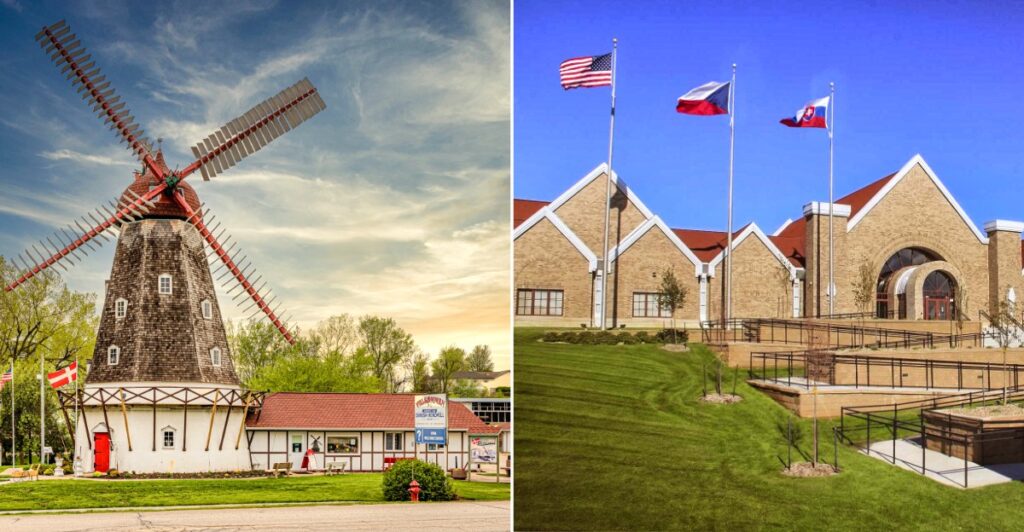
A German farmhouse dating back to the 1660s probably isn’t what you’d expect to find in Iowa, but that’s exactly what makes exploring this state so interesting.
And surprisingly, it’s only one of several places where European history has found a lasting home.
I knew Iowa had strong immigrant roots, but I hadn’t realized just how many remarkable landmarks were still around.
Some were actually brought across the Atlantic, while others were built by communities determined to preserve the traditions they left behind.
The details are what really caught my attention. A Danish windmill with nearly two centuries of history is impressive enough, but an astronomical clock inspired by Prague?
That’s a rather unexpected sight in the Midwest.
And there’s plenty more to discover beyond the familiar tourist stops.
These twelve Iowa destinations offer a fascinating glimpse of Europe, and a few might make you question how much you really know about the state.
1. Vermeer Mill, Pella
Pella has a windmill that was born in the Netherlands and now spins in the heart of Iowa.
The Vermeer Mill stands about 124 feet tall at 714 E 1st St in Pella, Iowa. It was built in the Netherlands and rebuilt here in 2002.
It is a working grain mill, so the sails are not just for show. Guided tours let you step inside and see how wind power turns grain into flour.
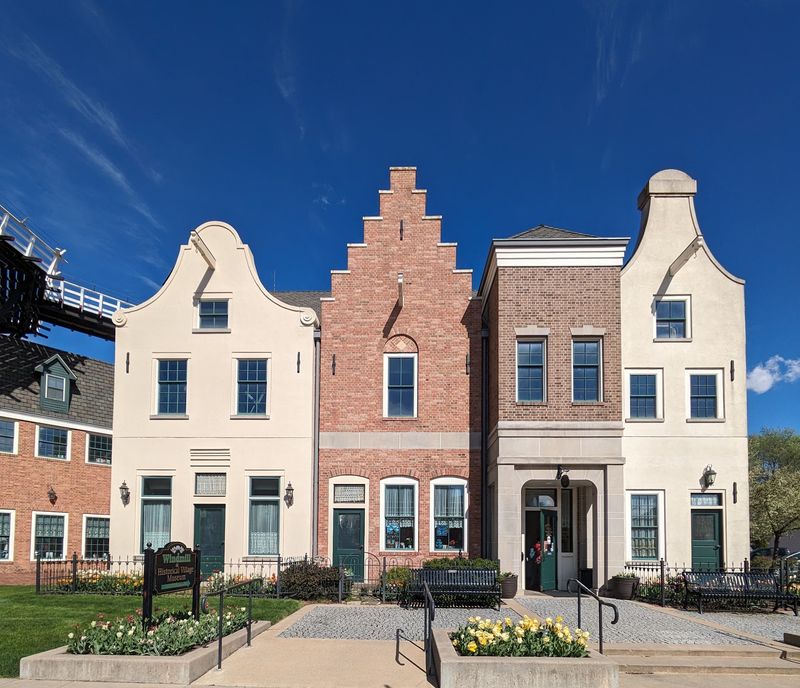
Right next to the mill sits the Historical Village, where old buildings show how early Dutch settlers lived. You can wander from house to house and picture daily life in the 1800s.
The streets around the mill are full of Dutch-style architecture, with tidy brick fronts and decorative touches. It feels like a postcard from a small town in the Netherlands.
Tulip season in spring is a favorite time to visit, since the town celebrates its roots with color and festivities. Even on a quiet weekday, though, the mill makes a fine photo stop.
Bring your camera and leave time for a stroll through the historic district. Some places say welcome in Dutch, and Pella says it with a giant windmill.
2. Windmill Park, Orange City
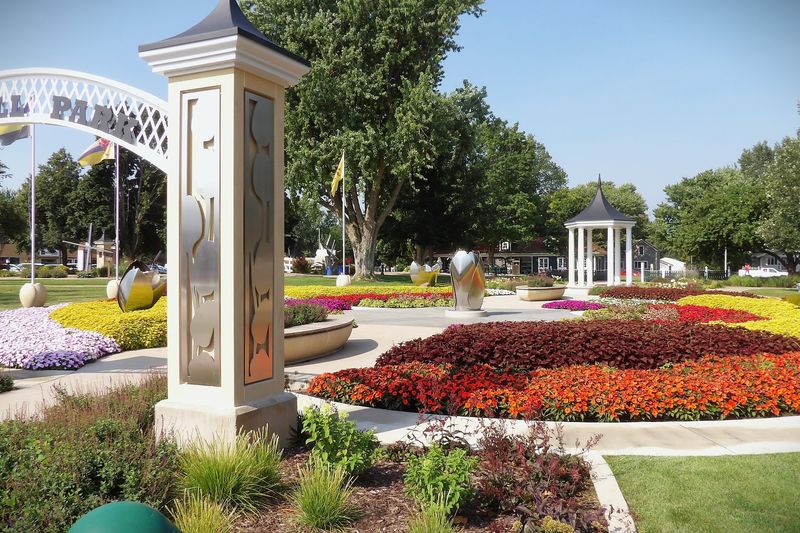
Tulips, wooden shoes, and a windmill all share one tidy corner of northwest Iowa.
Windmill Park sits at 201 Arizona Avenue NW in Orange City, Iowa. It anchors a downtown that proudly shows off its Dutch heritage.
The park is the heart of the annual Tulip Festival, when the town fills with color and music. Even outside festival days, the setting stays charming and calm.
Walk the public square and look up at the storefronts. Many have decorative gables inspired by historic buildings in the Netherlands, and each one adds a little personality to the street.
Families will like the open space, which is great for a picnic or a quick stretch after a long drive. The windmill also makes a handy backdrop for photos.
If you can, visit in mid-May to see the festival at its liveliest. If crowds are not your thing, a quiet fall afternoon shows off the town just as nicely.
Plan to wander downtown for an hour or two. You may leave wishing you had packed a pair of wooden clogs.
3. Danish Windmill, Elk Horn
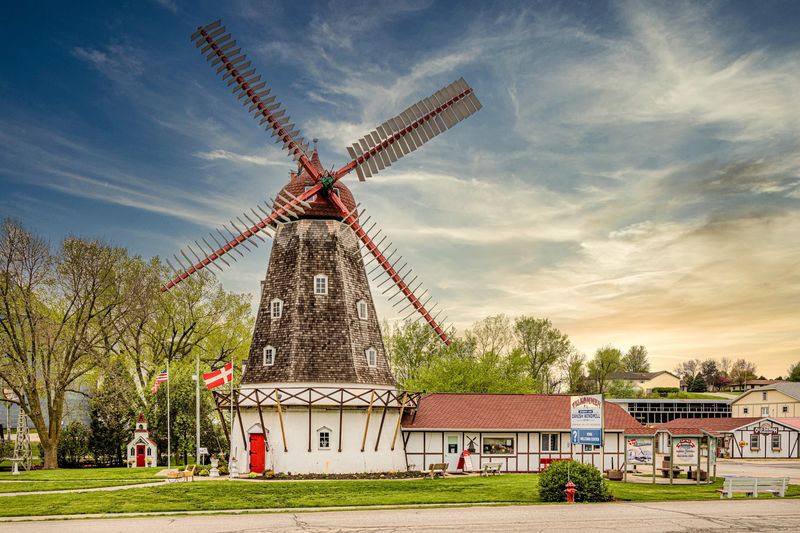
Here is a fun fact to share on the drive: this windmill was built in Denmark in 1848.
It was later taken apart and shipped to Elk Horn, Iowa. You can find it at 4038 Main St, standing tall over the town.
Today the restored structure is open for visitors. You can learn how traditional windmills worked and see the machinery that once ground grain.
The gift shop is a treat for anyone who loves Scandinavian goods. Shelves hold crafts, ornaments, and keepsakes that make good souvenirs.
Elk Horn proudly celebrates its Danish roots, and you notice it as soon as you roll down Main Street. The windmill is the star, but the whole town feels connected to its heritage.
Spring and summer bring the best weather for walking the grounds. The sails look especially striking against a bright afternoon sky.
Give yourself time to explore, since there is more to see than a quick glance suggests. Elk Horn is one of Iowa’s most convincing European-inspired stops, and it earns that title.
4. Hans Christian Andersen’s Little Mermaid and Sculpture Garden, Kimballton
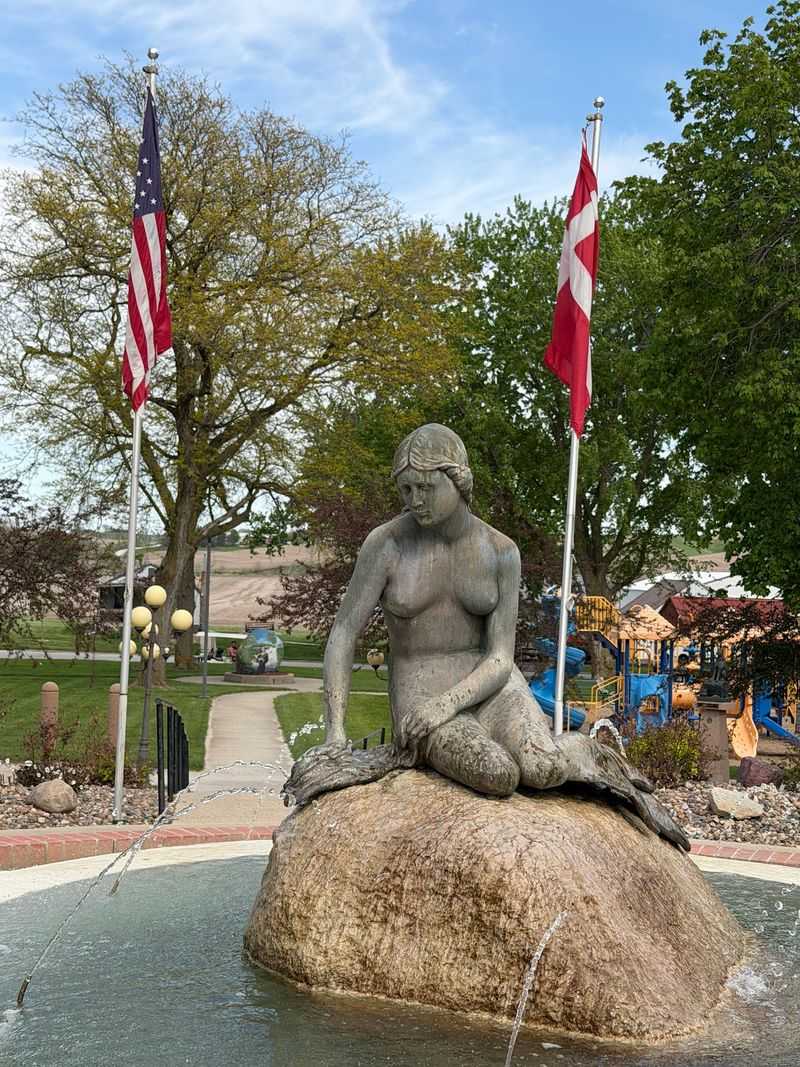
A mermaid has settled in a small Iowa park, and she seems happy about it.
The Little Mermaid replica sits at 100 Esbeck St in Kimballton, Iowa. It echoes the famous statue in Copenhagen, Denmark.
Around her, a sculpture garden fills the park with bronze figures. They are inspired by stories written by Danish author Hans Christian Andersen.
Many of us grew up on tales like The Ugly Duckling and The Emperor’s New Clothes. Spotting those characters in bronze feels like flipping through a storybook outdoors.
The stop is small, so it works well as a break between bigger destinations. Fifteen to thirty minutes is plenty for photos and a slow walk.
Kimballton has strong Danish cultural connections, which explains the unusual artwork. Kids tend to love finding each figure and guessing the story behind it.
Visit on a sunny day for the best pictures. Few roadside stops come with a happily ever after, but this one comes close.
5. Amana Heritage Society, Amana
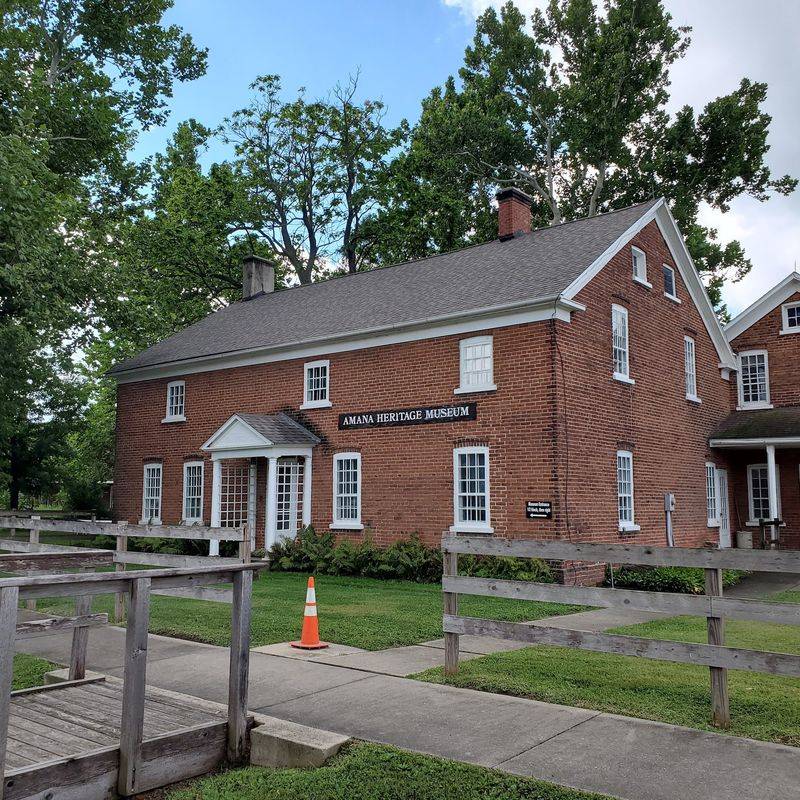
Seven villages, one shared way of life, and a whole lot of German tradition make Amana special.
The Amana Heritage Society is at 705 44th Ave in Amana, Iowa. It tells the story of German immigrants who founded communal villages in eastern Iowa in the 19th century.
The Amana Heritage Museum is a great first stop. It introduces the distinctive architecture, craftsmanship, and communal lifestyle that shaped the colonies.
Inside, you learn how families lived, worked, and shared resources. The details help the villages make more sense once you step back outside.
After the museum, wander through the surrounding villages. Historic buildings, traditional shops, and cultural exhibits are waiting along the way.
Plan for a half day at least, because there is a lot to take in. Fall is lovely here, when the trees add warm color to the old buildings.
Amana rewards curious travelers who like to read the stories behind a place. Bring your questions, because the villages have plenty of answers.
6. Manning Hausbarn Heritage Park, Manning
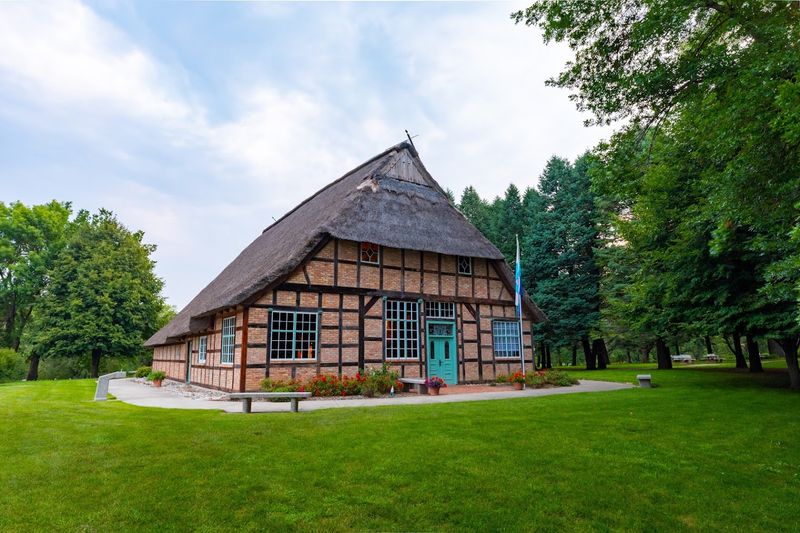
Few buildings have crossed an ocean, and this one did it after more than 300 years.
The Hausbarn at 130 Heritage Drive in Manning, Iowa, was built in Germany in the 1660s. It was carefully rebuilt here so visitors can see it up close.
A Hausbarn is a farm building where people and animals once shared a roof. That style of design tells you a lot about how farm families lived long ago.
Walk around the timber frame and notice the old craftsmanship. It looks very different from the barns most of us picture across the Iowa countryside.
The park also holds other historical buildings. They represent the area’s German-American heritage and give the visit more depth.
Regular tours run from May 1 through October 31, so November visitors should contact the park to arrange a visit in advance. That small bit of planning helps avoid arriving when the historic buildings are closed.
Manning is a small town with a big story. Few places in America can show you a real piece of 1660s Germany.
7. Vesterheim The National Norwegian-American Museum and Folk Art School, Decorah
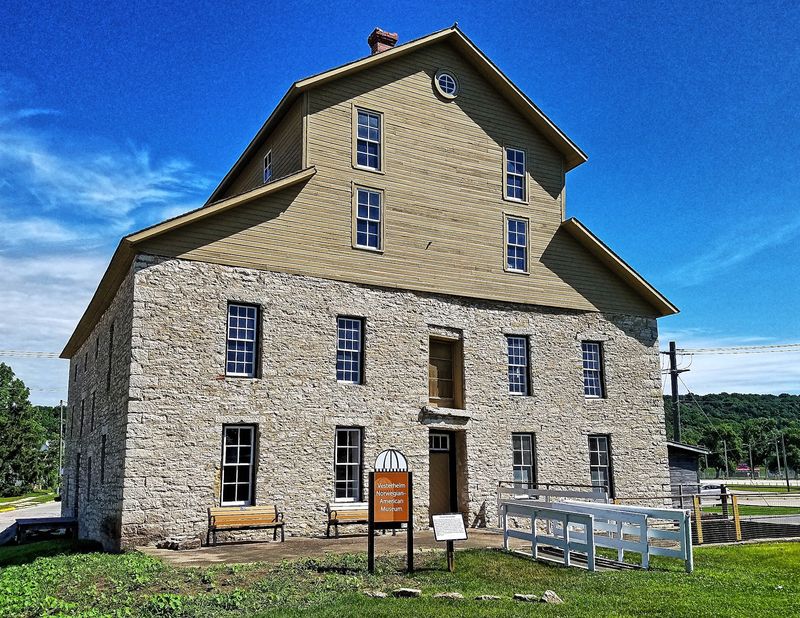
Rosemaling, the colorful Norwegian painting style, blooms on walls, trunks, and bowls in Decorah.
Vesterheim sits at 520 W Water St in Decorah, Iowa. The town is one of the state’s strongest centers of Norwegian heritage.
Inside the museum you will find folk art, historic artifacts, and handmade textiles. Many of the immigrant belongings are beautifully preserved, from tools to treasured keepsakes.
Each object hints at a journey. Families packed what they could carry and built new lives on the Iowa prairie.
Outside, the Heritage Park holds historic buildings that help explain those traditions. Walking among them gives the museum stories a real setting.
The folk art school also keeps old skills alive, so you may spot people learning crafts that are centuries old. It is a nice reminder that culture grows when people share it.
Plan at least two hours and bring a curious mind. You might leave wanting to try painting a flower on a wooden plate yourself.
8. National Czech and Slovak Museum and Library, Cedar Rapids
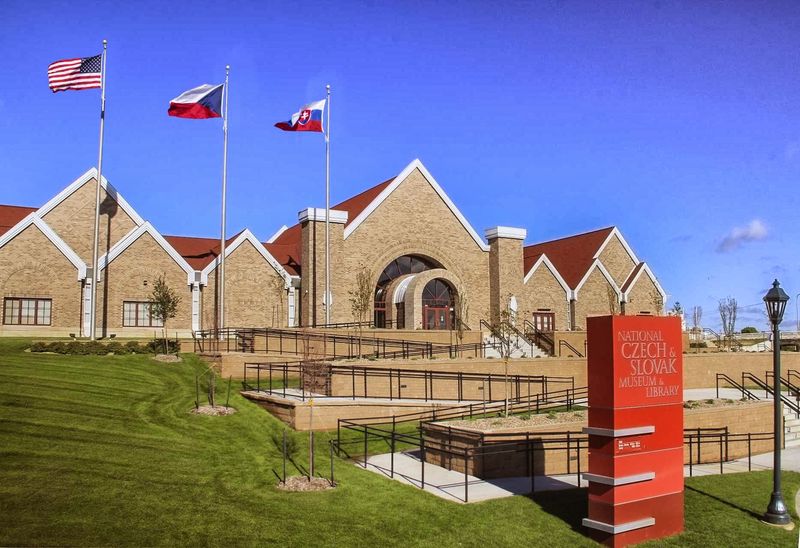
Prague has a famous clock, and Cedar Rapids has a cousin of it.
The National Czech and Slovak Museum and Library is at 1400 Inspiration Pl SW in Cedar Rapids, Iowa. It sits beside the historic Czech Village.
Inside, exhibits celebrate the traditions of the Czech Republic and Slovakia. You can see folk costumes, historic artifacts, and displays about Central European immigration.
The stories of families who left home and started over give the objects meaning. Reading them makes the museum feel personal.
Outside, the Buresh Immigration Clock Tower features an astronomical clock inspired by Prague’s famous Orloj. It is a fun detail to admire, and the photos turn out great.
After your visit, stroll the Czech Village next door. The neighborhood adds more flavor to the experience.
Give yourself a couple of hours, and check the museum hours before you go. This stop proves that Europe can be found along the Cedar River.
9. Swedish American Museum and Historical Society, Swedesburg
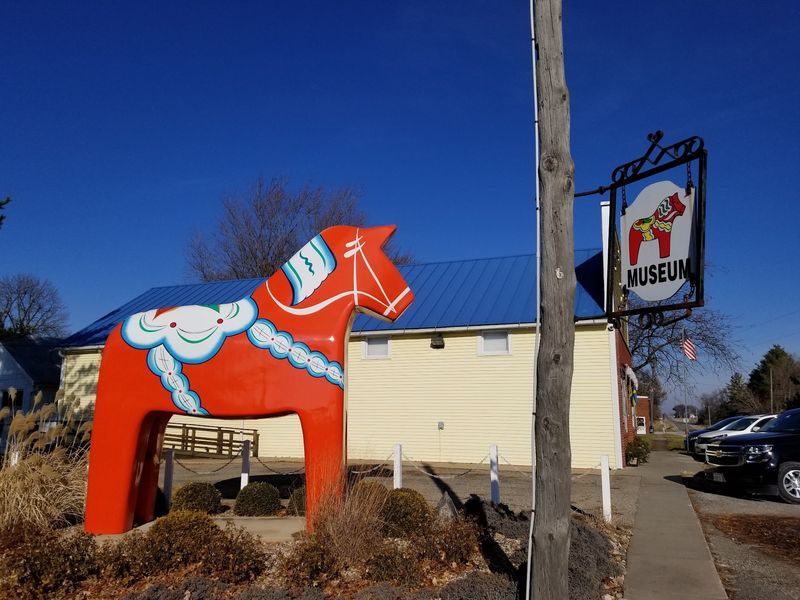
Ole is the biggest horse you will ever meet in southeast Iowa, and he is bright red.
The Swedish American Museum and Historical Society is at 107 James Ave in Swedesburg, Iowa. Ole, a giant Dala horse, is one of the town’s most recognizable sights.
The Dala horse is a traditional Swedish folk art symbol. Seeing it supersized makes it a great photo stop.
Inside the museum you can explore immigrant history. Displays introduce you to the families who came from Sweden and settled in this small community.
Scandinavian handicrafts are also part of the visit. They show how skills and designs traveled across the ocean and stayed alive for generations.
Swedesburg is tiny, so a visit is easy to fit into a longer drive. Call ahead or check hours, since small museums can keep limited schedules.
The town’s identity is closely tied to its Swedish roots, and you can feel it everywhere. Stop by, say hello to Ole, and snap that photo.
10. Historic Gehlen Stone Barn, St. Donatus
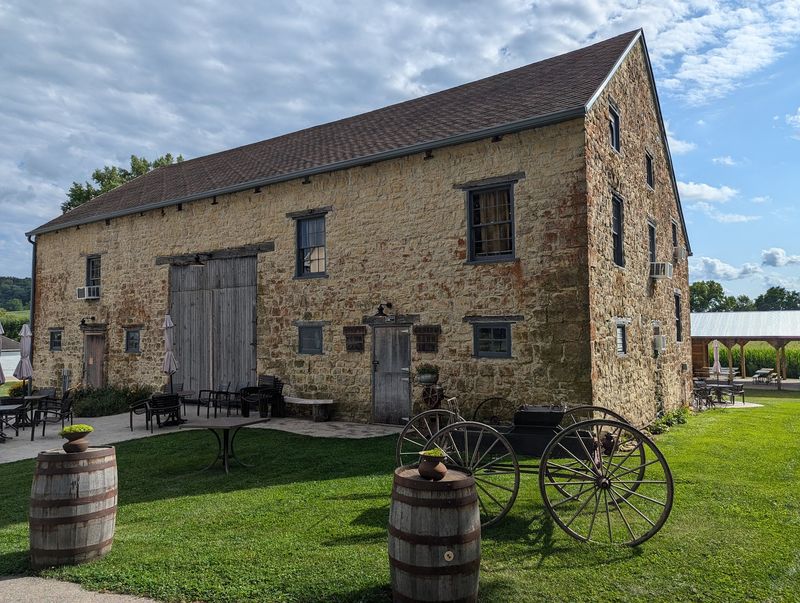
Luxembourg is one of Europe’s smallest countries, yet a piece of it lives in the hills of Iowa.
The Historic Gehlen Stone Barn is at 101 Main St in St. Donatus, Iowa. The village is famous for its preserved Luxembourgish heritage.
The Gehlen House and Barn were built by a Luxembourg immigrant in the 19th century. Their limestone walls are among the village’s most impressive landmarks.
Take a slow walk around the stone work and notice how sturdy it still looks. The craftsmanship is a nice reminder of the skills settlers brought with them.
The village streets are quiet and historic. They still reflect the influence of the European families who built them.
St. Donatus is small, so a visit can be short and sweet. Pair it with other river bluff stops in the area for a full day.
Visit in fall when the hillsides glow with color. The barn looks like it was made to be photographed.
11. Salisbury House and Gardens, Des Moines
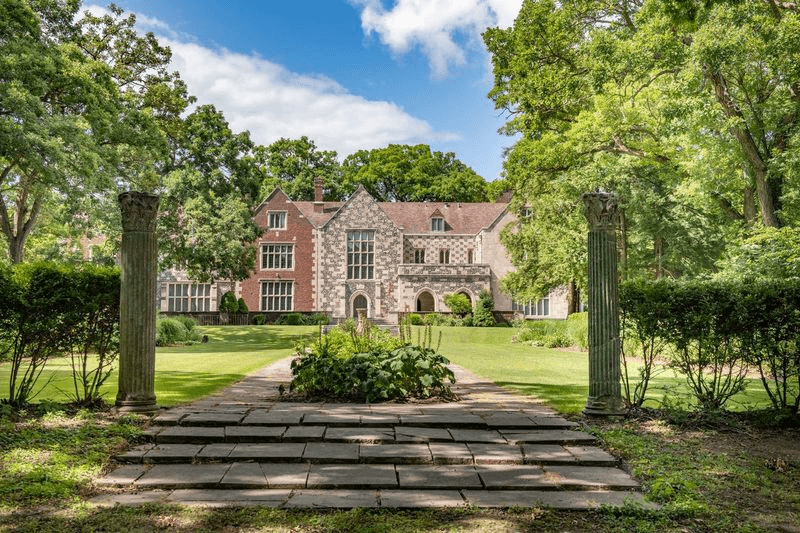
A trip to England might only take a short drive across Des Moines.
Salisbury House and Gardens is at 4025 Tonawanda Dr in Des Moines, Iowa. The 1920s mansion was inspired by historic English country estates.
Step inside and you will find authentic English woodwork and decorative stonework. The elegant rooms feel like a movie set for a British drama.
Visitors can explore the interior on a self-guided tour during regular museum hours or choose a scheduled guided tour. Both options offer a chance to admire architectural pieces collected from England and learn how they were brought to Iowa.
The grounds are beautifully maintained, so save time to wander outside. Gardens are especially pretty in late spring and summer.
Check the museum hours before you go, since it generally opens Wednesday through Sunday. Self-guided visits offer more flexibility, while guided tours follow specific schedules and availability.
The house is a favorite for people who love architecture and history. Tea and a good book would fit right in, even if you only bring the book.
12. Basilica of St. Francis Xavier, Dyersville
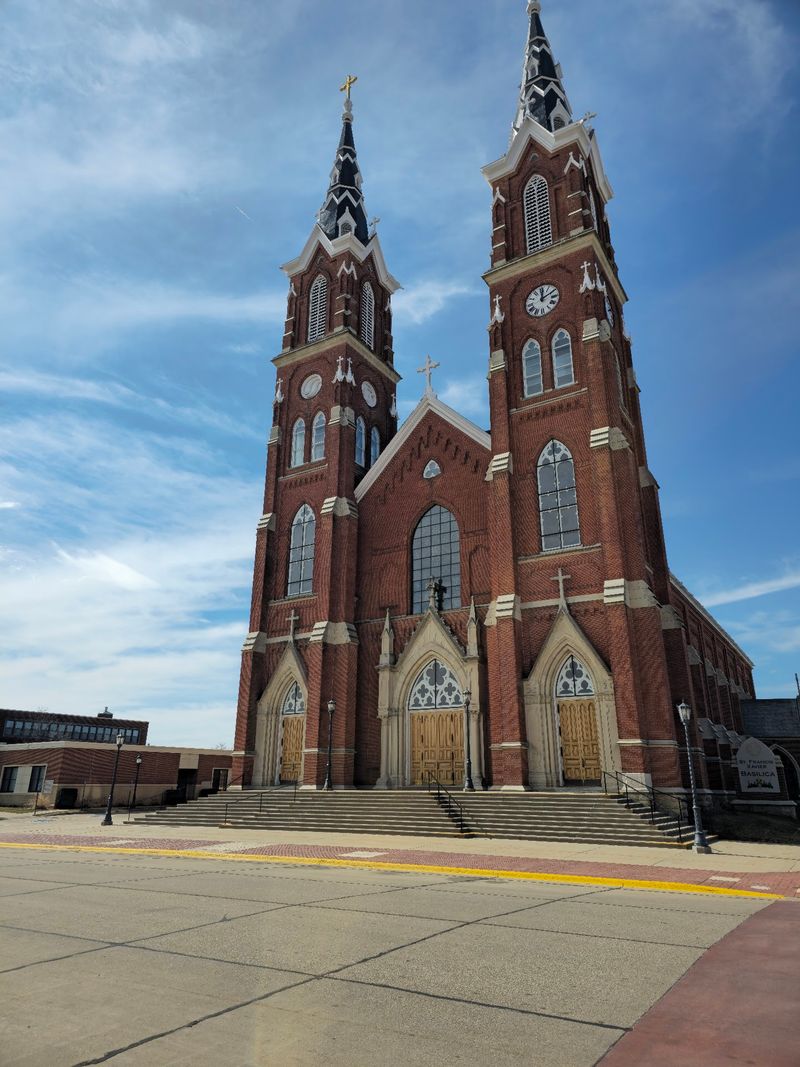
Two soaring towers rise above the cornfields near Dyersville, and they look like they belong in Europe.
The Basilica of St. Francis Xavier is at 104 3rd St SW in Dyersville, Iowa. It is a Gothic Revival church with the grandeur of a European cathedral.
Step through the doors and look up. Intricate stained-glass windows, elaborate altars, and a richly decorated interior fill the space with color.
Take your time and walk slowly. There are many small details, from carved figures to patterned ceilings, that are easy to miss at a quick glance.
The basilica welcomes visitors daily, which makes it simple to add to a road trip. Be respectful, since it is still an active place of worship.
Morning light through the windows is lovely, so an early visit pays off. Photographers will enjoy the exterior from across the street too.
Travelers who appreciate European-inspired architecture will find this a fitting finale. It is a grand last stop on a trip across a continent without leaving Iowa.