Ruins have a way of making silence feel interesting.
Across Kansas, weathered walls, abandoned structures, old foundations, and forgotten places can turn a simple visit into a walk through stories that still cling to the landscape.
They may be crumbling, but that is exactly what gives them their strange and powerful charm. The beauty of historic ruins is that they leave room for imagination.
You can stand there and picture the people, work, dreams, and daily lives that once filled the space.
Every broken stone or faded remnant feels like a clue from another time, waiting for someone curious enough to notice.
I have always been drawn to places that feel unfinished but unforgettable, and Kansas ruins with this much history would absolutely make my bucket list feel more adventurous.
1. Quindaro Ruins And Overlook, Kansas City, Kansas
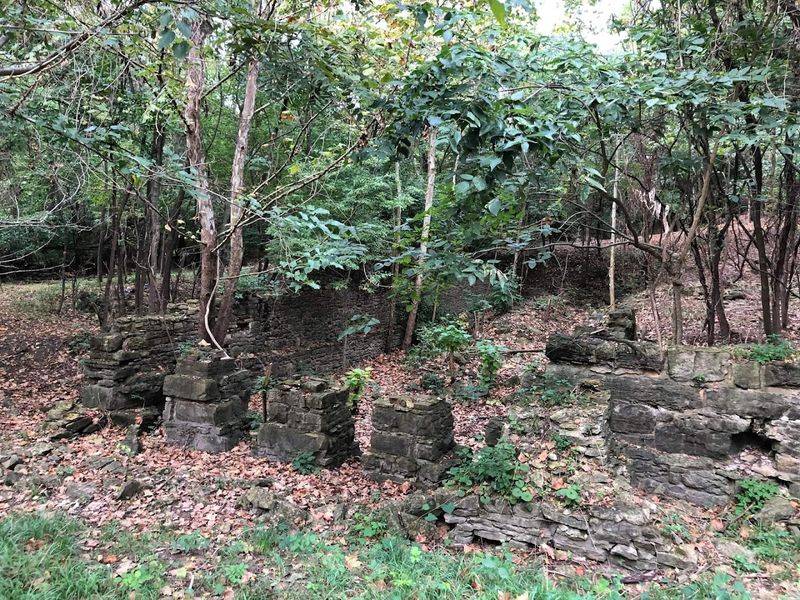
Few places in Kansas carry as much emotional and historical weight as Quindaro Ruins and Overlook in Kansas City, Kansas.
Public visitor information for the overlook points travelers to 3421 N 29th St, Kansas City, KS 66104, where the site’s layered past comes into sharper focus the moment you arrive.
This was once a thriving free-state town with deep ties to Black history and the struggle over slavery in territorial Kansas.
Quindaro also played an important role in the Underground Railroad era, which is a big part of why the place continues to matter so deeply today.
The ruins themselves remain partly buried and archaeologically sensitive, which gives the whole area a quiet, hidden quality that rewards patient visitors.
Standing at the overlook, you get a sweeping view toward the Missouri River that feels both peaceful and deeply meaningful given what this land represents.
Quindaro is recognized on the National Register of Historic Places, and as of April 2026 lawmakers were still pushing to secure National Historic Landmark status for the townsite.
Bring sturdy shoes, a curious mind, and plenty of time, because this place quietly demands both your attention and your respect.
2. El Cuartelejo Pueblo Ruins, Scott City, Kansas
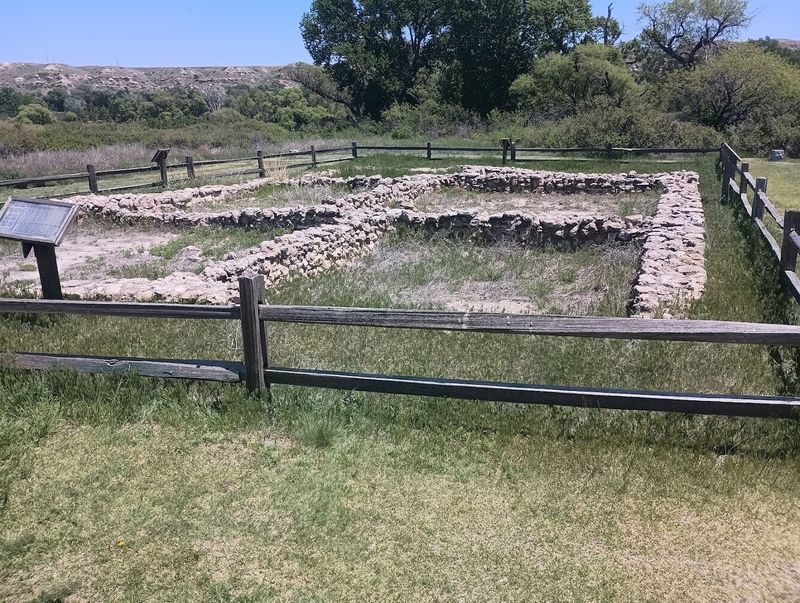
Hidden inside the beautiful Historic Lake Scott State Park at 101 West Scott Lake Drive in Scott City, Kansas, El Cuartelejo holds the impressive title of being the northernmost known pueblo ruins in the United States.
Built by Taos Pueblo people who fled Spanish rule in New Mexico around the late 1600s, this site tells a story of resistance, survival, and cultural identity that stretches far beyond Kansas borders.
The actual ruins are low to the ground and partially reconstructed, so they may look modest at first glance, but the history behind them is anything but small.
El Cuartelejo is a National Historic Landmark, and the park around it offers hiking trails, a lake, and camping, making it a genuinely rewarding full-day destination.
Visiting in the fall is especially lovely when the surrounding landscape turns golden and the crowds thin out considerably.
This spot proves that extraordinary history sometimes hides in the most unexpected, wide-open places.
3. Allegawaho Memorial Heritage Park, Council Grove, Kansas
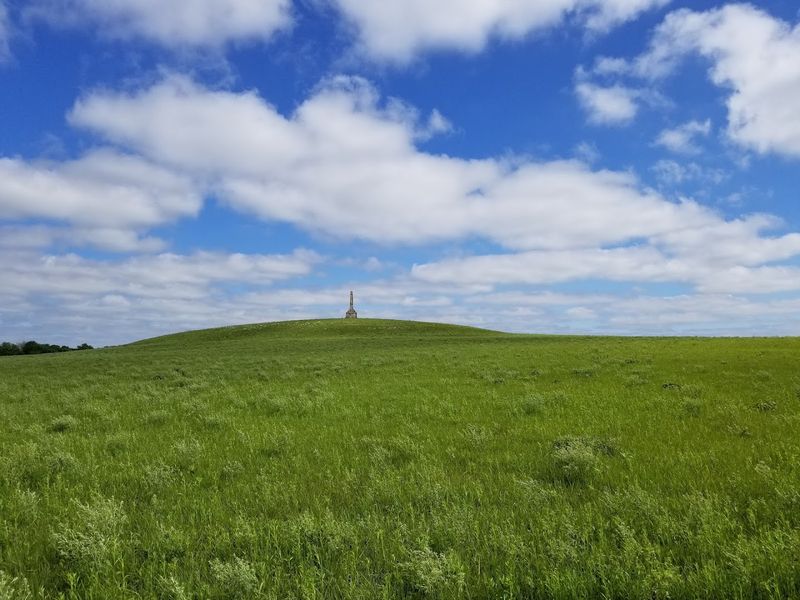
Perched along South 525 Road near Council Grove, Kansas, Allegawaho Memorial Heritage Park is a deeply moving place that honors the Kaw Nation, also known as the Kansa people, on land that was once their home.
The park sits on a bluff above the Neosho River and includes the site of a former Kaw village, a burial ground, and a stone monument dedicated to the tribe’s last chief, Allegawaho.
What makes this site feel different from many historic places is how quietly powerful it is, with no flashy visitor center or gift shop, just open prairie, wind, and memory.
The Kaw Nation was forcibly removed from this land in 1873, and visiting Allegawaho Memorial Heritage Park is a chance to reckon honestly with that history.
Council Grove itself is a charming small town with its own Santa Fe Trail heritage, so pairing a visit here with a stroll through downtown makes for a rich, layered day trip.
4. Pawnee Indian Museum State Historic Site, Republic, Kansas
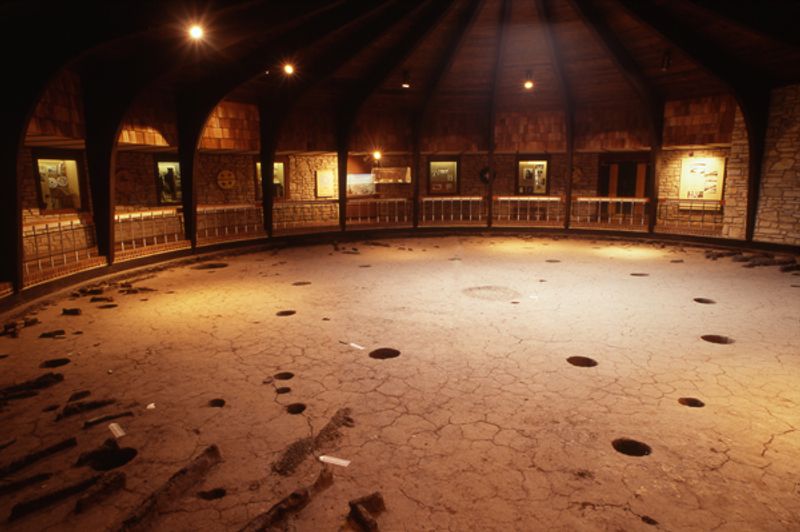
Something remarkable happens the moment you step inside the Pawnee Indian Museum State Historic Site at 480 Pawnee Trail in Republic, Kansas: you are literally standing on the floor of an excavated Pawnee earthlodge that dates back to around 1820.
The entire building was constructed around and over the archaeological site to protect it, which means the ruins are displayed in place exactly as they were found, with artifacts still visible in their original positions.
This is one of the most immersive and scientifically significant ways to experience Indigenous history anywhere in the Great Plains region.
The Pawnee Indian Museum State Historic Site sits within a larger historic park that also includes a self-guided trail through the surrounding village site area.
Interpretive exhibits inside the museum do a thorough job of explaining Pawnee culture, seasonal life, and the broader history of the tribe’s presence across Kansas and Nebraska.
Plan for at least two hours here, and you will leave with a completely different understanding of who lived on these plains long before settlers arrived.
5. Monument Rocks And Chalk Pyramids, Gove County, Kansas
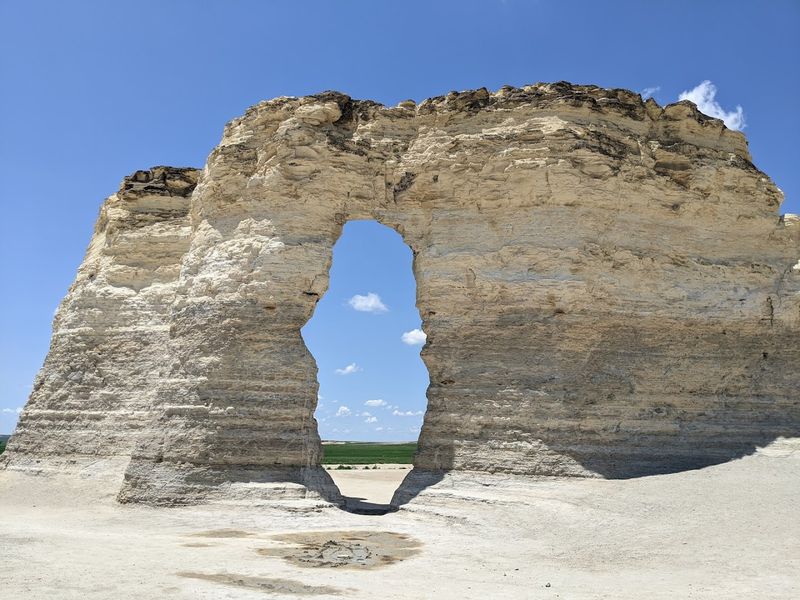
Rising straight out of the plains in Gove County near Oakley, Monument Rocks are one of the most jaw-dropping natural landmarks in Kansas, and they cost absolutely nothing to visit.
These chalk formations, also called the Chalk Pyramids, were designated a National Natural Landmark in 1968 and are widely described as Kansas’s first site with that designation.
The towering spires and arches reach roughly seventy feet in height and are packed with marine fossils from the ancient inland sea that once covered this part of North America about eighty million years ago.
Monument Rocks sit on private land, but visitors are allowed access thanks to the landowners, which makes respectful behavior especially important here.
The best light for photography hits the chalk in the early morning or late afternoon, when the low sun turns everything warm and golden.
Very few places in Kansas deliver this level of visual impact, and Monument Rocks near Oakley earns every bit of its legendary status.
6. Le Hunt And United Kansas Portland Cement Company Ruins, Independence, Kansas
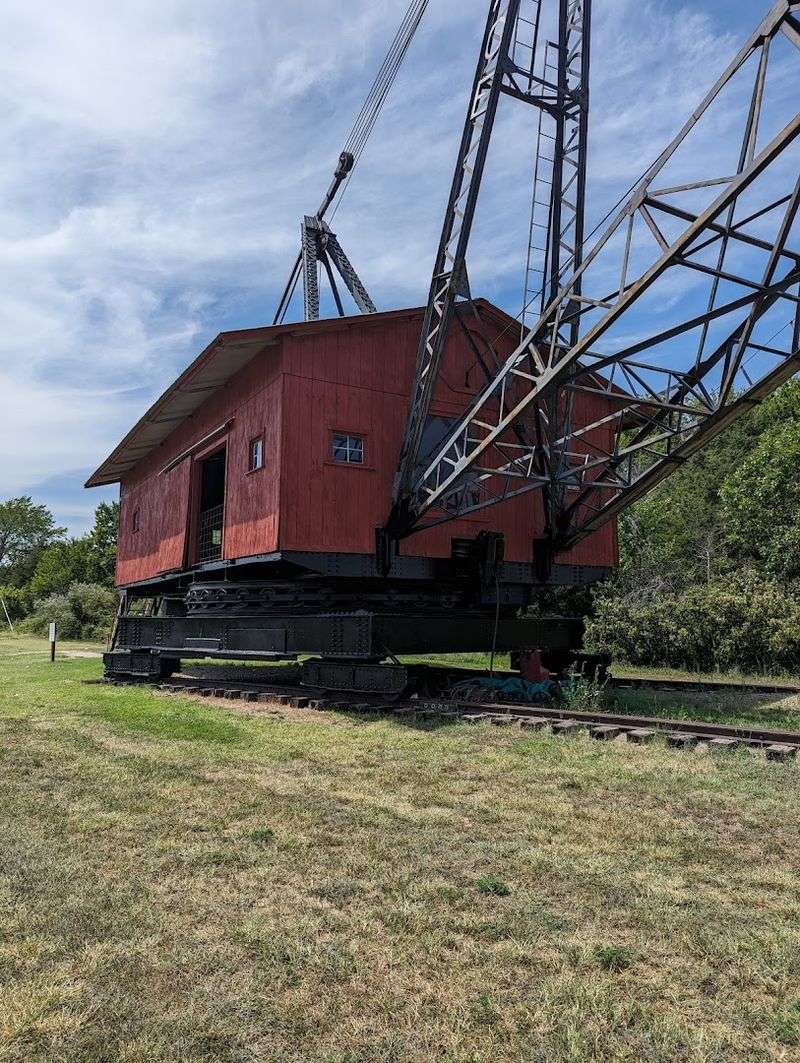
Just a short drive from Elk City State Park near Independence, Kansas, the Le Hunt cement plant ruins are one of the state’s most dramatic industrial ghost sites.
The town of Le Hunt grew around a cement operation launched by the Independence Kansas Portland Cement Company, and the remains still hint at how important the site once was to the regional economy.
Today, large concrete and stone remnants still rise out of the woods, giving the area an atmosphere that feels genuinely cinematic.
The ruins are not a formal state-park attraction, so exploring them requires a bit of adventurous spirit and careful footing on uneven terrain.
Many visitors pair a trip to the Le Hunt ruins with time in nearby Elk City State Park, which offers maintained trails and lake scenery not far away.
If you enjoy industrial history with a strong abandoned-place atmosphere, this crumbling complex near Independence absolutely delivers.
7. Lehigh Portland State Park Ruins, Iola, Kansas
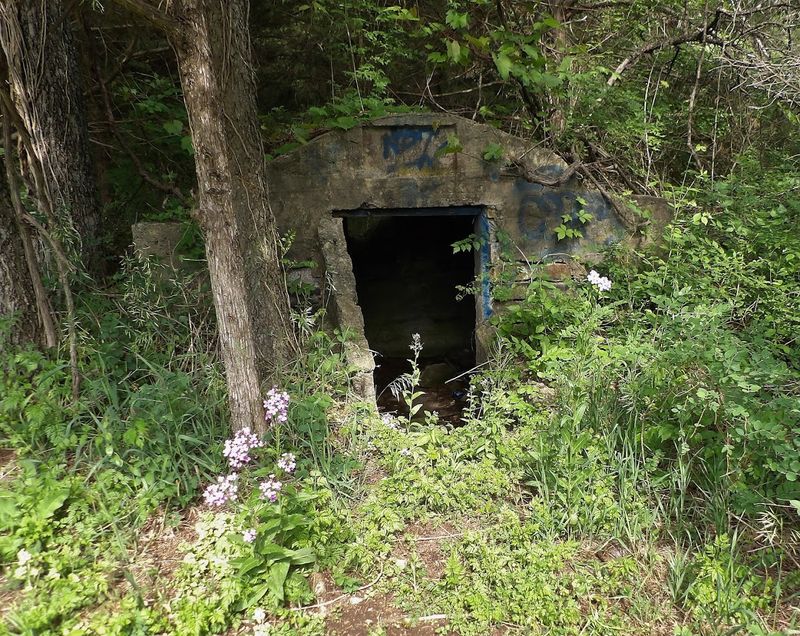
Near 1600th Street and Nebraska Road outside Iola, Kansas, LeHigh Portland State Park offers a compelling look at land shaped by the cement industry that once boomed across this part of the state.
The official park and trail descriptions make clear that the area was built on the site of a former cement plant and quarry along Elm Creek.
Today, the experience is less about standing in front of a formal ruin complex and more about exploring a state park and trail system layered over that industrial past.
Gravel and natural-surface trails cross woodland, prairie, quarry landscapes, and open areas that still carry the imprint of the site’s earlier use.
LeHigh Portland is a quiet, under-visited stop that rewards people who appreciate industrial history, reclaimed landscapes, and the kind of beauty that comes with slow natural change.
Iola itself has a few worthwhile stops nearby, so building a small road trip around this area still makes practical sense.
8. Drinkwater and Schriver Flour Mill, Cedar Point, Kansas
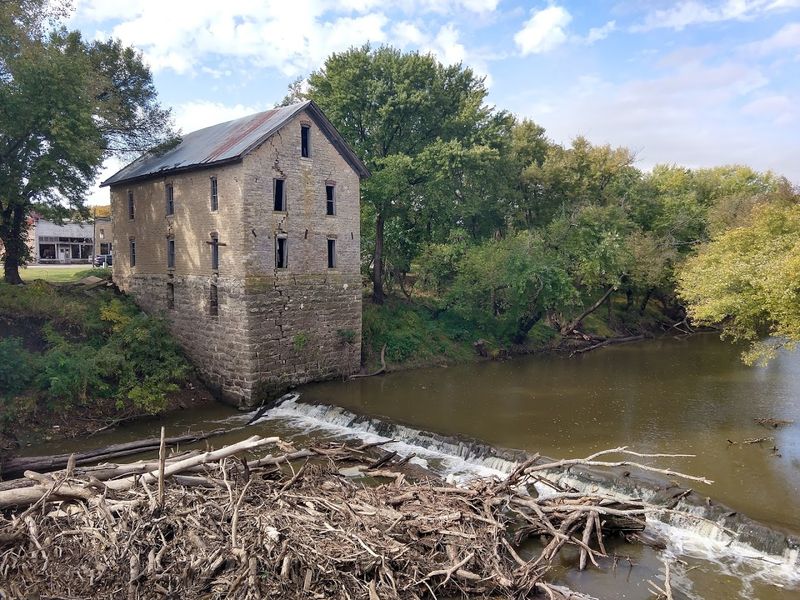
Sitting quietly at the corner of First Street and Main Street in the tiny community of Cedar Point, Kansas, the Drinkwater and Schriver Flour Mill is a hauntingly beautiful set of limestone ruins that dates back to the 1870s.
The mill was built to serve area farmers and was a commercial hub for Chase County during the latter half of the nineteenth century, grinding grain for communities spread across the surrounding Flint Hills region.
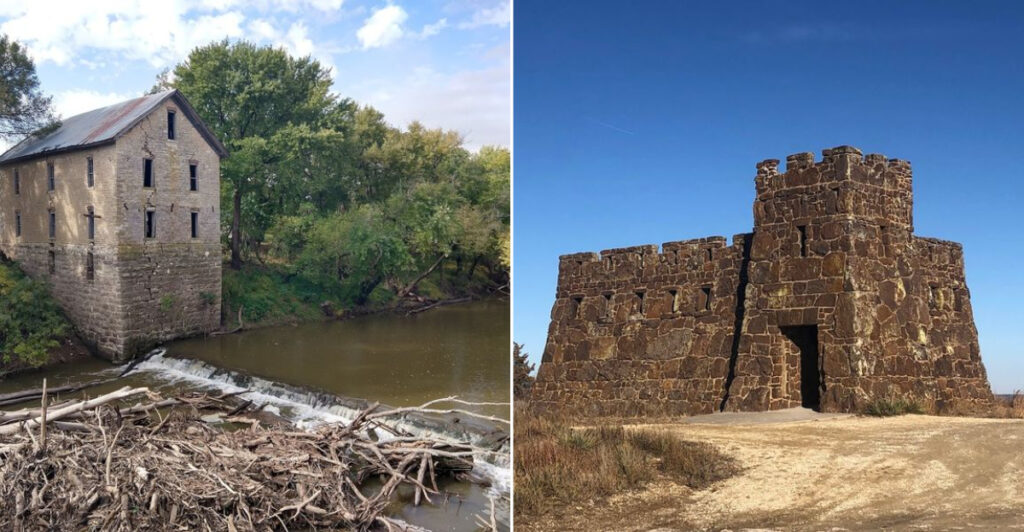
What remains today are the thick stone walls of the mill structure, standing beside a small waterway and framed by mature trees that soften the whole scene into something almost painterly.
Cedar Point itself is barely a dot on the map these days, which means visiting the Drinkwater and Schriver Flour Mill feels like stumbling onto a private piece of history that most of the world has simply forgotten.
The Flint Hills backdrop makes the drive to Cedar Point worthwhile on its own, with rolling tallgrass prairie stretching endlessly in every direction.
Pack a picnic and stay awhile, because this quiet corner of Kansas has a way of slowing everything down.
9. Castle Rock Badlands, Quinter, Kansas
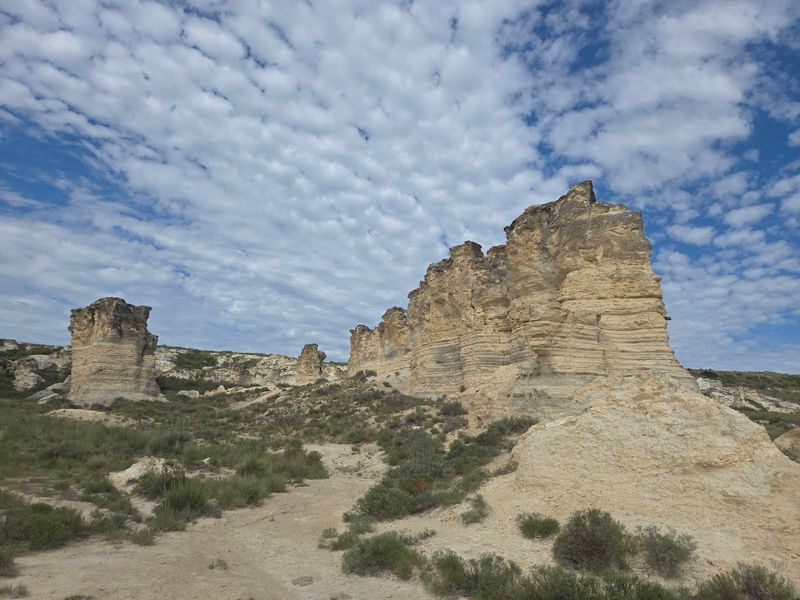
Standing alone in the rolling badlands near Quinter, Kansas, Castle Rock is a solitary chalk spire that has been slowly carved by wind and rain into one of the most striking natural sculptures anywhere on the Great Plains.
The formation sits on private ranchland, but public access is permitted, and the dirt road leading to it sets the tone perfectly, winding through open range country that feels genuinely remote and wonderfully untouched.
Castle Rock itself reaches about seventy feet into the air, and up close the layers of chalk and fossil-rich sediment are clearly visible, telling a geological story that stretches back tens of millions of years.
The surrounding badlands landscape adds to the drama, with eroded gullies and pale rock ridges giving the whole area a raw, otherworldly quality that photographs beautifully.
Visiting Castle Rock near Quinter on a weekday almost guarantees you will have the entire place to yourself, which makes the experience feel even more personal and quietly extraordinary.
Bring plenty of water and a good map, because cell service in this part of western Kansas is not something to rely on.
10. Coronado Heights Castle, Lindsborg, Kansas
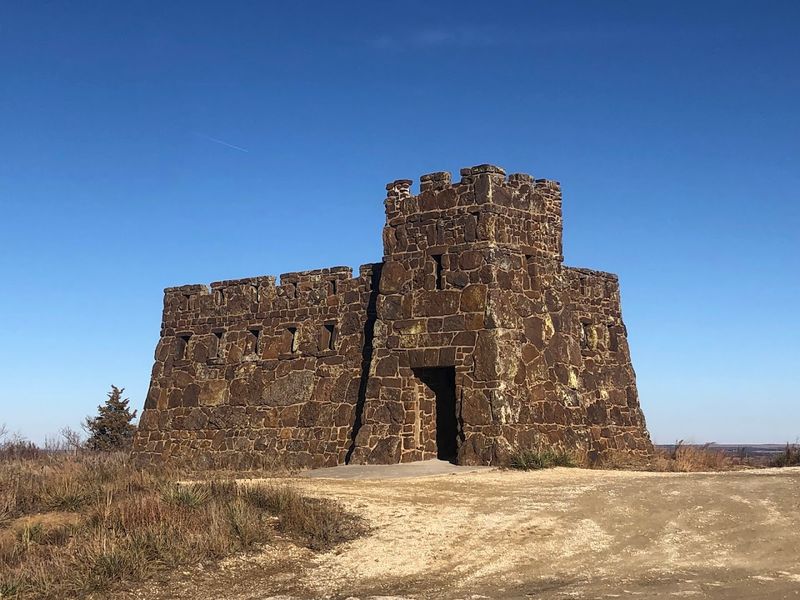
Crowning a dramatic bluff just outside Lindsborg, Kansas, this castle-like stone structure is one of the most photogenic and historically layered spots in the state.
Coronado Heights is not actually a ruin, but a historic 1930s stone shelter built by New Deal-era labor high above the surrounding valley.
The site is tied to the long-running local belief that Francisco Vázquez de Coronado and his men passed through or viewed the region from this high point in 1541.
The views from the top are genuinely spectacular, with the plains spreading out in every direction and Lindsborg adding an extra layer of charm below.
Sunset at Coronado Heights is a particularly memorable experience, as the warm light turns the stone golden and the surrounding landscape shifts through softer colors.
This is the kind of place that earns a permanent spot in your photo favorites folder without much effort at all.
11. Little Jerusalem Badlands State Park, Oakley, Kansas
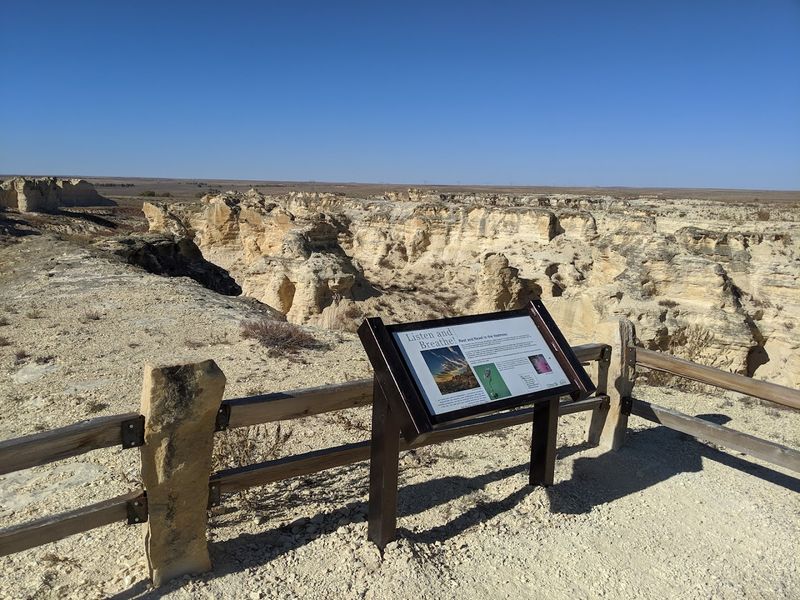
Opened as an official Kansas state park in 2019, Little Jerusalem Badlands State Park along County Road 400 and Gold Road near Oakley is the largest Niobrara Chalk formation in the United States, and the landscape is nothing short of spectacular.
The park features a well-designed boardwalk trail system that winds through and above the chalk badlands, offering views that genuinely feel more like the American Southwest than the Kansas plains most people picture.
Little Jerusalem Badlands State Park gets its evocative name from early settlers who reportedly thought the jagged white rock formations resembled the skyline of Jerusalem, and once you see the formations rising in clusters, the comparison makes perfect sense.
The park is home to diverse wildlife including prairie falcons, mule deer, and various reptiles, so keeping your eyes open during a walk rewards you with more than just geology.
Visiting in the early morning brings a soft, cool light that makes the chalk formations glow almost white against a pale blue sky.
For a state park that has only been open a few years, Little Jerusalem near Oakley already feels like a timeless Kansas treasure.