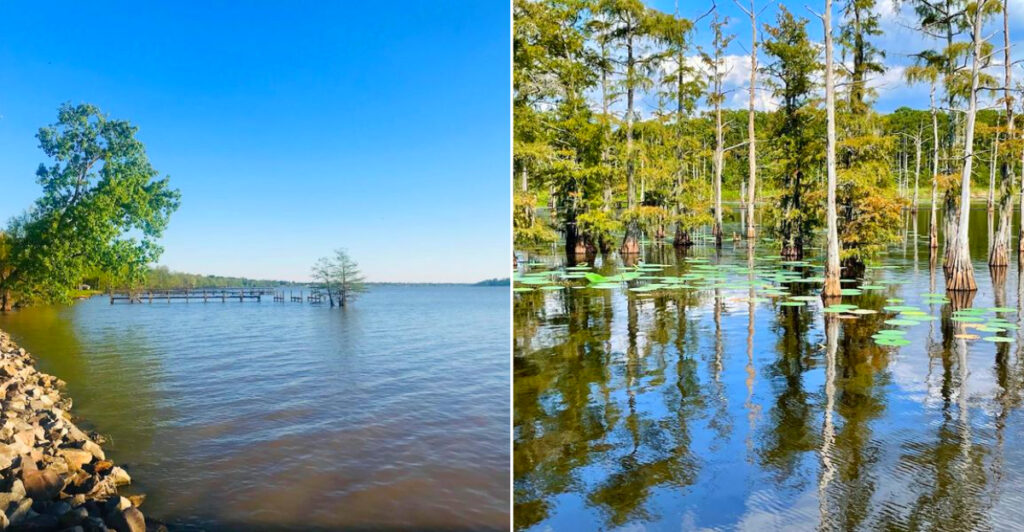
Sometimes the loudest sound you hear all day is the dip of a paddle or the call of a heron echoing across still water.
In a state better known for its lively music and vibrant festivals, some of the most memorable moments happen in complete silence, surrounded by towering cypress trees draped in Spanish moss.
The lakes scattered across this corner of the South are not the bustling recreation destinations you find elsewhere.
They are quiet refuges where the water reflects the sky like a mirror, where turtles sun themselves on fallen logs, plus where the only competition for a fishing spot comes from an egret standing knee-deep in the shallows.
State parks protect many of these quiet shores, offering cozy cabins, shaded campsites, and boat launches that make it easy to stay a while. These 9 Louisiana lakes are secrets worth keeping quiet about.
9. Lake Claiborne
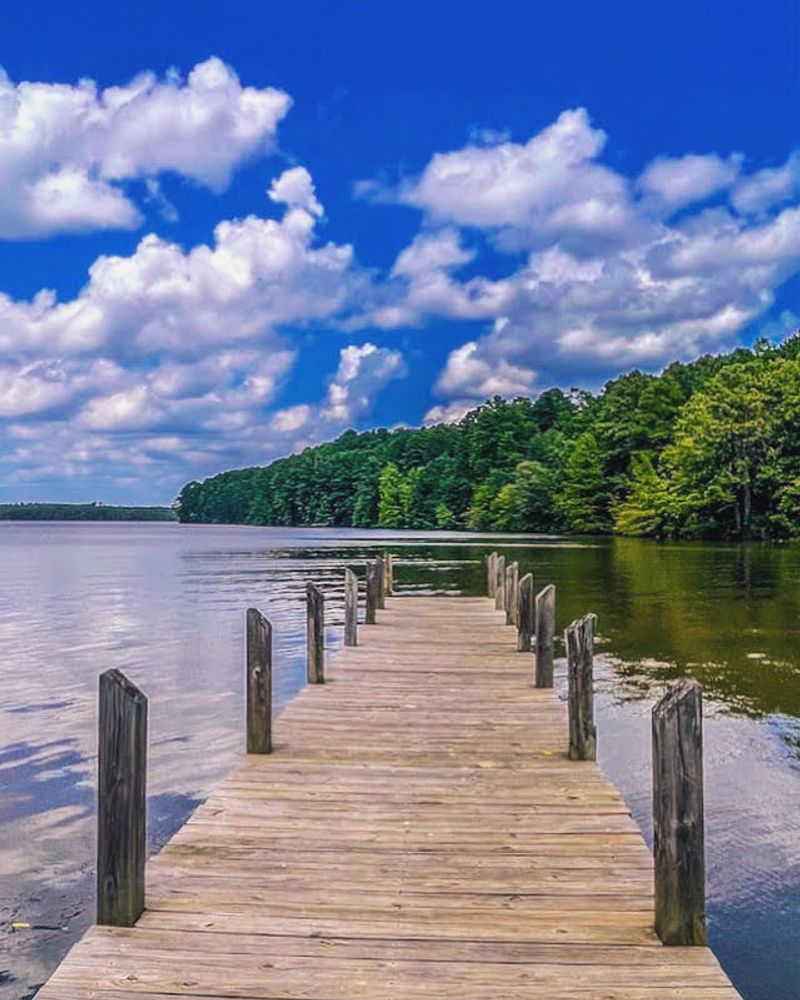
Clear water gives this north Louisiana lake its first quiet advantage. Set among pine and oak hills, Lake Claiborne feels protected without feeling remote, with sandy swimming areas, fishing water, shaded campsites, cabins, and trails that let visitors choose their own pace.
The state park makes the lake easy to enjoy, but it rarely pushes the day toward noise. The best moments arrive early, before boats and beach towels fully wake up. Dawn softens the hills, birds work the treeline, and the surface can turn glassy enough to make each ripple look intentional.
Anglers come for bass, crappie, catfish, and bream, while families appreciate the beach, playgrounds, picnic spots, and clear park layout.
Disc golf gives the park an unexpected extra identity, adding movement without overwhelming the lake’s calm. Still, Claiborne is strongest when treated as a slow retreat.
Walk a trail, sit near the shore, watch light move over the water, and let the piney atmosphere reset the day quietly before anyone feels the need to hurry. Pack a simple picnic, stay through sunset, and notice how the shore quiets again after families leave.
The lake’s secret is not isolation; it is the way calm keeps returning each time.
8. Lake Bruin
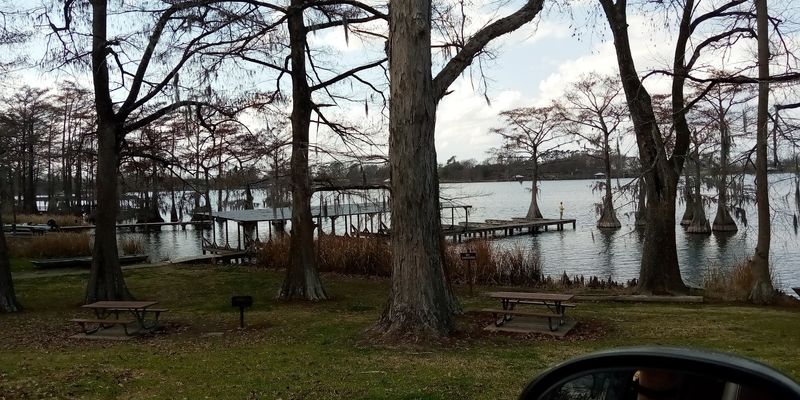
Cypress trees give this oxbow lake a still, old-souled beauty. Lake Bruin sits less than a mile from the Mississippi River, yet the mood is gentler than the river’s restless force.
The curved shape, clear water, and quiet banks make it especially appealing for visitors who want paddling, fishing, swimming, and overnight comfort without a giant-park feeling.
The state park is modest in size, but the shoreline creates a much larger sense of space. Cabins, campsites, a boat launch, fishing access, and a swim area keep logistics simple, which lets the lake stay at the center of the visit.
You can arrive with a family plan and still find moments that feel private.
Bring polarized sunglasses if you want to watch the shallows or fish with more intention. Bruin’s best scenes are often small: a turtle climbing onto a log, wind moving through cypress needles, a bird crossing low over the water, or a long reflection that holds steady.
The lake rewards quiet attention more than big plans ever could. Overnight guests get the deepest version, when porch lights replace day noise and the water turns dark under the cypress.
By then, even ordinary evening sounds seem carefully placed outside.
7. Lake D’Arbonne
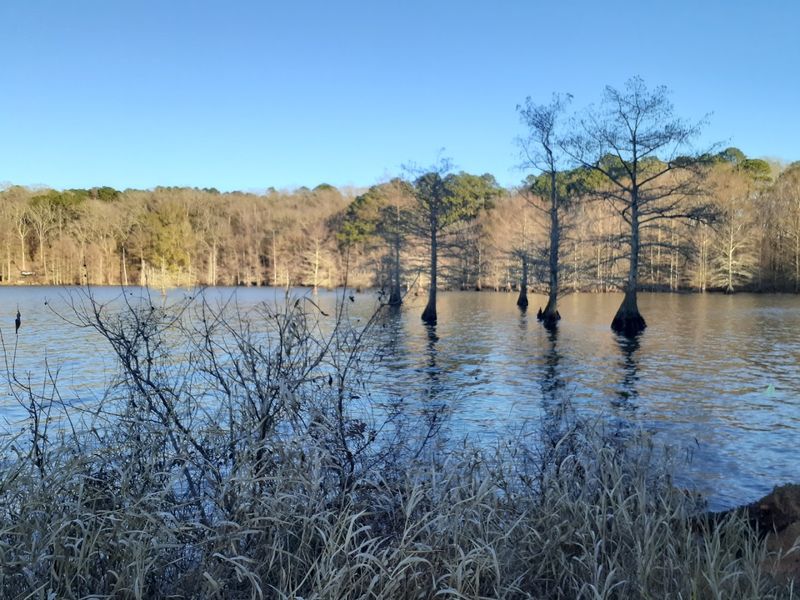
Piney hills and cypress coves make this reservoir feel like several moods folded into one. Around Lake D’Arbonne State Park, open water gives way to sheltered inlets, fishing piers, wooded trails, and calm pockets where a paddler can drift without feeling watched by the whole lake.
That variety keeps the place peaceful without making it dull.
Fishing is a major draw, especially for bass and crappie, but the park is not only for anglers. Cabins, lodges, camping, tennis, disc golf, hiking, swimming, and wildlife watching make it a flexible retreat for families, couples, and solo travelers who need different versions of quiet.
The lake has enough room to absorb activity.
Dusk is the hour that explains its charm best. Herons move along the edges, cypress trunks turn darker, and the reservoir’s wider surfaces begin settling into reflection.
D’Arbonne feels generous because it offers many ways to slow down. You can stay busy here, but the best memories usually come when you stop performing vacation and simply let the water stretch the evening.
Bring binoculars if birds matter, and leave room for aimless driving along the park roads. The quieter coves are easiest to appreciate when your schedule has blank space.
6. Caney Creek Lake
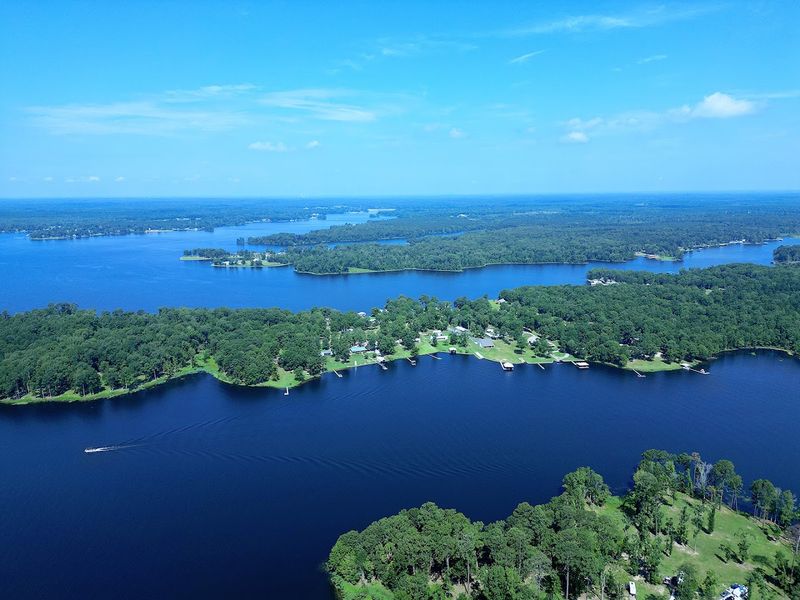
Trophy-bass reputation gives this lake a competitive whisper, but the setting can still feel calm. Inside Jimmie Davis State Park, Caney Creek Lake spreads around a peninsula of trees, cabins, campsites, boat launches, and recreation areas that make the water easy to reach without stripping away its quiet personality.
Anglers know the reservoir for largemouth bass, and the lake’s clarity adds a little visual pleasure for anyone watching grass beds, shallows, and gentle movement from shore. Families get a beach, splash pad, playground, picnic areas, and fishing pier, which makes the park practical for longer stays rather than quick scenic stops.
Comfort and stillness work together here.
Morning is the best introduction. Before heat and boat traffic build, the surface can look polished, with waterfowl slipping through vegetation and shoreline shadows holding their shape.
Caney Creek is peaceful because it gives visitors choices without demanding constant action. Swim, cast, walk, sit, or let children play, then return to the water when the day grows softer.
The lake keeps its calm best when you borrow its rhythm. For visitors, the cabins and campsites turn that rhythm into a reset.
Evening brings stillness when voices drop and the shoreline becomes reflective again.
5. Chicot Lake
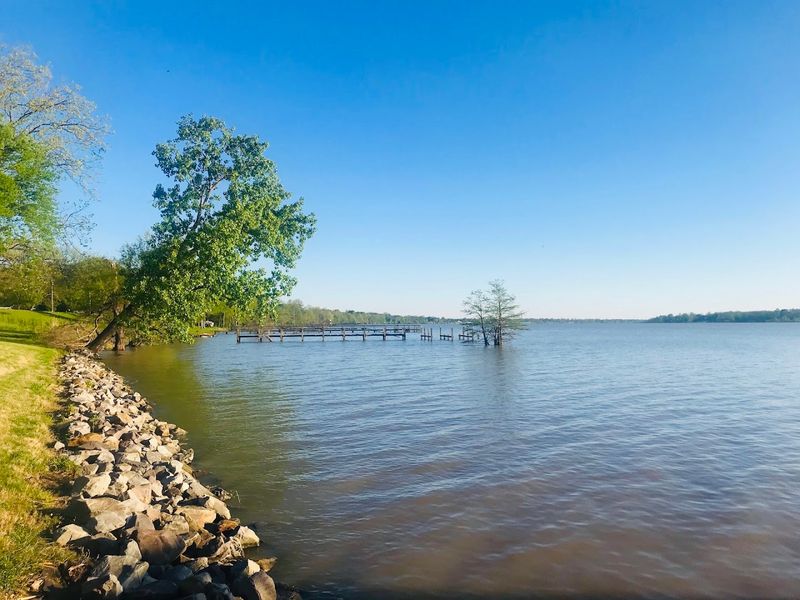
Inside Louisiana’s largest state park, this lake feels like a whole landscape rather than a single shoreline. Chicot Lake is wrapped by rolling terrain, hardwood forest, cypress edges, long trails, cabins, campsites, and the Louisiana State Arboretum, giving every visit more layers than a basic fishing stop.
The water has a patient, textured character. Stumps, lilies, fish, shaded edges, and paddling routes create a place that rewards slow movement.
Bass, crappie, and bream keep anglers interested, while hikers can commit to the long trail system circling the lake and reaching primitive camping areas. The arboretum adds another kind of quiet, with native trees and interpretive paths that make the park feel like a living classroom.
Chicot works best when you do not try to reduce it to one activity. It can be a cabin weekend, a serious hike, a birding trip, a fishing morning, or a slow nature study.
Stay longer than one afternoon if possible. The lake’s peace comes from the overlap of forest, water, history, and time.
Even short walks can feel rewarding because the terrain changes constantly by Louisiana standards. Listen for frogs near wet edges and wind in the trees above the darker water each season.
4. Lake Bistineau
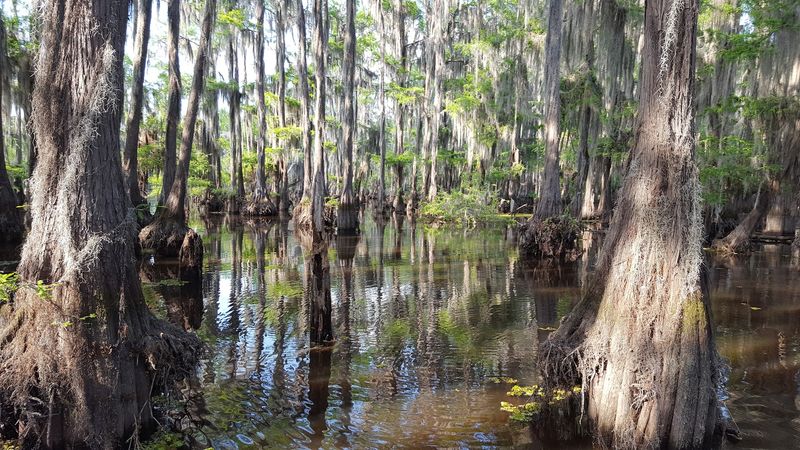
Cypress and tupelo give this lake a sense of age beyond its modern boundaries. Lake Bistineau State Park protects a watery landscape shaped by Red River history, flooded timber, mossy corridors, quiet coves, and a maze-like mood that feels especially powerful from a canoe.
The park offers a boat launch, cabins, camping, playgrounds, fishing, woodland trails, biking routes, horseback sections, and an eleven-mile canoe trail. That trail may be the lake’s most graceful invitation, pulling visitors through trunks, shadows, bird calls, and still channels where speed would feel almost rude.
Fishing remains important too, especially for crappie and bass, but Bistineau does not need a full stringer to justify the trip.
Conditions can shift with water levels, weather, and aquatic vegetation, so checking current updates before a boat-heavy visit is wise. When everything lines up, though, the lake feels like a secret cypress room.
Spanish moss, dark reflections, and patient water create the impression of entering a landscape that has been holding stories longer than anyone on shore. Bring a camera, but do not make photography the whole goal.
The place is strongest when you let long, quiet stretches do their patient work without interruption for once on bayou time.
3. Poverty Point Reservoir
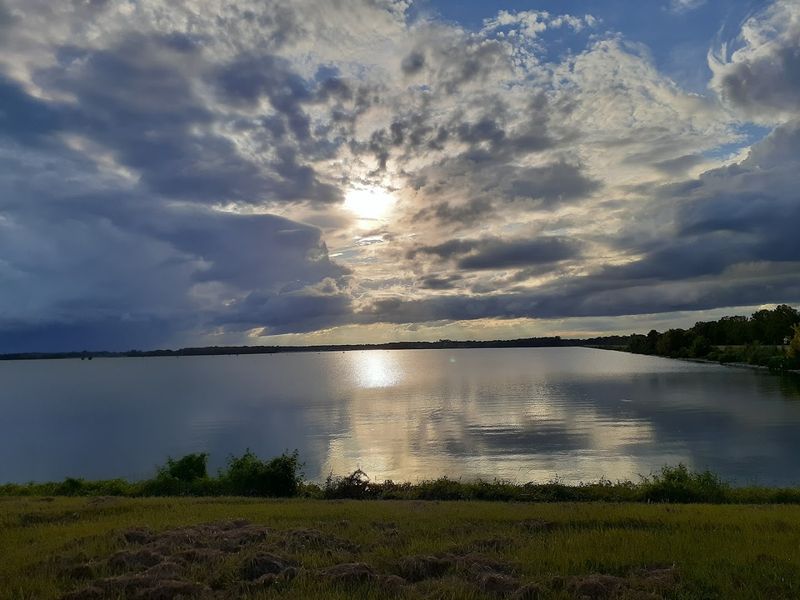
Wide Delta sky gives this reservoir a different kind of quiet. Poverty Point Reservoir State Park centers on a 2,700-acre manmade lake near Delhi, where fishing, birdwatching, camping, cabins, marina access, and open views create a peaceful base in northeastern Louisiana.
The setting gains depth because one of North America’s most important ancient earthwork landscapes sits nearby. A lake weekend can include Poverty Point World Heritage Site, turning a simple fishing or cabin trip into something more reflective.
That contrast between modern reservoir recreation and deep prehistoric history makes the water feel connected to a much longer human story.
Birders have another reason to linger, since the area falls within the Mississippi Flyway and can bring seasonal movement across the lake and surrounding habitat. Anglers work the productive water, while families use the marina, beach, and overnight facilities.
The lake’s mood is spacious rather than intimate: big sky, steady wind, calm water, distant birds, and the sense that silence can stretch a very long way across the Delta. Stay overnight if you can, because evening changes the mood beautifully.
Cabins and campsites make it easy to watch the water lose color while the sky opens wider above over the lake.
2. Black Bayou Lake
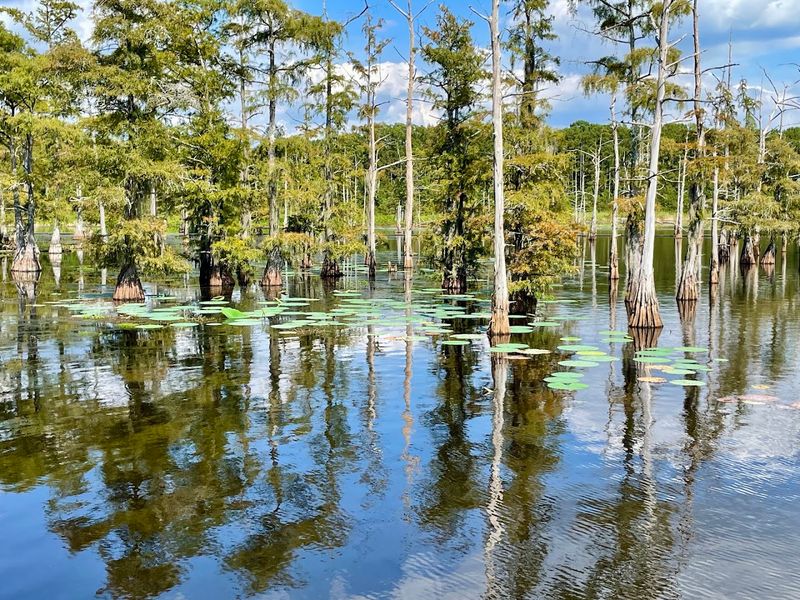
Near Monroe, this refuge proves that wildness does not always require distance. Black Bayou Lake National Wildlife Refuge sits within city limits, but cypress, water tupelo, lotus beds, shallow water, and bird movement quickly push the urban world to the edge of attention.
The visitor center gives the place a thoughtful beginning, using a restored late-1800s planter’s house as an education hub. Boardwalks, trails, observation areas, a boat launch, paddling access, and wildlife programs make the refuge approachable for families, photographers, birders, and anyone who wants nature without planning a remote expedition.
Short paths still deliver plenty because the habitat is so concentrated.
Motor restrictions and refuge protections help preserve the stillness. Herons, egrets, frogs, turtles, snakes, songbirds, and seasonal migrants all use the lake and surrounding wetlands, so quiet observation pays off.
Stand on the boardwalk long enough, and the surface begins to reveal more life than first appeared possible. Black Bayou feels peaceful because it teaches visitors to notice before moving on.
Bring binoculars, move slowly, and let children look before naming everything for them. The refuge works best when curiosity stays quiet enough to hear wings, water, reeds, and wind moving in the still afternoon light too.
1. Toledo Bend Reservoir
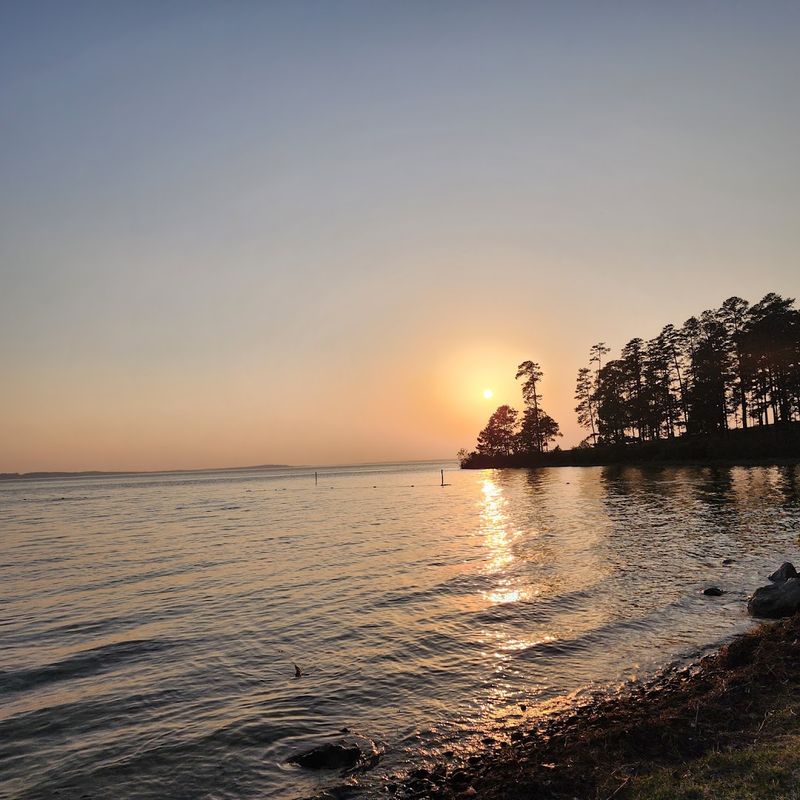
Scale is the first surprise at Toledo Bend. The reservoir stretches along the Louisiana-Texas border with enough shoreline, timber, coves, deep water, and open views to make smaller lakes feel almost delicate.
Yet South Toledo Bend State Park proves that a huge lake can still offer quiet pockets if you choose your timing well.
The park sits on bluffs above the water and gives visitors cabins, campsites, hiking trails, boating access, fishing opportunities, birding, and sunrise views that feel worth waking early for. Anglers know Toledo Bend for bass, but the lake’s appeal reaches beyond tournament reputation.
Forested edges, standing timber, and ravines create a landscape that rewards walking as well as casting.
Bald eagles nest in the area, adding a wild note to the wide setting. Busy weekends can change the mood, so peace depends on picking the right hour or corner.
Choose an early morning, a tucked-away trail, or a calm shoreline bench, and Toledo Bend becomes less massive spectacle and more breathing room. Stay long enough for the scale to stop feeling overwhelming.
Once your eyes adjust, small things return: pine shade, bird movement, reflected clouds, and water touching old wood under the wide southern sky again.