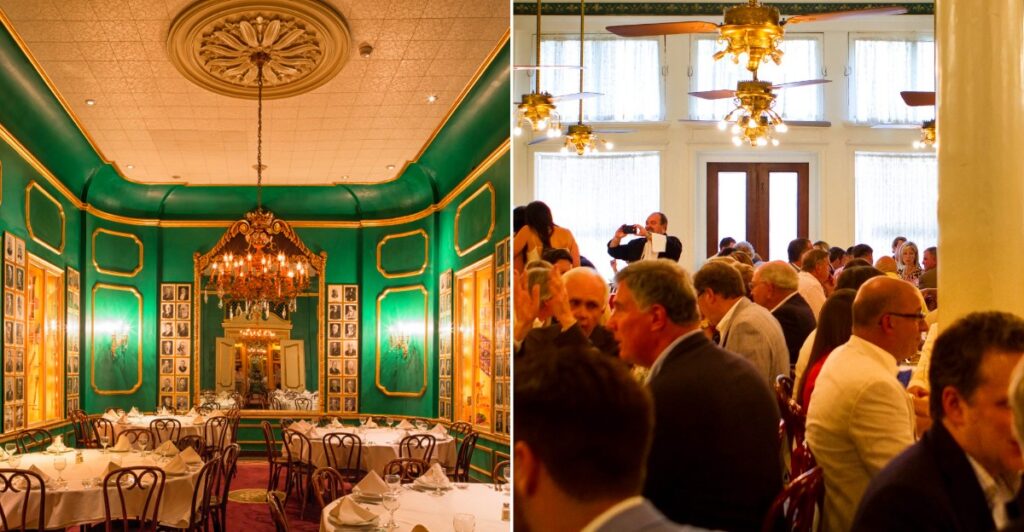
Some restaurants serve food. Others serve a reason to cross state lines. The twelve spots on this list fall firmly into the second category. One invented Oysters Rockefeller in the 1880s and still serves them in the same dining room.
Another started as a grocery store before the family behind the counter realized their turtle soup had a following. A third operates out of a roadhouse in the swamp where the oysters arrive under a crust of cheese and the jukebox still takes quarters.
The thing they share is not a cuisine or a price point. It is the conviction that food should be worth remembering.
The po-boy that fed striking streetcar workers. The pies baked by the tens of thousands in a town that declared itself the pie capital.
The thin fried catfish that has not changed since the thirties. These twelve restaurants prove that charm in Louisiana does not require a reservation.
12. Antoine’s Restaurant
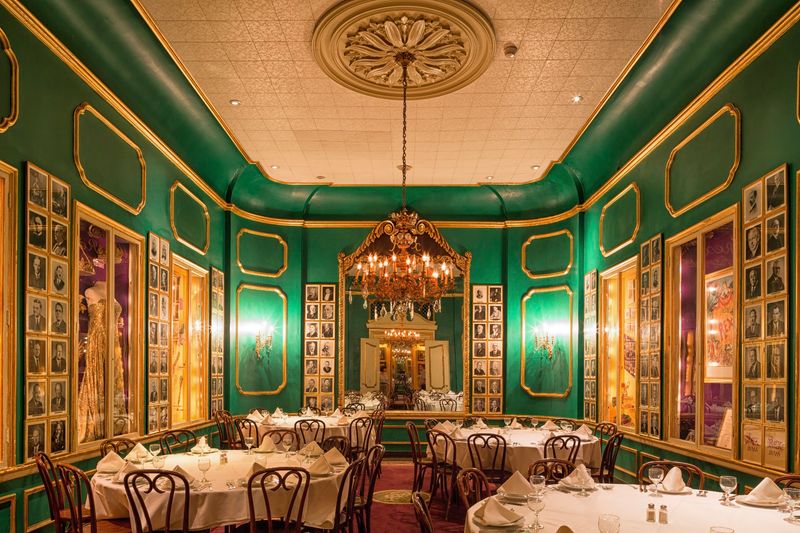
Walking into Antoine’s feels less like entering a restaurant and more like stepping into a piece of New Orleans that somehow never stopped serving dinner. The French Quarter landmark at 713 Saint Louis Street, New Orleans, LA 70130 has operated since 1840 and remains under fifth-generation family ownership.
Its culinary history is unusually substantial. Antoine’s is the birthplace of Oysters Rockefeller, Eggs Sardou, and several other dishes that became part of the city’s restaurant vocabulary, with Oysters Rockefeller still carrying the mysterious original sauce whose recipe has never been publicly revealed.
The dining rooms add almost as much character as the menu. Historic photographs, mirrors, memorabilia, elaborate private rooms, and old-school service make even the walk to the table feel ceremonial.
This is not the place to rush through three courses in forty minutes. Order something rooted in the restaurant’s history, pay attention to the room, and let the pace become part of the experience.
Reservations are strongly encouraged, particularly around holidays and busy weekends. Antoine’s currently serves lunch, dinner, and Sunday jazz brunch on varying schedules.
11. Galatoire’s
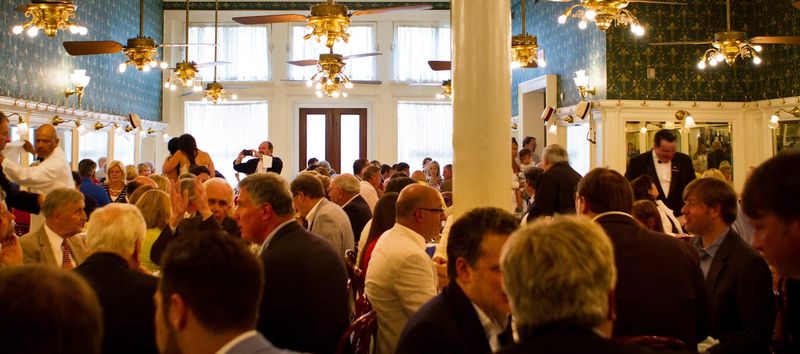
Friday lunch at Galatoire’s has developed a reputation that makes an ordinary midday meal sound suspiciously like a social event. The restaurant at 209 Bourbon Street, New Orleans, LA 70130 has been serving French-Creole cooking since 1905, and its downstairs dining room remains one of the French Quarter’s great people-watching stages.
White tablecloths and jacketed servers suggest formality, but the mood can become remarkably lively once lunch gets moving. Regulars greet servers by name, tables linger, celebrations spill into neighboring conversations, and the whole room begins to feel less restrained than the polished setting initially promises.
The food stays firmly rooted in old New Orleans. Shrimp remoulade, crabmeat maison, seafood preparations, soufflé potatoes, and classic sauces reward diners who arrive ready to embrace tradition rather than search for reinvention.
Galatoire’s now accepts reservations for its downstairs dining rooms, including Friday lunch, although the experience still attracts serious demand. Current service runs Tuesday through Sunday, with Monday closed.
Dress requirements are part of the ritual, especially later in the day. Rather than treating them as an inconvenience, lean into the occasion.
Galatoire’s charm comes from the fact that everyone seems to understand the same secret.
10. Dooky Chase Restaurant
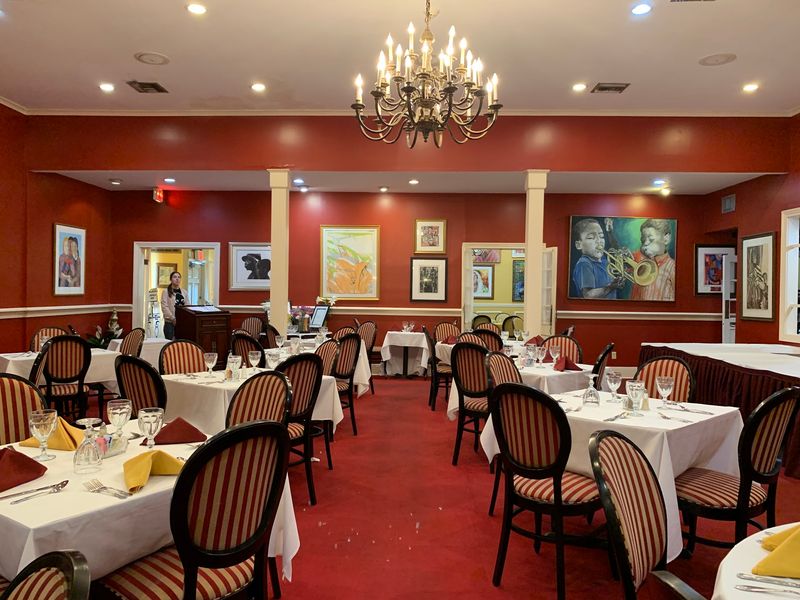
Dooky Chase’s is one of those rare restaurants where the history on the walls is inseparable from what happens on the plates. Located at 2301 Orleans Avenue, New Orleans, LA 70119, the restaurant began as a sandwich shop and bar before evolving into a landmark for Creole cooking, Black art, community life, and civil rights organizing.
Leah Chase helped transform the restaurant into an important gathering place while becoming one of America’s most influential Creole chefs. Civil rights leaders met here during segregation, and the dining rooms became known for displaying works by African American artists at a time when Black artists had few major exhibition spaces in the city.
The menu still carries the comforting confidence that made the restaurant famous. Gumbo, red beans and rice, shrimp Creole, fried chicken, and other Louisiana classics are prepared without treating tradition like something fragile.
Lunch currently runs Tuesday through Friday, while dinner is offered Friday and Saturday nights. Reservations are highly recommended because seating can fill quickly.
Take time to look around rather than simply finishing your meal and leaving. The art, photographs, and dining rooms help explain why Dooky Chase’s matters.
9. Parkway Bakery & Tavern
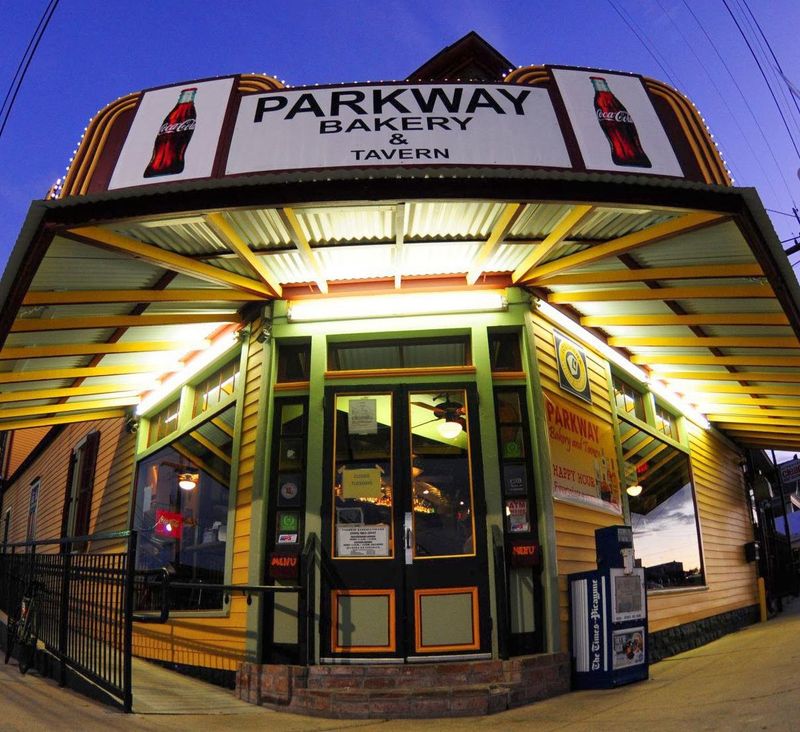
Parkway feels exactly like the kind of neighborhood place where a sandwich should require both hands and several napkins. The Mid-City institution at 538 Hagan Avenue, New Orleans, LA 70119 first opened in 1911 as a neighborhood bakery and has spent generations becoming one of the city’s best-known poor boy destinations.
The restaurant’s story overlaps with the broader history of the New Orleans poor boy, which emerged during the 1929 streetcar workers’ strike. Parkway later made the sandwich central to its identity, and today the menu covers roast beef, fried seafood, sausage, and combinations designed for people who do not mind gravy reaching their wrists.
The roast beef poor boy remains a natural first order. Tender beef, debris, and gravy soak into the bread just enough to make structural integrity an ongoing concern without completely surrendering.
Fried shrimp and oyster versions bring a different pleasure, relying on crisp seafood against soft bread and dressed toppings. Onion rings and other sides make restraint even less realistic.
Parkway currently opens Wednesday through Sunday from 10 a.m. to 6 p.m. and closes Monday and Tuesday.
8. Herby-K’s
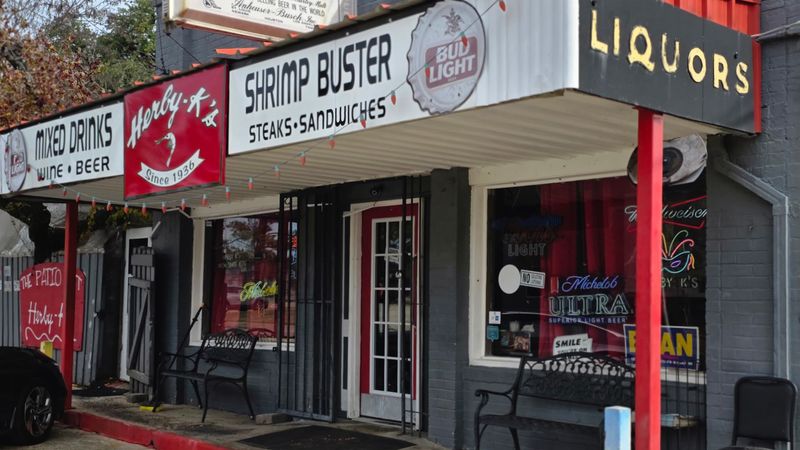
Shreveport keeps a few treasures that feel almost whispered about. Herby-K’s looks like it has spent decades resisting anyone who suggested making it slicker.
The little Shreveport institution at 1833 Pierre Avenue, Shreveport, LA 71103 has operated since 1936 and still carries the comfortable, timeworn appearance of a neighborhood place that earned its personality naturally.
The signature order is the Shrimp Buster, created by Herby K himself in 1945. Shrimp are flattened, breaded, and fried before being arranged over buttery bread and served with the restaurant’s distinctive sauce.
It sits somewhere between a shrimp sandwich and its own separate food category. The appeal comes from the contrast of crisp coating, soft bread, seafood, and sauce rather than elaborate presentation.
The rest of the menu stays close to Louisiana comfort food, with oysters, seafood plates, gumbo, and other favorites sharing space with the famous sandwich. The room itself is packed with memorabilia and decades of accumulated character.
Current hours vary by day, with shorter service early in the week and later closing Thursday through Saturday. Calling ahead is sensible if oysters or a particular menu item are the reason for the trip.
7. Lea’s Lunchroom
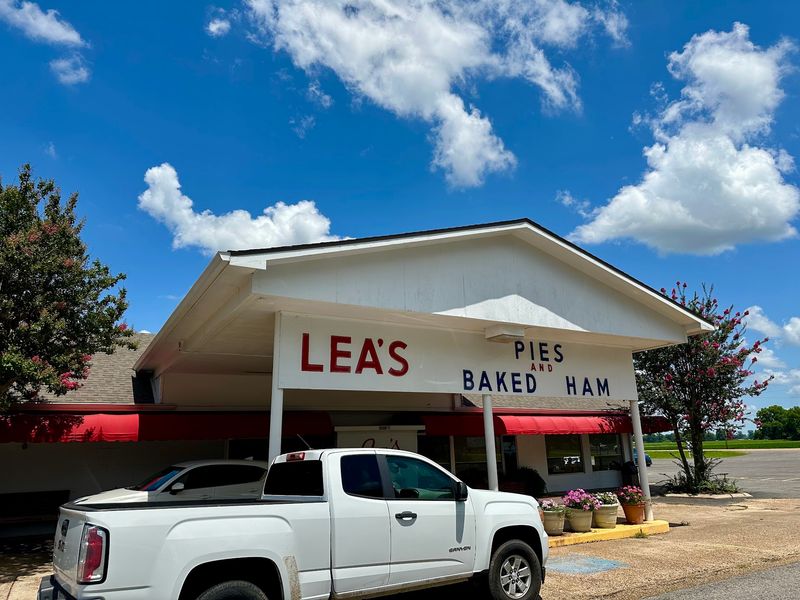
Pie perfume hits before the door fully closes at Lea’s Lunchroom, and that first impression matters. Located at 1810 Highway 71 South, Lecompte, LA 71346, the roadside institution traces its story to 1928 and has been feeding travelers from its Lecompte location since the early 1950s.
The original formula was beautifully uncomplicated. Ham sandwiches, plate lunches, strong coffee, and homemade pies gave travelers moving between north and south Louisiana a reliable reason to stop.
The pies eventually became the main legend. Lea’s bakes multiple varieties, including coconut, chocolate and lemon meringue, apple, peach, cherry, bumbleberry, and its bestselling pecan, with additional fruit flavors appearing seasonally.
The restaurant’s popularity helped Lecompte receive official recognition as Louisiana’s Pie Capital. That sounds like the sort of civic title designed specifically to make dessert unavoidable, which feels appropriate here.
Lea’s currently opens Tuesday through Sunday from 7 a.m. to 3 p.m. and closes Monday. Arriving well before closing gives you better odds of finding the pie you wanted.
Order lunch if you are hungry, but save room regardless. Lea’s has survived because it understands an enduring truth of highway travel.
6. Middendorf’s Manchac
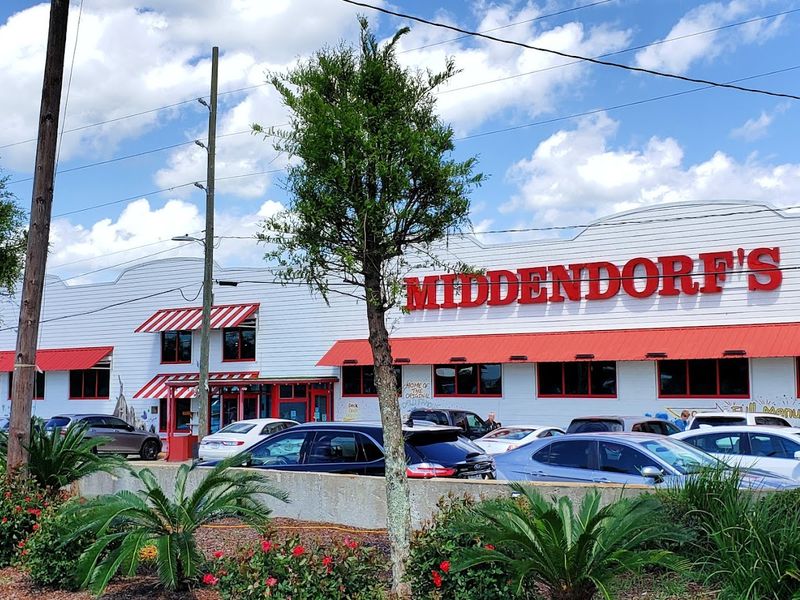
Middendorf’s occupies the kind of watery south Louisiana setting that makes fried seafood feel almost inevitable. The original restaurant at 30160 Highway 51 South, Akers, LA 70421 sits in Manchac, surrounded by wetlands and waterways between New Orleans and Baton Rouge.
The restaurant opened in 1934 and became famous for its original thin fried catfish. Instead of thick fillets, the fish is sliced unusually thin before frying, creating broad, delicate pieces with crisp edges and a lighter texture than many traditional catfish plates.
That signature dish still defines the restaurant generations later. Hush puppies, seafood sides, oysters, shrimp, and other Louisiana favorites give diners plenty of alternatives, but skipping the thin catfish on a first visit feels like visiting a lighthouse and refusing to look at the water.
Families can linger around the property, watch the water, and enjoy the relaxed pace that comes naturally to a restaurant built away from a dense downtown district.
Middendorf’s Manchac currently opens Wednesday through Sunday from 10:30 a.m. to 8 p.m. and closes Monday and Tuesday.
Drive into the wetlands, sit down, order the catfish that made the place famous, and discover why some recipes survive precisely because nobody felt compelled to improve them.
5. Mosca’s Restaurant
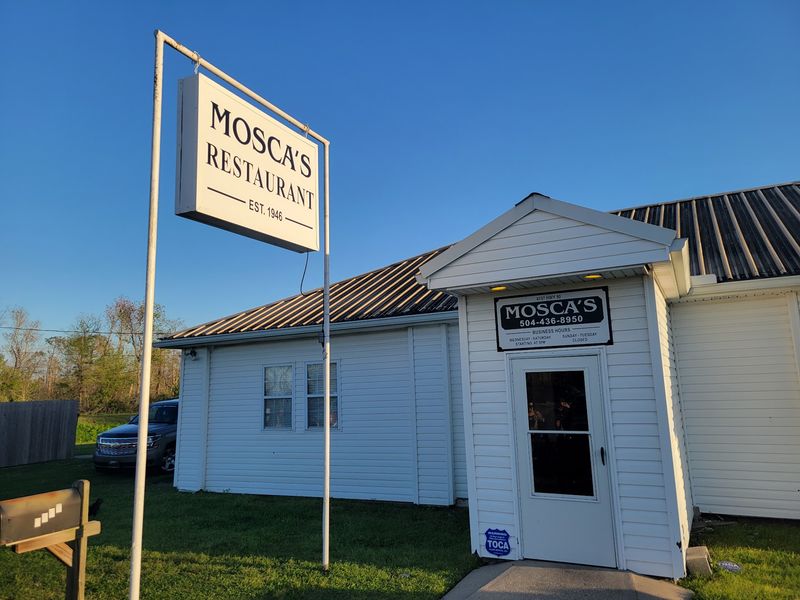
The exterior of Mosca’s gives away almost nothing. Sitting at 4137 U.S.
Highway 90, Westwego, LA 70094, the low roadside building looks modest enough that a first-time visitor could easily wonder whether this is really one of Louisiana’s most storied Italian restaurants.
Then the garlic arrives.
Mosca’s has operated since 1946, serving Creole-Italian food family-style in a wood-paneled dining room that has stubbornly resisted culinary fashion. Oysters Mosca, Chicken a la Grande, spaghetti Bordelaise, and other house classics arrive in generous portions meant to move around the table.
Oysters Mosca are particularly memorable, baked beneath breadcrumbs, cheese, herbs, and plenty of garlic until the edges brown. Chicken a la Grande follows the same philosophy of strong flavors and minimal hesitation, combining rosemary, olive oil, and more garlic than anyone should pretend to object to.
The current restaurant is open Tuesday through Saturday for dinner, beginning at 5 p.m. The simple schedule suits a place that feels more like a destination dinner than something you casually wander into at lunchtime.
Bring enough people to share several dishes. Mosca’s menu makes far more sense when plates travel around the table and everybody steals a little of everything.
4. Mandina’s Restaurant
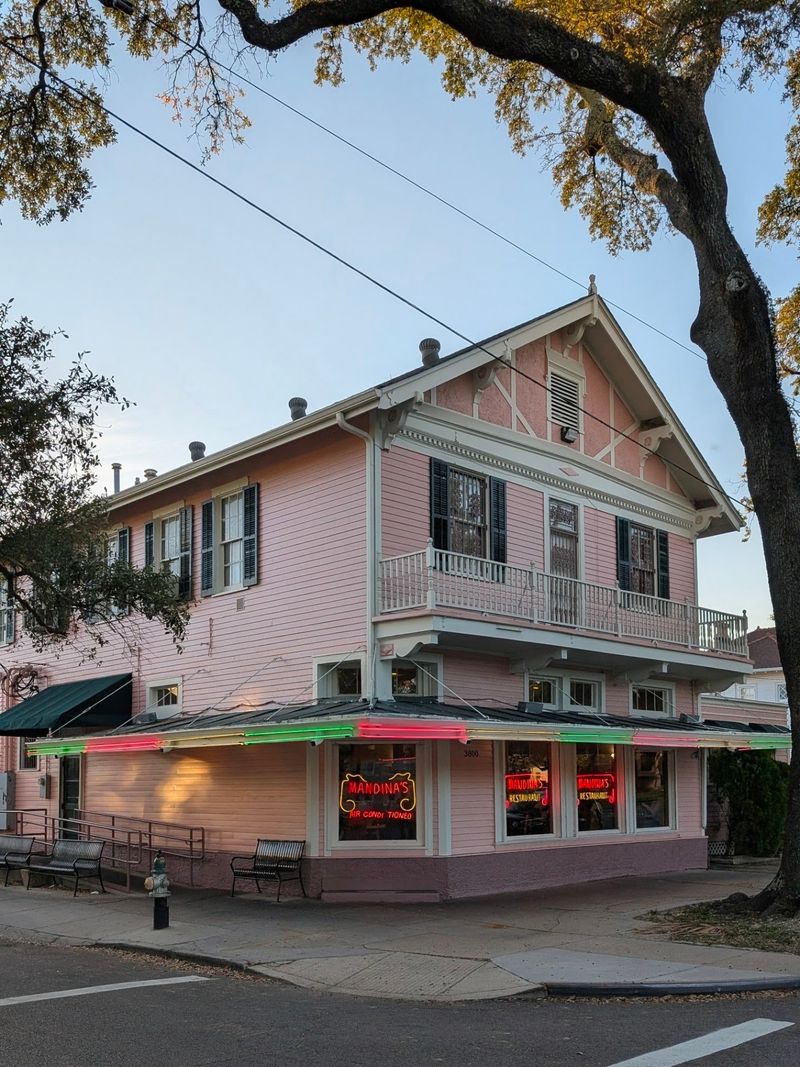
Mandina’s has the lived-in ease of a restaurant that belongs to its neighborhood as much as the houses around it. The pink building at 3800 Canal Street, New Orleans, LA 70119 began as a grocery store opened by Sicilian immigrant Sebastian Mandina before evolving into a pool hall and finally becoming the family restaurant recognizable today.
That history helps explain the menu. Italian American dishes, Creole seafood, poor boys, Gulf fish, pasta, and old New Orleans comfort food sit together without anyone worrying about which culinary category each plate technically belongs to.
Grilled shrimp over pasta Bordelaise is a particularly good example of that overlap. Garlic-heavy pasta meets Gulf seafood naturally, while dishes such as fish meunière or almondine, spaghetti and meatballs, fried seafood, and roast beef feel equally at home.
The room has the loose warmth of somewhere generations of customers have returned to for family lunches and ordinary Tuesday dinners. It feels established without turning reverence for its own history into the main attraction.
Mandina’s current fourth-generation ownership continues the family connection that began more than a century ago in the same building. That continuity matters because neighborhood restaurants are often defined as much by familiarity as by signature dishes.
3. Mother’s Restaurant
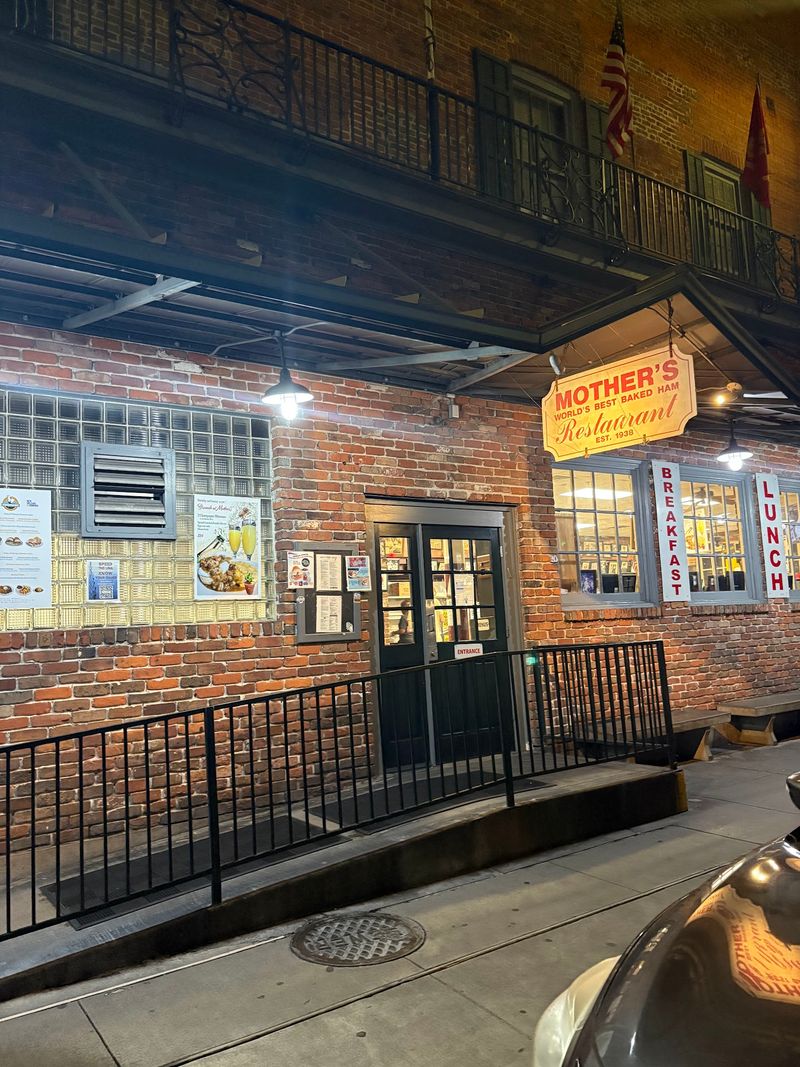
Lines outside Mother’s can look intimidating, but they move with purpose and promise. Mother’s Restaurant runs with the organized chaos of a place that has been feeding hungry people for almost ninety years.
Located at 401 Poydras Street, New Orleans, LA 70130, it opened in 1938 and built its early following among longshoremen, laborers, courthouse workers, journalists, and neighborhood regulars.
The cafeteria-style ordering system keeps the room moving. Diners work their way toward the counter while staring at baked ham, roast beef, debris, gumbo, jambalaya, breakfast plates, and poor boys long enough to reconsider whatever they originally planned to order.
The Ferdi Special is the classic introduction. Created after regular customer Ferdi asked for ham to be added to roast beef, the sandwich combines baked ham, roast beef, debris, gravy, and dressed poor-boy toppings into something magnificently excessive.
Mother’s also helped popularize the term debris for the bits of roast beef and juices left behind during carving. Those little shavings eventually became one of the restaurant’s signature additions rather than kitchen scraps.
The restaurant currently serves breakfast throughout the day and remains open daily. Lines are common during peak hours, but they usually move steadily.
2. Cafe Du Monde
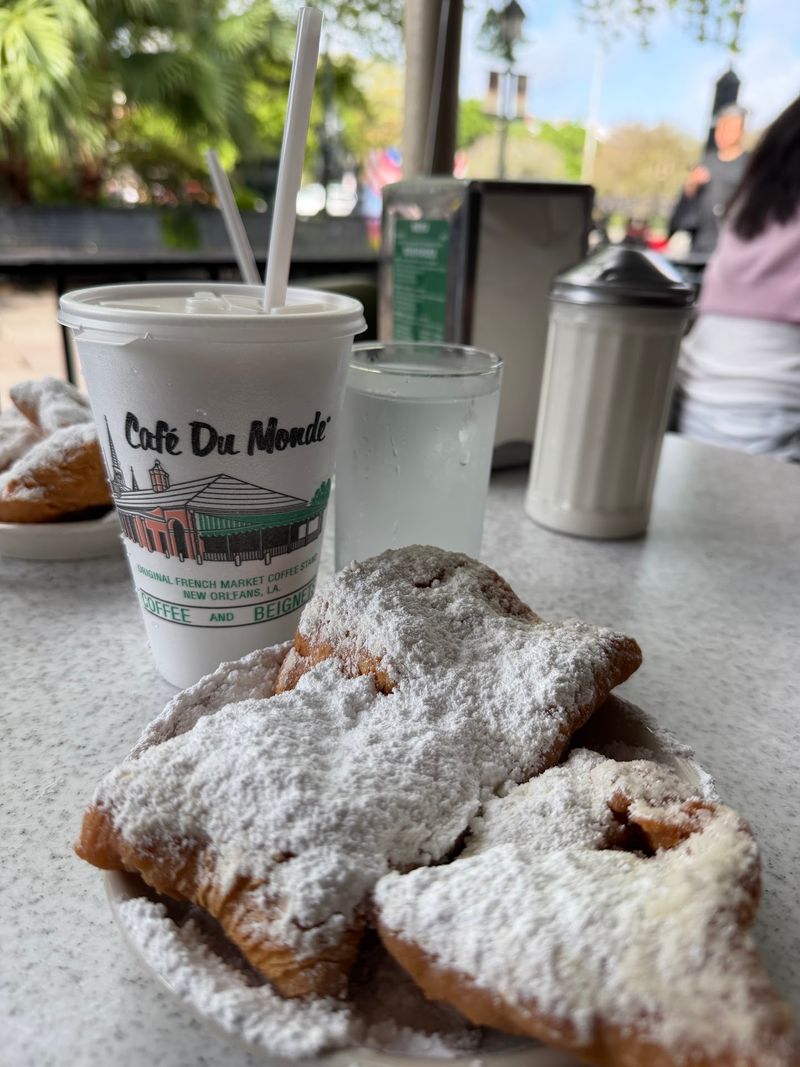
Few Louisiana meals require fewer decisions than Café Du Monde. At the original French Market location, 800 Decatur Street, New Orleans, LA 70116, the main event has remained remarkably simple since the coffee stand opened in 1862: beignets and coffee.
The beignets arrive hot and buried beneath enough powdered sugar to defeat anyone wearing black. Their crisp exterior gives way to warm, airy dough, while café au lait made with chicory coffee adds enough bitterness to keep breakfast from becoming pure dessert.
The open-air setting does much of the rest. Street musicians, carriages, French Quarter foot traffic, the nearby Mississippi River, and the constant movement around Jackson Square give even a short coffee stop a distinctly New Orleans soundtrack.
The French Market location currently opens early every morning and stays open late, with even longer hours on Friday and Saturday. That makes early breakfast and late-night beignets equally realistic options.
Morning is especially pleasant before the Quarter reaches full volume. Sit down, accept that powdered sugar will travel farther than physics should permit, and enjoy one of the city’s simplest rituals.
Café Du Monde is famous enough to risk becoming a cliché. Somehow it avoids that fate.
1. Tujague’s
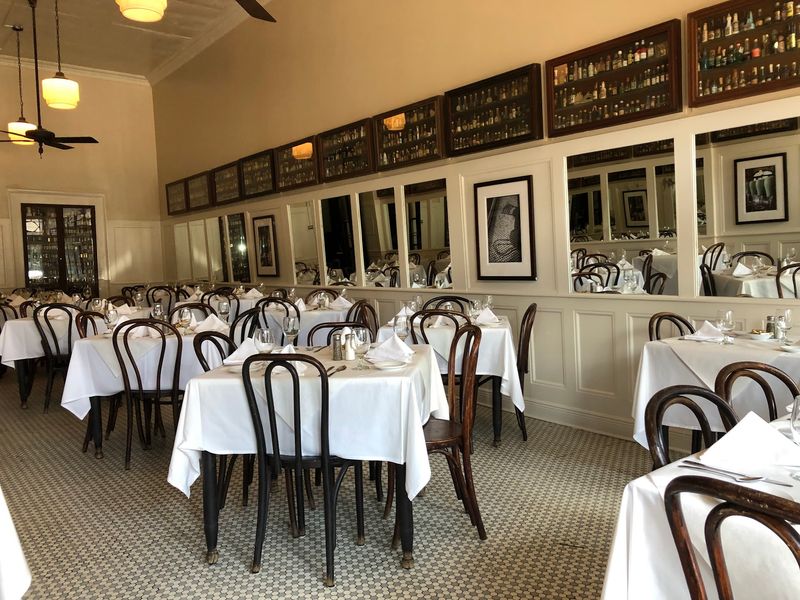
Tujague’s carries nearly two centuries of New Orleans restaurant culture without requiring diners to eat inside a historical reenactment. Founded in 1856 and now located at 429 Decatur Street, New Orleans, LA 70130, it celebrates its 170th anniversary in 2026 as the city’s second-oldest restaurant.
Its history includes the old French Market, the development of the city’s brunch tradition, generations of owners, and a dining format that once relied on fixed multi-course meals rather than printed menus. The restaurant has evolved considerably while keeping several dishes and rituals tied to its past.
Shrimp remoulade and boiled brisket remain two of the classics worth ordering. The Grasshopper cocktail was also created here, although the kitchen’s old Creole dishes provide plenty of reason to visit without making the bar the focus of the meal.
Tujague’s currently serves brunch Friday through Sunday and dinner throughout the week. Reservations are recommended, particularly on weekends, although walk-ins are still welcomed when space permits.
The rooms feel historic without becoming excessively formal. Mirrors, dark wood, old photographs, and a traditional bar provide atmosphere while the restaurant continues operating like a living part of the Quarter.
That is the real charm.