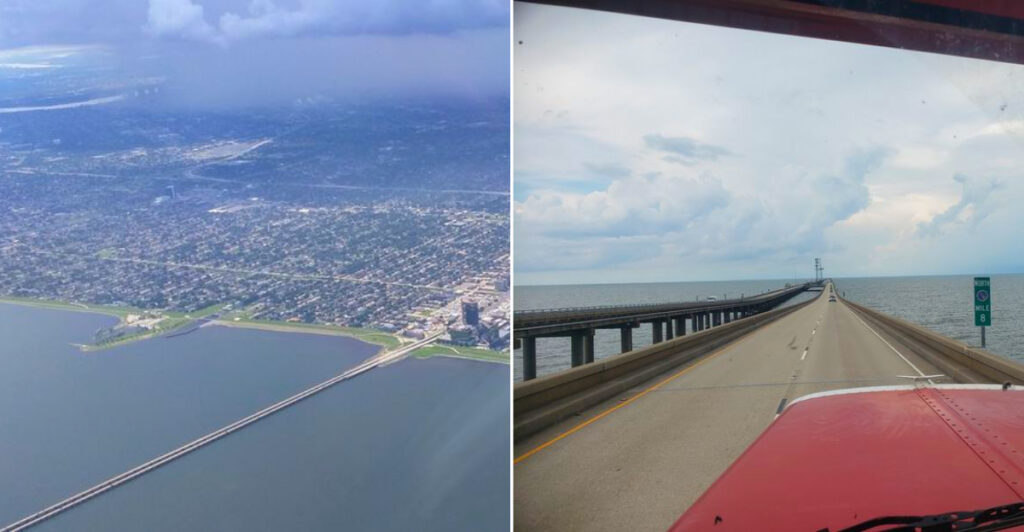
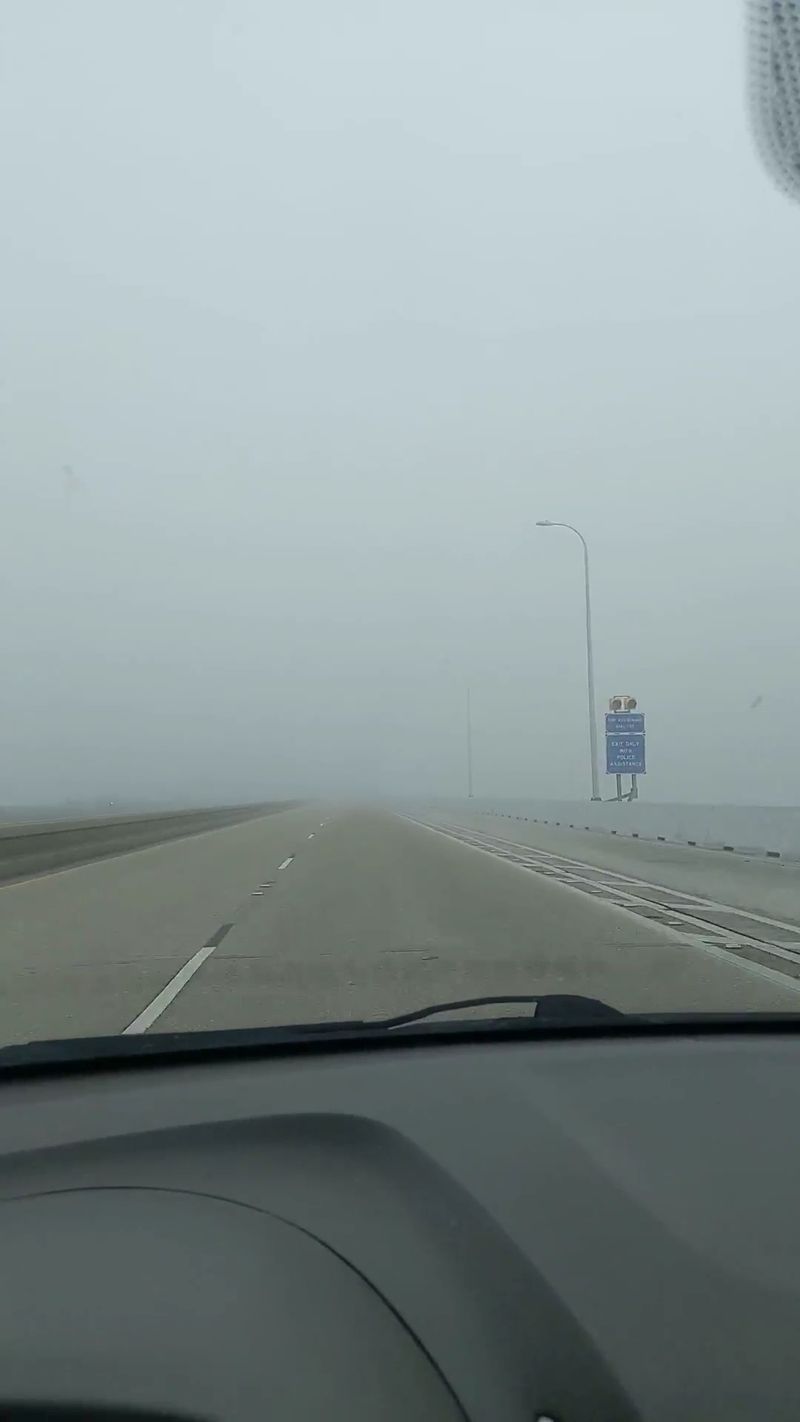
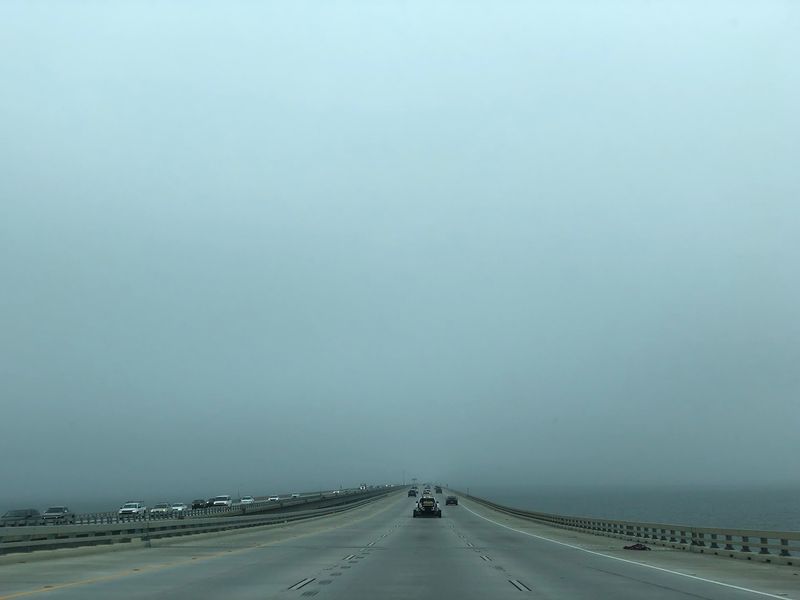
Twenty-four miles of bridge with nothing but water on either side. I have driven it at dawn when the fog was so thick the white line was a suggestion, and I have driven it at noon when the lake reflected the sky so perfectly that the road looked like it was floating through clouds.
The Causeway does not feel like a bridge. It feels like a dare. Expansion joints thump under your tires every few seconds for the entire length. There are no shoulders, no gas stations, no exits.
Just two lanes and a low railing between you and a lake that is barely twelve feet deep.
Somewhere around mile marker eight, the shore behind you disappears. Somewhere around mile twelve, you stop checking the mirror.
Louisiana built a bridge so long that both shores vanish, and people cross it every single day like it is nothing.
Pick Clear Weather When You Can
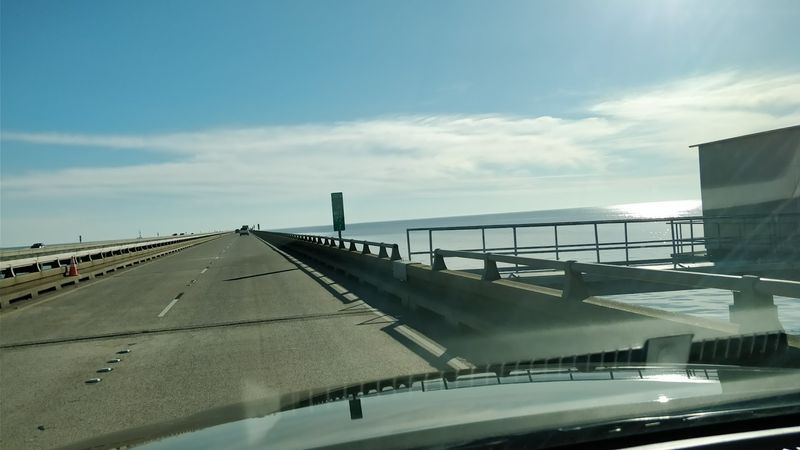
Morning light changes the bridge completely. On one trip, the lake looked like brushed metal, and by noon it had turned pale blue and glassy.
Because the deck sits only about 16 feet above the water, the weather and light feel close enough to touch.
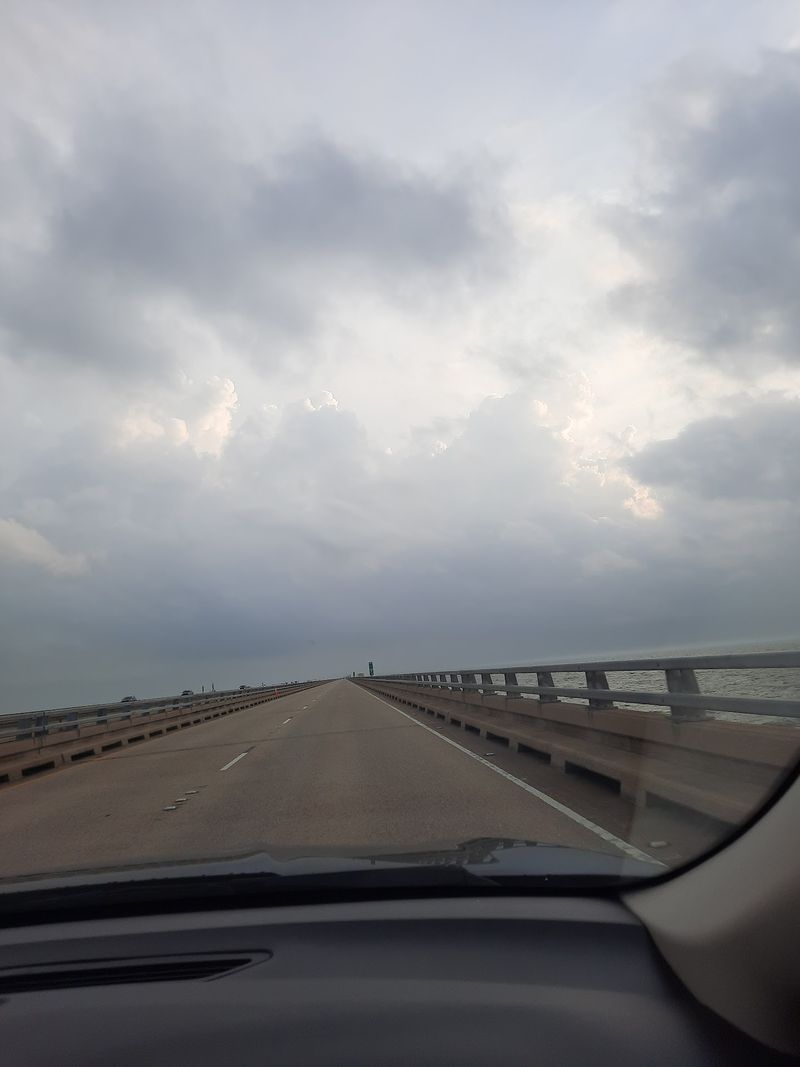
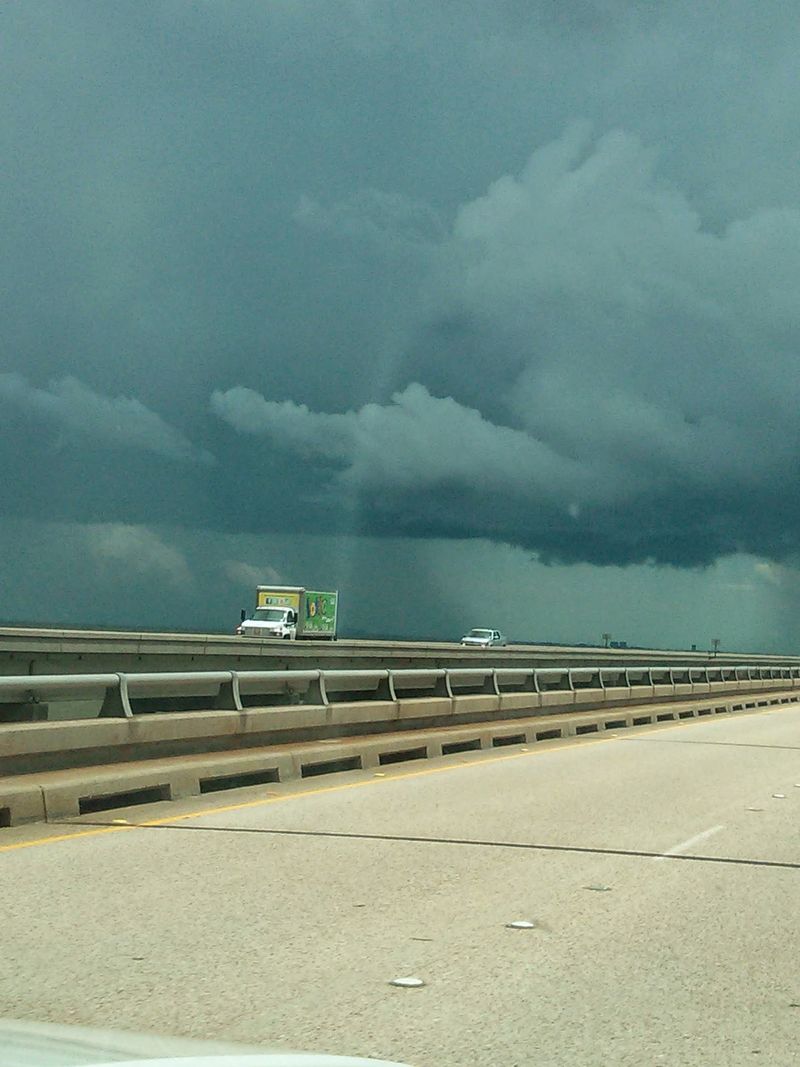
Clear days offer the easiest first crossing, especially if you want to enjoy the famous road to the horizon feeling. Fog, hard rain, wind, and storms can shrink the world fast, so check the forecast before you leave.
Causeway Information Radio on 1610 AM gives updates, and closures sometimes happen during rough conditions. If you can choose your moment, aim for a bright weekday outside rush hours.
The drive feels calmer, the lane changes around toll areas are simpler, and the views have room to work on your imagination after the city drops behind you.
Causeway Boulevard Runs Straight Into The Lake
The Lake Pontchartrain Causeway crosses Lake Pontchartrain between Metairie and Mandeville, Louisiana. From the New Orleans side, follow Causeway Boulevard north through Metairie until the roadway feeds directly onto the bridge; from the Northshore, North Causeway Boulevard leads south from Mandeville to the opposite end.
Once you enter the Causeway, the route becomes simple: stay on the twin bridge spans for roughly 24 miles across open water. Weekday traffic is usually heaviest from 6 to 9 a.m. and 3:30 to 6:30 p.m., so trips outside those windows can make the long crossing easier.
There is no parking or pedestrian access on the bridge itself, making this a drive-through destination from start to finish. Drivers heading south from Mandeville pass through the Causeway’s only toll plaza before entering the bridge, while northbound traffic from Metairie has no toll stop.
Notice The Rhythm In The Design
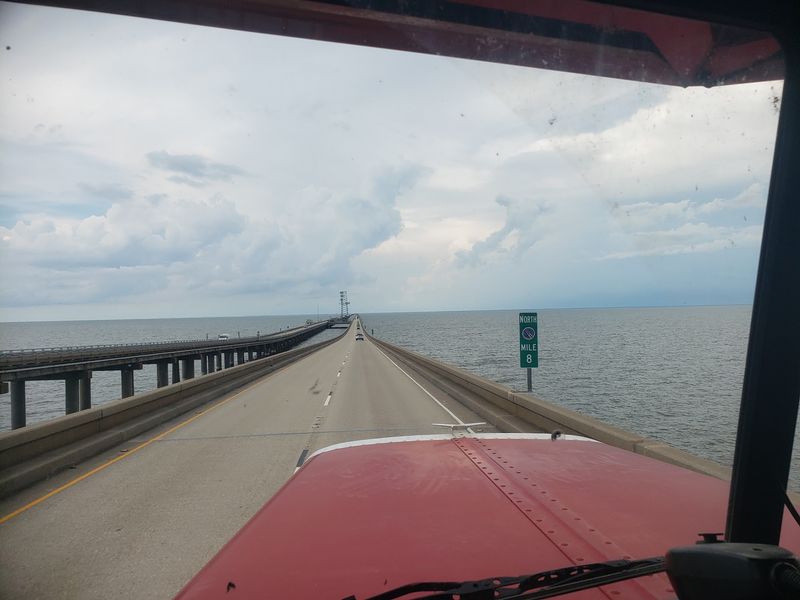
Repetition is the bridge’s secret trick. Span after span, pile after pile, the design looks almost plain, yet that steady pattern is exactly what makes the Causeway so impressive.
The first two lane bridge opened on August 30, 1956, after a fast 14 month construction effort that stunned many engineers.
Builders used prefabricated concrete pieces in a mass production style, then moved them into place across the lake. Later, a second span opened on May 10, 1969, carrying northbound traffic while the older bridge became southbound.
Knowing that story adds satisfying depth to the ride. What seems simple from behind the windshield is a landmark in civil engineering.
If you enjoy spotting details, watch the supports, the deck, and the drawbridge section near the side. The beauty here is rhythm, usefulness, and an idea made real.
Know Where The Toll Actually Is
Nothing spoils a good crossing like fumbling for payment at the wrong end. The toll is collected only on the southbound span, so drivers going from Mandeville toward Metairie are the ones who pay.
For a standard two axle vehicle, cash is 6 dollars, while a GeauxPass tag lowers the price to 3.40.
Knowing that ahead of time keeps the approach easy and cuts down on sudden lane choices. Cash booths are available, and tag only lanes are clearly marked, so read the signs early instead of rushing near the plaza.
If you cross often, GeauxPass saves money. If you are making a one time visit, keep small bills handy and settle in before the toll area appears.
A little planning leaves more attention for traffic, weather, and the strange floating feeling that makes the Causeway memorable for many drivers.
Use The Safety Features If You Need Them
Some people grip the wheel harder halfway across, and honestly, the bridge seems to expect that. The open water can feel huge, especially when the shoreline vanishes, which is why the Causeway has practical safety features built into daily use.
Emergency call boxes sit roughly every 3.5 miles, and crossovers connect the two spans for incidents or maintenance needs.
That knowledge matters more than people think. Drivers who feel nervous can request help from Causeway police, who may provide an escort across.
My best advice is simple: do not attempt the trip when you are tired, upset, or distracted. Pick daylight, leave extra time, and let the crossing be just a drive, not a test.
Even the safety systems send a comforting message. This ribbon over Lake Pontchartrain was built for movement, but it was built with nerves in mind.
Avoid Peak Commuter Hours
Timing changes the mood of the Causeway more than almost anything else. On a quiet morning, the bridge feels patient and almost meditative, but during peak commute hours it acts like a major work route, because that is exactly what it is.
About 43,000 vehicles use it daily, connecting the New Orleans area with Mandeville and the North Shore.
If you have flexibility, avoid weekday windows from roughly 6:00 to 9:00 AM and 3:30 to 6:30 PM. Fewer cars mean less braking and more room to settle into the bridge’s odd rhythm.
Weekend drives often feel easier for visitors, especially in clear weather. Keep a steady speed and avoid unnecessary lane changes near busier approaches.
Planning around traffic is not glamorous advice, yet it shapes the trip more than any playlist. Space, on this bridge, is part of the pleasure.
Remember What The Bridge Connects
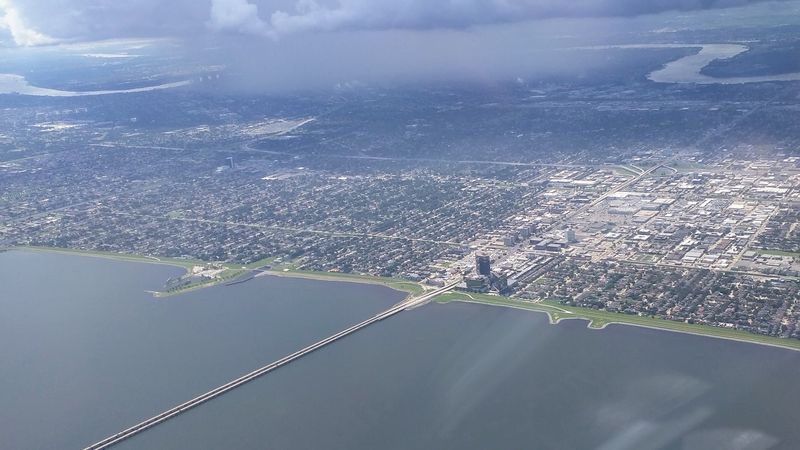
Before the bridge existed, getting around Lake Pontchartrain took a much longer route. That fact helps explain why the Causeway matters far beyond engineering records and horizon photos.
By linking Metairie and the New Orleans side with Mandeville and other North Shore communities, it changed daily life, work patterns, and the way people moved around the region.
Crossing it feels oddly modern and deeply local at the same time. Commuters, students, families, and delivery drivers all use the same line over open water, giving the bridge quiet civic importance.
That older 50 mile detour once shaped who saw whom and how often. Now the distance shrinks, and two sides of greater New Orleans feel closely stitched together.
Remembering that purpose makes the drive richer. You are not crossing water.
You are moving through one of Louisiana’s useful pieces of geography.
Look For The Drawbridge Story
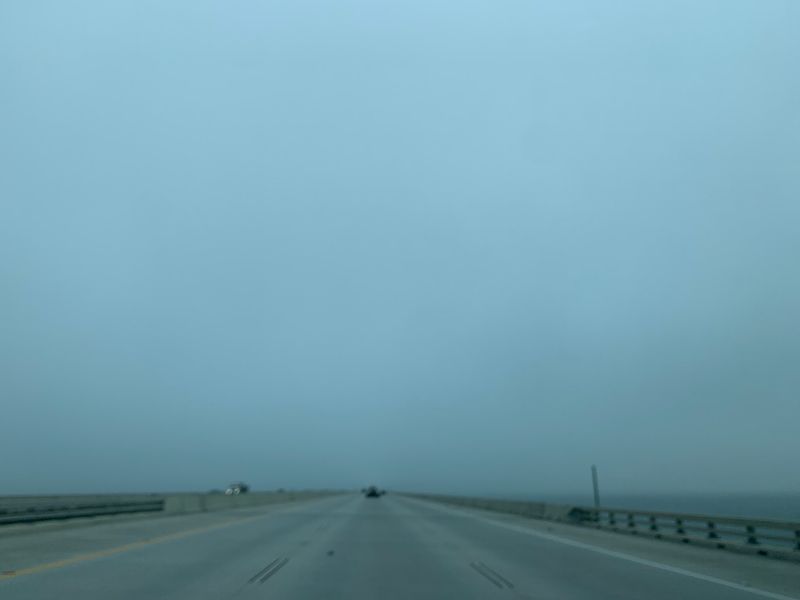
A bridge this long could have looked heavy, but the Causeway feels surprisingly light. The deck rides low over the lake, supported by thousands of hollow concrete pilings, and the repeating spans create a neat visual beat that seems to go on forever.
Hidden inside that repetition is one especially interesting feature: a bascule drawbridge section for marine traffic.
You will not notice it because it is flashy. In fact, the bridge offers a lesson in function first design.
Its plainness is part of its elegance. Knowing a drawbridge sits out there changes the trip a little.
Ships need passage too, and the Causeway had to serve road traffic and water traffic from the start. If you enjoy built landscapes, watch the repeating lines instead of waiting for one dramatic moment.
Here, the beauty comes through pattern, patience, and scale.
Treat It As Living Engineering History
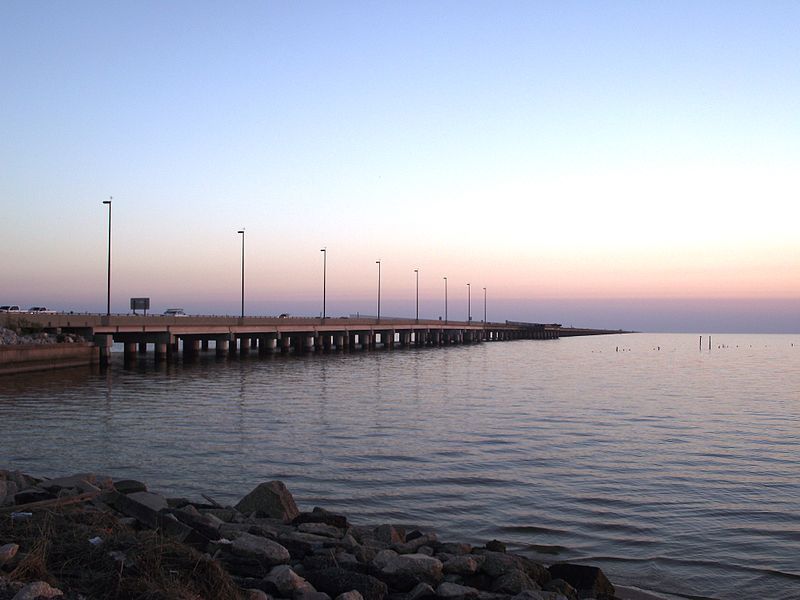
Records make good headlines, but the bridge’s deeper appeal is how much bold midcentury confidence it carries. The Lake Pontchartrain Causeway is recognized as a National Historic Civil Engineering Landmark, and that title fits.
It was not just long for its time. Its construction methods helped show how prefabricated concrete and assembly line thinking could speed up massive infrastructure.
That history gives the drive an extra layer. You are using a working road, but you are also moving across a project that changed bridge building practice in the 1950s.
There are no giant towers or showy reveal. Instead, the wonder hides in efficiency, repetition, and scale.
If you enjoy places that reward a little background reading, the Causeway delivers more than a crossing. It stands as a practical answer to a practical problem, and somehow that makes it more impressive.
Let The Minimal Scenery Work On You
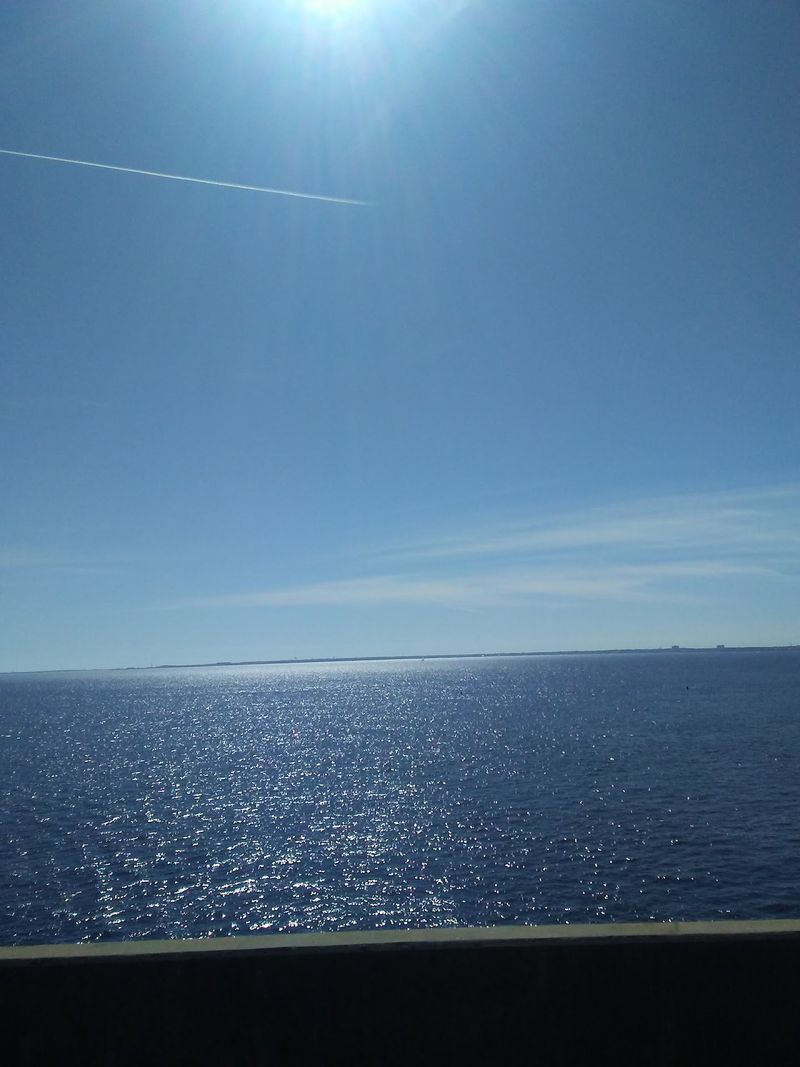
The strangest part of the Causeway is how little seems to happen, even while something memorable is happening the whole time. There are no steep climbs, no sweeping curves, and no dramatic skyline for most of the crossing.
What you get instead is a quiet, almost hypnotic line over brackish water, with sky and lake slowly trading colors around you.
That simple scene can unsettle some drivers and calm others. It helps to treat the crossing as its own landscape, not as an ordinary city bridge.
Keep your eyes far ahead, stay centered in your lane, and resist staring sideways for long stretches. On clear days, the New Orleans skyline may appear before the horizon takes over.
Then the city fades, the lake expands, and the bridge feels less like a shortcut and more like a world with its rules.
Understand Why There Are Two Spans
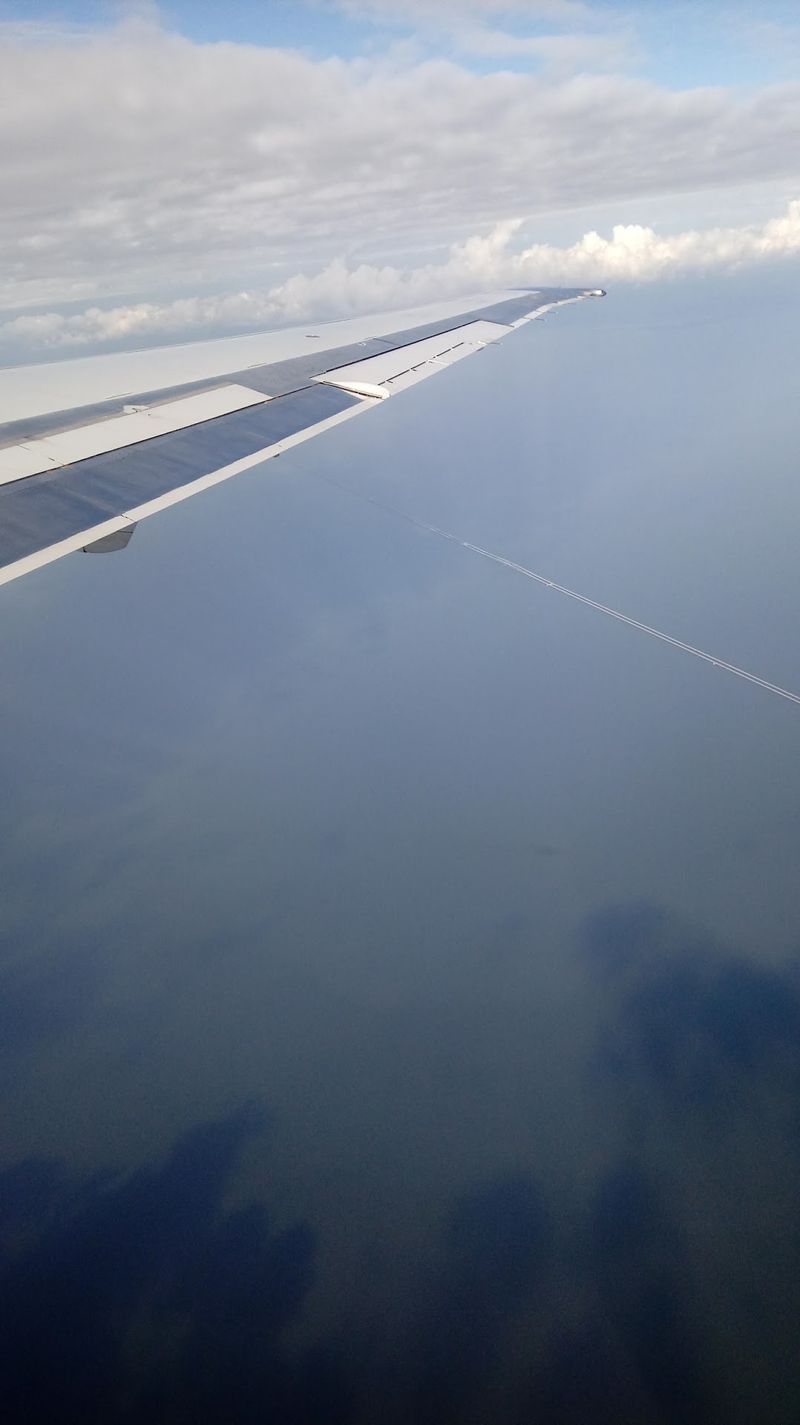
At first glance, the two parallel spans seem identical, like a bridge seeing double. Look closer and the pair tells a growth story.
The original span opened in 1956, and a second span, about 50 feet longer, opened in 1969 when traffic demands outgrew the first bridge alone.
Since then, the older bridge has carried southbound traffic and the newer one has taken northbound vehicles. That split makes the Causeway safer and smoother, which matters on a crossing this long.
Visitors do not need to memorize dates, but it helps to know which direction you are traveling before you set out, especially because the southbound side is the tolled one. The twin spans add a visual effect.
Seeing another line of traffic over the lake beside you can make the bridge feel stranger, like two pencil marks drawn across water.