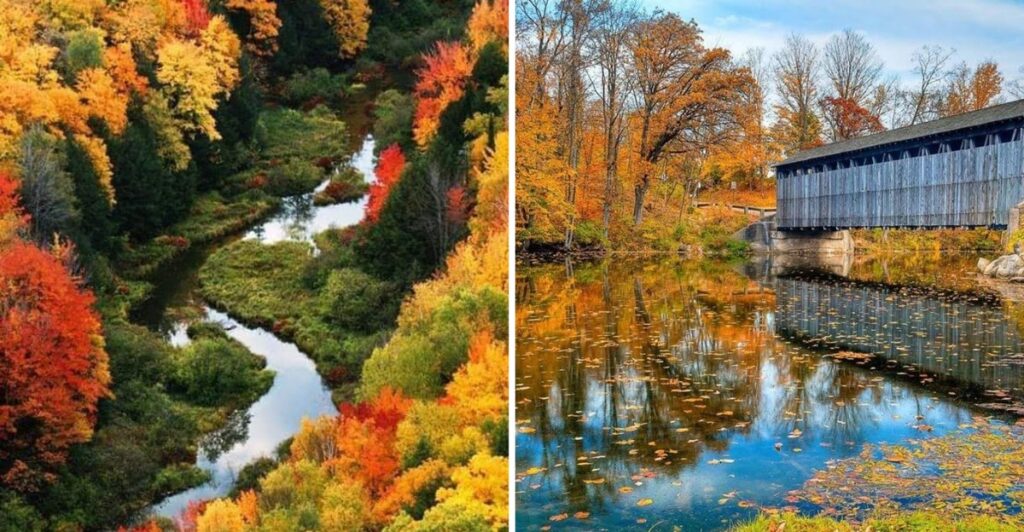
Michigan in fall is very good at making twenty bucks feel overqualified.
A waterfall does not care what your budget is. Neither does a dune, an old pine forest, or a view from above the treetops.
That leaves your money free for the important decisions, like cider, donuts, or the completely unnecessary souvenir you will defend all the way home.
Some outings need little more than park access. A few 2026 weekends throw festivals into the bargain, while other stops are ready whenever the leaves are.
The harder part is choosing what kind of day you want.
Quiet woods? Big lake views? Art booths?
An island in the middle of Detroit?
Michigan keeps handing you options like it has forgotten you only get one Saturday at a time.
1. Tahquamenon Falls State Park
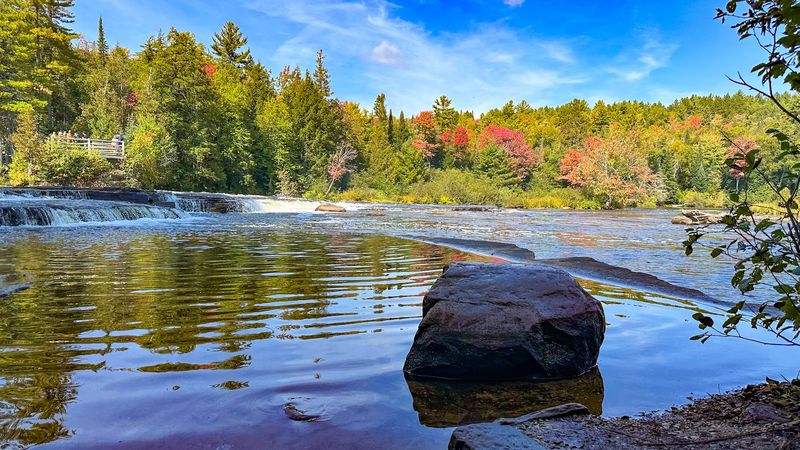
Tea-colored water pours over a drop nearly 50 feet high at the Upper Falls, where the river stretches more than 200 feet across.
The brown tint is natural, coming from tannins released by cedar, spruce, and hemlock swamps upstream. That combination of rushing water and surrounding hardwoods gives autumn plenty to work with.
Tahquamenon Falls State Park covers roughly 48,000 acres and contains more than 40 miles of trails. The Upper Falls has a paved half-mile walkway with viewing opportunities, while the Lower Falls can be reached from accessible routes that include the island bridge.
Give the two waterfall areas separate time instead of treating one as an optional extra. They sit several miles apart and offer different views of the same river.
The park remains open year-round, and vehicle entry uses Michigan’s Recreation Passport rather than a separate attraction ticket.
This is one of those days when the water is only half the show. Forest color around the river can keep changing long after you have found the main viewing platform.
Address: 41382 W M-123, Paradise, MI 49768.
2. Canyon Falls Roadside Park
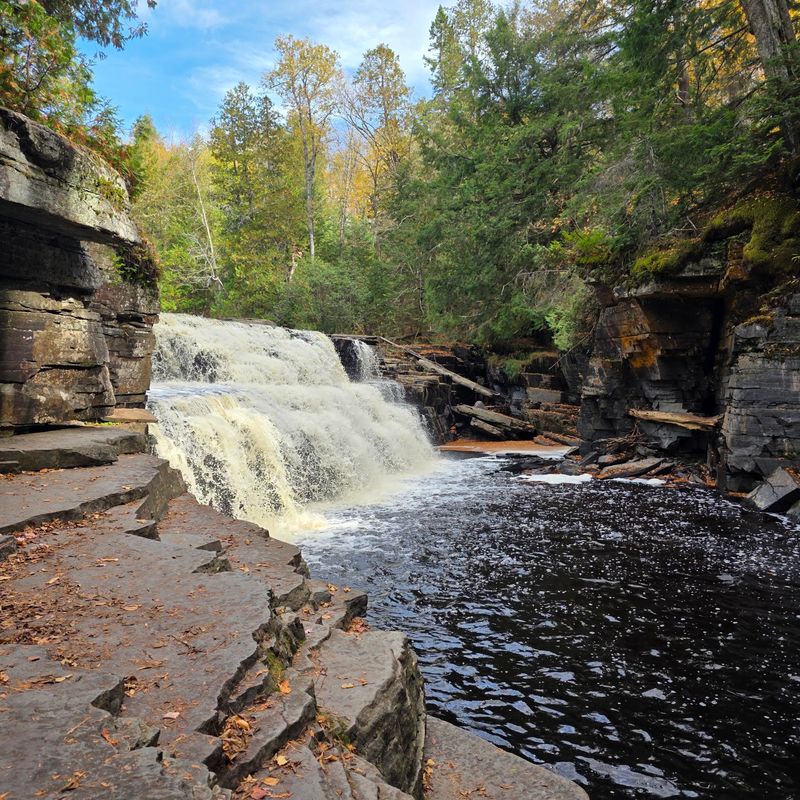
A roadside stop becomes a real hike surprisingly quickly here. A forest path follows the Sturgeon River toward waterfalls and a rocky gorge, adding far more scenery than the words “roadside park” usually suggest.
Canyon Falls Roadside Park sits on US-41 about nine miles south of L’Anse. Michigan’s Department of Transportation continues to maintain the park, and it reopened for the 2026 season after its usual spring weather delay.
The outing works well when you want something active without committing most of the day to a backcountry route. River views, footbridges, forest, and exposed rock provide several changes of scenery along a relatively compact walk.
Watch your footing as the terrain approaches the gorge. This is not the place to trade a marked path for a better photograph near an edge.
There is no complicated admission structure to organize before stopping. Pull in, follow the established trail, and let the river turn a highway break into one of the more memorable short walks in the western Upper Peninsula.
Address: US-41, 9 miles south of L’Anse, MI 49946.
3. Porcupine Mountains Wilderness State Park
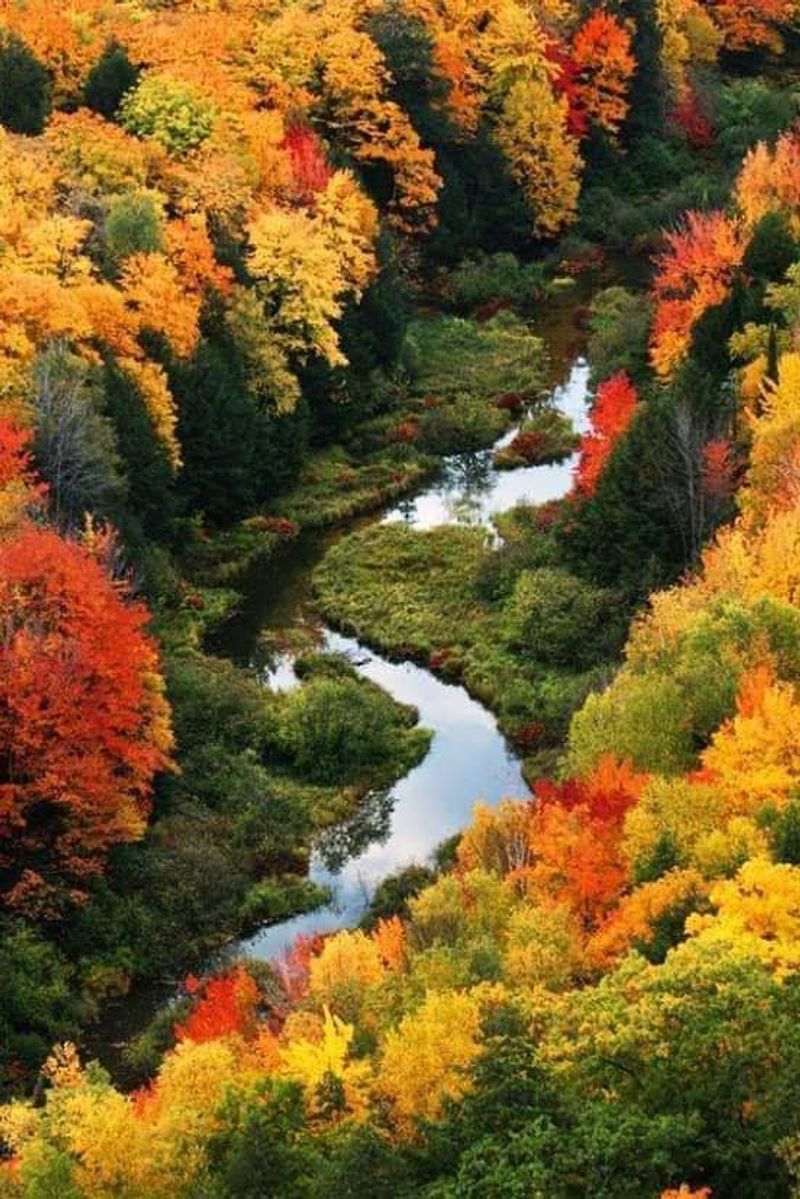
Sixty thousand acres give this park enough scale to support waterfalls, Lake Superior shoreline, old-growth forest, ridges, and about 90 miles of hiking trails.
Lake of the Clouds remains the obvious first look, with an accessible walkway leading toward its well-known overlook.
Porcupine Mountains Wilderness State Park adds something different on select weekends in 2026. Fall color chairlift rides are scheduled for September 26 and 27, October 3 and 4, and October 10 and 11.
The lift carries riders above the ski hill for a higher view over the autumn canopy.
A Recreation Passport is required for vehicle entry, while the chairlift uses a separate ticket. Skip the lift and the park still offers more than enough for a full day, especially around Lake of the Clouds and the visitor center.
A bigger appetite for walking opens up the trail system, but there is no requirement to turn the trip into an all-day trek. One major overlook and a shorter route can still give you the scale that makes the Porkies such a strong fall stop.
Address: 33303 Headquarters Rd, Ontonagon, MI 49953.
4. Palms Book State Park
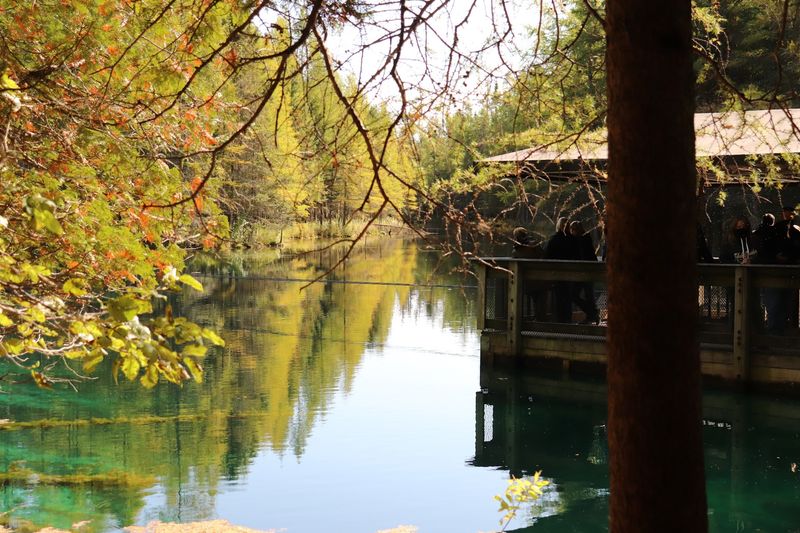
Clear water changes the color palette after several stops dominated by red and gold leaves. Kitch-iti-kipi, Michigan’s largest natural freshwater spring, stays at about 45 degrees year-round while more than 10,000 gallons of water move through it each minute.
Visitors cross the spring on a self-propelled observation raft. Looking down through the water reveals the emerald bottom, submerged tree trunks, moving sand, and fish below. The raft is accessible and operates from morning until dusk.
Palms Book State Park makes the trip especially simple because the raft is part of the park experience rather than a separate ride that requires another admission purchase. Vehicle entry uses a Recreation Passport.
Autumn adds color around the spring without changing the water temperature, so the contrast between clear blue-green water and turning leaves can be striking.
The park itself is compact, which also makes this an easy addition to a longer Upper Peninsula route rather than an exhausting full-day hike.
Address: 1380 Sawmill Rd, Manistique, MI 49854.
5. Hartwick Pines State Park
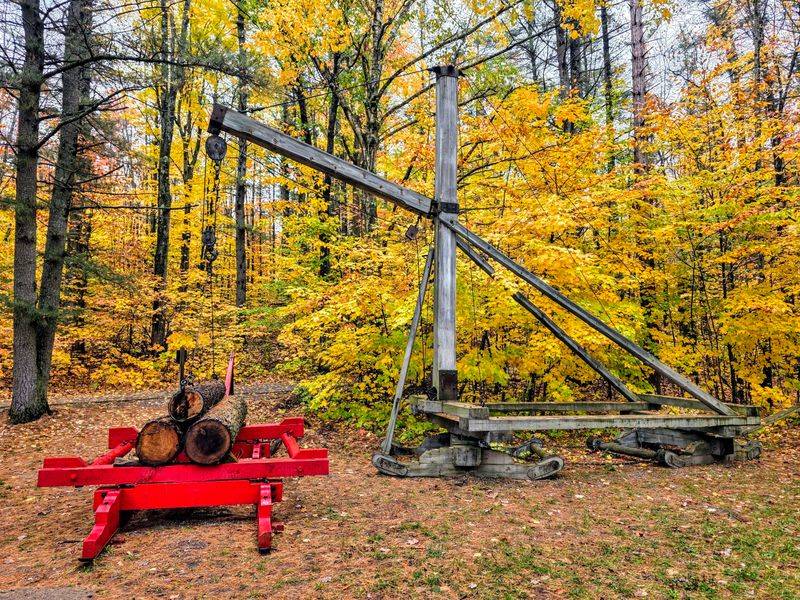
Old-growth white pine changes the scale of a forest walk. Hartwick Pines State Park protects a 49-acre stand, one of Michigan’s remaining accessible examples of the forests that covered far more of the state before large-scale logging.
The park also contains about 21 miles of trails. The paved Old Growth Forest Trail runs 1.25 miles, providing a manageable introduction before longer routes move deeper into the property.
History takes over at the Logging Museum. Two Civilian Conservation Corps-built structures recreate an 1890s logging camp, with exhibits including a bunkhouse, cook’s shack, blacksmith shop, equipment, and a 1914 steam engine and sawmill.
During fall, the museum operates on weekends through the end of October and does not charge a separate admission fee, although vehicle entry to the state park requires a Recreation Passport.
Look up often on the old-growth trail. The trunks are the attraction here, and fall color from surrounding hardwoods gives those dark pines an entirely different backdrop.
Address: 3612 State Park Dr, Grayling, MI 49738.
6. Ocqueoc Falls
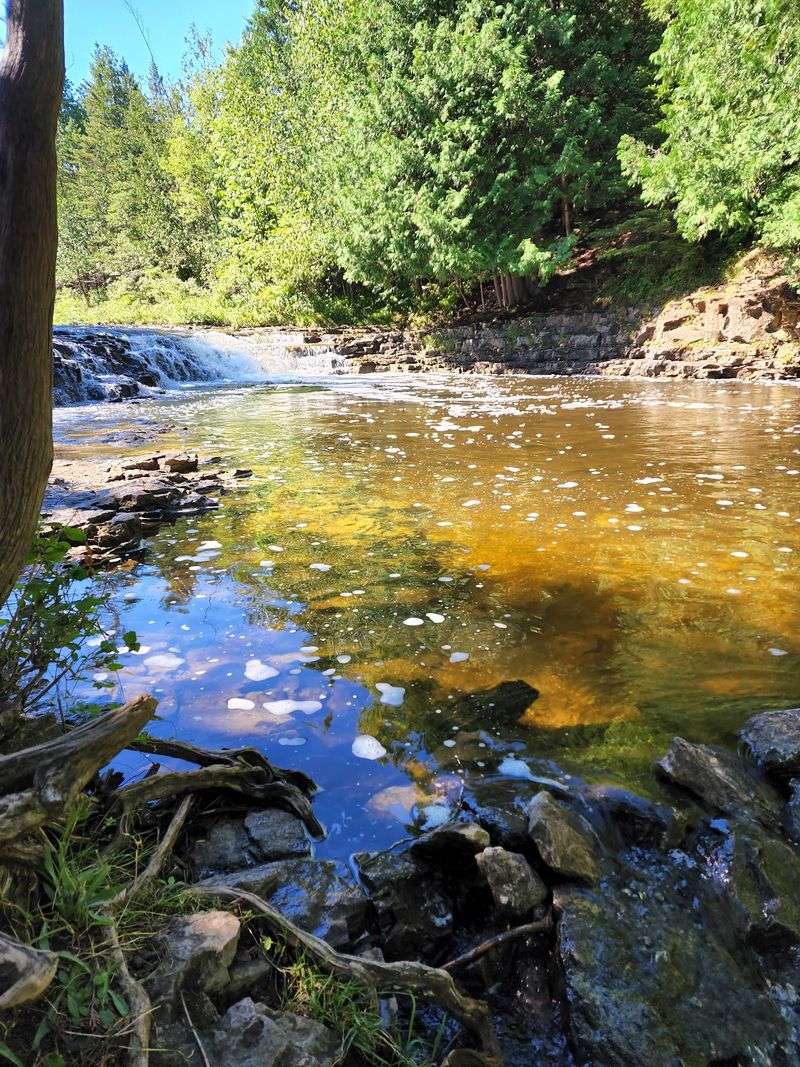
Michigan’s Lower Peninsula is not known for big waterfalls, which makes this one particularly useful on a northern fall route. Ocqueoc Falls is the largest waterfall in the Lower Peninsula and sits about 12 miles west of Rogers City.
The design around the falls is just as notable as the water. Michigan describes Ocqueoc as the first waterfall in the nation developed for universal accessibility, with a paved route, accessible picnic spaces, benches, and access improvements around the viewing area.
Ocqueoc Falls State Forest Campground provides access to the Bicentennial Pathway, where four trail loops range from roughly three to six miles. That means the day can stay focused on the falls or expand into a longer forest walk.
Vehicle entry requires a Recreation Passport. Beyond that, the main attraction is simply the river moving across limestone ledges with hardwood forest around it.
If the weather has already turned chilly, skip the temptation to get wet and use the accessible overlooks instead. The waterfall does not need warm weather to carry the stop.
Address: Ocqueoc Falls State Forest Campground, Millersburg, MI 49759.
7. Ludington State Park
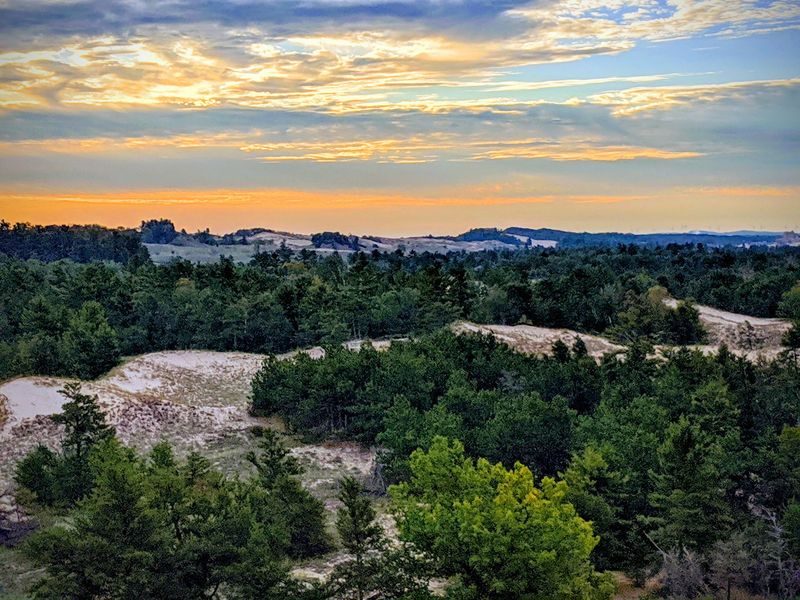
Seven miles of Lake Michigan shoreline sit on one side, while 5,000-acre Hamlin Lake borders the other. Between them are dunes, the Big Sable River, forest, campgrounds, and 21 miles of marked trails.
Ludington State Park gives you several ways to build the day without paying for a string of separate attractions. Big Sable Point Lighthouse stands at the end of a walk through the park, while shorter routes follow woods, dunes, wetlands, and the river.
Go toward the lighthouse when you want the outing to have a clear destination. Stay closer to the river and shorter trails when wind off Lake Michigan makes the open shoreline less appealing.
Recent park improvements have included repaved roads, pedestrian walkways, and parking upgrades, while the core shoreline and trail network remain open in 2026. Vehicle access requires a Recreation Passport.
Sunset may tempt you to stretch the day, but the best part is having several landscapes available before that. One park can move from quiet inland water to forest and then a broad Lake Michigan horizon.
Address: 8800 W M-116, Ludington, MI 49431.
8. Fallasburg Park
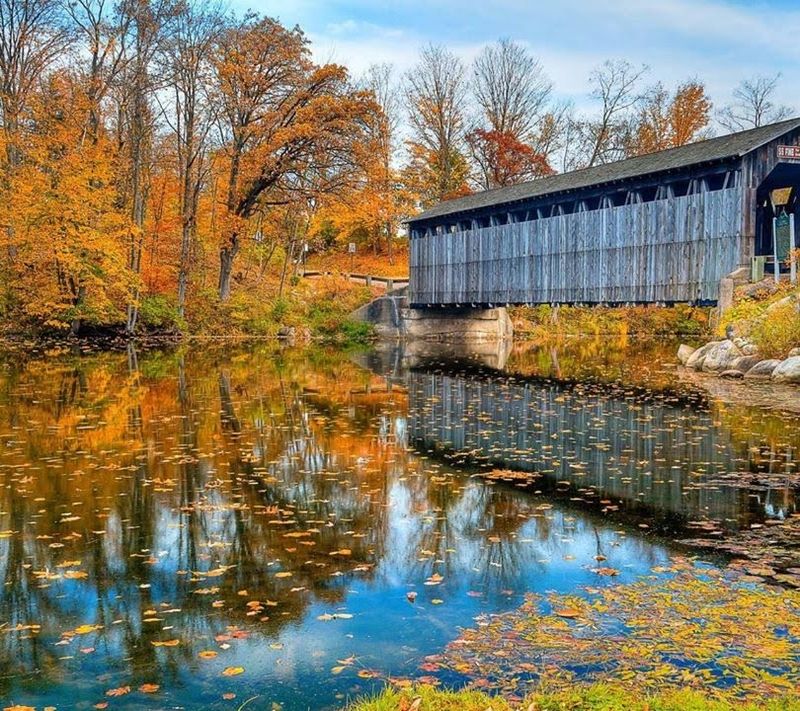
September 19 and 20 bring the 58th annual Fallasburg Arts Festival to this Lowell park.
The 2026 event includes about 100 fine art and craft booths, food vendors, children’s activities, demonstrations, and live music on an outdoor stage.
Festival admission is free, while parking carries a separate charge.
Fallasburg Park adds enough permanent scenery that the weekend does not depend entirely on the booths. The nearby covered bridge dates to 1871, spans the Flat River, and remains open to vehicle traffic.
Make one loop through the artists before buying anything. With ceramics, fibers, glass, jewelry, photography, painting, sculpture, woodwork, and other categories represented, the first booth that catches your attention may not be the one you remember an hour later.
The park itself includes trails and river scenery, so taking a short break from the festival can change the pace without requiring another destination.
Come for the art, but leave enough time to see the bridge. It gives the weekend a clear connection to the landscape around Lowell rather than making it just another craft fair.
Address: 1124 Fallasburg Park Dr, Lowell, MI 49331.
9. Dow Gardens
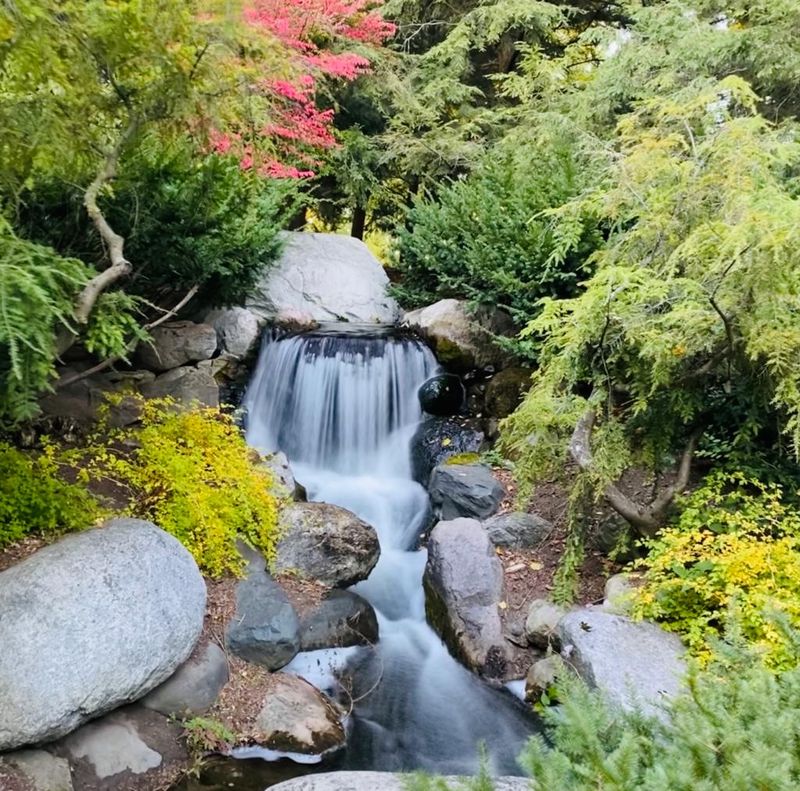
Autumn does not erase the formal side of a garden. Ponds, bridges, mature trees, perennial beds, and planted spaces continue across 110 acres, giving fall color a more structured setting than a state forest or waterfall trail.
In 2026, the grounds also have a temporary extra. Ten life-sized animatronic dinosaurs remain along the garden and forest paths through October 25, with the exhibit included in regular admission.
Dow Gardens stays open Tuesday through Sunday during its fall season, which runs through October 31. General admission covers the garden experience without requiring separate tickets for every path or seasonal display.
Autumn color here comes without requiring a rugged trail. Paths move past water features and planted landscapes, making the outing more about wandering than reaching one specific viewpoint.
Let the route bend a little. A garden works best when the next pond, bridge, tree, or dinosaur appears before anyone has checked a trail mileage number.
Address: 1809 Eastman Ave, Midland, MI 48640.
10. Hidden Lake Gardens
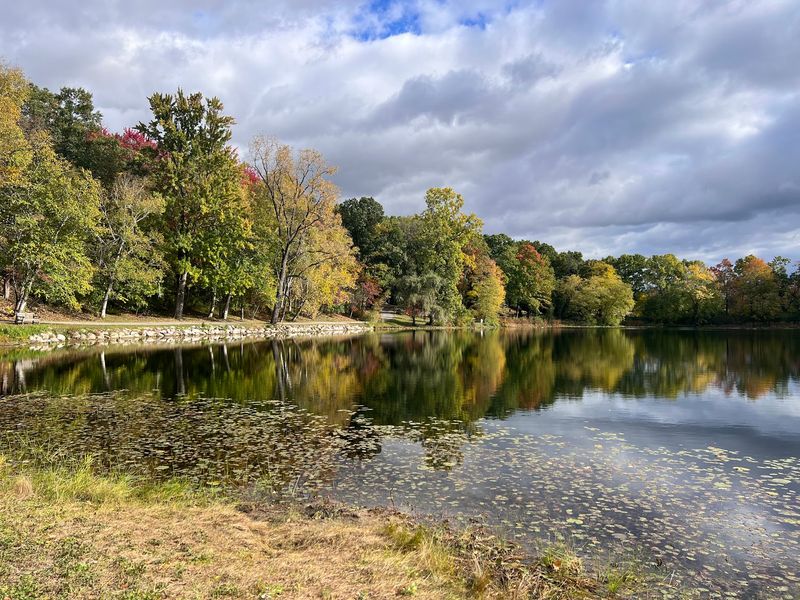
The Reach for the Sky Canopy Walk rises as high as 65 feet above a glacial kettle hole, with a 374-foot suspension bridge forming part of a structure that extends more than 700 feet. Access to the Sky Walk is included with regular garden admission.
Hidden Lake Gardens covers 755 acres and includes 12 miles of hiking trails, a conservatory, bonsai collection, arboretum, and other plant collections. The grounds remain open Tuesday through Sunday, while the Canopy Walk keeps its own daytime schedule.
Autumn gives the elevated walkway its obvious advantage. Instead of looking toward color from a distant overlook, you move through the tree canopy and across suspension spans surrounded by branches and leaves.
The approach to the Sky Walk includes slopes and mixed surfaces, so the trip involves more walking than the attraction’s name might suggest. Once there, the crossing itself is designed to accommodate wheelchairs, strollers, wagons, and other assistive devices.
Leave time for the conservatory afterward. Warm indoor plant collections make a useful contrast if an October afternoon turns colder than expected.
Address: 6214 W Monroe Rd, Tipton, MI 49287.
11. Belle Isle Park
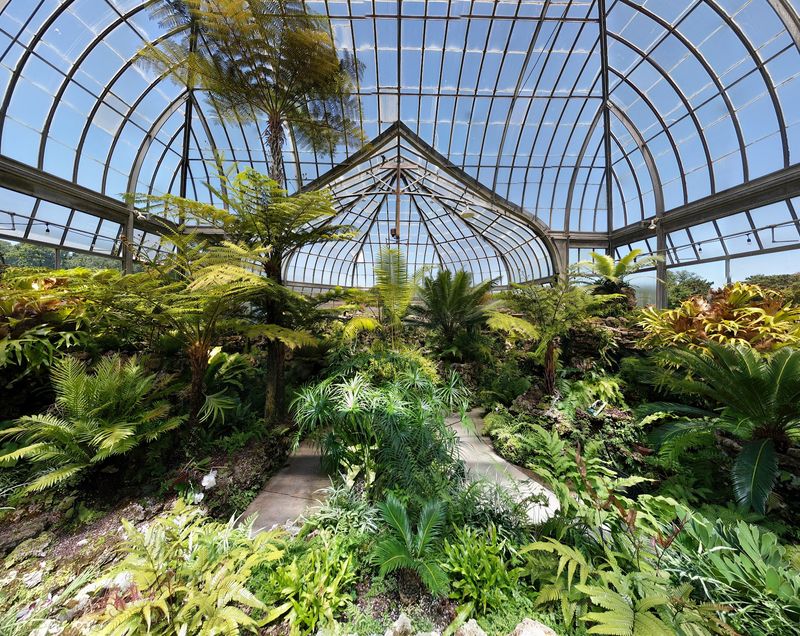
A 985-acre island in the Detroit River can cover several different interests before anyone needs to leave for another attraction.
Walking paths, lawns, river views, the aquarium, conservatory, nature center, and historic structures give the park far more range than a typical city picnic stop.
The Anna Scripps Whitcomb Conservatory has reopened following major renovations, while the Belle Isle Aquarium remains open during its own infrastructure work.
The aquarium operates Thursday through Sunday and does not require a standard admission ticket, although donations are encouraged.
Belle Isle Park does have one important 2026 limitation. The James Scott Memorial Fountain plaza, adjacent sidewalk, and Fountain Drive are closed through the year for restoration, with reopening expected in spring 2027.
That still leaves a substantial island to explore. Start indoors if the morning is cool, then use the riverfront and tree-lined roads as the day warms up. Motor vehicles need a Recreation Passport, while pedestrians and cyclists do not.
Address: 99 Pleasure Dr, Detroit, MI 48207.
12. Frankenmuth River Place Shops Scarecrow Fest
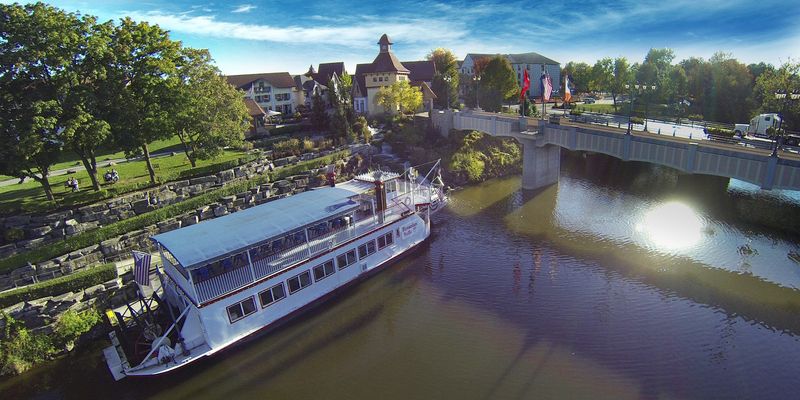
Two October weekends turn this shopping complex into a fall activity zone. Scarecrow Fest is scheduled for October 17 and 18 and again October 24 and 25 in 2026, with no general entry fee. Some individual activities carry their own charge.
Frankenmuth River Place Shops fills those weekends with scarecrow displays, pumpkin bowling, pumpkin painting, crafts, inflatables, a barrel train, and the pumpkin launcher.
The first weekend has a dog-focused program, while the second adds more children’s activities and trick-or-treating.
The easiest way to handle the day is to choose the weekend by activity rather than trying to treat both as identical. Families with younger children may prefer the later schedule, while dog owners get more dedicated programming on the first weekend.
Browsing the shops costs nothing, and the festival layout makes it possible to spend plenty of time walking between displays before choosing any paid extras.
The dates matter here. Put them on the calendar rather than arriving on a random October afternoon expecting the full festival program.
Address: 925 S Main St, Frankenmuth, MI 48734.