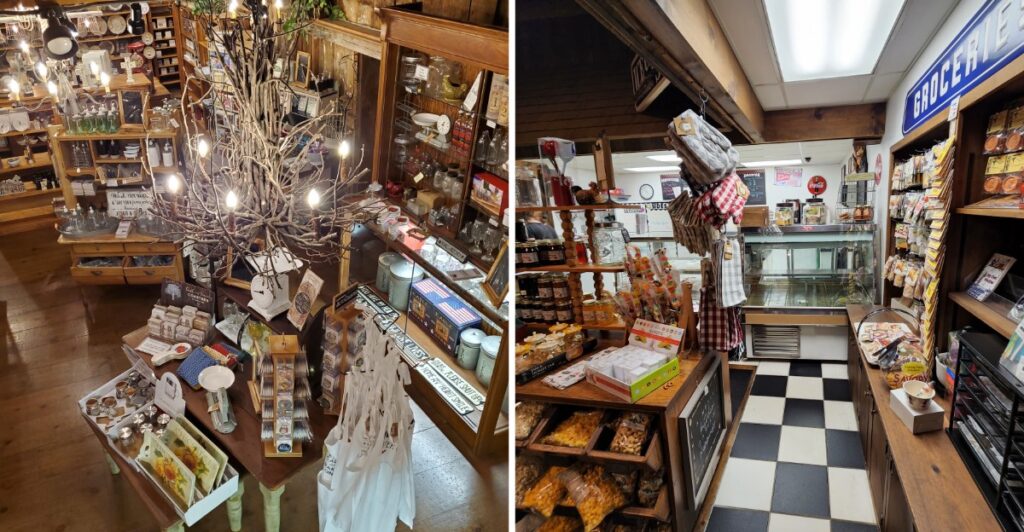
A farmhouse, a schoolhouse, and an old barn walked into the same Michigan shopping trip.
That is basically the setup here.
One historic building holds room after room of furnishings. Another has been turned into a boutique. The barn takes things in yet another direction, while seasonal goods and garden finds keep the property from feeling like one giant store.
The whole place grew from a much smaller beginning in 1989, when a basement craft business started the chain reaction.
Decades later, that handmade origin still shows up in the woodwork, custom pieces, and restored buildings spread across the village.
By the time you have crossed a few doorways, the property starts feeling less like a store and more like a shopping detour with its own little map.
More Than 40,000 Square Feet Make This Much More Than A Quick Shopping Stop
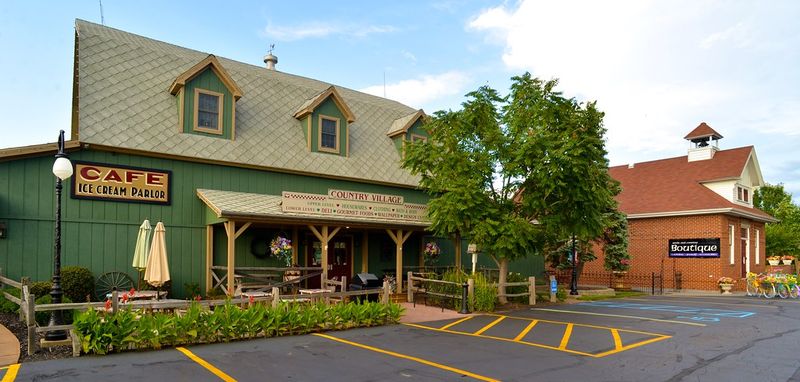
More than 40,000 square feet gives Pride and Country Village enough room to spread its shops across several buildings instead of placing everything on one sales floor.
Each structure has its own purpose, which keeps the visit changing as you move around the property.
Home furnishings fill several levels of the farmhouse. Clothing and accessories occupy the schoolhouse. The barn brings together home décor, a deli, a general store, and gifts.
The Mill handles seasonal merchandise, while Tumbleweed Farms becomes an outdoor garden center during the warmer part of the year.
That layout gives the property natural breaks. You can finish one building, step outside, and move into a completely different category without getting back in the car.
Pride and Country is open seven days a week and operates 361 days each year. Monday through Thursday hours run from 10 a.m. to 4:30 p.m., Friday and Saturday from 10 a.m. to 5 p.m., and Sunday from 11 a.m. to 5 p.m.
A visit can stay focused on one building or expand into several, depending on how much time you want to spend browsing.
Historic Farm Buildings Have Been Turned Into An Entire Village Of Shops
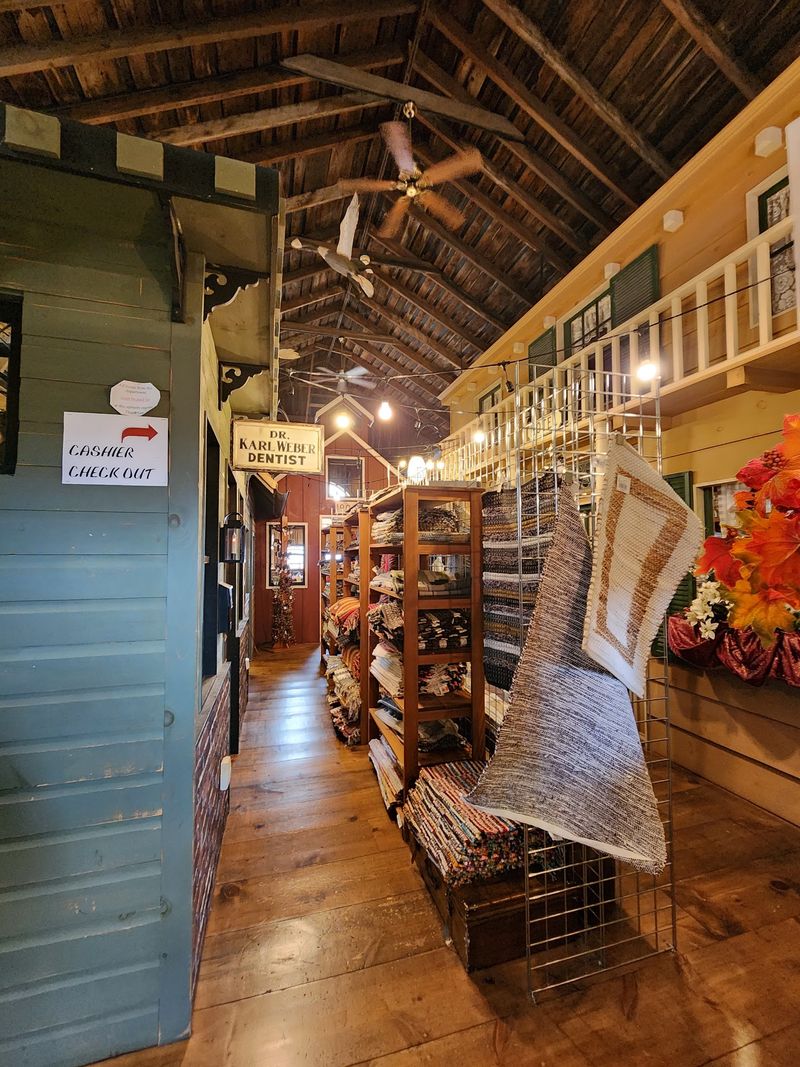
The buildings are part of the experience here. Pride and Country uses restored and relocated structures instead of relying on one modern retail building, so the property looks more like a small village than a standard shopping complex.
The farmhouse dates to 1904, the schoolhouse to 1899, and the barn to 1909. Tumbleweed Farms incorporates eight authentic farm buildings relocated from local farms, giving the outdoor garden center a setting that matches the rest of the property.
The buildings do not all serve the same purpose. One is centered on home furnishings, another on fashion, and another combines food, gifts, décor, and general-store goods. The Mill changes throughout the year, bringing a seasonal layer to the village.
Tumbleweed Farms follows its own calendar and is open from Memorial Day through Labor Day. During that season, lawn and garden décor fills the outdoor area around the relocated farm buildings.
The result is a property where architecture and shopping work together. Older structures have practical new uses, and moving between them adds more variety than a single large store could offer.
The 1904 Farmhouse Has Five Levels Of Home Furnishings To Explore
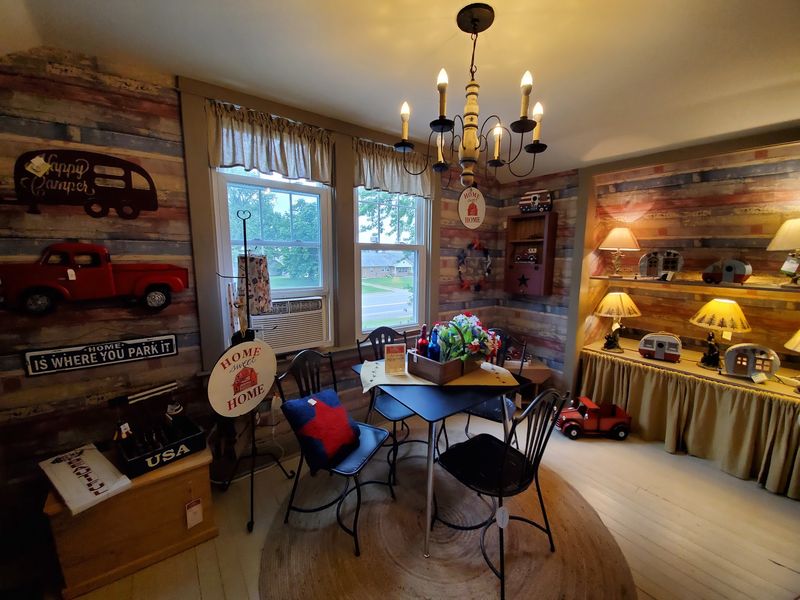
The refurbished 1904 farmhouse is the main stop for home furnishings. Five levels hold furniture, lighting, wall art, textiles, accent pieces, and gifts, with handcrafted wood furniture taking a central role.
The Pride and Country Woodshop produces custom pieces as well as one-of-a-kind furnishings.
Craftsmen build, paint, stain, and assemble furniture, and custom work allows a piece to be adapted to a particular space rather than chosen only from what is already available.
Dining tables and chairs share space with upholstered furniture, lamps, framed prints, canvases, table runners, place mats, and decorative accents.
aBecause the farmhouse is divided across several levels, the displays can shift between large furniture and smaller finishing pieces without putting everything in one room.
The building also connects directly to the roots of the business. Woodworking was part of Pride and Country from its earliest basement days and remains an important part of the village.
Anyone planning a room can compare shapes, finishes, textiles, and proportions in person before deciding what works at home. Even a smaller decorating project can turn into a longer browse once the different floors start opening up.
The farmhouse shows how one historic building can hold a surprisingly broad range of modern home goods.
An 1899 Schoolhouse Now Holds One Of The Village’s Most Unexpected Shops
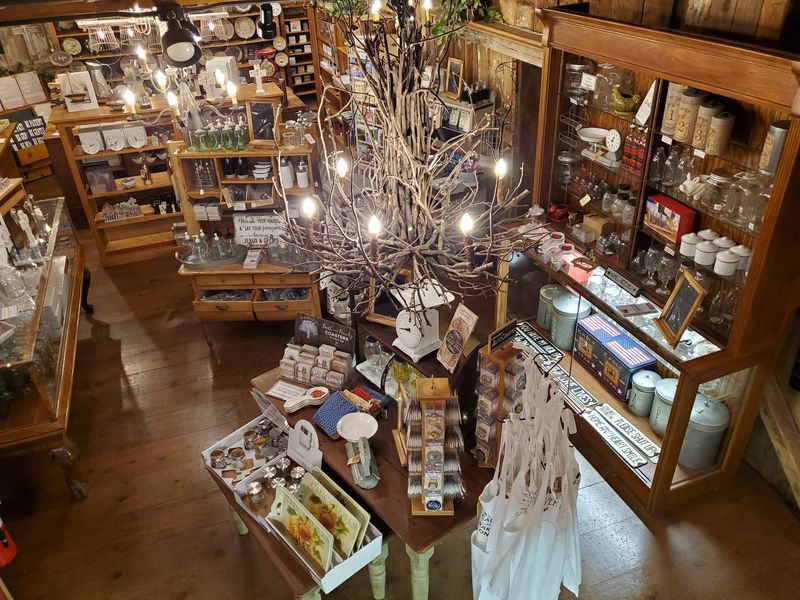
The 1899 schoolhouse has traded desks and lessons for clothing, accessories, and personal-care goods. Today it houses the Schoolhouse Fashion Boutique, giving one of the oldest buildings on the property a completely different role.
Women’s clothing anchors the shop, joined by purses, wallets, hats, scarves, costume jewelry, socks, jackets, and other accessories. Soaps and lotions add another category without requiring a separate stop elsewhere in the village.
The setting makes the boutique stand out from an ordinary clothing shop. The schoolhouse keeps its historic identity while serving a modern retail purpose, creating a clear contrast between the building itself and the merchandise inside.
That contrast also keeps the village from becoming visually repetitive. The farmhouse is dominated by home furnishings, while the schoolhouse shifts the focus to clothing and smaller personal items.
A short walk moves you into a different type of shopping without changing the historic setting.
Because the buildings sit close together, it is easy to browse the schoolhouse as one part of a larger visit rather than making fashion the whole reason to stop.
The Old Barn Brings A General Store, Deli, Gifts And Home Décor Together
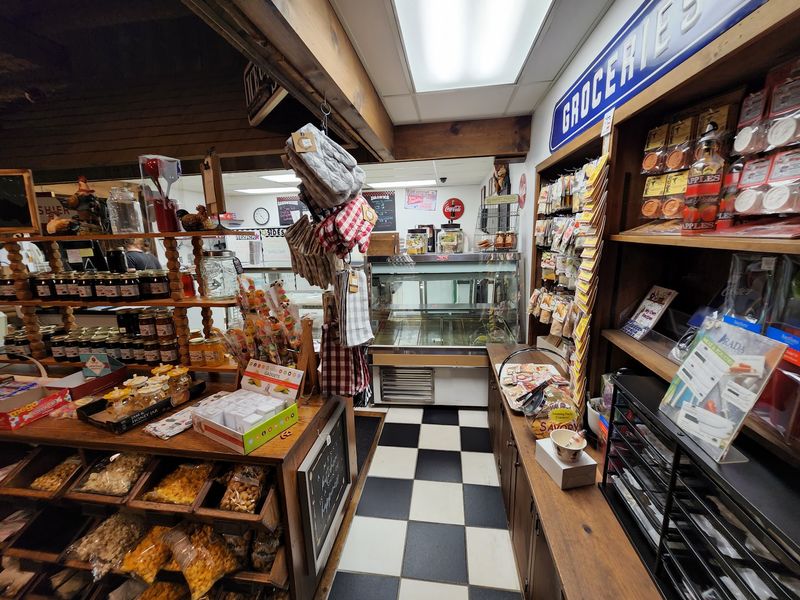
The remodeled 1909 barn contains four separate areas, making it one of the most varied buildings in the village. The Design Center, Deli, General Store, and Gifts to Go each occupy part of the structure.
The Design Center covers home décor with rugs, lighting, window treatments, wallpaper, and related accessories. That makes the barn a natural continuation after browsing larger furnishings in the farmhouse.
The sit-down deli creates a practical pause in the middle of the shopping day. Its menu includes sandwiches, paninis, subs, wraps, soups, salads, drinks, and desserts, with takeout available too.
The General Store changes the pace again with coffee beans, teas, jams, old-fashioned treats, dip mixes, cookbooks, cookie cutters, and kitchenware. Gifts to Go adds cards, picture frames, stationery, inspirational décor, and other smaller gift items.
Pride and Country Village is at 5965 E Holland Rd, Saginaw, MI 48601. The property sits east of Saginaw with convenient access from I-75.
Four distinct areas under one roof means the barn can cover lunch, decorating, pantry goods, and gifts without sending you to another building.
Old-Fashioned Treats And Specialty Goods Fill The General Store Shelves
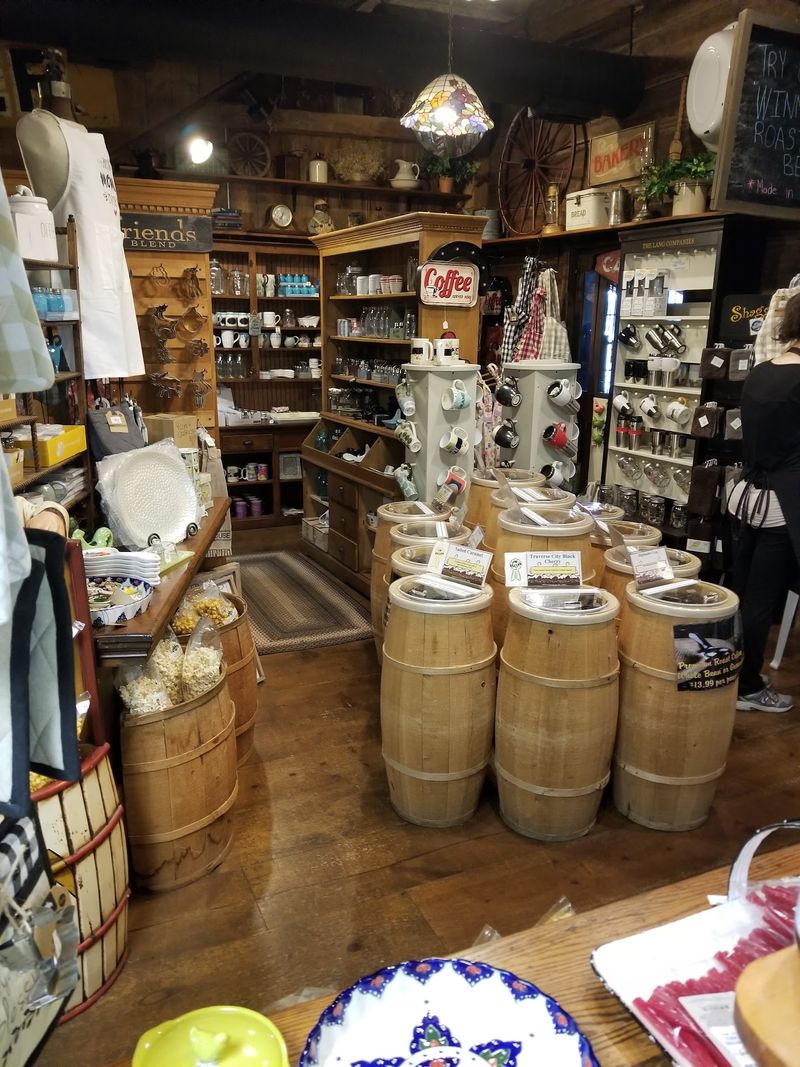
The General Store gives the village a smaller-scale shopping experience after the larger furniture and décor sections. Coffee, tea, pantry goods, old-fashioned sweets, and kitchen items share the shelves.
Gourmet coffee beans sit alongside teas, jams, dip mixes, cookbooks, cookie cutters, and kitchenware. The selection ties naturally into the deli nearby because both areas revolve around food without serving the same purpose.
The General Store also fits the historic barn setting. Pantry goods and kitchen tools make sense inside a building rooted in farm history, even though the merchandise is meant for modern kitchens.
This is where the visit can become less about furnishing a whole room and more about picking up one or two smaller items. A jar of jam, a bag of coffee, a kitchen tool, or a gift can fit easily into the day without the planning required for custom furniture.
Elsewhere in the barn, the Design Center and Gifts to Go broaden the selection, so the building can handle several different types of shopping before you step outside again.
This Michigan Shopping Village Has Been Growing Since 1989
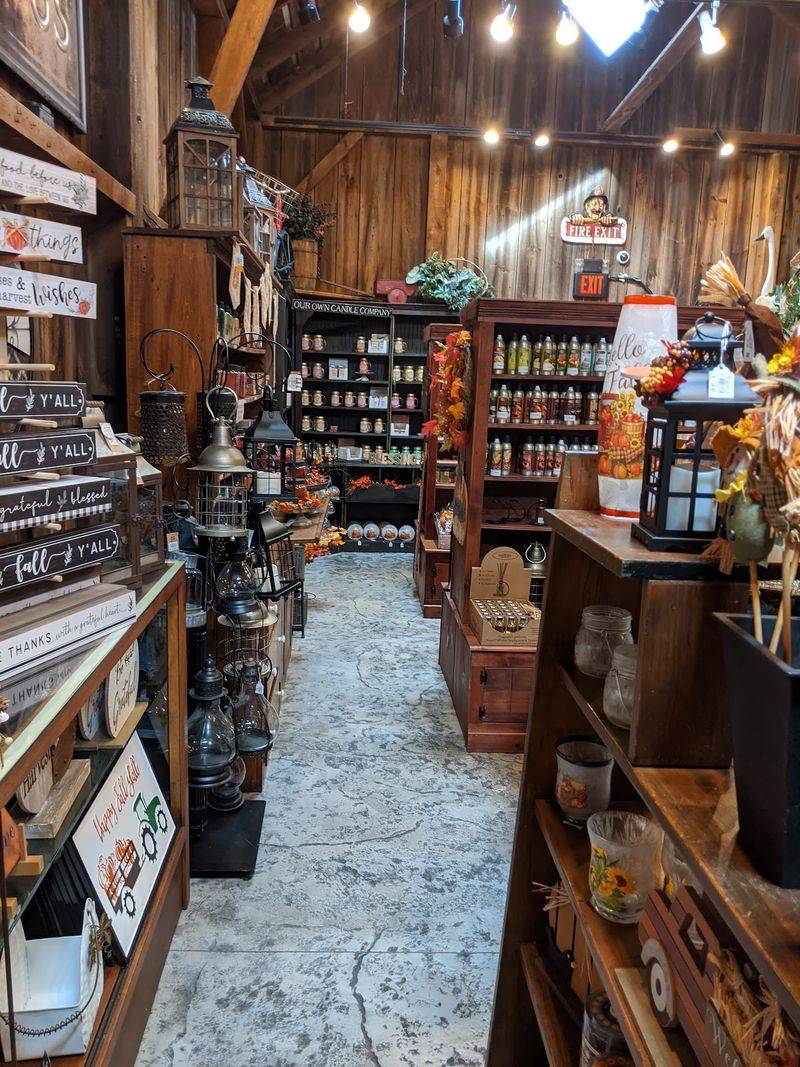
Pride and Country began in 1989 when Barb Schian opened the business in her basement and made the craft items she sold herself. The Woodshop became an early core of the operation and remains connected to the handcrafted furniture sold in the village today.
In 1992, Barb and Tom Schian purchased the farm property where Pride and Country Village now stands. The site developed into the collection of shops that occupies more than 40,000 square feet today.
The historic buildings became part of that growth. The 1904 farmhouse, 1899 schoolhouse, 1909 barn, Mill, and relocated farm structures created separate spaces for furniture, fashion, food, gifts, seasonal décor, and garden merchandise.
The Mill adds one of the clearest examples of how the village changes through the year. Fall and Halloween merchandise takes over in September, followed by Christmas and winter displays in November.
Other parts of the year bring spring, summer, lake, cabin, porch, garden, and floral themes.
Tumbleweed Farms brings another seasonal change from Memorial Day through Labor Day, while the indoor village remains open throughout the year.
What began with handmade crafts in a basement has grown into a multi-building Michigan shopping village where woodworking, historic structures, food, home goods, and seasonal shopping all share the same property.