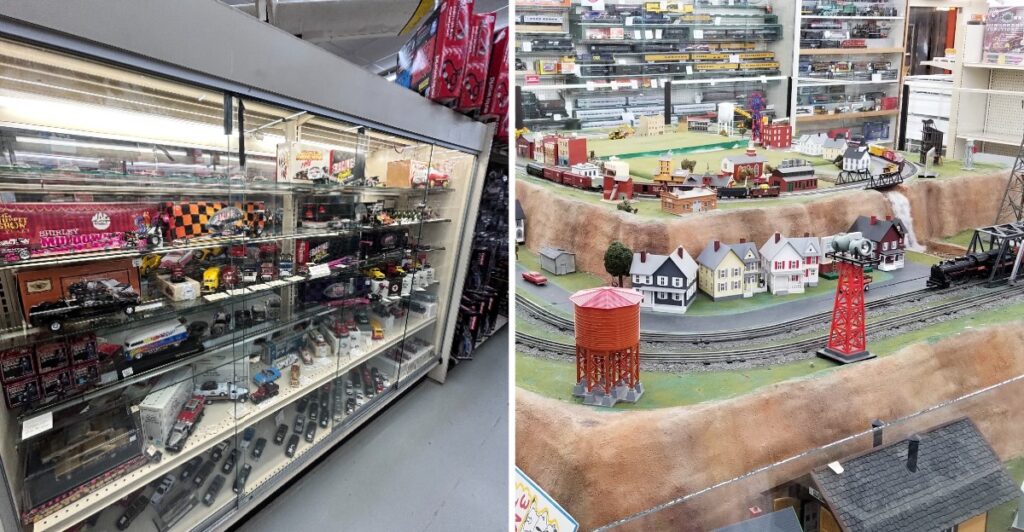
All aboard. Your five-minute errand has officially been canceled.
One look at the working train layout and suddenly you are Thomas the Tank Engine with a credit card and absolutely no timetable.
This place gives model railroading plenty of track to run on.
Locomotives get your attention first. Then scenery. Tiny buildings.
Track pieces. Different scales. Before long, you are studying miniature trees like the fate of the railway depends on you.
And the detours keep coming.
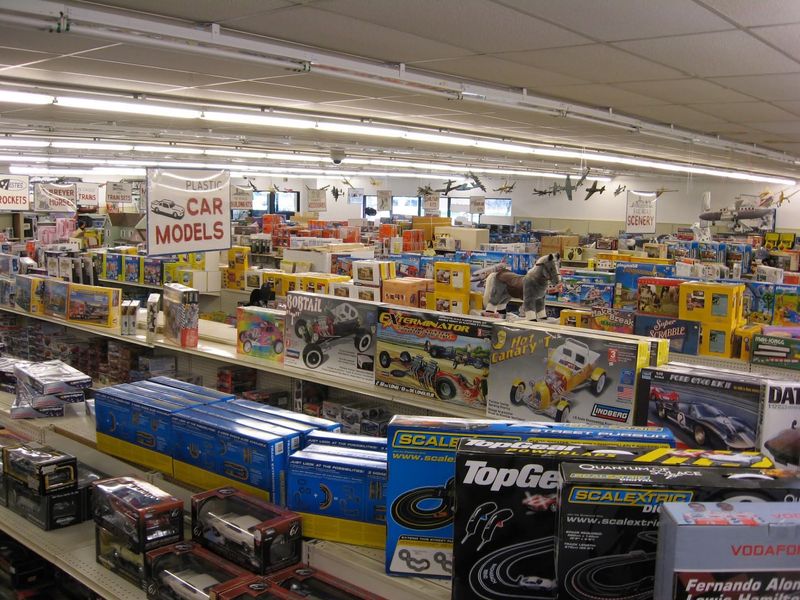
Model kits, slot cars, rockets, and puzzles fill out a store with more than 35,000 items spread across 10,000 square feet.
Michigan train fans, consider yourselves warned.
You may arrive with one project in mind.
But once this shopping trip leaves the station, good luck keeping it on a single track.
A Hobby Shop With More Than Three Decades Behind It
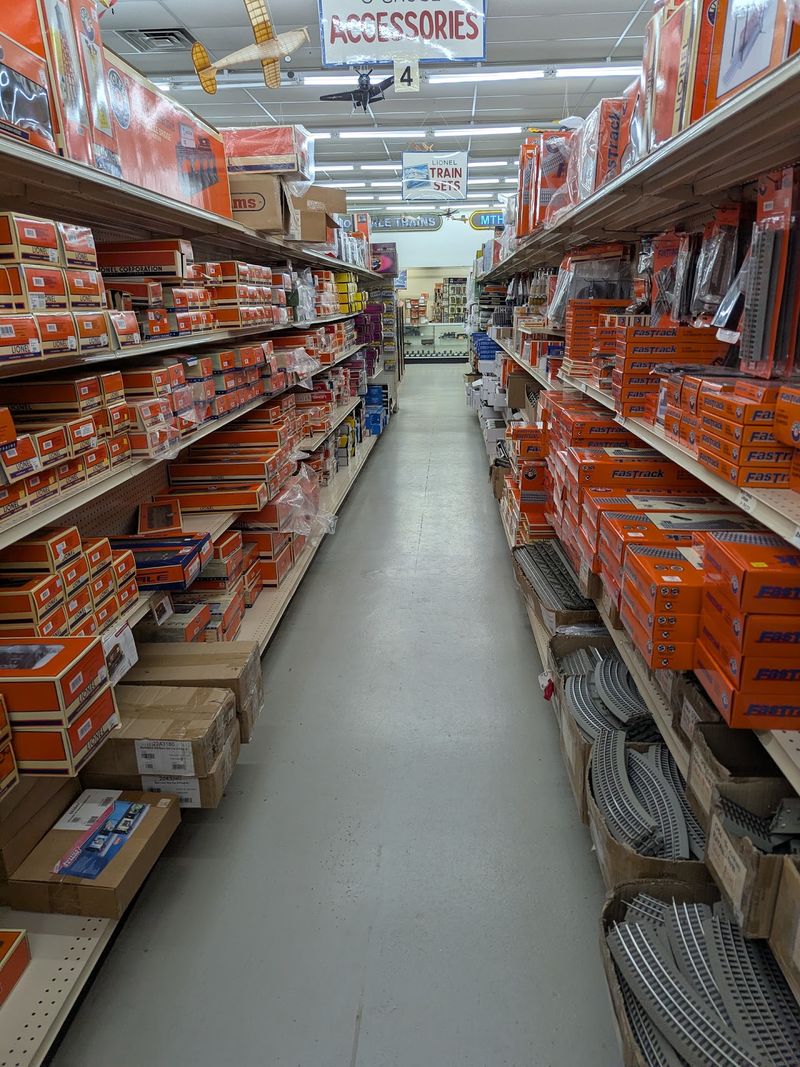
Great Lakes Hobby & Train has been part of Michigan’s hobby scene for more than 30 years.
The business began as a craft distributor and eventually developed into the large hobby and toy store it is today.
That history matters because the current operation still reflects the same broad idea: give hobbyists access to specialized products that are easier to understand when you can see them in person.
Model railroading is one of the biggest examples.
A locomotive is not just a locomotive once scale, track type, power system, couplers, scenery, and layout space enter the conversation. The same is true for model kits, slot cars, rockets, and other hands-on hobbies where one small choice affects the next.
That makes the store useful even before anything reaches the checkout counter.
Walk the train section slowly and you can compare sizes, packaging, track systems, and accessories side by side. Move into the model-kit aisles and the questions change, but the idea stays the same.
This is not a store where every shelf makes sense at first glance.
That is fine.
Bring a project in mind, take a full loop, and let the layout of the store show you where the useful sections are.
The Train Department Covers Several Major Scales
Model train fans have several major scales to work with here.
Great Lakes currently carries HO, N, and O scale trains, giving builders options that fit very different spaces and layout styles.
N scale is compact enough to fit longer scenes into smaller rooms. HO offers a middle ground between size and detail, which makes it a common choice for home layouts.
O scale is larger, so locomotives, rolling stock, and scenery pieces take up more physical room and create a different visual effect.
The practical question is not which scale is “best.”
It is which one matches the space and equipment you already have.
That is why a little preparation helps before visiting. Write down the scale you use, the track system on your layout, and any brand details that matter for the part you need.
If you are starting from scratch, think about the room first.
A long basement wall creates different possibilities than a small spare-room table. The same train can feel completely different depending on how much track you can realistically build around it.
Seeing the models in person also makes scale differences easier to understand.
A photograph can flatten everything to the same screen size. Standing beside several scales at once makes the proportions much clearer.
A Working Train Layout Adds Something To See
The store is not only shelves and boxes.
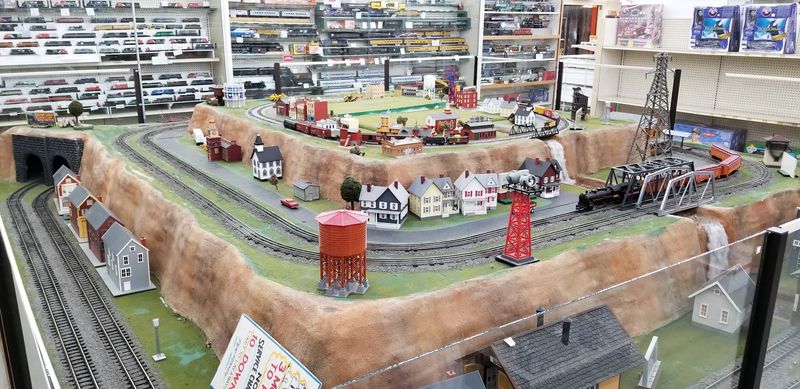
Great Lakes has a 256-square-foot working train layout that visitors can run, adding a moving example of what all those individual parts can become once they are assembled into a complete scene.
That matters for anyone still figuring out how a layout comes together.
Track looks different once it winds through scenery instead of sitting in a package. Structures make more sense beside locomotives and rolling stock. Lighting, terrain, and spacing also become easier to picture when they are working as one system.
Use the layout as a reference point rather than racing past it.
Look at how much room curves require. Notice the distance between track and scenery. Watch how buildings, roads, and landscape pieces keep the scene from feeling like a plain loop on a table.
Then go back to the shelves with that picture in mind.
A working layout can also help newer hobbyists separate the parts they truly need from the pieces that simply look interesting.
That is useful in a hobby where one shelf can quickly turn into five different project ideas.
The train may be moving, but there is no need to hurry.
Locomotives, Track, Scenery, And Electronics Fill The Train Section
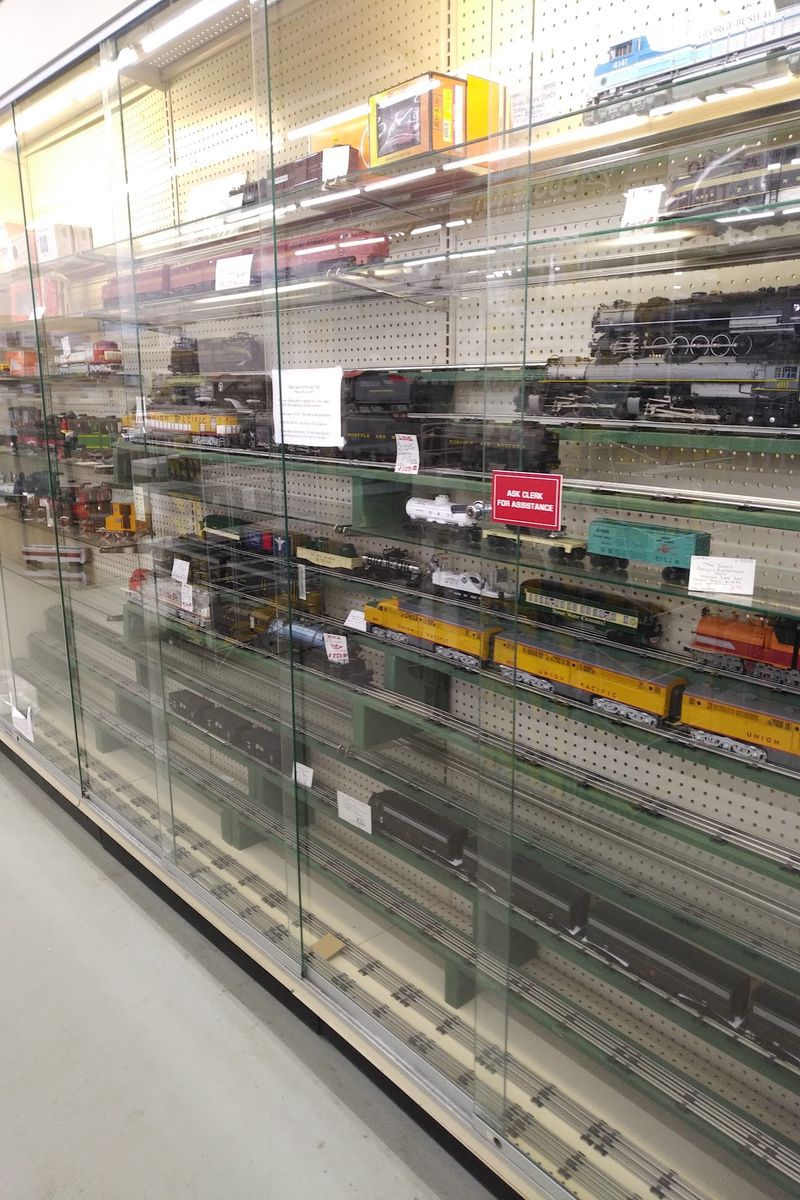
The train department goes well beyond starter sets.
Current categories include locomotives, rolling stock, train sets, structures, track, figures, scenery materials, DCC equipment, lighting, books, and cleaning and maintenance supplies.
That means a layout can be approached as a complete system instead of a collection of unrelated pieces.
Start with the track and power needs if the layout is still basic. Move toward structures and scenery once the route is settled. Electronics and lighting can come later, depending on how detailed you want the finished setup to become.
Great Lakes is also a current retailer for established model railroad brands including Athearn and MTH.
Brand compatibility can matter, especially when a project already includes specific locomotives, track standards, or control equipment.
Bring exact model information when possible.
A photo of the layout can help you remember how much space is available, while a note with part numbers can prevent an almost-correct purchase from becoming another box on the workbench.
Scenery is where the technical side starts becoming creative.
Grass, terrain materials, structures, figures, and lighting can turn a simple train loop into a town, industrial district, rural scene, or something entirely invented.
The shelves may begin with trains, but the project quickly becomes a small world.
Model Kits And Other Hobbies Go Beyond Railroading
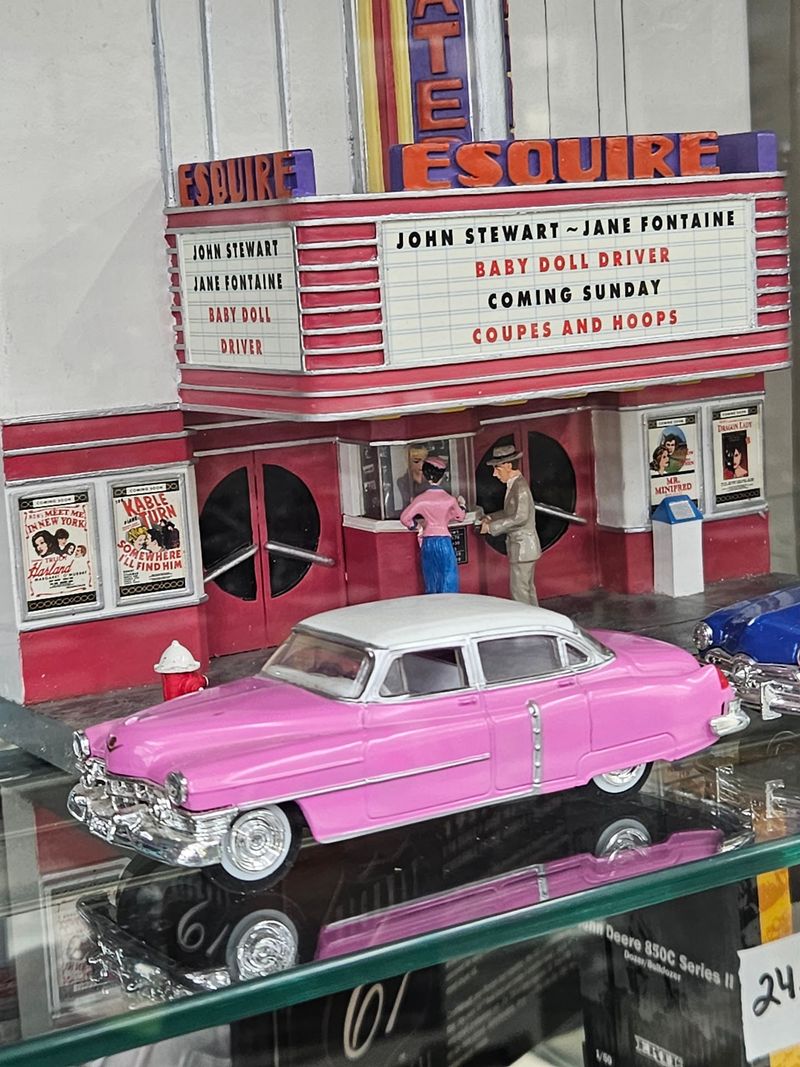
The store’s size becomes more obvious once you leave the train department.
Great Lakes also carries a wide range of model kits, including cars, trucks, ships, military subjects, aircraft, motorcycles, space models, and kits tied to science fiction, television, and movies.
That makes it easy to switch hobbies without switching stores.
Someone working on a railroad scene may wander into model kits for vehicles or buildings. A model-car builder may end up comparing paints or tools. Another visitor may skip trains entirely and head toward slot cars, rockets, puzzles, or other hobby categories.
The broader mix is useful when projects overlap.
Paints, tools, adhesives, scenery materials, and small-detail supplies often serve more than one hobby, so a trip for one project can cover several needs at once.
It also makes browsing less predictable in a good way.
You may know exactly where to begin but not which aisle will hold the next useful idea.
The practical move is to avoid buying for a project you have not thought through.
Check dimensions, materials, and compatibility first. A kit that looks manageable in the box can become a much bigger commitment once paint, tools, and workspace enter the picture.
That little pause can save a future workbench headache.
More Than Ten Thousand Square Feet Gives You Room To Browse
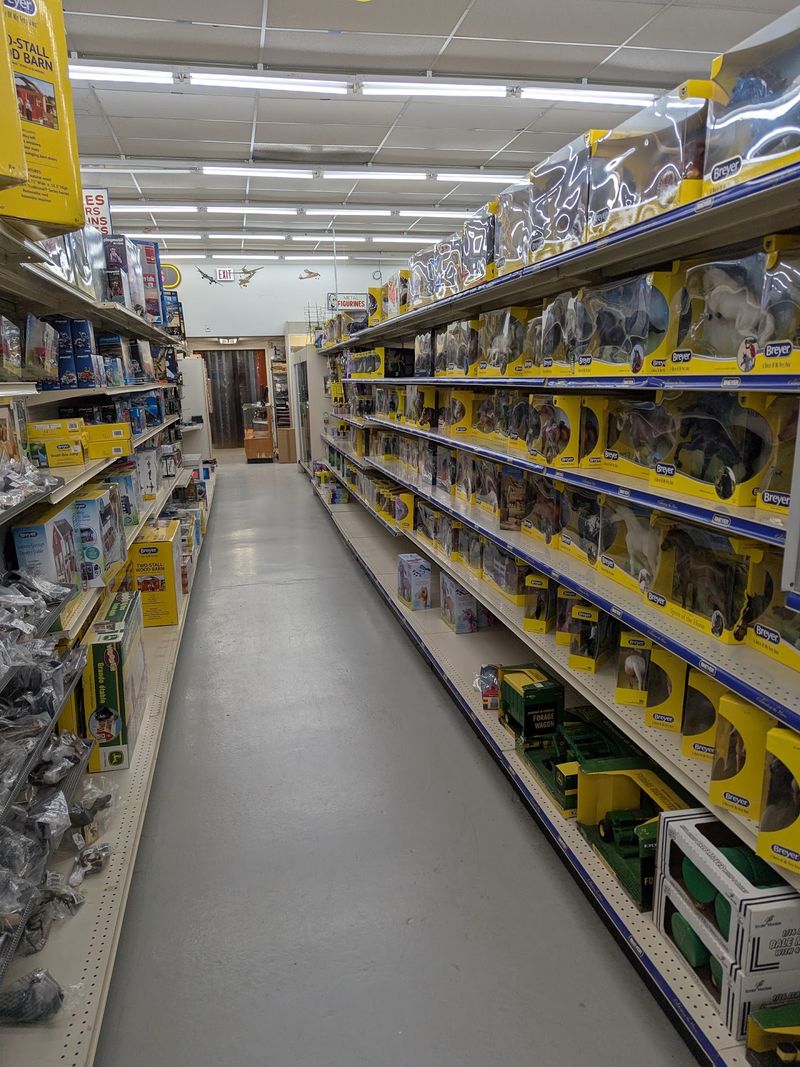
Numbers explain the scale of the store better than hype does.
Great Lakes covers more than 10,000 square feet and carries more than 35,000 unique items.
That is enough inventory to make a quick in-and-out visit possible only if you already know exactly where you are going.
Everyone else benefits from a first lap.
Start with the section tied to your main project, then walk the rest of the store before making final decisions. The train department may be the reason for the trip, but the model kits and other hobby categories can reveal tools or supplies that solve a different problem.
The store’s size also makes organization important from the shopper’s side.
Bring a short list. Add measurements. Write down scale, brand, track type, or kit details that are easy to forget once you are standing in front of several similar products.
A phone photo of the workbench or layout can be useful too.
Those details keep browsing enjoyable without turning it into guesswork.
The current Sterling Heights location is at 43055 Van Dyke Ave, Sterling Heights, MI 48314.
Once the practical part is handled, there is room to wander.
That is probably the most sensible way to use a hobby shop this large.
A Little Project Planning Helps Before You Go
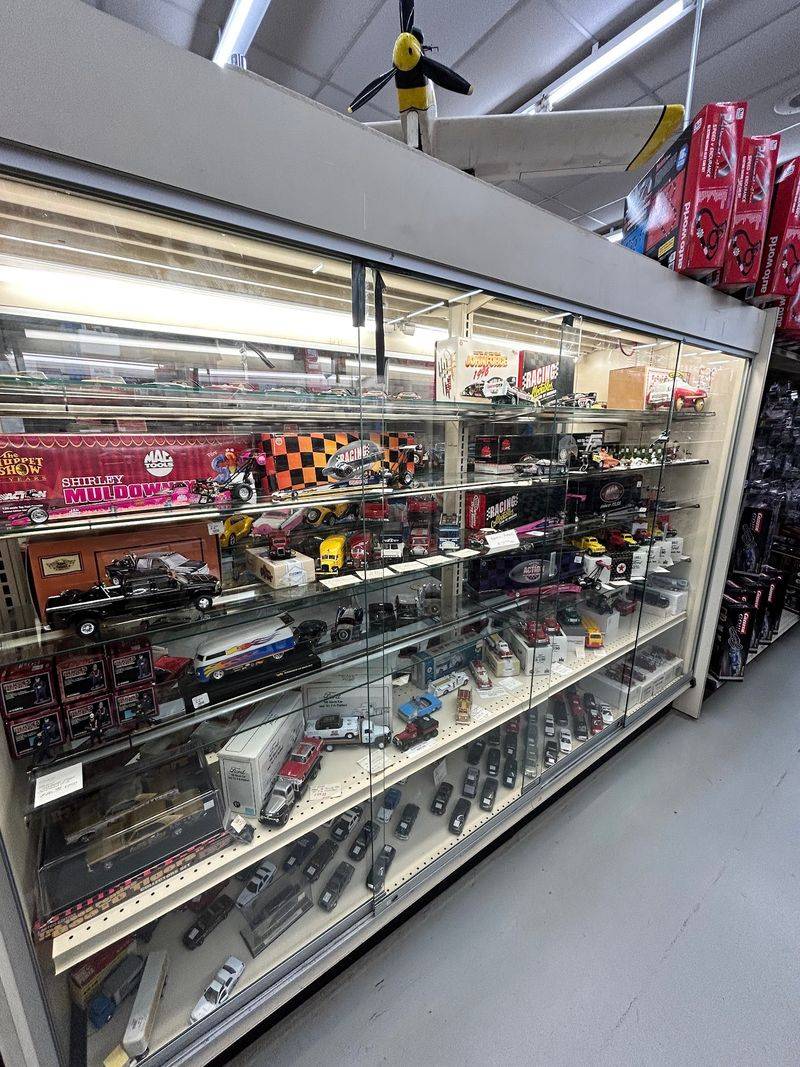
A visit works better when the project comes with you, even if only in note form.
Great Lakes is currently open seven days a week, with longer evening hours on Wednesday, Friday, and Saturday and shorter hours on Sunday.
Checking the day’s hours before leaving home is still smart, especially if the plan includes a longer drive or a detailed shopping list.
For model railroad work, bring the scale, track type, brand information, and any part numbers you already know. For model kits, note the tools, paints, or materials the project calls for before adding extras.
Then leave some space for browsing.
More than 35,000 unique items means the store covers far more than one project category, and the 256-square-foot working train layout gives you a useful break between shelves.
That mix keeps the visit practical without making it feel rigid.
You can compare locomotives, look at scenery supplies, check model kits, circle back to track, and still change direction when another section catches your eye.
The goal does not need to be seeing everything.
Find what the current project needs, learn something from the displays and shelves, and keep the next idea manageable enough to actually finish.
For a hobby shop built around trains, models, and hands-on projects, that is more than enough reason to take your time.