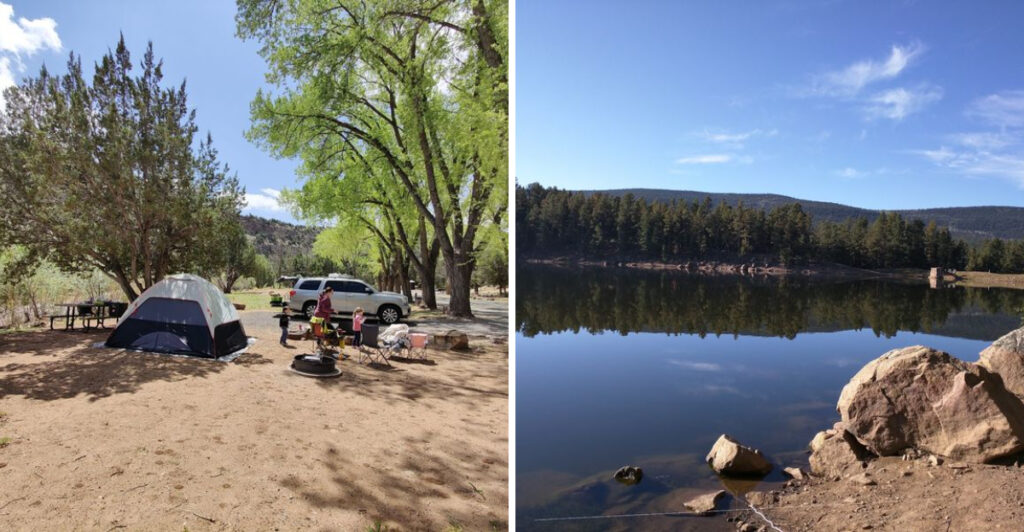
Camping beside the water hits differently when the landscape around it is all sunbaked ground and open sky. That is part of the surprise waiting at these New Mexico campgrounds.
You might unzip the tent to a lake view or hear a river moving beyond the trees. Later, the shoreline catches the last light while camp settles down.
It feels relaxed without being boring. There is still plenty to do once camp is set, especially for travelers who would rather stay outside than hover around an RV all day.
The best sites put the water close enough to shape the whole trip. Morning coffee comes with a view.
Afternoon plans can start right at the shore. Even the drive in feels more rewarding when blue water suddenly breaks up the desert scenery.
These picks prove that a waterfront camping weekend can feel refreshing without sending you far beyond the Southwest.
1. Bluewater Lake State Park, Prewitt
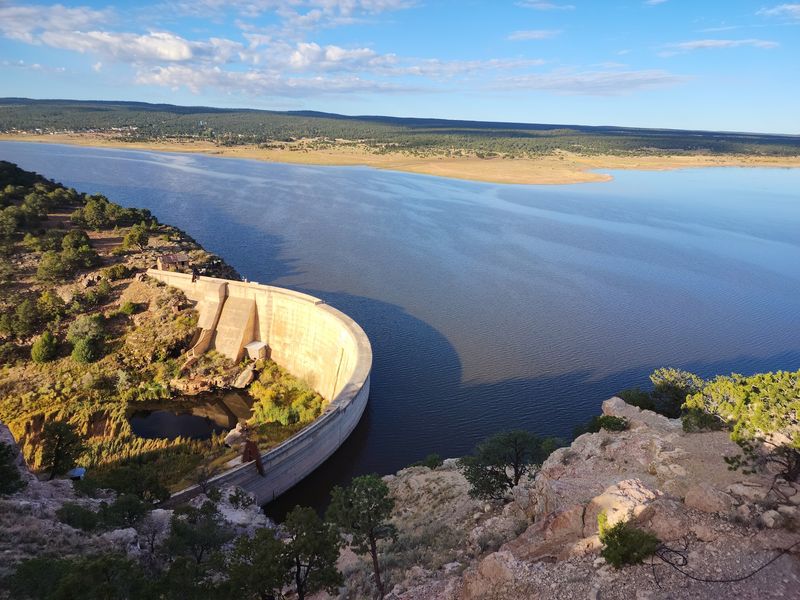
Tiger muskie. That toothy, torpedo-shaped fish is the reason plenty of anglers point their trucks toward Bluewater Lake State Park, west of Grants in New Mexico.
The park sits at 30 Bluewater State Park Road in Prewitt, wrapped in pinon-juniper country with the Zuni Mountains filling the horizon. The park has 149 developed campsites, including 14 electric sites, with campground water available.
Prefer something rougher around the edges? Primitive beach camping and boat-in sites let you trade convenience for shoreline solitude and a much shorter walk to the water.
Motorized and non-motorized boats both get the green light, so water skiers, sailors, and paddleboarders share the lake without stepping on each other’s toes. Mornings tend to be glassy and quiet, which paddlers appreciate.
Away from the shore, short hiking trails wind through the scrub, birdwatching stays productive through the seasons, and horseback riding is allowed on the surrounding terrain.
Modern restrooms and showers make the stay comfortable, which counts for something at this elevation. Sitting above 7,500 feet, Bluewater runs noticeably cooler than the desert parks farther south, so a warm layer belongs in the bag even in summer.
The fishing reputation is no small thing. Word of the muskie action travels, and it gives this lake a following that keeps regulars coming back season after season.
What strikes me most is the contrast: high-country air, pine-scented breezes, and a reservoir big enough for real boating, all within reach of Interstate 40.
Cool nights, big water, and a fish with an attitude. Bluewater keeps things interesting without ever feeling crowded.
2. Villanueva State Park, Villanueva
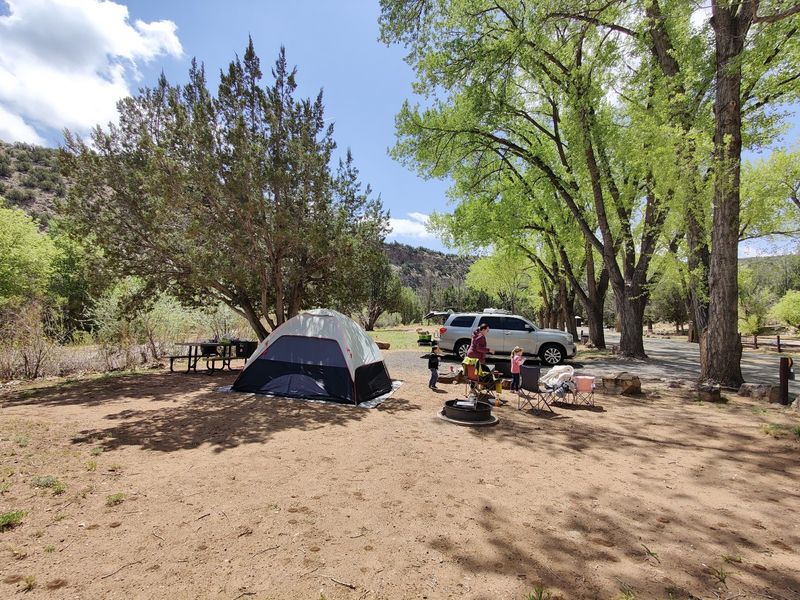
Red sandstone bluffs squeeze in tight here, and the Pecos River threads right between them. Villanueva State Park sits at 135 Dodge Road in Villanueva, New Mexico, where developed campsites rest close enough to the water that the current becomes background music.
Cottonwood trees do most of the shading work, and many sites come with adobe-style pergolas built over the picnic tables. Cooking outside in July suddenly sounds a lot more reasonable with that kind of cover.
Wading, swimming, and tubing keep families busy on warm afternoons. Canoes and kayaks are welcome too, since the river runs gentle enough for beginners to handle a paddle without much drama.
Anglers do well casting into the Pecos, and birdwatchers get their reward along the cottonwood corridor, which pulls in a steady rotation of feathered visitors. Bring binoculars if you like putting names to what you spot.
Dry-land options add up to nearly three miles of hiking trails climbing along the canyon walls. The payoff comes at the overlooks, where the layered red rock formations stack up above the green river line.
The park’s compact size works in its favor. You can walk from your site to the water, up a trail, and back before lunch without ever needing to move the car.
Just outside the gate, the small historic village of Villanueva gives the trip a sense of place, with old buildings and a quiet main road that feels a world away from the interstate.
I like that the scenery does the heavy lifting here instead of a long list of attractions. Sandstone, shade, and moving water turn out to be a pretty convincing combination for a weekend.
3. Conchas Lake State Park, Conchas Dam
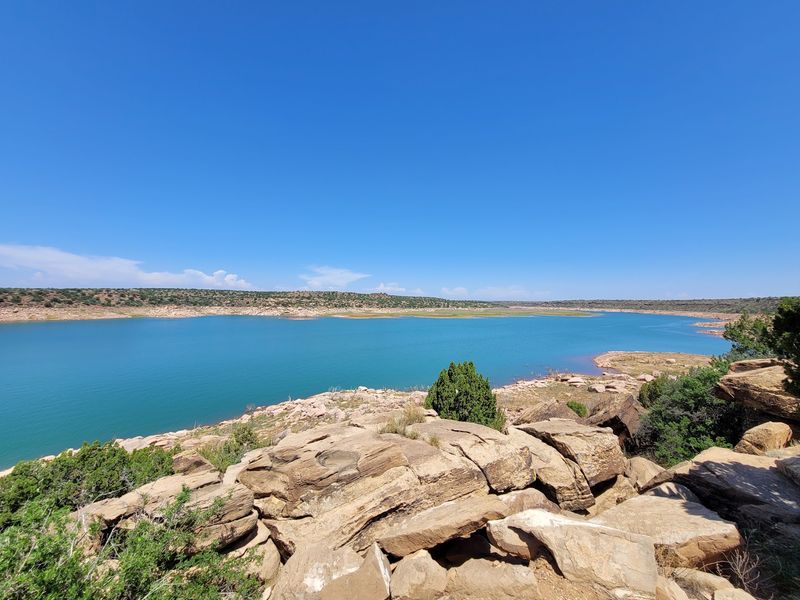
Two hundred campsites, three recreation areas, one very large lake. Conchas Lake State Park in northeastern New Mexico, not far from Tucumcari, was built for people who like room to spread out.
The address is 501 Bell Ranch Road, Conchas Dam, where the Canadian River was dammed to create this wide sheet of water. Many sites look straight out over the lake.
Water sports run the full range. Skiers and jet skiers carve up the open stretches, while swimmers, snorkelers, and even scuba divers make use of the clearer, deeper sections.
Fishing here means walleye, bluegill, crappie, and several bass species. Locals track the seasons closely, and the mix keeps tackle boxes interesting throughout the year.
Boaters benefit from serious infrastructure: a marina plus multiple ramps on both the north and south sides of the lake. Launching rarely turns into a waiting game.
Secluded coves are the real draw for anyone with a boat. Slipping into a quiet arm of the lake with nothing but rock walls and water sounds like the kind of afternoon that disappears fast.
Shoreline life offers plenty too. Hiking, picnicking, and wildlife watching fill the gaps, and the park even has a nine-hole golf course for a change of pace.
Campsites come equipped with covered picnic tables, fire rings, and pedestal grills, which makes cooking outdoors under those wide skies pretty painless.
Rugged mesas frame nearly every view, and the sunsets do dramatic things to the water. Bring shade, because tree cover is limited out on the mesa tops.
Big water, easy launching, and a golf course thrown in for good measure. Conchas plays the versatility card better than most.
4. Elephant Butte Lake State Park, Elephant Butte
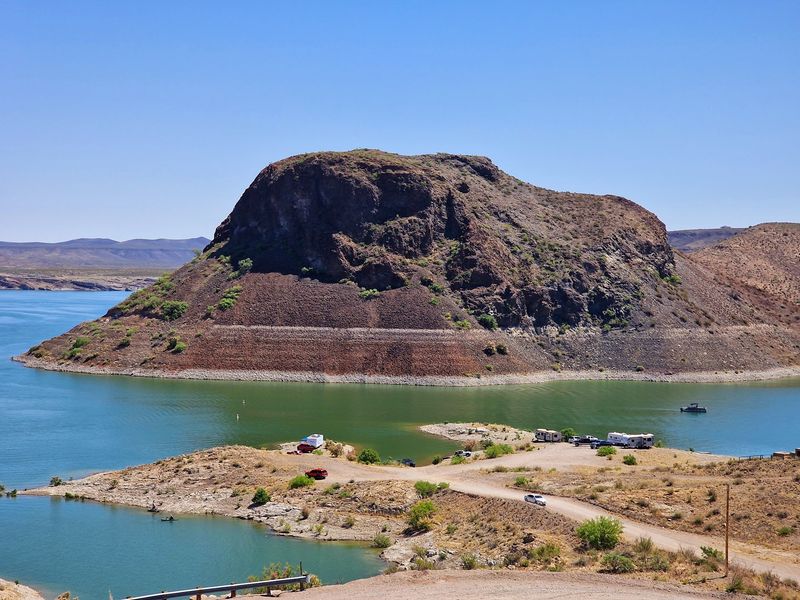
Nothing else in New Mexico’s state park system holds this much water. Elephant Butte Lake stretches out along the Rio Grande and pulls in boaters, swimmers, and anglers all season long.
Find it at 101 Hwy 195 in Elephant Butte, where 173 developed campsites await, many with water and electric hookups and some with full hookups for larger rigs.
The variety of watercraft is something to see. Kayaks, jet skis, pontoons, sailboats, and houseboats all share the reservoir, each finding a stretch of shoreline to call its own.
Sandy beaches give sunbathers and swimmers an easy place to settle in, and shoreline lounging is practically the local pastime on hot afternoons.
Fishing reputations get built on results, and this lake has produced record-worthy catches of black, white, and striped bass, plus crappie and bluegill. Serious anglers plan whole trips around it.
Landlubbers get roughly 15 miles of hiking trails winding through wide-open desert, ending in the kind of sunsets that make everyone reach for a camera.
Conditions matter here. Because water levels are historically low in 2026, Monticello Ramp is closed and four-wheel drive is recommended at Marina Del Sur.
Park staff have been clearing debris to keep things usable.
One upside of the low water: primitive beach camping is currently offered at no cost, which is hard to argue with.
I find it remarkable that a park facing this much change still delivers so much recreation. Check current conditions before you tow anything down.
Beach sites, big bass, and desert sunsets keep Elephant Butte firmly on the map.
5. Navajo Lake State Park, Navajo Dam
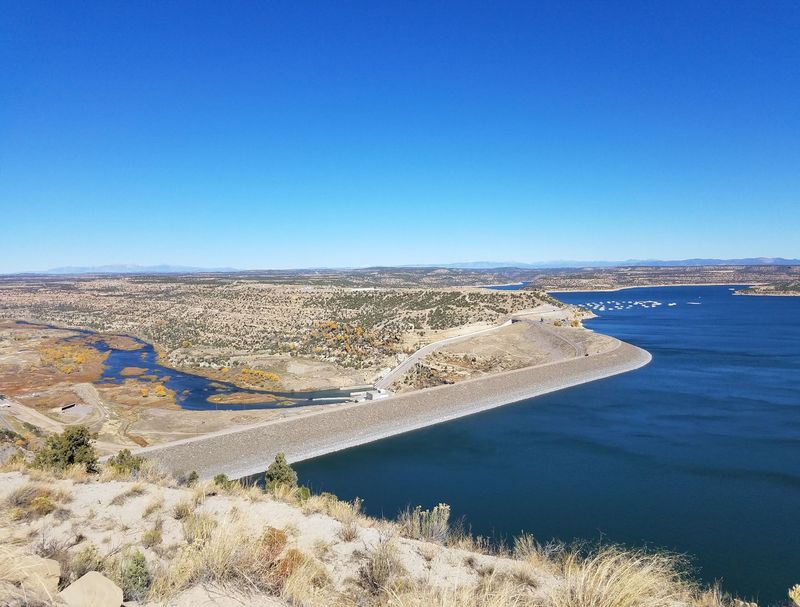
Fly anglers all over the country know the San Juan River by name, and it starts its famous run right below the dam at Navajo Lake State Park in northwestern New Mexico.
The main address is 36 Road 4110 #1, Navajo Dam. Developed campsites spread across seven campgrounds, handling tents and RVs with a broad range of hookup options available.
Above the dam sits the state’s second-largest lake, roomy enough for almost any water sport you can name. Kayaking and sailing suit the calm mornings; water skiing, jet skiing, and wakeboarding take over later.
The river’s Quality Waters section draws visitors from far beyond state lines, all chasing sizable trout in famously clear, cold flows. Etiquette runs high there, and so does the skill level.
Inside the lake, the catch list broadens to rainbow and brown trout, bass, salmon, and catfish, so nobody needs a fly rod to have a good day.
Two full-service marinas handle fuel, food, boat rentals, and slips, which removes a lot of the logistical headaches that come with big-lake trips.
Trails lace the shoreline hills for hikers, and wildlife viewing stays steady thanks to the mix of water, pinon, and open country.
Once the sun drops, the sky puts on its own show. Star-filled evenings beside the campsite here sound like the sort of thing people describe for years afterward.
Autumn brings thinner crowds and cooler air, a favorite window for anglers who prefer elbow room on the river.
World-class water above and below the dam. Few parks manage that particular double act.
6. Caballo Lake State Park, Caballo
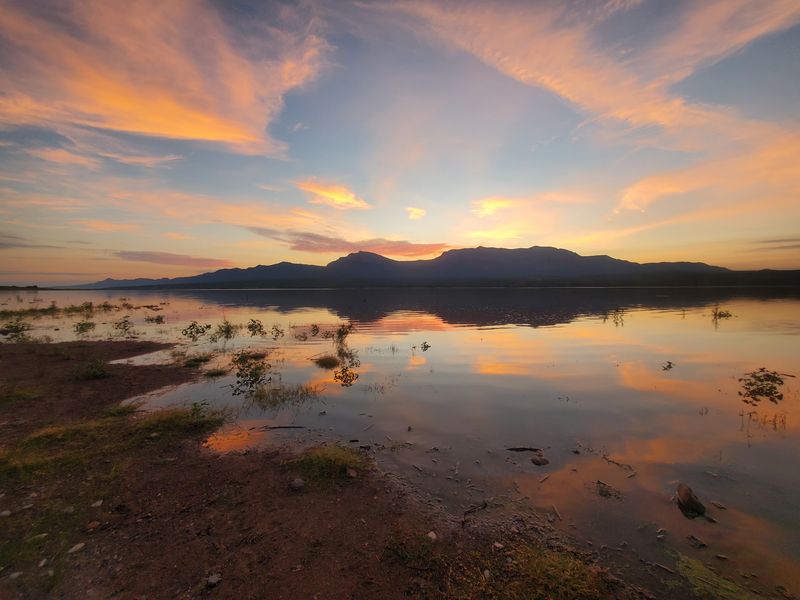
The Caballo Mountains stand guard over this stretch of the Rio Grande, giving Caballo Lake State Park a backdrop that changes color as the day moves along.
Located at 10 Palomino Road in Caballo, the park spreads 170 developed campsites across four campgrounds. Water and electric hookups are common, and some sites add full sewer connections for RVs.
Warm weather sticks around most of the year, which makes this a genuine four-season destination rather than a summer-only stop. Winter visitors show up in noticeable numbers.
Boat ramps welcome motorized and non-motorized vessels alike. Water skiers, sailors, canoeists, and kayakers all find room on the reservoir’s long stretch of open water.
Swimmers cool off along the shore, and anglers work the shoreline and coves with steady success. The extensive perimeter means there is almost always an unclaimed spot to cast from.
Trails handle both hikers and horseback riders, cutting through desert terrain where birdwatching turns up plenty of species drawn to the river corridor.
Primitive lakeshore camping sits alongside the developed loops, so tent campers who want to wake up nearly on the water can do exactly that without paying for hookups they will not use.
Parks offering this many choices tend to win over repeat visitors, and Caballo clearly has its regulars. The mix of RV comfort and bare-bones shoreline sites is unusually well balanced.
Late afternoon light on those mountains is worth stepping away from the grill for. Bring a chair and face west.
Mountain silhouettes, mild winters, and shoreline sites make Caballo an easy year-round pick.
7. Lea Lake Campground At Bottomless Lakes State Park, Roswell
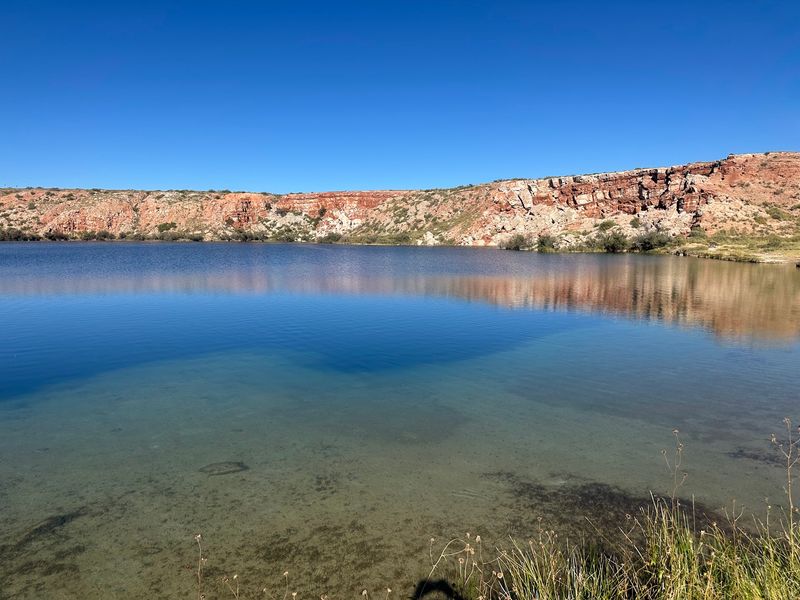
A blue-green sinkhole in the middle of the Chihuahuan Desert sounds like a tall tale, yet that is exactly what waits southeast of Roswell.
Bottomless Lakes State Park holds a string of these spring-fed lakes, and Lea Lake Campground sits right beside the largest and deepest of them at 545 A Bottomless Lakes Rd.
Freshwater springs feed Lea Lake, keeping the water strikingly clear and reaching down about 90 feet. Swimming, paddleboarding, and scuba diving all happen here, which is not something most desert parks can claim.
The campground offers 32 sites with various hookup choices, including full hookups, and it can handle RVs of considerable length without much maneuvering stress.
Amenities lean modern for a state park: restrooms with showers and a dump station on site. Wi-Fi is currently unavailable because of ongoing technical difficulties.
Motors stay off Lea Lake, so swimming and non-motorized boating rule the water. Anglers head instead to other lakes in the park, including Devil’s Ink Well and Pasture Lake.
Scuba diving in a desert sinkhole strikes me as one of the more unexpected activities in the entire state. Divers show up with full kits and no ocean in sight.
Hiking and mountain biking trails climb the surrounding bluffs, passing rust-colored rock and revealing how these lakes formed when underground caverns collapsed.
Roswell’s alien-themed shops sit a short drive away, giving the trip a second act if rain moves in or the kids need a change of scenery.
Clear water, red cliffs, and a whole lot of curiosity. Lea Lake earns its reputation honestly.
8. Morphy Lake State Park, Mora
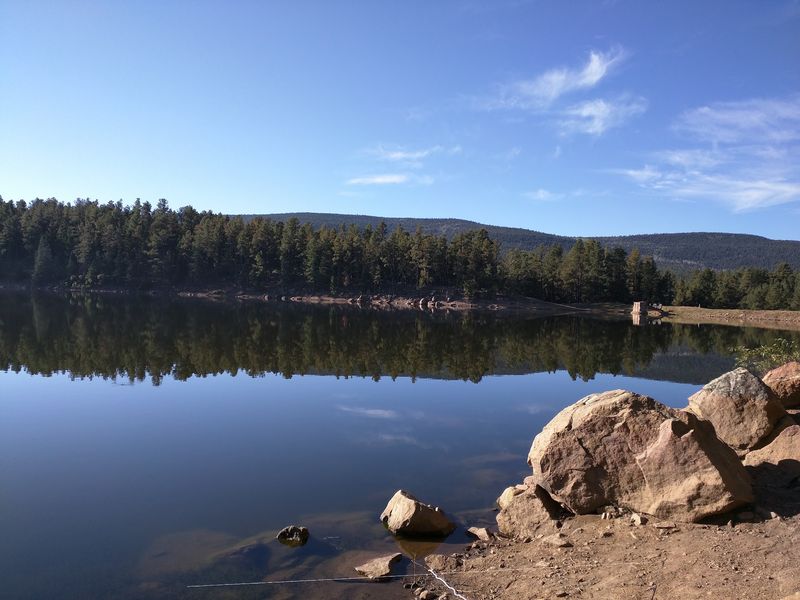
High and quiet on purpose. Morphy Lake State Park tucks itself into the Sangre de Cristo Mountains at roughly 8,000 feet in elevation, off Morphy Lake Road near Mora.
Campsites ring the water’s edge beneath ponderosa pines, giving the whole place a rustic feel that suits its position on the edge of the Pecos Wilderness.
Amenities are deliberately basic. Vault toilets are available, there is no running water, and you will want to arrive fully stocked with everything you plan to drink and cook with.
Fishing carries the park’s reputation. Rainbow trout are stocked regularly, and fishing is open from March 1 through October 31, weather permitting under current state regulations.
Boating stays peaceful because only oars and electric motors are permitted. Canoes glide across without engine noise, and the reflections on calm mornings are close to perfect.
Access roads are narrow and winding, which limits RVs to 18 feet. That restriction does a fine job of keeping the crowds small and the atmosphere unhurried.
Parks that protect their quiet this carefully are becoming rare, and Morphy clearly guards its hush. Even the boating rules seem designed around silence.
Autumn turns the surrounding slopes gold, and winter snow reduces everything to white pines and dark water. The views more than make up for the missing hot showers.
Nights get cold at this elevation regardless of the calendar, so pack sleeping bags rated warmer than you think you need.
Of all the water-adjacent options in New Mexico, this one rewards campers who pack light and value stillness above conveniences.