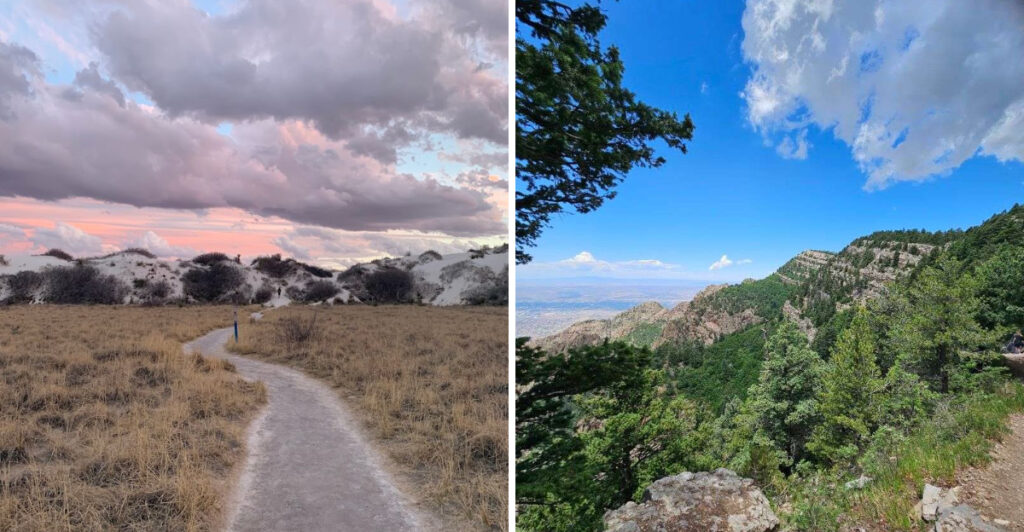
You do not need a ten-mile trek to find a view worth talking about all week. In New Mexico, some of the most memorable trails keep the mileage low while delivering white dunes, petroglyph-covered ridges, and canyon passages that feel far removed from the nearest road.
Each hike on this list measures under five miles, so you can easily fit one into a road trip without surrendering the entire day. Short does not mean uneventful here.
One route follows metal walkways above a creek, while another climbs through volcanic rock shaped by centuries of footsteps. Expect loose sand, ladders, and stretches with little shade.
The scenery changes quickly, and history often sits right beside the trail. Pack more water than you think you need, wear shoes that can handle uneven ground, and keep your camera ready.
These hikes prove a modest distance can still deliver a very big day outdoors.
1. Dune Life Nature Trailhead, Alamogordo
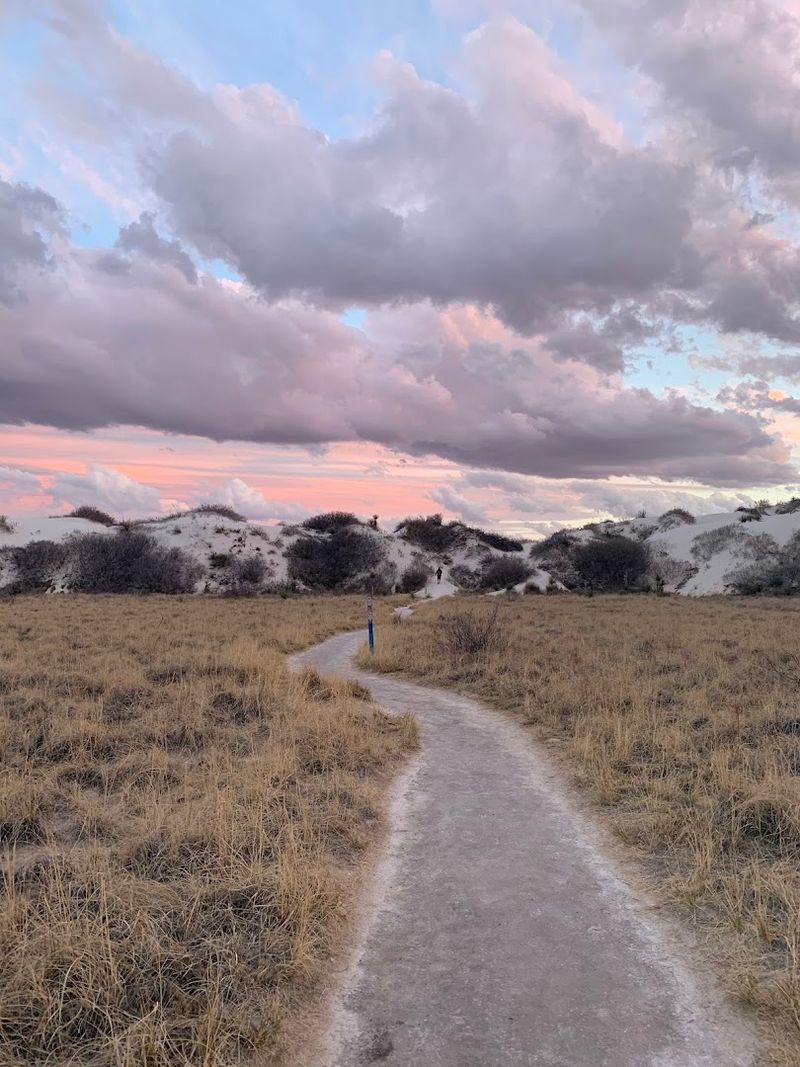
A one-mile loop might sound like a warm-up, but the Dune Life Nature Trailhead at 19955 US-70, Alamogordo, NM 88310 will have your calves disagreeing by the time you crest the second dune. The soft gypsum sand shifts underfoot with every step, turning a short walk into a real workout.
Blue club symbols mark the path so you won’t wander off into the endless white expanse of White Sands National Park.
What makes this trail genuinely captivating is the world it reveals. Look down and you’ll spot the delicate tracks of kit foxes, badgers, and small reptiles pressed into the sand like tiny signatures.
The dunes sit at a fascinating ecological crossover point where desert scrub plants hold on at the edges before giving way to the iconic all-white dune field.
This self-guided interpretive trail is perfect for curious hikers who love learning on the move. Go early in the morning, especially in summer, because the midday heat out here is no joke with very little shade and no water available on the trail.
A vault toilet waits in the parking area if you need it before heading out.
Soft sand means strollers and wheelchairs won’t fare well here, so plan accordingly. I’d suggest bringing trekking poles if you have them since the loose surface can catch you off guard on the steep sections.
The reward at the top of each dune is a sweeping, almost surreal view of one of the most unusual landscapes in the entire country.
2. Rinconada Canyon Trail, Albuquerque
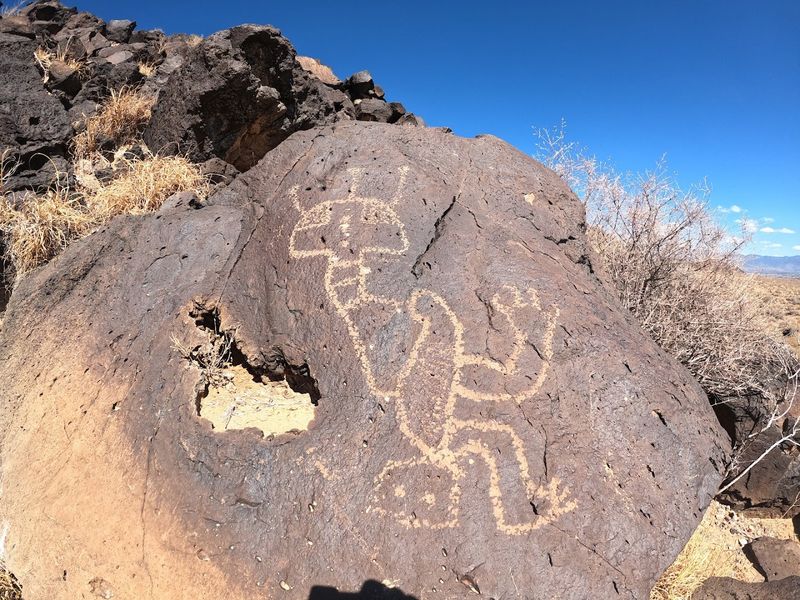
Hundreds of ancient images are waiting quietly on the basalt boulders of Rinconada Canyon Trail, and most hikers walk right past a few before their eyes finally adjust to spotting them. Located at Unser Boulevard NW and St. Joseph Avenue, Albuquerque, within Petroglyph National Monument, this 2.2-mile roundtrip loop is one of the rewarding short hikes in New Mexico.
The carvings were made by Ancestral Pueblo people somewhere between 400 and 700 years ago.
The trail follows a volcanic escarpment that formed from lava flows roughly 200,000 years ago, which gives the whole landscape a rugged, ancient energy. As you move along the sandy path, the sounds of Albuquerque’s suburbs start to fade.
A mourning dove calling from a rocky ledge or a collared lizard doing push-ups on a sun-warmed boulder becomes the main entertainment.
Up to 300 petroglyphs are scattered along this route, so take your time and scan the dark rock faces carefully. Binoculars are genuinely useful here for spotting carvings on boulders that sit a little higher up the escarpment.
There are no water sources on the trail, so a full water bottle before you start is essential.
Leashed dogs are welcome on this trail, which makes it a solid option for hikers who never go anywhere without their four-legged companions. A vault restroom is available at the trailhead.
I always find this place surprisingly peaceful for being so close to a major city, and the views of the West Mesa stretching out behind you add a satisfying backdrop to every step.
3. Piedras Marcadas Canyon, Albuquerque
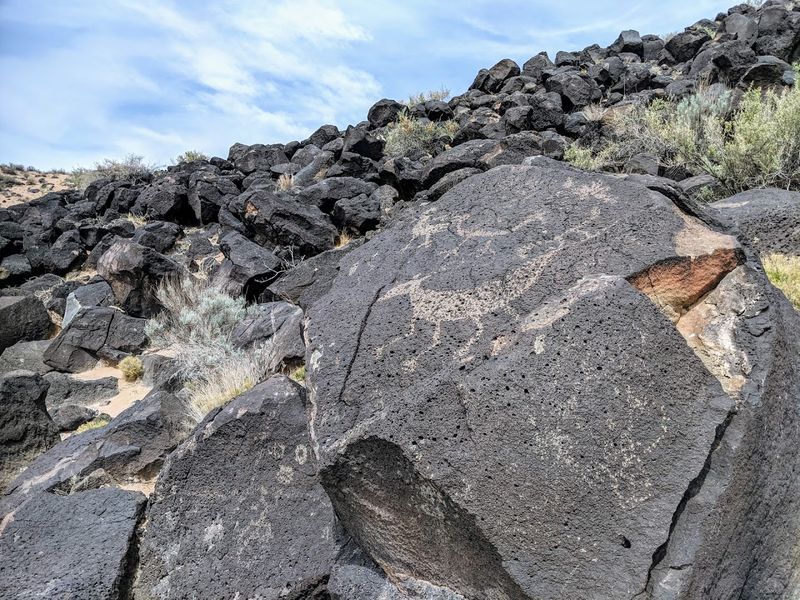
The name translates to “canyon of marked rocks,” and Piedras Marcadas Canyon absolutely delivers on that promise. Found at 9421 Jill Patricia Street NW, Albuquerque, NM 87114, this section of Petroglyph National Monument is home to one of the densest concentrations of rock art anywhere along the monument’s volcanic escarpment.
Up to 400 images are etched into the dark, patinated surfaces here, created mostly by ancestors of today’s Pueblo people 400 to 700 years ago, with later Spanish additions.
The hike itself runs about 1.5 to 1.8 miles round trip, keeping it well within easy reach for most fitness levels. Masks, handprints, geometric shapes, animals, and human figures cover the rocks in a way that feels both random and deeply intentional.
It’s a bit like walking through an open-air museum where the admission desk has been closed for centuries.
The sandy trail hugs the base of the lava escarpment, which adds a dramatic geological backdrop to the cultural experience. There are no restrooms or water facilities along the route, and shade is almost nonexistent, so pack accordingly before you leave your car.
The canyon is open daily from sunrise to sunset, and leashed pets are welcome.
What sets Piedras Marcadas apart from the other sections of the monument is the sheer volume of imagery packed into a compact stretch of trail. I found myself stopping every few feet to look at something new.
The canyon feels less visited than some of the other trailheads nearby, which gives it a quieter, more contemplative atmosphere that I really appreciated.
4. Tsankawi Prehistoric Sites, White Rock
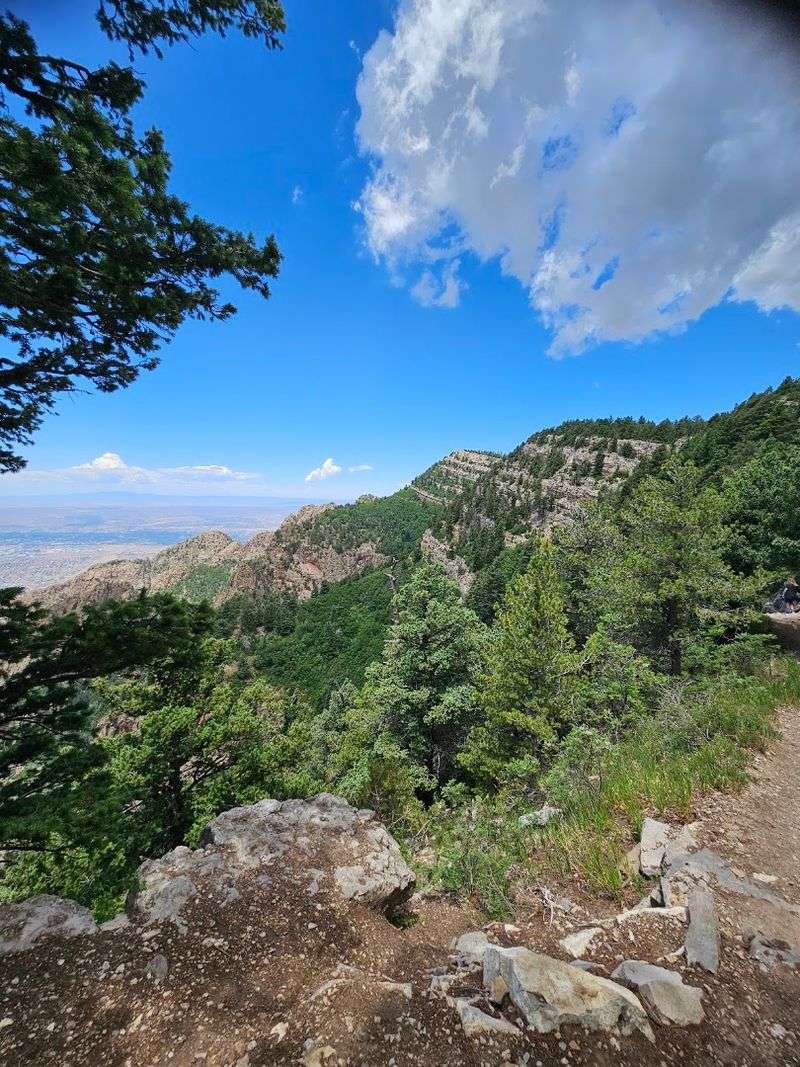
Few trails in the American Southwest ask you to literally walk in the footsteps of people who lived here six centuries ago, but Tsankawi Prehistoric Sites does exactly that. Located along NM-4 near White Rock, NM 87547, this 1.5-mile loop is a detached unit of Bandelier National Monument and one of the most distinctive short hikes you can do in the region.
The path follows grooves worn into the soft volcanic tuff by generations of ancestral Pueblo people who called this mesa home around 1400 AD.
The trail involves wooden ladders, narrow passages, and some steep drop-offs that make it feel more like a puzzle than a standard walk. Along the way, petroglyphs of lizards, birds, and flute players appear carved into the pale rock, and cavates, small rooms hollowed out of the cliffside, hint at the everyday lives of the people who shaped this place.
Unexcavated ruins sit quietly on the mesa surface, half-hidden by brush.
The payoff at the top is genuinely spectacular. A 360-degree panorama takes in the Jemez Mountains, the Sangre de Cristo Mountains, and the broad sweep of the Rio Grande Valley all at once.
On a clear day, the view feels almost impossibly wide.
A Bandelier National Monument pass is required for entry, so plan ahead if you don’t already have one. Pets, bicycles, and horses are not permitted on this trail.
I’d recommend wearing sturdy shoes with good grip since the tuff surface can be slippery, and the ladder sections require both hands. Come early to enjoy the quieter morning light on the rock carvings.
5. Soledad Canyon Day Use Area, Las Cruces
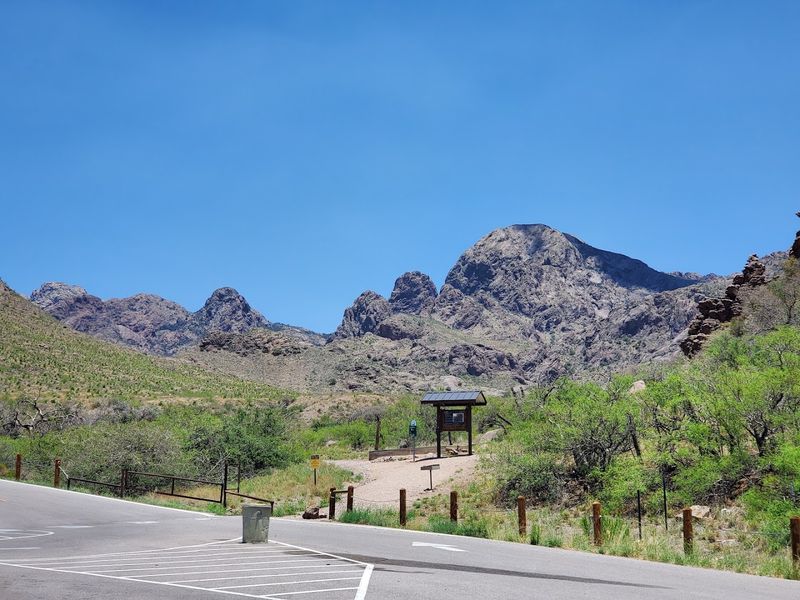
The Organ Mountains have a personality all their own, with sharp, jagged peaks that look like they were sketched by someone who really committed to the drama. The Soledad Canyon Day Use Area at 13300 Soledad Canyon Road, Las Cruces, NM 88011 puts you right at the base of those peaks, and the Bar Canyon Trail gives you a front-row seat to the whole show.
This easy, scenic loop runs just over 3 miles and rewards hikers with views of the central Organ Mountains and the sweeping Mesilla Valley to the south.
The trail passes through classic Chihuahuan desert terrain, with rocky outcrops, hardy desert plants, and wide-open skies that make the landscape feel expansive even on a short hike. Keep an eye out for the remains of a historic homestead tucked into the canyon, possibly dating back to the early 1900s, which adds a layer of human history to the natural scenery.
After enough rainfall, a seasonal waterfall can appear along the route, which is always a delightful surprise in the desert.
The Bar Canyon Trail forms the area’s roughly 3-mile loop and remains the main marked route for exploring this striking stretch of desert terrain on foot year-round throughout the entire year. The area is open year-round during posted daylight access hours for hiking, horseback riding, mountain biking, and wildlife viewing.
No entrance fee is required, which makes it one of the most accessible outdoor spots near Las Cruces.
Bring all your own water and snacks since there are no facilities on the trail. The wide-open views from the upper sections of the route are the kind that make the drive out here feel completely worth it.
6. Dripping Springs Natural Area, Las Cruces
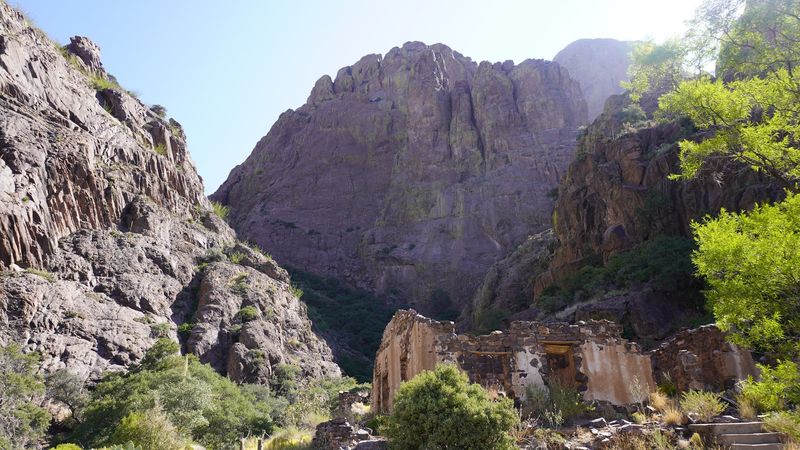
History and hiking make a surprisingly good team at Dripping Springs Natural Area, located at 15000 Dripping Springs Road, Las Cruces, NM 88011. The main trail runs about 1.5 miles one way to the springs, following a gradual uphill climb on a wide gravel path that’s comfortable for a broad range of hikers.
The Organ Mountains frame every step of the journey, shifting and changing perspective as you move deeper into the canyon.
The real story here is what you find along the way. The ruins of the Van Patten Mountain Camp, a resort hotel established in 1892, still stand in stabilized form, and the remnants of a livery, general store, and Boyd health resort give the whole area an unexpected historical richness.
A seasonal waterfall once fed the old resort, and on the right visit, you can still find it trickling down the rock face near the springs.
Wildlife sightings are common on this trail. Red-tailed hawks ride thermals above the canyon walls, Gambel’s quail dart through the brush in small, fast-moving groups, and desert mule deer sometimes appear along the upper sections of the path.
The Chihuahuan desert vegetation here is dense and varied compared to what you’d find on more exposed terrain, which makes the whole hike feel lush by desert standards.
A five-dollar entrance fee or a National Parks pass is required for access, which is a small price for a hike this satisfying. I found the morning light on the canyon walls particularly beautiful, and the quiet of the area made it easy to spot wildlife without having to slow down or hush anyone.
Plan to take your time on the return leg and soak in those mountain views.
7. Catwalk Recreation Area, Glenwood
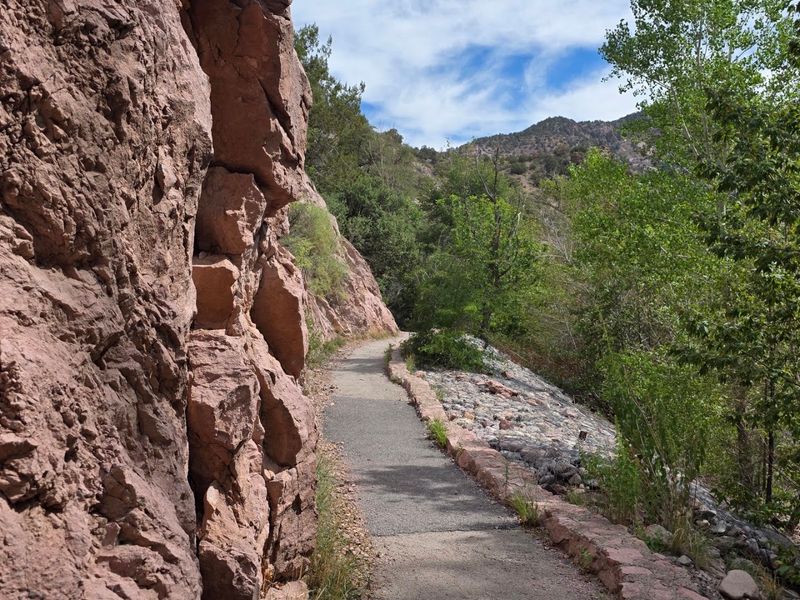
A metal walkway bolted to the walls of a narrow canyon above a rushing creek is not something you expect to find on a casual hiking trip, but that’s exactly what the Catwalk Recreation Area delivers. Located on Catwalk Road in Glenwood, NM 88039 within the Gila National Forest, this trail is one of the most visually dramatic short hikes in the state.
The main Catwalk Trail covers approximately 2 miles round-trip, and the iconic metal walkway carries you along the steep rock walls of Whitewater Canyon for about half a mile.
The engineering history behind this place is fascinating. The pipeline served the 1890s mining town of Graham, while the Civilian Conservation Corps built the recreational catwalk along its route during the 1930s for continued public recreation use.
After flood damage in 2013, the bridge system was carefully restored, and the result is a hike that blends industrial history with jaw-dropping natural scenery.
Whitewater Creek rushes and tumbles below the metal grating throughout the canyon section, and the geological formations overhead are intricate and colorful. The hike starts easy and transitions to moderate difficulty as you move beyond the reconstructed bridge system into the wider canyon.
Leashed dogs are welcome, though smaller pets might need a helping hand on the metal grating sections.
A five-dollar fee is payable at an on-site kiosk, and early morning or weekday visits are the smart move for avoiding crowds. I was genuinely surprised by how cool and shaded the canyon interior stays even on a warm day, making this one of the more comfortable summer hiking options in New Mexico.
8. Three Rivers Petroglyph Site, Tularosa
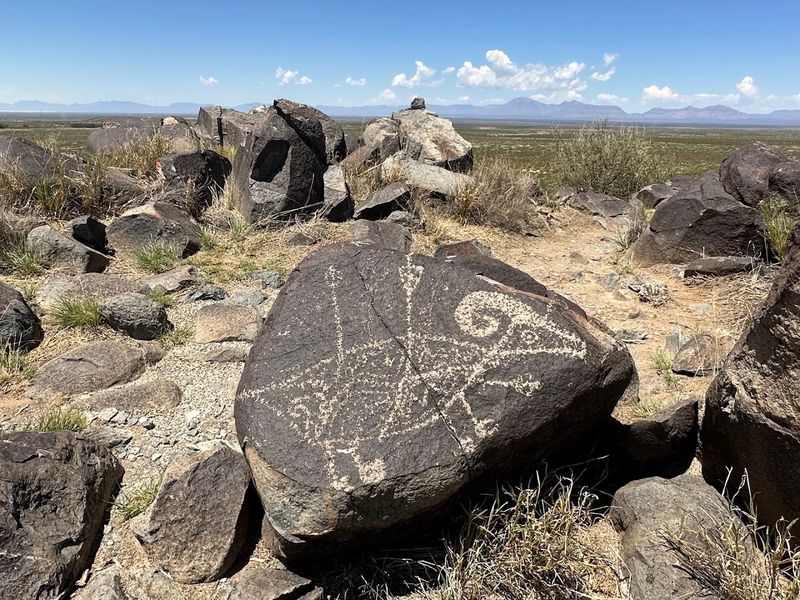
More than 21,000 individual carvings cover a basaltic ridge in the northern Chihuahuan Desert, making Three Rivers Petroglyph Site one of the most remarkable open-air archaeological sites anywhere in the country. Found on County Road B30 in Tularosa, NM 88352, this place was created by the Jornada Mogollon people over a span of roughly 1,200 years, and the variety of imagery on display is genuinely astonishing.
Masks, sunbursts, bighorn sheep, snakes, handprints, and intricate geometric patterns cover the rocks in every direction.
The Petroglyph Trail runs about 1 mile round-trip along the rocky ridge, putting you in direct contact with hundreds of carvings at close range. The path is rugged but manageable, and the elevated position of the ridge gives you wide views of the surrounding desert and distant mountain ranges that make the whole experience feel especially open and expansive.
A separate Village Trail, just 0.25 miles, leads to partially excavated ruins of a Mogollon village where the artists behind these thousands of images once lived.
Restrooms and water are available at the site, which is a welcome convenience compared to many remote desert trailheads. One practical note worth keeping in mind: rattlesnakes are common in this area, so watch where you step and keep your eyes on the ground as much as the rocks.
Dogs are not permitted on the petroglyph trail.
I spent far longer here than I planned, which is a pretty reliable sign that a place has real pull. The sheer scale of what the Jornada Mogollon people created on this ridge is hard to process all at once.
A visit here quietly reframes what a short hike can actually mean.