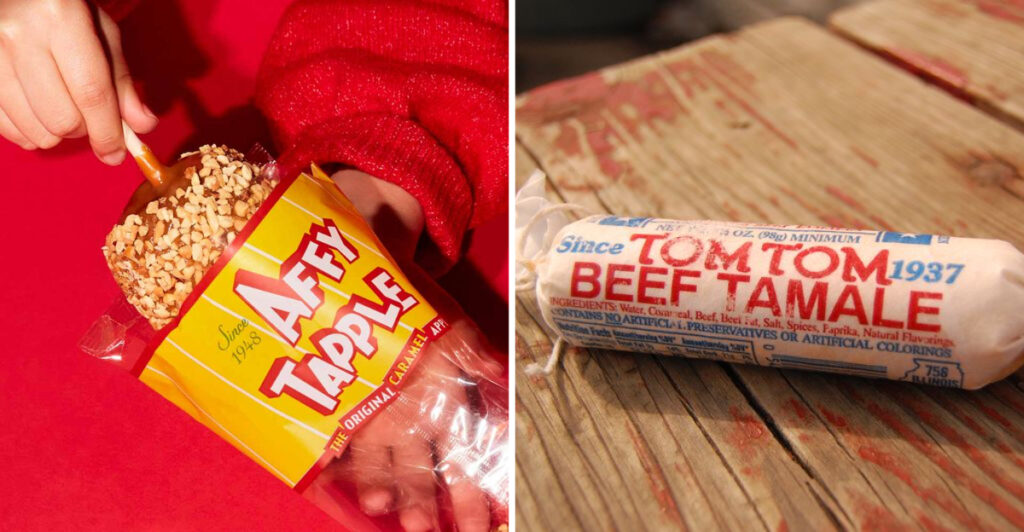
Some snacks do more than fill a bag. They practically come with a hometown attached.
Illinois has built plenty of that kind of loyalty over the years. Certain chips belong to one part of the state, specific sweets point straight to Chicago, and a few oddball favorites make perfect sense only if you grew up around them.
Most of these snacks never really disappeared. They stayed on shelves, at counters, and in family routines long enough to become part of the local vocabulary.
That is what makes the list fun. You are not just looking at old brands. You are looking at the foods people still recognize before the package is even fully in view.
For me, that is when a snack stops being just a snack and starts carrying a little history with it.
1. Maurice Lenell Pinwheel Cookies
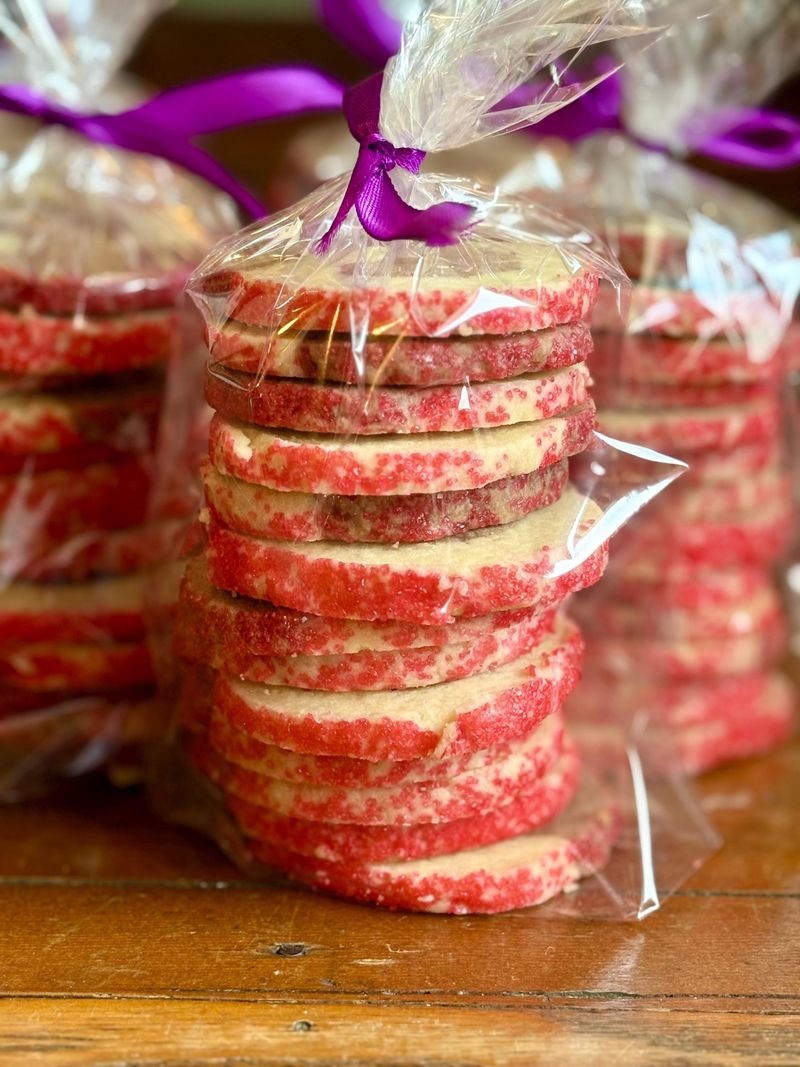
Maurice Lenell Pinwheel Cookies are the one snack here that really does belong to the past.
The Chicago-area cookie company traced its roots to 1937 and became known for distinctive butter cookies sold throughout the region.
Pinwheels were among the most recognizable, with two contrasting doughs twisted into a spiral pattern that made each cookie immediately identifiable.
Maurice Lenell also produced Jelly Stars and other varieties that became closely associated with holiday cookie trays and Chicago-area grocery stores.
The important part today is that the original product is gone. The Maurice Lenell line was discontinued in 2015, and genuine Pinwheel Cookies are no longer manufactured.
That has led home bakers and recipe writers to recreate the design, but those modern versions are imitations rather than surviving Maurice Lenell products.
If you remember the original box, the nostalgia is tied to something that really has disappeared from store shelves. That makes the Pinwheel different from almost every other snack on this list.
2. Salerno Butter Cookies
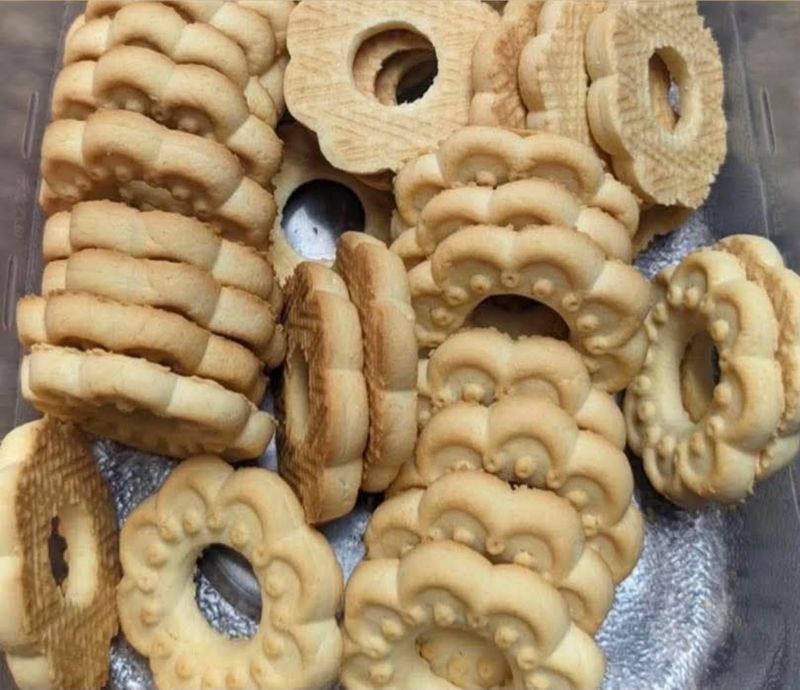
Salerno Butter Cookies never actually vanished.
The ring-shaped cookies remain available, carrying forward a brand history that stretches back to 1933. Their simple shape and lightly sweet butter-cookie flavor made them easy to recognize long before snack aisles became crowded with endless variations.
The open center is one of the details that made Salerno’s Original Butter Cookies stand out. Their design is simple enough that the cookie itself has barely needed explaining across generations.
Salerno has deep roots in Chicago’s baking history, and the butter cookies became part of a much broader Midwestern distribution story over the decades.
Salerno has stayed on shelves through decades of changes in the snack aisle, so the familiar ring cookies are still easy to find today.
If you remember the familiar ring shape from childhood, you do not have to rely entirely on memory. The cookies are still being sold, giving you a rare chance to compare the remembered version with the one sitting on shelves now.
3. Vitner’s Sizzlin’ Hot Crunchy Kurls
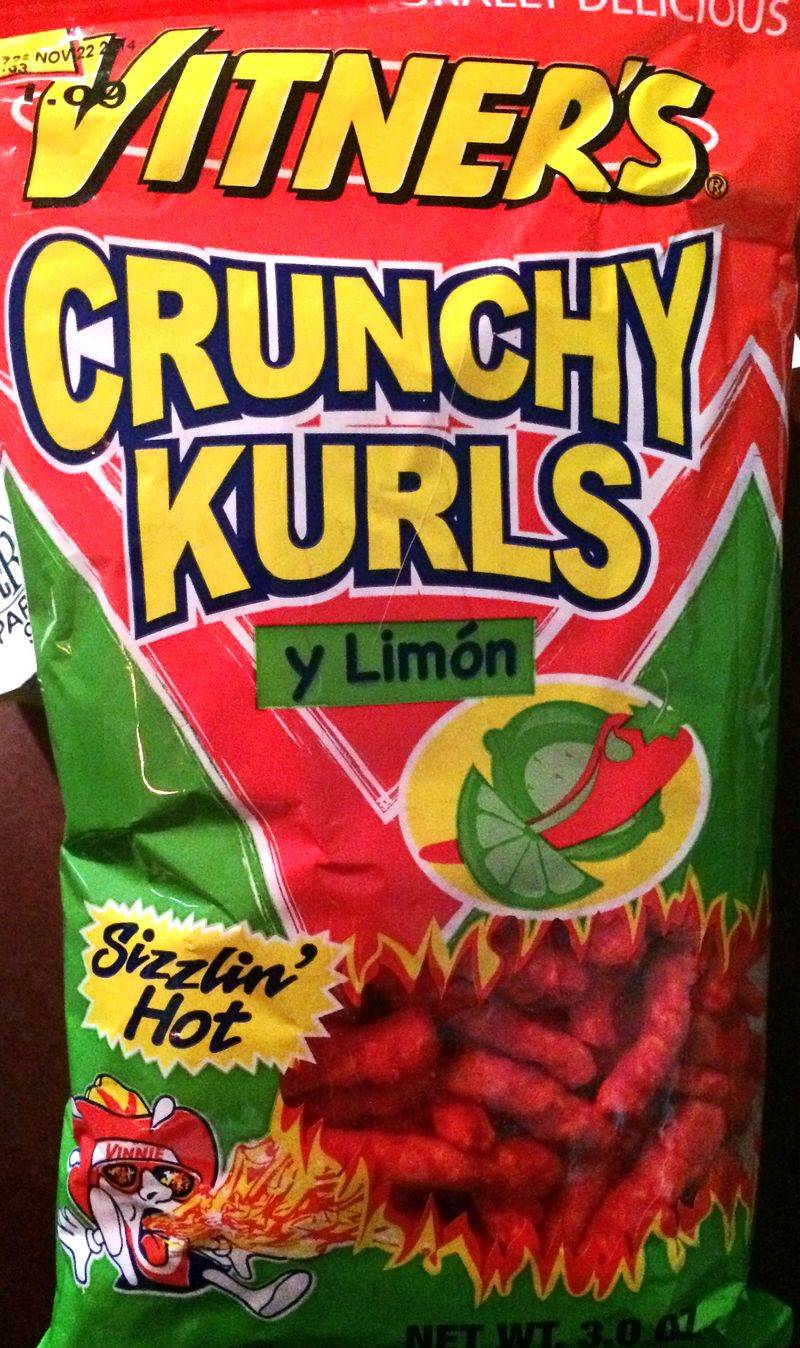
Bright seasoning and a serious crunch give Vitner’s Sizzlin’ Hot Crunchy Kurls a look that is difficult to mistake for anything mild.
Vitner’s began on Chicago’s South Side in 1926, initially operating several storefronts before growing into a major regional snack name. The brand eventually became part of Utz, but its Chicago identity remains an important part of the story.
Sizzlin’ Hot Crunchy Kurls are still in production today. The corn-based snack combines a crunchy texture with spicy hot-cheese seasoning, making the current bag very much a living product rather than a discontinued memory.
The brand’s ownership has changed, but the snack has not been relegated to vintage packaging collections. You can still buy it through current Utz distribution.
That makes Vitner’s a good example of how a regional Illinois snack can outlast the independent company structure that created it.
The red seasoning may be what catches your eye first, but the bigger story is almost a century of Chicago snack history continuing through a product that remains on shelves.
4. Jays Potato Chips
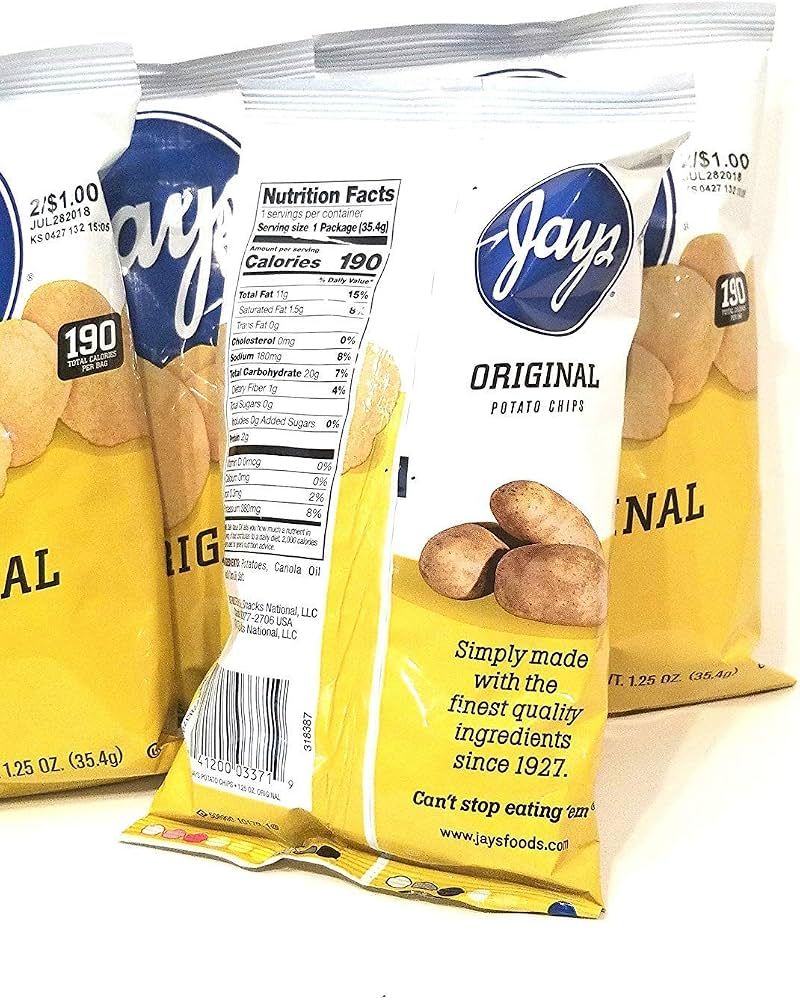
Jays belongs to Chicago snack history, but the chips are not history themselves.
The brand began in Chicago in 1927 and grew into one of the city’s best-known potato-chip names. Classic Original chips remain available today, along with flavors such as barbecue.
Ownership has changed over the years, and Jays is now connected to The Campbell’s Company through the Snyder’s-Lance business history. Even with those corporate changes, the Jays name has remained recognizable.
The classic salted chips keep the formula uncomplicated. Thin potato slices, salt, and crunch do most of the work, while barbecue gives the line a stronger-flavored option.
For many Illinois shoppers, the brand became familiar through grocery stores, lunch bags, neighborhood stores, and parties, but there is no need to turn those memories into a claim that everyone experienced Jays the same way.
The important fact is simpler: this was a Chicago-born chip brand, and it is still sold. You can treat the packaging as nostalgia without pretending the snack disappeared with it.
5. O-Ke-Doke Popcorn
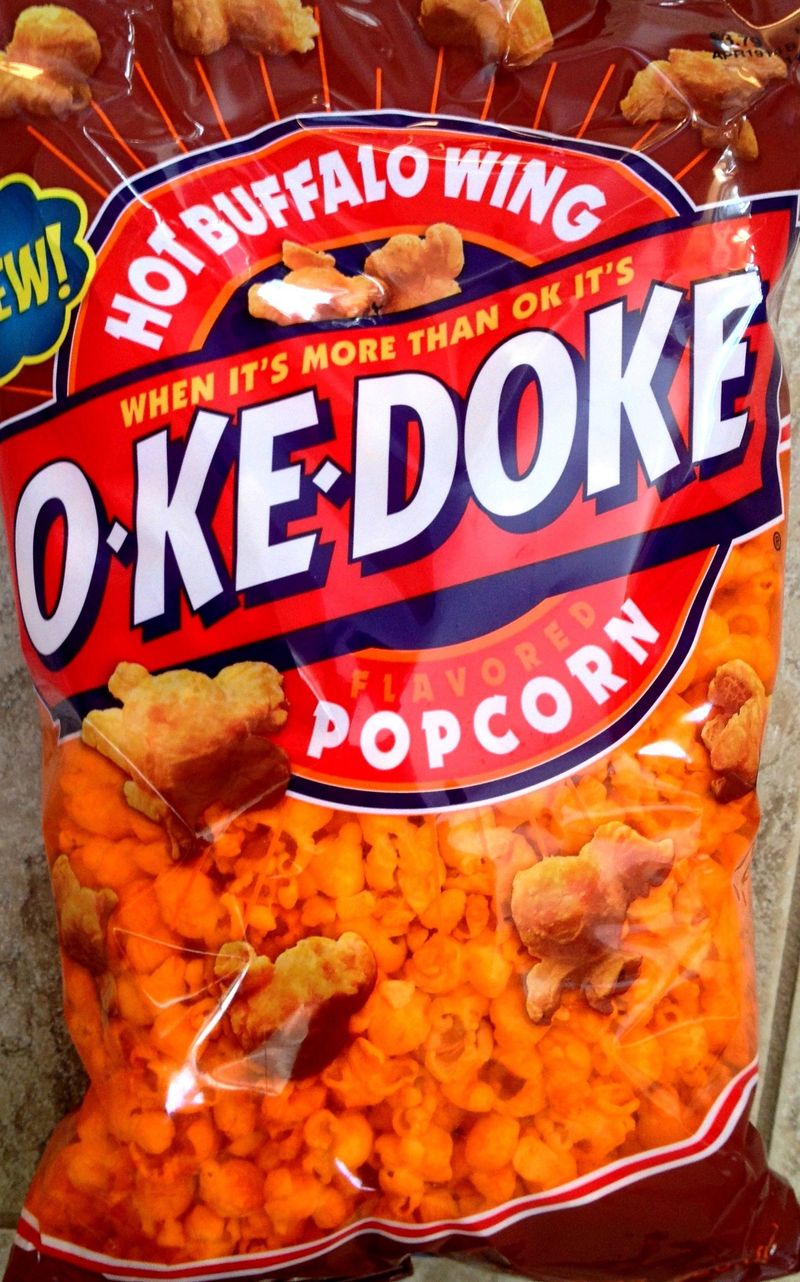
O-Ke-Doke has survived as another familiar name in the Chicago snack family.
Cheese Popcorn remains part of the current lineup, along with Hot Stuff Cheese Popcorn and White Popcorn. Retailers also continue to carry Chicago Mix, which combines cheese and caramel popcorn in the same bag.
Current options include Cheese Popcorn, Hot Stuff Cheese Popcorn, White Popcorn, and Chicago Mix, which pairs cheese and caramel popcorn in one bag.
The cheese version is easy to recognize by its orange coating and savory flavor, while Chicago Mix gives you the salty-sweet contrast that has become closely associated with regional popcorn blends.
O-Ke-Doke is still being sold, so this is another case where nostalgia and current availability overlap.
You might remember the brand from convenience stores or grocery aisles, but you can still encounter it without searching through vintage snack collections.
For anyone comparing Illinois snack brands across generations, O-Ke-Doke shows how a colorful regional popcorn name can stay familiar even as ownership, packaging, and retail habits change around it.
6. Mrs. Fisher’s Potato Chips
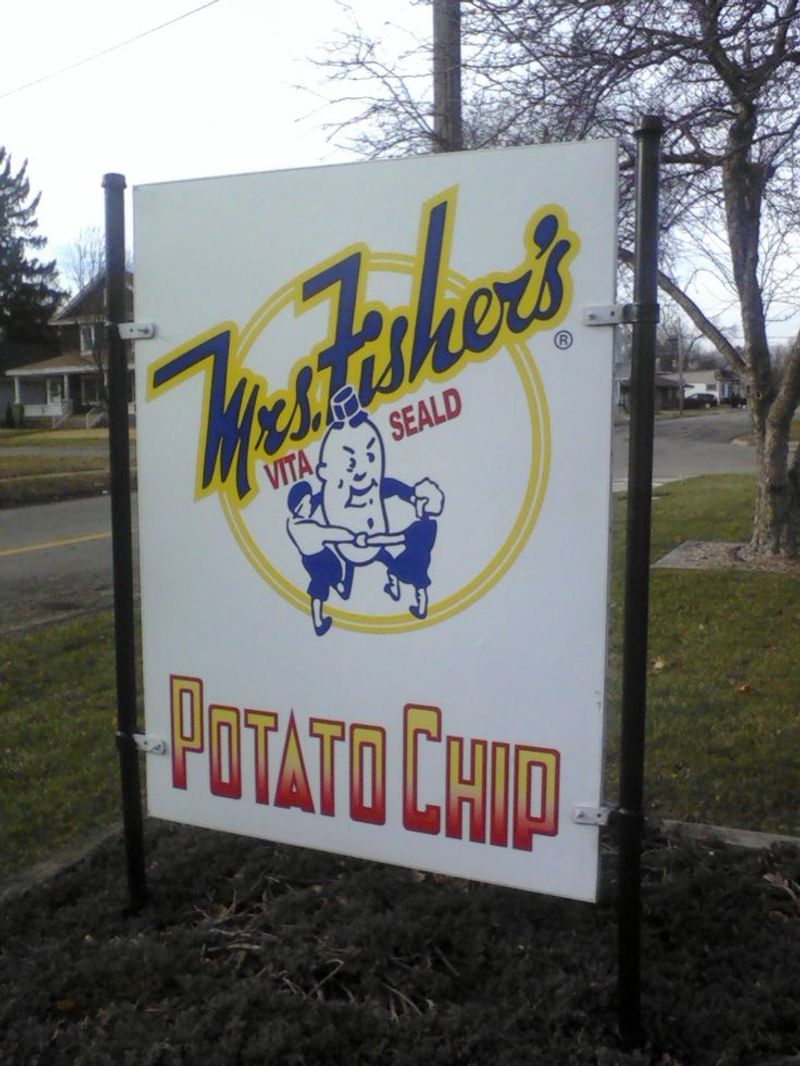
Rockford still has its own potato-chip story, and Mrs. Fisher’s is very much alive.
Ethel and Eugene Fisher began making chips from their home in 1932. The business grew into a long-running Rockford operation that continues producing potato chips locally.
One of the brand’s identifying traits is its thicker style. Current flavors include Classic, French Onion, BBQ, Rippled, Dark, Black Pepper, and other varieties.
That gives Mrs. Fisher’s a broader range than a single nostalgic bag from the past. The company has continued making chips while maintaining a strong connection to Rockford.
Its longevity is what makes this entry interesting. Plenty of regional snack brands were absorbed, relocated, or discontinued entirely. Mrs. Fisher’s instead remains tied directly to the city where its story began.
If you are passing through northern Illinois, the chips offer a current taste of a business that started more than nine decades ago.
You do not have to call them a lost hometown treasure. They are still being made where their Illinois history actually happened.
7. Kitchen Cooked Potato Chips
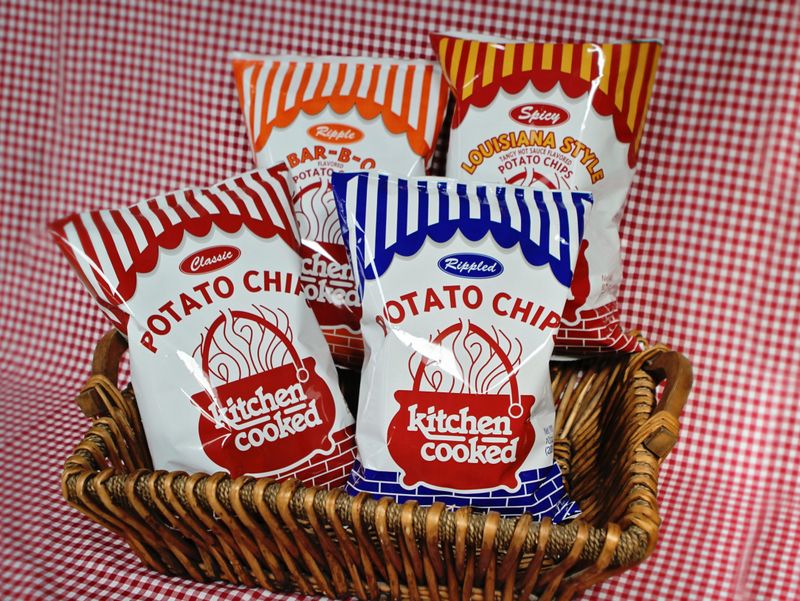
Kitchen Cooked still carries the Farmington name in its history, but the production story has changed.
The brand grew from Farmington into one of central Illinois’ recognizable potato-chip names. Utz purchased Kitchen Cooked in 2019, and potato-chip manufacturing moved away from Farmington in 2022 to other Utz facilities.
Production moved away from Farmington in 2022, while the town remained part of the brand’s Illinois identity through sales and distribution.
Classic Kitchen Cooked Potato Chips remain available today. The current product is described as kettle-style, with a thicker crunch than many standard chips.
The central Illinois identity, however, is real. Farmington is where the brand developed its following and became closely connected with the Peoria-area snack scene.
So the modern Kitchen Cooked story has two parts: a regional Illinois origin that still matters and a current production system that now belongs to a much larger snack company.
8. Affy Tapple Caramel Apples
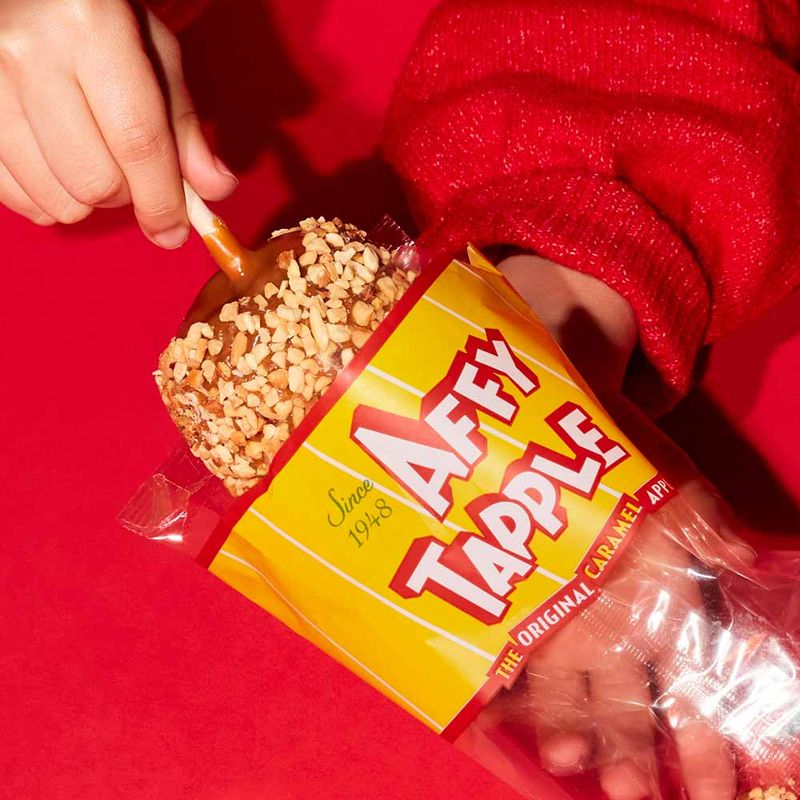
Affy Tapple has been turning apples into Chicago-area treats since 1948.
The Original Peanut Caramel Apple remains one of the company’s signature products. A fresh apple is covered in caramel and rolled in roasted peanuts, giving each bite a mix of crisp fruit, chewy caramel, and nutty crunch.
Fall is still closely associated with Affy Tapple, especially through Halloween traditions and school fundraising programs, but the apples are not limited to a short autumn season.
They are available year-round in Chicagoland grocery stores.
That makes the seasonal memory understandable without turning it into an inaccurate statement that Affy Tapples only appear when the leaves change.
The company continues producing its caramel apples in the Chicago area, and the caramel recipe traces back to the brand’s early years.
If you want one Illinois snack that crosses the line between candy, fruit, fundraiser, and fall tradition, Affy Tapple manages to occupy all four without being stuck entirely in the past.
9. Fannie May Pixies
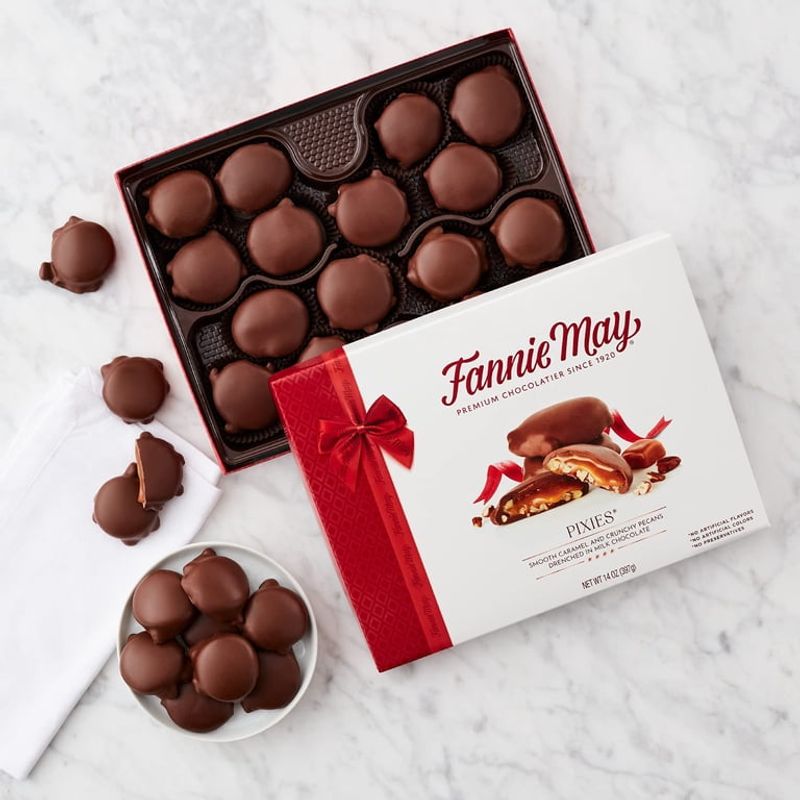
Fannie May started in Chicago in 1920, and Pixies followed in 1946.
The candy combines caramel, pecans, and chocolate in a format that became one of Fannie May’s signature confections. Pixies are still sold today, so they belong firmly in the old-school-but-current category.
Each piece brings together chewy caramel, crunchy pecans, and a chocolate coating, giving the candy three noticeably different textures.
Fannie May itself has changed substantially since its Chicago beginnings. Ownership shifted over time, and Ferrero acquired the brand in 2017.
Fannie May remains a Chicago-born confectionery brand, even though ownership and manufacturing have changed over time.
Pixies remain part of the current product lineup despite those corporate changes.
If you remember receiving a Fannie May box around a holiday or special occasion, the product inside may still be available in a form close enough to make the memory useful. Unlike Maurice Lenell Pinwheels, these candies never became strictly historical.
10. Iltaco Pizza Puffs
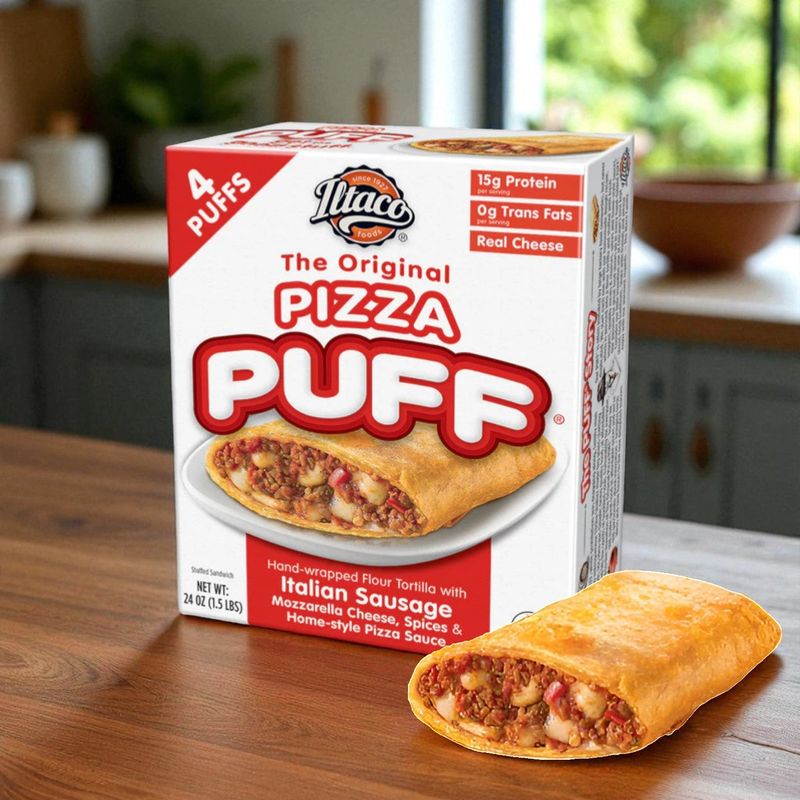
The Pizza Puff looks like something Chicago invented because a regular slice of pizza was somehow not portable enough.
Iltaco introduced the Original Pizza Puff in 1976. The current version uses a flour tortilla around sausage, mozzarella cheese, and home-style tomato sauce.
Pizza Puffs became closely associated with Chicago hot dog stands and neighborhood fast-food counters, where deep-frying remains a common preparation. But frying is not the only option.
Iltaco currently provides instructions for deep fryers, conventional ovens, convection ovens, and air fryers.
The product also reaches beyond Illinois now. Its identity is still strongly Chicago, but national distribution means it is no longer accurate to suggest people rarely encounter one outside the state.
What remains local is the origin story and the way Pizza Puffs became embedded in Chicago counter-service food culture.
Portable, cheesy, and unmistakably built for eating without a knife, the basic idea has held up since the 1970s.
11. Tom Tom Tamales
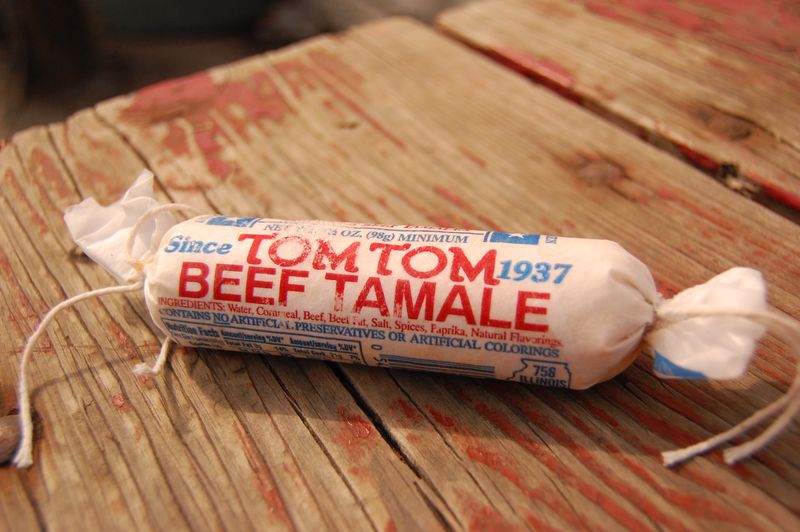
Chicago-style tamales deserve their own explanation because they are not the same thing as traditional Mexican tamales.
Tom Tom Tamales has served Chicago since 1937. Its beef tamales use seasoned meat inside a smooth cornmeal exterior, producing the narrow cylindrical shape long associated with the city’s hot dog stands and fast-food counters.
Commercial Chicago-style tamales are typically manufactured differently from handmade Mexican tamales. Their cornmeal dough and uniform shape give them a texture and appearance that are easy to distinguish once you know what you are looking at.
Tom Tom remains active today, so this is another snack that never truly disappeared.
Its connection with Chicago street food developed through decades of service at neighborhood stands and counters where tamales could be ordered alone or alongside other quick meals.
You can eat one without needing a full sit-down setup, which helps explain why the format fit Chicago fast-food culture so naturally.
The result is a local food with its own identity, even though the word “tamale” connects it to a much larger culinary tradition.