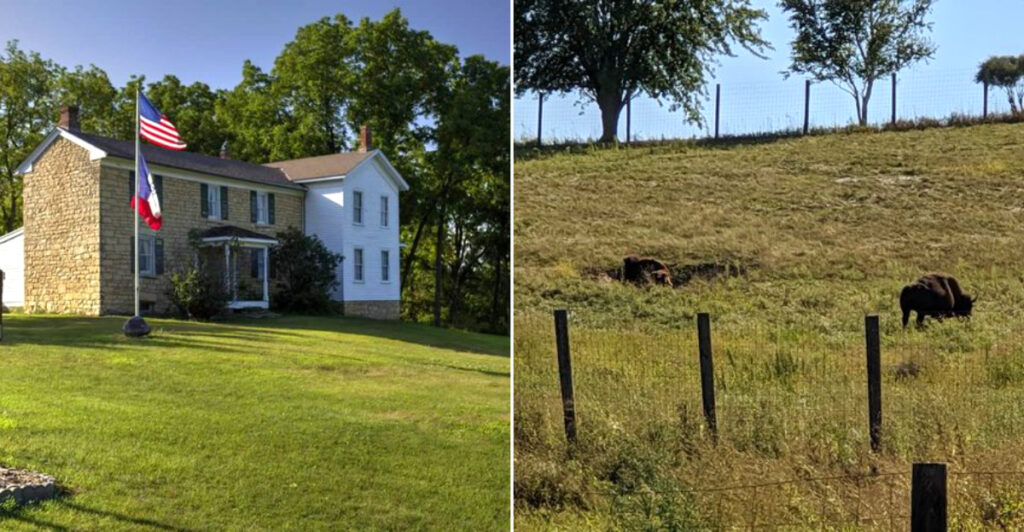
I always find it strange when a larger-than-life legend starts in a place that looks almost too quiet to matter. This Iowa farmhouse is one of those places.
Long before the famous name, the traveling shows, and the Western mythology, a boy grew up here among simple rooms, farm tools, and wide-open fields. Nothing about the setting hints at the fame that followed.
So how did an ordinary Iowa childhood become part of one of America’s biggest frontier stories? The answer starts on this modest property, where the beginning feels far more real than the legend ever did.
The Boy Behind the Legend
Buffalo Bill Cody was not born a showman. He was born William Frederick Cody on February 26, 1846, in LeClaire, Iowa, the son of Isaac and Mary Ann Cody, in a part of the state that was still very much frontier country at the time.
The family lived a simple, hardworking life on land that stretched out under wide Midwestern skies.
William was one of several siblings, and his Iowa boyhood shaped him in ways that would follow him for the rest of his life. He learned to ride horses early, developed sharp instincts outdoors, and grew up watching his father navigate the complicated politics of the pre-Civil War era.
His father, Isaac, was an outspoken opponent of slavery, which brought real tension to the family.
By the time William was a teenager, he was already working as a rider for the Pony Express, which tells you something about how quickly frontier kids had to grow up.
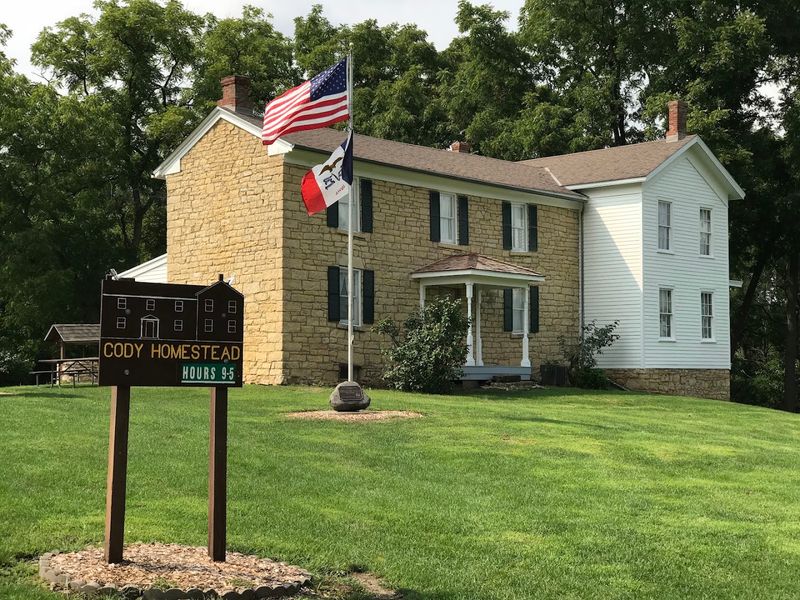
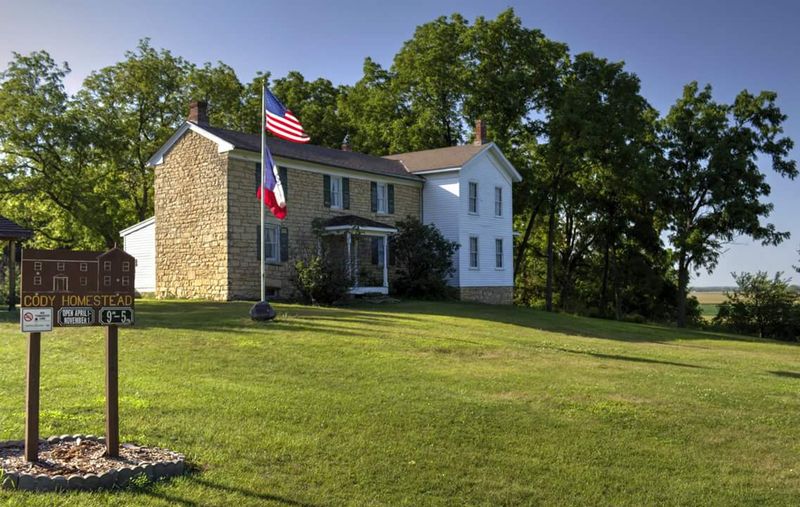
The Buffalo Bill Cody Homestead at 28050 230th Ave, Princeton, Iowa, preserves the farmhouse built by his father in 1847, and standing on that property, Cody’s early Iowa story feels surprisingly close.
What the Homestead Actually Looks Like
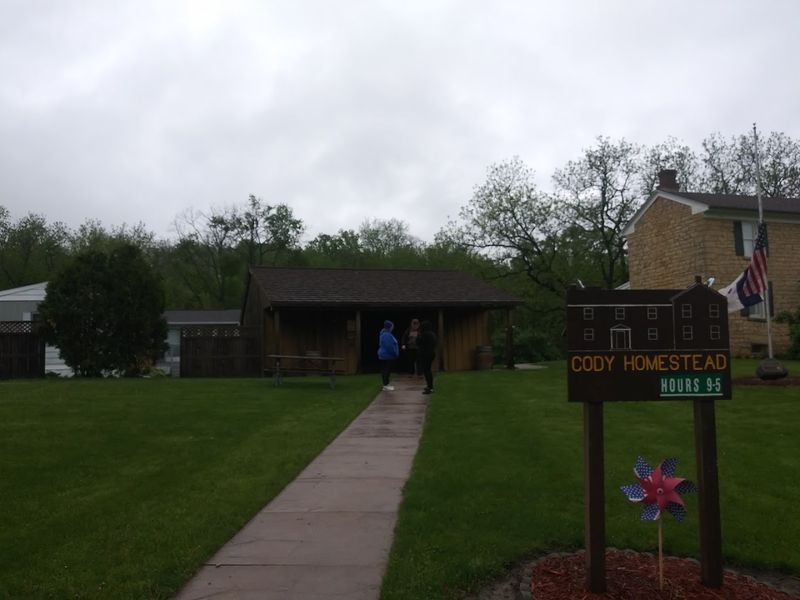
A lot of historic homes feel like museums wearing a costume. This one feels more like someone just stepped outside for a moment and forgot to come back.
The farmhouse at the Buffalo Bill Cody Homestead is a carefully restored 1847 structure built of native limestone, giving you a real sense of how the Cody family lived in the 1840s and 1850s.
Multiple rooms are set up to reflect different aspects of daily frontier life. The kitchen area has period tools and cooking equipment.
Other rooms show sleeping arrangements and household organization that remind you how compact and purposeful every inch of the space had to be. Nothing was wasted, and nothing was decorative just for the sake of it.
The furnishings include era-appropriate mid-19th century items, all chosen to give an honest picture of Iowa life during Cody’s boyhood. A small gift shop on the property carries books and souvenirs connected to Cody’s story.
The whole setup is self-guided, so you move through at whatever pace feels right, which turns out to be one of the better ways to absorb a place like this.
The Artifacts That Tell the Real Story
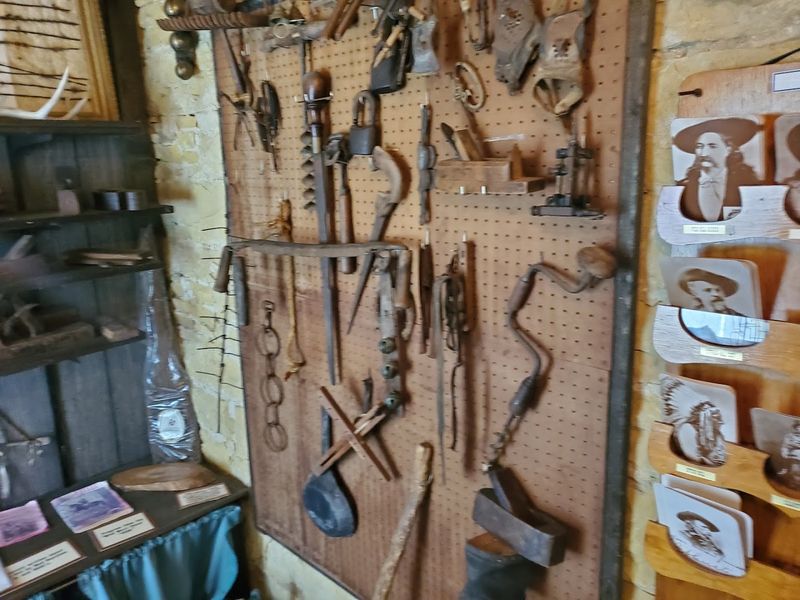
One of the things that sets this homestead apart from bigger, flashier historic properties is how grounded the collection feels. You are not looking at polished display cases with velvet lining.
You are looking at frontier-style homestead tools, kitchen aids, farm implements, and period furnishings that connect directly to the era when William Cody was a child in Iowa.
The homestead is restored and furnished with items typical of the mid-19th century, which helps visitors understand how physically demanding everyday life was before electricity, running water, or modern conveniences of any kind.
What makes browsing these objects interesting is realizing that the same kid who grew up in this kind of world would eventually become one of the most recognized names in American entertainment history.
The gap between that farmhouse kitchen and the global fame that followed is the kind of contrast that makes history actually interesting to think about rather than just memorize.
The Buffalo on the Property
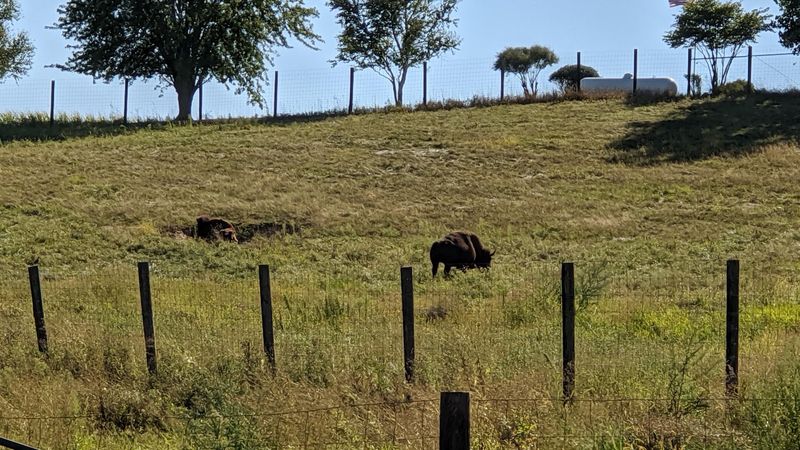
Nobody warns you about the bison, and honestly, that is part of what makes the visit memorable.
The farm neighboring the homestead keeps a herd of American bison, and depending on when you arrive, you may find them grazing close enough to the fence that you get a genuinely good look at just how large these animals are in person.
Several people who have visited specifically mention eating lunch under a shade tree while watching the bison in the pasture, which sounds like the kind of afternoon that does not need a lot of planning to be worthwhile.
Packing a picnic is a practical and enjoyable option if you want to stretch the visit into a longer outing.
Bison are deeply connected to Buffalo Bill’s story, given that his famous nickname came from his work as a buffalo hunter supplying meat to railroad crews.
Having living bison right there on the property adds a layer to the visit that no exhibit or display could replicate.
Kids especially tend to respond strongly to seeing the animals up close, which makes the stop a natural fit for families with younger children.
How to Plan Your Visit
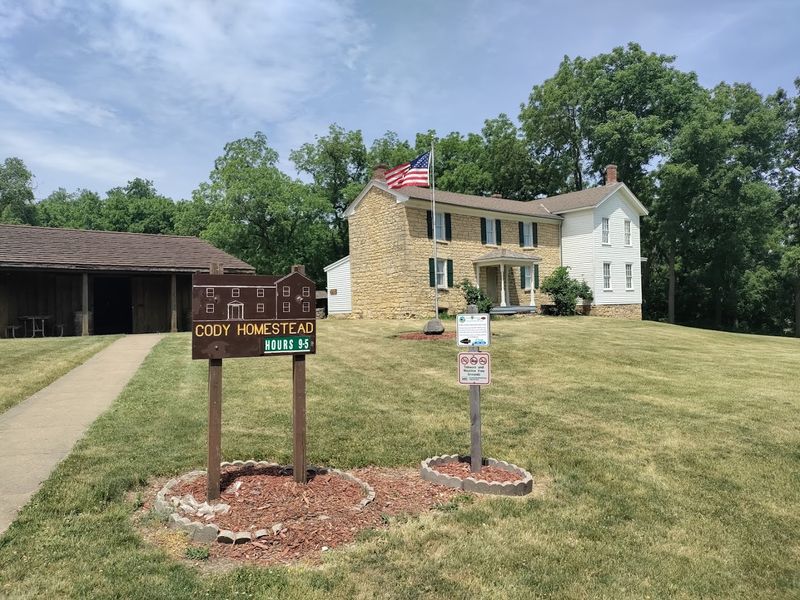
Planning ahead is genuinely important here, and not just as general travel advice.
The Buffalo Bill Cody Homestead is open April through October on Saturdays and Sundays from 9 AM to 5 PM, and it is closed on regular weekdays.
The property operates seasonally, so checking current details before you make the drive is a smart move. The phone number listed by Scott County Conservation is 563-328-3290, and the official Scott County Iowa Conservation site has current seasonal information.
Regular admission is very affordable, with current public information listing adults at $2 and visitors 16 and under admitted free.
The self-guided format means you are not locked into a tour schedule, and the staff on-site are consistently described as approachable and happy to answer questions.
One practical note worth knowing: restroom access is limited, so plan accordingly. If you are arriving with a large vehicle or travel trailer, rural property conditions can matter.
Dry days are simpler, but wet conditions may make maneuvering a trailered vehicle trickier. Arriving in a standard passenger vehicle keeps things easy.
The Setting and the Scenery
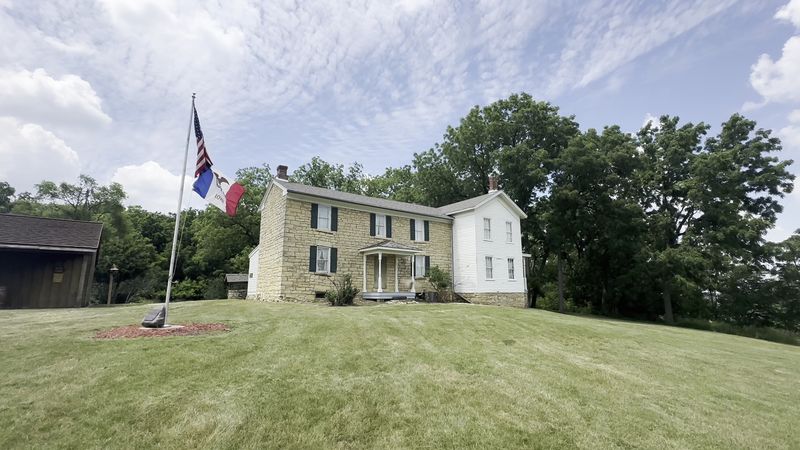
The drive out to the homestead is part of the appeal, even if it takes a bit longer than you might expect.
The property sits in a genuinely rural stretch of Iowa, and the landscape around it is the kind of wide, open Midwestern scenery that puts things in perspective. Rolling fields, tree lines in the distance, and a sky that feels bigger than it does in town.
One visitor described the view from the property as amazing, and on a clear day, that is not an overstatement. The grounds themselves are well maintained, with space to spread out, sit under a tree, and take in the surroundings without feeling rushed.
The property has a natural quietness to it that is harder to find the closer you get to any city.
That setting matters because it helps you understand something about Buffalo Bill’s early life that a textbook cannot really convey.
Growing up in this kind of landscape, far from anything resembling a city, with wide open space in every direction, would shape how a person thinks, moves, and understands the world.
The scenery is not just backdrop here; it is context.
Why Families Get a Lot Out of This Stop
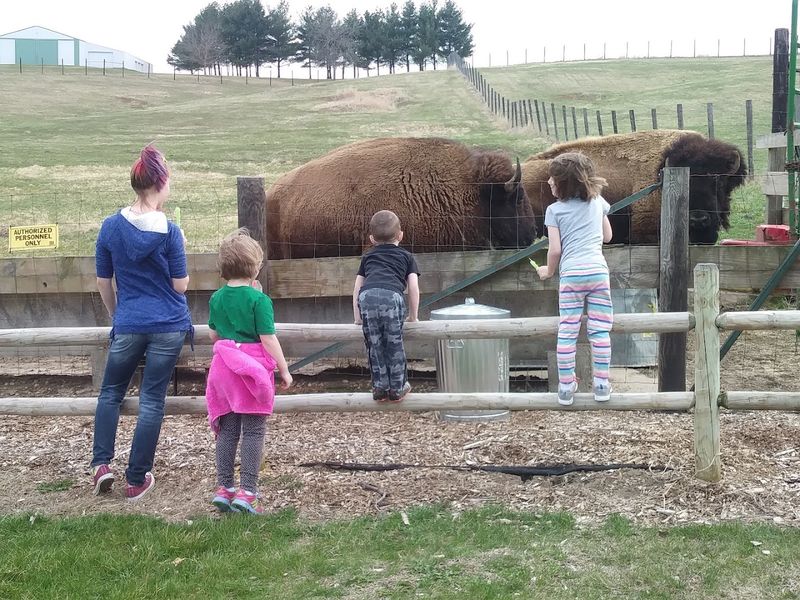
Buffalo Bill shows up in a lot of school curricula, which means many kids arrive at the homestead already knowing at least something about who he was.
That prior knowledge gives the visit a different energy than a standard field trip to a place nobody has heard of. Kids who have read about Cody in class tend to ask sharper questions once they are standing in the actual space where he grew up.
The bison on the neighboring farm add an obvious draw for younger children, and the self-guided format means families can move at whatever pace works for them without anyone feeling rushed or bored waiting for a tour group to catch up.
Parents with history-curious kids will find the artifact collection genuinely holds attention, because the objects are tactile and real rather than behind heavy glass.
The entry fee is low enough that a family visit does not require much financial planning. Bringing a picnic lunch and turning the trip into a half-day outing is a practical way to make the most of the property’s outdoor space.
A shade tree, some bison in the distance, and a good sandwich cover a lot of ground as far as afternoon plans go.
Buffalo Bill’s Path from Iowa to Global Fame
Most legends have a starting point that looks nothing like the legend itself, and Buffalo Bill Cody is a good example of that.
The kid who grew up on this Iowa farm went on to become a Pony Express rider, an Army scout, a buffalo hunter, and eventually the creator and star of Buffalo Bill’s Wild West, a traveling show that toured the United States and Europe for decades.
The Wild West show introduced millions of people around the world to the idea of the American frontier. It featured sharpshooters like Annie Oakley, reenactments of frontier battles, and performances by Native American riders.
Cody had a talent for turning real frontier skills into entertainment, and the show made him one of the most recognized Americans of his era.
What makes the homestead visit interesting in this context is the contrast. The log cabin, the farm tools, the simple rooms, the wide Iowa fields, none of it hints at what was coming.
The gap between that quiet beginning and the global spectacle that followed is the kind of thing that makes you reconsider what you think you know about where big lives actually start.
The People Who Keep This Place Going
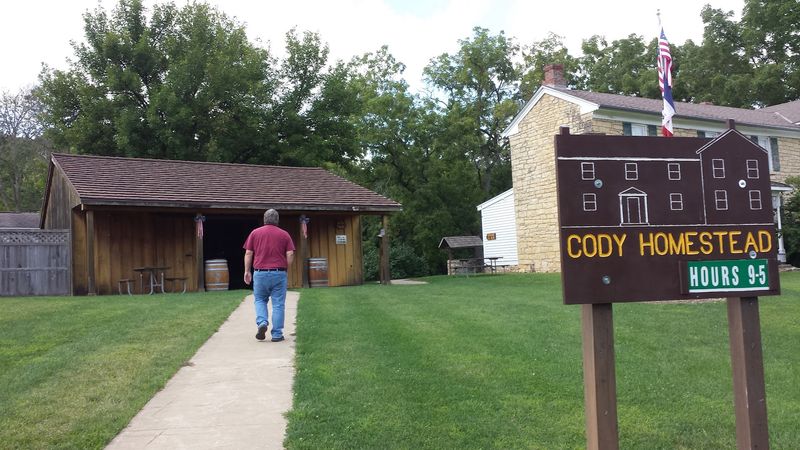
More than one person who has visited the homestead mentions the staff in the same breath as the property itself. That says something about how much the human element shapes the experience here.
That kind of hands-on, personal attention is harder to find at larger and more heavily staffed historic properties. At this homestead, the people watching over the place are genuinely invested in it, happy to answer questions, and clearly knowledgeable about the history on display.
That warmth changes the tone of the whole visit.
The property is managed through Scott County Iowa Conservation, which handles the preservation and operational details. The combination of institutional support and personal, ground-level care has kept the homestead in solid condition for the people who make the drive out to Princeton.
If you have specific questions about the property or the collection, the staff on-site are your best resource, and they are consistently worth talking to.
Making the Most of Your Trip Out There
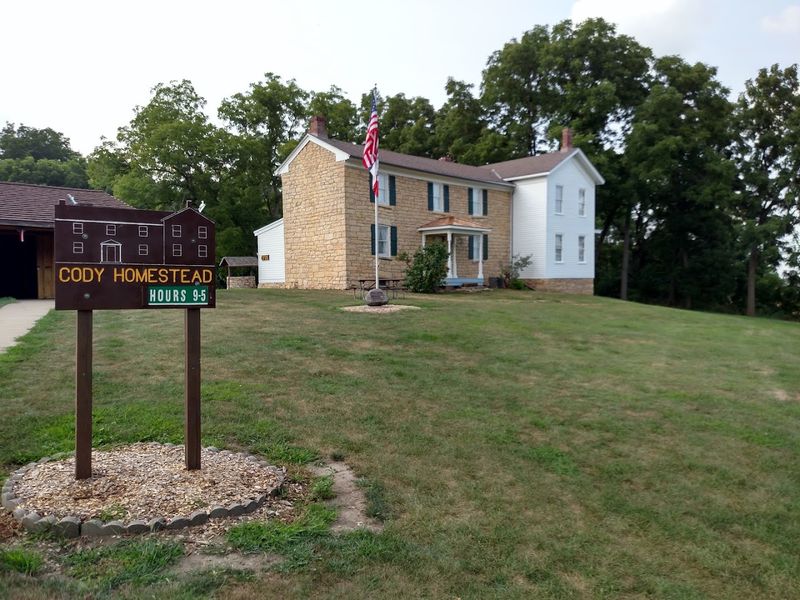
The homestead is genuinely out of the way, and that is worth acknowledging plainly.
The drive to Princeton, Iowa, takes some commitment depending on where you are coming from, but the surrounding area gives you options for turning it into a fuller day trip.
LeClaire is one of the easiest pairings, especially if you want to connect the homestead with other Buffalo Bill-related sites, including the Buffalo Bill Museum and birthplace-related stops along the Cody Trail.
If you are coming from the Quad Cities area, the drive is manageable and the roads through Scott County are straightforward. Bringing food is a good idea since the property is rural and there are no restaurants within easy walking distance.
The picnic option under a shade tree while bison graze nearby is a better lunch plan than it might sound on paper.
Give yourself at least an hour on the property, maybe more if you like reading every label and asking questions. The self-guided format rewards the curious and the unhurried.
Getting there early on a Saturday or Sunday morning means you might have the whole place to yourself, which is a genuinely different way to absorb a historic property than shuffling through with a crowd.