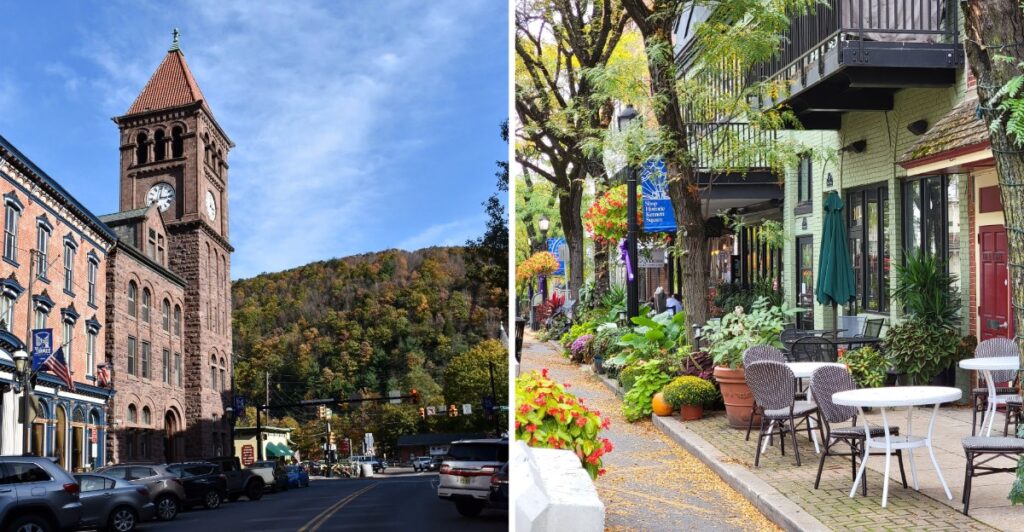
Park the car.
If the next hour disappears before you remember where you left it, the downtown is doing its job.
That happens easily in these Pennsylvania towns.
An old marquee catches your eye. Then a courthouse clock does. Two blocks later, you are staring above a storefront because the building itself is suddenly more interesting than whatever is inside.
These streets were never frozen for display.
Movies still play. Shops still open their doors. Festivals still take over the pavement.
People keep using buildings that have already watched several generations come and go.
The twelve towns ahead tell that story in different ways.
Some gather around public squares. Others stretch along old commercial streets.
Either way, expect your road trip to develop one peculiar habit: a suspicious amount of staring upward.
1. Lititz
Start with the stone building where commercial pretzel history took a major turn.
Julius Sturgis opened his bakery in 1861 inside a house that had already been standing since the eighteenth century, and visitors can still see the original ovens while learning how pretzel twisting changed over time.
That puts Lititz in a useful position for anyone who likes history with something to snack on.
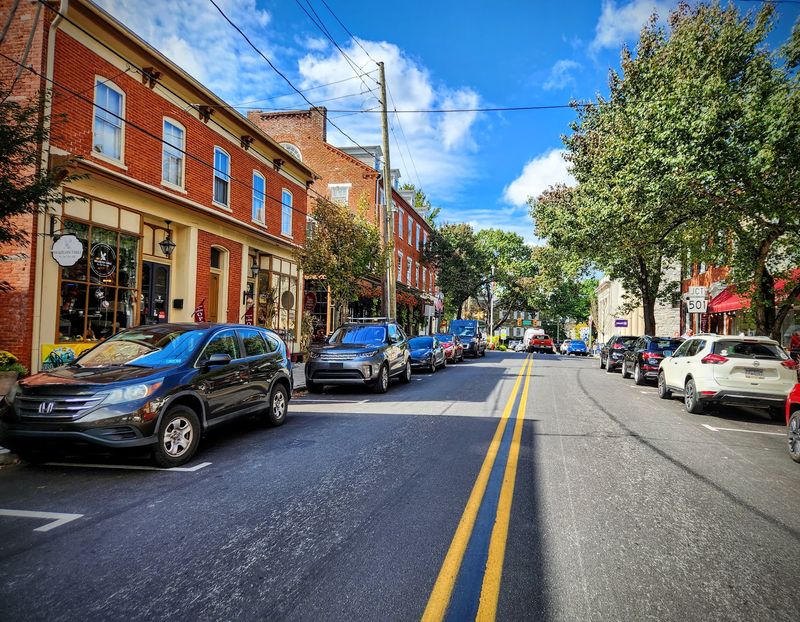
The bakery sits along East Main Street inside a town whose Moravian historic district includes architecture from several periods, including Federal, Victorian, and early commercial buildings.
The downtown is compact enough that you can connect the bakery with shops, older homes, and Lititz Springs Park without constantly returning to the car.
The park remains a central gathering place with walking paths, a stream, and community events, giving the historic blocks some breathing room.
One easy route is to begin at the bakery, work back toward Broad Street, and let the building details set the pace. Look above the shop windows as often as you look inside them. Older rooflines, stonework, and upper stories tell much of the story here.
Address: 219 E Main St, Lititz, PA 17543
2. Wellsboro
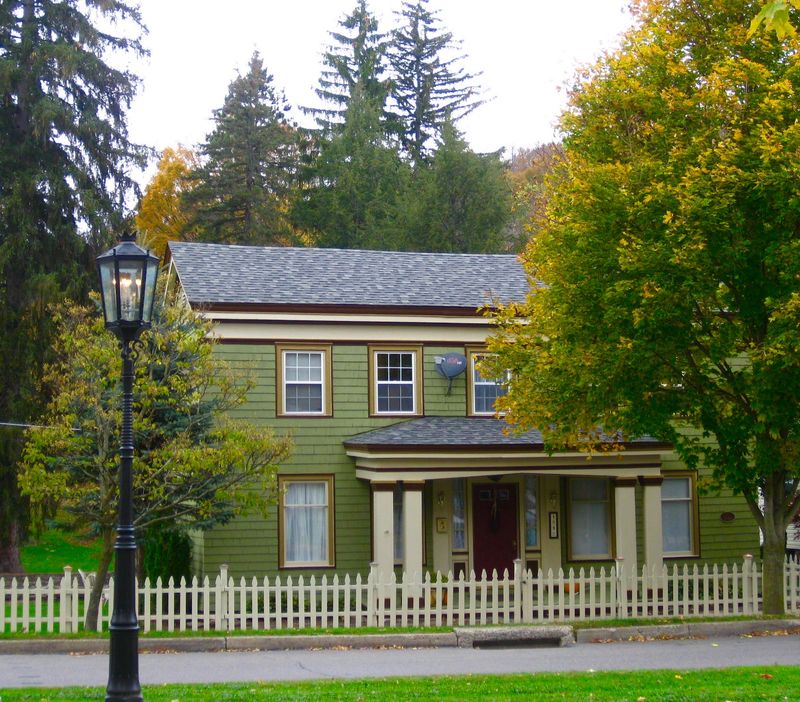
Main Street gets especially atmospheric after daylight fades. Wellsboro still has its distinctive gas-lit boulevard, with the lamps running through a downtown where many commercial buildings date to earlier generations.
The street has not been frozen in time, and that is part of its appeal. Businesses still operate behind old facades, while the broad median and rows of lamps keep the center visually tied to its past.
A local walking tour points out buildings from the nineteenth and early twentieth centuries along the commercial district.
Then there is the Wellsboro Diner. Open since 1939, the diner remains on its original site along Main Street and keeps one of the town’s most recognizable pieces of roadside history in everyday use.
Take the street slowly rather than treating the lamps as the entire attraction. The Tioga County Courthouse, older commercial blocks, diner, and boulevard all contribute to the scene.
If you can choose your timing, an evening walk lets the lighting do some of the work without requiring anything more complicated than a jacket and comfortable shoes.
Address: 116 Main St, Wellsboro, PA 16901.
3. Ligonier
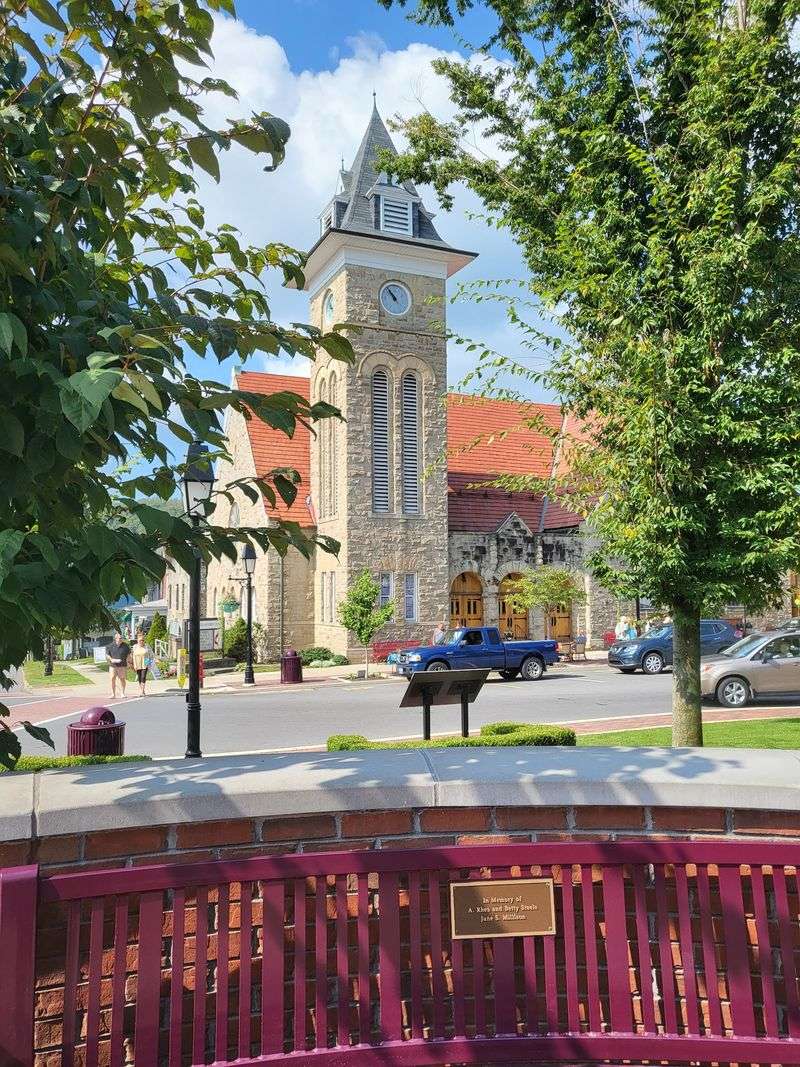
The center is not called a square. It is the Diamond, a green public space that gives this western Pennsylvania downtown a shape all its own. Streets and businesses wrap around it, making the park an obvious place to get oriented before wandering farther.
Historic preservation here goes beyond one photogenic block. The Ligonier Historic District is listed on the National Register and includes architectural periods stretching from the eighteenth century into the twentieth. Main and Market streets form the heart of that district.
Ligonier also carries an older layer of history just a short walk away. Fort Ligonier traces its origins to 1758, when British forces established a post during the French and Indian War.
TThe reconstructed fort and museum remain open to visitors, connecting the downtown blocks with the military history that preceded them.
Back around the Diamond, you can keep the visit simple. Circle the park, look up at the older facades, and branch onto nearby streets when something catches your eye.
The layout does most of the organizing for you, which is convenient when nobody in the car agreed on an itinerary.
Address: 120 E Main St, Ligonier, PA 15658.
4. Bedford
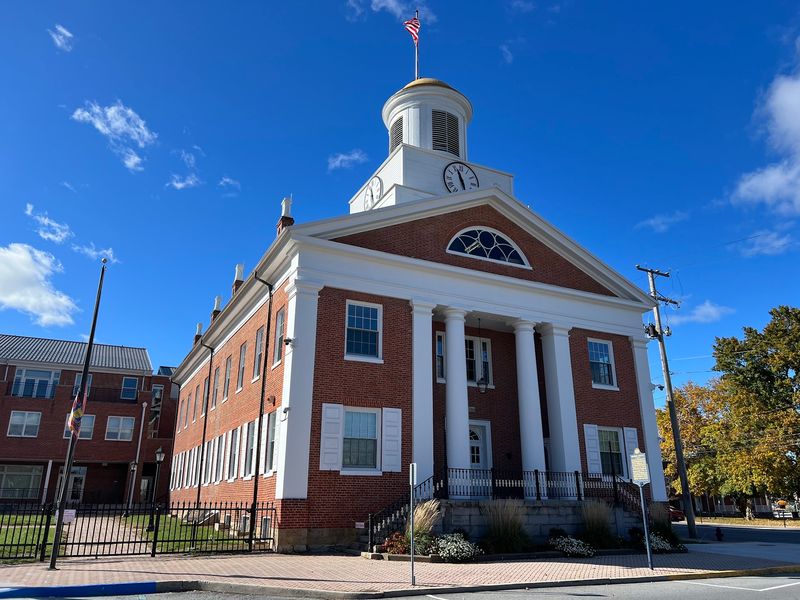
History is difficult to avoid once you reach the center of Bedford. The downtown historic district contains a concentration of older buildings, and the county courthouse still anchors the street pattern from South Juliana Street.
George Washington adds one particularly specific chapter. During the 1794 federal tax uprising, he stayed at the Espy House on Pitt Street while reviewing militia forces.
The building remains standing, giving the downtown a direct link to an event usually summarized in a few paragraphs of a history book.
The courthouse is another piece that keeps the district grounded. Built in 1828, the courthouse remains in use today, which means this is not simply preserved architecture sitting behind a rope.
Give yourself time for side streets. Bedford mixes stone houses, brick commercial buildings, and later architectural details within a fairly walkable center, so the interesting part is often a doorway or upper floor that is easy to miss from the car.
If you prefer a clear starting point, begin at the courthouse and work outward toward Pitt Street. You will cover plenty of history without turning the afternoon into a mileage challenge.
Address: 200 S Juliana St, Bedford, PA 15522.
5. Lewisburg
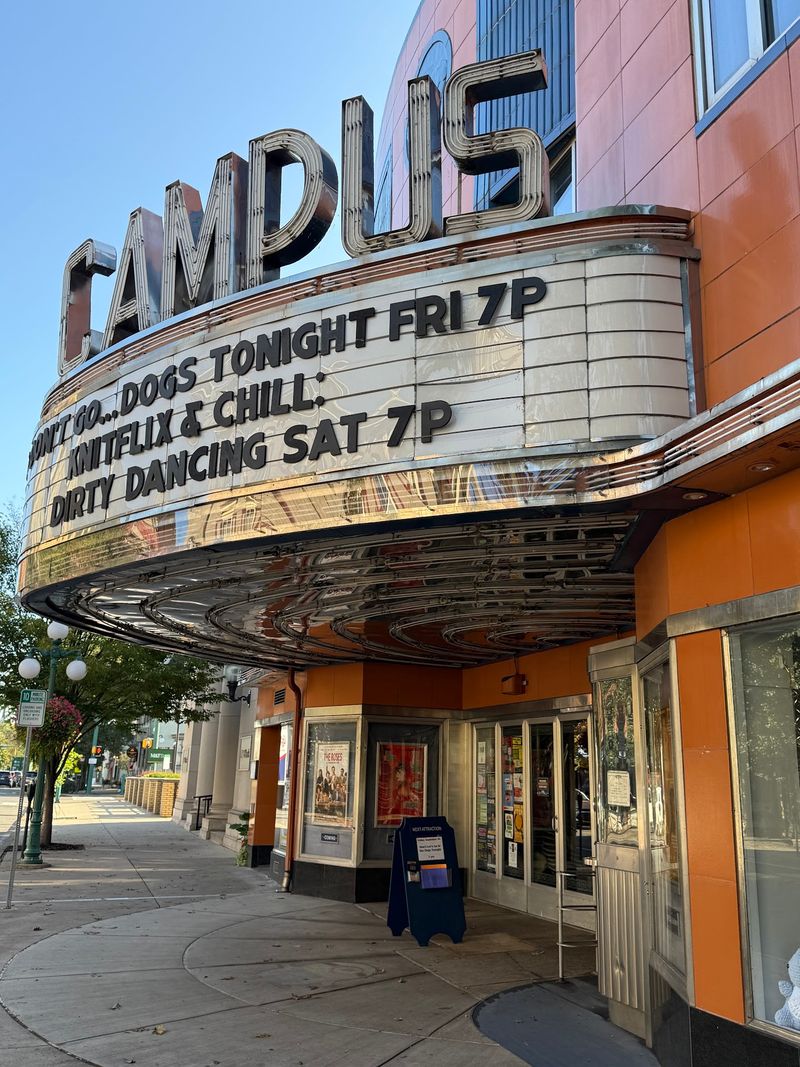
A historic downtown does not need to become quiet to stay historic. Market Street proves that point with shops, community events, university energy, and hundreds of contributing buildings spread through the larger historic district.
Lewisburg’s National Register district contains 871 contributing historic buildings, structures, and sites, with resources dating from roughly 1780 through 1960.
That range explains why the street does not belong to one architectural moment. Older brick buildings share the district with later commercial facades and civic landmarks.
The easiest landmark to spot after dark may be the Campus Theatre. Opened in 1941, the single-screen Art Deco movie house still shows films and retains the kind of marquee that can make an ordinary movie night look considerably more ceremonial.
Bucknell University sits nearby, but Market Street keeps its own identity. Walk a few blocks before deciding where to stop, because the upper stories are as useful as the ground floors for reading the town’s history.
The Lewisburg Downtown Partnership operates right on Market Street, making its address a practical central marker for exploring the district on foot.
Address: 328 Market St, Lewisburg, PA 17837.
6. Jim Thorpe
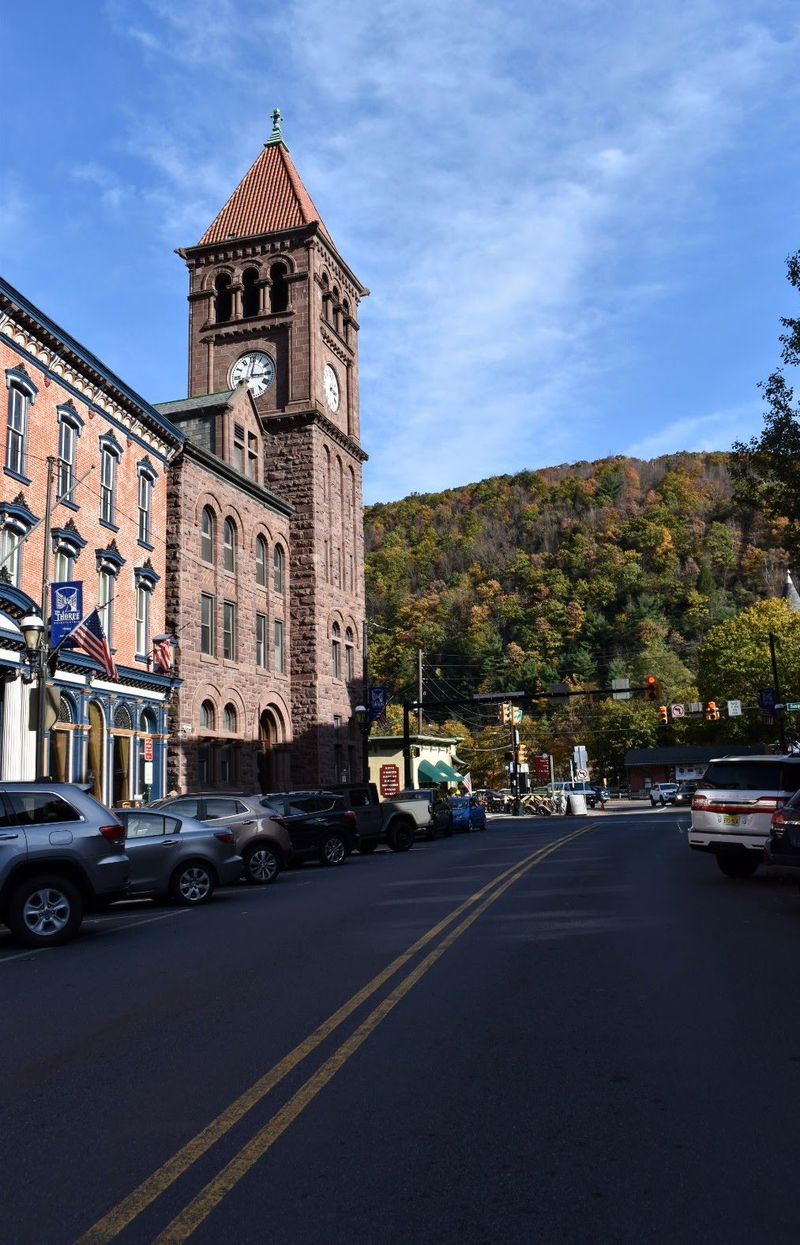
Steep hills do a lot of framing here. Historic buildings line the streets at the bottom while houses and landmarks climb above them, giving the downtown a shape that feels very different from Pennsylvania’s flatter courthouse towns.
The community carried the name Mauch Chunk until 1954, when East and West Mauch Chunk merged and the new borough was renamed Jim Thorpe. That older name still appears frequently in local history, including at the Mauch Chunk Museum on West Broadway.
Jim Thorpe’s nineteenth-century growth was tied closely to coal and rail transportation, and the architecture still reflects that period.
One standout is the Asa Packer Mansion, built in 1861 and preserved with its historic interiors. It remains open for tours, adding another layer beyond the storefronts below.
Broadway is the street to take slowly. Grades change, sidewalks bend with the terrain, and the buildings stack visually as you move through town. Comfortable shoes matter more here than clever planning.
For a history-first route, use the museum as your anchor and then continue along Broadway. You get the old town story before the hills start negotiating with your legs.
Address: 41 W Broadway, Jim Thorpe, PA 18229.
7. New Hope
Main Street has changed plenty over the generations, but the borough has formal historic districts and a review process designed to protect architecturally significant buildings.
That preservation shows up quickly as you move through the compact center beside the Delaware River.
New Hope mixes stone buildings, narrow commercial fronts, galleries, shops, and theater history within a few walkable blocks.
The river is never far away, and the bridge to Lambertville, New Jersey, makes it possible to add another historic downtown without moving the car.
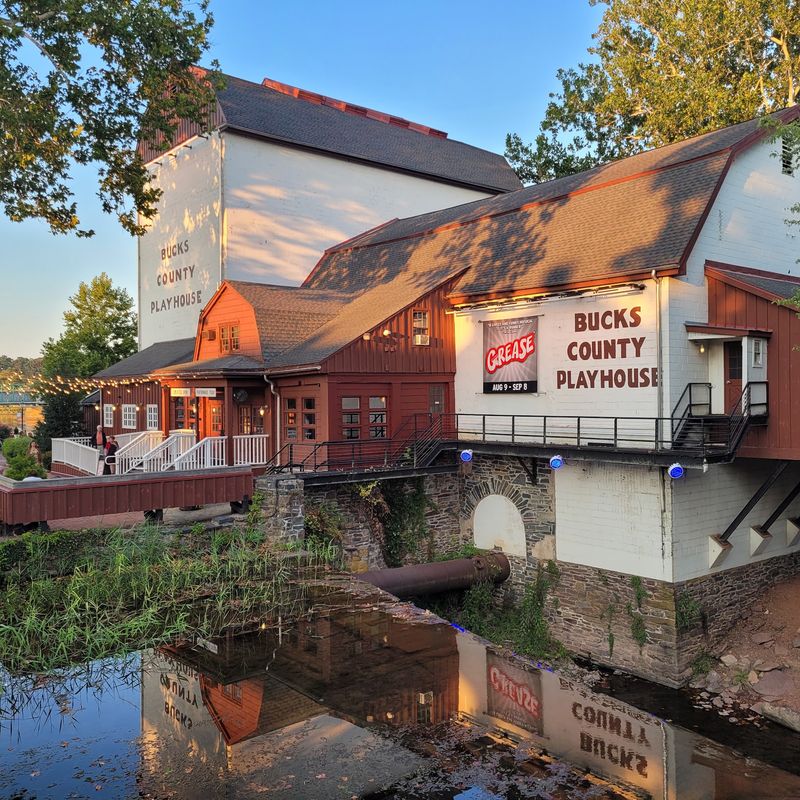
One building carries an especially long timeline. The structure housing Bucks County Playhouse began as a mill rebuilt in 1790. It was converted for theatrical use in the 1930s, and the Playhouse officially opened in 1939.
Performances continue there today.
That makes the theater a practical anchor rather than a historical footnote. Start near the river, follow Main Street, and give yourself permission to double back when a side street looks interesting.
Parking can require more patience on busy days, so once you have a spot, walking is the easier strategy. The blocks are compact enough that your feet can handle the sightseeing better than your car can.
Address: 70 S Main St, New Hope, PA 18938.
8. Brookville
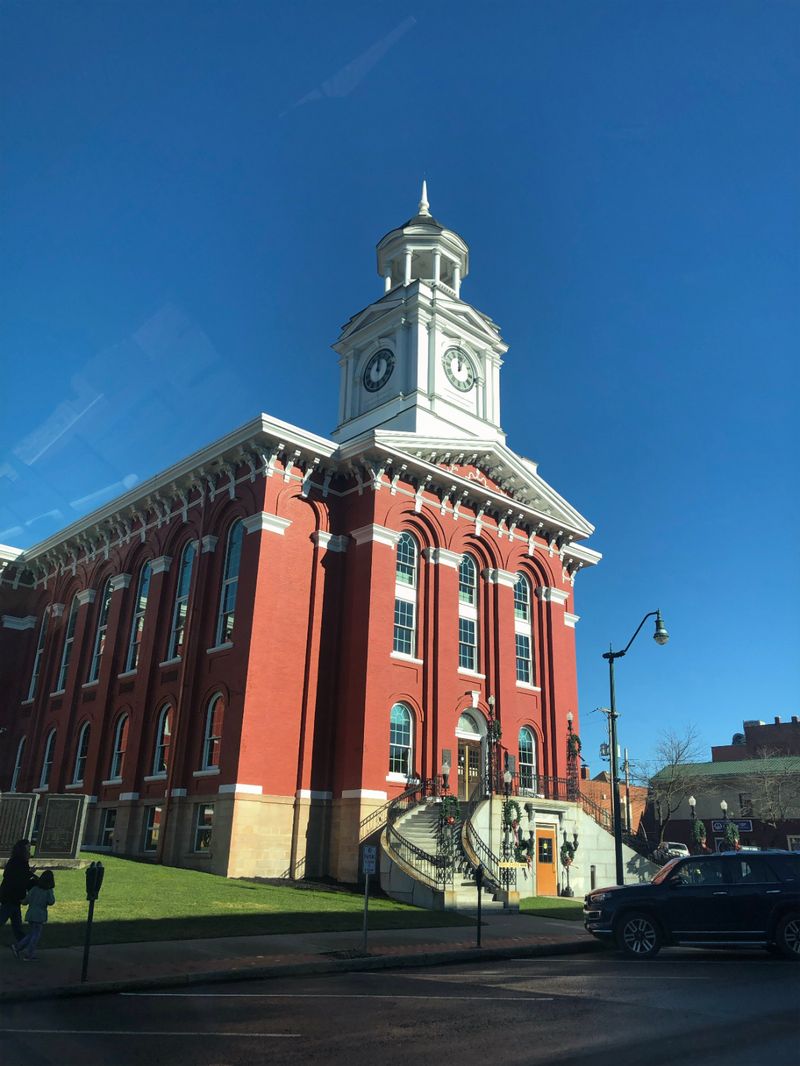
Look toward the upper floors before deciding this is simply another county-seat Main Street. Brickwork, tall windows, cornices, and older commercial facades carry much of the visual history above the storefront level.
Brookville’s historic district includes Main Street and surrounding residential and commercial blocks and has been listed on the National Register since 1984. The district reflects several periods of growth rather than one carefully matched architectural style.
At the center, the Jefferson County Courthouse provides the easiest landmark. The building dates to 1869, with a significant addition and remodeling completed in the late 1920s.
It remains a functioning county building, so the historic core is still doing everyday work rather than serving only as scenery.
A slow loop around the courthouse and nearby Main Street blocks is enough to spot how much nineteenth and early twentieth-century architecture remains mixed into the commercial center. There is no need to invent a complicated route.
Brookville works especially well as a break on a longer drive. Park once, walk several blocks, and look above eye level. The decorative details get more interesting as soon as the shop signs stop taking all the attention.
Address: 200 Main St, Brookville, PA 15825.
9. Honesdale
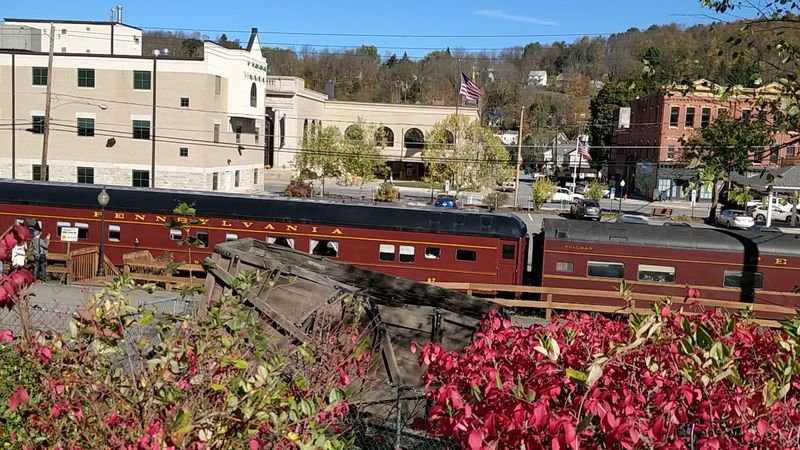
Railroad history is not hiding in a distant exhibit here. Honesdale’s best-known transportation story happened in town in 1829, when the Stourbridge Lion made its trial run and became the first steam locomotive to operate on commercial track in the United States.
The original locomotive did not remain intact, but a full-size replica is displayed at the Wayne County Historical Society on Main Street.
The museum itself occupies an 1860 building constructed as headquarters for the Delaware and Hudson Canal Company, so even the container has transportation history.
Main Street carries that industrial-era connection into the present with older commercial architecture and civic buildings still woven into the active downtown.
TThis is a good place to let one museum visit lead into a broader walk rather than treating the exhibit as an isolated stop.
Start with the Stourbridge Lion if the railroad story interests you, then step outside and continue along Main Street.
The scale is comfortable for walking, and the historical society gives you enough context to recognize why canals, rails, and commerce mattered so much here.
A train changed transportation history in Honesdale. Thankfully, exploring the town now requires considerably less steam.
Address: 810 Main St, Honesdale, PA 18431.
10. Mifflinburg
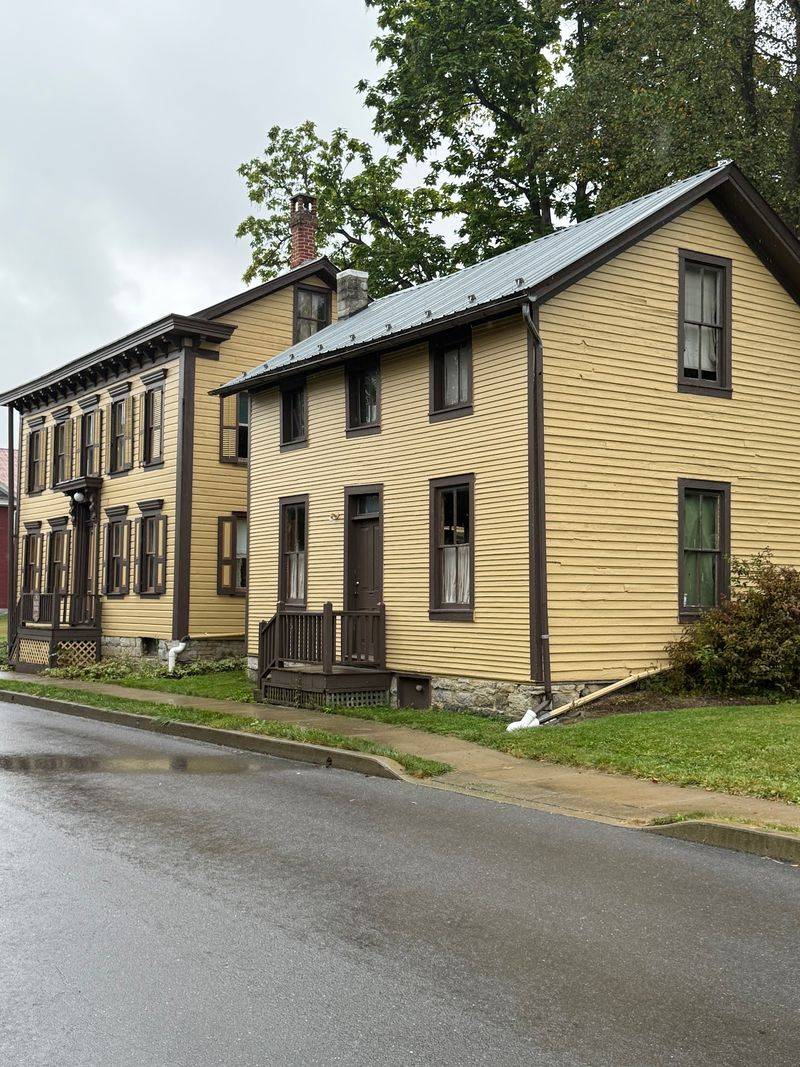
Before automobiles reorganized American towns around parking spaces and filling stations, carriage makers helped shape this central Pennsylvania community.
Buggy manufacturing began in the 1840s and became an important local industry for decades.
Mifflinburg’s own historic walking tour connects that trade to buildings along Chestnut Street, where former hotels, stores, homes, and business properties still help explain how the town developed.
The most tangible piece of the story sits at the Mifflinburg Buggy Museum. Its collection preserves the Heiss family’s original buggy factory, along with tools and workspaces tied to the trade.
The museum currently opens seasonally on weekends from May through the last Sunday in October.
Do not stop with the factory if the weather cooperates.
Chestnut Street makes more sense once you know how many local businesses were connected to carriage production.
The historic walking route points out structures that might otherwise look like attractive old buildings with no obvious connection.
One easy route is museum first, downtown second. That order gives the porches, storefronts, and former commercial buildings a little more meaning once you start walking.
Address: 598 Green St, Mifflinburg, PA 17844.
11. New Oxford
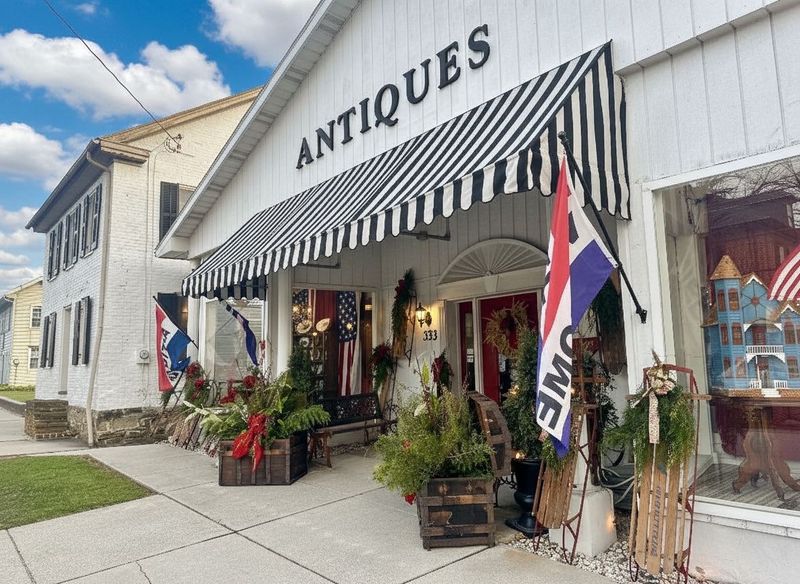
The layout gives this town away before you know much about its history. Roads meet around a central circle, and older brick homes and commercial buildings frame the area with the kind of street plan that encourages one more lap.
New Oxford was laid out in 1792 as Oxford Town and later became a borough in the nineteenth century.
The historic center still includes eighteenth and nineteenth-century architecture, and the local chamber offers a walking route that begins at the town circle and loops through surrounding streets.
Antiques remain part of the current downtown identity. The area supports antique shopping, while the annual Market on the Square brings antique, vintage, collectible, craft, and farmers market vendors into the center each June.
Your easiest plan is already built into the street pattern. Begin at Center Square, walk outward, and return from another direction. That gives you a natural look at both the commercial core and the older residential architecture nearby.
The square is compact, but do not rush it. New Oxford rewards the person willing to notice brick sidewalks, older rooflines, and small architectural changes from one building to the next.
Address: 27 Center Square, New Oxford, PA 17350.
12. Kennett Square
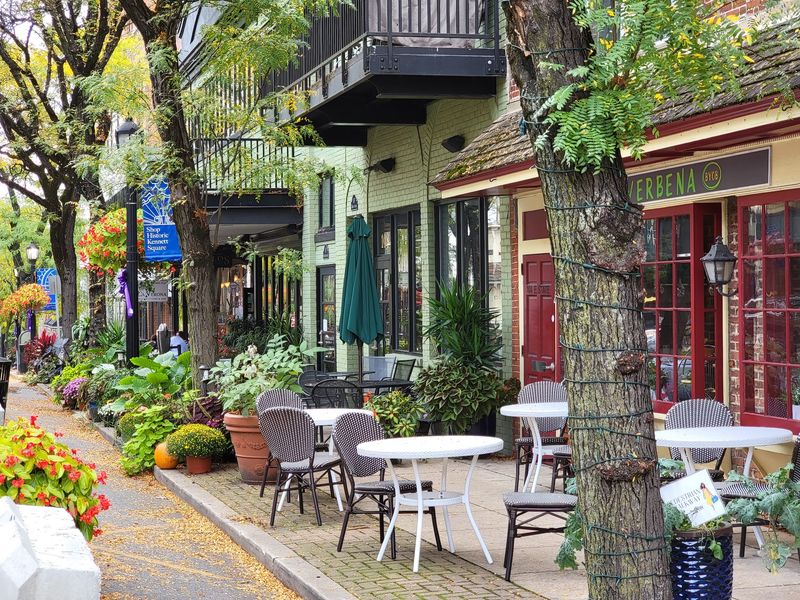
Mushrooms may get the headlines, but the architecture deserves some attention before lunch takes over the schedule.
A large portion of the borough belongs to the Kennett Square Historic District, which includes the commercial center and surrounding residential streets.
Federal, Victorian, and Colonial Revival buildings all appear within the district, giving the downtown layers rather than one uniform period look.
State Street remains the obvious spine. Shops, restaurants, community events, and older storefronts keep it active, while Kennett Collaborative organizes downtown programming from its State Street office.
The mushroom connection is not a marketing invention.
Kennett Square and the surrounding southeastern Pennsylvania growing region remain the country’s major center for mushroom production.
The annual Mushroom Festival still takes over State Street in September, tying the agricultural industry directly to the downtown.
Together, those pieces keep the historic district closely tied to the town’s everyday commercial life. Older architecture is not sitting quietly behind plaques while activity happens somewhere else.
Walk State Street first, then branch onto the adjoining blocks if you want more architecture and fewer storefront distractions. The mushrooms will still be there when you circle back.
Address: 106 W State St, Kennett Square, PA 19348.