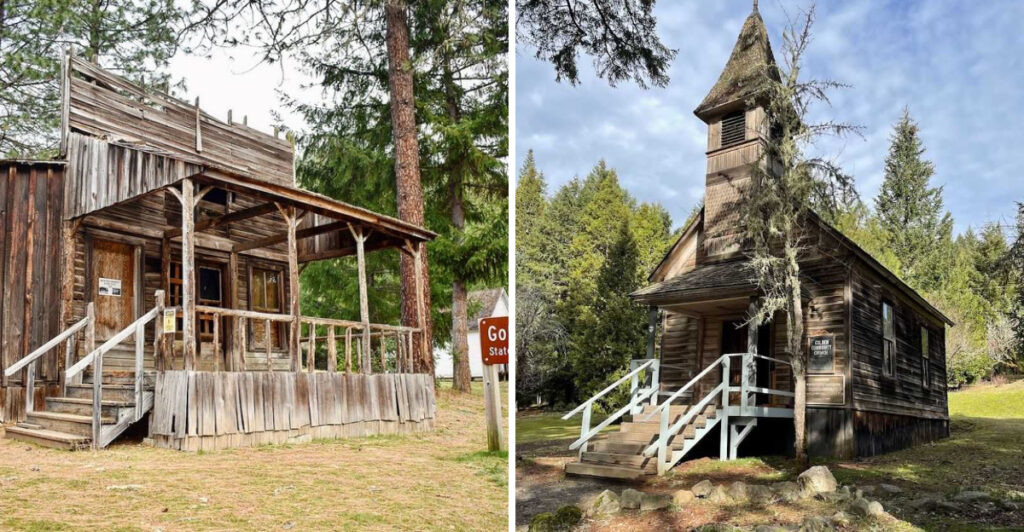
Just off the main highway, a gold rush mining town is standing right where it fell quiet. Buildings from the 1800s, still upright.
A church, a schoolhouse, a post office that ran its last mail in 1920 and never reopened. Oregon preserves this kind of stillness better than most states, and this particular corner of the southern valley delivers it for free.
No admission, no tour bus, no gift shop. Just four original structures, interpretive signs, and enough pioneer-era detail to absorb an entire afternoon.
The founders kept saloons out and built two churches instead, which makes this ghost town unlike almost anything else in the Gold Rush West. Oregon history is full of surprises, and this site, quiet and largely unknown, is one of the best of them.
A Ghost Town That Actually Earns The Title
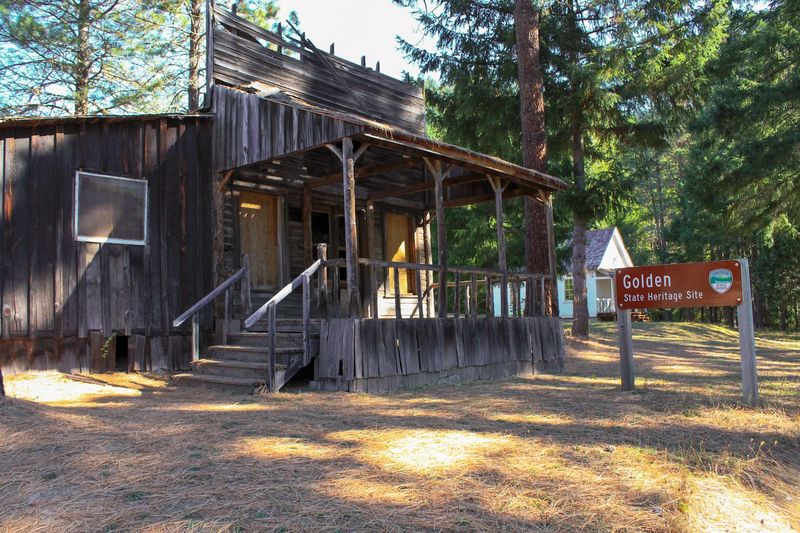
Gold towns in the American West were rarely this well-preserved. The Golden State Heritage Site near Wolf Creek, Oregon, is one of those rare places where the buildings are still upright, the history is still legible, and the silence feels almost intentional.
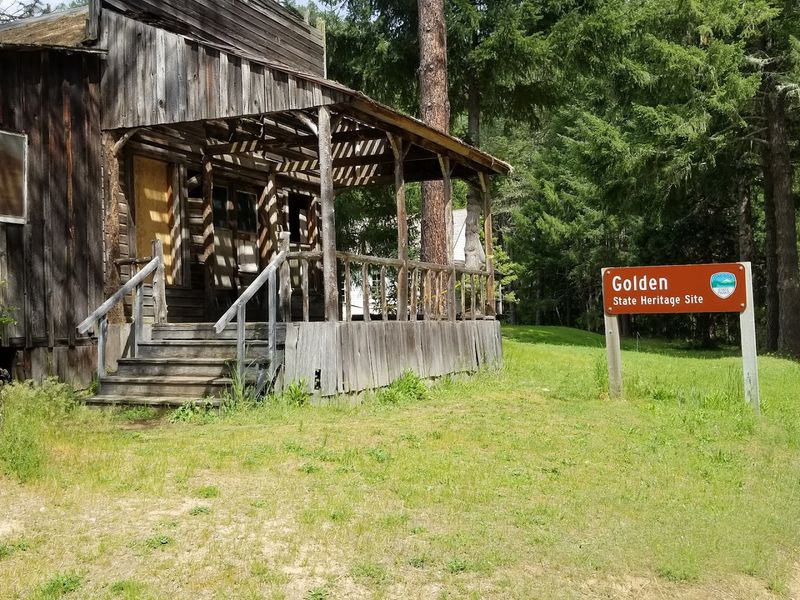
Four main structures survive on the site today. A church, a former residence, a shed, and a building that once served as both a post office and general store still stand with quiet dignity along the old town road.
Oregon State Parks maintains the site and has placed interpretive signs throughout, giving visitors real context for what they are looking at. These are not reconstructions or replicas.
They are original structures from the 1800s that have simply endured.
The site sits at the end of a short, paved road off Interstate 5, making it surprisingly easy to reach for something so rarely visited. The address is 3482 Coyote Creek Rd, Wolf Creek, OR 97497.
The Surprisingly Moral Origins Of A Mining Town
Most gold rush towns had a reputation for rowdiness, and saloons were as common as mud on the boots of miners. Golden, Oregon, broke that mold in a striking way.
The town’s founders, guided by strong religious convictions, kept saloons out of the town center entirely. The closest place to find that kind of refreshment was reportedly miles away at Graves Creek.
That detail alone sets Golden apart from nearly every other mining settlement of its era.
Instead of saloons, Golden had two active churches. The first was built in 1892, making faith a literal foundation of the community from its earliest organized years.
Founders also established a large orchard on the property, signaling that they intended to build a lasting, self-sufficient community rather than simply extract gold and move on. That long-term thinking is part of what makes the town’s eventual decline feel so poignant when you walk the grounds today.
From Mining Camp To Organized Community
What started as a rough mining camp in the 1850s gradually transformed into something that resembled a real town by around 1890. Golden had a peak population estimated between 100 and 150 residents, which was a meaningful size for a remote mountain community in Josephine County.
The town supported families, not just miners passing through. Children attended school.
Residents worshipped in proper church buildings. Families tended orchards and built homes meant to last more than a season.
The post office opened in 1896, a reliable sign that a settlement had reached a level of permanence worth recognizing. Mail service continued until 1920, which tracks closely with the period when gold resources in the area began to run thin.
That roughly 70-year arc from camp to community to quiet abandonment is compressed into just a few acres of land today. Visitors can absorb the whole story of Golden, Oregon, in a single unhurried afternoon walk.
The Church That Refused To Fall
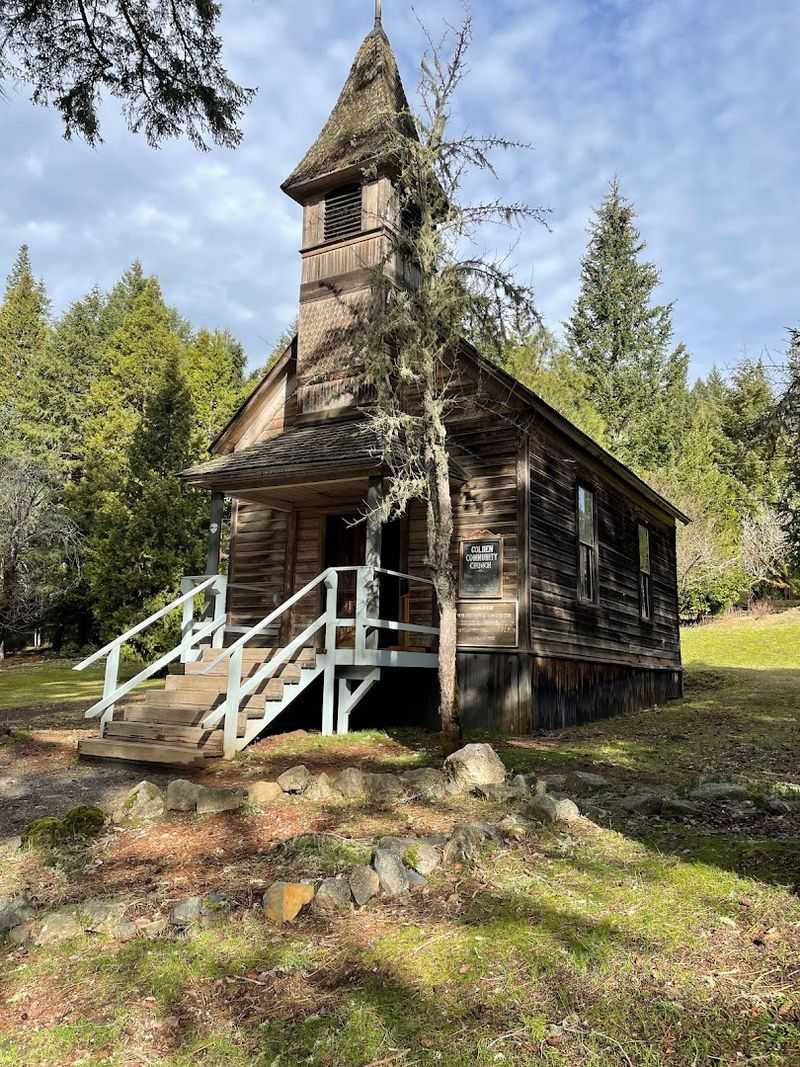
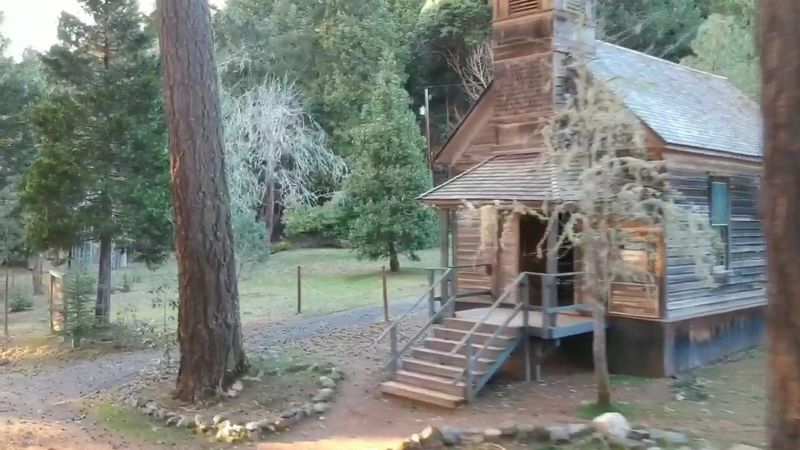
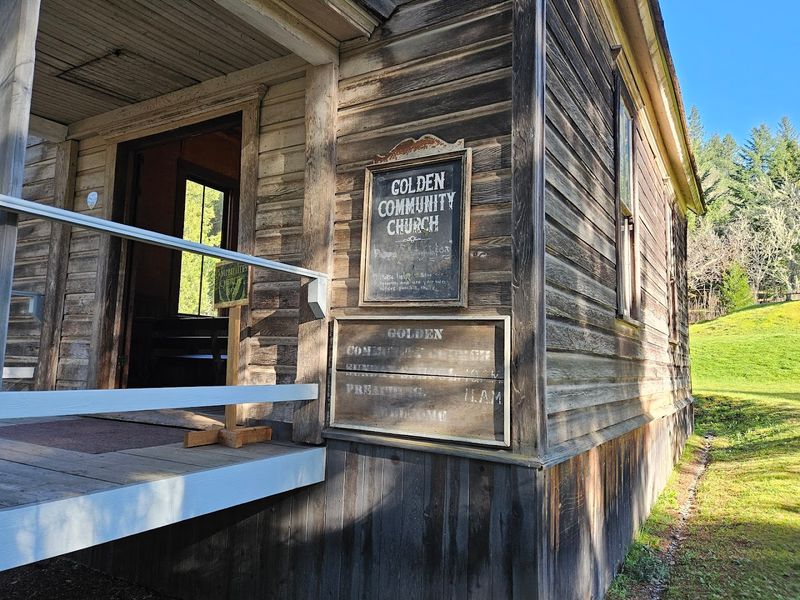
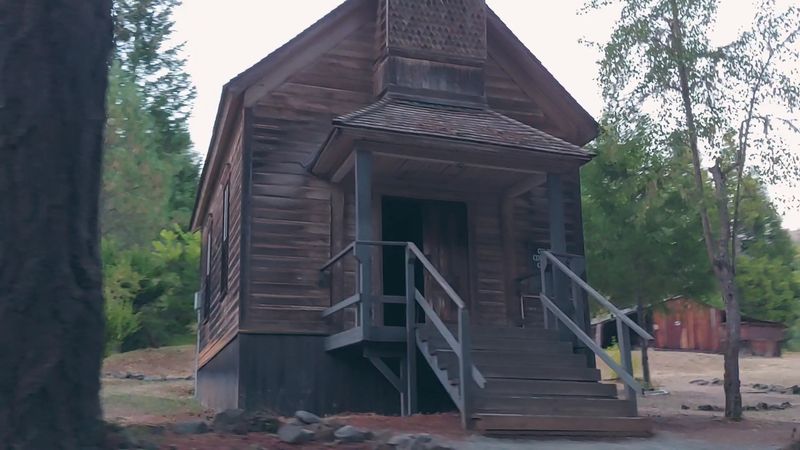
Of all the structures at the Golden State Heritage Site, the church draws the most attention. It is the visual anchor of the site and the building most people photograph first.
The original church was constructed in 1892. After decades of weathering, it was rebuilt in 1950, partly as a restoration effort and partly as a film set.
Several western movies and at least one episode of the television show Bonanza reportedly used the site during that era.
Today, visitors can enter the church when hosts are present on site. The interior is spare and simple, with the kind of stripped-back authenticity that no themed attraction could reproduce convincingly.
Standing inside, it is easy to picture the small congregation that once gathered there, surrounded by Oregon forest, far from any city. The church’s survival through more than a century of neglect and occasional restoration feels like its own kind of quiet stubbornness.
The Schoolhouse That Still Opens Its Doors
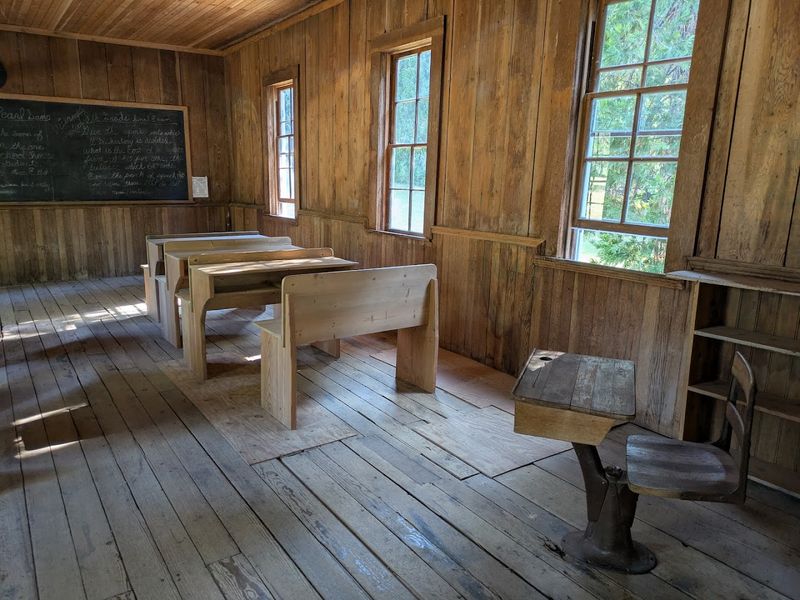
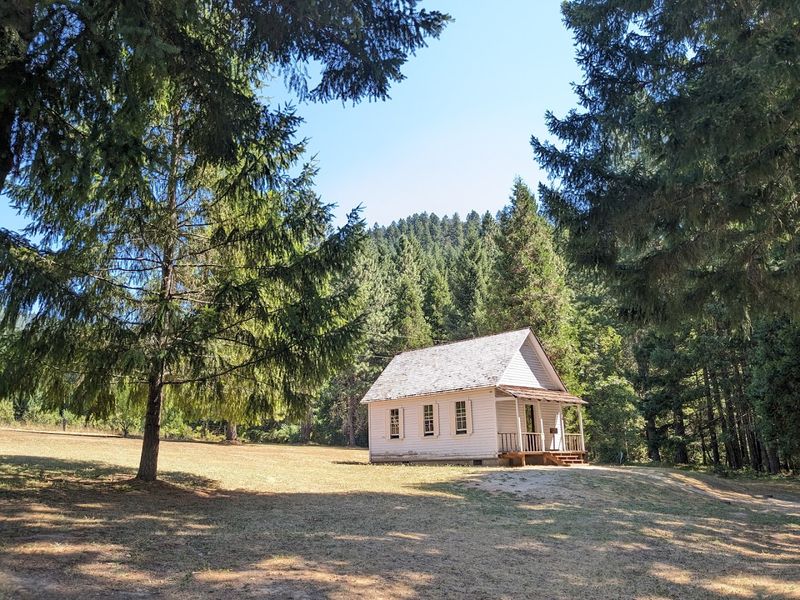
Right across from the church stands the old schoolhouse, and it is one of the two buildings visitors can actually step inside. That direct access makes a real difference in how the place feels.
Walking into a one-room schoolhouse from the 1800s is a grounding experience. The scale of the room, the simplicity of the furnishings, and the absence of anything modern make it easy to picture the children who once sat there learning to read and write in a remote Oregon mountain valley.
Education was clearly a priority for the founders of Golden. The fact that a dedicated school building existed at all in such a small, isolated community says a great deal about what kind of people built this town.
When site hosts are present, both the church and schoolhouse are open for interior viewing. Visitors are asked to respect the space, keep pets on leashes outside, and carry out anything they bring in, as there are no trash facilities on site.
The Post Office That Marked The Rise And Fall
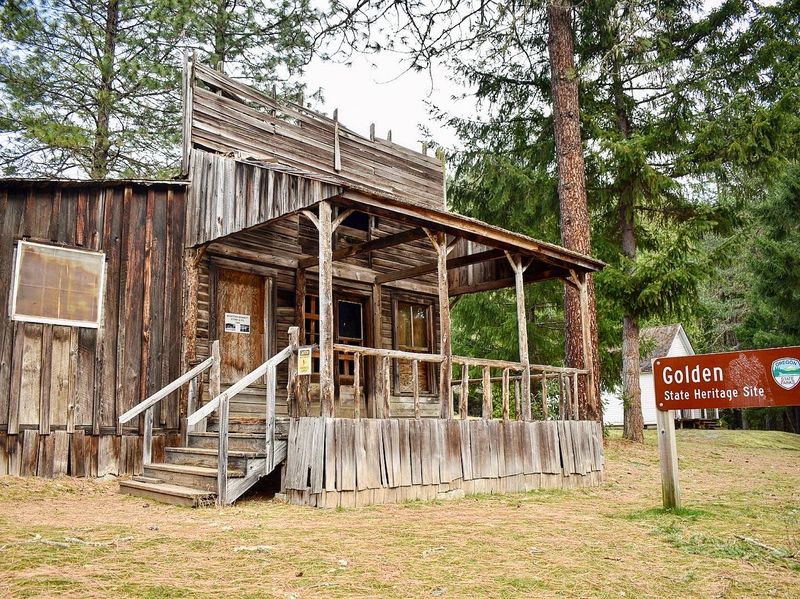
Few buildings at the Golden State Heritage Site carry as much historical weight as the structure that once served as both post office and general store. It was the commercial and civic heart of the community.
The post office operated from 1896 to 1920. That 24-year window of service neatly bookends the period when Golden was most active as a functioning town.
When the post office closed, it signaled more than just a change in mail routing. It marked the quiet end of a community.
Visitors can look through the windows of this building even when it is not open for interior access. The worn wooden floors and empty shelves visible from outside are strangely affecting.
Some visitors have reported feeling unexpectedly light-headed or uneasy near the general store deck, which has contributed to the site’s reputation as a location of unusual energy. Whether that is history pressing down on the senses or something else entirely is left to each visitor to decide.
Completely Free And Almost Nobody Knows About It
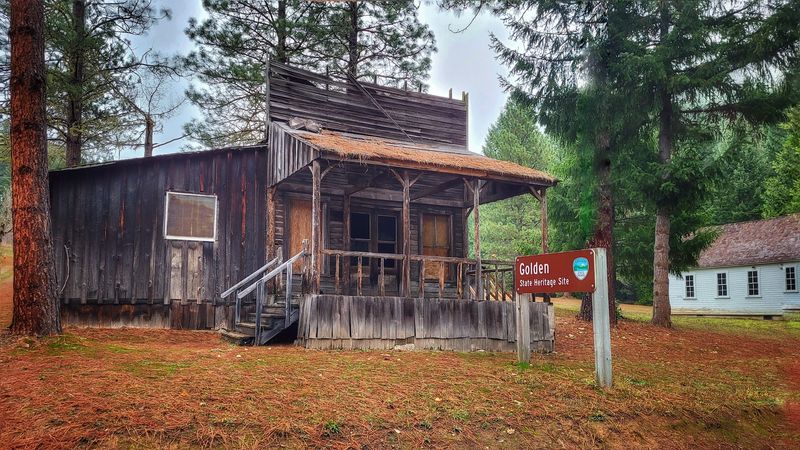
Free admission to a well-maintained, historically significant site is already rare. Free admission to one that almost nobody visits is practically unheard of.
The Golden State Heritage Site charges nothing to enter. Oregon State Parks manages the property, and the interpretive signs, preserved buildings, and maintained grounds are all available to any visitor who makes the short drive from Interstate 5.
On most days, the site sees very few visitors. Stopping by on a weekday morning can mean having the entire place to yourself.
That level of solitude at a National Register of Historic Places site is genuinely unusual.
Picnic tables are available on the grounds, making it a pleasant place to stop for a quiet break on a road trip. There is a portable restroom near the trailhead.
No food vendors, no gift shops, and no entrance booths. Just history, open air, and the sound of the surrounding Oregon forest doing its thing.
Wildlife And Nature Right Across The Road
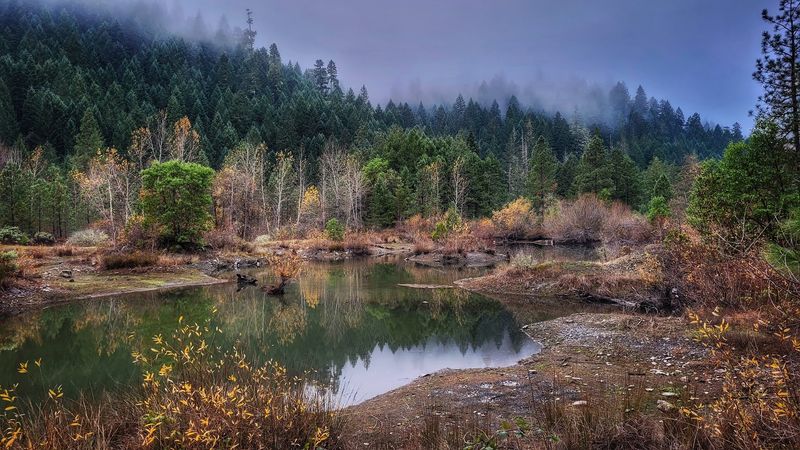
The history is compelling, but the natural setting around Golden adds another layer that many visitors do not expect. The area across the road from the main site has been developed into a small nature sanctuary.
A creek restoration project is underway in the valley below the town, and the results are already visible. Visitors have spotted geese, turtles, and other wildlife in and around the wetland areas near the creek.
A short, easy trail leads down to the water.
The creek itself was once a working gold mining site. Restoration efforts are actively reversing some of that environmental impact, and the recovering ecosystem is worth a look even for visitors who came primarily for the history.
Tall trees, open sky, and the sound of moving water make the natural surroundings feel like a bonus destination layered on top of the historical one. Bringing a pair of binoculars along would not be a bad idea for anyone who enjoys birdwatching in southern Oregon.
Ghost Adventures Came Here For A Reason
The paranormal television show Ghost Adventures featured the Golden State Heritage Site in one of its episodes, and that appearance put the town on the radar for a very specific kind of traveler.
Multiple visitors over the years have described unusual sensations while exploring the site, particularly near the church and the old general store. Reports of feeling suddenly light-headed or sensing a strong atmospheric shift near certain buildings have become a recurring theme in visitor accounts.
Whether those experiences have a supernatural explanation or a more practical one, the site’s atmosphere genuinely lends itself to that kind of contemplation. Old buildings in quiet settings have a way of amplifying the imagination.
The site does not market itself as a haunted attraction, and that restraint works in its favor. The history is compelling enough on its own.
The eerie undercurrent is simply part of the package for those who are paying attention while walking the grounds of this Oregon landmark after sunset.
Practical Tips For Planning Your Visit
Getting to the Golden State Heritage Site is straightforward. The site is located just a few miles off Interstate 5, east of Wolf Creek in Josephine County.
The drive in is along a paved road, so no off-road capability is required.
Parking is available, but the signs can be easy to miss. Visitors should park on the right side of the road as directed, not on the side adjacent to the buildings.
A caretaker is often present on site and appreciates visitors who follow the posted guidelines.
Pets are welcome but must remain on leashes and are not permitted inside any of the buildings. The site has no trash facilities, so packing out everything brought in is required.
Poison oak grows in the surrounding area, so wearing long pants and staying on the established paths is a smart precaution. The nearest services, including food and fuel, are available in the town of Wolf Creek, just a short drive back toward the highway.
Why This Quiet Corner Of Oregon Deserves Your Time
Road trips along Interstate 5 through southern Oregon tend to blur together after a while. The Golden State Heritage Site is the kind of detour that breaks that blur and sticks in the memory long after the drive is over.
It is listed on the National Register of Historic Places, maintained by Oregon State Parks, and rated exceptionally well by the visitors who do find it. Yet it remains largely unknown to the traveling public, which is part of its charm.
The combination of genuine pioneer history, free access, natural surroundings, and near-total solitude is rare. Very few sites in Oregon, or anywhere in the Pacific Northwest, offer that particular combination without a fee, a crowd, or a long drive on unpaved roads.
For anyone passing through southern Oregon with even twenty spare minutes, taking the exit toward Wolf Creek and following the road to Golden is a decision that holds up well in hindsight. History this accessible rarely stays secret for long.