Wisconsin roadside rule number one: if the thing beside the highway is absurdly oversized, you are probably stopping.
Rule number two: do not expect an explanation right away.
A perfectly normal drive can suddenly present something that belongs in a cartoon, a folk-art yard, or somebody’s very ambitious garage project. Then you learn there is an actual story behind it.
Some began with local pride. Others grew from history, art, or ideas that clearly escaped their original proportions.
A few need only five curious minutes.
Others can swallow an afternoon before the car keys come back out.
So forget the sensible route for a while.
Wisconsin has fish you can enter, objects that forgot their proper size, and enough roadside weirdness to make “Are we there yet?” completely irrelevant.
1. National Fresh Water Fishing Hall Of Fame And Big Musky
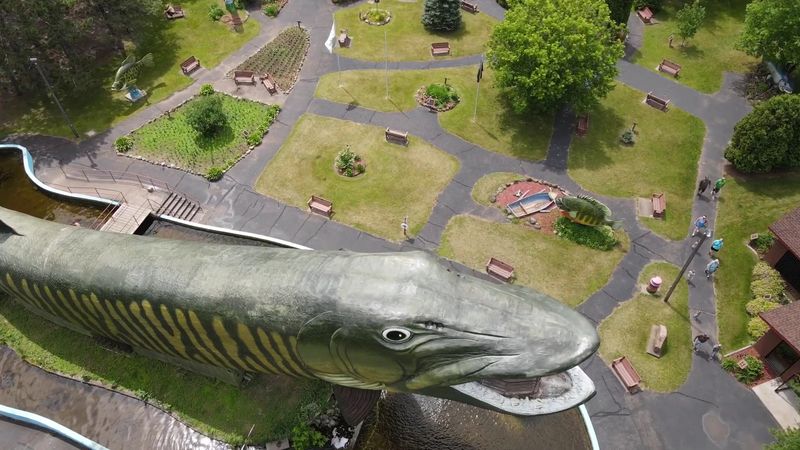
Hayward takes the phrase “big fish story” literally. A leaping muskellunge rises four and a half stories above the grounds and stretches roughly half a city block, turning an ordinary museum stop into something much harder to miss.
The giant fish belongs to the National Fresh Water Fishing Hall of Fame, and you can do more than stand beside it. Visitors can climb inside and make their way to an observation platform in the open mouth, where about 20 people can fit at once.
Standing between oversized painted teeth is one of those road-trip photos that does not need much explanation.
The museum complex gives you a reason to stay after the picture is taken. Its buildings hold more than 50,000 sportfishing artifacts, along with mounted freshwater fish and antique outboard motors.
The collection covers the history of angling in far more detail than the giant exterior suggests.
This is also a seasonal stop, so timing matters. The attraction operates from mid-April through October 31. If you are traveling in early fall, you still have time to climb into the fish, look across the grounds, and spend a while inside before the season wraps up.
Address: 10360 Hall of Fame Dr, Hayward, WI 54843.
2. World’s Largest Hodag Statue
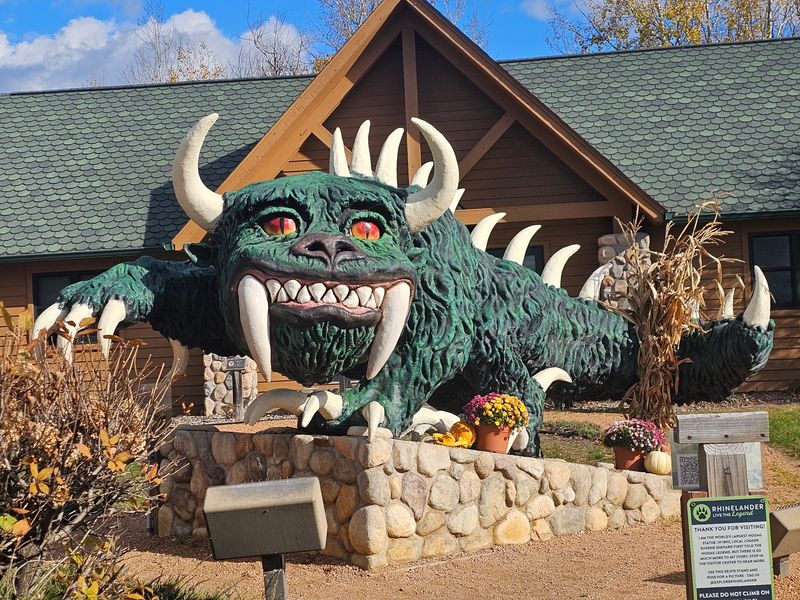
Few town mascots look this ready to cause trouble. Horns, fangs, claws, a spiked back, and a wide grin make Rhinelander’s best-known creature look like something invented during a particularly strange campfire story.
That is not far from the truth. The Hodag story dates to 1893, when timber cruiser Eugene Shepard helped spread tales of a bizarre beast in the northern woods.
A fabricated “live” version appeared at the 1896 Oneida County Fair, and the whole thing eventually became known as a hoax.
Rhinelander did not abandon the joke. Instead, the Hodag became part of the city’s identity, showing up in local art, signs, souvenirs, and statues around town.
The biggest version waits outside the Rhinelander Area Chamber of Commerce. The World’s Largest Hodag Statue is an easy roadside stop, but it can also become the starting point for spotting smaller Hodag references nearby.
That gives families a simple choice: grab one photo and keep moving, or turn the town into a low-stakes creature hunt.
Because the statue is outdoors, you do not need to build your day around admission times. Pull in, meet the monster, and decide whether one Hodag is enough.
Address: 450 W Kemp St, Rhinelander, WI 54501.
3. World’s Largest Potato Masher
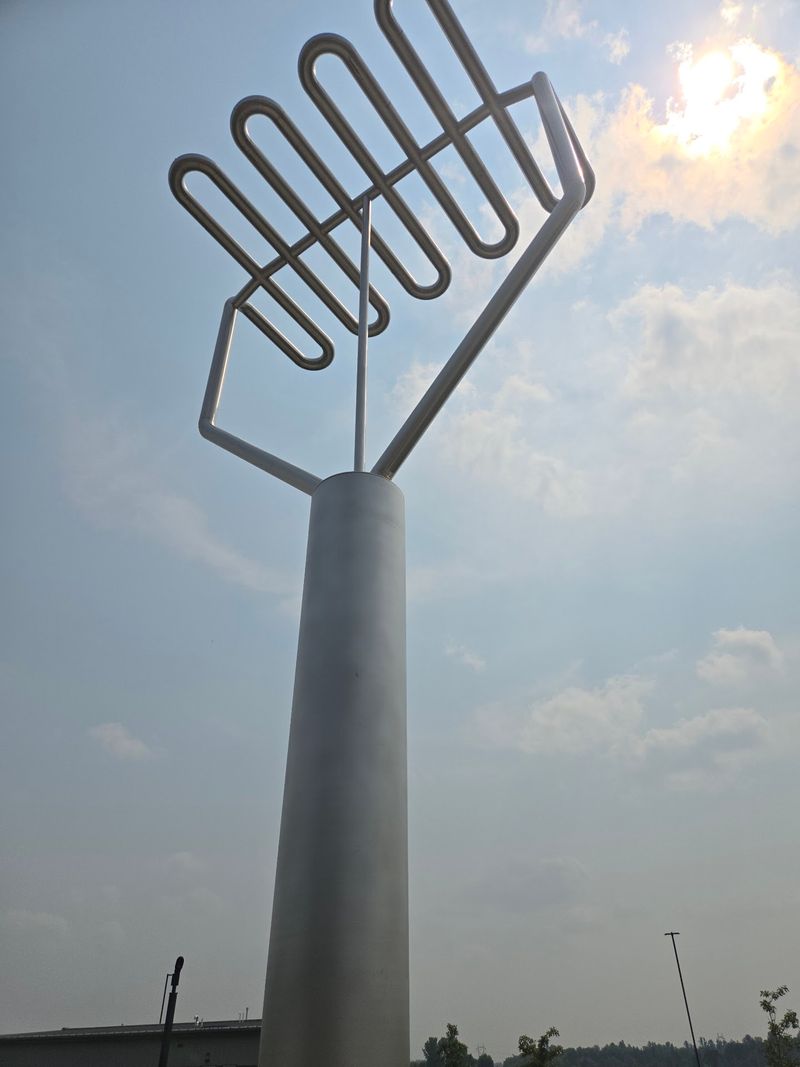
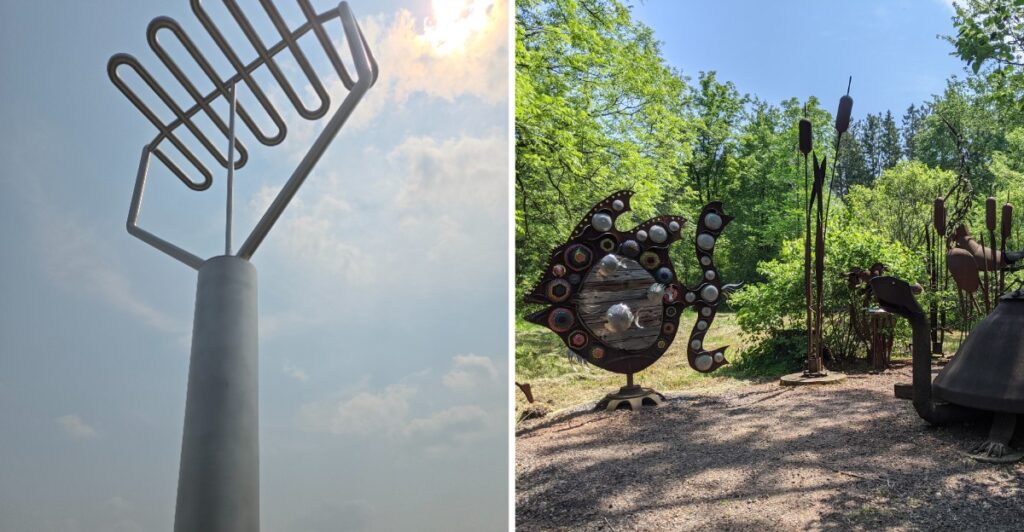
A roadside sculpture shaped like a kitchen utensil is already strange. Making that utensil nearly 39 feet tall takes things in a much more entertaining direction.
Plover’s giant potato masher stands outside the Food + Farm Exploration Center, where its scale makes it impossible to confuse with ordinary landscaping. Installed in 2023, the metal sculpture measures 38 feet 11 inches tall and weighs about 7,500 pounds.
The agricultural connection is not random. Central Wisconsin has deep ties to potato farming, and the oversized masher gives that history a playful visual hook.
You can stop for the photo and continue down the road, but the building behind it adds context if you have more time.
Inside the center, interactive exhibits explore farming, food production, technology, and the path from field to table.
That makes this one of the list’s easier attractions to stretch into a longer stop, especially if you are traveling with kids or anyone curious about modern agriculture.
Your biggest decision may be whether the giant utensil gets five minutes or an hour. Either way, it is hard to leave without at least one photo that makes the parking lot look unusually small.
Address: 3400 Innovation Dr, Plover, WI 54467.
4. Dr. Evermor’s Forevertron
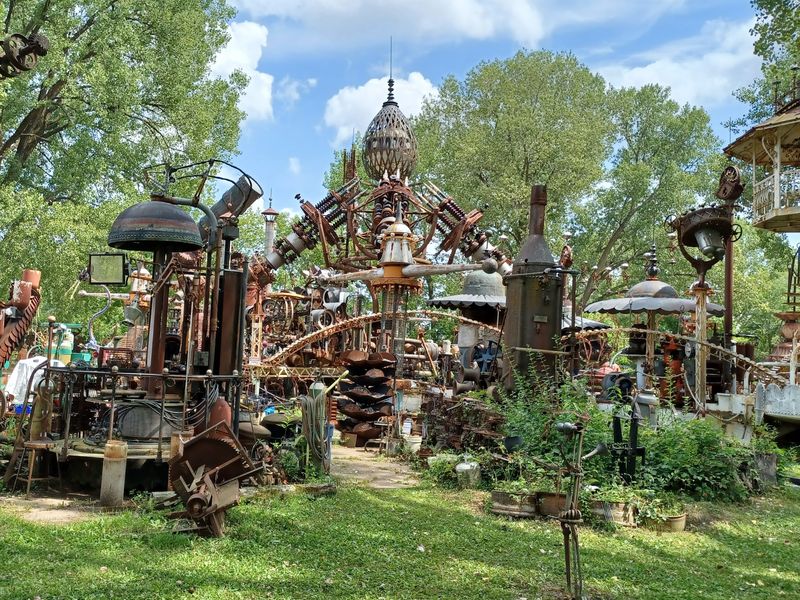
Old industrial parts become much stranger when they are rearranged into fantasy machines, giant birds, and metal creatures that look ready to star in their own science-fiction film.
Near North Freedom, sculptor Tom Every used the name Dr. Evermor while transforming salvaged factory pieces into one of Wisconsin’s most unusual outdoor art environments.
The Forevertron is the centerpiece, but stopping at the main structure and leaving would mean missing much of the fun.
Mechanical birds, strange creatures, boilers, gears, pipes, and other industrial fragments fill the surrounding grounds. Some pieces are immediately recognizable. Others make you stare for a moment before you figure out what the original part might have been.
The easiest way to explore is slowly. Pick a direction, wander, and let the details do the work. A piece of machinery that once had a practical purpose may now be a beak, wing, eye, or part of an imaginary engine.
Dr. Evermor’s Forevertron remains open to visitors on a limited weekly schedule, so this is one attraction where checking the day before you go makes sense.
The outdoor setting can also get muddy after rain, making sturdy shoes a smarter choice than anything you would mind getting dirty.
Address: S7703 US Highway 12, North Freedom, WI 53951.
5. World’s Largest Penny
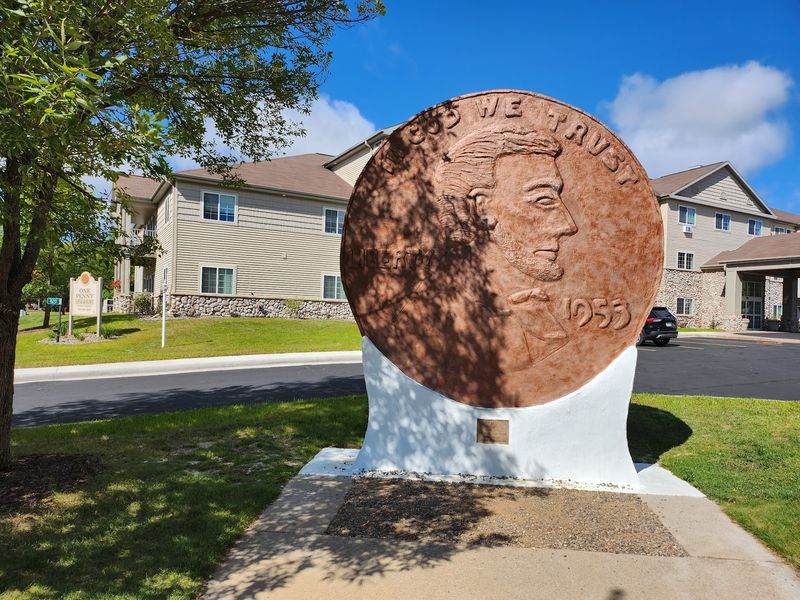
At first glance, this looks like a straightforward oversized-object stop. The story behind the coin is much bigger than the object itself.
In the early 1950s, local students joined a fundraising effort connected to Dr. Kate Pelham Newcomb’s push for a hospital in the Woodruff area. The campaign became known as the Million Penny Parade, and children collected pennies to help support the project.
The response went well beyond one classroom. About 1.7 million pennies were gathered in a little over 100 days, and a parade celebrated the effort in 1953. The giant penny monument followed in 1954, turning a community fundraiser into a roadside landmark.
Today, the World’s Largest Penny still stands as a reminder that the smallest donation can become part of something much larger. It also gives this list one of its more surprising stops because the visual joke comes with real local history attached.
For more background, the nearby Dr. Kate Museum covers Newcomb’s work, the penny campaign, and the hospital effort in greater detail. The museum is seasonal, while the monument itself remains the quick roadside photo.
Address: 820 3rd Ave, Woodruff, WI 54568.
6. World’s Largest M
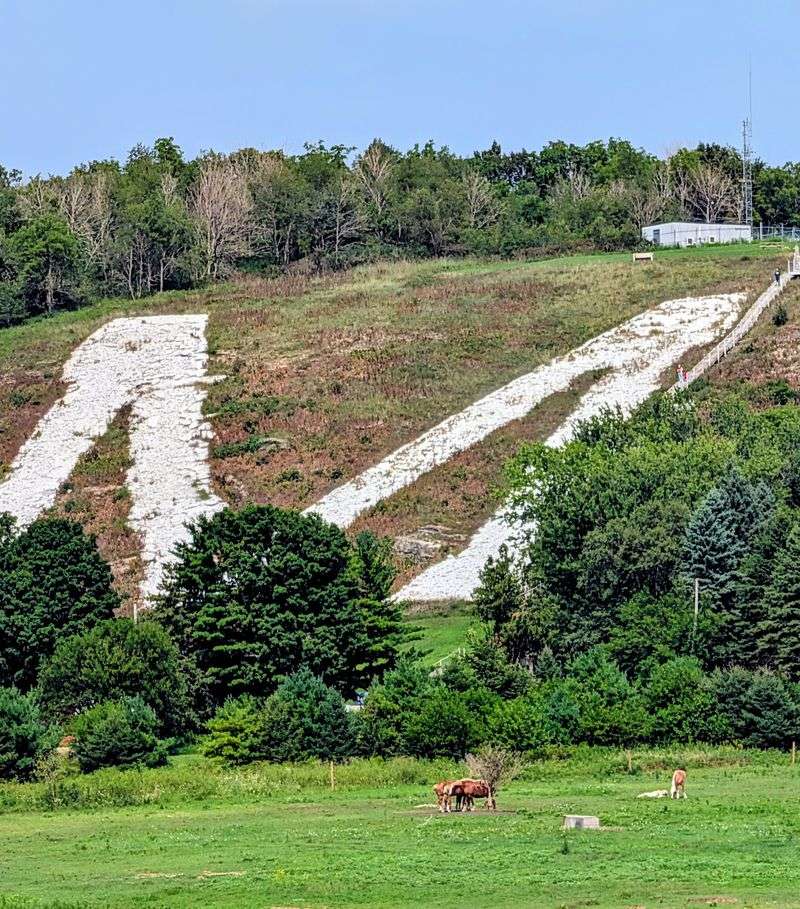
A giant white letter spread across a hillside sounds like someone took school spirit to an unreasonable scale. In southwest Wisconsin, that is almost exactly what happened.
The story began in 1936 when Wisconsin Mining School students stamped a large M into the snow on Platte Mound. The idea did not disappear with the weather. The following spring, students created a permanent limestone version.
Completed in 1937, the World’s Largest M measures about 241 feet high and 214 feet wide. Roughly 400 tons of stone went into the landmark, which honors the mining-school roots of what later became the University of Wisconsin-Platteville.
The fun part is that you can climb beside it. Around 290 steps run up the mound, making the stop more active than a standard roadside photo. At the top, the view opens across the surrounding farmland and rolling countryside.
Go with the climb if you have comfortable shoes and a little extra time. Otherwise, the scale of the letter is still easy to appreciate from below.
TPlatte Mound sits in the Town of Belmont, though the attraction is closely associated with Platteville and uses a Platteville mailing address.
Address: 18600 W Mound Rd, Platteville, WI 53818.
7. Jurustic Park
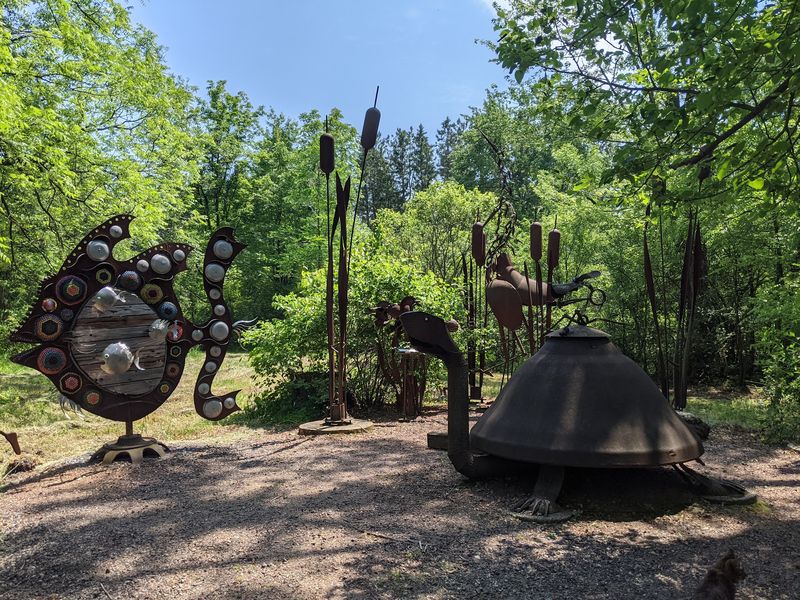
Rusty metal animals begin appearing before the joke behind them fully makes sense. Then you start reading the signs.
Near Marshfield, sculptor Clyde Wynia created an outdoor world of handmade creatures built from scrap, old machinery, and salvaged metal.
The fictional backstory claims the beasts were dug from the nearby marsh, giving the entire place a playful mythology that is almost as memorable as the sculptures.
Jurustic Park rewards people who like details. Wings, jaws, legs, and odd faces emerge from materials that once had completely different jobs. Some creatures look prehistoric.
Others seem to have escaped from a cartoon drawn by someone with access to a welding torch.
The park does not need a rigid route. Wander, read the signs, and stop whenever something makes you laugh or look twice. Next door, the Hobbit House features work by Nancy Wynia, including glass, fiber pieces, jewelry, and other handmade art.
General admission to the sculpture park is free, though guided group tours carry a fee. Hours can vary with the season, so checking before a longer drive is sensible. Give yourself more than a few minutes if you enjoy oddball art.
The jokes get better once you slow down enough to notice them.
Address: 112021 Old Sugarbush Ln, Marshfield, WI 54449.
8. Wisconsin Concrete Park
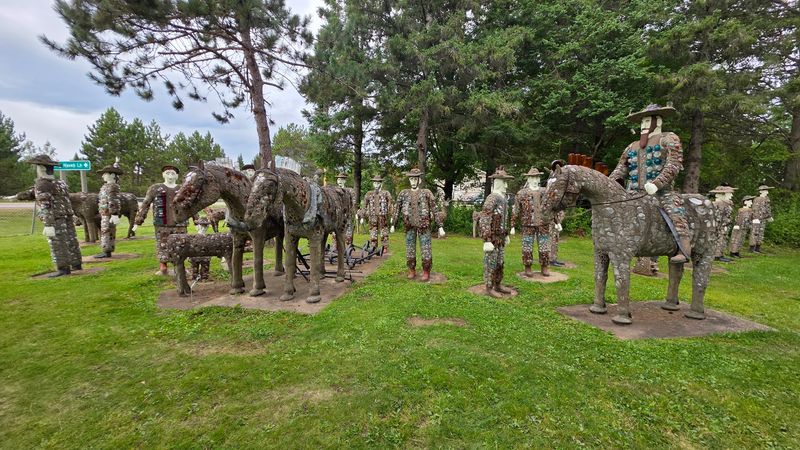
Some roadside attractions are built around one oversized object. This one gives you hundreds.
South of Phillips, a field is filled with 237 concrete sculptures and monuments created by self-taught artist Fred Smith. He began the project in 1948 after retiring from lumber work and continued building through 1964.
Smith used concrete as the base, then decorated the figures with glass, stone, mirrors, and other found material.
The surfaces are part of what makes the park so interesting up close. Sunlight catches small pieces embedded in the figures, changing the look as you move around them.
The subjects range widely. Animals, historical figures, local lore, and larger-than-life characters all share the grounds, so there is no single theme to follow. That unpredictability keeps the walk interesting from one section to the next.
Wisconsin Concrete Park is open daily throughout the year, and general admission is free. A gallery and gift shop in the Fred Smith House operate seasonally, but the outdoor sculpture grounds remain the main draw.
Take your time rather than trying to identify every figure immediately. The fun is often in the small materials and odd expressions you notice only after a second look.
Address: N8236 State Highway 13, Phillips, WI 54555.
9. Dickeyville Grotto
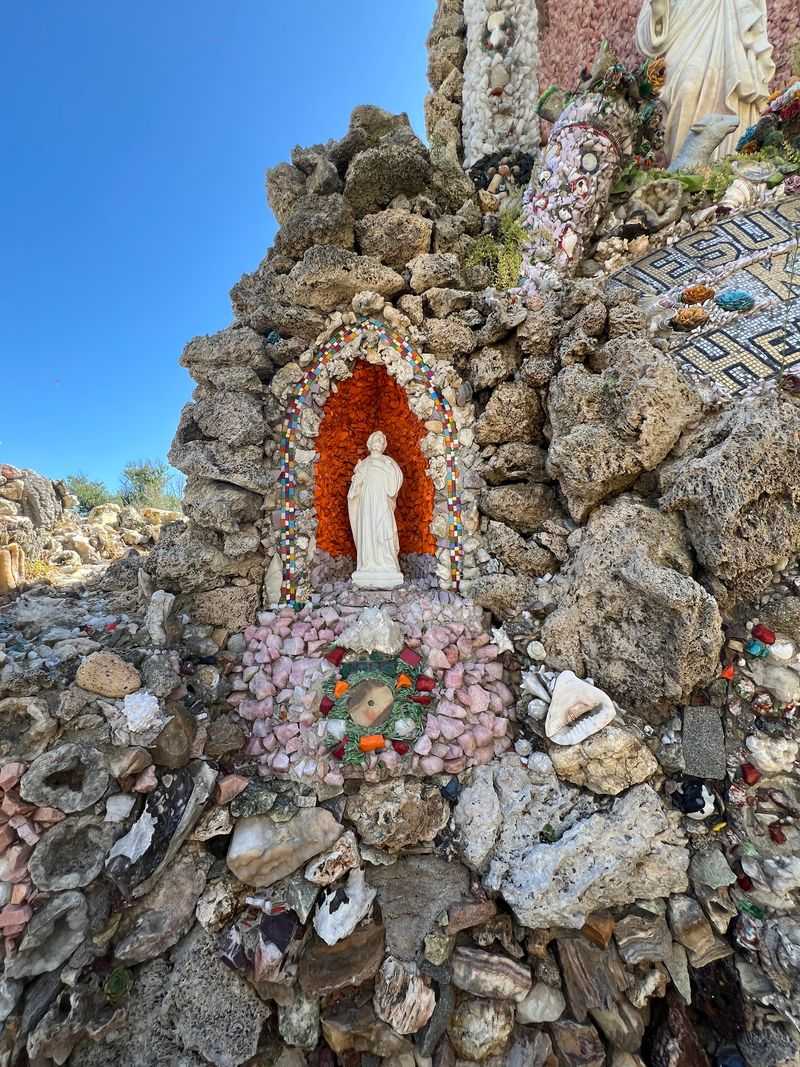
Tiny objects do most of the visual work here. Shells, stones, colored glass, pottery fragments, and other found materials cover walls, shrines, and decorative surfaces until ordinary mortar becomes something much more intricate.
Father Mathias Wernerus created the Dickeyville Grotto during the 1920s on the grounds of Holy Ghost Parish.
He used stone and mortar along with collected materials from many places, building a folk-art environment that mixes religious imagery, patriotic themes, architecture, and handmade detail.
This is not a stop to rush. The closer you look, the more individual pieces begin to stand out. A section that looks like one colorful surface from several steps away can turn into dozens of tiny objects once you move closer.
Several shrines surround the main grotto, so there is more to see than the roadside view suggests. The outdoor grounds welcome visitors year-round, while tours and the gift shop operate seasonally.
Because the site remains part of an active parish setting, a quieter visit fits best. Walk slowly, stay on the paths, and give yourself enough time to notice the workmanship rather than treating it as a quick photo stop.
Address: 305 W Main St, Dickeyville, WI 53808.
10. Claire d’Loon
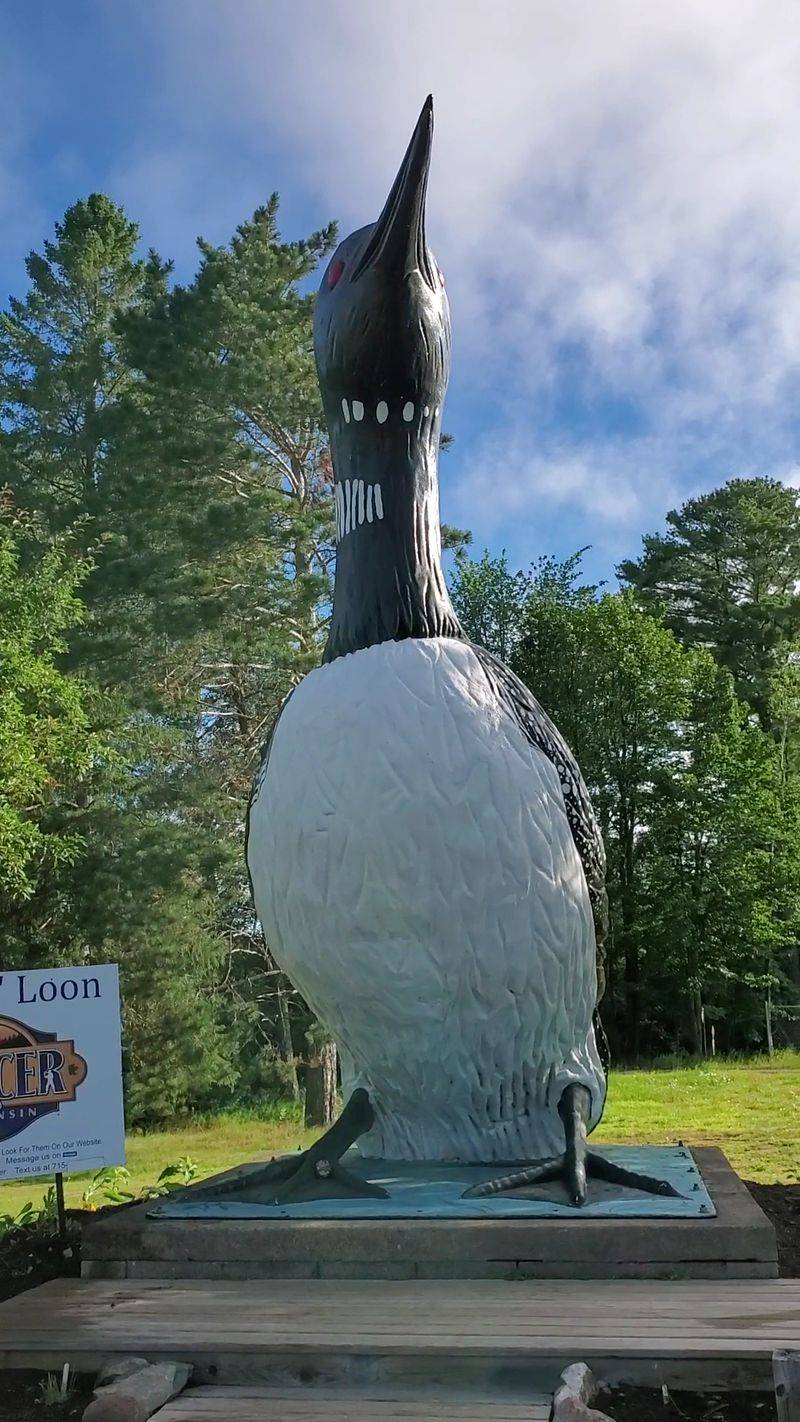
Mercer could have settled for a regular town mascot. Instead, it went with a 16-foot-tall talking bird.
Claire d’Loon has stood beside the Mercer Area Chamber of Commerce since 1981. The oversized statue weighs about 2,000 pounds and is billed as the World’s Largest Talking Loon, which sounds like the setup to a joke until you press the buttons.
Her sound system plays recognizable loon calls, including the wail, tremolo, yodel, and hoot. That makes the statue more interactive than the average giant roadside animal and gives kids an easy excuse to press every option before anyone gets back in the car.
The location also makes sense. Mercer is surrounded by northern Wisconsin lake country, where real loons are part of the landscape and their calls are much more natural than hearing them come from a giant statue beside the highway.
This is one of the easiest stops on the list to fit into a travel day. Pull in, take the photo, try the calls, and keep moving when you are ready. If you want more local information, the chamber is right beside her.
One giant bird, four familiar sounds, and almost no planning required. That is roadside efficiency.
Address: 5150 N US Highway 51, Mercer, WI 54547.